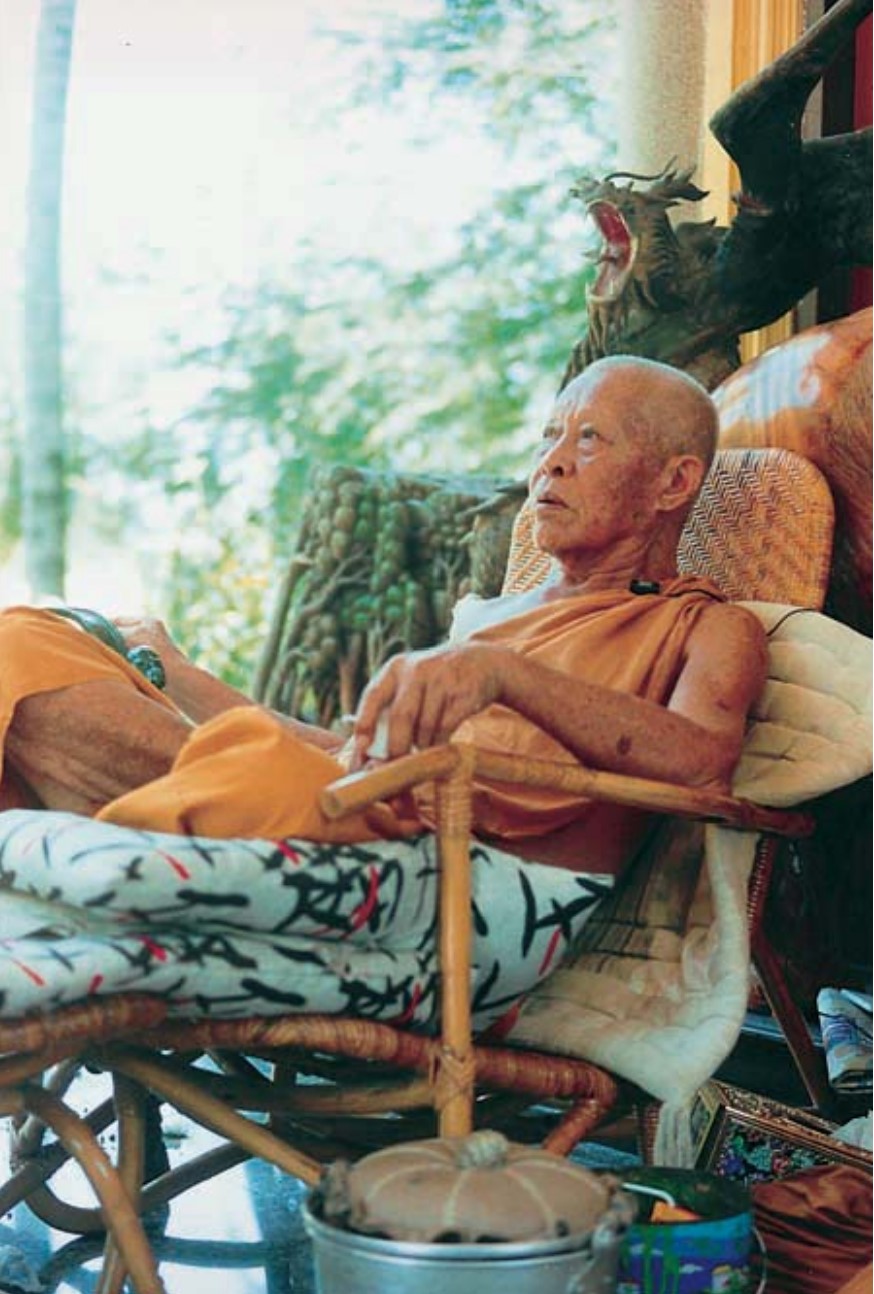
Ajaan Jia Cundo
I reckon I got better results meditating for the short time it took me to urinate than those lazy bastards did meditating all night!
—Ajahn Jia Cundo
Gold Wrapped in Rags
Translated by
Ajahn Dick Sīlaratano
Gold Wrapped in Rags © 2024 by Forest Dhamma Monastery Organization. ALL COMMERCIAL RIGHTS RESERVED. Printed in the United States of America. This book is printed for free distribution. It should not be sold. It has been made available through the faith, effort, and generosity of people who wish to share the knowledge and understanding it contains with whomever is interested. The act of freely offering is itself part of what makes this a “Dhamma publication,” a book dedicated to Buddhist principles.
This work is licensed under Attribution-NonCommercial-NoDerivatives 4.0 International. To view a copy of this license, visit https://creativecommons.org/licenses/by-nc-nd/4.0/
For permission to reprint, translate, or publish this content in any format or media please contact Forest Dhamma Publications at info@forestdhamma.org
This book is available for free download at https://www.forestdhamma.org
Cover and interior design by Mae Chee Melita Halim. Set in Kolker Brush and STIX Two Text.
Paperback ISBN: 979-8-9899500-0-3
PDF ISBN: 979-8-9899500-1-0
EPUB ISBN: 979-8-9899500-2-7
Kindle ISBN: 979-8-9899500-3-4
Forest Dhamma Publications
Forest Dhamma Monastery
255 Snakefoot Lane
Lexington, VA 24450, USA
Rays
Copyright
Dawn
Rags
Robes
Bones
Trails
Wilds
Roots
Seeds
Gold
Caves
Dusk
Stars
Author
I wish to express a deep sense of gratitude to Ajahn Cherry Abhiceto for the steady support and encouragement he has given me throughout my long spiritual journey.
Dawn
Imagine for a moment the desperation felt by ordinary peasant farmers in southeastern China during the first decade of the twentieth century, when living conditions had become untenable for poor farmers throughout the region. During extended periods of drought, the land lay parched; when the rains returned, the rivers flooded the lowlands. Either way, year after year, the conditions for harvesting crops were disastrous. Without rice to eat, life became desperate. To make matters worse, the general lawlessness of the region gave rise to raids by marauding gangs of armed men looting depleted grain supplies.
Sia Eung, the eldest son of an ethnic Hokkien family, grew up in a village in Fujian province alongside a river which flooded its banks so often that the rice crops frequently failed, leaving his family to survive on a meager harvest each year. As typhoons swept in over the mountains and onto the low-lying countryside, storm winds blew without respite, and dense, lashing rain fell steadily for months, drenching everything. When water levels rose until they overflowed the river’s banks, the rushing current started devouring the embankment, pulling the land into the surging torrent. The river swelled and flowed faster as its momentum grew, gobbling up everything in its path and spilling over so far that it inundated the rice fields.
The ensuing floods washed everything away, not just the family’s fields but their home as well. Everything the family owned ended up floating in the middle of the river. All that remained of their house above water was the thatched roof stubbornly hanging on against the floodtide. Half-starved farm animals clung to the debris floating in the water, and human corpses, beginning to bloat and rot, bobbed in the swirling eddies. When the rain stopped, the sun beat down, and wafts of stench drifted off the river. The scenes of destruction were reminiscent of what the Buddha realized on the night of his enlightenment: that the cycle of birth and death resembles an ocean of suffering.
After the flood, the young man’s family packed what few possessions they had left and trekked across the high mountains into the next valley to stay with relatives and try to start their lives anew. There, they built thatched huts in the open fields and eked a living out of the land. The following year drought descended, scorching the land and shriveling their crops.
When he could no longer endure the feelings of despair, Sia Eung reached a pivotal moment in his young life. One morning, as dawn broke across the barren fields, he bid a tearful goodbye to his parents and left home in search of a better future. He set out on foot over the parched floodplain south of his home, hiking through the flat, hard landscape scarred with the stubble of a drought-stricken rice crop. Full of youth, he was strong and capable of walking long distances without tiring. He took few possessions with him, only some extra clothes stuffed in his Chinese traveling case, a tall, rounded basket made of woven bamboo that he carried suspended from a shoulder-pole. Sia Eung was twenty-two years old and on his own.
Like so many young men of that era, he joined a mass migration fleeing the severe hardships of southern China in search of greener, fresher pastures in the lands of Southeast Asia. He had heard from the tales of previous migrants that lands to the far south were peaceful and plentiful. His plan was simple: keep walking south until he reached the sea, then stow away in the hold of a merchant vessel sailing southwest and plying its trade at cities and towns along the eastern coast of the Southeast Asian mainland. When a favorable opportunity presented itself, he intended to disembark and seek employment on the mainland.
When the Chinese junk he eventually stowed away on reached the open sea, Sia Eung presented himself to the ship’s captain and offered to work as a crewman to pay for his passage. Traveling in a southwesterly direction across the South China Sea, stopping to unload and load cargo at seaports along the route, the ship eventually entered the waters of the Gulf of Thailand where it dropped anchor at the port city of Laem Sing on Thailand’s southeastern coast. Finding conditions there favorable for beginning a new life, Sia Eung—soon to be the father of Ajahn Jia Cundo—disembarked carrying only his woven bamboo traveling case and sought employment in the bustling city.
Although Ajahn Jia’s father turned out to be a minor character in the following account of his son’s life, he nonetheless exerted an important influence on his son’s temperament, which formed the basis of his bold, direct, and assertive personality. Ajahn Jia’s father was an ethnic Hokkien, and the young Jia inherited from him the inherent character traits typical of Hokkien people.
Even when speaking with close friends and family, Hokkien people tended to shout and remonstrate in loud and forceful voices as if they were quarreling among themselves. The Hokkien viewed loud and brassy speech simply as an effective and confident way to communicate. Although they sounded rude using profanity in ordinary conversation, they did not intend their words to be offensive. In their minds, they were just bantering good-naturedly.
Ajahn Jia himself became well known for his “uncultured” character traits and his use of uncompromisingly forthright or even crude language in everyday conversation—behavior which at times led to public controversy. Ajahn Jia possessed a dynamic personality, resourceful and full of energy, strong-willed and adamantly self-assured. Like his father, he was a physically imposing man with a tireless work ethic, which could easily lead to confrontations when obstacles blocked his path.
When Ajahn Jia eventually agreed to recount the story of his life, his strict, no-nonsense character was on full display as he raised the curtain to look back on his life as a forest monk, with the hopes, goals, adventures, and lessons learned taking center stage. He guided his listeners through a biographic landscape of intersecting people, places, and events that focused attention on the fierce and resolute temperament that shaped the course of events on his spiritual journey. In his storytelling, Ajahn Jia did not avoid addressing his own shortcomings nor did he shy away from depicting the people with whom he interacted in the most candid and outspoken terms. In his rigorous pursuit of spiritual excellence, he was as demanding of himself as he was of his students. He was not all strictness and severity, however. Glimpses of his less daunting, more human side can be seen in the anecdotes he told about his eccentric habits and unorthodox behavior, which enable the reader to gain a fuller picture of his overall personality.
By the time of the first interview, Ajahn Jia’s enlightened mind, comfortably clothed in the discarded rags of his outward personality, engaged the world untouched by feelings of awkwardness or embarrassment. His account reads as though he was announcing to the world the confidence he felt in the depth and maturity of his understanding. Speaking honestly and openly about himself and his exploits, he concealed no hidden agendas or ulterior motives. He simply exhibited the stubborn, combative traits from which he had earned the moniker “gold wrapped in rags.”
On the afternoon of January 30, 2000, a group of monks and lay devotees, who had practiced under Ajahn Jia’s guidance for decades, approached him at his monastic residence with a special request: Would he kindly agree to tell the story of his life in full so that it could be recorded and preserved for the benefit of future generations? They were seeking an in-depth account of his personal experiences and reflections and were prepared to allow all the time he needed to relate his story. Then eighty-four years old, Ajahn Jia was nearing the end of his life. He suffered from multiple physical ailments which had decimated his body and sapped his strength. Laying back in a rattan recliner with his feet elevated to ease his chronic pain, Ajahn Jia agreed to narrate the events of his life on the condition that his biography be used for the purpose of inspiring the present generation of monks and lay practitioners to put their faith in the traditional Buddhist practices that lead directly to liberation from suffering. Recordings taken from that and subsequent interviews became the oral history on which this book is based.
While members of the group set up their video recording equipment, Ajahn Jia warned them that his memory had deteriorated along with his physical health, a handicap which was likely to affect the accuracy of his recollections. Nevertheless, he would do his best under the circumstances. The outcome was, in fact, a detailed account of the events that characterized Ajahn Jia’s life and the extraordinary times in which he lived.
With the exception of this introduction and the epilogue that concludes the book, the contents of this book were taken from those recorded interviews, which were conducted on a regular schedule over a period of several weeks. The voice recordings were later transcribed into the Thai language and published as an autobiography entitled: Ajahn Jia Cundo: Gold Wrapped in Rags.
This book presents the English translation of the Thai version, which I have reworked for clarity and smoothness. The resulting English version is a carefully composed work. The selection of its materials and their arrangement into chapters is guided by a desire to highlight specific themes of Ajahn Jia’s life and his path of practice.
Ajahn Jia opened his narrative with the story of his father’s emigration at a young age from South China to southeastern Thailand. He talked about the influence his parents had on his upbringing and temperament. He spoke about the time his mother and father met, recounted stories from his childhood and teenage years, and described his life as a monk, placing special emphasis on the many decades he lived the life of a forest monk alongside some of the most renowned meditation masters of the Thai Forest Tradition.
Ajahn Jia was born in an age of foot travel and boat canals, candlelight and wood stoves, dirt roads and gravel streets, and agrarian social customs. It was a simple, uncomplicated era when virgin forests, carpeted with thick subtropical undergrowth, dominated much of Thailand’s landmass, creating large expanses of wilderness that extended through many regions of the country. Where today roads wind through the countryside, at that time only narrow trails passed through the dense jungle terrain where village settlements were often located a day’s walk apart. The forests surrounding those communities teemed with dangerous wild animals, making them appear frightening to the local inhabitants. It was in such sparsely inhabited wilderness locations that Ajahn Jia would come to find the ideal environment for treading the Buddha’s noble path to enlightenment.
As can be expected from an off-the-cuff oral account of one’s life, his narration of events sometimes lacked structure and consistency. Initially, recollection of episodes from his youth did not always follow the order in which they occurred. Instead, remembrances came to mind in a more random fashion, as the memory of an event or person from his childhood prompted him to describe a related incident that happened years later. For example, while relating his life as a young teenager, he interposed stories that happened after he became a monk, then promptly returned to the narrative of his teenage experiences. In such instances, I have rearranged the storyline by regrouping the sequence of events to reflect an accurate chronological order as much as possible. For instance, all stories relating to his monastic life are placed together—some occurring at the time of his ordination, others in the years following it. Other sections of the narrative have been moved around and inserted in places where they seem to better fit the biographical order of events, making this English narrative flow smoothly from one story to the next.
Due to their conversational tone, Ajahn Jia’s recollections often seemed to ramble and meander from one episode to the next, with the chain of events punctuated at intervals by spontaneous Dhamma teachings. Had Ajahn Jia chosen to edit the text himself before publication, perhaps he would have pared down some of the digressions and organized the story in a clearer structure. But as he expressed no interest in doing so, the original editing team was left to their own devices. Reluctant to deviate from Ajahn Jia’s spoken word, the Thai editors transcribed his oral account just as he spoke it and published it without significant changes.
Because Ajahn Jia used informal language that is more common in speech than in writing, his storytelling was naturally folksy and colloquial. Being unrehearsed, his speech was characterized less by complex grammatical structures and technical vocabulary, and more by the grammar, vocabulary, and idioms suitable for everyday language and conversation. Following along with the drift of his memories wherever they lead gives his account a down-to-earth, unpretentious quality. Consequently, his storytelling reads like one friend talking to another about his life. That informal style notwithstanding, when the subject of Dhamma came up in the story, Ajahn Jia’s tone immediately became serious, restrained, and circumspect in response to and in respect for the Dhamma he was voicing.
His account portrayed many episodes detailing the events that happened in his life, some of which culminated in vivid descriptions of the decisive experiences that occurred during crucial periods of his spiritual growth and development. He stuck to the practical details that defined each episode of his life and did not try to present a romanticized version of events. He was neither wistful nor nostalgic about the past. He accepted the inevitability of a changing world, remaining pragmatic and forward-looking throughout the narration.
Because Ajahn Jia spoke spontaneously about his life, some degree of exaggeration and embellishment, or occasional stretching of time and place, was liable to occur. Ajahn Jia was often the only source of the accounts he gave and sometimes related his stories in more than one version, which inevitably gave rise to certain discrepancies and disparities. I attempted to reconcile seeming inconsistencies by prioritizing the most likely version—or in some cases combining details from several versions into one—and inserting it in its proper place in the chronology of events. To provide additional context for those events, the Thai editors sometimes added their own comments, or else quoted stories describing events in his life that were adapted from the comments of his contemporaries. When those comments were constructive, consistent with Ajahn Jia’s purpose, and helpful in clarifying the circumstances that formed the setting for a specific episode, I incorporated them into the narrative. I have also edited out digressions that do not seem relevant to the ongoing narrative and that might merely add confusion to the storyline. The result, I hope, is a coherent and readable biographical account that makes Ajahn Jia’s deep Dhamma accessible to a modern audience.
Ajahn Jia’s oral account of his life ends around 1984, a full twenty years before he passed away. In lieu of Ajahn Jia’s direct input, the Thai editors either commented on the last two decades of his life themselves or quoted accounts from other sources. These approaches, however, amounted to little more than a general overview, often lacking in detail and substance. To remedy that, I have taken what information the editors did provide, combined that with other descriptions I could find, and used that material to construct a narrative of the end of Ajahn Jia’s life. The resulting conclusion to this biography, captured in an epilogue entitled Dusk, is centered around two major themes of his final years—the construction of his monastery, Bhūridatta Forest Monastery, and the gradual deterioration of his physical body.
In order to paint a coherent picture of the events that occurred during the construction of Bhūridatta Forest Monastery, I collected and compared comments made by his disciples with information gleaned from photographs taken at various stages during the first ten years of that period. I then wove these together into a description that captures the enormous effort, cooperation, and generosity required for such an endeavor, and one that functions as a cautionary tale of the dangers that comfort and excess can bring to a community striving for genuine release from suffering.
So as to accurately depict Ajahn Jia’s physical decline and his unwavering resilience in the face of the cumulative health issues he experienced during the years prior to his death, I first consulted the relatively limited material provided by the original editors. This included a series of bullet points listing Ajahn Jia’s medical conditions, the doctors who treated him, particular dates of note, and the hospitals where he received treatment. From there, I researched the various illnesses to the point where I could accurately describe their typical symptoms and used that knowledge in conjunction with photographs from the period to add more details to the sequence of events leading up to his death. As the decline in his health paralleled other incidents that took place in his old age, I employed that association to draw the story of Ajahn Jia’s life to a close, culminating in the final passing of the spiritual warrior on August 23, 2004.
Throughout the course of this translation, I have endeavored to follow a time-honored tradition of Buddhist biography which places as much emphasis on the lessons learned from the moral consequences of the events described as it does on the events themselves. In other words, a Dhamma lesson waiting to be told can be found embedded in every episode of Ajahn Jia’s life. Ajahn Jia himself employed the method of using recollections about his life as a means of introducing his audience to important lessons regarding the practical aspects of the Buddha’s teachings.
Ajahn Jia’s narratives were told from the vantage point of an elderly and mature teacher. His principal motive for relating his life story was clearly instructional, his teaching activity being focused primarily on the forest monks under his care. He believed that talking about his experiences would encourage them in their training and clarify the true purpose of Buddhist meditation practices to help them avoid falling victim to doubt and confusion. During the interviews, he frequently broke the narrative to press home a point or lesson he believed to be of special benefit to monks in the audience. These digressions, which tend to give his narrative a somewhat episodic and disjointed quality, took several forms. Sometimes they relay short moral tales and direct exhortations of advice and caution to his listeners. At other times these digressions are profound teachings on moral virtue, meditative calm and concentration, and insight meditation techniques. Because Ajahn Jia spoke about Buddhist practice from his own personal experience, these Dhamma teaching interludes also lent the storyline the purpose and authority to allay doubt and instill confidence in the audience.
Ajahn Jia lived and practiced within a Buddhist monastic tradition where monks were usually tight-lipped about their personal stories, and autobiographies were almost nonexistent. Never one to comply with conventions, Ajahn Jia boldly proclaimed the methods he used and results he gained at each stage of his spiritual training. In that sense, he left a record of his life and meditation experiences that in both extent and detail was unusual in Thai Buddhism. The inclination to talk about his own life increased with age and had become a prominent feature of his teaching style by the time the interview for this book took place, prompting Ajahn Jia to openly discuss the full range of his spiritual attainments.
The narrative’s rambling style and rhythm seem just right as a reflection on the austere nomadic lifestyle Ajahn Jia led for much of his monastic life. Deeply impressed by stories he was told about Buddhist monks whose great virtue enabled them to undertake ascetic practices that would seem incredible to most, he embarked on a strict regimen of monastic training in an attempt to emulate them. Inspired by heroic tales of the hardships that illustrious Buddhist figures of the past had overcome in the struggle to reach enlightenment, he set out on the Buddhist path with high hopes, eager to start his formal practice. He believed that a monk who commits himself to attaining the end of all suffering must push forward with unwavering determination and maintain that momentum, whatever the difficulties encountered, until the ultimate goal is achieved.
Since the time of the Buddha, the lifestyle of a Buddhist monk has been modeled after the life of a homeless wanderer. Such a spiritual aspirant, having renounced the world and gone forth from his home and family, dressed in simple robes stitched together from discarded cloth, depended on alms food for his meals, and took the forest environment as his dwelling place. Buddhist renunciation practices based on that spartan lifestyle and exercised for the sake of spiritual progress on the Buddha’s path to enlightenment became known as dhutaṅgas. The austere nature of those practices provided the supporting structure for meditation methods used by forest-dwelling monks throughout the history of Buddhist monasticism, which helps to explain why ascetic practices have always been deeply woven into the fabric of Buddhism.
The early twentieth century witnessed an extraordinary revival of that traditional monastic lifestyle. The resurgence, which would come to be known as the Thai Forest Tradition, was an attempt to revitalize ancient standards of Buddhist practice—forest living, moral discipline, and meditation in search of the Buddha’s path to enlightenment—that had long been missing in the monastic culture of the day. During this revival, as in previous eras of Buddhist renaissance, the role of forest monks in Thailand came to be that of masters of ascetic practices and of meditation techniques that enabled them to directly access another order of reality and to transmit the knowledge resulting from that access to their disciples. The power perceived to have been generated by forest monks’ sexual abstinence, ascetic practices, and, above all, their dedication to meditation, motivated generations of followers to venerate them and to strive to emulate their austere way of life.
By the time Ajahn Jia entered the monkhood in 1937, the forest monks of Thailand had established a strong meditation tradition grounded in the thirteen dhutaṅga ascetic practices authorized and encouraged by the Buddha. They referred to their ascetic lifestyle as tudong, an abbreviated form of the word dhutaṅga. The tudong concept encompassed not only observing all or some of the dhutaṅgas and other renunciate practices, but also more broadly to the custom of a forest monk trekking alone on foot for months through sparsely populated wilderness areas—arduous journeys that often tested a monk’s spiritual strength and stamina to the limit. While traveling, dhutaṅga monks of Ajahn Jia’s generation carried only their basic requisites: the three principal robes, an alms bowl, a razor, a belt, needles and thread, a water strainer, and an umbrella-tent—a cloth curtain hung from the edge of a homemade umbrella that formed a tent-like shelter when suspended from the branch of a tree.
Their daily lives were full of forests and mountains, rivers and streams, caves, overhanging cliffs, and dangerous wild animals. They moved from place to place by hiking along narrow wilderness tracks in remote frontier regions where village communities were scarce. Since their lives depended on the alms food they collected from those small settlements, wandering dhutaṅga monks never knew precisely where they would find their next meal, and were prepared, when circumstances dictated, to receive no food at all. They simply relied on strict discipline and fierce determination to see them through the difficult challenges they set for themselves.
After his ordination, Ajahn Jia joined the ranks of those intrepid forest monks who undertook dhutaṅga ascetic practices to rid their minds of encumbering defilements. Accomplishing that goal required nothing short of a revolution in the mental habits by which a monk managed his daily life. Such a transformation, in turn, entailed commitment, courage, and a lifetime of persistence and discipline.
That meditative lifestyle combined periods of settled living—when monks gathered in forest monastic communities to train under a reputable ajaan, or teacher—with the nomadic dhutaṅga existence they pursued once their training was completed. Ajahn Jia’s introduction to the dhutaṅga practices began with life in a forest monastic community where he lived under the watchful tutelage of Ajahn Kongmaa, a senior monk respected for his wisdom. Inside the monastery, his life was regulated by an intensive regimen in which discipline restrained a monk at every turn: in the routines of meditation, in the procedures of the Dhamma hall, in the teacher and disciple protocols, in morning and evening chanting before the Buddha statue, and in the disciplinary precepts that Buddhist monks observed. Ajahn Jia was taught foundational Buddhist meditation themes like mindfulness focused on the meditation-word “buddho” and contemplation of the human body. By emphasizing respect for traditional monastic values in this way, forest monasteries were able to maintain the integrity of their monks’ commitment to authentic Buddhist practices. Although many forest monks lived and studied with their teachers for years before daring to strike out on their own, Ajahn Jia, with his bold and adventuresome temperament, was a notable exception. Over time, Ajahn Jia became one of a group of forest monks who pioneered the use of new and innovative dhutaṅga strategies, helping to add new dimensions to the Buddha’s time-honored ascetic practices.
In parallel with their solid training in discipline and meditation, forest monasteries also required their monks to regularly observe certain core dhutaṅga practices: living in the forest, walking on almsround each day, eating only one meal a day, and eating all food directly from their alms bowls. Monks were also encouraged to experiment with other dhutaṅga practices they felt suited their temperament; for example, wearing only robes that were made from discarded cloth, living outdoors—camping at the foot of a tree, in a cave, or under an overhanging cliff—and the practice of never lying down. These practices were considered advanced forms of asceticism to be undertaken at the discretion of individual monks when they felt they were ready to intensify their meditation and test their inner strength to the limit.
Ajahn Jia’s narrative reveals his deep appreciation of the natural world. His account indicates that many regions of Thailand were rich in pristine, old-growth forests, clearwater rivers and streams, wide caves where the air was cool and fresh, mountains watered by natural springs, and an abundance of wildlife. It was an environment of immense biodiversity that had remained virtually untouched in South and Southeast Asia stretching back for millennia to the time of the Buddha. Although the emphasis placed on forest meditation practices waxed and waned through the centuries, the virgin wilderness never ceased to be a source of ideal seclusion for the spiritual training of dedicated practitioners. That situation changed radically, however, in the mid-twentieth century.
In 1916, the year Ajahn Jia was born, nearly seventy percent of Thailand’s landmass was blanketed by vast expanses of hardwood forests where a dhutaṅga monk could hike from one end of the country to the other through uninterrupted wilderness. Due to subsequent rampant deforestation, by the time Ajahn Jia passed away in 2004, only twenty percent of the country remained forested, and those dwindling wilderness areas were mostly confined to national forest reserves. Such wholesale destruction of old-growth wilderness areas meant that a forest monk’s range of activity was eventually reduced to pockets of woodland separated by extensive areas of cultivated rice fields and urban sprawl. The Buddhist monk’s natural abode of rivers, mountains, and caves, which had endured unscathed for millennia, was confronted with the seemingly irreversible modern-day trend to lay the natural world to waste.
Read from the perspective of that altered landscape, Ajahn Jia’s autobiography can be understood as both an ode paying tribute to perhaps the last golden era of Buddhist ascetic practices, and as a swan song heralding the sunset of the ideal meditation environment that for so long made those unique modes of practice possible. Although a crucial element in forest practice had been lost during his lifetime, Ajahn Jia did not want his successors in Buddhist practice to become prisoners of time and place. Instead, he threw down the gauntlet to future generations of Buddhist practitioners, challenging them to remain true—under all circumstances—to traditional Buddhist practices that lead directly to liberation from suffering.
Gold Wrapped in Rags presents the real and true account of Ajahn Jia’s life and practice—disclosing for us not only the character and personality of the man who lived his transient life on this earth, but also the noble goal that he transcended his earthly persona to attain, and the means by which he threw back the shabby shroud of that persona to reveal the pure gold veiled behind those tattered rags.
Rags
When my father was in his early twenties, he traveled by ship from China to Thailand seeking a better life. He didn’t bring many possessions with him, only some extra clothes that he stuffed in a Chinese traveling case, a woven bamboo shoulder pack. When he finally made his way to Thailand, he settled in the province of Chanthaburi, where he lived in Klong Naam Khem district in the coastal town of Laem Sing on the Gulf of Thailand. That’s where he met my mother, who was born in Chanthaburi province to a Chinese father and a Thai mother. After they married, they moved ten miles north along the main Chanthaburi Canal to live at Nong Bua village. My whole family, including my parents and grandparents, had a strong faith in Buddhism. After all, we were all born Buddhists.
My father adopted the Thai name Sunchae Pothikit. My mother’s name was Fae Pothikit. My parents made their living as merchants, operating a general store from the ground floor of our home, selling local produce such as fruit, rice, and fish. In those days, there were no motorcars, so people traveled from one place to another on foot. My dad used to walk the length and breadth of Chanthaburi province collecting the rent from his rice fields. His trekking covered long distances: three miles from Nong Bua to Priw, six miles from Priw to Dong Ching, and another six miles to Srijomthian. He walked the whole route and then returned home straight after finishing his business. My dad was a strong and diligent man who worked very hard to build our family business.
As for me, I was born on June 6, 1916 in Tambon Khlong Naam Khem, Laem Sing district, Chanthaburi province. This date was equivalent to Tuesday, the sixth day of the seventh lunar month in the Year of the Dragon. I was the fourth child of a loving family with two older sisters, one older brother, two younger sisters, and one younger brother. My parents adopted our eldest sister, Pim, who was adored by all of us.
Initially, my parents called me Ow Jia, which means “black stone,” because I have a large black birthmark on my back. Later they shortened my name to Jia, which means “eat” in Chinese—maybe I used to eat too much! The black birthmark, which stretches from the center of my back across my shoulder blade and down toward my waist, was said to be a very auspicious sign. I wasn’t aware of that when I was growing up, but after I became a monk, I met a man in the south of the country who told me that it was very rare for anyone to be born with a black birthmark of such size on his back.
It is claimed that people who have this type of birthmark tend to be as solid as a rock. They can endure anything. Whether it’s extreme heat or extreme cold, ecstasy or misery, they can cope with every situation and overcome every obstacle. This makes for a good Dhamma teaching, reminding us to be emotionally firm, strong, and stable as a rock. When somebody pours filth on it, the rock is unmoved; should someone pour perfume on it, it’s equally unmoved. There is no reaction from the rock.
My childhood home was a two-story shophouse located at No. 82, Unit 7 in the Muang district in Nong Bua near where the main canal empties into the sea. The house stood on the canal side of the road with its back to the water. The front of the house faced a hard, earthen street crowded with many homes and small businesses. The rear of the house backed right up to the main canal which flowed down to the sea. A small area on the side between the house and the water, hugging the canal’s edge and cordoned off by a fence made of driftwood slats, contained a dozen enormous, round earthenware jars used for storing fresh rainwater. On the other side, a narrow bamboo walkway along the back of the house provided access to the landing pier where our boats were docked. Where the pier jutted out into the slow current, the tall wooden post that anchored it stood out distinctly against the rows of neatly moored boats that lined the canal. Tidewater filled the canal at high tide each day, raising the boats to the level of the pier as water flooded the wide basin in all directions. The long island that formed the opposite shore of the canal was sparsely populated. Only a few dwellings were visible from my house. For the most part, mango and lychee orchards grew all the way to the water’s edge.
Our house was built to last. Supported from below by solid wooden posts and cross beams and clad with hardwood planks, it was built to withstand the extreme tropical weather conditions. The double teakwood sliding doors on the ground level opened to a long, spacious room with a wooden floor where my parents ran the general store, buying and selling various local commodities. An old glass cabinet and two green antique jars in the corner held items of special value. A wide staircase led to the upper floor that served as our family’s living and sleeping quarters. Teak paneling covered the walls of all the upstairs bedrooms. Two doors opened onto a covered balcony overlooking the street. Wooden shingles covered the peaked roof, which was strong enough to withstand the punishing monsoon rains.
When I was a boy, I felt a real aversion to the fermented shrimp paste we call kapi, which has a pungent, rotten smell. When my big brother didn’t want me to follow him around, he yelled at me over his shoulder, “Hey Jia, don’t follow me. If you do, I’ll throw shrimp paste on your head!” That’s all it took for me to scream out and run back home.
When it came to food, I was always very hard to please. When the food contained a lot of pork fat, I’d throw a tantrum and stubbornly refuse to eat it. I was very fussy about what I ate and even kicked the food away angrily if it didn’t please me. I was able to get away with that because my family was quite wealthy. Even today, I refuse to eat shrimp paste, in part because it’s made from shrimp heads, which I’m allergic to. I felt a piercing rectal pain every time I ate them, so I stopped taking them altogether. I’m allergic to many other kinds of food as well, which made it extremely difficult for me later when I was a monk living in the jungle with my teacher, Ajahn Mun Bhūridatto.
After finishing fourth grade at the local elementary school, I began working in the family business. Waking up early every morning, I pushed open the big double doors downstairs, cleaned and swept out the store, and stacked the merchandise at the front, ready for my mother to sell. I then ate and ran off to play with my friends until the afternoon. Each evening, I lugged the unsold merchandise back inside, swept the floor again, and closed and locked the big doors.
As I grew older, I was the one that did most of the heavy work, whether selling to customers at home or hauling goods to sell at the river market. Mostly, we sold local fruit produce. Farmers delivered the fruits to our house where I packed them in woven bamboo baskets. My parents sold what they could at our home store, and I sold the excess at the local river market. In those days, the road system around our village was not well developed, so it was much easier to travel by boat to sell our goods. I loaded the baskets in one of our boats, which were moored out back, and took the produce to the local market. When fishing season came around, I focused my efforts on fishing.
Because my house was located on the bank of a canal that connected to the sea, I became one of the best swimmers in the village. At high tide, water covered the entire landscape as far as the eye could see. I was out on the water in my boat fishing every day, so I became very familiar with the sea—how could I fail to be a good swimmer? One day, I noticed something bobbing on the surface of the canal about 600 feet from the bank. I thought it must be a rooster because I spied a patch of red on its head. I decided to fetch the rooster, so without delay I dove into the water and started swimming out into the current. As my steady strokes pulled me farther and farther from the shoreline, my friends became so worried I might drown that they began screaming, “Look, Jia’s going to drown! Jia’s going to die!” But how could I die? I was too good a swimmer for that. Water skills were second nature to me since I rowed a boat every day to fish or deliver rice to the mill. Besides, the tide was going out, so I simply glided along with the prevailing current.
Before long, I reached the “rooster” only to discover that it was actually a vulture eating the bloated remains of a dog carcass floating on the surface. Startled, the vulture suddenly rose from the water and flew away. So much for my beautiful rooster! I couldn’t stop laughing at my own foolishness as I looked back and saw myself impetuously leaping into the water and swimming as fast as I could to grab it. Just the antics of a crazy kid, that’s all.
As a young man, I worked as a trader, selling fruits like rambutans, durians, and mangosteens. I tended to act the tough guy—serious, gruff, and afraid of no one. Like my father, I took my work seriously. Our forefathers were straightforward, honest people—they brooked no sympathy for the lies and deceit of others. This character trait was passed on from generation to generation until it reached me. I’m a very determined person. When I decide to achieve something, I won’t stop striving until I succeed. For instance, at the landing where I took my boat to sell fruit, the riverbank rose steeply from the water’s edge. None of the other merchants could manage to haul their boats up onto the bank, but I never failed to do so. I wouldn’t stop pulling until I made it. I was really strong, and I didn’t shy away from hard work. I just kept at it the whole time. I took the attitude that I would rather break than bend. That attitude led to a wild spirit that never allowed anyone to get the better of me.
By that time, I owned two sailboats, one big and one small, and I used the big one for trading. Once a year, I delivered large containers of preserved durian fruit to Bangkok and Malaysia. I bought durian preserves from local villagers at ten baht a pound and sold the stuff later for twenty-eight baht a pound. It was hard to store so much of it in the house because it easily became moldy. I had to pack the containers carefully, compressing the jellied fruit until it was free of air bubbles, then covering the top with wax paper to seal it. If mold appeared, I cut the moldy parts off and repacked the good parts tightly in another container.
Mine was one of the wealthiest families in the village. Because my father was a Chinese immigrant, we had only my mother’s land to farm. So, after the durian season, we sold the rice that the local farmers produced. We bought raw unhusked rice grown in the surrounding countryside and took it to a large rice mill for husking, then sold it to customers for cooking. This was one of the ways that my family made a living each year.
After the fruit season ended, I had to help with husking at the rice mill. We loaned milled rice to poor people who had no money to buy rice, and after the harvest, they gave us unhusked paddy rice in return. Besides selling various goods on credit, my parents also loaned money. Many of the local farmers borrowed money from them. Most of those transactions were in the form of a verbal agreement. My parents simply depended on people’s honesty. Occasionally, debtors denied ever borrowing the money. In those cases, my mother took the offenders to court, and invariably they lost. They were usually forced to give us a water buffalo to pay off the debt. One spiteful person fed the buffalo broken glass mixed with alcohol and grass before handing it over. The broken glass cut the animal’s stomach so badly that it died a few weeks after we received it. In the end, we were cheated—we got nothing of value in return for our loan. Still, my mother never complained much. She was a very kind and generous person.
My parents owned a lot of gold in the form of jewelry and ornaments, which had been fashioned into various shapes, such as turtles or birds. These gold ornaments were kept in bamboo baskets in our home, and my mother would return all the gold that people pawned with us as soon as they came to pay back their loan. My mother never cheated anyone. People in the surrounding area who were short of cash also borrowed money from my mother. Because they often paid off their debts at harvest time with sacks of rice, our store often had rice stacked to the ceiling.
In those days, people liked wearing necklaces, bracelets, and anklets. We had dozens of bamboo baskets full of such gold jewelry. When the price of gold increased, people came to ask for their jewelry back. My mother returned it all to them at the original price. She said that she would not take from others, as it was unwholesome behavior. My mother was very benevolent. She had two older brothers who ordained as monks, named Venerable Lung Heuy and Venerable Lung Hok, who taught her the value of virtuous behavior. When she went to the monastery, they told her, “Fae! Don’t cheat people when trading. The stuff you earn from cheating you cannot take with you when you die. Instead, it will lead you to birth in a hell realm.” My mother always kept this admonition in mind. She also enjoyed making merit by offering donations to the local monastery. As I was still young at that time, I was not interested in merit-making. I would go to the monastery only when someone asked me to accompany them.
I sometimes accompanied my grandmother to the local monastery when she went to make offerings to the monks on Buddhist festival days, such as Visākha Pūjā or Māgha Pūjā, or the beginning of the monastic rainy season retreat. We also set up a stall providing free food to people who came to join the festivities. On those occasions, I stayed overnight at the monastery, helping to transport the rice we used to cook rice porridge.
By the time I turned fifteen years old, I’d become the main strength of the family. My only interest was working hard and making lots of money for my parents. My mom and dad ran the shop, and I’d help them open it in the morning and then spend the rest of the day on my sailboat buying and selling goods for them. I worked hard for our family’s trading business, and I enjoyed the work, feeling a sense of pride and purpose every day as I set out on my own. I had a muscular body for a kid my age. Hoisting one on each shoulder, I regularly carried two forty-five-pound containers of durian preserves without any difficulty. I did not drink or take drugs. My only vice was smoking cigarettes.
When I had free time during the fishing season, I would accompany three or four of my friends to lay fishing nets in the open sea. My big sailboat was used to haul the nets and bring the fish back. When the wind picked up, we caught so many anchovies they almost filled the boat. Back on shore, we sold them for the going rate, and I usually gave all the money to my friends. We were very close and traveled together everywhere, working hard and looking for a good time. Those childhood friends are all dead now. I remember going out with my friends during the New Year holiday season, playing poker, competing in Chinese board games, and shooting pool. Sometimes we fought among ourselves, sometimes we played happily together. That’s just the way kids are. We never thought about the moral repercussions of our actions.
In my youthful exuberance, I paid no attention to skillful actions and unskillful actions. I didn’t bother much about good and evil, right and wrong. My only concerns were enjoying myself and making a living. I couldn’t even recite basic Buddhist chants like “Namo tassa bhagavato…” If I happened to visit a monastery and hear a monk talk about the six sense bases—eyes, ears, nose, tongue, body, and mind—I couldn’t make any sense out of what he was saying. I remember thinking to myself, “What is this monk talking about?” I didn’t have a clue. Only later in life, when I became a monk myself, did I realize how important the six senses are in the Buddha’s teachings.
As I mentioned earlier, I refused to let anyone take advantage of me. On one occasion, when I went to the riverside market landing to sell a boatload of fruit baskets at the pier, I punched a big Chinaman so hard that he passed out cold. My fist was that lethal. There was no way he could get back up by the count of ten. He couldn’t even move. It all started when I was emptying my boat, placing the baskets of fruit on the pier, and this guy pulls up beside me in his boat and starts stacking his fruit baskets on top of mine! His baskets were much bigger and heavier than mine, but he just kept crushing my baskets with his. I shouted out that if he didn’t stop, I’d punch him. But the big ape just ignored me and kept flattening my fruit. As soon as he dropped the next basket, that was it—wham!—I leveled him with an uppercut to the chin. And that settled it.
I was ready to go at him again when the police suddenly arrived. The officer in charge was furious because this Chinese guy was a subordinate of his. At the time, I felt that I was in the right because he barged right in like a thug. He ignored the rules. The rule at the landing was first come, first served. The boat that arrived first was allowed to unload its cargo onto the pier first. Latecomers had to keep their goods in the hold until the first boat finished unloading and received payment, and the pier was cleared for the next one. On top of that, if the brute damaged my fruit, I’d get paid less and lose a lot of money. So, I had to fight.
As it turned out, the Chinaman’s boss was one of my mother’s friends. Later, my mother scolded me for being so heavy-handed. I immediately shouted back at her, “Why? Why do you believe those people? If it’s going to be like that, I won’t work anymore. I’m finished! Are you going to let them bully us? That guy damaged our fruit, what do you say about that? Each basket is worth a lot of money, Mom.” In the end, my mom had to relent because my reasoning was good. That guy started the whole thing by trying to push me around. I wasn’t all that unruly as a kid, but I was really stubborn. Everyone was wary of me. And I’d be damned if I was going to let anyone push me around.
Sometime later, I was rowing my boat into the same docking area when I ran into three or four other guys who were struggling to control their boats. So, I just pulled around them and got to the pier first. When they accused me of cheating, I grabbed a big oar and stared them down, daring them to come get me. I really meant business. They were clumsy handling their boats; why should I have to wait? I wasn’t going to mess around. If they had made a move that day, I’d have broken some bones, for sure. I would probably have killed someone, which would have been disastrous; I would never have been able to ordain. Instead, I’d have been running from the cops. Fortunately, those guys didn’t dare approach me.
Because I had finished the fourth grade of elementary school, my teacher tried to persuade me to become a teacher like him. He offered a salary of three baht per month. I didn’t take up his offer. My mother also wanted me to be a teacher, so she tried to encourage me. I said, “No way! Right now, I can earn a lot more than that just by hauling durian fruit to the market—why should I be a teacher? No way.” And besides, I was not that good at my studies, just average.
My mother kept pestering me to be a teacher because she felt it was an honorable profession. So, when I was fifteen years old, I went to help teach at the school for about ten days. The students were so damn stubborn that I soon became annoyed and fed up with them.
They didn’t listen or pay attention to my lessons. They were awfully difficult to please. I thought long and hard about how to keep them under control. In the end, I hit on the idea of using an extremely bitter medicinal vine called borapet. It was well known that when a mother wanted to stop breast-feeding her baby, she would rub borapet on her breasts. When sucking her nipples, the baby tasted only the bitterness of the vine. Over time, the baby was weaned from breast milk, until it showed no further interest in suckling.
Taking that as my inspiration, I carried a handful of borapet with me to school and placed slivers of it in the mouths of the naughty students. That was enough to cure their misbehavior. Following that, the kids were very well behaved. However, when they returned home, they still had the bitter taste of borapet in their mouths, so they complained to their parents. Then, all hell broke loose. Their mothers came to lodge a formal protest at the school, which became a big story all over the district. I couldn’t figure out what all the fuss was about. How on earth could anyone be harmed by tasting borapet? Anyway, I couldn’t help it! Those students were too much. I told their parents as much, but they were in no mood to listen. So, I resigned from my position.
When I was young, I liked trading and I was always restless—I couldn’t stay still. Human beings can’t remain idle; they must work for a living. Most of my jobs were related to the sea and, because I was strong and smart on the water, I hardly ever felt afraid when traveling that way. I used to sail my boat from Chanthaburi to buy coffin planks on Elephant Island, which was located in the Gulf of Thailand off the coast of the neighboring province. I regularly traveled there to buy the planks, then sold them later back on the mainland for a good profit. If planks weren’t available, I purchased shrimp paste or pumpkins instead. Some years, it was quite pleasant going to the island as I could work and have fun at the same time. The weather was good, the beach was beautiful, and good, cheap food was easy to find.
Elephant Island was a big landmass surrounded by about twenty-eight smaller islands of various sizes. The island was carpeted with the thick vegetation of tropical rainforests and boasted several high mountain ranges, which were the source of the numerous waterfalls and short canals that crisscrossed its interior. It rained there almost year-round. The heaviest rains blew in from the sea during the rainy season months between May and October. From November to January, the wind blew from the shore out to sea. The villagers called it the North Wind, which gusted strongly for three to seven days, then slowed down for a week or two before increasing again. From February to April, the wind blew toward the shore again, but its breezes were slow and soft. I preferred sailing to the island during that period as it was the safest time to be out at sea. Apart from those months, trading boats faced the danger of capsizing in the high winds and large waves of a seasonal typhoon.
Villagers on the island subsisted on gardening and fishing and by selling their goods to visiting tradesmen. Besides buying coffin planks, I also loaded my boat with shrimp paste, pumpkins, second-grade fish sauce, sun-dried fish and shrimp, as well as salted fish, each of which was very cheap. Big pumpkins cost only one or two cents. I really enjoyed trading because with only a small amount of money I could buy lots of produce to fill up my boat. Sometimes, my mother complained to me, “Jia… what did you buy this for?” and I would reply, “It’s so cheap, Mom. Why should I waste my time going there and then come back with an empty boat?”
On one occasion, my parents asked me to go buy coffin planks on Elephant Island. No sooner had I set sail, than a violent squall suddenly whipped my boat around and rammed it bow-first into the nearest bank. The waves were so high and the wind so strong that the boat nearly broke apart.
Before I left on that trip, my grandmother taught me to meditate by continuously repeating the words “Buddhaṁ, Dhammaṁ, Saṅghaṁ” as a meditation focus. She said that the power of the Triple Gem would protect me. She told me, “We Buddhists must cultivate the virtues of the Buddha, Dhamma, and Sangha in our minds, and then we will avert all dangers.”
When the storm arose, with its huge waves crashing all around me, tossing my boat up and smashing it into the shore, and the howling, shrieking sound of the wind battering my ears, I thought I might die then and there. Suddenly, I recalled the meditation mantra that my grandmother taught me. So, I started to repeat, “Buddhaṁ, Dhammaṁ, Saṅghaṁ.” Once my mind became focused on the words, my fear of death subsided. Not long after that, amazingly, the gale-force winds also subsided, and I was able to maneuver the boat to calmer waters.
Shortly after I turned twenty, my outlook on life started to change. I had a steady relationship with a girl named Paeng, and we were planning to get married. Before taking that step, I wanted to ordain as a monk as a way of paying back all the kindhearted things that my parents had done for me. I knew they would be pleased with my decision, especially since I intended to remain a monk for only three months. Besides that, I was becoming increasingly frustrated with the way my eldest sister was handling the family finances. I wanted a break from work as I did most of the labor but received few of the profits. Nobody tried to persuade me to become a monk. It simply occurred to me that at age twenty the time was right to ordain as a way of repaying all the people in my life who had been so kind and supportive.
At that time, two senior disciples of Ajahn Mun—Ajahn Lee Dhammadharo and Ajahn Kongmaa Cirapuñño—were wandering dhutaṅga in Chanthaburi province, teaching people the benefits of giving up immoral behavior and cultivating moral virtue in their lives. Prior to their arrival, forest monks had never visited the eastern part of Thailand. They were the first teachers to introduce the Thai forest meditation tradition to residents on the east coast. Ajahn Kongmaa settled for a while at a local monastery near Nong Bua, where my grandmother sometimes took me to offer alms food. I was impressed by his resolute demeanor.
Dhamma, the teachings of the Buddha, is the most precious treasure in the world. Nothing else in the world compares to it. Why do I say this? Just look at me! I was always stubborn and full of mischief. Even though my parents were wealthy and respected members of the community, I had no interest in Dhamma when I was growing up. I just wanted to enjoy myself, playing around like the other boys my age. Still, I must have accumulated a reservoir of merit in my previous lives. That store of merit, combined with my parents’ unshakeable faith in the efficacy of kamma, eventually pulled me in the direction of the Buddha’s teachings.
A human birth is a fortunate one. Each of us who is born a human being can trace our good fortune back to the merit we accumulated from good and skillful actions performed in our past lives. Some people are born with severe handicaps such as blindness, deafness, muteness, or mental illness—all possible results of doing unskillful acts of body, speech, and mind in previous lives. Those who experience the results of their former skillful actions are born with good physical and mental faculties and bright and clear minds. In addition to that, some are born into wealthy families where life is especially easy because they needn’t work hard to earn a living. This level of well-being is known as pubbe kata-puññatā, which means “abundant merit accumulated from past actions.” Those who enjoy the benefits of ample merit should use that resource wisely to strive for higher and higher forms of merit.
Unfortunately, most people don’t have occasion to listen to Dhamma teachings from a meditation master. Instead, they gravitate toward worldly pursuits. Newborns’ first teachers are their parents who, because they themselves are more familiar with and more skilled in worldly affairs, tend to teach their children mundane knowledge instead of knowledge based on principles of Dhamma. Normally, parents prefer their children to marry, make a decent living, and raise families of their own to continue the family line, which from the viewpoint of the real aim of the Buddha’s teachings—putting an end to the causes of suffering—is equivalent to saddling their children with a lifetime of pain and dissatisfaction. Unfortunately, most parents show little interest in reflecting deeply on the implications the Buddha’s teachings have for their lives and the future happiness of their children. Instead, they encourage their children to cope with life in the same way they have, which often means enduring the same feelings of struggle, dissatisfaction, and anxiety they themselves experience.
The Buddha possessed the supreme vision to see and know all aspects of human experience, and all of them showed themselves to be on fire. That’s why the Buddha declared emphatically that “Everything is on fire!” By “everything,” he meant every facet of all six human sense faculties—the five external senses plus the mind; it includes their respective organs and objects, their operation, and all the feelings produced by their operation. The Buddha clearly stated that all the factors that make up human experience are ablaze with the fires of greed, aversion, and delusion.
The five aggregates are the five components of a living being, which means they are the five components of all experience. What we normally think of as a person or living being is, in fact, a set of five processes. The first of these, form, is comprised of the five physical senses. The remaining four processes are: feelings of pain or pleasure; memory or recognition; thought or imagination; and consciousness, which can take any of the other aggregates as its object. The Buddha saw these groups to be blazing masses of fuel. Consciousness and its objects are like fires consuming fuel in that they consist of an unceasing series of dynamic changes. The Buddha compared the five aggregates that constitute life’s experiences to heaps of burning firewood that add fuel to the flames of craving, aversion, and delusion and stoke the fires of suffering that they cause. Extinguishing those fires led the Lord Buddha to the supreme bliss of Nibbāna.
The Buddha was born the crown prince of a royal kingdom. Growing up, he exhibited exceptional intelligence, along with a compassionate heart and a bright mind that easily mastered any skill in any field of activity he attempted. Even his physical feats demonstrated supernatural powers. Legend has it that, without prior training, he strung the most powerful bow in the ancient world and drew the taut string back so hard that the arrow hit the center of a target 1,000 feet away, thus displaying his unrivaled ability to harness the forces of the natural world. He was in fact so gifted that he could accomplish any feat he set his mind to. But, having spent eons of his past lifetimes developing supreme virtues, he was destined from birth to attain Sammā-sambodhi-ñāṇa—the Spiritual Wisdom of the Awakened Ones—in order to help others achieve transcendent happiness through the knowledge and practice of Dhamma.
The young prince Siddhattha was taught by his father to accept the idea that living a life of luxury and comfort was the way to experience happiness. For decades, he enjoyed a life of pleasure and privilege residing at the royal court. When he eventually encountered a decrepit old man, a severely ill man, and a corpse being carried to the funeral pyre by mourners, he realized that all human beings without exception are destined to get sick, grow old, and die. This insight caused him great dismay. He became so disenchanted with the worldly pleasures he’d enjoyed that he resolved to leave his home and take up the life of a wandering ascetic. The Buddha-to-be then began a six-year quest for enlightenment by first practicing a regimen of extreme austerities in an attempt to burn off the mental impurities that bound him to the world of life and death. After much trial and error and a change of strategy, he finally awakened to Sammā-sambodhi-ñāṇa, attaining the supreme wisdom of all Buddhas. Following enlightenment, the Buddha began a life of teaching others that lasted for forty-five years. He soon gathered around him other ascetics who had renounced worldly life, and he initiated them into the Bhikkhu Sangha. The conduct of this order of monks was governed by the Vinaya rules of monastic discipline that he laid down—rules that have guided the conduct of Buddhist monks right up to the present day. Its emphasis on learning, practice, and discipline makes the Bhikkhu Sangha an extraordinary brotherhood. It is in essence a royal lineage, for we monks are the sons of a Tathāgata.
With that in mind, I regard the common Thai practice of short-term ordination to be disrespectful to the Buddha’s original intentions. It is now customary for Thai men to become monks with the intention of remaining in the Sangha for only a few months—sometimes only a few days—before abandoning that privilege to return to lay life. Their reason for ordaining has nothing to do with renouncing worldly pleasures and escaping from the prison of saṁsāra, which has always been the proper purpose for joining the Buddha’s Bhikkhu Sangha.
Alas, my own path to monkhood followed a similar pattern. Out of respect for my parents, I had decided to ordain when I reached the age of twenty. But just after I turned twenty, my plans were delayed when I was unexpectedly conscripted into military service. After undergoing an initial period of basic training at the local center, I was released from my military obligations because the army intended to recruit only forty new soldiers that year. Since enough men had volunteered to cover that quota, I was not required to move forward with military training. I felt relieved that I didn’t have to be a soldier.
But even after my stint in the army ended, I still found excuses to delay my ordination. Another season passed before I got around to it. When I finally made up my mind to proceed, it was with the intent that after being in robes for a reasonable amount of time, I would give up the monkhood and marry the girl I loved.
Initially, family and friends were surprised I was willing to join the monkhood, considering I had never in my life chanted the basic “Namo tassa…” verses and that my unruly temperament was at odds with the Buddhist ideal of self-restraint and strict discipline. I’d never looked down on the monks or their lifestyle, but my only concern as a young man was to have fun and enjoy my life like everyone else my age. Everybody called me a troublemaker, which was fair enough, but I wasn’t a hooligan. At the same time, I wasn’t afraid of anyone either—even the hooligans. I was prepared to lose any amount in an honest card game, but I could never tolerate cheating.
I convinced my friend Awt to ordain together with me. His parents and mine took us to meet with Ajahn Kongmaa at the local monastery and asked him to prepare us for ordination. When people heard the news, they said, “Jia?… He’ll never ordain! Even if he manages to put on the robes, he’ll never make it through. He will definitely disrobe within the first few months. Now his friend Awt, he’s so well-behaved. He’ll probably remain a lifetime in the monkhood.” In actual fact, Awt disrobed a few days after the ordination ceremony—and I’m still here! People are like that. They mostly focus on outward appearances. Then again, they did have a point: Who would have guessed that I could succeed as a monk? I was so stubborn, and as restless as a monkey. I was the village troublemaker!
I was obviously unprepared for monastic living. When I finally walked through the gates at Sai Ngaam Forest Monastery to request ordination, I lacked even a basic understanding of the Buddha, his life, and his teachings. I felt like a log of green wood with all its branches and leaves still intact being shoved into a firebox. That is how I entered the monkhood—unsuitable and awkward in every way.
In truth, my girlfriend was the center of my attention. Because of her, I planned to be a monk for only a few months and then disrobe. Before ordaining, I promised her that the situation would just be temporary, that I’d remain a monk for only four months as a gift of merit to share with my parents, and that I’d marry her after leaving the robes. Many young men who take temporary ordination are simply biding their time in the Sangha until they are free to disrobe and pursue their interest in women—the main attraction when we’re young.
This was also my mindset in those days. I was just a young kid out to have a good time. I didn’t know anything about Dhamma. I didn’t understand the difference between skillful and unskillful behavior. Back then, I couldn’t have cared less about the consequences of my actions. During the weeks of training before I shaved my head and put on the garb of a white-robed postulant, I continued to misbehave. When I was alone and nobody was watching, I’d sneak out of the monastery and go home for a while. But once I’d shaved my head and put on the white robes, I made a resolve to never sneak back home again.
Only later, after I ordained and spent time learning from my teacher, Ajahn Kongmaa, did I realize how heedless I’d been. Ajahn Kongmaa constantly reprimanded me, “Always consider your actions carefully. Reflect on your purpose before you act. Don’t act hastily when you should take your time; don’t act slowly when you need to be quick. If you don’t give sufficient thought to making the right choices, bumbling your way through life like a clumsy idiot, you’ll tend to meet with only pain and suffering.”
As Sai Ngaam Forest Monastery’s resident teacher, Ajahn Kongmaa was appointed to tutor me in preparation for my ordination. Making myself ready for ordination entailed being dressed in white, training in moral discipline by strictly following the rules of good conduct and other monastic regulations, and being well-informed about all the duties I should do for the monastery and my master. These were strict requirements. Only when Ajahn Kongmaa saw that a postulant was competent in these tasks would he ordain him. If a postulant was unable to carry them out to his satisfaction, he held off the ordination until he saw improvement.
Ajahn Kongmaa took very seriously the traditional practices championed by dhutaṅga forest monks. He was never indulgent toward an ordination candidate’s careless disregard for his strict training methods. He made sure each candidate was properly trained before becoming a monk. I, too, received the same treatment: For months, I lived with Ajahn Kongmaa as a white-robed postulant who was required to accompany him and attend to his daily needs. Throughout those months of initial training, I worked hard to learn each step of the ordination procedure and struggled to memorize the ordination chanting, focusing on how to properly pronounce the complex sounds of the Pāli language: the long and short vowels, the nasal sounds, the variance in the consonants, and the proper cadence. Besides that, I practiced the correct method of bowing to the Buddha, the Dhamma, the Sangha, and to my teacher. Every morning and evening, I sat in on Ajahn Kongmaa’s Dhamma talks, learning how to meditate by acquainting myself with the meditation objects prescribed by the Buddha.
On a night not too long after I began my training, during the period I was rehearsing the chants for my ordination, I listened attentively to Ajahn Kongmaa deliver his regular evening Dhamma talk. He had taught us to mentally recite “buddho” while listening to his talks, which I did. Although I couldn’t understand every word he spoke, I continued reciting the meditation-word buddho until my mind became absorbed in it. While I meditated on buddho, my ears continued to acknowledge Ajahn Kongmaa’s voice, but my mind remained focused on the meditation-word. That is to say, my mind was doing its duty, and my ears were doing theirs. Suddenly and unexpectedly, my mind dropped into a still, calm, quiet samādhi state. The samādhi experience then gave rise to a strange occurrence.
As my mind converged into one-pointedness, a mental image arose of me kneeling and then collapsing face-down on the white sand that covered the monastery compound. The vision was clear and precise: It was unmistakably the white sand in the monastery. This unusual perception lasted until Ajahn Kongmaa finished speaking, at which time the mind returned to ordinary consciousness. When my normal awareness resumed, I humbly approached Ajahn Kongmaa on my knees and asked him, “Venerable sir, a moment ago while I sat listening to your Dhamma talk, I felt that my body had disappeared. Is that possible? Where did my body go?”
These were the words I used, for I didn’t know the right way to describe my experience. Before that vision occurred, I’d never felt brave enough to ask Ajahn Kongmaa a question. But the excitement I felt that night emboldened me to speak out.
Ajahn Kongmaa replied, “There’s nothing to worry about. Everything is okay. Your meditation is improving. Just keep working on it.” I took pride in the knowledge that I was on the right track. I felt how fortunate it was that I’d found a good teacher like Ajahn Kongmaa, someone who knew about meditation from his own practical experience rather than mere speculation or guesswork. Finding an excellent teacher is of critical importance in meditation. If your teacher has the wisdom of a sage, he can set you on the right path to discover the truth for yourself.
Never before had I found the degree of tranquility I did that night. When it happened, my mind instantly thought, “What could this be?” and its immediate conclusion was, “This is happiness.” That experience was my real initiation into monastic life. The fact that my mind reached that stage of calm at the beginning of my training helped me to quickly develop higher levels of virtue and more profound levels of insight. Meditating in that monastic environment naturally inspired my mind to strive for increasingly higher levels of spiritual attainment, which is the true aim of monastic life. To achieve that objective, a monk must harness his powers of discipline and determination to ward off thoughts and emotions that can trouble his mind.
For instance, before I ordained as a postulant I was really deluded about women and their attractiveness. Even after ordination, thoughts of my girlfriend Paeng and our relationship still tormented me at first. But being an earnest and determined individual, I found it easy to put the Buddha’s teachings into practice. After my amazing samādhi experience, I saw my girlfriend in a different light. Previously, seeing her face every day on almsround caused a pang of longing to pierce my heart. But when I met her the day after my mind first dropped into that tranquil state of samādhi, I stopped on the road and told her that I had decided to remain in robes; I would not be returning home as I had promised. I wanted to tell her candidly that I wasn’t stupid anymore, that I was through with being a slave to my desires. But I was concerned that stating my feelings so bluntly would hurt her feelings.
Soon after that incident, I turned my attention to contemplating the human body as a topic of meditation. The Buddha highly recommended body contemplation practices that aimed at counteracting attachment to one’s own body and at preventing one from perceiving the bodies of others as objects of desire. Because attraction to Paeng occasionally crept into my mind, I decided to begin practicing asubha meditation, which focuses attention on the unattractive and unpleasant aspects of the human body. Of all the body contemplation practices taught by the Buddha, asubha is the most powerful and effective meditation for countering sexual craving.
I began practicing asubha meditation by probing deeply into the various parts that make up the physical body. In my meditation, I peeled away the body’s thin coating of skin to reveal the bloody and repulsive mess underneath. While doing so, I was constantly struck by the human body’s inherently disgusting nature. What I encountered resembled a living, stinking corpse more than a human being. The whole thing repulsed me; I couldn’t stand the sight of it. That woman’s body that I couldn’t resist grabbing a few months before completely lost its appeal. Once I turned my full attention to the body’s true nature and away from temptations of the flesh, my mind let go of lust and dropped into a clear, calm, concentrated state of samādhi.
As for Paeng, she later married a man from Khao Saming. They eventually moved to Saam Khok district and died there. It’s sad, really. She lived and died without doing anything meaningful with her life. And to think, that was the woman I fell in love with. It just goes to show how important associating with virtuous people is in life. I try to tell people that, but it’s usually a waste of time because most people fail to understand. Perhaps they have too much dust in their eyes to focus on the truth. The Lord Buddha put it best when he said, “Those who can scrub the muck of defilements from their minds and pull out the thorn of sexual craving from their hearts, such people will rid themselves of delusion. They will remain unperturbed in the face of praise or blame, happiness or suffering.”
After I put on the postulant’s robes, listening to Ajahn Kongmaa’s Dhamma talks encouraged me to reflect on the virtuous qualities of my parents and on the inevitable hardships of family life. I thought about how difficult it was for them to raise me, how much they sacrificed for my sake. I began to realize how much suffering is involved in raising a family, and in what ways it can at times resemble a living hell. The more I contemplated it, the more I realized that most parents are so busy bringing up their children that they rarely have time to rest and take it easy. That thought reminded me of an old Thai story about the virtuous man with a loving family who was having a difficult time making ends meet. As he walked through the forest one day, he came across a lush mango tree that had dropped some of its fruit. He gathered up the most beautiful mangoes on the ground and saved them for his children to eat; he saved the overly ripe mangoes for his wife; and the rotting ones he kept for himself. But he made sure to eat the spoiled fruit only when he was alone, as he didn’t want his wife and kids to know about his sacrifices.
This story calls attention to a certain reality about worldly life that those untrained in the principles of Dhamma don’t fully understand. For instance, although my parents sacrificed so much time and energy to ensure that I experienced success and happiness in the world, they, like most parents, failed to realize that true happiness is not found in material gains or pleasurable pursuits. On the contrary, true happiness is found in the heart of someone who is unattached to worldly concerns. This is an essential principle of Dhamma which exists within the heart of every individual. It is accessible to everyone who chooses to meditate on the Buddha’s teachings.
I myself had been content to follow my parents’ lead in life. I always respected them as my teachers without questioning their motives. It wasn’t until I began reading the Buddha’s life story soon after my ordination that my views on the purpose of family life began to change. I was struck by the fact that the Buddha was born into a wealthy family where he lived the luxurious life of a prince. Seeking to foster happiness for his son, his father so thoroughly shielded the young prince from all forms of unpleasantness that he was completely unaware of the pain, suffering, and hardship of life in the world outside the palace. But when the prince finally managed to venture outside the palace walls, he was confronted with the reality common to all human beings when he saw an old man, a sick man, and a corpse. The inevitability of old age, sickness, and death caused him to question the direction of his life. Inspired by seeing the peaceful demeanor of a wandering ascetic, the future Buddha resolved to renounce his exalted status and all his possessions and leave the palace in search of the true source of happiness.
The Buddha’s story illustrates that, even with the best intentions, parents can steer their children in a direction designed to perpetuate the cycle of life and death—and the pain and suffering that comes with it—while instilling in them a false sense of security in their outlook on life. Most children grow up with parents who emphasize worldly concerns, such as how to make money and earn a living. They want their children to continue the family lineage and have kids of their own.
Eventually, children learn to think in the same way their parents do. This outlook becomes an obstacle that discourages young people from taking a serious interest in Dhamma. Even though a human birth has given them the physical and mental capacity to grasp the basic teachings of the Buddha, they nonetheless end up spending most of their time thinking about worldly matters of little substance and fail to recognize and act on their hearts’ inherent spiritual qualities. This aspect of worldly existence is the reason why I say family life is difficult and burdensome.
Everyone who is born on this planet wants to experience genuine happiness in their lives. At the same time, everyone who comes to birth is bound to have a mind controlled by the forces of greed, hatred, and delusion. Due to a lack of training in faithfully upholding the precepts and practicing meditation, these dark forces are bound to dominate in the never-ending pursuit of commonplace, mundane goals.
All of us have parents who nurtured and protected us. Our very survival has depended on our parents more than anything else. If they had not taken care of us every step of the way, then we might not be alive today. Then again, because our parents brought us up with care, provided us with an education, and helped us to establish ourselves in a career and build our own family, we are conditioned to follow the way of life they taught us without questioning it. The mission of most parents is the pursuit of wealth and worldly gains, and this mission becomes their descendants’ inheritance when they die. They live full of hope that their children and grandchildren will follow their example and carry on the struggle to achieve or exceed the same goals they hold dear. In the end, people feel obliged to please those loved ones who have spent so much time and effort looking after them. Rarely does a son or a daughter seize the chance to free themselves from the burdens of lay life.
In everyday life, people try to live in a way that produces the kinds of causes which bring them good and beneficial results. It is natural for people to want to better their situation and be successful in life. But regardless of how hard they work to achieve success, at the time of death all their mundane achievements will be lost. Most people spend their lives chasing after worldly prosperity with the aim of amassing wealth for themselves and their family. Their basic goals in life are to have good health, a happy family life, a prosperous livelihood, and general satisfaction. But they seldom think clearly about the limitations of those forms of happiness. In fact, the effort put forth to achieve prosperity and happiness fails to deliver lasting peace of mind because people ignore the basic principle that all things that arise also pass away, that every accomplishment, by its very nature, is impermanent and therefore untrustworthy. Because they never last, worldly successes have only limited value. In the end, their effects will all disappear.
To understand these limitations and overcome them, people must examine their minds in light of the Buddha’s teachings on right view and right intention. And to achieve that, they have to seek seclusion from the dust and confusion of everyday life and take up the practice of meditation in earnest. Unless people search for the causes of their suffering and make efforts to eliminate those causes, the pleasures of good health and wealth will be only short-term remedies for their suffering and not a lasting solution. Without wisdom, people easily become concerned with the material rewards of their actions or with their desire for praise and a good reputation in society—all of which will soon be gone.
The Buddha established a spiritual training whereby a person who practices meditation with right view and right intention can attain sublime states of calm and concentration that transcend the bounds of common worldly pleasures and their false promise of happiness. In truth, practicing meditation is a means of attaining the highest form of happiness. No measure of happiness exceeds the happiness made possible by engaging in the mental training that leads directly to Nibbāna. Even a small amount of progress along the path in the direction of Nibbāna is far more beneficial than the pleasures associated with good health and wealth, which only succeed in making life in saṁsāra a little more comfortable. On the other hand, when done with the right commitment and determination, meditation practice, without a doubt, leads toward the realization of Nibbāna, the ultimate happiness and the end of all suffering.
Buddhists have the advantage that the Buddha clearly laid out the correct way to practice at every step of the path. Unfortunately, most people waste the excellent chance to make progress in the practice of Dhamma that a human birth provides. If they would only take advantage of the opportunity to come to the monastery to practice meditation and listen to Dhamma talks, they could learn to free their minds from the burden of troublesome thoughts and emotions. Like the Buddha and his Arahant disciples, they should seek out quiet and secluded locations that are removed from the disturbances of lay life. Such retreat environments are naturally conducive to practicing meditation for the sake of peace and tranquility.
Robes
My ordination ceremony took place on July 11, 1937 at 4:19 p.m. The ceremony was held inside the ordination hall at Chanthanārāma Monastery, which was located on the banks of the Chanthaburi River, not far from Sai Ngaam Forest Monastery where I lived. Chanthanārāma Monastery was the administrative headquarters of the Dhammayut Monastic Order for the provinces of Chanthaburi, Ranong, and Trat, and was the designated ordination center for the whole area. In those days, a stand of large canda sandalwood trees, from which the monastery got its name, grew beside the well on the monastery grounds. Presiding over my ordination was my preceptor, Venerable Ajahn Sian Uttamo, the monastery’s abbot. The Venerable Ajahn Cheui Thongkhamdee was my kammavācācariya chanting instructor and the Venerable Ajahn Lee Dhammadharo was my anusāvanācariya teaching instructor. I was given the Pāli name “Cundo.” I was one month and five days into my twenty-second year, and I was the first person for whom Ajahn Lee Dhammadharo chanted a part in a monk’s ordination ceremony.
I still remember Ajahn Lee’s instructions to me on that occasion, “You are a meditation monk. The primary work of a meditation monk has been assigned to you today at your ordination. It is given simply as five meditation objects to be memorized and reflected on in forward and reverse order: kesā—hair of the head; lomā—hair of the body; nakhā—nails; dantā—teeth; and taco—the skin that enwraps the body. It is up to you to contemplate the significance of these physical features in your meditation to the best of your ability. This reflection underlies the true work of those monks who practice according to the principles of Dhamma that were taught by the Lord Buddha.
“These five body parts are to be contemplated at length until you become aware that the body’s true nature is neither inherently beautiful nor desirable; but instead, that it is fundamentally unappealing, changeable, unsatisfactory, and thus should not be seen as belonging to you. These five parts form the external, visible features of the human body, the appearance of which can arouse lust and attachment in the mind. Only when the body is properly dissected and analyzed does the mind gradually develop a strong sense of dispassion toward the human form, causing the desires associated with it to begin to weaken and dissolve away. The mind is then free to devote itself to subtler aspects of meditation in search of more lasting and worthwhile forms of happiness.”
Following the ceremony at Chanthanārāma Monastery, I returned with Ajahn Lee and Ajahn Kongmaa to Sai Ngaam Forest Monastery where, from 1937-1939, I spent my first three rains retreats as their student. Those two ajaans had been Dhamma friends for many years. Before they first met, Ajahn Lee had already ordained as a monk at the temple in his home village. When he heard that a wandering dhutaṅga monk was camping out in the local cemetery, he went to pay his respects and ask him some questions. Ajahn Lee was inspired by the dhutaṅga monk’s demeanor, which was so different from the other monks he knew. Ajahn Lee asked the monk who his teacher was. He replied that his teacher was Ajahn Mun Bhūridatto, who at that time was staying not far away at Burapha Monastery in the city of Ubon Ratchathani.
Ajahn Lee then traveled several days on foot to reach Burapha Monastery, where he met Ajahn Mun for the first time. He formally paid respects to Ajahn Mun and asked for his guidance. The advice that he received showed him the way forward in his meditation practice. It was there at Burapha Monastery that Ajahn Lee made the acquaintance of Ajahn Kongmaa, who was already an accomplished student of Ajahn Mun.
Eventually, Ajahn Lee convinced Ajahn Kongmaa to take him wandering in the regional forests to search for secluded places to meditate. During their travels, Ajahn Kongmaa’s teachings on the Dhamma at various levels impressed Ajahn Lee, especially when Ajahn Kongmaa spoke about the results he achieved during the years he practiced under Ajahn Mun’s guidance. He explained the body contemplation methods that Ajahn Mun taught and the profound results he gained from their practice, which inspired Ajahn Lee to increase his diligence in meditation.
The two friends eventually returned to Ajahn Mun, where Ajahn Lee made the decision to take a second ordination with the Dhammayut Monastic Order, the order to which Ajahn Mun belonged. Ajahn Mun arranged for the ordination to take place at Burapha Monastery on May 27, 1927.
After following Ajahn Mun for many years, and later wandering dhutaṅga alone through numerous Thai provinces, Ajahn Lee departed the country’s Northeast region. He walked around the eastern foothills of the Sankambeng mountain range that separates the Northeast from the Southeast region of Thailand and proceeded south toward the town of Sra Kaeo. From Sra Kaeo, he walked through the forested slopes of Soi Dao Mountain and entered the Southeastern province of Chanthaburi for the first time in early 1935.
Ajahn Lee settled in Chanthaburi province, where he began to teach Dhamma to the lay community. Many of the local inhabitants were so enthusiastic about his Dhamma talks that they arranged a place nearby for him to spend that year’s rains retreat. His residence soon became known as Khlong Kung Forest Monastery. As meditation gained popularity with increasing numbers of people in Chanthaburi, Ajahn Lee’s teaching burden increased since he was the only meditation monk available in the area to guide them. This situation prompted Ajahn Lee to write Ajahn Kongmaa, asking if he could join him and assist him in teaching the laity. After receiving approval from his teacher, Ajahn Sing, Ajahn Kongmaa traveled to Chanthaburi and started giving the locals instructions in the virtues of kindness and generosity, proper moral behavior, and meditation.
When Ajahn Kongmaa first arrived, Ajahn Lee escorted him to Naa Yai Aam village at the request of the district head who wanted to set up a forest monastery there. Naa Yai Aam village was a very poor community with the reputation of being a rural hideout where bandits took shelter from the authorities.
Finding a quiet spot conducive to meditation, Ajahn Kongmaa camped in the forest outside the village for many months, allowing the locals a chance to get better acquainted with him. He taught them lessons in moral conduct to inspire them to feel remorseful about their past misdeeds and instill in them a healthy fear of the consequences of immoral behavior. To this end, he stressed the importance of strict adherence to the five precepts, which represent the foundation of all virtuous actions. By listening to his teachings and putting his advice into practice, the villagers’ lives began to improve. As their hearts learned to accept Ajahn Kongmaa’s practical instructions, their faith in him increased. With a belief in the benefits of moral virtue instilled in the hearts of its residents, the village that was once a hotbed of lawlessness became a cool, pleasant place to live. Old animosities died away to be replaced by a reverence for the monk whose teachings had made such an impression. When Ajahn Kongmaa eventually left Naa Yai Aam village, the people there cried like small children mourning the loss of a parent.
Due to Ajahn Lee’s influence in the province, forest monks were sought after in village communities around Chanthaburi. My hometown, Nong Bua, was one such village. Its residents, who harbored a strong faith in the Buddha and his teachings, had on multiple occasions invited Ajahn Lee to settle in their vicinity and guide them in matters of virtuous conduct and meditation. Ajahn Lee was unable to oblige their request, but they were nonetheless eager to support another monk from the forest tradition.
At that time, a group of the town’s devout lay supporters heard that Ajahn Kongmaa, who had the reputation of being a strict practitioner, was staying with Ajahn Lee at Khlong Kung Forest Monastery. Six people from the group volunteered to travel to Ajahn Lee’s monastery and invite Ajahn Kongmaa to return with them to Nong Bua. They did not propose to invite Ajahn Kongmaa simply to have him perform religious rituals. These people were truly interested in Dhamma and possessed a thorough knowledge of the Buddhist Scriptures. They also valued the wise counsel of practicing forest monks. After a two-hour boat ride, the petitioners landed at the dock in Chanthaburi and walked the rest of the way to the monastery.
So delighted was the group when they first met Ajahn Kongmaa that they immediately proffered him their invitation. Ajahn Kongmaa responded by saying, “You should go back home and make a solemn wish asking the Triple Gem to provide an auspicious omen. If an auspicious omen appears, you can return; otherwise, don’t come back.” Immediately, one of the villagers spoke up, “Venerable sir, I’ve received a good omen already. Last night I dreamt that two beautiful white elephants, a mother and her baby, approached me. But when I reached out my hand to pet them, the pair of them turned into a white chicken!”
Ajahn Kongmaa listened quietly to the man’s story and contemplated the meaning of the dream for a while. He then said, “Well! In that case, I agree to move to Nong Bua village. Come back to pick me up on Wednesday, March 17.” The year was 1936.
When the awaited day arrived, four villagers returned to pick up Ajahn Kongmaa and bring him back to Nong Bua. They showed up at his residence at exactly one in the afternoon. From there, they escorted Ajahn Kongmaa and the novice monk who attended him back to their district.
On arriving at Nong Bua village, Ajahn Kongmaa and the novice were taken to stay in a section of forest that the villagers reserved as a burial ground for uncremated dead bodies. It was also the location where they intended to build a monastery for the monks. A large group of villagers had gathered at the burial ground to welcome their arrival. Showing great enthusiasm, they busied themselves building small huts to house their guests. When evening fell, they all sat respectfully to listen to Ajahn Kongmaa teach the Dhamma. Feeling deeply inspired, they left for home when he finished speaking.
Let’s reflect for a moment on the story of the villager’s dream, the one in which two white elephants turned into a white chicken as soon as he started petting them. Dreams like that tend to be dismissed as fanciful imaginings, but to the surprise of all the monks, novices, and villagers of Nong Bua, the white chicken dream turned out to have a real-life basis.
About a mile from the burial ground lived a farmer that everyone called Uncle Bey who raised chickens for a living. His prize chicken was a plump white one. The very same night that Ajahn Kongmaa arrived at the burial ground, Uncle Bey decided to catch and kill that white chicken. His intention was to make a spicy lemongrass curry with it, which he planned to offer to the monks the next morning. In the dead of night, Uncle Bey chased the white chicken around the coop in a fruitless effort to capture it. The coop’s high walls made the job impossible as the chicken easily flew up to evade his grasp. In the end, worn out and weary of the chase, Uncle Bey decided to go to bed and try again first thing the next morning. He reckoned that daylight gave him a better chance of killing the chicken.
Before dawn the next day, however, the white chicken had already awakened and eaten its food before the other chickens woke up. Then it started crowing loudly, in an agitated manner, as though it was giving vent to a feeling of anger and resentment. “No matter how well that man raised and fed me, in the end he aims to kill me for food like he slaughtered the pigs next door!”
Thinking like this, the white chicken began to panic. It frantically paced the coop before daybreak, on the lookout for danger. Just the night before, it had managed to escape certain death; today it might not be so fortunate. Having considered its options, the chicken began scratching the ground looking for food to bolster its strength for the coming struggle. At the same time, it reflected on how it could escape from the coop.
As the morning sun rose over the horizon and the dim light of dawn began to illuminate its surroundings, the white chicken knew there wasn’t much time left. Once the sun’s rays struck its feathers, the white chicken gave out a big crow and jumped high into the air, launching its body out of the coop and onto the branch of an overhanging tree. Flying from branch to branch and crowing as loud as it could, it proceeded across the fields toward the burial ground where Ajahn Kongmaa stayed.
Almost immediately, Uncle Bey ran after it in hot pursuit. Staying just ahead of him, the chicken made its way into the grounds of Ajahn Kongmaa’s new monastery. Uncle Bey chased it around the grounds, making grabs at it while trying to drive it off monastery property. He managed to chase the white chicken back to his house three times, but it still evaded his grasp. Each time the bird bolted back to the monastery. The third time, feeling its very life to be at stake, the white chicken headed straight for Ajahn Kongmaa’s newly built hut, landed right on the roof, and refused to move. Fearful of Ajahn Kongmaa, Uncle Bey didn’t dare approach any closer. Feeling safe at last, the white chicken made its home in the monastery, taking Ajahn Kongmaa as its guardian. As its story spread through the village community, the white chicken soon became a kind of local celebrity—all of which led to the village man’s dream coming alive in the folklore of Sai Ngaam Forest Monastery.
The chicken remained a fixture at Ajahn Kongmaa’s residence, leaving it only to follow him around. The white chicken searched for food at his hut and roosted in a tree nearby. On occasions when Ajahn Kongmaa moved to another hut for a night, the faithful chicken followed along with him. Whichever hut he moved to, on whichever day, it traveled behind him like a shadow. In the end, it followed Ajahn Kongmaa everywhere.
Ajahn Kongmaa could train the chicken to do almost anything. When he told it to roost in a certain tree, it obeyed his command. When he told it to go somewhere, it took off straightaway. When he ordered it to stop, it stood stock still. It was as though it understood Ajahn Kongmaa’s spoken commands. He always treated it with fondness and a gentle kindness.
Whenever Ajahn Kongmaa was reading a book on monastic discipline, the white chicken would walk up close and stand right next to the book. It remained right beside the book, nearly obscuring Ajahn Kongmaa’s view of the pages, almost as though it was jealous of the attention he paid to the book! It even glared and cast angry glances at whatever Vinaya text Ajahn Kongmaa was holding, which made for a strange sight.
The white chicken became a major attraction for visitors to the monastery. Soon they started playing with it and teasing it just for fun. Over time, the chicken became frustrated and annoyed by all the unwanted attention. The playfulness of their intentions aside, people just wouldn’t leave the poor creature alone. Eventually, it couldn’t abide the constant intrusions any longer and began to strike out at its tormentors by kicking at anyone who teased it. Before long, everyone got the message: Whoever disturbs the white chicken gets kicked. But its kick could be dangerous, especially to toddlers and small children, because the chicken had long, menacing spurs on its feet capable of causing injury. No one dared to discipline the chicken, however, because it was viewed as being Ajahn Kongmaa’s favorite.
When the situation reached a crisis, the lay men and women who frequented the monastery decided to take matters into their own hands. Together, they decided to cut off the spurs on the chicken’s feet in order to keep everyone safe. Concluding that they could no longer allow it to injure people, they caught it one day and chopped off the menacing spurs with a machete.
The chicken was extremely upset and angered by this brutal attack. It felt that its source of strength and courage to resist its tormentors had been hacked off. Venting its anger, it ran constantly around the monastery screeching from morning till night. Distraught and inconsolable, the chicken fled at the sight of people, rebuffing all playful gestures. It no longer trusted people. Yet those same people continued to disturb its peace and quiet at every opportunity. In the end, it tried to avoid contact with people altogether. It wanted to live alone without fear of disturbance. Its body and mind could relax only when it was perched high up in the branches of a tall tree. But no matter where it went to hide, people searched until they found its hiding place. At last, heartbroken, it decided to return to Uncle Bey. One day it walked home, crestfallen, with its head hanging low to the ground, and never returned.
The incident with the white chicken caused a lot of Ajahn Kongmaa’s lay supporters to change their attitude toward animals. Some of them gave up killing animals for the rest of their lives. Some made steadfast resolutions to uphold the moral precepts till their dying day. Some felt guilty and came to regret the things they had done to the white chicken.
The whole episode was incredible! It was like a dream that comes true! A local man dreamed that he had two white elephants—a mother and her infant—which represented Ajahn Kongmaa and the novice monk. Upon petting them, the elephants turned into a white chicken. Shortly afterward, a white chicken shows up at Ajahn Kongmaa’s new monastery. This occurrence made a lasting impression on the local people, which caused them to reflect on its deeper significance.
“Might it be possible that a person of great merit and accomplishment will come to Sai Ngaam Forest Monastery, someone who ordains as a monk and attains the highest level of Dhamma, becoming pure and unsullied, like the white chicken’s feathers? Similar to the fearless white chicken, this person will be brave and determined in the practice of Dhamma. The white chicken must be an auspicious sign, one that portends the appearance of a powerful white elephant in the realm of the Buddha’s teachings.”
As word of these events spread, the residents of Nong Bua village began to believe that the white chicken story was a good omen indicating that Ajahn Kongmaa would attract outstanding disciples to ordain with him at Sai Ngaam Forest Monastery. But oddly enough, even though I lived right there in Nong Bua during the period of this incident, I knew nothing about it—I was obviously too busy having fun in my youth to take any notice. On the other hand, of all the many monks who ordained with Ajahn Kongmaa at Sai Ngaam Forest Monastery, I was the very first. Therefore, the story of the white elephants becoming the white chicken was particularly relevant to me—although I’m probably not the chicken.
I was still quite young when I entered the monkhood. I started my first rains retreat lazy, loud, and difficult to teach. Mainly, I avoided others and slept whenever I had a chance. By the middle of the rains retreat, I began to realize that it was inappropriate to be so stubborn and lazy. Feeling ashamed, I took to scolding myself, “Where did this idleness come from? Every day, I eat the food that the villagers offer to monks out of faith in us, and yet how do I repay them? By being lazy? I don’t deserve their faith and respect. Before leaving lay life to become a monk, I worked very hard. I rowed my boat nonstop day and night. Now that I’m a monk, why am I suddenly a no-good, lazy bastard? I’m really no different from the good-for-nothing idiot who’s too lazy to work to earn a living. I don’t deserve people’s respect! And yet the faithful pay their respects to me and offer me food because they think that I am a virtuous monk.” In the end, I cursed myself, “You bastard! What kind of a monk are you? How dare you let people bow down to you when you can’t even meditate as well as some of the elderly folks in town! Why did you bother to become a monk anyway?”
After berating myself for being useless, I was fired up and ready to do battle and overcome my shortcomings. Searching for a means to fight against the ignoble side of my character that made me lazy, weak, and worthless, I sat down to meditate, repeating the meditation-word “buddho” with the same serious-minded purpose that I’d always done things before laziness took hold of me. I thought, “Before I ordained, I said that I would never back down from anyone. But now I back down from my own weaknesses so easily that I’ve become their obedient slave. Is this feebleness something to be proud of? Hell no!”
“OK! That does it!” I thought. “I won’t give in, even if it means death. From now on I will take the Buddha as my example and practice with an earnestness similar to his. I vow to adopt the same diligence in my meditation practice that the Buddha’s Arahant disciples did in theirs. From now on, I will refuse to back down when confronted by my internal enemies.”
From the moment I took up buddho meditation in earnest, my attitude toward the monastic way of living totally changed. Whether I was seated in meditation or pacing back and forth on my meditation path, the effort I exerted was forceful and unrelenting. Ajahn Kongmaa taught me to practice walking meditation by pacing back and forth along a straight line between two well-marked points located thirty to forty paces apart and laid out at a quiet and secluded location in the forest. His instructions were to stand erect and alert, with hands joined just below the waist, the palm of the right hand overlapping and clasping the back of the left. While walking, the eyes should be kept focused on the ground a few paces ahead. I was told to walk diligently back and forth along the path, pivoting at each end and then returning. Because the repetition of buddho gave good results, I harmonized that mental repetition with the pace of walking, each footfall being coordinated with bud and then dho. In this way, I practiced walking meditation every day and every night without fail until my worldly infatuations and ambitions started to fade away. As the burden on my heart grew lighter, my mind felt calmer. Sometimes, I became so absorbed in meditation that I walked three or four hours at a stretch without a break, oblivious to the time of day or changes in the weather. By the end of my first rains retreat, I had spent so many hours doing walking meditation that the earthen path I walked on started breaking apart from continuous use.
Whoever claims that the development of virtuous mental qualities does not demand the sacrifice of every ounce of energy for the sake of the highest good, that person doesn’t know what he’s talking about. How can sacrificing your life for the sake of moral excellence not entail expending valued time and energy? Far from what people might think, development in Dhamma requires giving the endeavor everything you’ve got—until nothing’s held back, and no more energy remains to throw into the effort.
As the momentum of my meditation gathered pace, I sought fresh contemplations to stimulate my mindfulness. For instance, I began reflecting on death. Can people who are wealthy and have many material possessions take any of that stuff with them when they die? No. Regardless of what efforts a person has made to be successful in life, all their possessions and their worldly achievements are lost at the time of death. All things appear and disappear; they never last.
When monks are invited to officiate at a funeral ceremony, they perform the ritual of taking robe-making cloth from the coffin of the deceased. This funeral rite is performed not because the cloth itself has special value, but rather as an opportunity for the monks and relatives of the deceased to solemnly reflect on the nature of death, on the truth that one day all of them will certainly die as well. As the monks take the cloth, they chant “aniccā vata saṅkhārā”: All compounded things, including our bodies and minds, are impermanent and subject to change. Nothing carries on in the same way forever.
Unfortunately, most people never stop to reflect on their own bodies and minds. They are too lost in trivial thoughts to see their life frittering away—slipping away from them, moment by moment, as they settle into habitual ruts of thought and behavior. To get out of those ruts, they must learn to focus on the present moment. For this very purpose, I encourage people to focus their minds on buddho for as long as they can—for days at a time, for months, or even years, until it becomes a habit that remains with them all the time. By then, their meditation should be unshakeable.
If the mind resists their efforts to calm down while walking and repeating buddho, I advise them to remain steadfast and persistent. Continue walking in step with buddho until the restless mind relents and becomes peaceful, even if that means pacing back and forth for hours. As the mind becomes absorbed in buddho, concentration deepens, and the rhythm and pace of walking adapt to the steady stream of awareness that has developed. Then, the whole body may appear to float effortlessly along the path as though riding on a cushion of air.
I often experienced that feeling of floating while I walked meditation. It felt as though body and mind were suspended above the ground—at one moment, soaring up and away; at another, gliding back down, then up again. I could walk like that for hours, oblivious to the time and the fact that I was sweating profusely throughout. Walking meditation was such an enjoyable experience that I became hooked on the pleasant feeling and didn’t want to stop. Which just goes to show how rewarding walking meditation can be when you put your all into the practice.
In the early days of my monastic life, however, my meditation practice lacked proper direction and consistency. On some occasions, the results were encouraging; on others, I felt drowsy and couldn’t stay awake on the meditation seat. My halfhearted effort was discouraging. Deep down, I felt ashamed of myself for being so lazy in meditation. I compared my attitude to that of the monastery’s lay supporters, who found time to practice meditation even though they worked long hours and had busy family lives. And there I was—a fully ordained monk, a son of the Buddha—sitting around idly from dawn to dusk gazing at the Buddha statue with droopy eyes, attending to my teacher with a lazy indifference, and sleepwalking through my duties at the meditation hall. Instead of trying harder to be more diligent than ordinary village folk, I was no match for them. I also thought to myself that I am a human being, just like the Buddha and his Arahant disciples. I live the same way they did and eat the same kinds of food. How come they were able to attain such exalted spiritual heights while I’m stuck in a rut? Obviously, I have only myself to blame.
Is laziness a virtue? Of course not. The wise people of this world always praise hardworking individuals. Why do I feel so sluggish and drowsy? Don’t I feel embarrassed seeing the monastery’s main hall full of lay people sitting attentively in meditation? I have worked hard all my life. I was able to accomplish things that no one else could. How come, now that I’m a monk, I can’t learn to meditate wakefully? Why can’t I figure this out?
Considering my predicament in that way made me feel deeply dismayed. Making up my mind then and there to dramatically change course, I rose from my seat, approached the Buddha statue on my knees, and bowed to the Lord Buddha three times. With my hands joined together and my mind intensely focused, I made a solemn resolve, “From this moment on, if I do not meditate with unbending resolve, may I be destroyed by lightning bolts, earthquakes, floods, and raging fires!”
After putting my life on the line by making that uncompromising vow, my heart felt a burst of energy as my mind steeled for the challenge. Courage welled up inside as I prepared to face a life-or-death moment. I fervently appealed to the power inherent in the good kamma I’d accumulated from past virtuous actions to help me succeed in freeing my mind from all encumbering hindrances. To realize my vow, I began meditating day and night, sitting for long stretches during the day and walking for hours on end after dark.
From the moment I made that resolve, I forced my mind to stay firmly on the repetition of buddho. I had come to the conclusion that, for me, focusing on buddho was preferable to focusing on the breath as an object of meditation because my mind drifted too easily between the in and out breaths. Thus, from the time I awoke in the morning until I fell asleep at night, I made my mind think only buddho. Buddho became my sole preoccupation; all other concerns were irrelevant.
Maintaining such a single-minded focus was a struggle. I had to force my mind to be with buddho each and every moment without interruption. When my attention began to slip, I quickened the pace of the repetition…buddho, buddho, buddho…faster and faster, leaving no opening for other thoughts to gain a foothold. At times, I hammered away like that for many hours without moving, but my mind still refused to reach a calm and concentrated state. I then cursed myself, “You bastard! When there’s fish, you eat fish! When there’s shrimp, you eat shrimp! When there’s duck, you eat duck, too! Chili sauces and curries and syrups and sugars, you get to eat them all! So why the hell won’t you work for me?”
Whether I was seated in meditation, doing walking meditation, or performing daily chores, the word buddho resonated deeply within my mind at all times. As I’ve mentioned, by temperament I was always bold and uncompromising, and this tenacity worked to my advantage. In the end, I became so earnestly committed to the meditation that nothing could shake my resolve; no errant thought could separate the mind from buddho.
As it happened, that was the only way I could quiet my mind and attain samādhi. Having staked my life on the solemn pledge I took, I could not let up or give in. Even when I sat in meditation continuously for five hours but still couldn’t bring the mind to stillness, I did not dare to get up and take a break for fear of suffering the consequences of breaking my vow. I just had to force myself to submit to those harsh training methods. “Ow! My legs hurt! Ow! I can’t fight anymore! Ow! I’m getting up in another half an hour! I’m done! This is awful!” I needed to battle that internal discord. A warrior must fight! There is no other way to achieve victory.
Practicing meditation earnestly to attain deep calm and concentration means being totally committed to the work at each stage of the practice. Nothing less than total commitment will succeed. To experience deep levels of samādhi, meditators cannot afford to be halfhearted and listless, forever wavering because they lack a firm resolve to guide their practice. Meditators without a solid commitment to the principles of practice can meditate their entire lives without gaining satisfactory results.
When, with supreme effort, my mind was able to let go of everything and drop into samādhi, the experience was an indescribably amazing, silent, and smooth stillness of mind. That stillness was accompanied by an incredible feeling of lightness and buoyancy that made my body feel as though it was hovering in midair. I was conscious of a similar sense of floating when walking on the meditation path, as though I was flying above the path. My meditation soon reached a point where I could walk all night without sleeping. Eventually, the meditation path became so worn down and broken apart that the monks would look at it in disbelief. They couldn’t understand how two feet could exact so much punishment on the sandy soil beneath them. But how could it be otherwise when I continued to walk night after night without stopping to rest?
Resolutely safeguarding my vow involved exerting myself to the limit of my endurance and then pushing beyond it. My determination was so strong that nothing would deter me. If eating became an obstacle to fulfilling my vow, then I just wouldn’t eat. If keeping the vow meant death, I was prepared to die. I would not back down. When, with all my determined effort, the mind still refused to converge into samādhi, I’d counter with an even more potent vow and increase my exertions. This boldness became so much a part of my practice that Ajahn Lee began warning people, “Don’t dare challenge Tan Jia. He won’t give in to anyone, not even the devas. He’ll accept anyone’s challenge.”
During the hot season months of my first year in robes, I joined three fellow monks hiking through the mountainous region in the northern part of Chanthaburi province, seeking out quiet and secluded forested locations where we could practice meditation undisturbed. That region had tracts of forest and hilly terrain that were well suited to our need for solitude.
In the style of dhutaṅga monks, we wandered from place to place, hiking through forests and mountains in locales where there were just enough small village settlements to support our daily almsround. We each carried an umbrella-tent slung over one shoulder and an alms bowl slung over the other. When we found a quiet spot that was conducive to meditation, we camped for a while in the outlying forests near those small settlements. We saw this lifestyle as a way to be serious in our determination to practice correctly for the sake of Dhamma. We became convinced that working tirelessly to improve our meditation practice was the most important task in monastic life.
The four of us returned safely to Sai Ngaam Forest Monastery shortly before the start of the 1938 rains retreat. In our enthusiasm for the ascetic way of life, we decided to use that rains retreat to strictly observe some of the dhutaṅga practices that the Buddha recommended. We wanted to emulate genuine practicing monks who were striving earnestly for liberation from suffering. Together, we pledged to walk to the village for almsround every morning, except when fasting; to sweep the monastery grounds and clean the main hall every morning and evening without fail; to eat food only from our alms bowls; and as a group, to pay our respects by bowing to the Buddha and to our teachers every morning.
Other practices that were mandatory for the rainy season retreat included gathering at 8:00 p.m. for evening chanting, followed by a Vinaya reading and a group meditation session that lasted until 11:00 p.m. We were required to wake up at 3:00 a.m. and meditate on our own until 5:00 a.m., and then gather at the main hall for the morning almsround.
By far, the most challenging practice that a few of us undertook was going without sleep the whole night until dawn. Of all of us, I was the most committed to this practice as I made a solemn vow from the very beginning not to sleep at night throughout the entire three months of the retreat period. Following the potency of my previous vow, I bowed deeply to the Buddha, Dhamma, and Sangha, steadied my mind and focused it inward, repeating silently to myself, “I vow through the power of the Buddha, Dhamma, and Sangha to not sleep during the hours from dusk to dawn every day for the entire three months of this rains retreat. Should I break this vow for any reason, may I be destroyed by lightning bolts, earthquakes, floods, and raging fires!”
Upholding the integrity of my vow was the most important aspect of its success because that indicated how well the potency of my past kamma had prepared me for the intense challenge ahead. Karmic strengths and weaknesses are crucial factors in meditation because the moral quality of our past actions largely determines the strength and depth of our meditation and reinforces our readiness to persevere through hardships and difficulties without giving in. In that way, our capacity to carry out a vow relies on an accumulation of inner worth, which is based on the good merit we have made. The cultivation of inner worth is an important aspect of how effectively we can overcome the obstacles we face in intensive practice. Being able to stick with a demanding challenge indicates a high level of virtuous kamma—a degree of excellence which those who fail the challenge tend to lack. In truth, it’s not easy to succeed; most people fail. It’s easy to make a solemn vow, but extremely difficult to put your life on the line to realize it.
I admit I wasn’t mentally prepared for how difficult it would be to forego sleep every night. My whole life I had routinely laid down to sleep at night. When suddenly I had to stop and stay awake instead, my body struggled to adapt. Some nights I wanted to collapse on the floor and pass out. But by repeating buddho with unrelenting determination, I managed to enter samādhi and go long periods without sleep. As I pushed myself past the bounds of physical endurance with a complete lack of regard for my health, the thin flesh on my buttocks became bruised and sore, making it extremely painful to sit long hours. But I had the strength of a bull in those days, and a temperament to match. Consequently, I devoted the entire rains retreat to meditation, without spending a single moment lying down to recuperate. Despite the pain and difficulty I endured, never once, day or night, did I lie down to rest. I hardly slept at all either. I took short naps in the daytime sitting up and leaning my back against a post, but only to give me enough rest to stay awake all night. I always felt drowsy in the morning when walking on almsround. But I doggedly resisted the fatigue and pushed on, fearing the consequences should I fail to escape from the world of saṁsāra and fall again into human existence with its suffering, constant change, and certainty of death and rebirth.
During my three-month-long quest to abstain from sleep, I experienced nights when the conditions in my meditation were just right, moments when my mind was centered and so totally focused on buddho that I became oblivious to the time of day and the external environment. No images or visions appeared in the mind at all. When the mind was free of distraction and fully concentrated, a refined awareness was all that remained, standing out prominently on its own. Occasionally, feelings of body and mind ceased altogether, leaving an incomparable stillness in their place.
Aside from occasionally experiencing such sublime states, maintaining my vow day in and day out was usually a struggle. There were times when I just wanted to escape. But each time, I doubled down on my primary purpose. Any thought of surrender was out of the question because surrender meant reneging on my solemn pledge, the dishonor of which might shame me into abandoning my life as a monk. To inspire courage, I reflected on the fate of worldly folk who are drowning in the vast and deep ocean of saṁsāra. Life has no purpose in its depths, other than to be food for turtles and fish to prey upon. Dying such a death is worse than useless. And yet, living beings continue to sink through those dark waters with no prospect of salvation. Unless a liberating vessel comes to their rescue, they will die a meaningless death at the bottom of the sea. I was determined not to follow suit.
Contrary to popular sentiment, living the life of a householder—having a spouse and supporting children, struggling for financial prosperity and trying desperately to hold on to it—entails many causes for disappointment and dissatisfaction. Because of the pressure they feel to earn a living and raise a family, people run frantically around day and night with little time to rest their minds and experience peace.
The Buddha was right when he declared, “The fetter that shackles people to a life of pain and suffering is the fetter of attachment to sons and daughters, husbands and wives, property and possessions. These personal bonds are the most difficult to disengage from and go beyond. Grasping at and clinging to them drags people down to the deepest point in the sea of perpetual life and death, where they languish in the darkness, unable to find their way up to the light at the surface.”
People everywhere value worldly knowledge more than the Dhamma that the Buddha taught. The Buddha was very clear when he declared, “I cannot see any fetter more dangerous than craving for binding living beings to an existence of endless wandering in saṁsāra, the realm of pain and suffering.” But most people are reluctant to take the words of the Buddha to heart and act upon them. They’d rather waste their time gossiping, taking it easy, and having fun. When they come to visit the monastery, they bring radios and other devices that they listen to furtively while the monks are teaching Dhamma—even though the real purpose of visiting a monastery should be to leave all worldly pleasures and amusements at home and focus wholeheartedly on learning the way to find true and lasting happiness in their lives.
Sincerity is an essential quality in training the mind. No matter how ignorant someone is, if that person is truly sincere and dedicated to Dhamma practice in all postures—whether standing, walking, sitting, or lying down—that person will surely attain supreme happiness someday. The Buddha himself stressed that diligent effort practiced relentlessly leads to complete disenchantment and dispassion, and through dispassion, liberation of the mind is attained. This is the only way; there is no other way.
When the rains retreat of 1938 ended, I had fulfilled my vow—I did not lie down for the entire three months. My sincerity and dedication to Dhamma practice in only three postures gave me the confidence to push my strengths and abilities to their limits in the challenges that still lay before me.
Bones
In early July, 1939, Ajahn Kongmaa called a meeting of five local Chanthaburi monasteries. The purpose of the gathering was to cultivate unity and harmony among the monks, novices, and lay people to ensure that Buddhism would continue to prosper in the area. Primarily, he wanted to make the practice of the monastic rules consistent so that monks residing in all five monasteries would be observing the monastic code and practicing proper etiquette to the same standard. After the meeting adjourned, Ajahn Kongmaa delivered an inspiring Dhamma talk to raise the spirits of the monks and novices and stimulate the development of their meditation practice.
At the outset of the rains retreat that year, Ajahn Kongmaa established the daily routine to be followed by all monks residing at Sai Ngaam Forest Monastery. He mandated that silence should prevail after dusk and throughout the night—no one should disturb the quietude. Monks must strive to maintain a calm body and a quiet mind. At 7:30 p.m. every evening, a bell announced the time for evening chanting. Ajahn Kongmaa’s nightly Dhamma talk followed the chanting, after which the monks remained seated in meditation until 11:00 p.m. Ajahn Kongmaa stressed that anyone who fell asleep in the hall before that time had to make up for his lapse of concentration by meditating throughout the night until dawn.
At precisely 3:00 a.m., the first bell of the day woke the monks and novices, calling them to rise from their sleeping mats and begin walking meditation. The bell sounded again at 4:00 a.m., summoning the monks to the main hall to practice seated meditation, and at 5:00 a.m. sharp the morning chanting began. Upon the conclusion of chanting, the monks stood up in unison and quickly focused their attention on their assigned chore of preparing the main hall for the morning meal. Each monk spread a sitting cloth at his appointed seat on the dais, readied water for drinking and washing, and helped sweep the hall clean of dust. Once all the tasks were completed, the monks knelt at their seats and bowed three times to the Buddha statue and then did the same to Ajahn Kongmaa. Only then were they ready to walk to the village to receive alms.
After returning to the monastery with food offerings, the monks ate their meal in silence. The bowls from which they ate were then washed, thoroughly dried, and returned to each monk’s hut where they were put neatly away for the day. By 9:00 a.m. the monks were seated, meditating in the solitude of the forest. Both sitting and walking meditation continued until 3:00 p.m. at which point the paths around the monastery were swept of leaves and twigs and the main hall’s floor was again dusted and polished in keeping with a long-standing tradition of Thai forest monks.
Ajahn Kongmaa trained his students to uphold the high standards expected of forest monastics. In addition to studying the ancient Pāli texts, meditation—aimed at both meditative calm and wisdom—was practiced daily. Ajahn Kongmaa stressed that samādhi and wisdom were like the two wheels on a cart: Only when both wheels worked in unison could the cart move forward. The calm and concentration of samādhi enabled wisdom to reach deeply to remove mental defilements; the intuitive insights that uprooted defilements, in turn, deepened meditative calm. In this manner, the two worked together to lead a practitioner along the path to enlightenment. Besides study and meditation, attendance at the fortnightly recital of the Pāṭimokkha rules was mandatory for the whole community, as was attendance at Sangha meetings and Ajahn Kongmaa’s frequent Dhamma talks. Monastics were obliged to perform pūjās and chant devotional verses on all important Buddhist holy days.
By the time my third rains retreat began, the monks at Ajahn Lee Dhammadharo’s monastery—Khlong Kung Forest Monastery—and those living at Sai Ngaam Forest Monastery were engaged in a brotherly competition to see which group could strive more diligently in meditation. The monks at Khlong Kung Forest Monastery emphasized abstinence from food as an aid to practice, while the monks at Sai Ngaam Forest Monastery preferred to refrain from lying down at night to aid theirs. The ajaans at both monasteries encouraged their students to put forth increased effort in their chosen meditation methods.
At that time, I also observed the sitter’s practice—I never slept at night. As a result, my heart was peaceful, and its wisdom was quick to understand basic principles clearly. Although I believed my heart had developed a strong foundation to anchor it, I did not recount the results of my meditation to anybody, not even Ajahn Kongmaa. Since almost everyone in Nong Bua village remembered me as being stubborn and disobedient, they too were totally unsuspecting. They wouldn’t have believed me anyway, even if I had told them. I myself was surprised that I could ordain and stay as a monk for as long as I had.
The news that the monks of two nearby monasteries were fasting and depriving themselves of sleep began to spread through the district. Even though the monks were practicing diligently and putting their lives on the line for the sake of the Buddha’s teachings, not everyone was sympathetic. Monks from other monasteries who did not meditate started criticizing the practice monks, saying, “These practices are atta-kilamathānuyogo! Fasting and sleep deprivation are forms of self-mortification, which the Buddha strictly forbade! Those monks are causing themselves to suffer for no good reason. Their overly zealous austerities are in breach of the monastic rules. They have deviated from the Middle Way that the Buddha laid down.”
To draw attention to this perceived breach of the rules, a delegation of local Chanthaburi monks took their complaints to Bangkok and addressed them directly to Supreme Patriarch Chuen, the administrative head of the Thai Sangha, who then traveled to Sai Ngaam Forest Monastery to evaluate the truth of the matter for himself. Was Ajahn Kongmaa misleading his students? Supreme Patriarch Chuen wanted to see with his own eyes how the forest monks practiced and whether their meditation methods were appropriate according to Dhamma and Vinaya and the Buddha’s Middle Way. I was fortunate enough to act as Supreme Patriarch Chuen’s attendant during his visit, setting up his seat in the main hall and looking after his robes and bowl. As a result, I became well acquainted with him. My mother and father also spoke with him quite often.
Because Ajahn Kongmaa was very strict in matters involving meditation practice and monastic discipline, his reputation as a good meditation monk spread far and wide. He was highly respected by people in Chanthaburi province, who often crowded into the monastery to hear him discourse on Buddhist principles. His fame soon stirred up resentment among those who were envious of his popularity, some of whom went so far as to try to damage his reputation. However, Ajahn Kongmaa did not perceive their unfriendly actions as a hindrance to his practice. He simply viewed all such “problems” as opportunities for growth and development in the practice. He taught his students to see their problems in the same light—not as obstacles on the path, nor as setbacks to their progress, but as motivations to find ways to overcome the faults in their own character and go beyond them.
Supreme Patriarch Chuen was circumspect in the way he investigated the accusations leveled against Ajahn Kongmaa. From the beginning of his stay, he followed the routines, rules, and etiquette of the monastery as if he were just another one of the resident monks. He insisted on eating only once a day. Even though Ajahn Kongmaa arranged for lay people to offer him his usual midday meal, he expressed a wish to practice exactly like the monks with whom he was living.
One complaint lodged with Supreme Patriarch Chuen accused Ajahn Kongmaa of slinging his alms bowl from one shoulder like the monks of other sects. Curious about this practice, the Supreme Patriarch came out of his residence one morning and walked toward the monks when they were about to go on almsround. He wanted to see with his own eyes how the monks carried their alms bowls. Once he saw firsthand the way meditation monks walk for alms—with their bowls slung in front of them from a shoulder-strap and held tightly to their side—he thought that method looked quite practical. He ended up saying, “Kongmaa, your way of carrying the alms bowl slung from one shoulder resembles carrying it the conventional way. It’s okay. It’s not wrong.” For his part, Ajahn Kongmaa was unaware that complaints had been made about his behavior.
Ajahn Kongmaa was later accused of misrepresenting the Buddha’s teachings in his Dhamma talks. Some claimed that his discourses presented a mistaken and false interpretation of the Pāli texts. Without prior knowledge of these accusations, Ajahn Kongmaa sent out an announcement one day summoning the townsfolk to the monastery to hear Supreme Patriarch Chuen expound on the Dhamma. In response, a large crowd showed up eager to hear the Supreme Patriarch give a Dhamma talk. Never had so many faithful lay supporters gathered in the monastery at the same time.
When Ajahn Kongmaa, himself keen to hear the talk, approached the Supreme Patriarch’s residence to respectfully invite him to speak, the Supreme Patriarch surprised him by saying that he felt unwell, so Ajahn Kongmaa would have to give the talk on his behalf. Ajahn Kongmaa bowed, returned to the main hall, and began speaking to the gathering. A little over ten minutes into the talk, a young novice stepped outside the hall to relieve himself and spied the Supreme Patriarch seated on the ground beside the hall listening to Ajahn Kongmaa speak. Amazed, the novice quickly reentered the hall to inform Ajahn Kongmaa, but was unable to catch his attention.
On that occasion, Ajahn Kongmaa gave a profound and comprehensive discourse on the Dhamma that covered both academic and practical aspects in detail. The Supreme Patriarch was full of praise the next morning, saying, “Kongmaa, you’re more articulate than scholar monks with the highest degree in Buddhist theory.”
Another accusation falsely leveled at Ajahn Kongmaa was that he practiced black magic when he wandered through the countryside, handing out amulets and talismans to local people like a shaman.
So, one day Supreme Patriarch Chuen asked Ajahn Kongmaa to take him on a short dhutaṅga trek through the forest. He didn’t want anyone else to join them, just the two of them were to go. Despite his monastic seniority, the Supreme Patriarch insisted on carrying his own alms bowl and umbrella-tent as they hiked along the forest trails. Although Ajahn Kongmaa offered to carry his gear for him, the Supreme Patriarch wouldn’t allow it. Carrying his own requisites, he walked behind Ajahn Kongmaa out of the monastery and into the dense surrounding forests. The sight was most impressive—as though a brave monarch was striding onto the battlefield to strive for victory.
He asked to be taken to the places where Ajahn Kongmaa had previously traveled. So, Ajahn Kongmaa led him out into the forested regions of Chanthaburi province, walking from place to place, stopping in locations where he had meditated in the past. Wherever they stopped, many people interested in Dhamma came to pay their respects to the wandering monks, listen to Ajahn Kongmaa give Dhamma talks, and practice meditation under his guidance. The Supreme Patriarch remained quietly in the background. From the beginning, he had stipulated that Ajahn Kongmaa should not disclose to others that he was the Supreme Patriarch of Thailand. He wanted Ajahn Kongmaa to address him as he would any other monk.
One day they camped on the lower slopes of Sabaap Mountain. No sooner had they settled in than a severe rainstorm blew in packing high, swirling winds. Their umbrella-tents were no match for the strong gusts and heavy downpours. As was common among practicing monks, they had set up their umbrella-tents some distance apart. Huddled under his umbrella-tent for protection, the Supreme Patriarch was drenched by the deluge, his robes soaked through and through. Seated under his umbrella-tent, Ajahn Kongmaa was also drenched by the rainstorm, but his robes remained dry, for he knew how to safeguard them.
After the rain stopped, Ajahn Kongmaa wrapped himself in a dry robe and went to check on his partner. Seeing him wrapped in a dry robe, the Supreme Patriarch asked, “How come you’re not sopping wet? I’m soaked right through!”
“I know a magic formula that protects me,” said Ajahn Kongmaa.
“Can you please tell me the formula?”
Ajahn Kongmaa just smiled and changed the subject.
When they arrived back at Sai Ngaam Forest Monastery, one of the novices went to pay his respects to the Supreme Patriarch and sweep out his residence. Remembering Ajahn Kongmaa’s protection formula, he questioned the novice, “Novice! I want to ask you something. Do you know anything about the rain-protection formula—what are the words for it? Tell me what you know.”
“I kinda know them, sir.”
“Good! Let me hear them so I can commit them to memory.”
“When it rains, store all robes inside the alms bowl. This is what all practicing dhutaṅga monks do. Their upper and outer robes are neatly folded and placed inside their bowls, after which they put the bowl lid on good and tight.”
The Supreme Patriarch burst out laughing, “So that’s how he did it! Ajahn Kongmaa wouldn’t say! I really thought he used a Pāli protection-verse.”
After that incident, Supreme Patriarch Chuen was fond of telling everyone, “The dhutaṅga practices that Ajahn Kongmaa and other practicing monks follow are very beneficial. These are the sort of practices that will help Buddhism flourish.”
Such were the good leadership qualities exhibited by the Supreme Patriarch, who undertook the investigation in such a way that he could personally experience the situation for himself and judge its merits with fairness. After the close of his inspection, he steadfastly protected Ajahn Kongmaa from criticism and praised him for the noble purpose of his way of practice.
By the time my third rains retreat began, I had fully embraced my uncompromising commitment to meditation. That steadfastness was the result of the solemn vow I had taken earlier while bowing to the Buddha statue at Sai Ngaam Forest Monastery. I’d made that vow as a pledge to resolutely carry out the mission of taming my unruly mind. I had called on the Buddha to be my witness because I feared the devastating consequences that I’d suffer should I break an oath to the Buddha.
My meditation during the rains retreat was dominated by that tough-minded attitude toward practice. Confident I was on the right track, I doubled down on my buddho repetitions by increasing the tempo, each buddho following the last in quick succession to close off any gaps where thoughts might gain a foothold. If repeating bud—dho… bud—dho at a quickened pace wasn’t enough to narrow the gaps, I sped up to bud-dho..bud-dho, then bud.dho.bud.dho, until finally dho.dho. dho.dho.dho… in extra quick succession in order to keep up with the fleeting nature of my mind. If I simply breathed in thinking bud and breathed out thinking dho, my mind would still find openings where sense impressions could easily squeeze through to incite unwanted thoughts. The secret was to repeat the mantra very fast with focused attention, so fast that the mind quieted down, became still, and entered naturally into a calm, concentrated state of samādhi. Resting serenely there, the mind no longer required the anchor of the meditation-word.
My mind would withdraw from deep samādhi focused and alert, so I’d quickly stand up and go straight to the walking path to continue meditating without interruption. The meditation path was about thirty paces long, a comfortable distance for long hours of pacing. Standing stock still at one end of the path, I reinforced my resolve to walk through the night until daybreak without sleeping as a prelude to taking the first step. Normally, nonstop pacing should be exhausting, but instead of feeling heavy and tired as the night wore on, I was more invigorated the longer I walked. My body felt light and airy, as though floating like a feather, while my mind was uplifted by an indescribable joy. Every evening, I looked forward to another all-night meditation session.
In this respect, I followed an old adage in the circle of practicing forest monks which instructs practitioners to continue using a meditation method that suits their temperament for as long as it gives them good results. It’s counterproductive to continually try different methods when the one they are practicing is just right for them.
As I progressed with my preferred meditation method, a familiar pattern began to develop. When the mind became calm and fully aware, applied thought and discernment arose spontaneously, prompting wisdom to perceive the way forward. Increased concentration led to a rapturous feeling of peace and contentment, which was accompanied by a sense of expansiveness and buoyancy permeating the whole body. When the feelings of rapture subsided, the mind settled into a quiet, blissful happiness. From there, the mind converged into appanā samādhi or full absorption—a totally tranquil state free from defilements.
The rapturous feeling, called pīti in Pāli, has a unique revitalizing and recuperative effect. It is experienced in a variety of ways during meditation. Initially, it appears as a slight sense of excitement, as though the hairs on the back of the neck are standing up. As the meditation progresses, pīti can arise in the body like flashes of lightning flaring brightly inside. Then, there’s sporadic pīti, which comes and goes like waves breaking on the shore, passing first through the body and then vanishing. In some cases, pīti can arise with such an intense and powerful burst of energy that it makes the body rise quickly into the air and levitate there. In fact, Ajahn Sao Kantasīlo was known to have levitated effortlessly while experiencing this form of pīti.
The ultimate form of pīti permeates throughout the entire body like a mountain torrent filling up a deep gorge. It’s a sensation of such potency that it has the power to cure both physical and mental ailments. Often referred to as “Joy in Dhamma,” it’s the kind of pīti that I experienced most often.
On one specific occasion, late at night when my mind was well composed, the experience of Joy in Dhamma that pervaded my heart was so intense that tears began to roll down my face. While wandering endlessly through saṁsāra, how seldom it is that one has the opportunity to come in contact with the Buddha’s teachings or those of his fully liberated Arahant disciples! With the incredible opportunity for liberation afforded by a human birth, I was struck by a poignant sadness as I reflected on the human condition with its insecurity, its impermanence, its proximity to death, and the possibility of rebirth in the lower realms for those people who squander this chance.
I, too, had wandered aimlessly through countless births and deaths over eons of time. But once the attachments inside my mind began to loosen their grip, revealing the causes of my suffering, I began to understand the extent to which pain and confusion exist in the hearts of other people as well. Having examined my own heart and seen the pain and delusion there, I realized that everybody is caught in a similar predicament. But because I had caught a glimpse of the way to go beyond suffering and its causes, I had the advantage of viewing that predicament from a higher level of wisdom and understanding. A deep, personal intuition then arose that everyone has the potential to transcend suffering if they could only open their eyes and see the way for themselves. The sadness and dismay I felt at recognizing the root causes of pain and suffering in other people arose simultaneously with the wonderful sense of joy and freedom I felt inside, causing tears of compassion to roll down my cheeks.
In truth, the consciousness that pervades living beings is by nature an aimless wanderer, roaming the length and breadth of saṁsāric existence without purpose or direction—just ceaselessly moving on without the prospect of ever finding a final resting place. When human beings are born, that transient consciousness animates their bodies and minds. But those people don’t know where they came from or where they’re headed. They know only that they were born, and that they will die someday. Beyond that, life’s path is a mystery. They were born into this world alone, and they will die and pass on alone. They have parents and relatives, brothers and sisters, friends and colleagues, but none of them will be traveling with them when they die. They will move on into the uncertainty of the future all on their own. The worst danger of life in the human realm is that such people may misunderstand the true value of moral principles and consequently deny the efficacy of meritorious action and moral virtue—instead, placing a higher value on immoral ideas and harmful behavior.
During long walking meditation sessions, I contemplated the unstable nature of saṁsāric existence and recognized the same instability in my own mind—how in the endless cycle of wandering from one birth to the next, it had never found a place where it could stop to rest for good. But I saw too that in this lifetime I’d found a meditation method that calmed the mind and brought its wayward whirling to a halt. I felt like a long-lost and confused person who suddenly discovers a path that can lead him to complete safety and perfect happiness.
Inspired by that insight into the nature of living and dying, I continued walking nonstop throughout the night. Even though I continued pacing on the meditation path until dawn, my body felt fully rested and ready to keep going, as if it had enjoyed a normal night’s sleep. All the while, my mind was immersed in a profound sense of compassion for the plight of living beings who repeatedly come to birth, grow old, become sick, and die—over and over again without end.
Following that intense experience, I decided to seek Ajahn Kongmaa’s advice. I approached my teacher respectfully, bowed three times, and related my experience of the previous night. His reply altered the course of my meditation. He instructed me that my experiences in meditation the previous night were a consequence of an intense form of pīti known as Joy in Dhamma, which, though powerful, would not be able to sustain my practice in the long run. He insisted that I continue the repetition of buddho with increased vigor, and that once I did so, the intense experiences of rapture would gradually subside. After that, I should turn my attention to body contemplation, focusing on the body’s constituent parts, as a means of gaining insight into the attachments that cause pain and suffering.
After I followed Ajahn Kongmaa’s advice to focus exclusively on buddho, the rapturous joy disappeared as he said it would. I then turned my attention to body contemplation. The more I contemplated the physical body, the more I perceived bodily experience in a way I had never expected or imagined. In traditional Buddhist meditation, thirty-two specific parts of the body are recommended as objects for body contemplation. These include hair on the head, hair on the body, nails, teeth, skin, flesh, sinews, bones, kidneys, heart, spleen, lungs, intestines, stomach, feces, pus, blood, and so on. They are intended to be broadly representative of the human body as a whole.
I began examining the thirty-two body parts by visualizing each part individually to determine which piece appeared attractive, which piece aroused lust in the mind. Mentally, I cut off body parts one at a time and placed them together in front of me. I placed the hair in one pile, and nails and teeth in another. I removed the skin, the flesh, the sinews, and the bones and heaped them up as well. Next, the internal organs were laid out before me. Contemplating them in my mind’s eye, I wondered which pile warranted feelings of desire. With the skin removed, what was there to admire in the human body? Whether they belong to a man or a woman, human body parts in and of themselves have no attractive qualities. How then is a bag of flesh, blood, and bones able to fool the whole of humanity into lusting for it?
Contemplating like this in all postures throughout the days and nights I spent at Sai Ngaam Forest Monastery, my mind became concentrated in a special way unique to wisdom practice. When the mind dropped into samādhi by means of wisdom, that samādhi was sharper and more powerful than the samādhi achieved by more conventional means.
As my practice gathered momentum during that retreat period, I instinctively switched my meditation-word from buddho to maraṇaṁ, a Pāli word meaning “death.” The dismaying sadness of the human condition, caught up as it is in the repetitive cycle of death and rebirth, had become a recurring theme in my meditation. The body that is clung to so dearly in life breaks up and disintegrates after death, leaving a confused mind adrift and blindly grasping for another physical form to anchor it. The ensuing rebirth sets in motion another torturous round of pain and suffering, and so on—ad infinitum. The transition to death meditation was a consequence of those sobering reflections.
The more effort I put into repeating maraṇaṁ as a mantra, the more benefit I gained from the contemplation of death and dying. When my mind accepted the truth that death is a reality shared among all people, a strong empathy arose for humanity’s common experience of enduring this kind of suffering. Facing the reality of death also enabled me to appreciate the importance of the opportunities that life gave me, which inspired me to make the best use of that valuable time to strive for freedom from suffering. In this way, death meditation generated in me a strong desire to practice for the attainment of the Buddha’s “deathless” Dhamma.
When the Buddha embarked on his quest for liberation, one of his most influential experiences was the sight of a fresh corpse, which inspired the realization that he too would surely die. Spurred on by a sense of urgency, he resolved to search for that which doesn’t age, doesn’t become sick, and doesn’t die—the end of all suffering—Nibbāna. Because death contemplation was practiced as a path to enlightenment, the Buddha encouraged people to meditate on, deeply investigate, and directly understand the nature of death for themselves.
To realize the full benefits of the Buddha’s teachings, meditators must train their minds to stay fully focused on every breath, every repetition of a mantra, and every contemplation—without wavering. As dedicated practitioners struggle to develop such a wide-ranging mental discipline, they learn to recognize which meditation methods work best for them at any given time and are prepared to apply the most appropriate method whenever concentration begins to falter. Lacking these effective means, meditators may strive tirelessly all night but still fail to experience the peace and calm they are seeking.
Repeating a mantra is one such effective method. It can serve as a lifeline when all else fails. Constantly repeating a single word may seem like an inferior practice, but don’t be fooled by its apparent simplicity. Its uncomplicated nature actually works to a meditator’s advantage when the mind is confronted by a continuous assault of thoughts and sense impressions, and a sharp, effective method to cut through the cognitive overload is needed. Done quickly and energetically, repeating a mantra can yield incredible results. Like a strong post embedded in the ground that remains unshaken, intensive mantra repetition prevents the mind from being attracted to distractions that enter through the sense doors. With firmness established, mindfulness can fully immerse itself in the mantra, creating an immovable presence of mind that guards against carelessness when dealing with ongoing thoughts and emotions.
Because the power of a mind focused on one object is what brings the mind to the peace and calm of samādhi, meditators should remain intent on keeping mindfulness firmly focused on their mantra. Ultimately, the mind becomes so internally focused, so completely absorbed in the mantra, that the act of repeating it becomes unnecessary, causing it to simply drop away on its own. The result is a still, quiet, clear mind free of thought and delusion that is indescribably amazing.
Regrettably, due to a lack of consistency in maintaining their focus, many meditators experience highs and lows in their practice. To avoid this tendency, every effort must be made to keep one’s undivided attention fixed on the repetition of the mantra. Without this single-minded attention, results soon become erratic. Meditation can progress smoothly at times only to stall suddenly and become unexpectedly difficult. Concentration can falter to the point where all apparent progress vanishes. But when a mantra like buddho is used continuously as an anchor to ground mindfulness in the present moment, the mind is sure to attain a consistent state of meditative calm and concentration.
Practicing meditation earnestly to attain the end of all suffering requires total commitment to the project at each stage of the path. Nothing less than full dedication will succeed. To experience the deepest levels of samādhi and achieve the most profound levels of wisdom, meditators cannot afford to be halfhearted and lazy, yielding to the lure of old mental habits. They must put their life—their whole being—on the line. Otherwise, practitioners can meditate their entire lives without breaking through to freedom.
I speak here from personal experience. When I first began to meditate on buddho, my foundation was still too shaky to be reliable. Due to the intense effort I exerted in the beginning, my mind succeeded in attaining samādhi on a regular basis. With my mind feeling as stable as a mountain, I pushed myself relentlessly every night to attain samādhi sooner and stay there longer. The results I achieved seemed spectacular.
But over time I became complacent and relaxed my intensity, which permitted my meditation to decline. As mental hindrances took advantage of my slackness, what had once been a robust meditation practice slowly deteriorated. The more I worried about the decline, the more my meditation suffered. I was at a loss and didn’t know where to turn for help. I finally realized that I had let go of my anchor—buddho—which allowed my mind to drift in a sea of thoughts and frustrations.
So, I started anew. I picked up buddho and drove it like a stake into the ground, refusing to release my grip even for a moment. I was determined not to indulge my old thought patterns. All my concerns about progress or decline were put aside. I would let happen whatever was going to happen. Worrying about progress and decline was a source of agitation that distracted me from the primary mission. Only the unrelenting repetition of buddho could prevent fluctuations in my meditation. It was time for all-out war on worrisome thoughts. If I let myself think, I’d be thinking all day; if I let myself talk, I’d be talking all day. It was time to use buddho like a buzz saw to cut through all the mental crap.
My mind had repeatedly failed to drop into samādhi because its unruly nature kept bossing my thoughts around. Forceful measures were needed to crush that unruliness once and for all. I was prepared to torture the mind if necessary—bring it to its knees and teach it a lesson it would never forget. The time had come to do or die. I predetermined a time limit for my seated meditation sessions—whether it was two or three hours or more—and adamantly refused to uncross my legs to stand up before I had exceeded that limit. Surrendering to weakness was not an option. I would only submit to what the Buddha taught: be strong and tolerant of pain and hardship; be persistent and diligent in meditation; and be honest and truthful to oneself. This is the attitude of a true Dhamma warrior.
It was during this crucial stage that I gained a solid foundation in my practice. After succeeding in that trial by fire, I never again experienced a decline in my meditation. The fluctuations that had long plagued me ceased to be a factor. Instead, my mind achieved increasing levels of calm and concentration, which soon gave me the confidence to place a renewed emphasis on wisdom and insight meditation.
No matter how deep or continuous my samādhi experiences had been, on their own they were incapable of bringing about an end to all suffering. But a firm samādhi practice did provide me with an effective springboard from which to launch my investigations into the true nature of the human body. So from that time on, I reestablished body contemplation as the focal point of my meditation practice.
Focusing with mindfulness and scrutinizing with wisdom is what the Buddha and his Arahant disciples called insight meditation, and it is the key to accessing body contemplation. So, when I felt attracted to a human form because it looked appealing to the eye, I activated mindfulness and wisdom to dissect that pleasant image, bit by bit, until the perception changed from pleasing to unpleasant, from attractive to unattractive.
While observing the bodily forms and features of people around me, I noticed that I felt sexually attracted to certain body parts more than others. Paying special attention to those alluring forms—whether the shape of a leg, the curve of a chest, or a distinctive facial feature—I made that specific part an object of investigation. Scrutinizing its distinctive characteristics, I questioned why the sight of that part delighted the senses and aroused feelings of attraction. Did it appear especially beautiful? If so, what distinguished its beauty? The body is composed of numerous parts, why was that part so enticing? Recognizing that this kind of infatuation was a hindrance to my meditation, I focused my attention on that part with a vengeance, mentally dissecting the pleasing aspects and delving into them to discover exactly where the attraction lay. Close inspection showed that I’d been yearning for something which was, at best, unexceptional or, at worst, repugnant. By investigating deeply with wisdom into just one body part until its true nature was clearly understood, I could apply that insight to every other body part, for they were all by nature foul and unappealing.
Sexual attraction is based in perceptions of the human body, and those perceptions are generated in the mind of the beholder. It is the mind, defiled by sexual desire, that lusts after sensual perceptions. For that reason, mindfulness and wisdom are the tools of choice for rooting out the defiling influence of sexual craving. Mindfulness is the ability to maintain one’s focus on the inherent features of sensual perceptions as they occur, while simultaneously recognizing their significance relative to the ongoing investigation; in other words, identifying which features are central to the experience of sexual attraction, and which are merely peripheral to it. This twofold ability explains why mindfulness is so tightly bound up with insight and wisdom. It obviously plays an important preparatory role in laying the groundwork for clear comprehension to arise.
When wisdom arises coupled with mindfulness, the intuitive qualities of wisdom are more potent; lacking the focused support of mindfulness, wisdom tends to be more analytical and less potent. In fact, the more alert mindfulness becomes, the weaker unwholesome states of mind tend to be, making it harder for those defiled states to dominate thoughts, speech, and actions. The more clearly the mind understands the underlying repugnance of sexually attractive mental images, the less likely it is to be ensnared by them.
I probed and examined my mind’s attraction to bodily images over and over until I became skilled at recognizing the defilements that caused me to eagerly grasp at and cling to false perceptions of beauty. Using wisdom’s acuity to penetrate directly to the source of sexual desire enabled me to counteract those mental images associated with lust’s corrupting effects. Deployed in this way, wisdom was able to understand the truth of the body with greater clarity. When perceptions of the body’s attractiveness lost their appeal and faded away, what was left to be attached to? What was there to lust after? What part of the body was worth clinging to? The defilement of sexual desire had long deceived me with its perceptions of human beauty. When finally seen clearly with wisdom, however, the human body by its very nature repelled desire.
To truly grasp the truth of this matter for myself, in a clear and precise way that left no room for doubt, I had to approach the practice with utmost urgency—as though nothing else in the world mattered more than the project I was working on at that moment. Time and place were not relevant factors; nor were ease and comfort relevant concerns. Regardless of how long it took or how difficult the work proved to be, I would persist with body contemplation until doubt and uncertainty were overcome.
Nearing a decisive breakthrough in my investigation, I accelerated my effort to discover the truth. Repeatedly contemplating and deepening my understanding unshackled the mind from its false assumptions about the body and weakened the defiling influence of sexual desires. As the defilements lessened, the mind’s knowing nature began to shine forth with greater clarity. With increased clarity came sharper wisdom.
By that time, my mind was continuously alert and wide awake. The need for sleep and the pangs of hunger no longer intervened. I didn’t feel tired or hungry, even when seated in meditation late into the night. Such wakefulness has been referred to as “entering the path of the Noble Ones.” The Buddha called it ekāyano maggo—the one sure path to Nibbāna. He also described it as paccattaṁ veditabbo viññūhi, meaning that it must be individually experienced by the wise for themselves. Not even the Buddha, his Arahant disciples, or our revered teachers can walk the path and experience the journey’s liberating results for us. We must take up the challenge to practice diligently until we put an end to suffering within our own minds, which is where Nibbāna, the end of all suffering, will appear. I cannot stress this point enough: Practitioners must dig deep to fulfill their quest for enlightenment. We already know the strategies that the Buddha taught for accomplishing this goal—we just need to apply them effectively in our own mental training.
Due to the uncompromising earnestness with which I undertook the mental training at Sai Ngaam Forest Monastery, my meditation continued to increase in strength and intensity. Even so, I regularly reminded myself to avoid feeling complacent and content with my accomplishments, but instead to keep pushing the meditation to higher and higher levels. I knew that contemplating the body in all its aspects was the way to relieve my mind of concerns about sliding back into old mental habits, so I redoubled my efforts to break down the barriers that attachment to physical appearance had erected. After thoroughly investigating the body and clearly seeing all its implications for craving and clinging, I not only became disillusioned with the lure of physical attraction but also disgusted with my tendency to still take the bait. The more I investigated every unpleasant aspect of the human body, the more weary and dismayed I felt about my deluded attachment to it. It was disheartening that I should identify with, and find desirable, something so unreliable and repulsive.
Later, during my third rains retreat at Sai Ngaam Forest Monastery, I sat down one day to meditate under the shade of a large almond tree. By then, my mindfulness and wisdom were fully engaged in continuous, around-the-clock body contemplation. The pace of the investigation at that point was truly extraordinary. Wisdom moved rapidly through the body, looking in and out from every angle while examining each aspect in meticulous detail.
The mind became so engrossed in its investigation that I ceased to feel the physical body I was investigating. When the feeling of my body’s presence disappeared from awareness, the mind felt light and buoyant. Mindfulness and wisdom, however, remained unperturbed by the loss of physical sensation. They continued their nonstop efforts by using a mental image of the body as the focal point of their search for the truth. The investigation progressed without any reduction in intensity until my mental acuity became very subtle and refined. Mindfulness and wisdom were able to manipulate the mental image of the body to the extent that I could chop up the body parts appearing in the image into smaller and smaller shreds, effectively mincing the whole body with my mind. My attention was focused solely on the mental image I was investigating. I saw the entire process unfold distinctly because my concentration fixed itself firmly to each consecutive stage of the visualization.
At that juncture, the mind felt no inclination to turn its attention elsewhere; it was completely engrossed in the insightful work at hand. Its understanding grew clearer and clearer until only a conceptual image of scattered body parts remained, with wisdom figuratively pounding the flesh to a pulp and the bones to dust. The sense of having a physical body had long since vanished from my awareness. What remained was a spellbinding perception of body parts crumbling to bits and slowly disintegrating as their basic constituent elements merged with the earth and disappeared. At the precise moment that perception vanished into the earth, the mind and its mental faculties simultaneously converged into a wondrous state of pure and pristine awareness that radiated out in all directions. When the real basis of that perception was understood, the external world of appearances collapsed, and my attachment to it ceased of its own accord. Once my mind had withdrawn completely from all sensual involvement, a feeling of profound serenity enveloped my entire being. With that climactic occurrence, the mind had been purged of mental impurities rooted in sexual desire.
When the mind suddenly disengaged from bodily perceptions and the world of external appearances disappeared, it felt like the earth and the sky had just collapsed, like the entire universe had imploded. With the cessation of all images created by the mind, came the cessation of attachment to form. Only brilliantly pure awareness remained. My mind experienced that utterly amazing Dhamma for many hours before it withdrew to normal consciousness. Coming out of meditation that night, my heart exclaimed, “I’ve found the precious treasure I was looking for!” I will remember that night for the rest of my life.
The impact of that realization brought tears of wonder to my eyes. The Dhamma of the Lord Buddha is amazing beyond all belief! It possesses a marvelous flavor that far surpasses every other taste. Whoever has earned the merit to savor its exceptional taste will certainly treasure it forever. It’s infinitely more valuable than all the material wealth in the world. Reflecting thus on the ultimate worth of my monastic life, I felt that I had discovered a priceless treasure.
What is the meaning of the “priceless treasure” that I discovered in my meditation that night? Pay careful attention as I explain. What we experience as mind has two distinctly different aspects which we might call the “knowing mind” and the “thinking mind.” In our ordinary experience, these two are lumped together as “the mind,” but as we progress deeper and deeper in both samādhi and wisdom meditation, their distinction becomes more obvious. It is important to understand the relationship between these two aspects of mind. Otherwise, we will be unaware of the crucial difference between the thinking mind, which constantly deliberates and inclines toward the influence of defilements, and the knowing mind, which does not form any ideas at all but simply knows and remains neutral. The thinking mind is fabricated; the knowing mind is genuine. The thinking mind is intellect, defiled and complicated, whereas the knowing mind is awareness itself—pure and simple. Try to see this difference for yourself when you practice samādhi meditation. Notice how the mind that attains a still, calm state of samādhi and then withdraws, differs from the mind that thinks incessantly about worldly attachments and never remains still.
The thinking mind and the knowing mind are actually two facets of the same mental sphere. Only mindfulness and wisdom can effectively bridge the gap between these two aspects of mind. When the mind is focused in samādhi and firmly grounded in mindfulness and wisdom, its thinking capacity becomes a useful tool which can rationally contemplate the relationship between external activity taking place in the six objective sense-spheres and the subjective awareness of the sights, sounds, smells, tastes, touches, and ideas that arise as a result, and which are known internally. The space where the reasoning mind and the knowing mind overlap is wisdom’s field of action.
The Buddha and the Arahants designated wisdom as a factor on the path to the realization of Nibbāna, not the final outcome. The ultimate outcome, the attainment of Nibbāna, they called vimutti or total release—the pure mind freed from all delusion. Release occurs when the mind, in all its aspects, has been investigated and clearly understood and its true nature has been realized. With its task completed, wisdom, the investigative tool, is naturally set aside, leaving the knowing mind secluded from defiling influences and sensual interference.
When path factors like diligence, mindfulness, samādhi, and wisdom become fully integrated, they converge on the calm solitude of pure awareness, detached from everything. At that point, the meditator understands intuitively that craving and clinging to objects of the senses are the greatest dangers to peace of mind. This knowledge and understanding arises inside the mind that is dispassionate about the world and supremely contented within. Experience is then akāliko—time no longer exists. Concepts of space have no meaning. The mind and the Dhamma have become one as the meditator stands squarely in the middle of the noble path to Nibbāna.
The nature of the mind is inconceivably mysterious. The gulf between the state of my mind before it converged so spectacularly, and what appeared after I emerged from that experience, was like the difference between night and day—as though those experiences represented two completely different people. I say this in the context of Dhamma. It’s not an exaggeration. After the mind withdrew from deep absorption that night, it appeared conspicuously bold and fearless. By fearless, I mean the mind held no fear of facing the truth in any situation. Wherever my further investigations into the truth of Dhamma were to lead me, I now had the courage to face the realities of living and dying head-on without flinching.
Following that life-changing experience, all desire for wealth or worldly treasures vanished. Even if a heap of gold, silver, and precious gemstones were piled before me as high as a mountain, I would view it as a worthless pile of shit compared to the radiant Dhamma in my heart. So brightly did the Dhamma of the Lord Buddha illuminate my heart that night that I no longer felt attraction to sensual objects.
Trails
Because the Dhamma is sandiṭṭhiko—experienced and understood within oneself alone—I did not talk to anyone about this incident in my meditation, not even Ajahn Kongmaa. I simply kept it to myself. I didn’t tell Ajahn Kongmaa about the profound experiences that happened in my meditation because I suspected he wouldn’t take them seriously. After all, I was still a very junior monk at that time. I was reluctant to speak openly about my meditation in Sai Ngaam Forest Monastery for I feared that talking about it would only lead to differences of opinion among the senior monks and give rise to unnecessary misunderstanding.
Instead, my thoughts were drawn toward the Venerable Ajahn Mun, whose great renown as a meditation teacher I had long been aware of. I’d heard about the extraordinary courage and determination he displayed in practicing the forest monk’s way of life and the uncompromising strictness he used in teaching his disciples. I considered Ajahn Mun to be the highest authority on meditation. Although the ajaans at Sai Ngaam Forest Monastery were disciples of Ajahn Mun, I was convinced it would be better to question the great master himself. Indeed, I felt sure that Ajahn Mun was the only person I could trust to interpret the significance of my recent meditation experience. I resolved to seek him out, prostrate myself at his feet, and request his guidance. I intended to tell him everything, beginning with the day I started meditating and continuing step by step up to the dramatic events I’d recently experienced in my body contemplation practice. I hoped to have him confirm my belief that my meditation was firmly on the right track.
In December of 1939, I made the decision to take leave of Ajahn Kongmaa and make the long trek to the northern province of Chiang Mai, hoping to meet up with Ajahn Mun there. When Ajahn Kongmaa learned that I intended to take his leave to search for Ajahn Mun, he asked me in a very serious tone, “Tan Jia, how can a monk like you possibly stay with Ajahn Mun?”
Did he really think I was that inept? Even if there was some truth in what Ajahn Kongmaa implied, I had no intention to abandon my resolve. I answered him as diplomatically as I could. “Why is it wrong for me to go see a monk of such high virtue? A rough person like me needs to find a tough teacher to straighten him out. The venerable teachers here are certainly competent. I don’t underestimate their ability. But continuing to stay at Sai Ngaam Forest Monastery means I’m living too close to home, too near family and friends. I need more seclusion from the distractions caused by their frequent visits. Living nearby, they can easily drop in and chat about whatever’s on their minds. Friends and neighbors try to drag me into their worldly affairs, which makes it more difficult to focus on meditation practice. As soon as my mother heard that I planned to leave for Chiang Mai, she showed up and broke down in tears. Emotional outbursts like that disrupt my calm and concentration, which becomes very tiresome. I left the home life with all its worries and concerns in a deliberate attempt to pursue a life of renunciation. I now feel that facing the challenge of living far away from home will keep my mind sheltered from mundane concerns and greatly benefit my practice. That’s why I humbly seek your approval.”
Ajahn Kongmaa’s curt reply was, “Well, Tan Jia, if you learn something good up there in Chiang Mai, don’t forget to come back down to enlighten us old folks, okay?”
Hearing the mocking tone in his voice, I thought, “What the… What the hell does that mean?” and I became more determined than ever to leave.
Somewhat annoyed, I stated my intentions very clearly, “Permission or no permission, I’m going to Chiang Mai. Let Ajahn Mun be the one to judge whether or not I can stay with him.” I felt that sure of myself at the time.
After informing Ajahn Kongmaa of my intention to leave, I went to say goodbye to my parents and other relatives. I arrived home to find both my mother and my father crying. My mother pleaded with me tearfully, “You’ve always been picky about food and so hard to feed! How can you even think about going on such a long and arduous journey, son?”
Of all her children, I was the one my mother had always loved the most, and her concern showed in the tears on her face. “Eggs! Yeah, they’re hard for me to eat! And that’s why I have to go to Chiang Mai—I’ll become so well trained that eating eggs will be easy! There’s no need to worry! I’m not going to die of starvation, Mom!” I tried to calm my parents down and make them feel comfortable with my decision because I did not want them to worry about me too much.
As I headed out on the trek to Chiang Mai, I stopped at Ajahn Lee’s monastery to pay my respects. When I told him where I intended to go, his eyes lit up and his voice roared out, “That’s the way to do it! Go for it, Jia! Like a disciple of the Tathāgata!” He continued with some timely advice, “Ajahn Mun is a truly great monk, so be careful to behave faultlessly in his presence. Stay vigilant and be sincere in your practice, otherwise you won’t be able to stay with him for long. You can’t fake it with Ajahn Mun, he will see through you straightaway. Pay close attention to how he thinks, how he speaks, and how he behaves and try to incorporate these factors into your Dhamma practice. In that way, you will stay on the Dhamma path that Ajahn Mun has blazed.”
Listening to Ajahn Lee’s instructions, my heart felt a surge of courage as I resolved to push forward in the quest to train under such a renowned Arahant. My spirits were high as I prepared to take leave of Ajahn Lee. As I rose to go, he pointed to the young monk seated beside him and said, “Tan Jia, take my disciple Tan Fuang with you as a traveling companion. Should you encounter difficulties, you can help each other out.”
Ajahn Lee then set our departure date to coincide with his, for he was soon to depart on a trip to India. A few days later, the three of us journeyed to Bangkok on a passenger steamer. As we were preparing to board the boat, my parents and relatives showed up to plead one last time for me to stay. With tearful faces, they crowded around me, trying to prevent me from going aboard. My older sister cried out, “Monks can’t carry money, they can’t work for wages, so how will you survive? How will you manage to travel to Chiang Mai?”
I shot back, “How do monks all over Thailand travel? How do they live? How do they eat? Well, that’s exactly how I’m going to travel. That’s exactly how I plan to live. The Buddha never had this much damn trouble when leaving the palace to become a monk! What a nuisance!”
Reacting to this outburst, my sister snatched the umbrella-tent that I used to ward off mosquitoes when meditating and hid it from view. It was exasperating. By the time we were called to board the boat, she still hadn’t returned it to me. Finally, I looked right at her and said, “Okay, I guess I’ll have to just damn well sleep without it and let the mosquitoes devour me. When my own family can’t stop me from going, what makes you think that an umbrella-tent or a hoard of mosquitoes can?”
Once my sister realized how dogged my determination was, she relented and handed back the umbrella-tent. Ajahn Lee, Tan Fuang, and I then boarded the steamer to Bangkok without further incident.
From Bangkok, Ajahn Lee set out on his journey to India, the birthplace of the Buddha. He didn’t fly to India or go by train; instead, he hiked through wilderness areas until he reached the Burmese border and trekked all the way across Burma to arrive in India.
Meanwhile, Tan Fuang and I resided in Bangkok for about three weeks before boarding an overnight train heading north to Chiang Mai. Upon our arrival, we went to stay at Chedi Luang Monastery in the city center. Somdet Mahā Wirawong was the abbot, although at that time he had yet to be promoted to the title of Somdet. Hence, he was known to us simply as Ajahn Pim. He was young, and we had just met for the first time. Straightaway, Ajahn Pim told me to spend the night in an underground passage beneath the ancient royal stupa at the center of the monastery. A tight corridor descending from a narrow aperture at the chedi’s base provided just enough space to lie down at the bottom. It turned out that this chedi was considered to be the home of a very fierce demon. Right after I lay down to sleep, a huge black apparition appeared standing menacingly over me, one giant leg on each side. I quickly began repeating a protection-verse that I knew by heart and then radiated thoughts of friendliness in all directions until my mind converged into deep meditation. By the time I withdrew from meditation, the demon had vanished.
The next morning, the monks told me that everyone who had ventured to spend the night underneath that chedi became so terrified that they abandoned their attempts in the middle of the night. I was the only person they knew of who had spent an entire night there. Later, I found out that the demon had departed the chedi that night and never returned to frighten the monks again. That demon and I must have shared some karmic relationship in our past-life history for my presence to have had such an effect on it.
Tan Fuang and I resided at Chedi Luang Monastery for only a short time before moving on in search of Ajahn Mun. In hopes of picking up clues about his whereabouts, we set out on foot heading in the direction of Chiang Dao. Finding no word of him there, we proceeded west through mountains and valleys, hiking and camping along winding forest trails until we reached Phrao district. While camping there, we asked the village folk living in the surrounding area if they knew where we could find Ajahn Mun. Not surprisingly, the hill tribe people of northern Thailand spoke their own dialects that neither Tan Fuang nor I understood. It was quite frustrating, really. The villagers kept repeating something that sounded like “Tu, aew yung gaa” but we had no idea what that meant. They obviously couldn’t understand the questions we asked them either. Finally, I threw up my hands and shouted, “Tu, your mother’s one too!” and walked off. Fortunately, they didn’t catch my meaning.
The journey to find Ajahn Mun in the northern wilderness was the most arduous and exhausting endeavor I’d ever undertaken. It was the first time that I’d walked long distances barefoot on rugged dirt trails that never seemed to reach a satisfactory destination. My feet were blistered and raw. My body became so weak that I had only my inner strength to carry me through.
As I struggled with hardships day after day, my thoughts were constantly drawn toward Ajahn Mun and the refuge that he embodied. Dragging my body through long hours of pain and fatigue, I beseeched Ajahn Mun to rescue me from my plight. “Ajahn Mun, where are you? Help me, please. I’m nearly dead from exhaustion. I’ve heard you can know the hearts and minds of others. Are you aware that Tan Jia is coming to see you? His body is worn out and ready to collapse. He no longer knows how he got here or where he should be going. Where are you, Ajahn Mun? If you are aware of this appeal to your kind heart, please send someone to come and fetch me before I die along the way.”
This plea ran through my mind many times a day while I pushed ahead in my search for Ajahn Mun. Sometimes, I whispered it under my breath; sometimes, I spoke it out loud. But I never gave up my resolve. I never let thoughts of defeat creep in. Whatever the toll on my body, I was determined to continue the search until my last breath. I believed I must meet him to tell him about my meditation experiences. I wanted to hear his verdict. If I failed to find him in Phrao district, so be it—I’d continue trekking from one northern district to another until I tracked him down. As long as I kept body and mind together, I was sure to find him in the end. My commitment to overcoming all obstacles in my path was just incredible.
And to think that before I became a monk, I had no interest in religious matters at all. I would turn my back and walk away every time a monk gave a Dhamma talk. I couldn’t be bothered to listen. But now look at me. I’d walk to the end of the earth to hear Ajahn Mun speak. I was that eager to find a trusted authority who could confirm that I was not crazy, that the Dhamma I had realized was the kind of Dhamma that people trapped in a web of craving and delusion could never comprehend. Only a fully awakened Arahant could verify the attainment of that Dhamma, the value of which transcends all heavenly and earthly treasures. Thinking like this put a bounce in my step as I forged ahead with my pilgrimage.
Shortly thereafter, Tan Fuang and I happened upon a small village settlement called Mae Koy. There we met a man who told us that Ajahn Mun was residing in an old, abandoned monastery nearby. This welcome news lifted my spirits and whetted my appetite to hear his teachings to such an extent that concerns about hunger, thirst, and exhaustion vanished. Tan Fuang and I hurried on our way and were soon standing at the monastery gate. Finding the gate open, we strode in to look around. Inside the monastery grounds we saw several small, grass-roofed huts with split-bamboo floors and walls made of bamboo latticework packed with leaves. The grounds were swept so neatly that I thought the monastery was bound to house a sizable community of monks.
As I walked up to the first hut, I spied an old monk sitting on a small bamboo platform wearing his upper robe with the right shoulder bare, as though he were patiently waiting for someone to show up. A man of small stature with dark, tanned skin, he looked up inquisitively but said nothing when I approached. It was the bold, majestic appearance that gave him away. It must certainly be Ajahn Mun—who else could it be? He must have known already that I was coming to see him! That’s why he’s sitting here waiting. I showed up without any advance notice, but he already knew! Certain I faced Ajahn Mun, I dropped to my knees on the bare ground and bowed deeply three times at his feet, thinking how rare it was to meet a man who knows the events of past and future, who knows in advance who’s coming in and who’s going out.
After my prostrations, he asked me, “Where are you from?”
“I’m from Chanthaburi. I’ve lived with Ajahn Kongmaa and Ajahn Lee.”
“Aha! Tan Lee and Tan Kongmaa, right? They’re my disciples.” He said this in such a way that I felt he knew my background, where I’d come from, and why I was there.
Later, when an opportunity arose, I briefly described my meditation experience to him, “I practiced body contemplation until body and mind separated and everything disappeared. I probed deeply to investigate every aspect of the body in meticulous detail. I searched carefully and methodically, part by part, layer by layer—until, in a moment of wonder, the whole physical universe tore apart and dropped away from the mind, leaving in place only the mind’s natural state of knowing the truth in harmony with Dhamma. Alone, on its own, totally devoid of worldly impact, the awareness itself shone bright and clear. Absolutely nothing made contact with it. A feeling of being centered in this clear brightness expanded until eventually all sense of bodily awareness disappeared. Only clear, pure awareness remained. The mind stayed absorbed in this serene state of deep samādhi for many hours.
“Even though the awareness felt intensely single-minded, it seemed almost as if the mindful focus I had cultivated for so long suddenly lacked its usual concentration. But it was just a case where the entire physical world had vanished from awareness. Only an indescribable purity of mind remained—just the true knowing mind, without a trace of blemish.”
Sitting quietly as he listened, Ajahn Mun did not object to my account. I then asked how I should proceed, what I should do next. He replied, “Continue with the same practice. That’s good already. Just keep striving until you finish the job.” His answer was very brief, but I felt gratified knowing I was on the right path.
Those who have never seriously practiced body contemplation fail to realize how much the physical body is a source of various afflictions and attachments, which in turn cause constant frustration and anxiety in life. So long as the mind remains focused on external bodily appearances, it won’t be able to free itself from pain and suffering. However, when attention is directed inside the body, the cause of the problem starts to become apparent because mindful attention guards against the intrusion of external distractions.
Whether doing walking or sitting meditation, always hold the mind’s attention within the body’s physical frame. Don’t let it stray from the constraints of mindfulness. Mindfulness is essential because it keeps awareness grounded in the present moment. Mindfulness provides the information needed for wisdom to investigate the body. Because it is constantly aware of what occurs moment to moment, mindfulness is the mental faculty that gathers the necessary investigative data. It outlines the boundaries of the mind’s perceptions. Through detached observation, a clear mental picture emerges to serve as a basis for in-depth examination. In this way, mindfulness is the foundation of every meditative investigation.
Repeatedly contemplating with mindfulness and wisdom helps to weaken mental hindrances and free the mind from sensual attachment to the body. As the mind’s preoccupation with the physical body decreases, it begins to shine forth with greater concentration and clarity. With increased clarity comes heightened understanding. Strong concentration allows wisdom to reach deeply and remove mental defilements through profound insights. To accomplish this, each part of the body must be examined until it appears clearly to the mind as repugnant, unsatisfactory, ever-changing, and not-self. In truth, the Buddha encouraged his disciples to clearly comprehend how everything in the body is subject to change, that no inherent self can be found there, and that no bodily experience will ever lead to full and lasting happiness. When the investigation reaches this level, wisdom separates the mind from the body until the mind eventually becomes detached forever from the belief that the body is oneself. Upon reaching this level, the mind passes beyond bodily desires with no lingering attachments.
After receiving assurances from Ajahn Mun that my practice was on the right track, I bowed gratefully at his feet three times, retired to the hut assigned to me, put my bowl and robes away, and bathed at the well. I rejoined Ajahn Mun that evening to ask dependence from him as my teacher, an observance strictly followed by forest monks. He agreed to my request, which meant that he accepted me as a disciple like a father would a son. I was now his burden, for it was his responsibility to train and instruct me in the Buddha’s way of practice. But the burden was shared, for it was now my responsibility to trust in Ajahn Mun’s instructions and to serve faithfully as his personal attendant. Thus began a four-year relationship of devotion and practice.
In his wisdom, the Buddha established this practice of mutual dependence to ensure that junior monks receive proper discipline and guidance when they join the Sangha. A junior monk of five rains retreats or fewer is required to live in dependence under the supervision of an experienced senior monk. If the dependency lapses because the student is separated from his teacher overnight, the junior monk must request dependency anew upon his return. Even if a newly ordained monk is exceptionally learned and skilled in both the ways of the world and of Dhamma, he is not exempt from this obligation.
The Buddha did allow exceptions to this rule for the following cases: a junior monk who has yet to find a monastery to start his training; a monk in the middle of a long-distance journey; a monk laid up with a serious illness or serving as another monk’s nurse; and a monk camped temporarily in the wilderness to accelerate his meditation. However, such monks were advised to bear in mind that whenever they encountered a worthy teacher, they must continue the five-year dependency with him and fulfill their responsibility to the end. This was the correct attitude to have.
A monk who has fulfilled his five-year obligation but has yet to reach ten years as a trainee is considered an intermediate monk. He is expected to have sufficient knowledge and experience to hold his own in the Dhamma and Vinaya practices, thus making him capable of living and practicing on his own. For this reason, the Buddha gave intermediate monks who were deemed competent permission to excuse themselves from their apprenticeships to go live by themselves. In other words, they have faith in the Buddha, Dhamma, and Sangha, possess energy and mindfulness, and feel fear and dread of bad behavior. They must have right view concerning moral virtue and be well-versed in Dhamma teachings and the ways of wisdom. In addition to that, they should know what is and what is not an offense of the Vinaya monastic rules, as well as which are considered minor offenses, and which are grave offenses. They should also have correctly committed the entire Pāṭimokkha to memory. Intermediate monks who possess the above qualities are permitted to stay and meditate alone. However, they are not supposed to mentor other monks by setting themselves up as teachers. On the other hand, intermediate monks who lack sufficient knowledge and understanding to depend on themselves must continue taking dependence from the teacher, even after they’ve completed a five-year training period.
Ajahn Mun instructed me at length about the monastic duties and responsibilities that make up the code of behavior expected from members of a forest monastic community. Learning these duties is especially important for junior monks because it allows them to integrate quickly into the established routine of the monastery. In the Pāli language, these duties are called vatta. These specifics of monastic behavior, which are detailed in the Vinaya texts, form an integral part of the customs and traditions practiced by forest monks in Thailand. As such, they play a central and practical role in the daily life of a forest monastery.
The main objective of practicing this code of behavior is the cultivation of mindfulness and wisdom in a monk’s everyday chores. With increased focus on routine tasks comes a heightened attention to detail. Because the number of details regulating nearly every aspect of monastic life is extensive, a monk undergoing the training—especially a junior one—must pay close attention to everything he does from morning to evening. This degree of attention requires mindfulness to always be aware of what’s happening, to recall what action is appropriate for that situation, and to act on it in a timely manner. Such attentiveness demands diligence and energy. Diligence counteracts the tendency to do things halfheartedly or in a sloppy way. Monks who perform their daily chores to perfection are called Ācāra-sampanno, meaning they exhibit flawless conduct.
Mostly, Ajahn Mun directed his remarks specifically to my situation as a junior monk, explaining how I was expected to fulfill my obligation to serve as his personal attendant. Every morning just after dawn, I was to take his bowl, sitting cloth, and shoulder bag from his hut, carry them to the main meeting hall, and set up his seat there by arranging his sitting cloth, lap cloth, face cloth, cup, tooth sticks, and other requisites. I had to check to make sure the water kettle was full of fresh, clean water and that a clean spittoon was placed beside it. It was also my responsibility to sweep and clean his hut every morning before almsround.
Ajahn Mun taught that junior monks should show respect to senior teachers by bowing to them at the appropriate times, by rising to greet them when they arrive, by holding their hands in añjali when speaking to them, and by performing other duties of respect.
His advice for the monks in training with him was practical. A junior monk still under dependence must ask permission from the abbot before going to the village or traveling to another location. To go without asking permission or to go after being denied permission is an offense against the disciplinary code. A junior monk is expected to leave decisions about travel up to his teacher’s discretion. Likewise, a junior monk should avoid associating with people outside the monastery in such a way as to cause mistrust and suspicion. He should avoid engaging in unseemly behavior which might reflect badly on his teacher; he should try to behave as though he were always in his teacher’s presence. When alone, he can imagine that his teacher is present and ask himself, “How would I behave if he were here watching me?”
A junior monk should always walk a few paces behind his teacher, and never interrupt him when he is speaking. Should his teacher misspeak, he shouldn’t correct him publicly but instead wait for an opportunity to mention it privately. Also, a junior monk is responsible for taking care of his teacher when he is sick and should not leave his side until he either recovers from illness or passes away.
Ajahn Mun directed me to take special care of my requisites—be they personal possessions, like the bowl and the robes, or something which belongs to the Sangha, like buildings, books, or tools—in such a way as to make them last as long as possible.
Taking a good look at monastic discipline, I saw that the entire code of conduct was about training the heart to be self-sacrificing, humble, and free from blemish. Ajahn Mun pressed me to carry this diligent attitude into my meditation practice. His message was loud and clear: Whether walking for alms, sweeping the grounds, sewing or dying robes, eating a meal, washing a bowl, or simply stretching my legs, mindfulness must be maintained at every waking moment and in all activities. His advice for me concerning rest was meant for serious practitioners: Take a break only when it’s time to sleep, then resolve to get up immediately as soon as you awaken. The moment you wake up, rise quickly, wash your face with cold water, and resume your meditation. If you still feel sleepy, practice walking meditation, striding briskly back and forth to dispel the drowsiness. Sit down to meditate only when all drowsiness has disappeared.
Invigorated by the power of Ajahn Mun’s teaching, I spent the next several months making an all-out effort in every aspect of monastic practice. But when the more temperate climate of the rainy season abruptly ended and the cold, windy nights set in, I struggled to stay warm, and my concentration suffered. I had only thin cotton robes to wrap around me which left me shivering at the mercy of the elements. The walls and roof of the bamboo platform where I slept were made of dried banana leaves, which afforded just enough protection to keep out the morning dew but not enough to protect from the cold. One night, as I lay on that platform shaking uncontrollably and unable to fall asleep, I wondered how my companion Tan Fuang was coping with the northern climate. I walked quietly to his platform and whispered ever so softly to him, “Fuang, it’s so damn cold. Let’s just go back home.” I said this not because I intended to give up and leave, but because I wanted to gauge his mood—see how he’d respond, what he was thinking. He remained silent and still, and in the silence, I knew that he was as determined as I was to stick it out, no matter the hardship.
At dawn the next morning, when it was light enough to make out the lines on the palm of my hand, I left the small platform where I stayed and walked quickly to a small bamboo hut that served as the dining hall. The moment I entered and looked up, Ajahn Mun’s eyes struck me like a thunderbolt. “You people from the southern seashore don’t have any tolerance for pain! Get out! Go! No one invited you to come here!” His voice roared as fiercely as a tiger ready to pounce. Small kitten that I was, I crouched down in fear. My legs suddenly went numb; I couldn’t move.
Ajahn Mun could read my mind. He knew everything. That was a scary thought. From then on, I knew I had to be extremely careful with my thoughts and my speech in his presence. Because Ajahn Mun was an Arahant, the consequences of my negligence could be severe. After composing myself, I took a tentative step and very humbly began doing my morning duties.
Those few words from Ajahn Mun really caught my attention. I felt as though I’d come under his spell because I followed his example in everything I did. I cautioned myself to be careful—Ajahn Mun was the real thing. After that incident, he treated me kindly. He asked me to help him in various ways, and I kept close to him and took good care of him. I gradually became more familiar with his methods and felt more comfortable in his presence.
Back then I was still young and strong, but I worried about Ajahn Mun’s health. He was almost seventy years old and so thin that his skin had shrunken around the bones, making him appear frail and sickly. But then again, when we walked together, his quick movements surprised me. When I walked with him through the forest, his pace was so fast that I could hardly keep up with him on the trails. He easily walked all day. And when dusk turned to night, he just kept right on going.
Despite his age, Ajahn Mun went entirely without food on some days. He subsisted solely on tea and water. As a result, he grew even thinner. His gaunt appearance worried me so much that I occasionally pleaded with him to eat some food. He’d usually grunt and say, “It’s none of your business.” I’d press him further, “Come on, please eat something.” To which he’d shoot back, “Leave me alone. Don’t bother me.” Exasperated, I’d blurt out, “Good grief! How can someone be born a human being and not want to eat food?” Then, he would respond more forcefully, “Go away! Leave me alone! It’s my business, not yours.” Ajahn Mun scolded me like that every time I brought up his fasting.
After Tan Fuang happened to overhear one of these heated discussions, he caught up with me as I walked away and asked why I was so intent on provoking Ajahn Mun. Wasn’t I afraid of his scolding? Tan Fuang was obviously terrified, but I told him that if I didn’t provoke Ajahn Mun, we wouldn’t hear such good teachings.
Later, Ajahn Mun scolded Tan Fuang because he disagreed with the way Ajahn Mun took palm sugar as a medicinal in the afternoon. Every morning on almsround in the village, someone placed a small piece of palm sugar in Ajahn Mun’s bowl. Since it was wrapped up tightly, the piece of sugar did not make direct contact with the food items in the bowl. Upon returning to the monastery, Ajahn Mun had a monk put the sugar aside for use with his afternoon tea. According to monastic rules, if the lump of sugar contained traces of food, its consumption in the afternoon would not be allowed. Ajahn Mun was always scrupulous in making this distinction. But Tan Fuang mistakenly thought that Ajahn Mun had violated a rule of conduct and made comments to that effect behind Ajahn Mun’s back.
In the afternoon, after having a monk break the sugar lump into small pieces, Ajahn Mun would place a piece in his mouth and then follow it with three sips of tea. He would repeat this several more times and then stop, leaving half the sugar uneaten.
Ajahn Mun confronted the monks at a group meeting that night. His eyes flared and his tone of voice was menacing as he spoke, “Which one of you wants to challenge me? Huh? Somebody here tried to hit me on the head with the rule book. He thinks I’m a fool. Who is it?” In fact, Ajahn Mun had already seen into the mind of the guilty party and knew who he was.
There were not many of us present, so we also knew the culprit. After the meeting, we discussed the Vinaya issue among ourselves in some depth. In the end, Tan Fuang admitted the fault was his and went straightaway to apologize and ask Ajahn Mun’s forgiveness. Following that, Ajahn Mun never mentioned this matter again. But our respect for his mental skills increased, and we were much more cautious and circumspect about what we thought and how we behaved from then on.
I often recalled what Ajahn Lee told me before I left Chanthaburi, “So, you think you can live with Ajahn Mun, eh? Then be careful, because he will know everything that’s going on in your mind. If you do stay with him, don’t act in any way to spoil my good reputation!”
Despite the hardships I endured, I felt extremely fortunate to have the opportunity to live and practice in the presence of a monk like Ajahn Mun, who was faultless both in realization of the Dhamma and adherence to the Vinaya. From an ordinary person’s perspective, living on a windblown platform in a remote wilderness location and eating one meal a day is bound to be torture. But the setting was just right for a monk intent on liberation.
Daeng Forest Monastery, where Ajahn Mun resided, was situated in a small clearing surrounded by a landscape of forests and mountains stretching to the horizon in all directions. Its resident monks relied on the inhabitants of a nearby six-house village settlement for their daily alms food and other simple requisites. Owing to their faith in Ajahn Mun, the villagers had fashioned the hut in which he lived out of local materials. With a frame constructed of bamboo posts and a floor of flattened bamboo strips, the hut had walls and a roof covered with large overlapping banana leaves for protection against the weather.
The monastery provided a place of ideal seclusion for forest monks to practice. At the same time, the power of Ajahn Mun’s virtuous attainments and accumulated merit was so strong that his presence acted like a magnet drawing people of faith to him. The longer Ajahn Mun resided at Daeng Forest Monastery, the more his exalted reputation spread to people living far and wide in that area. Consequently, people were willing to travel long distances just to meet him and pay their respects. Although well-intentioned on their part, intrusions of this kind were unwelcome disruptions to his daily practice. This inevitably meant that Ajahn Mun would not remain very long in one location. Having a character shaped by the practice of Dhamma and Vinaya, he was not willing to compromise the strictness of his principles simply to satisfy the wishes of his devotees.
The same strict attitude applied to the way in which Ajahn Mun managed affairs inside the monastery. For instance, one day the monastery’s female lay attendant, who walked from the village every morning to offer food to Ajahn Mun, arrived carrying several small mango seedlings, which she proceeded to plant near Ajahn Mun’s hut. He immediately asked what she was doing. She replied that she was planting mango trees for the monks so that when they eventually bore fruit, the monks would have mangoes to eat. She considered this idea very practical.
Seeing the matter differently, Ajahn Mun raised his voice and scolded her, “Who do you think I am? You misunderstand my purpose here. I came to this monastery to find seclusion from the outside world. My sole purpose is to practice the Dhamma that transcends mundane concerns. I didn’t come here with the intention to settle down and cultivate fruit trees and vegetables to supplement my diet. Don’t you realize that you’re bringing me a load of trouble? Do you expect me to sit here and grow old looking after these mango trees?”
This incident pointed to another reason why Ajahn Mun never stayed in one location for very long. Always acting with discretion, he was very circumspect in the way he practiced the monk’s life. He refrained altogether from involvement in worldly matters. Even small matters that most people would consider insignificant received his full attention. He didn’t get carried away with popular trends in society. He saw them for what they were—distractions from the true purpose of monastic living. He believed that monks, whose livelihood depends on the generosity of others, have an obligation to earnestly focus on Dhamma rather than directing their attention to common lay practices. He believed in a strict division of labor between the monks and laity, which he felt accorded with the spirit of the monastic discipline set out by the Buddha.
Ajahn Mun was especially dismissive of planting fruit trees and flowering plants inside the monastery compound and was particularly critical of monks who engaged in these activities. He accused them of flirting with nature or of being aristocratic monks who indulged in a frivolous pursuit of beauty and comfort but lacked any substance of Dhamma in their hearts. The more flowering trees and shrubs they had to look after, the more disinclined they were to meditate seriously.
In fact, the Buddha’s rules for monastic conduct clearly state that a monk violates the disciplinary code if he plants fruit trees and flowering plants himself, has someone do it for him, or if he places flowers in pots for decoration. The Buddha criticized all such activities as inappropriate behavior that leads to a decline in monastic standards. During his lifetime, if a monk committed even a minor transgression of the rules, the Buddha asked his great disciples, Venerable Sāriputta and Venerable Moggallāna, to discipline the offender on his behalf. If that monk refused to obey their instructions, they had the Buddha’s permission to penalize him according to the severity of the offence. The Buddha stipulated that the Sangha was responsible for reprimanding and punishing those monks whose harmful behavior adversely affected the community, especially in the case where recalcitrant monks refused to change their ways. The Buddha realized that if he did not establish a means to address such disobedience, it would soon become a chronic problem leading to disharmony within the Sangha.
The history of Daeng Forest Monastery stretches back centuries. Early ethnic Mon inhabitants of the area built the monastery in the middle of a dense rosewood forest. The site was later abandoned and fell into ruin, as evidenced by the broken bricks and clay tiles scattered around the compound—the only remains of a fabled past. In his wanderings through the North, Ajahn Mun discovered this ancient site and decided to settle there for a while. The forest setting provided a naturally quiet and secluded retreat environment conducive to a life of meditation.
Despite his reclusive nature, Ajahn Mun attracted a large following of disciples willing to endure the hardships of life in the wilderness to study with him. During Ajahn Mun’s sojourn at Daeng Forest Monastery, many disciples traveled on foot from as far away as Central and Northeast Thailand to listen to his teaching and receive his training. Ajahn Tate Desaraṁsī, Ajahn Phrom Cirapuñño, Ajahn Waen Suciṇṇo, and Ajahn Fan Ācāro are a few examples. To reach him, they had to hike for days along narrow trails in the remote wilderness regions that separated Thailand’s North from the rest of the country—regions where the population was sparse and village settlements were so far apart that it often took a whole day to walk from one to the next. These indomitable monks endured rain and cold, hunger and thirst, and the ever-present danger of tigers and elephants to learn at the feet of the great master. Many of the monks who trained directly under his guidance have distinguished themselves by their attainments in Dhamma. Eventually becoming well-known teachers, they’ve passed on his distinctive teaching methods to their disciples in a forest monastic lineage that extends to the present day.
Ajahn Mun’s teaching style was very practical and down-to-earth. It was conveyed to us less through lofty discourses, though these were very inspiring, than through his exemplary actions and the force of his personality—as Ajahn Mahā Boowa has clearly described in two classic books: Venerable Ācariya Mun Bhūridatta Thera: A Spiritual Biography and Paṭipadā: Venerable Ācariya Mun’s Path of Practice. As for me, I gained practical knowledge mostly by observing how he behaved and trying to emulate it, rather than by simply listening to him speak and trying to process that information intellectually. By temperament, I have always placed more emphasis on doing than on speaking. I prefer to put all my effort into getting things done, as I’m not very skilled at talking, writing, or memorizing long Dhamma passages. Ajahn Mun’s ability to be a living, practicing example of what he taught was one of the traits that most impressed me about the training I received with him. Instead of just teaching verbal knowledge, he wanted to place me in situations that would force me to develop the qualities of mind and character which I needed to survive my battle with the defilements.
For instance, Ajahn Mun always stressed the importance of good moral conduct for monks—how we speak and how we behave. He explained that moral discipline is the gateway to the path that leads to an enlightened mind and the cornerstone on which all genuine progress in meditation rests. Unless monks are principled in their conduct, taking their precepts seriously and practicing them strictly, they will not be able to live this life of renunciation for long. A monk lacking moral virtue is like a human body with a defective organ that can’t function properly or perform its obligations for the welfare of the whole body. The more moral handicaps a monk has, the more apathetic he is toward Dhamma practice. On the other hand, those monks whose moral standards are high and whose conduct is unblemished should not become complacent. Their moral standard can be raised even higher, and their virtue can become even purer by concentrating on being satisfied with little, being easy to care for, being calm and serene, being free of defilements, being inquisitive and energetic, and being refined in manner and character. All these factors will contribute to the perfection of monastic discipline, which makes a monk inclined to join the noble lineage of the Arahants.
These refinements of a monk’s conduct are covered extensively in the thirteen traditional dhutaṅgas, or ascetic practices, initiated by the Buddha—practices like living off alms food, wearing robes made of discarded rags, living in the forest, and eating only one meal a day. These and other dhutaṅgas are austere trainings designed to aid in the elimination of defilements from the mind, and thus serve as powerful means to advance meditation practice. Their primary aim is to pressure the practitioner to see the inherent danger of attachment to insubstantial things, such as the physical body and perceptions of the eight worldly concerns—pleasure and pain, gain and loss, praise and blame, fame and disrepute. Practiced with diligence, the dhutaṅgas reduce troubling weaknesses like excessive eating, preoccupation with clothing, laziness, attachment to comfort, and restlessness.
A monk who practices the dhutaṅgas must be willing to put his life on the line and, if necessary, sacrifice his life to attain the fruits of the practice. When he makes a solemn resolve to observe a certain practice, he should never back down, never give up. It is therefore advisable for him to choose the dhutaṅgas that are suitable to his own character and temperament. It’s not necessary to practice them all. He can simply select the ones that are best suited to his needs from the following dhutaṅga practices.
Wearing only robes made from discarded cloth is a dhutaṅga observance that Ajahn Mun practiced routinely. This ascetic practice counters the desire to wear fine, attractive-looking robes and other personal items. It is practiced by searching for large and small pieces of cloth which have been thrown away because they are no longer useful, then washing and stitching the pieces together to make a usable garment—such as an upper robe, a lower robe, an outer robe, a bathing cloth, or any other cloth requisite. Such cloth may be found discarded on the ground at cremation sites, along roadways, in alleyways, or at public dumps—any cloth that is obviously ownerless. It may be torn, burned, frayed, or gnawed by animals then cast aside as rubbish; it might even be soiled with human waste or other dirty stains. In other words, worthless old rags are collected here and there, one piece at a time, and put away until a full robe can be sewn from them. The difference between this ascetic practice and a monk’s normal practice is that monks’ robes are usually cut and sewn from bolts of new, store-bought cloth offered for that purpose by lay supporters.
The main benefit of this ascetic practice is that it counters thoughts of pride and self-importance. A practicing monk must never allow pride to usurp the virtues he cultivates within his heart. Instead, he should train himself to assume the self-effacing attitude of living as a worthless old rag by never allowing conceit about his worthiness to come up. Ajahn Mun believed that the practice of wearing robes made from discarded old rags was an excellent way to reduce feelings of self-importance.
Wearing only the three principal robes is a dhutaṅga practice that Ajahn Mun observed faithfully from the day he ordained until he reached old age. In those days, dhutaṅga monks wandered through forests and mountains, traveling by foot the whole way. Because each monk carried his own belongings, he took with him only what was truly essential. A monk’s three principal robes—the lower robe, the upper robe, and the outer robe—were all that he needed to protect himself from sun, wind, and rain and thus to live in relative comfort. Extra robes were often an unnecessary indulgence. Choosing the dhutaṅga practice of using only three robes fostered contentment with little and allowed a monk to travel in a light and carefree manner like a bird on the wing. Should he be given something extra, he would simply pass it on to another monk to avoid accumulating unnecessary possessions.
Walking on almsround every day is a dhutaṅga observance that, as an ascetic practice, directs a monk to walk from the monastery to a village community to collect alms food every day without fail. A dhutaṅga monk chooses to make the effort to meet faithful donors in their own communal setting for their spiritual benefit, rather than sitting back lazily waiting for the villagers to come to serve him in the monastery for his benefit. A lazy monk easily becomes spoiled when his needs are kindly attended to. A dhutaṅga monk, however, harbors no such expectations. He is intent on receiving food in his bowl at the homes of his donors as a way of benefiting them by giving each of them the opportunity to make merit for their long-term well-being.
Ajahn Mun believed this practice should be treated as a sacred duty that calls for serious reflection each time a monk prepares to go on his morning almsround. He viewed almsround as an aspect of meditation practice during which each monk should endeavor to be mindful and remain properly restrained in body, speech, and mind. He stressed that mindfulness should be present in every movement and every thought, at every step on the route.
Omitting no house on almsround while walking in the village each morning to collect food for the day is another dhutaṅga ascetic practice. A dhutaṅga monk does not choose to frequent only wealthy households that offer better food or favor the homes of his relatives or special supporters. He stops in front of every house on his route, even in front of those where he is unlikely to receive any food at all. He doesn’t choose the houses where he’d prefer to go and avoid those he’d prefer not to. He accepts whatever is offered at each stop with a clear mind unsullied by sensual desire. He trains himself to be contented with whatever food is placed in his bowl, whether it is tasty or tasteless, crude or refined, day-old or freshly cooked, separately wrapped or ladled in, or offered with clean hands or dirty ones. In each case, his demeanor remains calm and composed.
Eating only one meal a day is an ascetic practice that is ideal for the meditative lifestyle of a dhutaṅga monk. This practice helps support the work of meditation, as eating too much food can make the mind sluggish and dull. This dhutaṅga observance is an especially useful means of curtailing the greedy mentality of a practicing monk who tends to be infatuated with food. Unrestrained by a single meal, he could easily become more concerned about the food he puts in his stomach than he is about the fruits of his meditation.
The rules for this ascetic practice stipulate that a monk’s daily ration of food must all be eaten in one sitting. As soon as he rises from his seat, his meal for the day is over, even if food remains in his bowl. Eventually, even more stringent variations to the main rule were added. In the first variation a monk consumes only the amount of food that is in his bowl when he begins to eat—regardless of how little that may be—and refuses to accept more food before he gets up from his seat. In the second variation a monk is allowed to receive more food so long as some food still remains in his bowl. In the third, most lenient variation, a monk can continue to receive and consume more food provided he remains seated.
Eating food only from the alms bowl is an ascetic practice whereby a dhutaṅga monk eats all food directly from his alms bowl, using his fingers to pick up each morsel and put it in his mouth. He abstains entirely from using utensils such as dishes, cups, or spoons while eating the meal. Every type of food—whether savory, salty, sour, or sweet—is placed together in the one vessel, where the flavors are bound to mix together. At a minimum level of strictness, different classes of food can be separated and kept apart. In a stricter practice, different types of food contact one another at the bottom of the bowl. With the strictest version of this practice, a dhutaṅga monk deliberately mixes together all varieties of food, using his hand to combine them into a hodge-podge of contrasting flavors and textures. Consequently, eating directly from the alms bowl is an excellent practice for freeing the mind from infatuation with the taste of food.
Combining the taste and feel of food together in one bowl is an effective means to undercut desire for the taste of food and remove greed from a monk’s mind as he eats his meal. A dhutaṅga monk cultivates the awareness that food’s real purpose is to nourish the body, allowing it to remain healthy enough to continue his meditative lifestyle from one day to the next. In this way, neither the pleasant flavor of preferred foods, nor the unpleasant flavor of disagreeable ones, will cause mental disturbance that might prompt a monk’s mind to waver.
At the same time, eating all food directly from the alms bowl without using any other utensils is a practice suited to the ascetic lifestyle of a dhutaṅga monk who aims to be content with little. Using just his alms bowl is a valuable practice for a monk wishing to unburden himself of concerns about having to carry extra utensils and look after them.
Eating only the food collected on almsround is the dhutaṅga monk’s practice of eating only that food which is received in the alms bowl on a monk’s daily almsround, while declining food that is offered later back at the monastery. A dhutaṅga monk eats whatever food is offered into his bowl, never feeling anxious or upset should it fail to meet expectations. He regards the food he receives in his bowl each day to be enough for his needs, regardless of how much or how little he is offered. Anxiety about food is a characteristic of hungry ghosts, who are tormented by the harrowing results of their own bad kamma. Instead, the dhutaṅga monk cultivates contentment with little, and thus he is easily satisfied. The ascetic practice of refusing to accept any food offered after returning from almsround is a good method for countering the tendency to be greedy for food. It is also effective in reducing a monk’s expectations concerning food and in eliminating the anxiety these expectations create.
Living in the forest is an ascetic practice that stands at the heart of all the dhutaṅga observances. The Buddha bestowed high praise on monks who undertook this practice. In the Pāli discourses, the Buddha often instructed his disciples to seek out the seclusion of forest dwellings as they were the most favorable places for purifying the mind of all defilements. Many of his greatest disciples, including Venerable Aññā-Koṇḍañña and Venerable Mahā Kassapa, were strict forest dwellers who maintained an austere, renunciant lifestyle their entire lives. The practices of those early forest monks epitomized the Buddha’s teachings and exemplified his path to liberation.
Buddhist monks who have chosen to undertake this dhutaṅga practice have gained many advantages from living in the forest. Meditating in a forest environment, a monk is more likely to attain those concentrated samādhi states he has yet to attain and maintain those he has already attained. Dwelling in the wilderness, with its austere and dangerous conditions, provides an excellent place for training the mind to overcome fear and dread. Because a dhutaṅga monk lives entirely out of doors at the mercy of changes in the weather, he develops a deep appreciation of the changing nature of all conditions. His daily life unfolds within an environment of forests and mountains, rivers and streams, caves, overhanging cliffs, and the presence of wild animals, which he sees as his equals in birth, aging, sickness, and death. Meditating in the natural surroundings of a forest environment awakens his senses and encourages mindfulness to remain vigilant in all his daily activities. Living in the seclusion of forests and mountains offers the dhutaṅga monk a calm, quiet environment for meditation, far removed from the distracting sights and sounds of crowded places. The seclusion experienced living in wilderness areas allows him to go beyond an intellectual understanding of the teaching and experience the true nature of what the Buddha taught. And living in the forest is the one ascetic practice that sets the stage for the other twelve dhutaṅga practices by providing them fertile ground in which to take root and flourish.
Dwelling at the foot of a tree as a dhutaṅga observance closely resembles the ascetic practice of living in the forest. It differs in that a monk refrains from lodging in the relative safety of a bamboo platform or a crude hut and instead reaps the benefits of choosing the foot of a tree—usually a large, majestic one with a broad base and abundant shade—as a temporary lodging. He resolves to sit and sleep on the ground, using leaves and moss for cushioning. The tree’s canopy becomes his roof. While providing some protection against the onslaughts of inclement weather, the tree also acts as an ideal location to firmly center his mind on the Four Foundations of Mindfulness and the Four Noble Truths, meditations which constitute his most effective defense against the inner onslaughts of mental defilements. Being constantly vulnerable to the threat posed by wild animals forces a monk to rely on the power of his meditation to protect him from imminent danger by establishing a firm inner refuge in the mind.
Monks and forests have coexisted in harmony since the time of the Buddha, when his disciples regularly retreated into the depths of the forests and mountains in search of physical isolation to aid them in the development of meditation and realization of the truth of the Buddha’s teachings. The Buddha himself was born in a forest grove, he attained enlightenment at the foot of the Bodhi Tree, and he passed into Parinibbāna between a pair of sal trees. The Buddha frequently dwelt in forests, both during his spiritual quest and after his enlightenment.
Not all forest locations were deemed suitable for ascetic practice, however. The Buddha discouraged monks from living under trees that bordered a property line, trees located at a pilgrimage site, fruit-bearing trees, flowering trees, resinous, sappy trees, trees occupied by bats, or trees growing in the middle of a monastery compound. Being inconvenient for calm and seclusion, these places should be avoided.
Living under the open sky is the ascetic practice whereby a dhutaṅga monk resides in an area out in the open—like a meadow or a woodland clearing—away from the canopy and shelter of trees found in forests and mountains. A makeshift cover fashioned from a monk’s robes and a patchwork of large leaves can be put up in the middle of a clearing. Other less strict forms of this dhutaṅga observance include: living under the shade of boulders, under the covering of bushes and shrubs, under the protection of overhanging cliffs, or in a deserted shack in a rice field. Living in wide and open spaces that integrate simplicity, quietude, and natural beauty offers monks an abode conducive to pleasant, peaceful abiding and deep meditative concentration.
The monk who adopts this dhutaṅga practice lives free of the responsibility to keep his lodging neat and tidy. Instead, he simply defers to the natural world’s prevailing order. When on the move, he feels lighthearted and confident, knowing that he can stop and rest anywhere along his journey and expect to have the stars as his ceiling and the moon as his lamplight. This prospect energizes a dhutaṅga monk, helping him dispel drowsiness, laziness, and boredom on a long trek. Invigorated by this freedom, he finds it convenient to undertake the ascetic practices that strengthen virtuous qualities like fewness of wishes, contentment with solitude, self-effacement, and wholehearted effort. The dhutaṅga monk who lives and practices under the open sky is the perfect example of the “homeless one” whose mind is constantly alert and earnestly focused on its primary objective—the transcendence of all suffering.
Staying in a cremation ground is an ascetic practice that reminds a monk to be attentive to the fact that his body, too, will die and be cast aside one day. The Buddha encouraged monks to stay in cemeteries and cremation sites to promote the awareness that they themselves live each moment in the shadow of aging, sickness, and death. Camping at places where corpses are discarded to rot on the ground or to be cremated on a pyre of burning logs forces a dhutaṅga monk to be mindful that death can strike at any moment in any place—an awareness that arouses a sense of urgency in his practice.
At the Buddha’s time, corpses were customarily dumped in a charnel ground and left to slowly decompose while the rotting flesh was gnawed at by vultures, crows, dogs, and jackals. The pervasive stench of decay was overpowering. Eventually, the moldering remains were reduced to a skeleton smeared with remnants of flesh and blood and held together by withered tendons, until, at last, even the bones broke apart and turned to dust.
Viewing this macabre spectacle and contemplating the grave and mortal reality of human existence, a forest monk enlists mindfulness and wisdom to probe, explore, and discover for himself the basic principles underlying the truth of life and death. Consequently, cemeteries have always offered monks an opportunity to develop a comprehensive knowledge and understanding of what it means to die.
Arousing a feeling of urgency is a critical step forward on the Buddha’s path to liberation. Practicing mindfulness of death with that urgency is a powerful means of paying the reality of death the attention it deserves, and the respect it merits, without hesitation or delay. Practiced thoughtfully, it produces an acute awareness of the fragile nature of human life, which is expressed as a deep feeling of shock and dismay accompanied by a comprehension that life does not last forever, and that efforts to overcome the fear of dying must be accelerated accordingly.
Contentment with any lodging assigned is a dhutaṅga practice that fosters a monk’s contentment with whatever lodging is available, regardless of its condition or location. In a forest monastery, a member of the community is usually chosen to assign dwellings to permanent residents and visiting monks, often using the status of seniority as a determining factor. A monk who observes the ascetic practice of being content with any lodging will not make any requests or state any preferences; he will simply accept the accommodation arranged for him. Neither will he hint nor suggest that another monk be moved to accommodate him, even if that monk is his junior. He will gratefully accept without reservation the dwelling assigned to him, and in the process, close the door to greed and envy—actions befitting a disciple of the Buddha.
The sitter’s practice of not lying down is the last of the thirteen ascetic observances and one that exemplifies the intense nature of the dhutaṅgas. The monk who chooses to adopt this challenging practice agrees to spend the entire day and night using only three postures—sitting, standing, and walking—without ever lying down. Even when a monk is overcome by drowsiness, any naps he takes must be confined to these three postures. A dhutaṅga monk undertaking this practice strictly should sit free of all back support or other aids that would help keep his body upright. Practicing a less strict version, a monk is allowed to lean against a post or a wall to ease the strain on his back, but he should never rest in a reclining position. A vow may be taken to continue this practice for a single day or for many days in a row, even up to spending the entire three-month rains retreat in only three postures without lying down to sleep, as I myself have frequently done.
The sitter’s practice is excellent for getting rid of sloth and torpor and laziness of all kinds, including the pleasure derived from lounging about idly or lying comfortably to sleep. Foregoing lying down gives a monk a lot more time to practice meditation. Its main purpose is to arouse increased energy to fight through the hindrances experienced in night-long meditation efforts.
Ajahn Mun strongly believed that the observance of dhutaṅga practices exemplified the true spirit of the forest monk’s way of life. He strictly adhered to many of these ascetic practices throughout his life and always urged his disciples to adopt them in their own practice. While I lived and practiced with Ajahn Mun, he constantly stressed the value of using these austere methods in training. He sang the praises of living in remote wilderness areas, places that were isolated and frightening; for example, at the foot of a tree, high in the mountains, in caves, under overhanging rocks, and in cemeteries. We were taught to consider our daily almsround a solemn duty and advised to refuse food offered after we returned. He insisted that we eat all food mixed together in our bowls and avoid eating from other containers. And he exhibited a peerless standard of austerity by eating only one meal each day until the very last day of his life.
As for me, I have practiced four dhutaṅgas my whole monastic life without fail: wearing only the three principal robes, walking on almsround every day, eating food only from the alms bowl, and eating only one meal a day.
Apart from these four, I also undertook other dhutaṅga practices from time to time. As I mentioned earlier, I spent an entire rains retreat observing the sitter’s practice. The other dhutaṅga observance that I’ve practiced most often is living in wilderness areas remote from places of human habitation. True to the character of a forest ascetic, I retreated from social interaction and kept to myself in the peace and quiet of forested recesses which the village and townsfolk viewed with such a sense of fear and dread that they dared not come to disturb me.
During my younger years, when I had more strength and energy, I’d trek alone into Thailand’s vast wilderness areas searching for secluded places to hang my umbrella-tent and meditate uninterrupted by the sights and sounds of public life. I sought out remote sites in impenetrable jungle terrain and camped under overhanging cliffs on craggy rock faces in the mountains, places where even local hill tribe people found it hard to follow me. I lived in solitude, without concern for my life or fear for prolonged hardship, practicing the dhutaṅga way of life to the best of my ability.
Wilds
Ajahn Mun established a monastic routine at Daeng Forest Monastery that laid out a monk’s daily duties and responsibilities beginning from the moment he rose in the early morning until he retired late at night, and his disciples conscientiously followed that schedule. Rising in the early hours before dawn, the monks got up quickly, washed their faces in cold water to liven up, then stepped onto their meditation paths to pace back and forth until all drowsiness had been dispelled. As dawn broke, each monk descended from his hut carrying his bowl and robes and hastened to the dining hall. The gathered monks began their chores by scrubbing and sweeping the hardwood floor and railings, after which they placed their sitting cloths on the clean floor, rinsed out their alms bowls with cold water, and set the bowls at their seats in preparation for the day’s almsround. In the time remaining before the walk to the village, they swept the grounds around the dining hall in all directions.
When the early morning light was bright enough to leave for almsround, each monk reentered the hall, put on his upper and outer robes, slung his alms bowl over one shoulder, and started walking with the others toward the village to collect alms. Upon returning to the monastery, he hung his outer robe in the sun, put on his upper robe, and attended to the food he’d received in his bowl. Once all the monks were seated, Ajahn Mun led them in chanting the blessing—rejoicing in the generosity of the givers and wishing peace and happiness to all living beings. Before beginning the meal, each monk focused on the food he was preparing to eat, reflecting on its nature and its purpose as follows: “The food I am about to consume is eaten simply for the purpose of maintaining the body’s health and longevity and relieving its various afflictions. Eating this meal as a support for living the holy life, I will conduct myself blamelessly and live a simple life.”
After finishing his meal, each monk carried his empty bowl to the washing area outside, scrubbed it clean, dried it in the sun, put it in a carrying case, and returned it to his hut where he placed it neatly in one corner. The bowl’s lid was left slightly open to allow any residual food odors to escape. The monk took time to pick and brush his teeth and attend to his toilet needs. After that, he might take a short rest, but would not fall asleep. When he felt refreshed, he rose to pay respects to the small Buddha statue in his hut and sat down to begin meditating on his preferred meditation theme. If he continued to feel drowsy, he would step outside his hut and onto his walking meditation path to focus his attention on the body in motion. Invigorated by walking, he later returned to a seated posture—the right foot placed on the left thigh, the left foot placed on the ground and tucked under the right thigh. Firmly grounded in body and mind, a monk could pass many hours absorbed in mindful awareness.
Every day at 4:00 p.m., the resident monks put aside their formal meditation practice to participate in the afternoon chores required of all members of the community. They began by sweeping the grounds of the entire monastery compound. Having closed their bowls’ lids tightly to keep out the dust, they swept leaves and twigs from the area around their huts and continued sweeping the path that led from their huts to the main hall. They finished by sweeping the wide, cleared area encircling the open-air hall. Several monks began cleaning dust from the hall’s floor while others proceeded to the well to fetch water to fill the earthenware pots that held water used for drinking and washing. When their chores were completed, the monks donned their bathing cloths and took a bath at the well. Feeling clean and refreshed from a cold-water bath, each monk returned to his hut and stepped onto his meditation path. Standing erect and alert with hands joined just below the waist, the palm of the right hand gently overlapping and clasping the back of the left, he paced the path from one end to the other and back again until sunset.
As night fell, the monks often congregated at Ajahn Mun’s hut to give him a massage and listen while he gave an inspiring Dhamma teaching on the merits of training the mind with the powers of mindfulness and wisdom. Afterward, he asked the monks to return to their huts to chant and meditate on their own. Typically, monks at Daeng Forest Monastery went to sleep at around 10:00 p.m. and woke up at 3:00 a.m., getting up quickly, washing their faces with cold water, and stepping onto their meditation paths, just as they had the morning before. This was the basic daily routine that Ajahn Mun employed to keep his disciples fully focused on their monastic purpose throughout their waking hours.
Ajahn Mun always followed well-established monastic practices that had been passed down and used effectively through successive generations from the time of the Buddha to the present day. He believed that following those procedures diligently, with attention to detail, guarded against complacency and misbehavior in the monastic community. He stressed that proper conduct, especially regarding the monastic rules, was the foundation on which a good meditation practice rested. The development of meditative concentration and wisdom required adherence to certain uniform principles of thought, speech, and action. To be successful, this discipline needed to encompass all facets of a monk’s character and all aspects of his daily life. Ajahn Mun used to say that when the foundation is solid from the beginning, the results will be good in the end. He compared monks who had built such a foundation to rice farmers who, having prepared their fields well, can expect to harvest a good crop. He constantly reminded his disciples to pay heed to the fine details of their everyday conduct, both those aspects that focused on the monastic code of conduct and those that concerned proper monastic etiquette. Forest monks could not choose to be concerned with some aspects of their behavior and neglect others; otherwise, their efforts in meditation would ultimately prove disappointing. Ajahn Mun insisted that forest monks pay close attention to these basic elements of the practice.
I seemed to be standing in Ajahn Mun’s line of fire the whole time I lived with him. He took aim at me even when his intended target was someone else. There were many instances when I was minding my own business and remaining aloof from events happening around me, yet Ajahn Mun singled me out for public criticism. I was caught off guard because I couldn’t understand what I’d done wrong. He could be so vocal and so severe with his reprimands that I was occasionally reduced to tears. Assuming that Ajahn Mun had his own good reasons, I silently endured the tongue lashings, remained patient, and carried on.
One such episode involved a group of visiting monks who showed up at the monastery to seek Ajahn Mun’s advice. Though he was obviously displeased with their comportment, he decided not to confront them directly. Instead, he confronted me! Turning to me sitting quietly nearby, he reprimanded me harshly for some apparent fault. I was devastated. I felt like I was his spittoon! But I sat there calmly, not daring to react.
Another incident occurred after I’d finished sweeping leaves from the path going to the communal outhouse. I’d done a thorough job and was pleased with myself. I had painstakingly swept the whole area clean, except for a deep depression around the drainage ditch. Try as I might, I couldn’t manage to remove all the leaves from that depression.
As I stood there admiring my handiwork, Ajahn Mun walked into the area, inspecting the paths as he went along. He scanned the whole place looking for stray leaves, but I was confident he wouldn’t find anything to criticize. Suddenly, he looked up, walked over to where I stood, and started giving me hell. I thought, “Oh no, I’m about to bear the blame again!” I could see it coming because at that time a group of new monks had come to stay with us, and they liked to talk together throughout the night.
Ajahn Mun walked up and, looking right at me, asked in a booming voice, “Jia! What are you doing? Who took all the candles from the outhouse? And which one of you swept the ditch over there! Which one? Who just swept there?”
Ajahn Mun already knew that the new monks were to blame for taking all the outhouse’s candles to illuminate their huts while they sat and talked till almost daybreak. They didn’t meditate; they were only interested in idle chatter.
It so happened that those careless monks were sweeping within earshot of Ajahn Mun. Realizing that scolding them to their faces would be counterproductive, he turned on me instead and bellowed out his disapproval for their benefit. Nonetheless, I still managed to shoot myself in the foot. In answer to his question about who had swept the leaves, I proudly informed him that I had swept the whole area.
His voice descended like a hammer blow, which startled me because I was unprepared. “You’ve gone over the heads of Ajahn Kongmaa and Ajahn Lee to reach me, now you must make good use of this opportunity! If you insist on misbehaving, I’m telling you—don’t stay here! Get out! Go right now and don’t come back if this is the way you want to behave! Get out! Leave! Now!” The intensity of his rebuke shook me to the core, and inwardly I bowed to his authority.
Meanwhile, the new monks had heard what Ajahn Mun said loud and clear, and they were rattled. They looked at each other in panic and quickly hurried off in separate directions. But they failed to take his words to heart and see the reprimand as a warning directed at them. Instead, they were amused that Tan Jia had received a scolding and soon began criticizing me for my perceived shortcomings. In the end, none of those monks were the wiser for Ajahn Mun’s teaching. Stubborn and heedless, they neglected to see their own faults but instead saw faults only in others.
Ajahn Mun’s indirect approach was characteristic of his teaching style. If he couldn’t get through to the recalcitrant monks among us, he made sure that the rest of us got the message loud and clear. He refused to allow us any leeway when it came to inappropriate or undignified behavior. It was unfortunate that certain monks came with the intention to learn Dhamma from Ajahn Mun only to turn a deaf ear to his teachings. Given their attitude, I was baffled as to what kind of lessons they expected to learn from him. In the end, although they were the ones acting like a bunch of swine, it was usually my head that ended up on the chopping block.
The fact that Ajahn Mun often treated me like a punching bag was unsettling and disheartening to the point where I sometimes began to question his motives. But in my heart, I accepted that he had valid reasons for his teaching methods, and I deferred to his wisdom. Ultimately, I loved Ajahn Mun like a father.
I had lived with Ajahn Mun at Daeng Forest Monastery for several months when he received a letter inviting him to join a group of distinguished senior monks at Chedi Luang Monastery in Chiang Mai for a special ceremony honoring the occasion of Māgha Pūjā. This annual ceremony celebrates a gathering held between the Buddha and 1,250 of his Arahant disciples at which the Buddha summarized the basic principles of his teachings as: doing good actions, refraining from bad actions, and purifying the mind.
By coincidence, the letter arrived when Ajahn Mun was suffering from a bout of malaria. The high fever, chills, nausea, vomiting, and fatigue that he experienced meant that he was not well enough to travel such a long distance. Consequently, and to my surprise, Ajahn Mun asked me to attend the ceremony on his behalf. He wrote a letter to the abbot introducing me as his representative and told me to deliver it to the abbot in person. I did what he asked and felt honored to do so.
I left Daeng Forest Monastery with tears in my eyes. I worried about Ajahn Mun’s worsening condition the whole time I was away. I felt that my fellow monks at the monastery lacked the necessary experience to take care of him in a manner that suited his temperament and took account of his needs. Up to that point, I had served as Ajahn Mun’s personal attendant, performing the daily chores at his residence: preparing and washing his bowl and robes; arranging the tooth sticks; washing the spittoon and replenishing the drinking water; sweeping and cleaning his residence; giving him a nightly massage; and ministering to him in times of illness. I prepared the water for Ajahn Mun’s evening bath, making sure it was the right temperature. I massaged his arms and legs to relieve the stress of aches and pains. I boiled water for his afternoon tea and cleaned the cup when he finished drinking. I washed his robes in a timely manner and laundered his other cloth requisites until they were clean. All those chores were accomplished with mindfulness and wisdom to the best of my ability.
Giving all my energy to those tasks as if my life depended on his well-being, I never tired of serving my teacher. Everything had to be ready on time and done just the way he preferred it. Out of deep devotion, I gladly took the responsibility of caring for his every need. Not even my own parents had been treated so well.
My attitude was strange, really, because it was out of character for me to devote so much time and energy to the needs of another person. By nature, I instinctively preferred to focus my time and energy on my own practice. How could I suddenly be so neat and tidy with someone else’s requisites when my own hut always looked messy and unkempt? Although I felt indifferent to my own living conditions, I would not tolerate the slightest neglect of the high standards that Ajahn Mun demanded of me. No matter how much stress and strain that attention to detail entailed, I always rushed back to be close by his side.
I felt that a special kinship existed between the two of us. Perhaps I had a past-life connection with Ajahn Mun; perhaps our karmic paths had crossed long-ago in lives of Buddhist endeavor. Even though I tended to appear disheveled and socially awkward, he never gave up on me. In fact, he was always kind to me—no matter how it may have appeared to others. I’m not ashamed to admit that whenever I recall the kindness he showed me when I lived with him, I’m left so speechless with emotion that sometimes I shed tears of gratitude.
The more I reflect deeply on Ajahn Mun’s exemplary conduct and the tireless energy he put into instructing his students, the more certain I am that no one else in the world had such a storehouse of merit and virtue. He never sought mundane happiness for himself; on the contrary, he endured the hardships of forest life just so he could help relieve the suffering of his disciples. The time I spent as Ajahn Mun’s student was the most auspicious period of my life. To me, he was the embodiment of the Buddha’s teachings on Dhamma and Vinaya. As a fully awakened Arahant, he was revered by humans and celestial beings from all realms of existence.
As soon as the Māgha Pūjā ceremony at Chedi Luang Monastery concluded, I hurried back from Chiang Mai to help look after my teacher, whose malarial symptoms had worsened in the interim. He continued to suffer bouts of high fever, followed by cold sweats and chills. He hadn’t eaten any food the whole time I was gone.
Ajahn Mun had been struggling with malarial symptoms off and on for years. He further aggravated those symptoms while on a visit to a hill tribe village where he had been invited to preside over a local merit-making function. Feeling unwell even before he left, he made the long trip through the mountains on foot as a favor to a longtime supporter who was hosting the event. The strain of the journey worsened his condition, causing a sharp spike in his fever. Malarial parasites had begun to infect his brain, which made him feel nauseous and disoriented. Despite this severe disability, Ajahn Mun made the trek back to Daeng Forest Monastery on foot as soon as the merit-making function ended.
That long march was a trip to remember for the young hill tribesman who accompanied him. He was amazed by the speed with which Ajahn Mun covered the distance over mountains and through valleys despite his ailing health. He exclaimed to us when they arrived that, even though he’d hiked in those mountains all his life, he couldn’t keep up with the old and sickly monk he was escorting. The way Ajahn Mun glided effortlessly along the forest paths without tiring left the young man gasping for air as he tried to keep up with him. The whole experience made him wonder what the trip would have been like had Ajahn Mun been in good health. In any event, Ajahn Mun arrived back long before his young escort.
Back at the monastery, Ajahn Mun’s condition continued to deteriorate. Fearing the worst, Naan Daeng, a devout supporter from Chiang Mai, entreated Ajahn Mun to travel to McCormick Hospital in Chiang Mai for treatment, and he agreed. In those days, there were no roads linking the monastery to the city, so we were obliged to travel there on foot. We soon set off together. Ajahn Mun walked ahead at his usual rapid pace, his walking stick tapping out the rhythm of his steps. I followed behind carrying two alms bowls slung across my shoulders, trying desperately to keep up. His capacity for tolerating acute pain and discomfort was second to none. Although dreadfully sick, he hiked steadily to Phrao district without showing signs of fatigue or complaining about ill health.
Finally arriving at Chiang Mai city, we stopped briefly to rest at Chedi Luang Monastery before proceeding to the hospital. Naan Daeng and other local supporters took care of all the arrangements for Ajahn Mun’s admission to McCormick Hospital, which had been founded by a group of Christian missionaries. Catering mostly to wealthy patients, it offered the most advanced care in the city at that time.
The abbot of Chedi Luang Monastery arranged for a specialist to supervise Ajahn Mun’s medical care. After administering several standard remedies for cerebral malaria, which showed only negligible results, the doctor was unwilling to give an assurance about Ajahn Mun’s recovery. He whispered to the abbot that he’d reached the limit of what he could do to help. The condition was life threatening. He was concerned that as the hours passed, Ajahn Mun might slip into a coma.
As soon as the doctor left the room, Ajahn Mun called the abbot to his bedside and asked what the doctor had said. When told, Ajahn Mun assured the abbot that he would not die from this illness, so everyone should remain calm and not panic. Calling all of us together, Ajahn Mun explained what he intended to do next. He had investigated his condition thoroughly and concluded that only the therapeutic powers of Dhamma could effect a cure for the illness. He then specified a secluded location not far from Chiang Mai, known as Pehr Forest, where he asked to be taken. The abbot immediately arranged to send him to Pehr Forest.
Before Ajahn Mun left the hospital to head for Pehr Forest, I took his leave, hiked back to Daeng Forest Monastery, and reported his decision to the interim abbot, Ajahn Phrom Cirapuñño. That same night, Ajahn Phrom called a meeting of the monastic community and inquired as to who among the monks present would volunteer to look after Ajahn Mun’s needs at Pehr Forest. Without hesitation, I raised my hand. Ajahn Phrom kept looking around the room, but no one else made a gesture. They all sat quietly with heads bowed. The other monks didn’t dare to speak up; they were too afraid of Ajahn Mun, who had a reputation for fierceness and harsh admonishments. I looked at the monk sitting beside me, Tan Taa Piak, whom I had known from the time we lived together at Sai Ngaam Forest Monastery in Chanthaburi. I leaned over and spoke softly, encouraging him to join me. Would he go with me to take care of Ajahn Mun? Tan Taa Piak nodded and, having received Ajahn Phrom’s consent, we agreed to leave the next morning.
We started the trek back to Chiang Mai after the morning meal and didn’t arrive until 9:00 at night—almost twelve hours on our feet! By contrast, when Ajahn Mun and I walked to Chiang Mai, we left at the same time after the meal but arrived in Chiang Mai at 5:00 in the afternoon. That’s four hours faster! And Ajahn Mun was sick with malaria! The problem was that Tan Taa Piak, though young, walked the forest trails very slowly, resting often. We spent that night at Chedi Luang Monastery in Chiang Mai.
The following morning Naan Daeng arrived with a car, picked us up, and drove us to Pehr Forest, where we respectfully greeted Ajahn Mun and bowed at his feet. His thin, gaunt appearance worried us. Clearly, the malaria still raged inside his body. He’d lost more weight, and his strength appeared to be waning—as though life energy was draining from his haggard form. Simply walking required one person on either side to prop him up and prevent him from falling over. But remarkably, his radiant inner presence showed no signs of sickness or infirmity. He uttered not a single complaint about his worsening condition. He didn’t groan or bemoan his fate. His indomitable character made Ajahn Mun an easy patient to nurse. Even the doctors were impressed by his unflappable equanimity in the face of intense suffering. He projected such a feeling of warmth and tranquility that everyone around him felt soothed and reassured.
In times of illness, Ajahn Mun preferred to employ the therapeutic powers of Dhamma to manage the pain and bring about an effective cure. This method entailed investigating painful bodily feelings with an intense, incisive degree of mindfulness and wisdom. He viewed all pain as a manifestation of the Noble Truth of Suffering. The weakness and exhaustion he displayed externally resembled that of any other sick person; but internally, mindfulness and wisdom rose in his heart like warriors preparing to do battle, ensuring that no amount of pain affected his presence of mind. If the Dhamma troops succeeded, the symptoms would abate and health would be restored. If, however, Ajahn Mun were to die on the battlefield, he would die undefeated.
Ajahn Mun praised monks who remained self-controlled during onslaughts of painful feelings, calling them worthy representatives of the warrior spirit that’s expected of dhutaṅga monks. In critical situations, they stood their ground and put up a strong fight. No matter how overwhelming the pain, a dhutaṅga monk’s mindfulness and wisdom never retreated or conceded defeat—even in death he was triumphant.
Ajahn Mun used inspirational teaching methods to boost his disciples’ fighting spirit, regardless of whether they were sick or healthy. He insisted that his monks act like warriors fighting to rescue themselves from mortal danger. He placed special emphasis on remaining steadfast in times of illness, with the intention of preventing meditators from becoming dispirited when pain threatened to overwhelm their defenses. Ajahn Mun tended to rebuke sick monks who showed signs of weakness or despair, believing that putting up with difficult situations while investigating them carefully was the least a practicing monk could do to live up to his status as a son of the Buddha.
Ajahn Mun had adopted this uncompromising attitude toward ill health when he first ordained. His initial reaction to sickness of any kind was to focus the powers of Dhamma he’d developed in samādhi and insight meditation on bodily symptoms as they occurred. He would focus those therapeutic powers on the feelings of pain and weakness that arose in order to neutralize their debilitating effects and gradually bring about a long-term cure. He rarely turned to doctors and medical remedies for relief. On the occasions when he experienced a dangerous health crisis, an internal investigation of the disease in his body and symptoms such as fever or fatigue was critical to his survival and recovery. With some illnesses, especially those he experienced alone deep in the wilderness, Dhamma medicine was his only recourse to treat the problem. At such times, mindfulness and wisdom worked day and night to bring his physical condition back from the brink.
Ajahn Mun had struggled with chronic stomach pains since childhood. Every time this condition flared up, the abdominal pains became so severe that he couldn’t move without causing more pain. His only source of relief was meditation, using wisdom techniques to keep his mind in the present and work with the effects of the searing pain.
His stomach problem became so acute and persistent at times that the condition appeared to be life threatening. Under those circumstances, an ordinary, untrained person who relied only on doctors and medicines would surely have succumbed to the illness. Likewise, if Ajahn Mun had depended solely on external support—as though he lacked a nose of his own to breathe—he would surely have died in agony at some remote forest location. Instead, he relied on calling forth the therapeutic power of Dhamma to escape from the clutches of death. He said that as soon as the symptoms of illness started to appear, the therapeutic properties of his meditation responded immediately and began to bring relief. As a result, he showed little interest in conventional medicines. Even as his vitality steadily declined in old age, he continued to apply Dhamma medicine to maintain harmony in his bodily elements.
When Ajahn Mun addressed a sick monk, he brought up his own experiences as examples to follow. He would say, “When the body is sick with a high fever and relentless pain, immediately summon the therapeutic power of Dhamma and use it to deal with those debilitating conditions. When this method is practiced with persistence, the sickness will abate, and its symptoms will subside on their own.
“When you have courage to fortify yourself and mindfulness and wisdom as your guides, the painful feelings caused by illness can be overcome. This approach fosters a solid basis of Dhamma in the heart that will serve you well not only in times of sickness but also in times of good health. Mindfulness and wisdom teach you to understand the connection between body, pain, and mind. When their relationship is clearly understood, painful feelings will never again be a cause for concern. The firm basis in Dhamma achieved through meditation on pain can become so stable that, should a critical situation arise in the future, your well-trained mindfulness and wisdom will come to the rescue, overriding the anxiety caused by pain and allowing you to reach a state of equanimity. When death becomes imminent, you will not feel weak or disheartened, and thus will not be overwhelmed. Having succeeded in mastering the Noble Truth of Suffering, you can boldly face this moment of ultimate truth about life and death.”
I was blessed with the chance to nurse Ajahn Mun back to health during his convalescence at Pehr Forest. There I saw further evidence that Ajahn Mun was an exemplary teacher in every aspect of the practice—both in his impeccable behavior and in his outstanding mental qualities. His energy, endurance, courage, frugality, and sublime detachment were exceptional attributes that put him in a class of his own. None of his disciples could rival Ajahn Mun’s excellence in those virtues. He was the ultimate Dhamma warrior—intrepid and fearless to such a degree that mortal enemies like craving and ignorance could never perturb his equanimity.
Living with Ajahn Mun motivated me to have great enthusiasm for the principles of Dhamma. Although I endured many hardships practicing under austere conditions, Ajahn Mun’s authentic training methods brought joy to the practice. The affection and devotion I felt for my teacher gave me a feeling of complete confidence in his guidance. I placed my life and well-being solely in his hands. I managed to put up with the daily deprivations because Ajahn Mun convinced me that Dhamma was more important than all other matters. I was content to persevere through days of rigorous training because of his steadfast support and guidance. There were times when I felt that I would willingly give up my life for him without regret.
Ajahn Mun contended that, because the human body is naturally subject to old age, sickness, and death, human beings can expect to experience many kinds of painful afflictions during their lives. He challenged his disciples to realize that pain and suffering need not be the same thing. Even while experiencing a severe sickness, it’s possible to convert the resulting pain into a Dhamma lesson by deeply investigating pain’s true nature with mindfulness and wisdom. How much we suffer from painful feelings depends more on the degree to which we cling to our bodies than it does on the severity of the affliction the body endures. Suffering is caused not by the severity of the physical condition but by how attached we are to our physical well-being. If we were not attached to the body, then painful feelings on their own would not cause us to suffer. When we reach a clear understanding that the mind’s grasping at and clinging to the body is actually the main problem, then when the body is in pain, the mind need not suffer as a consequence. Painful feelings are seen merely as natural phenomena, arising and ceasing, which need not result in experiences of personal suffering.
Ajahn Mun did not deny the effectiveness of medical remedies for healing disease, nor did he forbid his monks to seek such remedies. He explicitly stated that diseases caused by imbalances in the bodily elements—such as infections, allergies, and malnutrition—can be treated and cured by taking medications prescribed for those ailments. What he objected to was meditation monks making a habit of depending on doctors and medical cures to relieve every ailment they suffered. Such an attitude tended to strengthen the defilements and weaken the warrior spirit that would embolden these monks to hold their ground and put up a fight. He wanted his monks to make a habit of fending for themselves, rather than habitually looking outside for help. The warrior training that he emphasized aimed to instill in them a faith in the power of their own inner strength. He worried that without that attitude his monks would become so afraid of dying that they’d neglect to search for the healing power of Dhamma within themselves.
Ajahn Mun constantly reminded his disciples that death is the natural consequence of birth—that all creatures born on this earth will eventually die, their bodies decaying until they are reduced to their natural elements. Indeed, everything in the universe is impermanent and ever-changing. Everything will disintegrate and disappear. Because death is unavoidable, fear of this inevitability is misguided. Better they fear rebirth and its consequences and use that apprehension as motivation to go beyond birth and death entirely. If fear of death prevents a monk from diligently practicing meditation, he is bound to come back and suffer pain and distress time and time again in future births. Likewise, if he doesn’t experience for himself what it’s like to overcome the fear of intense pain, he’ll likely never experience the wonders of Dhamma. Dying and being born again means continuing to carry the burden of misery with no end in sight. Monks who overcome the fear of death can gradually reduce their number of rebirths until they eventually transcend birth and death altogether. At that point they will never again return to bear the burden of suffering.
While I was nursing Ajahn Mun back to health, Lady Khiaw, a long-standing supporter, paid him a visit one day and offered to provide him a donation of one Thai baht. That same evening, as I massaged Ajahn Mun’s feet, I asked him to please consider whether it would be appropriate to use Lady Khiaw’s donation to purchase a can of condensed milk so that he could drink a cup every morning to regain his strength. Back then, the only milk available was a brand of sweetened condensed milk called Mali, and one can of it cost only five Thai pennies.
I sat still listening for his answer, but Ajahn Mun remained silent. He was probably thinking over his options, as every action he took—even in such a small matter as this—demanded conformity with the Dhamma in his heart. He never gave more priority to food or health than to the principles of Dhamma. He used to say, “I’m a son of the Buddha practicing the Dhamma, and every aspect of my behavior must conform to a higher standard. Although that standard may displease the sensibilities of worldly people, I cannot violate my oath to faithful -ly observe the major and minor principles of monastic conduct which the Lord Buddha so compassionately established for the Sangha. The true Dhamma is not influenced by popular trends or majority opinion but is rather the exclusive right of the pure mind that has fully realized the truth of that Dhamma. Ordinary people whose minds are tainted by the defiling influence of their own self-interest tend to set up standards that benefit them personally. Being a Dhamma practitioner, I must take the Buddha’s teachings as the highest authority governing my actions. Taking this attitude is far safer than following the dictates of self-interest or majority opinion.”
Following a long period of silence, I spoke up again, “Drinking a little milk every day can be beneficial for the elderly. It helps rejuvenate the body so it can recover more quickly from illness. Please try drinking a cup of milk in the morning.”
Ajahn Mun continued to sit quietly as before. I took his silence to mean that he had accepted my proposal. At sunrise the following morning, I had a layman take the money which Lady Khiaw had offered Ajahn Mun to the market and buy a can of condensed milk. When he returned, I heated up the milk and offered it to Ajahn Mun. Appearing annoyed, he refused to drink it, telling me that milk usually gave him diarrhea. Undeterred, I implored him to try it anyway, assuring him that he needn’t worry as I would take care of any mess myself. Hearing that, Ajahn Mun relented.
The milk helped him to gradually regain the strength he needed to fight off the malaria. When Lady Khiaw’s money ran out, Naan Daeng continued to provide condensed milk until Ajahn Mun made a full recovery. After that, Ajahn Mun stopped taking milk entirely. He had been drinking the milk merely as a medicine, not because he enjoyed the taste or craved the extra vitality.
I served Ajahn Mun with a sense of deep faith and awe in the steadfastness with which he comported himself through times of severe hardship. Being in his presence while illness ravaged his body became an important lesson for me in the unsurpassed power of spiritual well-being. Through the dignity and composure Ajahn Mun displayed when encountering bodily sickness, he educated a physically healthy person like me about the superiority of inner strength over physical strength. It was a potent reminder that diseases of the spirit are potentially far more damaging than those of the body.
Ajahn Mun himself liked to say that it’s possible for a human being to remain healthy and free from physical sickness for a year or two, or for decades, or even for their entire life. Finding people with good healthy bodies is not so unusual. But finding people with good healthy spiritual qualities is very unusual. The diseases of greed, aversion, and delusion, and their legion of contagious mental defilements, are like a plague that infects the hearts and minds of people everywhere. No one is spared the harmful effects of this widespread contagion. The Buddha and the Arahants are the sole exception. Only the Buddha and the Arahants have cured these chronic ailments for good; only they have totally eradicated diseases of the mind.
For three months, I attended to Ajahn Mun’s every need, nursing him back to good health as best I could with the limited resources at hand. Of course, my clumsy efforts paled in comparison to my teacher’s curative powers. Still, I put my body on the line for him, and his condition steadily improved. Just after dawn every morning, I scrubbed and swept Ajahn Mun’s hut, prepared his robes, and set out his alms bowl for the morning meal. Due to ailing health, he was unable to make the long walk to the village and back, so the rest of us shared with him the best of the food we received in our bowls, and I added a cup of warm condensed milk each day. After the meal, I washed Ajahn Mun’s bowl, dried it thoroughly in the sun, and returned it to its place in his hut. I then cleaned the outhouse toilet and swept the ground around the hut.
In the afternoon, I brought Ajahn Mun a cup of hot tea and again swept the leaves from his path. I boiled a kettle of water and mixed the hot water with his cold bath water. Then I used my palms and fingers to rub the warm water over his frail body in a circular motion. One therapy I administered every night without fail was a full-body massage. At dusk, I would walk to his hut, prostrate to his recumbent figure reclining on a thin straw mat, and start to massage his limbs. Ajahn Mun taught me how to gently squeeze with my hands along the full length of his arms and legs, moving up and down each limb before shifting my attention to his torso and kneading his back. I was careful not to press too firmly for fear of accidentally injuring him. By then, his body was little more than skin and bones, and it ached constantly.
Ajahn Mun found this type of massage helpful for reviving the strength and relieving the discomfort in his weakening body. So, I kneaded and squeezed Ajahn Mun’s legs and arms several hours every night for the entire three months he was recuperating from that bout of malaria. In the end, Ajahn Mun’s health returned to normal, and I felt greatly relieved.
Although nursing Ajahn Mun through illness put a strain on me physically, my mind was peaceful and happy. The physical difficulty was part of the training, and I accepted it gladly. The exhaustion and hunger I endured never bothered me. I looked on the whole experience as an extremely valuable Dhamma teaching, one in which I became so absorbed that I lost all track of time. I felt no desire to be anywhere else but by his side day and night. His presence was the treasure I’d been seeking all my life. His pure goodness and impeccable demeanor drew me to him like a magnet.
The highest truth of the Buddha’s teachings is not a right or privilege that can be bought by the rich and famous. That truth can be realized only by one whose heart has been purified in Dhamma. The inner wealth of such an individual surpasses any riches that might be amassed in the human world. Ajahn Mun lived in extreme poverty by worldly standards—he had no possessions of any worth. What he possessed in abundance was a wealth of Dhamma. In spiritual wealth, he was unsurpassed in our day and age. He was a famous monk with lots of disciples, but he rarely had enough food to eat from one day to the next. Living with him was hard because basic requisites were always in short supply. For as long as I stayed with Ajahn Mun, I never saw him eat high-quality food. His penchant for living in the wilderness—in caves and under overhanging cliffs, at cremation grounds and other remote places—precluded the luxury of a nutritious diet. He preferred to avoid busy commercial centers like towns and cities because their social activities and prosperous lifestyles were unsuitable for the tasks of calming the mind and transcending the cycle of birth and death.
Ajahn Mun chose a life of deprivation by staying at places where even the simple requisites he used daily were scarce and hard to come by. People living comfortably in their homes would find such conditions unbearable, but Ajahn Mun embraced this lifestyle voluntarily for the purpose of achieving enlightenment. He lived for Dhamma and accepted the inconvenience and hardship associated with its practice. These harsh conditions also served as a challenging spiritual training ground for the monks who practiced under his guidance. Monks had to force themselves to live in this way because such living conditions naturally went against the grain.
Ajahn Mun spent most of his life in wilderness areas where villages were located a day’s walk apart, places where he could easily put the teaching into practice. When I stayed with him, we often ate only plain rice—with no other food items added. I never once tasted a piece of grilled fish. But Ajahn Mun always gave the impression that wherever we were was just the right place to be because we were prospering in Dhamma. His attitude indicated that the Buddha, the Dhamma, and the Sangha were always present—living with him, at one with his supreme awareness. For this reason, he felt contentment whenever and wherever he traveled.
Ajahn Mun taught his monks to put body and mind on the line when striving to establish a firm basis in the practice. They must be willing to sacrifice their lives for Dhamma. Everyone who is born must die—such is the nature of the world. It’s fruitless trying to resist that truth. The fruits of Dhamma cannot be experienced by denying the natural order of things. Ajahn Mun expected a practicing monk to be resolute and brave in the face of death. He insisted that his monks live in isolated wilderness areas teeming with wild animals so that they could discover for themselves the liberating power of meditation.
Training with Ajahn Mun forced us to be prepared for anything—including the prospect of dying—for danger lay in wait at the various places where we practiced. But the lesson was clear: When a monk was constrained by living in a frightening place where the food was limited and the basic requisites were scarce, his mind tended to be constantly under the control of mindfulness. As a result of strong mindful awareness, he was often able to attain samādhi faster than would otherwise be expected. Ajahn Mun was confident that monks who practiced while hemmed in on all sides by adversity and hardship could experience advancements in their meditation that would exceed all their expectations.
One day while I was doing walking meditation on a path under the trees at the edge of Daeng Forest Monastery, I heard a woman singing as she walked through the fields behind me. With what was obviously a northeastern accent, she sang a soulful song in such a beautiful voice and with such fervent emotion that the sound pierced my heart. The lyrics she sang in a high-pitched, mournful voice sounded like a lament of her life of pain and suffering. Those words communicated a flavor of the Buddha’s teaching, which prompted me to reflect deeply on the sad reality of human existence. Although she sang from her raw emotions without much mindfulness, I turned my listening inward to connect with the Dhamma in my heart. The sound of her voice resonated with my inner awareness until suddenly, while standing still on the meditation path, I experienced a profound insight that caused my awareness to converge rapidly into a central point of focus, drop to the very base of samādhi, and experience an indescribable feeling of pure knowing.
The lyrics that lady sang said it all:
Suffering of body and mind
Consumes my thoughts and feelings.
Suffering binds me so tightly
Leaving no room for escape.
Tolerating the suffering of human life
I live and die with pain and sorrow.
Suffering of body and mind
Consumes my thoughts and feelings.
Pain and suffering overwhelm my lonely heart.
On merely hearing those words, my mind came together and dropped into a state of pure awareness. That extraordinary experience goes to show that Dhamma resides inside the minds of us all. We need only to concentrate our focus in the right way with the right intention to discover the true meaning of suffering and its causes. By acknowledging this potential and acting on it, we can use the sights and sounds of the world as teaching aids—like transforming a poignant song about life’s sorrows into a symphony of Dhamma in the heart.
“Suffering of body and mind,” what does it mean? Once a woman marries, she’s always busy. Her body is in constant motion. Her husband demands attention and expects to be served, so she shoulders that burden. She soon bears children, who add weight to the burden, each in their own way. There’s always work to do and mouths to feed. She plows the fields and sows the rice, later harvesting and threshing it, all done in the hot sunshine. She feeds her family the best she can, cooking meager meals of rice and wild vegetables mixed with bits of meat and fermented fish paste. She makes brooms and baskets by hand. She sews pillows and mattresses, stuffing them with cotton wool. She knits woolen clothing for the winters and mends threadbare clothes all year long. She provides care and support for her aging parents and for her in-laws, as well. Her interest in spiritual matters loses out to the daily toil. Then, when she has a few hours alone, she releases the pent-up emotion by singing her plaintive song.
Hearing the haunting refrain of suffering of body and mind had become an inspiration for wisdom to arise. Letting the sound and its lyrics resonate in my heart, I contemplated their significance for people bound up in perpetual hardship and I experienced a deep dismay for the plight of all living beings. Because I had achieved a degree of freedom from suffering, I could reflect on those who were still trapped in a world of pain and delusion and experience a sense of heartfelt compassion.
By that point I had practiced the Buddha’s teachings up to a stage where I began to understand the mind’s deluded nature and its wrongful ways of thinking. As a result, my mind’s attachments had begun to loosen their grip. This led to a wonderful sense of happiness and freedom. Only when I clearly understood the causes of my own suffering could I begin to realize how much pain and confusion existed in the hearts of other people. Having shone the light of wisdom on my own ignorance, I could view the suffering of others from a higher level of understanding. I saw clearly the way to go beyond suffering and its causes, while other people failed to see it or were uninterested in its existence. Considering this sad situation, a strong feeling of compassion arose within my heart.
At the time of the Buddha, some Arahants sang their own poetic verses. As I understand, they tended to intone the Dhamma in the melodic sarabhañña chanting style. When the Venerable Soṇa Kuṭikaṇṇa, a disciple of the Buddha, attained enlightenment, he offered the Buddha an account of his attainment chanted in verse, reciting the stanzas in a sarabhañña cadence. After listening, the Buddha praised the pleasantly melodic tone of his chanting.
Even today, we Thais like to recite Dhamma verses the sarabhañña way. I myself enjoy hearing the Sahassanaya Verses intoned this way. Sarabhañña chanting is really a form of singing in which the lyrics follow a rhythmic pattern. Setting Dhamma to music originated with a devaputta named Pañcasikha, who was foremost among heavenly musicians. While seated in front of a cave where the Buddha resided waiting for the Buddha to acknowledge his presence, Pañcasikha pulled out his lute and started to strum. He sang a joyous song about the affection he felt for his beloved. The lyrics compared his love for her to the love the Bodhisatta felt for Bodhiñāṇa, the Wisdom of Enlightenment. When Pañcasikha finished, the Buddha praised him for his ability to harmonize his voice with the strings on his instrument.
At the time of the Buddha, a group of monks attained enlightenment while contemplating the words of a cheerful song being sung by a gang of female slaves as they drew water from a well. The sound and rhythm of their voices possessed a mesmerizing quality that drew the listeners’ attention straight to the internal attributes of the sound itself, without reference to the singers or the external circumstances.
Many of the Pāli verses chanted today have been popular since the time of the Buddha. They were recited regularly throughout the ages by both lay practitioners and enlightened monks. Chanting the same verses that the ancients did connects us with the timeless quality of the Buddha’s teachings. Chanting Pāli verses as a daily practice fosters success in meditation by allowing chanters to focus on the rhythmic patterns of the chants while also voicing spiritually uplifting sounds that resonate with the heart in a special way. Chanting cultivates mindfulness, builds concentration, strengthens wisdom, and helps keep the mind grounded in the present.
Throughout the period of my attendance on Ajahn Mun, my meditation continued to progress smoothly under his practical guidance. As my mastery of samādhi meditation increased, I experienced the frequent occurrence of nimittas arising in the mind. Nimittas are internal images arising in meditation that can appear in the form of lights, colors, or shapes, and which look as real as external images seen with the naked eye. Unsure as to whether I should actively engage these visions and try to understand them or simply ignore them, I sought Ajahn Mun’s advice. Ajahn Mun warned me straightaway that if their appearance was merely a distraction, they should be intentionally ignored. But if my purpose was to understand the implication of those experiences, I must question the visions directly and then wait for the nimitta to reveal its significance. I asked him if the images represented something real, something to be trusted. He replied that, in and of themselves, nimittas should not be considered real or trustworthy, but with caution they can be used by skilled meditators as tools for investigating with wisdom.
The visions that appeared when my mind attained a state of calm and concentration were usually related to some form of bodily experience. For instance, on one occasion I sat facing a bottomless abyss opening below me. Suddenly my body tilted and started falling headfirst into the dark, yawning chasm. As I hurtled downward toward certain death, I steeled myself for the final impact and prepared to part from my physical body. Then, following a few moments in free fall, the vision vanished as suddenly as it had appeared. On another occasion, the trunk of my body expanded to such an enormous size—as wide as a gigantic water tank—that it felt like my body would burst, scattering body parts in all directions.
After experiencing many similar nimittas, I again expressed my concerns to Ajahn Mun and asked for advice on how to investigate them. He said that although such visions appeared to be in front of my field of vision—which caused me to look at them—they were, in fact, created inside my mind, and their visual manifestation was merely an illusion. He instructed me to redirect the focus of my awareness inside—to engage images of the body at their source—then use that sharp inner focus to investigate the images of the body created by the mind.
With that said, Ajahn Mun urged me not to chase after nimittas arising in my meditation. Images perceived in meditation were merely mental phenomena that had no inherent power of their own. They were no more special than images seen with open eyes. Although they weren’t solid like tangible material objects, they were still seen as separate from the awareness that knew them. He insisted that I determine to reverse the direction of my focus, halting the outward flow of awareness and turning it inward to connect with the source of awareness itself. He cautioned that all nimitta visions are unreal and unreliable. Trusting them can destabilize the meditator’s mind, threaten its equilibrium, and endanger its sanity. At the very least, they distract from the primary purpose of the Buddha’s teachings. The only safe way to deal with them is to bring the images inside and investigate them there.
Equipped with Ajahn Mun’s sage instructions, I mentally established right mindfulness on the body and combined that with wisdom techniques to redouble my efforts on body contemplation. After withdrawing from samādhi, feeling calm and concentrated, I first focused attention on an imaginary image of my right thumbnail, then on images of my index fingernail, my middle fingernail, my ring fingernail, and finally, my pinkie fingernail. Returning to the thumb, I examined its structure, identified its joints, and then imagined cutting off the joints one by one up to the palm of the hand. The joints of the index and middle fingers were then chopped off as well, followed by the final two fingers. Once the joints of all five had been amputated on each hand, only the imaginary bloodied stumps of the hands remained. Methodically, I focused my attention across the palm to the wrist, where I lopped off my hands at their junction. I proceeded to the middle of my forearm, chopping through muscle and bone to leave only a stump behind. My elbows came next, each severed at the joint. By the time I dismembered the shoulders, the images of both my arms were separated from the torso.
My awareness scanned the entire physical frame, slicing up the lower body from the toes to the hips and the torso from the hips to the shoulders, until only the head and neck remained intact. In my mind’s eye, I pulled the right eyeball from its socket, then the left one. I ripped off the right side of my nose, then the left side; the upper lip, then the lower lip; the right ear, then the left. The removal of both cheeks was followed by the extraction of the upper and lower teeth, leaving only a sunken, skeletal face flecked with bits of flesh and skin. The neck was severed at the jaw, exposing a ragged skull that had cracked open at the brow to reveal the soft tissue of the brain. These parts then joined the other severed body parts in an imagined blood-soaked heap of flesh and bone.
I further investigated this mass of physical matter by applying to it the perception of the three fundamental characteristics of all things: anicca, dukkha, and anattā. The Buddha recommended that we clearly comprehend how everything in the body is subject to change; how no experience of the body will ever lead to complete and lasting happiness; and how no inherent, independent self can be found therein. Reflecting thus with mindfulness and clear comprehension can reduce the body’s power over the mind and allow the mind’s subtle awareness to shine forth with greater concentration and clarity. Increased clarity is accompanied by heightened understanding, while strong concentration empowers wisdom to dig deeply to uproot tenacious mental defilements. The removal of those defilements deepens concentration.
Body contemplation at this level presents a difficult challenge for the meditator. Its practice requires a degree of heightened concentration that can remain fully focused on the investigative process without succumbing to distractions. Once this strong concentration is established, the mind follows a series of changing images that methodically track each successive stage of the human body’s dismemberment. This contemplation, when practiced consistently, enhances one’s concentration which, in turn, leads naturally to the amazing full-absorption experience of appanā samādhi.
Ajahn Mun compared concentration and wisdom to the two wings of a bird in flight. Both wings must be properly balanced to lift the mind above craving and ignorance and toward liberation from suffering. The concentrated awareness of samādhi supports the insight practices of observing, examining, and investigating, while the insights gained from these practices foster heightened concentration. Like a bird’s wings, each is essential for traversing the path to enlightenment. Meditative calm, concentration, and clarity of mind must be present before wisdom practices can penetrate to the root causes of suffering. Only when insight gains clear understanding at this deep level can defilements and delusions of the mind be exposed and removed. Concentrated awareness excavates the roots of the tree of ignorance; wisdom uproots and eradicates them.
Ajahn Mun taught well-established meditation practices that had been passed down from generation to generation since the time of the Buddha. He was an acknowledged master of all facets of the Buddha’s teachings, and remarkably single-minded in his determination to pursue their practice to attain spiritual perfection. He was also keenly aware that people’s temperaments and abilities differed widely and understood that it was unwise to teach only one meditation method when it came to the relationship between concentration and wisdom practices. Due to the varying strengths of people’s spiritual faculties, not everyone could benefit from a single teaching method. Because Ajahn Mun knew intuitively what each student needed to hear, he tailored the emphasis of his teachings to fit specific individual needs, giving special prominence to the meditation subjects most appropriate to each meditator.
While Ajahn Mun lived in the mountains of Chiang Mai, the hill tribe people felt great joy listening to his Dhamma discourses in the late afternoons. Later at night, he taught Dhamma to devas from various realms of sentient existence, kindly responding to their many inquiries. Devas from the surrounding area had all heard of Ajahn Mun. On some nights, thousands of them gathered on the mountain to hear his teaching. From afar, the locals saw a strange radiance illuminating the mountaintop, which steadily grew in intensity until the entire mountain appeared to shine brightly. The villagers were bewildered: Was Ajahn Mun’s meditation causing the radiance, or had he perhaps lit an especially bright lantern that night?
On the mornings following such episodes, the villagers would ask Ajahn Mun for an explanation as he walked through the village collecting alms food. Did he have a special lantern that could light up the whole mountain? Ajahn Mun would just smile but never revealed the true cause of the luminescence.
Ajahn Mun’s fine-tuned powers of extrasensory perception contacted a diverse range of celestial beings whose existence was as much a part of his daily experience as that of the wild animals in the forest and the monks he trained in the monastery. He fully understood the causes of birth in these realms of existence. He explained that the reason a being is reborn into a particular realm is that in a previous life that being had made the kind of kamma that predisposed it to rebirth in that realm. As a general rule, the quality of future births depends on the moral quality of one’s actions and the levels of concentration and wisdom achieved in one’s meditation practice. Thus, someone who makes sufficiently good merit in this lifetime may be worthy of rebirth in a heavenly realm. Additionally, the enduring strength of those meritorious deeds will make it more likely that, in a subsequent human birth, such a person will have the good fortune to meet an accomplished meditation monk.
But those who spend their lives striving only for fame and fortune will be in danger of slipping into the lower realms because, regardless of what efforts they made to be successful in life, at the time of death all their worldly achievements will be lost. The only accomplishments that are not lost at death are actions and their future consequences. The karmic consequences of actions taken in this life will follow on to the next life and beyond. Sowing good seeds reaps pleasing fruit both now and in the future, whereas sowing bad seeds reaps unpleasant fruit now and in the future. With this understanding in mind, many faithful Buddhists spend their lives doing as many good deeds as possible with the aim of amassing a large amount of merit as an investment toward a favorable future rebirth. For instance, devout supporters who share their money, time, and effort to construct meeting halls and monks’ cabins for a Buddhist monastery are, in effect, building themselves a heavenly “palace,” an abode that awaits them in a celestial realm of existence at the time of death.
I was fascinated by Ajahn Mun’s uncanny ability to communicate with nonhuman beings from many different realms of existence. Since childhood, I’d heard about devas, nāgas, and yakkhas, and how truly accomplished monks could, in some mysterious way, see and converse with these otherworldly beings. As a young monk I learned from my teachers about the thirty-one levels of sentient existence. In the Buddhist worldview, the saṁsāric universe is inhabited not only by physical beings like humans and animals but also by various classes of nonphysical, heavenly beings called devas, which exist above the human realm in a hierarchy of increasing refinement, and by classes of lower beings living in the subhuman realms of existence. But I had no idea how to see or communicate with any of these realms.
Everyone knew that Ajahn Mun was an expert in matters regarding ghosts, devas, brahmas, yakkhas, and nāgas. Although he rarely talked about the extent of his knowledge, he excelled in the ability to interact directly with all the classes of living beings that populate nonphysical realms existing beyond the range of ordinary human perception. He maintained daily contact with beings in the higher and lower celestial realms, spirits of the terrestrial realms, and even inhabitants of the hell realms—all of which are invisible to the human eye and inaudible to the human ear but can be clearly known by means of extrasensory perceptions like divine sight and divine hearing.
Being rather audacious by nature, I couldn’t resist asking Ajahn Mun about his experiences with the deva worlds. I knew full well he’d give me a tongue lashing, but I decided I had to ask him regardless of the consequences. One night while I massaged his limbs, I summoned enough courage to pose my question, though I remained apprehensive about his response. But before I spoke up, as I considered how to phrase my question, Ajahn Mun called out my name: “Jia! If you’ve got a question to ask, ask it! You’re so confused you can’t think straight!”
Despite the intense fear I felt at that moment, I blurted out, “What do celestial beings look like? What do they sound like? How can I see them too?”
Duly provoked, Ajahn Mun replied, “That’s none of your business! You’re always asking such trivial questions. Forget about the devas and their appearance. Your problems exist right there inside your own heart and mind, and the devas have nothing to do with that. Look at your own appearance! Use some wisdom to examine the hair, nails, teeth, and skin that form the outer shell of your body. See them clearly for what they really are. The Buddha examined and investigated himself until he attained supreme enlightenment before he turned his attention to teaching humans and celestial beings. But you’ve become infatuated with the visible trappings of the world around you even though you’re still too blind to know what you’re seeing. Be careful you don’t damage your eyes before you even open them!”
Right then and there, I bowed to Ajahn Mun’s superior wisdom.
He continued by exhorting me to focus all my attention on my meditation practice. Only then would the whole panorama of the Dhamma’s possibilities open up before me. After that, anything would be possible. As if to illustrate those possibilities, he related the story of a monk he befriended while living deep within the northern wilderness, a monk whose extrasensory powers were so acute that he could make himself small enough to pass through the eye of a keyhole. When he wished, he could vanish into thin air; he could travel through space like a bird; he could dive into the earth as if it were water and walk on water as if it were land; he could pass through walls and mountains as if they weren’t there. The virtues of his character and the power of his concentration were so great that he had mastered the ability to manipulate the four elements. However, he lived and died alone in the wilderness without ever exhibiting those supernatural powers publicly.
Noticing my eyes light up with amazement as he spoke, Ajahn Mun quickly reminded me not to join the legions of blind people who waste their lives seeking delight in things they don’t know and can’t see. Instead, he urged me to focus full attention on my potential as a human being. Ajahn Mun stressed that, of all forms of existence, a human birth is especially opportune because it offers the best chance to overcome suffering and its causes.
Shortly after I asked the question about celestial beings, Ajahn Mun assembled the whole community for a Dhamma talk in which he urged the monks under his care to be more diligent in their training. “Why is it that other meditators can develop calm and concentration, but you can’t? Your bodies and minds are basically no different from theirs—only the attitude and the effort are different. You must understand that no matter how immense the goal may appear, it is possible to achieve it provided you are willing to make the necessary effort. Reflect for a moment on the importance of a human birth. Of all possible births, a human birth is the one in which success on the Buddha’s path is truly possible—precisely because we have the capacity to gain insights into the pain and difficulty of human existence and use those insights to overcome the fundamental causes of suffering. So, learn to endure hardship and use that experience as a motivation to realize the truth. Don’t let this opportunity slip through your grasp. The devas that come to see me enjoy lives of ease and comfort, never having reason to long for freedom from suffering. They tend to indulge in their own complacency. We human beings don’t have that luxury. Human life is not a time for complacency. Where is your sense of urgency, your enthusiasm for the challenge? Wasting the incredible opportunity for liberation this human life gives you will bring you face to face with the Lord of Death and the gates of hell. Don’t say I didn’t warn you!
“In the training, fear and dread of the consequences of weakness and backsliding in meditation practice are attitudes that can arouse enthusiasm and resolve. Once these attitudes are awakened, they must be diligently upheld. Even when guided by the best of intentions, the life of a human being is full of pain and uncertainty. If old mental habits are allowed to remain stubbornly entrenched, they can produce unintended consequences when your initial enthusiasm and resolve eventually lose momentum. For the same reason, it is possible to undertake the practice of Dhamma with intense energy and commitment only to later turn away with little to show for your intention to attain freedom from suffering.
“Under those circumstances, death carries the possibility of future suffering in infernal torment. If you squander this incredible opportunity for liberation, how will you feel when the Lord of Death makes his ghastly appearance? How will you feel when hell’s minions throw you scraps like they would a scrawny, stray dog? See the danger clearly and gather your courage to stand firm in the struggle. Whatever ground you have gained in your battle with the defiling forces inside the mind must be held without yielding an inch. Your commitment and enthusiasm for the Dhamma must be safeguarded and never be allowed to retreat.”
A shiver raced through my heart as I sat listening to Ajahn Mun’s powerful Dhamma.
Ajahn Mun used his very acute powers of extrasensory perception to ensure against his students thinking or acting carelessly and without restraint. He chastised many heedless monks who were unaware he was privy to their thoughts and actions. Tan Paan was one such case. Tan Paan had previously been a well-known boxer in the Suan Gulap boxing camp. Giving up his profession to ordain as a monk, he followed Ajahn Kongmaa from his home in Ubon Ratchathani province to Chanthaburi, where he began his monastic training at Sai Ngaam Forest Monastery. Under Ajahn Kongmaa’s guidance, he developed a strong faith in forest meditation practices. Aware of Ajahn Mun’s excellent reputation as a revered meditation master, he eventually traveled to the North in search of the place where Ajahn Mun resided.
Inadvertently, he’d left some photographs of boxers posing in various stances in his shoulder bag. Carrying these photos, he traveled from Bangkok to Chiang Mai, searching for Ajahn Mun in the mountainous region where he lived. Finally arriving at Daeng Forest Monastery, he paid his respects to Ajahn Mun and explained his reasons for coming. Ajahn Mun accepted him as a disciple and gave him dependence.
Ajahn Mun must have investigated the new monk that night. The next morning, when all the monks gathered in preparation for almsround, he straightaway addressed the new arrival: “You claimed you came here for the purpose of learning about Dhamma. Why then did you exhibit such dreadful behavior last night? As I sat in meditation, you appeared right in front of me and started shadow boxing, punching and kicking the air around me like a prizefighter. Luckily, you didn’t hurt me. Such behavior is not normal for someone with good intentions. What’s the matter with you? Speak up!”
Tan Paan stood frozen to the spot, his heart racing and his body shaking with fear. His mouth opened, but he couldn’t utter a word. He offered no response to Ajahn Mun’s inquiries. A monk who had befriended him then spoke up in his defense, telling Ajahn Mun that Tan Paan had been a professional boxer. Having become disillusioned with life in the ring, he decided to ordain and devote his energy to a more noble pursuit.
Ajahn Mun noticed that Tan Paan looked unwell, so he changed the subject, saying it was time to go on almsround. Later, he told the other monk to question him privately, since Tan Paan’s fear of Ajahn Mun prevented him from speaking coherently. After the meal, the monk found an opportunity to question him in private. During their discussion, the two monks searched for a solution to this dilemma. Looking inside Tan Paan’s shoulder bag, they discovered the photographs of boxers facing the camera with fists raised as if ready to strike. They immediately realized the implications: Ajahn Mun’s fine-tuned extrasensory perception had picked up on these images. After looking at them, they were convinced that the pictures were the cause of Ajahn Mun’s interrogation. Regretting his carelessness, Tan Paan decided to burn the offending images. After that, life with Ajahn Mun returned to normal, and the boxing issue never resurfaced.
During the time Ajahn Mun spent recuperating from malaria at Pehr Forest, one of his more senior disciples, Ajahn Oon Kalyāṇadhammo, accompanied by a group of high-ranking lay people, came to talk to him about the virtues of eating vegetarian food. In their attempt to educate Ajahn Mun on the subject, they extolled the benefits of eating vegetarian meals, implying by their praise of a meatless diet that wise and discerning people prefer to be vegetarian. Their claim that vegetarians are clean and pure, whereas meat-eaters are like demons and ghosts performing evil deeds, struck a raw nerve with Ajahn Mun.
As I sat there listening, I surmised that it wouldn’t be long before Ajahn Mun rebuked them. When they paused their harangue for a moment, Ajahn Mun issued a scathing retort.
“Well, Oon! Is this what you want to talk about? Listen here! People don’t become virtuous because of the type of food they eat, but rather because of how well they reflect on the real purpose of eating food, whether it be vegetables or meat. Unlike the mind, neither meat nor vegetables can differentiate between what is good and what is bad, between wholesome and unwholesome qualities. Only the Buddha’s teachings in all their aspects are capable of cleansing and purifying the mind. Only the Dhamma can teach us how to root out the bad and cultivate the good, to abandon the unwholesome and promote the wholesome. Do you understand what I’m saying?
“Have any of you tried to realize the supreme Dhamma? Do you think merely chewing on vegetables will enlighten your mind? What power does food have anyway? It goes in fresh at one end and comes out a pile of excrement at the other. And from that you derive purity of mind? Since when has filth become virtuous? Meanwhile, the mind is full of its own form of excrement: the excretions of greed, ill will, and delusion. Everyone’s mind is polluted by these defiling excretions. Why don’t you put concerns for your stomachs aside and look at what really matters? The Buddha, teacher of humans and devas, was preeminent in wisdom. And the Vinaya rules state clearly that monks are allowed to eat meat. Yet you seem to think your wisdom surpasses that of the Buddha, that you can do him one better.
“As monks, we eat whatever food has been offered to us by lay supporters. Whether the food is fine or coarse, appetizing or unappealing, we accept it with gratitude and eat it for the health and well-being of the body. The Buddha laid down several rules forbidding monks from asking for the food they preferred to eat. They were expected to eat just the kind of meals that ordinary people ate, which often contained meat.
“In your rush to judgment, you seem to have forgotten that Devadatta tried to claim the same exception you have. When trying to create a schism in the Sangha, he challenged the Buddha to declare that all his monks must be vegetarians. As you surely know, the Buddha refused and cited the Vinaya rule that monks may eat fish or meat if it is not from an animal whose meat is specifically forbidden, and as long as they had no reason to believe that the animal was slaughtered specifically for them.
“If it’s true that eating vegetation leads to enlightenment, then cows and water buffaloes are bound to attain enlightenment before any of us, because they’ve eaten nothing but grass since the day they were born. Their mouths and stomachs are full of greens from morning till evening, and yet they can’t stop chasing each other around, fornicating all over the grasslands. Where’s the virtue in that?
“I’m not criticizing you for not eating meat—that’s your choice to make. I don’t take issue with that. But I do take issue with you for disparaging others who eat meat, suggesting they are demons and ghosts while praising yourselves as being superior to them because of your vegetarian diet. That thinking is arrogant and inappropriate. Search within your own minds first to find out if anything truly virtuous resides there. Realize that you have yet to attain a superior level of virtue and get to work ridding your minds of the sensual desire, aversion, and delusion that are blocking your path to freedom. Don’t waste time and energy traveling around trying to convince people that they should become vegetarians.
“We human beings achieve goodness and virtue through the purity of our intentions and the quality of our behavior, not through our stomachs and what we put in them. The kind of food we eat is a minor issue. Stop exaggerating its importance. Whatever keeps us alive from one day to the next is fit for our needs. If you prefer to eat only vegetarian food, feel free to do so. But don’t seek to drag others along with you. I, for one, am firmly established in Dhamma principles.”
After Ajahn Mun finished speaking, Ajahn Oon and his lay supporters remained totally silent. They shot each other sideways glances, but no one dared contradict Ajahn Mun. They probably felt as though a bolt of lightning had struck them from a clear blue sky. Some, no doubt, understood the reasoning behind Ajahn Mun’s retort. Others, to their misfortune, refused to accept the truth of what they heard.
Roots
I had attended on Ajahn Mun for six months at Pehr Forest when he received a letter from Venerable Chao Khun Dhammachedi, the abbot of Bodhisomphon Monastery and the chief administrative monk of the entire Northeast province of Udon Thani. In his letter, Chao Khun Dhammachedi, who had been a disciple of Ajahn Mun since his youth, invited him to return to Udon Thani and settle in that region for the benefit of his many disciples there. Ajahn Mun had been born in the Lao-speaking Northeast region of Thailand, of which Udon Thani is a part, and had spent many years wandering through its vast wilderness areas that border the Mekong River. Known colloquially as Issan, Thailand’s Northeast region was the homeland of many forest monks of that era and the birthplace of the Thai Forest Tradition.
By the time he received Chao Khun Dhammachedi’s letter, Ajahn Mun had been living and practicing in the northern province of Chiang Mai for over twelve years. Interestingly enough, a short time before the letter arrived, he had expressed a desire to return “home,” citing a wish to make his teachings available to a larger group of forest monks. Due to the remoteness of the northern region, only the most intrepid monks had managed to find him there, and their numbers were fairly small compared to the many devoted disciples he had left behind when he moved to the North. Ajahn Mun felt the time was right to reconnect with them in order to consolidate the Thai Forest Sangha and ensure its longevity as a beacon of hope for future generations.
In the past, Ajahn Mun had received many such invitations from Chao Khun Dhammachedi, but he had never answered those letters or accepted the requests. He was still considering this new request when Chao Khun Dhammachedi suddenly showed up at Pehr Forest to invite him in person. He had traveled from Udon Thani to the isolated region where Ajahn Mun lived to speak with him personally and thus give Ajahn Mun a chance to answer all his previous letters.
Ajahn Mun smiled and said, “I’ve received all the letters you sent, but I didn’t answer them because they were small and insignificant compared to your arrival here today. Now I am prepared to honor your request.”
Chao Khun Dhammachedi then formally invited Ajahn Mun to return to Udon Thani, a province where he had once lived many years before. He informed Ajahn Mun that he was offering this invitation on behalf of his disciples there, who missed his inspirational presence. Having received Ajahn Mun’s consent, Chao Khun Dhammachedi suggested they set a timetable for his trip to Udon Thani. Due to Ajahn Mun’s age and declining health, they deemed it wise that he travel the long distance by train. After a brief discussion, they decided on a departure date at the beginning of May that year—1940.
Ajahn Mun laughed like a lovable and distinguished elder statesman after the agreement was reached. Despite his obvious physical frailty, in that moment his appearance had an ageless quality. A master of the unconditioned Dhamma, he radiated warmth and vitality, while his demeanor displayed sublime elegance and grace. By his very presence, Ajahn Mun lent a clear sense of spiritual purpose to every occasion. People from all walks of life were naturally attracted to his aura of compassion and wisdom, which beckoned them to approach him and engage in conversation. These distinctive qualities are what I call “aging gracefully.”
People who never attempt to practice meditation usually feel distraught when they recognize the telltale signs of aging and decline in their bodies and minds. They are unsettled when facing a loss of physical strength that leaves them unable to manage their own affairs. Those who pride themselves on their intellect are shocked when their sight and hearing decline and their mental faculties become dull and confused. Watching their physical and mental powers waste away frightens those who have spent their lives actively engaged in affairs of the world. For most people, aging is a cruel reminder of life’s natural limitations. No matter how well they take care of their physical and mental well-being, both body and mind are bound to let them down in the end and cause them great discomfort. Without spiritual well-being to uplift their hearts and minds, they face the inevitability of death with fear and trepidation.
Good health, a happy family life, wealth, and prosperity are the primary goals that most people pursue. Such mundane achievements are regarded by most as reliable sources of happiness. In their rush to find happiness in these ways, many people neglect to make a habit of giving generously, of adhering strictly to basic moral precepts, or of developing firm spiritual principles by practicing meditation. They fail to understand that these fundamental virtues are the true sources of happiness. Once old age sets in, the short-lived and hollow nature of these commonplace forms of happiness can take the elderly by surprise. As they cling futilely to the ebb and flow of the memories and experiences that make up their disappearing past, they are left to regret many unfulfilled aims and ambitions. This predicament is what I call “mundane aging.”
In contrast, elderly practitioners who throughout their lives practice warmhearted generosity, maintain a high level of moral virtue, and develop their minds with meditation will amass a storehouse of inner worth sufficient to guide them along the noble path to the end of all suffering. The highest levels of Dhamma are within their reach. The noble virtues of such elderly practitioners are lauded and respected by devas and humans alike. They are no longer attached to their physical appearance or their intellectual capabilities; nor do they feel lonely and isolated from the world around them. Some elderly practitioners even succeed in completely extinguishing the fires of greed, aversion, and delusion during their lifetime and pass away in a state of perfect purity; like Ajahn Mun, for example. Their spiritual purity shines like a beacon of Dhamma, illuminating the hearts and minds of Buddhist practitioners the world over, while their loving kindness radiates in every direction, bringing peace and contentment to living beings of all realms of existence. This serenity is what I call “supramundane aging.”
Witnessing these supreme virtues in Ajahn Mun’s animated presence while he conversed with Chao Khun Dhammachedi in the manner of a loving father reconnecting with his long-lost son was a heartwarming sight. How rare it is in today’s world to witness such a close and harmonious companionship. Rejoicing at the wonderful scene unfolding before me, I suddenly realized that monks who are truly sons of the Buddha possess the power to pass on the true spirit of the Dhamma to their disciples.
The night we arrived at Chedi Luang Monastery, a large group of terrestrial devas paid a nocturnal visit to Ajahn Mun as he sat in meditation and pleaded with him to remain in the North for the benefit of the deva population there. Reluctant to see him leave, they insisted that devas from all realms experienced peace and contentment from the power of the loving kindness emanating from his presence. They were loath to see him leave, for they feared their sense of contentment would soon fade in his absence. Even their social harmony might be affected.
Ajahn Mun told them that, having accepted an invitation and given his word, he was obliged to leave as planned. As a monk, he was duty-bound to honor his promise and remain true to his word. If he went back on a promise, his virtue would soon evaporate and his worth as a monk would diminish. He made it clear to them that a monk must preserve his moral integrity at all costs.
Ajahn Mun remained at Chedi Luang Monastery for about one week. During that time, a large group of his local devotees came to try to persuade him to extend his stay in Chiang Mai for the benefit of the people living there. Repeating the response he had given to the terrestrial devas, he insisted that, having accepted the invitation to go to Udon Thani, he could not further delay his departure.
After remaining several more days at Chedi Luang Monastery, Ajahn Mun and I departed on our journey to the Northeast. As there was no direct railway line from Chiang Mai to Udon Thani in those days, our first stop would be Bangkok. Somdet Mahā Wirawong, one of the highest-ranking monks in the country, accompanied by other senior monks and a large group of lay supporters, escorted Ajahn Mun from the monastery to the train station. Also present on that occasion was a multitude of celestial devas. Ajahn Mun told me that the devas who came to escort him to the train station filled the sky around us in every direction. They hovered patiently in midair after he reached the station, waiting to send him off before returning to their respective celestial realms. On the ground, a hectic scene unfolded as Ajahn Mun greeted the scores of monks and lay people who were gathered to see him off, while at the same time intentionally bestowing his blessing on all the devas who hovered above. In the end, he was not able to focus his undivided attention on the devas and give them his final blessing until after he’d finished speaking to all the people gathered there and the train had begun pulling away from the station.
Ajahn Mun felt compassion for the devas who held him in such high esteem. They showed the same signs of sadness and distress that human beings do when parting with a close relative. Some continued to hover behind the train as it sped down the tracks, until eventually Ajahn Mun felt it necessary to tell them to return to their celestial realms. They obeyed reluctantly, wondering if he would ever bless them with his presence again.
Upon our arrival in Bangkok, we took up residence at Boromniwat Monastery at the personal request of Somdet Mahā Wirawong. As usual, I served Ajahn Mun by arranging the lodgings to suit his needs: fetching water from the well for bathing, preparing his drinking water, sweeping his room, and taking care of his bowl and robes. During our stay in Bangkok, many people came to discuss the Dhamma with Ajahn Mun. Those discussions often centered on issues of moral virtue, which he addressed as follows:
“Practicing moral virtue requires keeping your actions and speech in good order. But before you can put your actions and speech in proper moral order, you must ascertain where the intentions behind these activities originate. They begin with the master of body and speech—the mind—which determines the moral quality of your behavior. Once you have established that the mind is the causal factor, you must learn the ways in which your intentions regulate action and speech so that these activities remain blameless in all circumstances and are thus a source of well-being for yourself and others. In this manner, the mind supervises the performance of every activity you engage in to ensure that your actions produce virtuous results every time.
“Safeguarding morality requires the mind to be skilled at controlling its intentions. Lack of such control will result in a stained moral fabric that is patchy and full of holes. The key to moral integrity is mindful awareness of your thoughts, coupled with the recognition of which urges are appropriate to act on and which are not. Pay attention to how you express yourself by way of body, speech, and mind. By monitoring these three behaviors so that actions stay within the confines of what is morally acceptable, you can be confident that your behavior will always be exemplary and never damaging or offensive. Apart from such exemplary supervision of body, speech, and mind, it’s difficult to define what genuine moral virtue is, since it’s impossible to separate its practice from the mind of the person who maintains it. Morality and the mind are not distinct entities like a house and its owner, so it’s impossible to distinguish between moral virtue and the mental attitude that produces it. Further, the peace of mind resulting from the practice of moral precepts cannot be separated from the virtuous actions that created it. They are all bound up together. Those who understand these principles and practice accordingly remain content in all circumstances, for they never worry about lapses in their virtuous intentions.”
When he felt the time was appropriate, Ajahn Mun and I boarded the passenger train that traveled from Bangkok to Udon Thani. We stopped first at Korat, the capital of Nakhon Ratchasima, which was considered the gateway to the Lao-speaking northeastern region. Lay devotees who wanted to make his acquaintance had asked Ajahn Mun to briefly stop over there. We stayed for several days at Salawan Forest Monastery, where Ajahn Mun received numerous visitors who came to ask him questions about meditation practice. On one occasion, he answered questions from late morning until nightfall. A question I still remember concerned Ajahn Mun’s reason for journeying to Nakhon Ratchasima. Was his purpose to seek seclusion and strive for Nibbāna? His response was striking:
“Being neither hungry nor deluded, I’m not searching for anything to create suffering or cause myself trouble. Restless and hungry people are never content with what they have. They run around creating difficulties here and there, doing whatever they please without considering if their behavior is morally correct or not. In the end, that restless hunger consumes their hearts like a blazing fire. Deluded people are always searching for wealth, status, praise, and pleasure. The wise, however, have ceased searching. Everything is already perfect within their hearts, so why should they waste their time looking for more? Why should they eagerly grasp at shadows when they know perfectly well that shadows are illusory? The Four Noble Truths are real, and they display themselves constantly within the minds and bodies of all living beings. Having fully understood those truths, I myself am no longer deluded and thus have nothing further to seek. As long as I am still alive and people need my help, I will do my best to assist them—it’s as simple as that.
“The Buddha taught that we are always subject to the law of cause and effect, which is to say the law of kamma. A cornerstone of his teachings says that where there is birth, there is also death; that actions bring consequences. In everyday life, even people who do not think carefully about actions and their consequences still try to produce the causes that bring them good and beneficial results. It is natural for people to want to better their situation and be successful in life.
“But regardless of what efforts they have made to be successful, at the time of death all their material gains are left behind. All things are like bubbles: They appear and disappear, impermanent and ever-changing. This truth applies not only to human beings but also to all material things in the world: Everything must go through a time of arising, a time of staying, and a time of passing away. In the case of human beings, we perceive this truth in the process of birth, aging, sickness, and death.
“Ultimately, the varying results that you experience in life depend on the deeds you have done and the karmic consequences you have created by the quality of your actions. You have no recourse but to accept the outcomes dictated by your kamma. It’s for this very reason that living beings differ so widely in everything from the quality of their next life—with its potential for different bodily forms and emotional temperaments—to the degrees of pleasure and pain they experience in that subsequent lifetime. All such consequences form part of their own personal makeup, a personal destiny for which each of them must take full responsibility. They must learn to live with the good and the bad, the pleasant and the painful experiences that come their way, for no one has the power to disown the consequences of their actions.
“For this reason, you must pay careful attention to your conduct in everyday life. Be wary lest the intentions behind your behavior become the cause of misfortune and suffering now or in the future. Rather than simply acting on impulse, use discretion to safeguard your prospects of experiencing good fortune. Pay attention to what you are involving yourself in, what you are involving other people in, and how that involvement will affect you in the future. In the end, every action you take results in karmic consequences. Good and bad acts of body, speech, and mind bring their corresponding outcomes, and their cumulative effect will shape your spiritual welfare going forward. So be careful not to unwittingly create a store of unwanted results and a future of unwelcome suffering.”
Before long, Ajahn Mun and I left Nakhon Ratchasima and resumed our journey to Udon Thani. When our train pulled into the bustling station at Khon Kaen, some of Ajahn Mun’s relatives who lived in the city were waiting there to greet him. They wished to invite him to disembark and break his journey there. They pleaded with him to stay in Khon Kaen for a while out of compassion for his devotees. Since he was determined to push on to his final destination, he was forced to disappoint his relatives on that occasion.
When Ajahn Mun and I finally arrived in Udon Thani, we stayed with Chao Khun Dhammachedi at Bodhisomphon Monastery in the provincial capital. People from the provinces of Nong Khai and Sakon Nakhon, in addition to those from Udon Thani, were waiting there to pay respects to him and listen to him expound on the Dhamma. Ajahn Mun soon felt hemmed in on all sides by the crowds of devotees that visited the city monastery, so after several days he asked Chao Khun Dhammachedi to take him to a charnel ground somewhere in the jungle surrounding Udon Thani. In his dhutaṅga travels, Ajahn Mun was always on the lookout for secluded sites where he could set up his umbrella-tent and camp out in solitude. He found that charnel grounds were places that naturally encouraged alertness and introspection.
After considering the options, Chao Khun Dhammachedi suggested a site near Non Niwet, which was located in a quiet and undisturbed forested area. It remained secluded because the locals, fearing the wrath of fierce ghosts, did not dare to approach the area. Non Niwet’s charnel ground was a place where local villagers discarded the corpses of thieves and murderers, throwing their bodies on the barren earth to decay and attract scavenging animals. As a result, the site provoked fear and dread in the hearts of the villagers.
Ajahn Mun and I moved to Non Niwet, set up our umbrella-tents under the shade of the trees bordering the open, corpse-strewn clearing, and settled there to begin the rainy season retreat. Once each week during the retreat that year, Chao Khun Dhammachedi escorted a group of public officials and other lay supporters from the city to visit Ajahn Mun, listen to his evening Dhamma talks, and ask him questions. I recall one questioner who asked if the attraction felt between a married couple occurs as a result of previous relationships in past lives.
Ajahn Mun’s reply set the record straight:
“It is very difficult to know with any certainty whether or not our love for this person or our relationship with that person has its roots in a mutual affinity developed over many lifetimes. For the most part, people fall in love and get married rather blindly. Feeling hungry, a person’s normal tendency is to reach out and grab some food to satisfy that hunger. They will eat whatever is available if it is sufficient for their day-to-day needs. The same can be said for past-life associations as well. Although such relationships are a common feature of worldly life, it’s not at all easy to find genuine cases of people who fall in love and get married simply due to a long-standing past-life association. That’s because the emotional defilements which cause people to fall in love don’t spare anyone’s blushes, and they certainly don’t wait patiently to give past-life affinities a chance to have a say in the matter first. All those defilements ask is that there is someone of the opposite sex who suits their fancy—that’s enough for passion to arise and impulsively grab a hold. Those defiling forces that cause people to fall in love can turn ordinary people into aggressive competitors who will battle to the bitter end without respect for modesty or moderation, no matter what the consequences might be. Even if they realize they’ve made a mistake, they still refuse to budge. Even the prospect of death cannot make them abandon their unrestrained passions. This self-indulgence is the root of the emotional defilements that cause people to fall in love. Displaying itself conspicuously in people’s hearts, such self-indulgence is extremely difficult to control.”
Chao Khun Dhammachedi had gone out of his way to invite Ajahn Mun to Udon Thani, trekking for days through the mountains and forests of Chiang Mai to personally present his request. He had always shown a keen interest in the way of practice and never tired of talking about Buddhist principles, no matter how long the conversation lasted. He was especially appreciative when the discussion concerned meditation practice. Because he felt great respect and affection for Ajahn Mun, he took a special interest in his welfare, constantly asking people who had seen Ajahn Mun about the state of his health. In addition, he encouraged people to meet with Ajahn Mun and get to know him, even going so far as to accompany those who did not dare go alone.
The Dhamma talks that Ajahn Mun gave when monks visited him at Non Niwet were always inspiring and insightful. A typical talk went like this:
“Only a monk who is firm in his discipline and respectful of all the training rules can be considered a fully fledged monk. He does not transgress the minor training rules merely because he considers them to be insignificant. Such negligence by a monk indicates that he feels no shame about improper behavior—a fault which may eventually lead him to commit more serious transgressions. A virtuous monk strictly adheres to the monastic code of discipline to ensure that his behavior is not stained by unsightly blemishes. By doing so, he feels comfortable and confident living among his peers, without concern that his teacher or his fellow monks will have reason to be critical or reproachful.
“For the ‘inner monk’ in your heart to reach perfection, you must be steady and relentless in your efforts to attain each successive level of both samādhi and wisdom. The present moment is where your mind must be focused. With your mind anchored in the present, worries and concerns about the past and future drop away, and you cease to send your awareness out to chase after restive thoughts that are disconnected from the present moment. Grounding your mind in the present means being mindful of what is front and center in your awareness at each moment. Well-trained mindfulness has the ability to move effortlessly from moment to moment with the natural spontaneity and fluid momentum gained from cultivating heightened awareness through consistent practice. When you persevere in this practice, skillful mental states will arise naturally and continue to gain strength until they are powerful enough to scrub clean the stains and blemishes that the defilements have produced to pollute your mind.
“When a monk’s conduct is wholly above reproach, his mind will be gladdened by the Dhamma qualities that he cultivates. A monk should never appear dreary or sad. Nor should he appear undignified, shunning his fellow monks because a guilty conscience is troubling his heart. Such negligent behavior runs contrary to the discipline espoused by the Lord Buddha, whose internal conduct and external behavior were both impeccable. To follow in his footsteps, a monk has to muster the courage needed to forsake all forms of evil and instead engage only in good deeds. He must be a man of integrity who is honest with himself and his peers while being faithful to the Dhamma teachings and the Vinaya rules. His meditation practice will thus be supported by his exemplary behavior wherever he goes. The brightness of his mindfulness and wisdom will light the way to a mind suffused with the essence of Dhamma. He will never again find himself trapped in a dark web of delusion with no means of escape. These are the inner qualities cultivated by a true disciple of the Lord Buddha. Study them carefully and continually bear them in mind.”
During the dry season months following the rains retreat, Ajahn Mun preferred to hike along footpaths in the surrounding wilderness, seeking secluded locations where he could practice the way of Dhamma in the manner most suited to his temperament. When the time came for us to leave Non Niwet’s charnel ground and head to the wilderness, Ajahn Mun told me to prepare his belongings for the journey and await his instructions. His modest belongings were limited to the eight basic requisites of a monk: a lower robe, an upper robe, an outer robe, an alms bowl, a razor to shave his head, a needle for mending robes, a cloth water strainer, and a waist belt. I quickly packed all his gear with mine. We were now ready to go the moment he gave the command. Once he had, I slung his bowl over one shoulder and mine over the other and walked behind Ajahn Mun as he headed out. I never asked him about our destination. I simply followed him with a mind fully focused on the path in front of me.
Although Ajahn Mun leaned on a wooden staff when he walked, his pace was remarkably fast. After all this time, I can still remember the sound of the quick rhythm of his footfalls on the earthen path. I felt as though I had to run to keep up with him nearly every time we were on the trail—he walked that quickly! That year we set up camp in the vicinity of Nong Naam Khem village, where we spent several months living and practicing in the village’s charnel ground. Ajahn Mun liked the location because it was surrounded by a cool, shady forest and situated close to an abundant supply of fresh water.
From the years 1939 to 1941, I was the monk who most often accompanied Ajahn Mun on his dhutaṅga wanderings, which enabled my meditation practice to steadily progress as a result of the teachings he gave me during each outing. I was fortunate to have learned many new things during these excursions. But the training was intense, which forced me to remain sharp-eyed and on the ball at every moment. I had to think on my feet and make quick, sensible decisions in his presence; otherwise, he wouldn’t allow me to stay with him. I observed Ajahn Mun attentively when we were together and listened carefully to his explanations, straining to make out his remarks when he spoke softly, careful not to miss any words of wisdom. Through his guidance, I was able to resolve many doubts I had about the Buddha’s teachings and their application, for which I’ve been forever grateful.
One evening, as I gently massaged Ajahn Mun’s tired limbs at Nong Naam Khem village, he told me a captivating story about an extraordinary vision that arose in his meditation while he was living deep in a mountainous region of Chiang Mai. The hour was 3:00 a.m., a time when his body elements were especially subtle. He had just awoken from sleep and was sitting calmly in meditation when he noticed that his mind wanted to rest in complete tranquility. He quickly entered a state of deep samādhi and remained there for about two hours. As his mind withdrew from that state and began returning to normal waking consciousness, it paused at the level of access concentration. There he became aware of certain events unfolding in his mind’s eye.
In his vision, a huge elephant walked up to Ajahn Mun and knelt before him, indicating it wanted him to mount. Ajahn Mun promptly climbed onto its back and sat straddling its neck. Once he was settled on the elephant, he noticed two other elephants following behind him, both carrying young monks on their backs. The elephants were also very large, though slightly smaller than the one Ajahn Mun was riding. The three elephants appeared very handsome and majestic, like royal elephants that possess human-like intelligence and intimately know their master’s wishes. When the other two elephants reached him, he led them toward a mountain range that was visible in the distance.
Ajahn Mun felt the whole scene to be exceptionally majestic, as though he were escorting the two young monks away from the perpetual cycle of birth and death. Upon reaching the mountain range, his elephant led them all to the entrance of a cave that was recessed into a hillside a short distance up the mountain. As soon as they arrived, his elephant turned around, placing its rear toward the entrance. With Ajahn Mun still straddling its neck, it backed into the cave until its rear end touched the back wall. The other two elephants with the two young monks astride walked forward into the cave. Each then stood in place on opposite sides of Ajahn Mun’s elephant, facing inward as his faced outward. Ajahn Mun then spoke to the two monks as if he were giving them his final, parting instructions:
“I have reached my final hour of birth in a human body. Perpetual existence in the conventional world will soon cease altogether for me. Never again shall I return to the world of living and dying. I want you both to continue your monastic lives and develop your minds to the fullest extent possible. Before long, you will follow in my footsteps and depart this world in the same manner as I am preparing to do now. Escaping from the world of sentient existence, with its clinging attachments and its agonizing pain and suffering, is an extremely difficult task that demands unwavering commitment. You must pour every ounce of energy into the struggle to prevail in this noble endeavor—including facing the threshold of death—before you can expect to attain complete freedom from craving and delusion. Once freed, you will never again fear death, nor will you grasp again at future birth and experience further death as a result.
“Having completely transcended even the slightest attachments, I shall depart this world unfettered, much like a captive released from bondage. Unlike people whose desperate clinging to life causes them immense suffering at the time of death, I have no regrets whatsoever about letting go of sentient existence for good. Therefore, you should not mourn my passing, for nothing good will come of it. Such grief merely promotes an increase of defilements in the mind, which the wise have never encouraged.”
When he finished speaking, Ajahn Mun told the two young monks to back their elephants out of the cave. Both elephants had been standing perfectly still, one on either side, as though they too were listening to Ajahn Mun’s parting words and mourning his imminent departure. In that moment, all three elephants resembled real, living animals, rather than visual images. At his command, the elephants carrying the young monks slowly backed out of the cave, all the while facing Ajahn Mun with their regally dignified demeanors. Then, as Ajahn Mun sat astride its neck, his elephant began to bore its hindquarters into the cave wall to its rear. When half of the elephant’s body had penetrated the wall of the cave, Ajahn Mun’s mind began to withdraw from samādhi, bringing an end to the vision.
Having never experienced such an unusual vision before, Ajahn Mun analyzed it and understood its meaning to be twofold. Firstly, when he died, two young monks would attain full enlightenment after his demise, though he didn’t specify who they were. Secondly, the vision demonstrated the abiding importance of both samatha and vipassanā meditation. The samatha approach to meditation encompasses practices, like the stages of samādhi, that aim to achieve mental calm and concentration. Vipassanā focuses on practices, such as body contemplation, that foster insight into the true nature of suffering and its causes. Ajahn Mun clearly understood the benefits that an Arahant gains from practicing both of these modes of meditation from the time he attains enlightenment until the time of his death. During that period of his life, he must rely on samatha and vipassanā to be his “Dhamma abodes.” These abodes are experienced as spheres of blissful abiding here and now that help to ease the tension that occurs between the liberated mind and the five mundane aggregates—both of which remain interdependent until the moment when the mundane aggregates and the transcendent mind go their separate ways at the time of death. After an Arahant passes away, samatha and vipassanā cease to function and disappear like all other conditioned phenomena.
Ajahn Mun was heartened to know that two young monks would realize the highest Dhamma around the time of his death, either just before or soon after. He said it was very strange that, in his parting instructions to them, he spoke about his own impending death as though his time had already come.
When Ajahn Mun finished speaking, he remained silent. I continued waiting expectantly, eager to hear him reveal the names of those two young monks. But he didn’t say another word.
Of all the great meditation monks I’ve lived and practiced with, I admired and respected Ajahn Mun the most. He was, without question, the most outstanding teacher I had ever met. Living and studying under his guidance for many years, I never saw him act contrary to the Dhamma or the Vinaya. His behavior was in complete harmony with the Buddha’s teachings and it never caused his students to doubt him. From my observations, he faithfully kept to the straight and narrow path of those noble disciples who practice rightly and truly. He never strayed from that path in the slightest.
When Ajahn Mun described the beginning stages of his practice, he spoke about his effort to develop mindfulness and his preference for living alone. When he lived with other monks, their social conduct could hinder his meditation progress. When living on his own, he found that all his activities were infused with mindfulness and wisdom, which enabled his mind to fully engage in meditation practice all the time.
Early in his monastic career, Ajahn Mun resolved never to return to this world of continued death and rebirth. No matter how much time and effort were required, he was determined to gain release from suffering in this lifetime and never be born again. He regarded his birth in the world of human affairs as a cause for dismay. When he saw the effects of birth, aging, sickness, and death experienced by all classes of living beings, it only increased his dismay and strengthened his motivation to seek complete freedom from suffering before he died. Wherever he lived, he resolved to diligently practice the Buddha’s teachings. He desired nothing that might delay his release from suffering.
Ajahn Mun spent years trekking alone through forests and mountains in search of secluded places that offered body and mind a calm, quiet environment in which to practice meditation. For the most part, he lived entirely outdoors at the mercy of the elements and the vagaries of the weather. His daily life was full of forests and mountains, rivers and streams, caves, overhanging cliffs, and dangerous wild animals. Normally, he didn’t remain in the same place for more than a single rains retreat. When the rainy season ended, he wandered peacefully through wilderness areas like a bird burdened only by its wings, free to fly wherever it wished. Ajahn Mun preferred living in the wilderness because the environment was not only spiritually challenging but also free from worldly distractions. Camped in the wilds, he could push his practice to the limit without being sidetracked by less important issues. Wherever he cast his glance, whatever he contemplated, his ultimate purpose was at the forefront, fostering a clear sense of direction in his meditation.
Through his own heroic efforts, Ajahn Mun became keenly aware of the practical value that dhutaṅga observances had for practicing monks. He clearly understood that each of these practices is a very effective means of closing off the outlets through which a monk’s mental defilements tend to flow. Ajahn Mun could see that each ascetic practice promoted specific virtuous qualities, while its observance reminded a monk not to carelessly think in ways that contradicted the very virtue he was trying to develop. Always on guard, a dedicated dhutaṅga monk immediately became aware of any lapses in judgment and resolved to remedy those failures in the future.
In addition to teaching the dhutaṅgas to his students, Ajahn Mun taught a variety of meditation methods, all of which were completely in line with the practical teachings of the Buddha. For example, he taught the recollection of the Buddha and mindfulness of breathing as a means of producing peace and tranquility in the heart. He taught the Four Foundations of Mindfulness and body contemplation for developing wisdom. He instructed his disciples to probe deeply to discover the truth about birth, aging, sickness, and death, showing them how to uproot the real causes of suffering from their minds. And he guided them every step of the way with precise instructions and timely advice. Because of his compassionate efforts, many monks of his lineage were able to attain an extraordinary level of success in their meditation.
Ajahn Mun taught his disciples that if they aimed to become firmly established in the practice they must be willing to put everything on the line to achieve that goal—both their bodies and their minds. Everything except their mindful focus must be sacrificed for the sake of attaining the ultimate Dhamma. Even their lives should not be exempted. Whatever happened, nature should be allowed to take its course. Everyone who is born must die—nothing is gained from trying to resist that inevitability. Truth cannot be found by denying the natural order of things. Instead, a monk must be resolute and brave in the face of death. Ajahn Mun was particularly vocal when encouraging his disciples to live in isolated wilderness areas teeming with wild animals, places where they came face to face with challenges that would motivate them to discover the virtues of meditation for themselves. The demanding nature of such environments encouraged serious practitioners to reflect inwardly and find within themselves a safe refuge—an inner space where external perils could not threaten their mental equilibrium.
Discovering this inner refuge required great courage, skill, and strength of mind. For Ajahn Mun, regularly maintaining that attitude meant pursuing the life of a homeless wanderer intent on renunciation and solitude. Having renounced the world and gone forth from home, he wore robes made from discarded cloth, depended on alms for food, and took the forest as his dwelling place. From the day he first ordained until the last day of his life, his entire lifestyle and the example he set for his disciples were modeled on the principles of fewness of wishes and contentment with little.
Ajahn Mun’s lifestyle personified contentment with the absolute minimum. When Ajahn Mun walked to a village to collect food offerings, he didn’t harbor expectations about what kind of food he would receive, nor did he verbally solicit alms from the inhabitants. If he received generous offerings of food, he felt fortunate. If he received little food, or occasionally no food, that was fine too. His hunger never conflicted with the Dhamma in his heart. For most of Ajahn Mun’s adult life, his diet consisted of rice and water, with small pieces of fish and some forest greens thrown in to add flavor. Afternoon refreshments like coffee and sugar were largely unavailable. In his old age, Ajahn Mun became a highly respected and famous senior monk, one who deserved the best food and the most comfortable lodgings. But a lifestyle of ease did not suit his temperament. Instead, he insisted on camping in remote wilderness areas where the local farmers, who were themselves very poor, shared with him what little they could grow on small plots of sloping mountain land.
Ajahn Mun found cloth to make and mend his robes in places where people threw away bits of old clothing: along the roadside, in refuse heaps, or at cremation sites. He picked up pieces of cloth that were soiled, wrinkled, and faded. Although they might appear tattered, when sewn together they produced a robe that was just enough to cover his body and protect it from the elements. He often slept on the ground, making his bedding of gathered leaves and his pillow of a folded robe. Using his outer robe for a blanket and the shade of a tree for a roof, he relied on this simple shelter wherever he traveled.
Ajahn Mun used Dhamma’s curative powers as his medical remedy of choice. Occasionally, he used the medicinal fruits, leaves, or tubers which grew wild in the forest, when they were made available to him. He took these traditional medicines either pickled in fermented cow’s urine or boiled in plain water as a concoction. By caring for himself in these ways, he remained healthy in body and mind.
Ajahn Mun’s mind was powerful and all-encompassing, while his behavior was humble and unassuming. He believed in sacrificing his own interests to help others in need. When he received gifts of monks’ requisites from lay supporters, he invariably left those articles behind when he departed so that other monks and novices could make use of them. He never hoped to gain more, nor did he fear going without. He neither sought pleasant experiences nor shied away from painful ones. Neither praise nor criticism aroused strong feelings. The beliefs and opinions that people expressed about him did not affect his serene state of mind. His mind was aware of everything but attached to nothing. The sum of his wanting was next to nothing. The objects of his dispassion were nearly everything.
Ajahn Mun possessed a mastery of psychic skills concerning all aspects of sentient phenomena. Over the years, his proficiency grew to such an extent that it seemed to have no limits. Because the monks living with him were aware of his extraordinary abilities, they took extra precautions to make sure they always remained mindfully self-controlled. They couldn’t afford to let their minds wander carelessly lest their errant thoughts become the subject of a Dhamma talk at the evening meeting.
Giving helpful advice to nonphysical beings from many diverse realms of existence was a responsibility that Ajahn Mun continued to take very seriously right up to the time of his death. He was in constant communication with such beings wherever he lived, though those interactions occurred most often in the mountainous regions of the North. During the years that he lived in those remote wilderness areas, far from human habitation, one group or another visited him almost every night. Aware that living beings throughout the sentient universe share a common heritage of birth, aging, sickness, and death, and a universal desire to avoid suffering and gain happiness, Ajahn Mun understood the benefit they received from hearing teachings on Dhamma as a means of fulfilling their spiritual potential and attaining enduring happiness. Because he possessed the eye of wisdom, he made no fundamental distinction between the hearts of people and the hearts of devas. He did, however, tailor his teaching to fit their individual circumstances and levels of understanding.
Ajahn Mun could know things both apparent and hidden, including knowledge of the past and future. Although he displayed this ability on numerous occasions, his actions never concealed ulterior or worldly motives. His spoken words were derived from his own knowledge and insights and expressed to make people reflect on their essential meaning. Ajahn Mun’s eloquent discourses clarified the principles of Dhamma in a way that left no room for doubt, which made listening to his talks an inspiring learning experience. His teachings were fresh and invigorating, never stale or boring. He spoke of common, everyday things—things we saw and heard all the time but never paid close attention to until he mentioned them. His teachings employed a full range of expression: sometimes casual, sometimes serious, and sometimes forceful when stressing specific points. He could analyze the disparate aspects of the Buddha’s teachings and articulate them in a way that deeply affected his audience.
I myself asked him questions about meditation problems that I couldn’t solve on my own, and I always benefited from the wisdom of his answers. I was impressed by the fact that Ajahn Mun’s advice never deviated from the path of practice taught by the Lord Buddha. For this reason, I became absolutely convinced that Ajahn Mun was one of the Lord Buddha’s present-day Arahant disciples. Courageous and masterful in the way he lived his life, he was never in danger of succumbing to the power of greed, hatred, or delusion. Even in old age, when he could have been expected to rest and take it easy because he no longer needed to exert himself in meditation practice, he still did as much walking meditation as he always had; so much, in fact, that the younger monks struggled to match his exertions. Never losing hope in his students’ potential for enlightenment, Ajahn Mun fulfilled his teaching obligations with great compassion. His powerful words reflected his resolute character, and he invariably used the rhetoric of a warrior to inspire courage in his disciples. He delivered his talks with the force of his convictions, aiming to arouse in his monks the strength and tenacity needed to completely transcend craving in all its guises. He never compromised his principles or made allowances for his students’ shortcomings. Instead, he relentlessly pushed his disciples toward the threshold of the deathless Dhamma.
Seeds
Ajahn Mun and I spent two consecutive rains retreats at Non Niwet Monastery in Udon Thani. Following the second retreat, a delegation of lay devotees from neighboring Sakon Nakhon province came to visit Ajahn Mun. After exchanging heartfelt greetings, they expressed a fervent wish that Ajahn Mun consider moving to Sakon Nakhon to take up residence in the province for the spiritual benefit of the Buddhist faithful there. When he agreed, the delighted visitors quickly set about making travel arrangements. As usual, I accompanied him on the journey. By that time, I’d been Ajahn Mun’s personal attendant for two full years. Upon our arrival at Sakon Nakhon in late 1941, Ajahn Mun and I were escorted to Suddhawat Monastery in the provincial capital. Soon, crowds of monks and laity were packing the Dhamma hall, eager to pay their respects and seek his advice.
Several days after we arrived at Suddhawat Monastery, Ajahn Mun received a correspondence from his friend and mentor, Ajahn Sao Kantasīlo, who wrote asking Ajahn Mun to visit him in Ubon Ratchathani province because he had fallen gravely ill. Reluctant to make the long trek to Ubon himself, Ajahn Mun entrusted me to go on his behalf to attend to Ajahn Sao’s needs and nurse him back to good health. I was to inform Ajahn Sao that, with all due respect, Ajahn Mun had sent me to be his attendant. When Ajahn Mun instructed me to take special care of Ajahn Sao, he stressed that even if his symptoms abated, I was not to trust that he was cured. He reminded me that Ajahn Sao would be eighty-two years old soon, and his health had been on the decline for some time.
I immediately took off on foot for Ubon. With my umbrella-tent slung over one shoulder and my bowl hanging from the other, I trekked south along forest tracks that passed through mountain ranges thick with dense foliage, where small settlements were often a day’s walk apart. After two weeks of hiking, I finally arrived at Ubon and found Ajahn Sao recuperating at Dawn Taat Monastery in the Piboon Mangsahaan district. The cause of Ajahn Sao’s symptoms was a severe allergic reaction. While Ajahn Sao sat meditating under a large rubber tree one afternoon, a hawk happened to swoop down through the overhead branches to snatch its prey. By some twist of fate, the hawk’s wing collided with a beehive suspended from a branch high up in the tree. Suddenly dislodged, the hive crashed to the ground and split open a few feet from where Ajahn Sao sat. The agitated bees swarmed his body and stung him repeatedly. While under attack from all directions, Ajahn Sao managed to crawl under a nearby mosquito net, after which the bees gradually dispersed. It was a reaction to the bee stings that had caused Ajahn Sao’s acute condition.
When I arrived, Ajahn Sao’s skin appeared flushed, his throat and tongue were swollen, and he had difficulty breathing. Additionally, he suffered bouts of dizziness and felt unsteady on his feet. I immediately went to work trying to relieve the most severe symptoms, but despite my efforts his condition only seemed to worsen. Using my fingernails, I scraped out a few stingers that remained embedded in his skin. To relieve the persistent redness, pain, and swelling, I crushed handfuls of soothing forest herbs and applied them to his body as a poultice to reduce the inflammation. After several days, the swelling and the skin discoloration subsided, and I eventually managed to nurse Ajahn Sao back to health.
Dawn Taat Monastery was a fifty-acre plot of land situated in the middle of the Moon River. The island monastery was the first monastery built by Ajahn Sao. Local farmers had previously planted rice on the island’s low-lying land near the water’s edge but had left the hilly, forested interior alone. Impressed by the island’s seclusion, Ajahn Sao crossed over and began meditating on the island’s forested hills. Before long, the villagers who supported him with alms food had developed such strong faith in Ajahn Sao that they offered him their low-lying fields as a site to build a monastery, thus turning the whole island into a residence for monks.
Originally, the local villagers had called the island Dawn Taak, or Leech Island, because the damp forest floor was teeming with leeches. The villagers were bitten by hordes of leeches whenever they entered the forest to look for wild vegetables and medicinal plants. After Ajahn Sao took up residence on the island, however, the locals changed its name slightly to Dawn Taat—taat meaning “holy relic.”
Ajahn Sao told me that before arriving at Dawn Taat, he had wandered continuously from place to place, spending nights camping in rural rice fields and pastures, sometimes taking shelter inside rice barns or under large, shady trees. Before the sun set below the horizon each day, he would have already found a place to hang his umbrella-tent and spend the night. When he first reached the area around Dawn Taat, he camped under a large khor tree near Dawn Phanchaat village. The monks accompanying him set up their umbrella-tents in a woodland area nearby.
Ajahn Sao told me a strange story about the large flock of crows that lived in the branches of that khor tree. The whole flock exhibited abnormal behavior. They flew over and around the big tree where he camped all day, making raucous cawing sounds from dawn to dusk. The local villagers didn’t dare take any action against them because they believed that the crows belonged to the guardian spirit that lived in the tree. They were terrified that, if they harmed the crows, the powerful spirit might curse them and cause them misfortune. For his part, Ajahn Sao saw the crows as companions in birth, aging, sickness, and death. Out of compassion, he began feeding them the leftover food from his alms bowl every morning. Soon, the crows became especially attached to him.
Each morning as Ajahn Sao left his campsite under the tree and began his walk to the village for alms, he called out to them, “Dear lovesick crows! Let’s go on almsround together! Let’s go help others who are suffering. Life on earth is difficult for humans and animals alike.” Upon hearing this call to action, the flock of crows flew out from the khor tree and soared above Ajahn Sao while he walked to the village. The airborne procession of crows was a remarkable sight. Flying and cawing loudly in advance of Ajahn Sao, they heralded his approach to the village every morning. At first, people were astounded. They couldn’t believe their eyes. They had vested the guardian spirit of the khor tree with so much power, only to realize that their belief in it had been misguided. At the same time, their faith in Ajahn Sao increased until it became unshakeable. Before Ajahn Sao showed up, the villagers had taken refuge in the guardian spirit in the khor tree for generations. From then on, however, they instead took the power of the Buddha, Dhamma, and Sangha as their refuge.
The villagers’ faith was so sincere that they brought their small children outside and lined them up with everyone else to bow down before Ajahn Sao as he walked past their homes on his morning almsround. Ajahn Sao was always kind. Loving kindness radiated from him wherever he went. He never scolded the villagers or criticized them for their beliefs. Instead, he possessed many clever techniques for teaching Dhamma lessons to the local inhabitants. Through the power of his inexhaustible loving kindness, Ajahn Sao remained a steadfast refuge for living beings—animals, humans, and devas alike.
As soon as Ajahn Sao had fully recovered from the effects of the bee stings and regained his strength, he crossed the Mekong River and traveled on foot to the Laotian village of Li Phi to preside over a ceremony dedicating merit to his deceased preceptor, Tan Dae Dang. Ajahn Sao had wandered dhutaṅga in the southern provinces of Laos every year for decades. He usually lived and practiced in the Laotian province of Jumpasak near the village of Li Phi on the banks of the Mekong River during the cold and hot seasons, then returned to Dawn Taat Monastery for the rainy season retreat each year.
Ajahn Sao decided to travel to Laos by himself on that occasion. I was to join him there a little while later. Initially, I felt reluctant to accompany him to Jumpasak because I already had my mind set on returning to Sakon Nakhon to rejoin Ajahn Mun. But I couldn’t stop thinking about the instructions Ajahn Mun gave me before I left: “Jia!… Take special care of Ajahn Sao for me, alright? Even if his symptoms improve and he feels better, be cautious. Don’t trust the improvement in his health.”
When Ajahn Sao was well on his way to Jumpasak in Laos, I gathered together three monks, a novice, and a white-robed postulant from Dawn Taat Monastery, and together we set off in pursuit of Ajahn Sao. We hiked first along the Mekong River toward the Suwan Kiri mountains, which are situated at the mouth of the Moon River where it flows into the Mekong.
We spent the first night camped in the Suwan Kiri mountains. The next day a lay supporter invited our group to stay at one of his properties near the Mekong River. His land contained a huge forest where wild animals like elephants, tigers, and bears roamed freely. Its waters teemed with what the locals called freshwater dolphins, which made low-pitched crying sounds, similar to a cow’s mooing. The villagers constructed tiger traps from the branches and trunks of the large rubber trees which grew tall throughout the forest. The traps were designed so that a tiger passing through them would dislodge a low-lying branch, causing a heavy tree trunk to crash down on its back and kill it. Not knowing what a tiger trap looked like, I pushed a branch to the side as our group passed through the dense foliage, causing a log to fall and stab me in the leg. The pain was excruciating. I rubbed the wound with medicinal oil for hours before I could walk again.
After camping only briefly in that forest, we resumed our journey to meet Ajahn Sao at Jumpasak. As our group trekked along the west bank of the Mekong River, a local tradesman who was also headed to Jumpasak invited us to join him for a ride on his paddleboat. The rains had been heavier than usual that year, and the Mekong had swollen and overflowed its banks. The river’s flow was so strong and its surface so choppy that it threatened to capsize our boat. Because the boat was propelled by the swiftness of that rough current, it was difficult to control. As it bounced up and down on the rough waves, the boat suddenly plunged into the gaping mouth of a large whirlpool, startling the boatman, who completely lost control of the oars.
The boat was immediately drawn into the rotating mass of water where it spun wildly around the opening at least twenty times, while we desperately held on to the gunnels for our very lives. Had it been a larger boat, like a barge, it probably would have gone around once and then moved on. But ours was a small paddleboat, which was nearly impossible to control in a strong, swirling current. Nevertheless, from my childhood experience with boats I instinctively knew what to do. I yelled at the boatman to paddle hard against the flow of the whirling water and aim for the outer edge of the opening. I added my powerful stroke to help. With everyone’s assistance, we prevented the boat from filling with water and just managed to escape without harm. We might have died if the boat had been drawn into the whirlpool’s center.
We rode the Mekong’s raging current without further incident until we reached our destination. After we disembarked, I led the monks to Ummaat Monastery in Jumpasak, hoping to catch up with Ajahn Sao there. But we arrived too late. He was already out on the forest trails, hiking to Li Phi Falls in the very south of Laos.
Our group remained at Ummaat Monastery for a short while, then hiked into the forest again. We found a secluded location to meditate near Sa-hua Creek, about six miles from the center of Jumpasak town, and remained there for the following six weeks. The small village settlement near Sa-hua Creek had only eighteen houses. During our sojourn there, we ate nothing but local village food. Because I stayed there for the purpose of Dhamma, the villagers’ rough diet wasn’t a problem for me. They offered us mostly sticky rice and small, boiled rice-field crabs, which I had difficulty eating because they were so dry and acidic.
We were meditating peacefully at our Sa-hua Creek campsite one morning when a messenger arrived to deliver a letter from Ajahn Mao of Ummaat Monastery stating that Ajahn Sao was seriously ill. We were informed that Ajahn Sao was traveling back from southern Laos on a boat that was expected to dock at Jumpasak around 5:00 p.m. that day. Ajahn Mao requested that Ajahn Sao’s nephew Tan Peng and I be present at the riverside landing to receive Ajahn Sao and help attend to his needs. We set off without delay and arrived at the pier just in time.
When Ajahn Sao’s boat arrived at the dock, Tan Peng and I saw immediately that he was in critical condition. We arranged for a stretcher to carry him to Ummaat Monastery, where we laid him down to rest inside the wood-framed ordination hall. As Ajahn Sao lay there breathing softly, he signaled to us with his hands, indicating that he wanted us to help him up so he could bow down to the Buddha statue. We gently maneuvered his weak, frail body into a bowing posture, with knees on the floor and back erect. He bowed to the Buddha and rose slowly but gracefully two times.
After completing his third bow, I noticed that he remained prostrate with his forehead touching the floor for an unusually long time. Approaching him cautiously, I gently checked his wrist and could not detect even the faintest pulse. Seeing this, the other monks present in the hall began exclaiming, “Ajahn Sao is dead! Ajahn Sao died!” I quickly reprimanded them. “Ajahn Sao has not yet died! He is in a deep state of samādhi. Stay quiet and don’t interfere!”
Since Ajahn Sao continued to stay prostrate on the floor facing the Buddha statue, I decided to slowly move his body to a reclining posture. Because he was on the brink of death, moving his limp, lifeless body required skill and concentration. As I respectfully tried to reposition Ajahn Sao’s body, I noticed the monks and novices seated behind us sobbing and weeping. I told them sharply to leave the hall and wait quietly outside. Once I’d managed to maneuver Ajahn Sao’s body into a supine position, he took three prolonged breaths and passed away peacefully. The time was 5:30 p.m. on the third day of February, 1942. Ajahn Sao was eighty-two years old.
Immediately after Ajahn Sao’s passing, I began putting all my energy into the preparations for his cremation. First, I did everything I could think of that required immediate attention. I telegraphed Mr. Wichit, a student of Ajahn Sao in Ubon Ratchathani, to give him the sad news. I then found the large wooden mortar that I would use to break up charcoal. That done, I searched for a sizable log to use as a pestle. With the pestle in hand, I broke large chunks of charcoal into small pieces and placed the charcoal lumps at the bottom of Ajahn Sao’s coffin where they would soak up the corpse’s decomposition fluids, thus preventing foul odors. This method was the standard practice before modern embalming techniques took its place. When pounding the large chunks, it’s important to use high-quality charcoal to make sure that the smaller pieces don’t crumble into dust while being broken up. I spread two large sacks of crushed charcoal inside the coffin to a depth of about ten inches. By the time I’d finished, I was completely covered in black soot, so I jumped in the river to wash up.
After lining the coffin with charcoal, I draped a clean white cloth over Ajahn Sao’s body. Once the charcoal was suitably spread and the white cloth properly arranged, I gingerly placed Ajahn Sao’s body inside the coffin. As a final act of service, with a heart full of devotion, I got down on my knees and bowed to his coffin three times. I then silently asked his forgiveness for any offence I might have committed against him in thought, word, or deed—by way of greed, aversion, or delusion—either intentionally or unintentionally.
To give his devotees in Jumpasak the opportunity to pay their final respects, I left Ajahn Sao’s body on display in the ordination hall at Ummaat Monastery for several days. At the earliest suitable occasion, I arranged to have his coffin placed on a boat and ferried across the Mekong to the Thai side of the river. When the boat reached Thailand, a large gathering of senior monks and lay devotees from Ubon Ratchathani were waiting at the dock with a motorized vehicle to carry Ajahn Sao’s body back to the monastery in Ubon where it would be cremated.
Shortly after I placed Ajahn Sao’s body on the ferryboat, I left Jumpasak on foot. I trekked along the Laotian side of the Mekong before crossing over into Thailand at Amnat Charoen province. In Amnat Charoen, I stayed for a while with Ajahn Sao’s most senior disciple, Ajahn Tong, then started my return trip to Sakon Nakhon province, hoping to rejoin Ajahn Mun in time for the beginning of the next rains retreat.
During the time I was away from him, Ajahn Mun had led his monks and novices from Suddhawat Monastery into the forests on the eastern slopes of the Phuphaan mountain range. They first set up camp near Naa Srinuan village. Later the whole group hiked further into the wilderness, staying for a while near Namon village, before they finally settled in a small forest monastery near the village of Baan Khok. The location suited Ajahn Mun’s temperament perfectly as it was very quiet and secluded both day and night. He lived there free of illness, experiencing no recurrence of malaria and its painful symptoms.
As soon as I learned of Ajahn Mun’s whereabouts, I set off immediately for Baan Khok village in Sakon Nakhon province, which was located about 180 miles north of Ubon following regional foot trails. I hiked at a steady pace along earthen paths that passed through rough, hilly terrain, stopping in the evening to camp in remote cremation grounds, wide-open fields, haystacks, forest dens, or under overhanging cliffs and outcrops. Wherever I ended up at nightfall, that’s where I spent the night. My two years of living in the wilderness with Ajahn Mun had prepared me to cope with the hardships of trekking through this vast expanse of jungle. Even the crudeness of the village food offerings no longer bothered me. I felt I was ready to die on the trail if need be.
As I trekked over mountains and across valleys following in the footsteps of the old dhutaṅga masters, my heart took courage from reflecting on Ajahn Sao and the inspiration his life provided to an aspirant on the Buddha’s noble path. The meditative lifestyle of trekking through wilderness areas and observing the ascetic dhutaṅga practices had been revived in the modern era largely by the efforts of Ajahn Sao Kantasīlo. He set the example that Ajahn Mun would follow and pass on to his disciples. Ajahn Sao’s dhutaṅga wanderings had taken him through all the wilderness areas on both sides of the Mekong River—Lao and Thai.
When he was younger, Ajahn Sao hiked continuously as a way of life. With no particular destination in mind, he simply accepted whatever life’s changing circumstances provided. Even when his journey did have a destination, he never knew what would be waiting for him when he arrived. In either case, he found very little in the way of comfort wherever he traveled. At the close of each day, he settled for any shelter that was available: the base of a tree, an overhanging cliff, or a farmer’s dilapidated rice barn. When no proper shelter presented itself, he simply lay down out in the open air. Early every morning, he slung his alms bowl over one shoulder and walked through the vacant landscape to the nearest village settlement in search of food for the day. The rations he received were usually meager, though enough to sustain his wandering lifestyle. Occasionally, however, he received nothing at all and had to continue his journey on an empty stomach. As a rule, he practiced meditation in conditions of perpetual hunger and hardship. With only his three principal robes to clothe him, he struggled to keep warm in the cold season and dry in the rainy season. Taxing his body severely, Ajahn Sao stoically carried on with his meditation because he wanted to reach the end of the Buddha’s path to freedom from suffering. Over time, his years of painful practice transformed his very being into a noble presence of perfect happiness.
Hiking and practicing the dhutaṅga way alone for once, I resolved to take Ajahn Sao’s conduct as my standard. Since I experienced no external disturbances to distract me from my purpose, I saw this journey as an ideal opportunity to put all my strength and energy into meditation. The Buddha often described the virtues of monks wandering into the depths of forests and mountains, seeking secluded locations to support them in the development of meditation for the realization of the truth of his teachings. After all, the Buddha himself was born in a forest and attained enlightenment in a forest. He taught the Dhamma in forest environments and passed away under two magnificent sal trees. The Buddha frequently dwelt in the wilderness areas of northern India, both during his spiritual quest and after his supreme enlightenment. Before he passed away, he left explicit instructions that preceptors who ordain new monks must advise them on the advantages of residing in the forest and meditating at the base of a tree. In accordance with those instructions, forest Dhamma practices continue to be faithfully observed to this day.
The Buddha once proclaimed, “Bhikkhus! Cut back the jungle, but don’t cut down the trees. The dangers you face come from the jungle. Once you’ve cut back the jungle, you will have tamed the wilderness.”
Some of the monks in attendance were perplexed by the Buddha’s statement. “Cut back the jungle, but don’t cut down the trees? What does the Buddha mean by that?” In fact, the Buddha was using the jungle as an analogy for the mind with its prolific undergrowth of defilements that spreads out in all directions. He was telling the monks to cut back the riotous undergrowth of greed, aversion, and delusion by uprooting the dense and tangled offshoots of mental defilements. The cravings that cause suffering and the attachments they spawn create a seemingly impenetrable jungle-like disorder and confusion in the mind. Clearing away this jungle once and for all opens an avenue to the supreme happiness of Nibbāna. The word Nibbāna indicates the absence of all defilements; in other words, laying waste to the mind’s jungle.
This, at least, is the scholarly interpretation of what the Buddha had to say. However, if Ajahn Mun were asked to translate this teaching, his interpretation would be much more blunt and direct: “Those jungles teeming with delusion, craving, and clinging must be totally eradicated by supreme wisdom. It is not enough to merely chop the trees down at the trunk; you must pull the whole tree out by the roots. Don’t cut down the trees—uproot them instead!”
Ajahn Mun translated quotes from the ancient Pāli texts based on his own personal experience. He spoke directly to their essential meaning, often bypassing the strict rules of Pāli grammar preferred by scholars. The uniqueness of his translations gave us a glimpse of the true purpose of the Buddha’s teachings. From the point of view of forest Dhamma, Ajahn Mun’s interpretation of those teachings was always insightful and inspiring.
As March approached, the weather turned hot and dry. While hiking, I was on the lookout for places with tall, shady trees that allowed cooling breezes to move freely under their foliage. Walking beneath them helped bring relief from the stifling heat. Having been away from Ajahn Mun and his guidance for many months, I began to feel a bit lonely and adrift. Still, because I had fulfilled the responsibilities he entrusted to me when I departed, I felt confident that the power of his all-embracing virtue would protect me as I made my way back. Whether hiking, thinking, or conversing with the locals, I constantly heard Ajahn Mun’s distinct voice in the back of my mind, coaxing me to remain focused and resolute in my practice. The subtle sound of Ajahn Mun’s encouragement created a sense of buoyancy and contentment in my heart. I felt as though I was walking through a shady grove, where cool water to quench my thirst was never far away.
During long, hot days on the trail, when my mind started longing for some measure of ease and comfort, I imagined Ajahn Mun’s powerful voice admonishing me not to clutter my mind with frivolous desires. With each sign of weakness, I could hear Ajahn Mun’s warnings in my head. “Don’t burden your mind with excessive thinking. It has enough to consider without adding dead weight to the load. Keep your wants simple. Don’t wish for more than the minimum allowance of a monk’s basic requisites. Be contented with little so that your life does not become a messy collection of material possessions. Carrying around stuff in excess of what’s necessary just for the sake of comfort and convenience can be fatal for a dhutaṅga monk intent on following in the Buddha’s footsteps. Greed can easily lay a trap that ensnares the unwitting monk and often leads to his ignoble downfall. So, you must always remain one step ahead of greedy intentions in order to avoid the traps that will prevent you from achieving the highest goal.”
I had heard Ajahn Mun speak this admonition to his disciples many times. He often warned that a monk who hungers for possessions is as vulnerable to ruin as a hungry animal that cannot resist the bait in a deadly trap. He compared this cruel deception to a trap used by hunters in northeastern Thailand. To construct the device, trappers erected a pile of heavy stones placed loosely on one another and propped up in a precarious fashion with a few sticks. Bait was then placed underneath the stones. Upon spying the food, hungry animals like squirrels, chipmunks, monkeys, or gibbons abandoned their natural caution and unwittingly dashed into the trap. They were bound to strike one of the support sticks on the way in and bring the whole load of stones crashing down on top of them, ensuring an agonizing death. The message for dhutaṅga monks was: Don’t let your guard down or act heedlessly.
Some forest monks ignored this warning. They trekked through the wilderness with the sincere intention of practicing meditation for the sake of Nibbāna. Eventually, one of them became well-known for his diligence in the practice and his exploits in wild places. People sought him out to prostrate themselves at his feet and honor him as a spiritual hero. They praised him glowingly and lavished him with costly gifts. Ambushed by the siren call of greed, this monk soon forgot his original purpose. He forgot the Dhamma of the Lord Buddha and the teachings of the great ajaans. Delighted by material possessions, he became the victim of his own defilements, which crashed down on his head like a load of heavy stones. In the end, even his moral virtue was compromised. Lacking moral shame, his behavior could lead to stressful situations and nagging feelings of regret, which made meditation difficult, if not impossible, to develop properly.
With Ajahn Mun’s cautionary tale echoing in my heart, I was motivated to keep my distance from social interactions. This trek was my first experience walking dhutaṅga alone, and I was determined to maintain my inward focus until I reached the oasis of Ajahn Mun’s monastery.
After hiking and camping in the wilderness areas between Amnat Charoen, Nakhon Phanom, and Mukdahaan, I decided to take a quicker, more direct route to Sakon Nakhon to hasten my return to Ajahn Mun. The shortcut led me through a region of dense jungle where the tree trunks grew so large that several people could not have encircled them with their arms. Tigers and other wild beasts prowled the undergrowth, occasionally roaring close by the trail. I climbed up and down mountains thick with impenetrable foliage located in sparsely populated areas. Most of the villages were small farming settlements where enterprising country folk eked out a living by clear-cutting small patches of jungle so they could plow the earth and plant subsistence crops.
I trekked on through this harsh landscape to the point of exhaustion. By noon of my first day on the trail, I’d gone through all my drinking water. Since I didn’t know where to find more water and didn’t dare leave the path to look for it, I just pushed on. Eventually, I encountered a jungle dweller who, knowing instinctively what I needed, quickly fetched water and humbly offered me some to quench my thirst. I soon realized that the villagers in those parts felt a common bond with dhutaṅga monks.
Using a commonsense sort of wisdom, I often reflected on the living conditions and the mindset of these hardy village folk. It was obvious to me that their lives were just as rough and austere as mine. But whereas they suffered countless hardships for the sake of building a home and feeding their families, I endured hardships on the trail for the sake of the Dhamma that would free my mind from suffering. They were destitute and overworked, struggling against the natural elements just to survive; whereas I willingly put my life on the line without fear of hardship, content to struggle against mental defilements until I vanquished them forever.
At nightfall, after a long, strenuous day of hiking, I would sit in meditation beneath a roof of leaves or a canopy of stars. Later, if I found a path adequate for walking, I would continue my meditation by pacing back and forth until late into the night. I was motivated to push myself by the fear that Ajahn Mun might question me about my progress in meditation and criticize me if it didn’t meet his expectations.
I finally emerged from that dense jungle when the trail crossed into the province of Sakon Nakhon. From there, I headed straight to Baan Khok village in Khok Srisupan district, where Ajahn Mun had established a small monastic community in the outlying forest. I passed quickly through the cluster of houses in the village and strode eagerly into the forest monastery, prepared now to respectfully inform Ajahn Mun about everything pertaining to Ajahn Sao’s passing away.
The monks and novices living with Ajahn Mun at Baan Khok Monastery were an impressive sight. I noticed straightaway that they spoke very little. Instead of chatting among themselves, they preferred to practice meditation in solitude, each monk sitting in his own hut or walking in meditation at a separate location out in the forest. They came together after dawn each day for almsround and the morning meal. Each monk walked the distance to and from the village with cautious restraint, mindfully intent on his meditation theme. He never strolled along casually, gazing here and there and chatting with anyone who chanced to pass by. The daily routine inside the monastery was just as disciplined. At 4:00 p.m. the monks emerged from their huts in unison to sweep the monastery’s grounds. When the whole area had been swept, they drew water from the well and carried buckets of it around the monastery to fill up the water barrels used for cleaning their feet and washing their alms bowls. After completing these chores, all the monks bathed at the well in a quiet and composed manner. They performed each daily chore with admirable self-control, attentively focusing mindfulness and discernment on the execution of their assigned tasks. As soon as the day’s duties were finished, each monk returned to his hut to sit or walk in mindful meditation.
Wherever Ajahn Mun happened to set up camp on his travels, his devoted disciples soon began to congregate. They were drawn by the magnetic pull of his exceptional spiritual power. During his stay at Baan Khok Monastery, the number of monks coming to live with him steadily increased. Besides the monks who lived in the monastery, many others stayed in forest locations within walking distance of the monastery grounds. During the day, they dispersed into the thick forest to do their practice in solitude.
Before the 1942 rains retreat began, the village community pooled its resources and labored in teams to build small huts for the monks camped in the outlying forests so that they too could join Ajahn Mun for the retreat period. Ajahn Mun ordered me to oversee that construction work, which I continued to do until the buildings were completed, just days before the retreat period started.
During that retreat, Ajahn Mun employed a wide variety of methods to persuade the monks under his guidance to maximize their efforts in the practice. He called an evening meeting and gave a Dhamma talk to all the monks at least once a week during the three months of that retreat. The monks sat on the floor facing Ajahn Mun in orderly rows as he elaborated on key points of the Buddha’s teachings. His long and detailed talks would usually last about two hours, but would sometimes stretch to three or four. I found his lengthy discourses inspiring and invigorating. I became so absorbed in meditation as I listened that thoughts of weariness and fatigue never crossed my mind. For his part, Ajahn Mun was totally focused on expounding the nature of discipline, concentration, and insight in a profound way that always struck a chord with his audience.
Ajahn Mun delivered Dhamma talks in a manner that was reminiscent of times past when the Lord Buddha delivered discourses to large gatherings of monks. We can be sure that the Lord Buddha’s discourses were concerned solely with the great treasures of Dhamma, that he spoke only on subjects related to the direct path to Nibbāna. As a result, many monks in the Buddha’s audience were able to attain the paths, the fruits, and Nibbāna right up until the day he passed away. Because his teachings emanated directly from an absolutely pure heart, the Dhamma that the Buddha expounded was so incomparably superb that hearing it inspired many of his listeners to emulate his liberating achievements.
The Dhamma talks that Ajahn Mun presented occurred to him spontaneously at the moment he spoke. What he said was never rehearsed. There was no formal introduction or specific conclusion; his talks were not mapped in advance like journeys with beginnings, rest stops, and final destinations. They were instead organic discourses that served to discuss and teach important Dhamma principles in an uplifting fashion. Ajahn Mun did not theorize or speculate when he spoke. His listeners already had their own doubts about meditation; speculation on his part would only have increased their uncertainty. Instead, his explanations tended to dispel the monks’ doubts while they listened. Monks who heard Ajahn Mun’s detailed descriptions of the obstacles they could expect to encounter in meditation were able to apply those lessons to their own practice and by doing so, significantly reduce troublesome mental hindrances.
Ajahn Mun addressed many different topics during those weekly meetings. He would tell us stories about his past-life encounters and recount stories about the initial stages of his own meditation practice, including insights into various experiences that arose in his meditation. He would explain the training methods he used in his struggle to extricate himself from the quagmire of saṁsāric existence and how those methods led the way to his transcendence of the world of conventional reality.
Talk of Ajahn Mun’s supreme attainment made those monks who yearned for this transcendent Dhamma eager to experience it for themselves, which prompted some of them to question whether they had enough inherent potential to successfully reach the level of liberation that Ajahn Mun had attained. Perhaps they would remain stuck in the quagmire forever, unable to climb free from saṁsāra’s deep pit. “How is it that he can attain freedom, yet we still can’t rouse ourselves from sleep? When will we be able to achieve the supreme state of freedom that he has?” This sort of thinking had the advantage of awakening in the monks a persistent determination to tolerate the hardships they faced while they pressed ahead with their meditation. This firmness of purpose, in turn, permeated every aspect of their practice. Ajahn Mun’s disciples were so inspired and energized by the Dhamma he so kindly elucidated for them that all fear and hesitation vanished. Their faith in him provided them with the strength needed to willingly shoulder the heaviest burdens.
The Lord Buddha taught us to associate with the wise. The truth of this teaching is obvious to monks who live in the presence of a good teacher and listen to his uplifting instructions daily. Their enthusiasm gains strength as they gradually assimilate his teachings into their own practical experience, while also making an effort to match his virtuous qualities. Although they cannot hope to equal him in every respect, they can at least attempt to embody some of their teacher’s virtues.
The opposite also holds true as well: The more we associate with fools, the worse off we become. These two teachings of the Buddha are equally valid; we can become good through association with good people, or we can suffer harm through association with bad people. If we observe those who have spent a long time training under a skilled teacher, it is evident that they have gained some steadfast principles from that relationship. Conversely, it’s obvious that those who get mixed up with fools eventually display the same foolish characteristics.
Ajahn Khao Anālayo was one example of a monk whom Ajahn Mun praised for the sterling example he set for his disciples, both in terms of his resolute practice and his steadfast principles. Though I’d yet to meet Ajahn Khao, Ajahn Mun’s descriptions of his life and practice truly amazed me. The fact that Ajahn Khao had the kind of bold character that guaranteed he would put his whole strength into whatever he did strongly resonated with me. Like Ajahn Mun, he preferred to practice in remote, secluded locations with a single-minded resolve that put him in a class of his own among Ajahn Mun’s disciples. He had no difficulty sitting in meditation from dusk until dawn without moving. He could sit the whole night through whenever he chose to do so.
In one of his evening Dhamma talks during that retreat, Ajahn Mun made it clear that Ajahn Khao had already followed the Buddha’s noble path to the end and attained total freedom from craving and delusion. He stressed that both Ajahn Khao’s mode of practice and his level of spiritual attainment were worthy of the utmost respect. He deemed Ajahn Khao fully capable of being an inspiration to his disciples, enabling them to reach the higher stages of concentration and wisdom by following faithfully in his footsteps.
After Ajahn Mun had spoken in praise of Ajahn Khao, he went on to declare that one of the monks seated there in the assembly that night had previously sought him out in the wilds of Chiang Mai to reveal certain results he’d experienced in his meditation practice. From that monk’s description, Ajahn Mun could confirm that he had successfully eradicated sensual desire and ill will from his mind and thus attained the stage on the path to enlightenment known as Non-Returner. Ajahn Mun also disclosed that the very same attainment that he himself had struggled for twenty-two years to accomplish, the monk in question had achieved in just three. The disparity in the length of time required to reach that attainment, he stated, came down to the difference between the levels of their spiritual perfections and the varying strengths of the karmic legacies they had accrued in the past.
The monk in question, you see, was me. But I simply sat there listening respectfully with my head bowed, and Ajahn Mun never mentioned my name. In bringing up his praise of me here, I’m not trying to elevate myself to his level. I simply want to make the point that the spiritual qualities developed in past lives combined with the effort made in meditation during the present life have an effect on how prepared a person is to attain results in Dhamma practice—with some attaining quickly, others more slowly. To a significant degree, the ability to make progress toward enlightenment depends on the cultivation and general excellence of specific spiritual qualities known as the ten pāramis or perfections. These perfections are: generosity, moral virtue, renunciation, wisdom, energy, resolve, patience, truthfulness, loving kindness, and equanimity. They are referred to as perfections because the Bodhisatta “perfected” these ideal virtues to a transcendent standard of excellence over the course of many eons as he strove to become a Buddha.
Similar to a Bodhisatta, aspirants on the path must strive to cultivate and refine these ten virtuous perfections in their pursuit of enlightenment. The skillful means needed to make progress along that path hinge on the general excellence of those ten virtuous qualities. How skilled we are at developing them to a high standard will largely determine the strength and depth of our meditation, as well as our readiness to understand the higher truths reached at the advanced levels of Dhamma practice. We can only understand what we are ready to understand, and our readiness is largely a matter of the quality of our character, which is determined by the excellence of our perfections.
Similarly, only by enriching the quality of our inner being can we become worthy of encountering the right circumstances, the right guidance, and the right insights that will lead us to the realization of Dhamma’s highest truths. Our capacity to clearly comprehend all aspects of the Buddha’s teachings relies on an accumulation of inner wealth, the value of which is based on the level of the perfections we have developed. As such, cultivating inner worth is a critically important part of the overall practice.
Inner worth is not measured by good actions alone, but also by the state of mind and the quality of the intentions with which those actions are performed. A desire to accumulate inner wealth without the intention to abandon harmful acts of body, speech, and mind shows a lack of understanding of the true nature of merit. Merit encompasses all the good and noble intentions in the mind. That’s where inner worth resides. When the mind is meritorious, all thoughts, speech, and bodily acts are a source of merit as well. Wisdom is needed to guide intentions in a meritorious direction. Without wise guidance, people become more concerned with the future rewards of their good actions, praise, or good reputation among their peers than with accumulating a long-lasting store of inner wealth.
In order to understand the mind’s intentions well enough to steer them in the right direction, mental activity must be examined in light of the Buddha’s teachings on right intention and right understanding. In order to do so, meditation must be practiced in earnest. Ultimately, merit is a state of mind that we must cultivate within ourselves. When we meditate and investigate within the mind until we reach the heart of wisdom, we will see that evil refers to our own bad and ignoble intentions and merit refers to our good and noble intentions. Practicing meditation with the right commitment and determination is the highest form of merit we can make. No other merit exceeds the merit of engaging in the mental training that leads directly toward Nibbāna and its final release from suffering.
Seeing in my personal background a tough, unruly, and irreverent kid who cursed regularly and never backed down from a fight, some people might reckon that I don’t deserve to be in the same league as the ajaans who are renowned for their outstanding virtue. Even as a monk, I rarely pulled punches, though those on the receiving end were usually unruly defilements and mental hindrances blocking my path. But that rough outward appearance is just my personality, not my true nature. External appearances and personality traits are natural expressions of the five aggregates, which display the unique physical and mental characteristics of each person. Those personality traits should not be mistaken for spiritual virtues and their levels of perfection, which exist outside the domain of the five aggregates. This distinction between observable personality traits and inner spiritual worth is clearly illustrated in the life of the notorious bandit Aṅgulimāla.
Aṅgulimāla was a young brahmin and scholar at the time of the Buddha who, prior to meeting the Buddha and attaining Arahantship, embarked on a murderous rampage, terrorizing the local population to accomplish a macabre mission. When he spotted the Buddha walking one day, he grabbed his weapons and dashed out to murder him. Aṅgulimāla expected to easily overtake him but even though the Buddha was only walking, serene and unhurried, Aṅgulimāla found that he couldn’t catch up to him. Exhausted and frustrated, Aṅgulimāla yelled at the Buddha to stop. The Buddha told Aṅgulimāla that he had already stopped. He had stopped killing and harming and now it was time for Aṅgulimāla to do likewise. Aṅgulimāla was so struck by these words that he immediately cast away his weapons and followed the Buddha back to the monastery where he was ordained as a monk and later became an Arahant.
How on earth could a villainous murderer, known to have killed nearly one thousand people in cold blood, subsequently attain the exalted status of Arahant? The answer is that, having examined the accumulation of spiritual wealth in Aṅgulimāla’s heart, the Buddha saw that during his eons-long journey through saṁsāric existence, he had been responsible for an incalculable number of virtuous acts of generosity, moral integrity, and spiritual awareness. He had thus amassed an enormous quantity of worthy kamma, the cumulative effect of which was immeasurably greater than the consequences of the evil actions he committed in his present life. Reconnecting with his rich karmic legacy, Aṅgulimāla responded to the Buddha’s command that he stop his wrongdoing by throwing away his weapons, renouncing his acts of terror, and wholeheartedly embracing the Buddha’s teachings for the sake of attaining the highest of spiritual goals. In the end, the personality embedded in the five aggregates had not changed; it was the undefiled awareness detached from the personality that had undergone a transformation.
The Buddha stated that among human beings, only a Buddha could totally transform his innate personality and leave his inborn character traits behind. All other human beings are unable to escape from the character and temperament with which they were born. For this reason, it can be misleading to judge someone’s spiritual worth merely by their behavior or appearance. In fact, the part that holds the true essence of a person is invisible to human sensory perception. For instance, Ajahn Mun was by nature articulate and charismatic. His mind was energetic and tended to experience dynamic occurrences in meditation. These character traits remained with him throughout his life. His basic temperament never changed; even after he attained enlightenment, these innate character traits were still part of his personality, part of the person called Ajahn Mun that we all knew. Ajahn Sao, on the other hand, was by nature brief and impassive in speech and reclusive in habits. His mind was placid, smooth, and buoyant. These personality traits remained unchanged even after enlightenment. It was obvious to those who knew them that both men had vastly different personalities. Far less obvious was the fact that in terms of inner wealth and purity of heart, both men were in essence the same, with not a hair’s breadth between them.
To indicate how external appearances can deceive, the Buddha told the story of a monk who was so decorous and refined in his conduct that his fellow monks assumed he must be enlightened. But when someone asked the Buddha if this monk was indeed an Arahant since his behavior was so inspiring, the Buddha replied, “No, not yet.” The Buddha elaborated, explaining that these were personality traits that the monk had inherited from previous lifetimes when he’d been born as a lion whose natural manner was always regal and majestic. Having now been born a human being and ordained a Buddhist monk, he’d brought those elegant mannerisms with him. Internally, however, he was still subject to the ill-mannered boorishness of the defilements.
Mine may have been the opposite case. It was during this rains retreat that Ajahn Mun began referring to me as “gold wrapped in rags.” It was his way of paying tribute to the brightness of the heart shining through a boorish personality. I took the compliment humbly and with caution because, even then, Ajahn Mun could turn quickly and scold me at any moment.
While spending the rains retreat at Baan Khok Monastery that year, a debilitating inflammation developed in the tendons of my right leg. The pain started at the hip and extended down to the foot, which made standing and walking very difficult. The pain I experienced felt like a boa constrictor had wrapped itself tightly around my leg. Ajahn Mun started calling me “the cripple” when he watched me limping around the grounds of the monastery.
Eventually, the excruciating pain moved up from my legs and spread into my upper body as well. Then I couldn’t move around at all! Tan Tongpaan—the monk whom I had befriended at Ajahn Mun’s monastery in Chiang Mai—concocted a curative treatment by soaking wholegrain rice overnight in warm water and then pounding it into a white mush. He also took handfuls of the extremely bitter medicinal vine called borapet, pounded it to pulp, kneaded lots of water into the pulp, and strained the borapet-infused water out of it. After that, he combined the rice mush with the borapet water, poured the mixture into empty liquor bottles, and buried them underground for three days and nights. When the bottles were buried, the tops of the bottles had to protrude out of the earth about one inch.
When the concoction was fully matured and ready for consumption, Tan Tongpaan offered me the medicine. According to Buddhist monastic rules, all food items like rice must be consumed before noon. So, I had to take Tan Tongpaan’s medicine between the hours of dawn and noon each day. I drank one full bottle every day until all the medicine was gone. By the end of this treatment, my tendinitis had been cured.
While living with Ajahn Mun, I remained my typically stubborn self—but stubborn in the way of a practicing monk. For instance, I had a tendency to argue with Ajahn Mun when I thought my reasoning was strong. But each time my views conflicted with his, I was put in my place by my teacher’s superior wisdom. I must have been one of Ajahn Mun’s most bothersome disciples. I accept full blame for that character flaw. Nonetheless, to this day I have no misgivings about speaking out so boldly. Although my arguments with him may have sounded like shouting matches, my intention was to test my doggedly held views against the unshakeable truth of Ajahn Mun’s knowledge and understanding. The more I defended my opinions, the more I realized that he had all the truth on his side. Courageous though I was, I always fought a losing battle.
After each exchange, I reflected carefully on what he had said and respectfully accepted its truth with all my heart. On the few occasions when I stubbornly refused to yield to his teaching because I couldn’t understand its meaning, I’d look for another opportunity to debate him. But I always came away battered and bruised by the power of his reasoning, with my opinions tied in knots. Although Ajahn Mun was fully aware of my opinionated ways, he tolerated my outbursts because they were spoken in search of a clearer understanding. He never tried to change my attitude. Even today, my stubborn character trait often prevails. I can be single-minded and argumentative with monks and lay supporters alike when I have reason to be, which leads some people to think that I’m not a very nice person. Alas, the curse of the “old rag”!
Shortly after the 1942 rains retreat ended, Ajahn Mun announced to the monks that he intended to move his residence from Baan Khok to the forested hillsides surrounding the village of Namon. He planned to set up camp in an enormous wilderness area that was sixty miles wide and almost unlimited in length as it extended along a series of overlapping mountain ranges that seemed to stretch on forever. Many monks had gathered around Ajahn Mun at Baan Khok Monastery by that time, and most of them intended to accompany him on the journey. Among those monks, Ajahn Mahā Boowa stood out the most to me. He was a few years older than I was, but perhaps not yet wiser. His tough, uncompromising strictness set him apart from the others. His bold, outspoken character reminded me of something Ajahn Mun told me several years before when he saw a vision of himself seated majestically astride a white elephant, while two young monks straddled smaller elephants just behind him. Ajahn Mun understood that these two young monks would attain full enlightenment soon after he passed away and that they would bring enormous benefit to Buddhists everywhere. Although Ajahn Mun did not name the monks that appeared in his vision, he described to me their predominant character traits, which sounded very much like my own. I recognized many of these traits in Ajahn Mahā Boowa as well. I instinctively surmised that he must be one of the monks that Ajahn Mun was referring to in Chiang Mai.
By this time, I’d been living with Ajahn Mun and attending to his needs for almost three years. Looking toward the future, I felt the time was right for me to begin striking out on my own. I sought the opportunity to devote all my attention and effort to overcoming a persistent form of delusion that still plagued my meditation. Ajahn Mahā Boowa’s presence made that decision much easier for me because I sincerely believed I could entrust him with the duties and responsibilities that I undertook on Ajahn Mun’s behalf. I saw that Ajahn Mahā Boowa was diligent, thorough, and attentive to detail. He appeared to be trustworthy, especially when it came to matters pertaining to Ajahn Mun or Sangha activities. He was obviously capable of handling the pressure of serving Ajahn Mun without becoming flustered or upset by the demands of the assignment.
Attending to Ajahn Mun’s needs on a regular basis provided many opportunities for good character development and success in meditation. But the duties were also demanding and sometimes stressful. A monk undertaking these responsibilities was obliged to remain very observant and vigilant whenever he was in Ajahn Mun’s presence. He couldn’t just go through the motions, performing his duties in a routine, mechanical fashion. He was expected to show a reason and a purpose for everything he did, whether it concerned how he cleaned Ajahn Mun’s residence, how he looked after his requisites, or how he carried out errands. Every day, Ajahn Mun’s residence had to be cleaned and straightened up; his bowl and robes freshened in the sunshine and put away neatly; his bedding aired out and put back in its place; and his teakettle and spittoon washed, wiped dry, and placed in its proper location. Everything needed to be in order and be done quickly and efficiently. Ajahn Mun did not put up with monks who hurriedly finished their duties by cutting corners. Nor would he tolerate monks who only reluctantly did what they were told to do because they were unwilling to put their hearts into the task.
By nature, Ajahn Mun always preferred to live quietly by himself. The monks living with him were discouraged from bothering him unless the circumstances truly required it. Those monks attending to his personal needs had to be very circumspect in his presence. They had to step so quietly that they made no sound when walking on the floor. They wiped their feet thoroughly after washing them so as not to leave wet footprints on the floorboards. They took extra care to work soundlessly when shaking out robes or opening windows and doors. As a result, only monks deemed to be trustworthy were selected to oversee Ajahn Mun’s personal needs. Since by nature Ajahn Mun was very thorough and meticulous, his attendant monk had to decide what action was appropriate in each instance and then see that the other monks carefully followed this regimen. For this reason, monks attending to him were carefully chosen to ensure that their behavior did not conflict with his refined temperament. Keeping all of these factors in mind, I felt confident handing off this responsibility to Ajahn Mahā Boowa.
I myself had spent the previous several years attending to Ajahn Mun’s personal needs and overseeing arrangements for his health care. I learned early on that practicing with him wasn’t simply a matter of listening to teachings about Dhamma. I needed to attune my mind to how he reasoned things out, how he expressed his ideas, and how he deported himself, until they were firmly assimilated into the way I myself thought, spoke, and acted. Living with him for such a long time allowed me to regularly observe his habits, his conduct, his virtues, and his wisdom, day in and day out, under all circumstances. In a similar vein, living with Ajahn Mun forced me to remain so constantly restrained and watchful that mental vigilance eventually became an ingrained habit. Because of that, I felt that if I left Ajahn Mun at this time to wander dhutaṅga on my own, I’d be able to take care of myself using the various spiritual qualities I’d gained from his practical training.
After appropriate arrangements were made for his care, I paid my heartfelt respects to Ajahn Mun and humbly requested his permission to leave. With permission granted, I bowed again and begged his forgiveness for anything offensive I might have done, said, or thought in his presence, whether intentionally or unintentionally. I then departed Baan Khok Monastery and hiked to Naa Srinuan village, where I set up camp in a nearby forest cemetery.
Finding the location suitable for accelerating my meditation practice, I remained in the vicinity of Naa Srinuan through the end of the next rains retreat. My encampment was just half a day’s walk from Baan Khok Monastery, which made it convenient to walk there when I had a question about my meditation. Twice a month, on lunar observance days, I made a day journey to Baan Khok to join the Sangha for Pāṭimokkha chanting and to listen to the Dhamma talks Ajahn Mun gave on those occasions. Afterward, I would hike back to Naa Srinuan, reaching my encampment just as night fell.
After the rains retreat, I wandered dhutaṅga in the surrounding mountains. I considered hiking from place to place to be another aspect of my meditation practice. Once I had determined the mountain range or forest I wanted to head for, I focused my mind on the practice and proceeded as though I was doing walking meditation with the forest trail as my path. I didn’t worry about where I might find the next village, or whether I’d reach it before nightfall. I simply resolved to walk until dusk, then look for a place to rest for the night. The next morning, I’d continue until I reached the nearest village, where I collected alms food from the local inhabitants as I passed through. I was content to eat whatever food they offered. The quality of the food was usually poor, but that no longer bothered me. It was enough to keep me going from one day to the next, which was all that really mattered.
I continued trekking through those wilderness areas until I found a place that suited my purpose of setting up camp to practice intensive meditation for an extended period of time. Such a location preferably provided sufficient protection from the weather, a reliable source of fresh water, and a small village within walking distance. As soon as I had settled in, I turned my attention to redoubling my efforts, alternating walking and sitting meditation around the clock, day and night. My meditation at that time was primarily focused on insight practices, mainly those that investigated the body and the sense faculties.
Ajahn Mun always stressed that monks cannot afford to be lazy and must constantly remain diligent. This attitude required a lot more willpower now that I no longer had Ajahn Mun to urge me to put forth greater effort. I had felt so comfortable and secure living in his presence that—now alone—I occasionally cried because I missed him. I valued my connection with Ajahn Mun so much that no matter how far I wandered on my dhutaṅga travels I always returned to a place within walking distance of his monastery to set up camp for the rains retreat each year. Every dry season, I trekked off to meditate in the Phuphaan mountains, following my free-roaming spirit. But regardless of how far I ranged, I invariably hiked back to pay respects to Ajahn Mun, as I always considered him as the inspiration for my life, the one who continually shed light on the Dhamma path for me.
What passes for dhutaṅga training in the present day and age is radically different from the way we practiced it in the past. The current practice is so easygoing and comfortable that the monks behave more like privileged royalty than hardened practitioners. Some of them are so afraid of sunburn they don’t dare stand out in the sun. When wandering dhutaṅga, instead of going on foot like practicing monks of old, they travel in the comfort of a car or a bus. Because their initial approach to the practice contradicts the true purpose of Dhamma, they inevitably start out on the wrong foot and continue to veer off the path from there.
Staying with Ajahn Mun, the training was always extremely difficult. The food was never as sumptuous and expensive as we find so often nowadays. Previously, we ate only chilies and salt with our plain rice, which made us hungry to imbibe our fill of the Dhamma instead. Now, so many varieties of food are available to dhutaṅga monks that they’ve become thoroughly spoiled! Ajahn Mun taught us to put our lives on the line for Dhamma, so we never concerned ourselves with the quality or the quantity of what we put in our mouths. Today, on the other hand, attachment to food takes precedence over Dhamma. Consequently, modern-day dhutaṅga monks prefer to walk around the town’s crowded streets and markets, not daring to venture too far from their ever-dependable support network. What a shame!
Gold
By the beginning of 1947, I’d been away from my hometown for over seven years. I reflected often on the role my parents played in my upbringing and the opportunity they’d given me to pursue the path of Buddhist practice. I felt a strong desire to demonstrate my deep gratitude. There is, of course, nothing so profound as the care and affection of parents for their children. Without the care and love of my parents, who would have fed me when I was young and tended to me when I was sick? My parents looked after me when I didn’t know what was going on around me and couldn’t fend for myself. They raised me and taught me how to speak and think for myself. And, of course, they introduced me to Buddhism. Now that I’d had a chance to put the Buddha’s teachings into practice, my heart had come to realize an amazing happiness. All of this was made possible by the power of deep parental love. Honoring my parents for all they did for me was the least I could do to repay their constant care and affection. Due to my chosen vocation, I had never succeeded in giving them wealth and security like a good, faithful son normally would. Instead, I had what I considered to be the best repayment of all to offer them: I wanted to teach them about the wonders of Buddhist practice and help instill the Dhamma securely in their hearts.
By coincidence, at that time, I happened to meet a monk from my hometown who informed me that my mother was sick. And so it seemed appropriate that I return home and visit my parents. I also felt the absence of Ajahn Lee in my life. He taught me many inspiring Dhamma lessons and pointedly steered me in the direction of Ajahn Mun. I sincerely hoped to meet up with him when I returned. With these aims in mind, I began the long trek from the Northeast region back to my hometown in Chanthaburi on the southeast coast, a walking distance of over 400 miles. I covered the whole trek on foot by the quickest route possible, camping out in dhutaṅga fashion along the way. Traveling in those days was arduous because the dirt roads were in a constant state of disrepair. Few motor vehicles even attempted to traverse those poor conditions, leaving the muddy, pot-holed tracks to foot traffic and bullock carts.
When I finally arrived in Chanthaburi, I took up residence at Sai Ngaam Forest Monastery, the place where my life as a monk had begun ten years before. When my parents heard of my return, they rushed to the monastery to greet me, crying while asking me how I was and why I hadn’t kept in touch with them. They said they had no idea whether I was alive or dead. “You should have at least let your mother know that you were still alive,” my mother said with tears streaming down her cheeks. She wiped her eyes as she looked at me reproachfully.
I reminded my mother that she had cried when I left home seven years before, so now that I was safely back, why was she still crying? I chided her that if I had continued to stay home that whole time, she would probably have cried even then. I advised her to let go of the past. I was back now, and that was all that mattered.
My mother sat still, listening and blinking her eyes as they welled up with tears. She spoke to me about her failing health and how worry and concern had made her miss me even more. “Had I died before setting eyes on you again, I would have been distraught. When I’m feeling sick, I cannot help thinking about my children. Should any of them be unaccounted for, I’d be beside myself with grief.” Then with a timid smile she asked, “By the way, what did you learn from Ajahn Mun when you stayed with him?”
The two monks who had been left in charge of Sai Ngaam Forest Monastery’s upkeep when a previous abbot departed helped me to settle in comfortably. I had lived with them for only a few weeks when they expressed a fervent desire to visit Ajahn Mun in the Northeast to pay their respects and listen to his Dhamma talks. They had questions about their meditation practice that they felt only he could answer. They were delighted that I’d returned to the monastery because it gave them a chance to pass their responsibilities on to me while they traveled north. Since I’d already spent many years with Ajahn Mun, it made sense that I offer them this opportunity. So, I agreed to be the temporary abbot at Sai Ngaam Forest Monastery in their absence.
I dedicated the next two years of my life to maintaining the monastery in good order and attending to the religious needs of my parents and the lay devotees who regularly attended the monastery to offer food in the morning. I resolved from the start to take these everyday responsibilities seriously. I curtailed the wilder side of my nature and remained courteous in my speech and sympathetic in my interactions with members of the local community, patiently performing the ritual roles expected of a village abbot. At the same time, in order to create the most peaceful and secluded environment possible for monastic training, I reduced contact with the lay community to a minimum. Lay people were welcome to come to the monastery in the morning to offer food and request teachings or advice from me after I finished the meal. Otherwise, I asked that they did not visit as I found constant daytime interruptions from the lay community to be incompatible with the quiet and seclusion required for a monk’s meditation practice. My strict policy resulted in a lack of distractions for the resident monks and maintained the sanctity of their meditation environment.
Following a lifelong tendency to seek seclusion and solitude, I left behind my monastic responsibilities during the cold season months and ventured alone into the nearby mountains to fully immerse myself in dhutaṅga meditation practices. I refocused my attention solely on the development of deep levels of concentration and on the intensive application of wisdom techniques. I journeyed on foot through local wilderness areas for several months, living simply and in harmony with nature, relying on the kindness of small forest communities to provide sustenance for my wandering lifestyle. When the next rainy season retreat period approached, I made my way back to Sai Ngaam Forest Monastery and resumed my monastic duties as before.
Following the 1948 rains retreat, I again took the opportunity to put aside my administrative responsibilities and spend time alone in the wilderness areas to the north. By then, the heat and humidity of the monsoon season had begun to ease off, signaling the onset of the cold season. The cooler, drier weather was a welcome relief, but more relieving still was the sense of solitude experienced in the seclusion of forested mountain ranges. After months of living a sedentary life and managing the monastery’s diverse affairs, I was ready to seek sanctuary in a wandering, meditative lifestyle and the peace and quiet of solitude.
By the early months of 1949, I had penetrated deep into the jungle terrain of Chanthaburi’s northernmost district. I’d been hiking on remote trails for months and my meditation was back to full strength. One evening, while I was seated on the ledge beneath an overhanging rock, my mind experienced an occurrence that left a lasting impression on me. I was meditating nonstop at that time, trying to uproot the remaining defilements that obstructed my path. Suddenly and unexpectedly, my mind dropped into a state of profound stillness where not a single thought disturbed its sublime tranquility. Except for a very refined awareness that seemed to suffuse everything throughout the entire universe, absolutely nothing else appeared. The whole world appeared to be filled with this subtle quality of knowing, the effect of which was truly amazing. Whether I actively investigated the body or rested quietly in samādhi, stray thoughts did not intervene. The mind remained effortlessly bright and clear for hours.
From that day forward, the mind continued to contemplate all aspects of the body for many hours at a stretch. My concentration was intense and impactful, turning into a relentless driving force as the investigations gathered momentum. Through knowledge and skill gained over time, I knew where in my mind to dig and probe; it was just a matter of precisely locating defilements and extracting them. I felt like an experienced folk doctor who knows where to look for wild roots and herbs growing deep in the jungle; all he has to do is penetrate the tangled vegetation, find them, and pull them up. In this more advanced stage of my practice, my mind remained completely disengaged from peripheral thoughts and emotions and could thus focus exclusively on whatever appeared in its field of awareness.
My body contemplations soon reached the stage where wisdom sprang into action automatically, without conscious intention. The effect was a complete absorption in those investigations both day and night. Wisdom moved through mental images of the body with speed and agility, uncovering lingering attachments, grabbing those mental fetters by the scruff of the neck, and forcefully yanking them out. The mind spun relentlessly through every part and every aspect of the body, searching for the root causes of craving and delusion. This is surely what Ajahn Mun had meant when he told me to “use the Noble Truths to smash the body to pieces.”
I reached the stage where I experienced the mind as though it were totally independent and soaring freely. As amazing as the sense of unhindered freedom appeared, I was reluctant to entirely trust this perception. I felt that nothing should be taken for granted at this stage in the practice. I continued to probe deeper into the mind, giving wisdom full rein to uncover the truth. When I say the mind appeared to soar freely, I mean the mind felt as buoyant as a wisp of cotton wool floating on a cushion of air. Probing deeper into that perception, I realized that although the cotton wisp appeared to be floating independently, it actually relied on air currents to keep it aloft. Without that uplifting support, it would fall back to earth. I also realized that the current state of my practice presented a similar predicament. In the same way that the sense of floating free and independent was an illusion—because its sense of freedom was, in fact, dependent on other factors—so too were the amazing experiences in my meditation just faulty perceptions, rooted in the mind’s fundamental delusion about itself. In other words, I still had crucial work left to do.
Shortly after that profound realization, I moved into a shallow cave-like opening hollowed out of the base of a cliff deep in a dense tropical forest on the south side of Baisri Mountain, an area known locally for its deadly malaria outbreaks. The jungle was also home to many dangerous wild animals such as elephants, tigers, leopards, bears, venomous snakes, and wild boars. I had been warned of all these dangers, but I chose to go anyway to challenge my mind’s ability to respond decisively to extreme conditions. Sheltering in the cave, I pushed myself mercilessly, fasting and going without sleep for days at a time, determined not to relax my efforts until I had achieved a further breakthrough.
Within days, I had come down with a severe case of malaria, which resulted in alternating bouts of high fevers and shaking chills. Throughout the duration of these punishing symptoms, the sharpness and keenness of my mind became more and more acute and perceptive. On certain occasions, my awareness seemed to disconnect from external sense contact altogether. But normally, I could detect a very subtle sensation that’s difficult to describe emanating from the physical sphere. My mind thus became fully focused on what appeared to be an exceedingly refined breath sensation. When I was able to hold the sensation steady at that refined level, it became increasingly fainter and more elusive as it faded in and out of awareness. Focusing intently on the faintest of those sensations, I watched them steadily become so indistinct that only a tiny trace of movement was detectable. I continued to delicately probe and question this almost imperceptible sensation until it finally faded into complete and utter stillness. All mental motion ceased. Nothing remained in the sphere of awareness. Nothing lingered to search for, nothing was left to focus on. All attachment between that totally still awareness and the activities of body and mind had been severed. Awareness was then free, vast, and supremely empty, without limits—boundless and all-encompassing. Nothing at all enclosed or obstructed it. When everything that had permeated awareness vanished, there was only a genuine, all-pervading emptiness that contained nothing. Emptiness of this kind is a total and permanent disengagement that requires no further effort to maintain.
At that unparalleled moment, awareness expressed the highest form of freedom, having absolutely let go of every vestige of primal ignorance, thus overturning the perpetual cycle of birth and death once and for all. After disabling delusion’s all-encompassing network of ignorance with one powerful and decisive stroke, wisdom’s insight delivered a fatal right hook to the chin of the champion of saṁsāric existence—knocking it out cold—never again to rise from the mat.
In the singularity of that moment, I finally came face to face with the Lord Buddha. I don’t mean to boast, but that’s the only way I can describe it. I realized unequivocally that attachment to the cycle of birth and death, repeated endlessly over countless lifetimes, was rooted in a universal ignorance of the truth. Free from that attachment now, the world of ignorance no longer found a foothold in an awareness that was absolutely pure and at one with Nibbāna. Beyond that, I can find no words to convey the truth because that singular purity lies outside the realm of conventional language. Ordinary people who try to wrap their heads around it are bound to be left bewildered.
I finally rid myself of delusion and confusion by battling toe-to-toe with the demon of ignorance until the power of supreme wisdom broke through its last line of defense. Supported by the combined forces of faith, effort, mindfulness, samādhi, and wisdom—all of which had been well trained during countless lives of Buddhist practice—the ramparts of ignorance were stormed, and the great demon was slain in its previously impregnable saṁsāric fortress.
Supreme mindfulness and supreme wisdom closed all the pathways through which awareness could escape into sights, sounds, smells, tastes, tactile sensations, and thoughts. This allowed wisdom’s forces to battle their way into delusion’s inner sanctum and take out the central tyrant—the primary cause of all suffering. When awareness finally let go of body and mind, only the amazingly pure Dhamma remained, an occurrence inexpressively more astounding than anything I had ever experienced before in my years of meditation.
The plaintive song that I had overheard a lady in the North sing many years before rang true. “Suffering of body and mind consumes my thoughts and feelings. Suffering binds me so tightly…” That suffering, the suffering of body and mind, had now flipped over to become ease of body and mind. The verse “Suffering binds me so tightly” had been transformed into “Happiness embraces me so tightly.” My spontaneous reaction was: “How incredible! I’ve seen the truth I’ve sought for so long!”
Nibbāna is inherent within the realm of human existence, but it is not something specifically human. Nibbāna cannot be found in the elements of earth, water, fire, or wind, nor in anything of the physical universe. Figuratively, we may say that Nibbāna is a realm of absolute freedom. But, in truth, Nibbāna is a natural principle innate within all of us. It has no physical characteristics whatsoever. The five senses cannot know it; philosophy cannot reveal it; science cannot verify it. Even extensive study of the Buddha’s teachings cannot reach Nibbāna unless the teachings are diligently put into practice. Only by practicing Buddhist meditation can the mind make the adjustments needed to realize Nibbāna. All of the many past Buddhas and their countless Arahant disciples did just that, allowing the truth to arise unequivocally within their minds.
If you want to dispel doubts about the ultimate consequences of your actions, you must resolve these uncertainties internally by practicing meditation until you clearly realize the truth of these things for yourself. Even doubts that have plagued you for your whole life will dissipate in a flash at the moment that realization occurs—just as perpetual darkness turns to brightness the moment a light is turned on.
The truth of the Buddha’s teachings will be revealed to those who practice the teachings with diligence and an unwavering determination to discover the truth. To fully realize the truth about their own potential for release from suffering, seekers of the way must strive to become spiritual warriors on the path to liberation. Their hearts need to have a firm resolve that can boldly stand up to their internal enemies, finding the strength of purpose to fight with all their might without becoming weakened or disheartened and without retreating when the struggle appears too difficult. When this kind of fighting spirit is exhibited in the pursuit of Dhamma, then time and place are not relevant to the quest for truth. Regardless of whether it is the Buddha’s age or our present age, Nibbāna can always be attained by those who earnestly follow the way to freedom. The true Dhamma always exists in the present moment—the timeless present, here and now.
At the moment awareness passed beyond the tangled jungles of saṁsāric existence, wonder and amazement arose in me as I sat alone amidst the mountainous wilderness of northern Chanthaburi. It was clear that ignorance had ceased creating future births in the various realms of sentient existence. What remained was a completely pure awareness. As the sun rose above the mountain peaks, I bowed deeply in my heart to the Buddha, Dhamma, and Sangha, those three absolutely pure jewels which had been fused into the one unconditioned element of Nibbāna. A heart filled with Dhamma reflected with immense gratitude on everyone who had so graciously assisted me in reaching the land of freedom. I felt a deep sense of gratitude for the many sacrifices my parents had made on my behalf. It was impossible to assess the value of all their love and care for me. A moment of rapturous joy arose at the thought that I could now truly repay my great debt of gratitude to them.
My gratitude for Ajahn Mun’s love and compassion knew no bounds. He had taken this worthless-looking old rag, tamed and refined its coarse and clumsy exterior, and polished the gold concealed inside until it had shone forth unhindered in all directions. I felt as though he had given me renewed courage every time I began to falter. He acted as both a mother and father in my times of need to such an extent that I knew I would never be able to repay even a small part of the debt I owed him. He was living proof of “that which knows.” Sailing on the raft of his compassionate guidance, my heart had reached the other shore. With the turbulent waves and karmic consequences of greed, ill will, and delusion now left behind, I was free to leave the precious raft behind at the shoreline. How incredible.
I continued to reside in that small cave under a cliff in the wilderness, resting serenely in the undefiled bliss of final release from suffering. My heart rejoiced in the peace and quiet of that sparsely populated mountain region where human contact was limited to the folks giving food on my daily almsround. That wild, uncivilized jungle area was inhabited by good, honest, moral people. Even jungles with dense forests, tangled vegetation, and wild animals aren’t as dangerous as the civilized jungles of human society—places overrun with entangling defilements where greed, hatred, and delusion are constantly on the prowl. These ferocious mental tigers inflict deep internal wounds, gradually eroding a person’s physical and mental health until the damage becomes acute. Such injuries are extremely difficult to treat. Though the wounds tend to fester menacingly, those who are afflicted usually neglect their injuries, hoping they will somehow heal by themselves.
As the 1949 hot season neared and the sweltering heat and humidity began intensifying in the high jungles of northern Chanthaburi, I made my way back down to the marshy seashore communities of my youth. Relieved by then from all encumbering burdens, both mental and physical, I somewhat reluctantly returned to Sai Ngaam Forest Monastery to resume my responsibilities as “temporary” abbot of the small monastic community there—which of course meant living again amid the thorns and brambles of mundane society. Initially, I had contemplated taking the excellent Dhamma in my heart and teaching it to the people in my hometown. But eventually I concluded that it was beyond the spiritual power and ability of those people to grasp the radically profound nature of that supreme Dhamma. When I reflected on it, I felt disheartened by the prospect of trying to explain the amazing nature of that attainment to others and so decided to remain silent when I returned.
After taking up my former position as abbot, I began to contemplate my next move. By that time, I had served as the temporary abbot of Sai Ngaam Forest Monastery off and on for two full years. The two monks who were supposed to return from Ajahn Mun’s monastery to replace me had still not returned. Feeling that I’d already done all I possibly could to repay the debt of gratitude I owed my parents, I decided the time had come for me to wander freely again. As I had no intention to become a permanent abbot in my hometown monastery, I decided that I’d stayed there long enough. My spirit yearned to return to the wilds: to live in caves, under overhanging cliffs, or beneath shady trees.
It occurred to me that I’d never traveled to the South of Thailand. Ajahn Lee Dhammadharo, who mentored me in my early years as a monk, had spent many years wandering dhutaṅga in Thailand’s southern provinces, so I decided to follow in his footsteps. I hoped to find a quiet, secluded cave in an area where nobody knew me. I felt as free as a bird, released to fly with no attachments to hold me down. My heart felt satiated in every way. Indeed, the Buddha and his Arahant disciples chose to live at ease in the depths of the forest, abiding pleasantly in the here and now.
For me, Ajahn Mun had always led the way. Even after he had thoroughly cleansed his mind of all defilements, a time when he could afford to relax in the company of like-minded followers, he chose instead to abide in secluded and tranquil wilderness areas, even though that arduous lifestyle took a toll on his physical health. He simply relied on the power of Dhamma, using its potency as all the Noble Ones had, to maintain the well-being of body and mind.
I traveled south by train and disembarked at Sawee district in Chumporn province, located about 300 miles down the southern peninsula. I soon set off hiking into the mountains, camping at suitable sites beside the trail. I occasionally hung my umbrella-tent near a villager’s garden or in an orchard. I lived off the fruits of my daily almsround like a honeybee sampling the pollen from one blossom to another without worry or concern.
After months of dhutaṅga wandering in the mountains of Sawee district, I met a group of villagers who led me to a cave deep in a tropical jungle abounding with wild animals. The large cavern there had once been part of an ancient monastery complex but had long since been abandoned. The villagers invited me to reside there for the upcoming rains retreat and offered to renovate a section of the monastery if I agreed. I accepted the invitation mainly because I liked the cave and its location. Staying in a cave surrounded by dangerous animals would force me to remain alert and mindfully aware—important elements of abiding pleasantly here and now. Although I’d reached a stage where I could rest in peace and tranquility under all conditions, I still utilized external aspects of Dhamma to keep body and mind healthy and vigorous.
I spent the 1949 rainy season retreat at that cave in peace and solitude. No sooner did the retreat end than the same village group invited me to reside there permanently. They promised that if I agreed to stay on, they would raise funds to expand the monastery’s living space to accommodate more monks. Seeing the danger of a long-term commitment as more frightening than the danger of wild animals, I slipped away quietly one day and resumed my dhutaṅga wanderings.
I trekked 180 miles further south to Nakhon Si Thammarat province and stayed at Maheyong Monastery for a short while before hiking another 150 miles to Songkhla province in the deep South, reaching there in November of 1949. I settled for a while at Huay Yaang near Baan Phru village in the Haat Yai district.
Not long after setting up camp at Huay Yaang in the second week of November, I had a startling vision of Ajahn Mun. A vivid mental image of his pale, dead body lying motionless within an open casket appeared suddenly in my meditation. I witnessed him departing the realm of saṁsāric existence forever to enter the liberation realm of Anupādisesa Nibbāna, the absolute cessation of all suffering. The image was clear and unmistakable.
On almsround the next morning, I asked one of the villagers if he’d heard any news about Ajahn Mun. Although he had not, I wasn’t entirely reassured. I had a strong feeling my vision was an omen. I seemed to recall him saying that he would die in his eightieth year.
Upon returning from almsround, as I sat eating the food I’d received, a messenger came to inform me that news bulletins on the local radio were announcing that the Venerable Ajahn Mun Bhūridatto had passed away the night before at Suddhawat Monastery in Sakon Nakhon. Hearing that, I immediately finished eating and walked straight to the back of the building. There, in private, my chest heaved and I sobbed as an uncontrollable emotion arose and lodged in my throat, nearly choking me. I felt a terrible sense of loss. A feeling of eternal gratitude and reverence washed over me when I reflected on the departure of the man who had so illuminated my life and brightened my heart. He had always been close at hand and ready to help resolve my doubts and provide me with inspiration.
I knew I had to return to Sakon Nakhon immediately. Fortunately, Ajahn Mun’s senior disciples had arranged to have news of his death broadcast over the radio and printed in the newspapers so that his faithful followers would have access to the news wherever they might be. Even though I was deep in the south of the country at that time, I still had the opportunity to pay my final respects in a timely manner. I boarded a train heading north that day. I stopped over in Chanthaburi to meet with Ajahn Lee Dhammadharo and asked him what course of action he wanted me to take.
Night had fallen by the time I arrived. Ajahn Lee was about to preside over a Pāṭimokkha recitation of the monks’ disciplinary rules. Evidently, he was waiting for me to arrive to join them, even though I had not notified him in advance about my plans. The next morning, he told Tan Fuang, who had returned to train with Ajahn Lee some years before, and me to proceed quickly to Sakon Nakhon and help with the funeral arrangements. He planned to join us later.
When we arrived at Suddhawat Monastery, we were told that prominent senior monks, in consultation with local government officials, had decided that it would be best to keep Ajahn Mun’s body for several months before proceeding with the cremation. An agreement had been reached that the cremation should take place during the time of the waxing moon in January of 1950. In the meantime, a special casket had been arranged to hold the body.
I headed straight for the pavilion where Ajahn Mun’s body lay in state. As I glanced down into the open casket at Ajahn Mun’s still, lifeless body, tears welled up in my eyes and flowed down my cheeks. I was helpless to stop them. I knelt beside the casket and performed three long bows to pay my final respects to the venerable monk who had such a profound impact on my life. All other thoughts evaporated, leaving only an overpowering sense of love and gratitude in that moment of supreme stillness.
Outside the pavilion, large kerosene lamps floodlit the monastery grounds, where people milled around uncertainly, seemingly lost. I could hear chaotic sounds of grief and lamentation from the crowd of visitors who waited patiently for their chance to go inside and pay their respects to Ajahn Mun’s body.
In the months leading up to the cremation ceremony, hundreds of monks who also wished to pay him their final respects arrived in Sakon Nakhon. Although most then returned home, over a hundred remained, residing in the monastery to help coordinate all the funeral arrangements. The people of Sakon Nakhon put forth a concerted effort to make life as convenient as possible for the monks and novices gathered there for the occasion. Despite the large influx of monks, local residents were prepared to support them each day with an abundance of alms food. The line of monks receiving food every morning stretched into the distance, but people remained unstinting in their generosity from the first day to the last. They worked tirelessly and with enthusiasm to ensure that this huge funeral ceremony would be an unqualified success.
Well in advance of the cremation date, monks and novices who wished to attend were arriving in large numbers. The cremation ceremony itself was expected to attract a crowd of thousands. Soon after I arrived, a critical shortage of clean water became apparent. Unless sufficient water could be found quickly, the monastery compound would soon become unlivable. Seeing that I was still young and robust, a senior monk ordered me to take charge of the search for a reliable source of water.
Lay supporters had been digging the ground in random locations with crude picks and long-handled hoes for so long that their hands were raw and blistered, but they still hadn’t found groundwater. To avoid wasting time and energy, I decided to focus a combined effort on one promising spot at the edge of the woods, where the group quickly began to dig a wide vertical shaft in search of an underground water source. I also joined in the work, stripping off my shoulder cloth and working bare-chested under the winter sun to fill large wicker baskets with soil from the pit and haul them to the surface by hand. I must have looked like just another layman on the job—but monastic decorum be damned! We had a critical objective to achieve, and I needed freedom of movement to do my part. Once we finally reached an adequate source of groundwater, we were able to provide enough fresh water to last for the three months leading up to the funeral ceremony.
I was also tasked with completing construction of the funeral pyre and the main ceremonial pavilion, as well as many small dwellings to house the monks and novices. Several smaller pavilions were constructed to provide shelter for lay participants, and many places to prepare and cook meals were set up around the grounds to provide an adequate supply of food for the large crowd that was expected to attend the important occasion. I was kept so busy for those three months that I hardly found time to rest. But in my heart, I never complained. I saw it as a means of honoring Ajahn Mun’s virtuous perfections.
As the day of the funeral ceremony drew near, monks and lay devotees flooded in from all directions, their numbers swelling until those charged with receiving them were barely able to cope. The closer it came to cremation day, the greater the multitude pouring into the monastery. In the end, no more space could be found to accommodate the hordes of people who kept arriving. By funeral day, all the huts were full, and the whole extensive tract of forest within the monastery grounds was crowded with monks and novices who had traveled from all over the region. Most of them simply camped out in the woods. In all, well over a thousand monks and novices were present at Ajahn Mun’s cremation. As for the lay devotees, it was simply impossible to count how many were camped inside and outside the monastery grounds.
And yet, amazingly, very little of the noise usually associated with such a crowded ceremony was heard. For the duration of the funeral, no instances of drinking or drunken behavior occurred, no quarreling or fighting flared up, and no cases of theft were reported. The entire event proceeded with such good taste and propriety that I couldn’t help but imagine the hands of the celestial devas at work.
The cremation ceremony preliminaries began on the tenth lunar day of the third lunar month and culminated four days later with the cremation of Ajahn Mun’s body at midnight on January 31, 1950. While the special casket containing his body passed through the crowd on its way to its final resting place on the funeral pyre, many in the crowd wept openly, all mourning the loss of an exceptionally noble person. The bodily remains being carried to the pyre were all they had left of him—the last vestige of conventional reality still associated with his presence in the world. He had entered the sublime, pure realm of Nibbāna. Never again would he return to physical, bodily existence—the land of pain and suffering.
The following day, when the fires of the funeral pyre had died down and Ajahn Mun’s bone relics had been collected for safekeeping, the gathering of monks and lay devotees began to gradually disperse. I stayed on for several more days, determined to help clean up the monastery compound and leave the place as immaculate as possible, as it would always be the final resting place of the one person who had meant more to me than anyone else in the world.
In the days after Ajahn Mun’s cremation, the dhutaṅga monks of his lineage wandered off in different directions feeling like orphans who’d lost both parents. Most of the younger monks began searching for a reliable teacher to act as a refuge in Ajahn Mun’s stead. Many of them congregated around his senior disciples, whom they had learned to admire and respect. Although these monks ended up scattered across the Northeast, their purpose remained the same—striving for the realization of Nibbāna.
I myself headed south by foot, wandering dhutaṅga as I always had, until I eventually reached my hometown in Chanthaburi province. As my mother’s health had continued to deteriorate, I spent a few busy weeks at Sai Ngaam Forest Monastery coordinating my mother’s health care schedule with my brothers and sisters, who spared no expense of time or money to provide her with the best treatments available. As soon as I was convinced that my services were no longer needed, I approached Ajahn Lee and asked him to help me find a quiet, peaceful monastic setting somewhere in the forested regions of Chanthaburi, a place where I could live in seclusion and still wholeheartedly serve the interests of the religion. He advised me to move to a place called Khao Kaew and take up residence on the hilltop. Ajahn Lee had lived there several years previously. His austere lifestyle had so impressed the locals that they banded together to build a small pavilion and a bamboo hut for his stay. He named the monastery Khao Kaew, meaning Crystal Mountain, because the peaked hilltop appeared to draw the surrounding landscape up to a point of symmetry and concord. I found the monastery deserted, so I moved in straightaway. I ended up residing there off and on for the next ten years.
By nature, I did not like to remain idle. I soon went to work making improvements to the original buildings and constructing new ones. Mostly, I labored on my own, using whatever local materials were available. The original buildings had begun to crumble and decay, succumbing to the hot, humid climate of the jungle. Since the buildings needed stronger foundations, I borrowed an old sledgehammer and spent my afternoons breaking up the large stones scattered around the hilltop. I didn’t bother to ask for anyone’s help, and no one would have been able to keep up with me even if I had.
When I needed lumber for posts and beams or for floorboards, I led a party of village men deep into the forest on the other side of the hill, where they felled trees and sawed the trunks into planks. We usually camped in the jungle overnight, slaving from dawn to dusk every day until the work was completed. We used long, two-man handsaws with wooden handles at each end to cut the big logs into flat boards. As one man pushed and the other pulled, the saw’s teeth cut on both strokes to make a clean surface along the entire length of the log. When we had enough planks, we shouldered them through the thick jungle and up the hill to the monastery. The work was backbreaking but worthwhile, because hardwood made excellent building material.
Because I set very high standards for myself, I could be equally demanding with the work ethic of others. I expected a job to be done quickly and skillfully with no excuses or delays. Even though my helpers were local volunteers, I tended to be a hard taskmaster. I pushed myself to the limit, and everyone else was expected to follow suit. It was not in my character to talk sweetly and offer sympathies. On the contrary, on the occasions when I should perhaps have spoken softly, I yelled loudly instead. We had work to do; I just couldn’t be bothered to speak politely. Due to my hard-nosed, tough attitude, the village men were often reluctant to join me when I called on them to help with a work project. If I could’ve managed it by myself, I would have. But I needed help for the jobs monks weren’t allowed to do. I felt the village men should have been grateful for the opportunity to earn spiritual rewards for their hard work. They should have honored the Buddha’s teaching on the fruits of meritorious actions.
I did my best to repay the hard physical labor that the local people contributed to the monastery. On one occasion, I was invited to bless a newlywed couple at their family home. I felt reluctant to attend, but the parents were supporters of the monastery, and they were offering a meal. Their house was a typical village structure built on stilts with the main floor raised five feet above the ground. Because I arrived late, the other eight monks who’d been invited had already taken their seats on the floor above, and the rest of the house was full of family members milling around. The staircase going up to the main floor was bustling with women and children. Piles of cast-off shoes littered its base. Because the building was elevated on wooden posts, the upstairs floor stuck out at the level of my chest and was enclosed at the top by a guardrail about three feet tall. Since I had no intention of waiting for the crowd on the staircase to make way, and I didn’t want to elbow my way through that crowd to find my seat upstairs, I simply reached out, grabbed the base of the guardrail with my hand, and pulled my whole body up until my right knee rested on the edge of the floor upstairs. With my alms bowl slung around my neck and resting behind one shoulder, I raised my body to a standing position, swung one leg over the top rail, and straddled it under my crotch. With my legs swinging freely on either side of the railing, I pivoted and hopped down on the floor—to the speechless astonishment of all the monks and guests present. I quickly took my seat at the head of the row of monks, surveyed the disorder of family and friends moving about laughing and greeting one another, and cut the whole scene short by bellowing out, “Do you want the monks here to chant or not? If not, just bring in the food so we can eat!”
Since the owner obviously wanted us to bless his kids with auspicious chants, he was shocked by the sudden interruption. He blurted out, “Yes, please, sir.” I felt indifferent to his embarrassment. If all he really wanted was an auspicious future for the married couple, then there was sufficient merit in offering a meal to the monks, even without the chanted blessing. What was the purpose of the chants supposed to be anyway? To bless the sexual exploits of a couple so they could make a family, grow old, get sick, and die like everyone else in this world of pain and suffering?
In the end, we intoned the ritual chants and ate the meal without further comment. When the time came to leave, the upper floor was still congested, and the stairs leading down still crowded. What to do? My only option was to leave the house the same way I’d entered. With my bowl hanging from my neck, I straddled the railing again, arched one leg over the top, and gripped the railing to swing down to the ground. I could tell the young monks were embarrassed to watch a senior monk behave that way, but I felt unperturbed. Under the circumstances, it was the only sensible action to take. I probably reached the monastery before the other monks had even left their seats!
It felt awkward and out of character for me to always address people in a polite and deferential manner, as though I had to pretend to be someone I wasn’t. I never spoke with harmful intentions or hidden agendas. Just straight talk—no bullshit. For instance, an elderly matron from the Royal Palace in Bangkok showed up one day at Khao Kaew Monastery while I was working on a construction project. The occasion was her birthday, for which she wanted to make merit by offering a donation. Having come directly from work, I was under-dressed for the occasion. I wore an old and soiled waist cloth with the shoulder cloth hitched up high around my neck. I probably looked more like the gardener than the abbot. The lady, on the other hand, was painted up like one of the china dolls my mother kept on display in her glass cabinet at home. Never one for formality, I began hawking and spitting tobacco juice into an old, rusty tin can as we spoke. The poor lady looked alarmed. I could tell she was being very critical in her assessment of my conduct. Perhaps she was offended as well. I was happy that she had the chance to make merit for her birthday, but I could see that was the extent of her interest in coming to the monastery. Had she asked about Dhamma practice, that would have been another matter. I could be articulate when it came to the higher purpose of teaching Dhamma, but small talk was a waste of my time.
When I needed a ride to take care of business somewhere in the district, I usually flagged down a passing truck on the road outside the monastery’s gate. I found the easiest way to get the driver’s attention was to stand in the middle of the road and wait for him to stop. As soon as he did, I quickly hopped on board—no permission asked. The driver had no choice, really. He couldn’t run over a monk! Besides, I treated everyone I met as though they were a friend or a relative. I saw us all as equals, as companions in birth, aging, sickness, and death. All living beings were the same in that respect. Hell, I’d hitch a ride with an elephant if I could!
Straddling the middle of the road with my legs spread apart while I adjusted my upper robe over both shoulders, I stopped whichever vehicle passed first: a farm truck headed to market, a local bus going to town, or a car of any kind. Once my business was finished, I returned to the monastery by the same means.
One day, I received an urgent telegram from the royal Dhammayut monastery in Bangkok, requesting that I go there immediately. As Khao Kaew Monastery was a full day’s drive from Bangkok, I quickly walked to the road and stopped a ten-wheel truck hauling fruit the long distance to the capital. When I found the cab crowded with passengers, many of them women, I hoisted myself up onto the truck bed and took a seat cross-legged on the roof of the cab. There I remained the whole day, the hot sun beating down on my head and the wind blowing in my face. By the time we reached Bangkok, I was worn out. To get from the fruit market to the royal monastery, I hailed the first taxi that passed by and jumped in. I didn’t carry any money, of course, so the cabbie was in for a surprise. Heck, he was also a companion on the journey from birth to death, so I had no doubt that we’d work it out like brothers.
I had been summoned to Bangkok to join a delegation of senior monks that was scheduled to attend a meal offering at the Royal Palace. When the royal representative arrived to escort us to the palace, I asked him if I would be required to take a monk’s ceremonial fan for the occasion, as I assumed it was the proper etiquette. But he said no, just go as you are. I was fine with that. But during the royal ceremony, when the monks sat down to chant the blessing just before the meal began, one of the palace officials overseeing the ceremony pointed to me and asked loudly, “Why doesn’t that monk have a fan!” Just as loudly, I shot back for all to hear, “Stop! Everybody stop! We can’t proceed until I retrieve my fan from the monastery!” My outburst spoiled the formal dignity of the occasion, stunning monks and royal householders alike. Softly and sternly, the palace official asked me why I had spoken up. I barked back, “I damn well asked before coming whether I needed a fan or not, and was told, no! So, I didn’t bring one.” Heads hung and faces turned red, as the royal family solemnly carried on offering the meal.
What is a fan, anyway? It’s a badge of esteem used in formal monastic rituals. I had put up with those fans for ceremonial events, as they were promoted by the hierarchy of the administrative Sangha to denote rank and scholastic achievement. Such achievements were hollow in the view of practicing forest monks, however. Did Ajahn Mun esteem the ranks that were “bestowed” on monks? Hardly. He respected levels of meditative achievement: samādhi ranks and wisdom status. Real achievement comes from an internal struggle that involves effort, discipline, and great enthusiasm. This path leads to the inner strength needed in the fight to increase wisdom and lessen ignorance. The only true badge of honor then is the attainment of absolute freedom.
Living at Khao Kaew Monastery, I was free to leave my ritual fan tucked away in a storage cabinet. The dhutaṅga monks who visited me never lugged one along when they came. We greeted and recognized each other by the Dhamma virtues in our hearts.
Life at Khao Kaew Monastery turned into an ongoing construction project. The only structurally sound building standing on the property when I arrived was the small pavilion where the monks gathered for meals and chanting. Even that was in poor condition. The few monks’ huts that remained were falling apart. Roofs leaked and walls were missing. I resolved to renovate the old structures, build new ones, and develop the property into a fully functioning monastic hermitage.
I was prepared to shoulder most of the physical burden. The local village headman agreed to provide the monastery with financial resources. I believed it was my duty to achieve success through hard work without wasting money or other resources. We started by upgrading the materials we used to build new residences for the monks. I experimented with mixing and pouring concrete to replace the rickety bamboo huts. Bags of cement were available in the local market, sand was hauled in from the beaches and, with my trusty sledgehammer, I crushed rocks to provide stone aggregate to complete the mix. It was physically demanding manual labor. Cement, sand, and stone were combined with water in a shallow pit in the ground adjacent to the building site and mixed by hand. I pushed and pulled the blade of a long-handled hoe back and forth through the heavy mixture until it became a thick slurry ready to pour. Fresh concrete was scooped into buckets, hauled to the site, and poured into wooden frames to make first the floor and later the walls. Mostly I toiled alone. The village headman was appreciative of my dedicated enthusiasm for the project, but he kept advising me to slow down and take it easy. It was all right to take time off to meditate, he cautioned. To that, I responded that I’d spent my entire monk’s life meditating and there was nothing left to attain. He insisted that I’d gone too far with my insistence on working so hard. Working at that pace, he couldn’t find workers willing to help me. I lambasted him and his workers for being lazy bastards who preferred lolling around to working hard. By the time I left Khao Kaew Monastery many years later, I’d built four concrete monks’ residences, a new hardwood pavilion, and a towering concrete ordination hall. In other words, a fully functioning practice monastery. In addition, we planted a small forest of native trees covering the whole hilltop.
One of my earliest complaints was the poor quality of the tools that were donated for my use. I was particularly frustrated by the low-grade metal used in making sharp-edged tools like hatchets, axes, and machetes. Within a week of chopping with a new axe blade, the cutting edge began to nick and fracture because the metal was weak and brittle. Shoddy materials and sloppy workmanship were to blame. Fed up with poor-quality tools, I decided to take matters into my own hands and become my own blacksmith. Forging steel was a simple trade, but it required enormous strength, which suited my temperament very well. I built a small, charcoal-burning furnace behind my hut. I used leaf springs salvaged from the suspensions of old trucks because of their high strength, and heated the thick steel plates in the furnace’s glowing charcoal until the metal became soft enough to shape using hand tools. When the metal was hot enough, I pulled it out, placed it flat side down on an anvil and pounded it into shape with a large hammer. Once the metal reached its desired shape, I filed the sharp edge down to remove any imperfections and smooth the surface. I then heat-treated it in the forge one more time to achieve optimal hardness. The tools I made were far more durable than those sold at the market.
Some idiots accused me of violating monastic discipline. They claimed the Buddhist Monastic Code forbade monks from forging their own tools. Nothing could be further from the truth. Nowhere in the Vinaya rules are monks prohibited from making an axe or a knife. These are common monks’ requisites. I made them for a useful purpose. How could there be a fault? I did not use them to commit a crime. I did not use them to kill living beings. I did not sell them to make a profit. Having done nothing unskillful in their making or in their use, how could my conduct be wrong? Besides, pounding red-hot metal bars into tools can be a Dhamma teaching. Think about it as pounding your defilements and laziness into submission. In the end, I gave most of my axes and hatchets away to other monks. Where was the harm? Even today, at a ripe old age, I still enjoy working at the forge behind my residence.
My arrival at Khao Kaew Monastery had initially been greeted with enthusiasm in the surrounding communities, and many of the locals had volunteered to work on my construction crews. But the villagers also had their own work to do and their own lives to live. After the major building projects were completed, the majority of them returned to their mundane affairs and lost interest in the forest monastery on the hill. Villagers were grateful to have an opportunity to put food in the forest monks’ bowls in the morning, but most of them didn’t expect much more from the religion than that chance to make merit. Nevertheless, a small group of villagers who were deeply inspired by forest monks and their lifestyle did become regular supporters of Khao Kaew Monastery.
In the meantime, a number of monks and novices began to gather around me on Khao Kaew Hill, and I led them in undertaking an austere and vigorous meditation regimen. I pressed them to eat less, sleep less, talk less, and instead put their effort into sitting and walking meditation. Often, we sat in meditation or practiced walking meditation from dusk till dawn.
This group of monks included some of my earliest disciples. I gave them special attention because I knew the kind of momentum and intensity of effort needed to break through the walls of craving and delusion. I was in no mood for compromise, so I pushed my disciples to their limits. I always told them that if they genuinely aimed for liberation, they would have to courageously stare death in the face. Those who could put up with the pressure stayed on and prospered; those who couldn’t soon left. The early disciples who persevered in putting my teachings into practice later became well-respected teachers in their own right and built monasteries and forest hermitages in wilderness areas of the country’s northwestern region.
I tried to inspire in my disciples an enthusiasm for the training, stressing the patient endurance that was needed for them to succeed in reaching their goal. My aim was to instill in their minds the attitude that every detail has significance, and every action has consequences. Nothing was to be done in a lazy, slipshod frame of mind. Attention and careful consideration had to be given to every endeavor. I repeatedly hammered home the message that mindfulness must be sustained in every activity and tirelessly admonished the monks when I caught them being heedless.
Ten years after my return to Chanthaburi, I felt happy with the results of my efforts at Khao Kaew Monastery. The growing number of forest monks under my guidance was a good indication that Ajahn Mun’s forest monastic lineage was firmly taking root in the Southeast. Shortly after the end of the 1960 rainy season retreat, I left the monks I’d trained in charge of Khao Kaew Monastery, bid farewell to my family, and stepped onto the forest trail leading to the Northeast. I intended to visit and pay homage to the disciples of Ajahn Mun that I respected the most. By the start of the rainy season, I had reached Baan Taad Forest Monastery, where I bowed at the feet of Ajahn Mahā Boowa and requested permission to spend the 1961 retreat period there.
It was immediately apparent that Ajahn Mahā Boowa had established a thriving community of forest monks, all of whom were striving to maintain the virtues of renunciation, strict discipline, and intensive meditation. Much like Ajahn Mun, Ajahn Mahā Boowa had a reputation for being fierce and uncompromising with his students. He drilled into them the importance of practicing the bold meditation techniques that Ajahn Mun had championed.
He was also uncompromising in his opposition to attempts to introduce worldly values into the monastic community. Refusing to practice in line with people’s wishes and opinions, he held true to the principles of Dhamma and monastic discipline and successfully maintained the monastery’s atmosphere of concentrated focus. This strict attitude made me feel right at home.
Ajahn Mun used to caution monks against being influenced by worldly wishes and opinions that aren’t based on Buddhist principles or ethical standards. Monks must remind themselves that lay life is a confining and dusty path, one that presents significant challenges to those seeking to tread the monastic path. The stability and strength of our religion have always depended on a community of monks who are completely dedicated to the practice of Buddhism and to teaching that path of practice to others. The stability and strength of the ordained Sangha, in turn, are dependent on its code of discipline, which is defined and governed by adherence to a set of precepts designed specifically for monastic living. Those rules outline a disciplined lifestyle that is ideally suited for practical application of the Buddha’s teachings. Rather than expediently accepting the lower standards of worldly life, monks choose to adopt the higher principles enshrined in the monastic code of conduct. Otherwise, communities of practicing monks will lack harmony and discipline, and the religion will suffer as a result.
A central tenet guiding forest Dhamma meditation practices states that true achievement on the Buddha’s path emerges from an internal struggle that involves enormous effort, strict discipline, and unwavering determination. Regardless of one’s preferred method of practice, any effort put into meditation that ignores these principles easily becomes aimless and hesitant, which can lead to more mental discord, not less. It is imperative to develop enough inner strength to fight against the powerful pushback that comes from the combined forces of greed, aversion, and delusion. When the battle lines are drawn in the heart, only the strongest practitioners will emerge victorious.
When I arrived at his monastery, Ajahn Mahā Boowa resided in a small bamboo hut with a thatched grass roof, tucked away at one side of the monastery in a shady grove of tall bamboo trees. Local villagers had just begun to construct a new hardwood residence for him, which they considered to be a more appropriate dwelling given his status as the abbot. I soon jumped right in, uninvited, to lend a hand. The locals were clearing the brush and digging the ground in preparation for laying a foundation. I joined them after the morning meal, raking and leveling the earth, and generally doing groundwork where the wooden posts would be placed. When the workers broke for lunch, I kept raking. When they quit in the afternoon to go home for the night, I had my sights set on working until midnight. I continued to pound the loose soil with a tree stump attached to poles to compact and level the site. After the sun set and dusk enveloped the work area, I pounded the ground by moonlight with such a single-minded focus on the task that I was oblivious to any disruption I might have been causing.
Fed up with the constant racket at that quiet hour, Ajahn Mahā Boowa soon appeared in the half-light. He showed surprise at finding me to be the culprit. In a reproachful tone, he said that if it were anyone else, he would kick them out of the monastery straightaway. But since I’d lived and practiced with Ajahn Mun, he’d tolerate my behavior just this once. “Is this how Ajahn Mun taught you? Was that what the Buddha taught his disciples? No. Quite the opposite.”
Ajahn Mahā Boowa continued his admonition citing a story from the scriptures about a time when, one evening after dark, the Buddha heard a crowd of people making a loud commotion inside his monastery. The loud, unpleasant clamor sounded like traders noisily hawking their wares. The Buddha told the monk next to him to send the offenders home immediately with the admonishment that their rowdy behavior at that late hour was detrimental to the monastery’s peaceful, quiet environment. Conscientious people are thoughtful of the needs of others and choose to act accordingly. They do not suppose they have a right to disturb the quietude of dedicated practitioners. Practicing monks have the right to expect the monastery to be still and quiet during the evening hours. That is a time when they thrive in a calm and quiet meditation environment. Disturbing that silence wastes their time and causes them difficulties for no good purpose. Noisy activity, when necessary, can wait for daytime. In that instance from the Buddha’s time, the disturbance was caused by lay people. How much worse is the offence when the culprit is a monk! Having said that, Ajahn Mahā Boowa quietly walked back to his hut.
Early the next morning, I waited for Ajahn Mahā Boowa to arrive at the main pavilion. After bowing respectfully to the Buddha statue, he sat down on the seat prepared for him. I quickly crawled over to where he sat and pulled one of his legs out from under him. Surprised, he demanded to know what I was up to. With tears running down my cheeks, I told him that I wished to bow down at his feet and pay my sincere respects to him. Looking Ajahn Mahā Boowa straight in the eyes, I told him with a sense of wonder that when he reproached me the previous night, he sounded exactly like Ajahn Mun, both in his manner and his expression. I voiced heartfelt regrets about my behavior the night before and confessed to being totally in the wrong.
I submitted wholly to Ajahn Mahā Boowa’s authority because he so resembled Ajahn Mun, for whom I had undying reverence. In my entire life as a monk, I had felt afraid in the presence of only two monks: Ajahn Mun and Ajahn Mahā Boowa. That’s it. I would not dare to contradict their superior judgment.
Much to my delight, I found out from Ajahn Mahā Boowa that Ajahn Khao’s forest monastery was situated on the western edge of Udon Thani province, just a few days hike to the west. Ajahn Khao had been on my mind ever since I heard Ajahn Mun praise his virtuous character and high Dhamma attainment.
The day I arrived at Klong Pane Cave Monastery, I encountered the assembly of monks seated neatly in a row on the floor of a large open-air cave. I crept to one end of the line and asked which monk was Ajahn Khao. One of the monks nodded down the line, indicating the head monk at the end. Other than appearing older than the rest, Ajahn Khao did not stand out by his appearance. He seemed to be treated with no special deference, as though he was just another elderly monk at the gathering. This casualness surprised me, and years of living with Ajahn Mun had ingrained in my heart what I considered to be the proper monastic etiquette for this occasion. Oblivious to the glances of everyone present, I humbly crawled on my knees down the line of monks until I reached Ajahn Khao and bowed three times at his feet. Facing Ajahn Khao on my knees with palms raised and a feeling of sincere awe and respect, I begged him to sternly discipline me should I do anything wrong or unseemly. I promised to humbly admit my faults. I asked only that he accept me as a disciple.
Later, when I found the right opportunity, I approached Ajahn Khao with questions about his training methods. Since he was an elderly and experienced monk and I was still relatively young at that time, I relished every chance I had to learn from such a true master. At our first meeting, he inquired about the state of my meditation practice. After I described my meditation from the earliest stages to the last stage, he praised my effort and confirmed that my understanding was correct. Even though I had supreme confidence in my Dhamma attainments, I believed it was important for a junior monk to show deference to his elders with a humble attitude.
I have often recounted this episode with Ajahn Khao to teach my disciples a lesson: Even though you may believe you are very proficient in meditation, be cautious about trusting your own assessments. Don’t fall prey to complacency. Instead, test your understanding against that of an enlightened master. The same applies to body contemplation: Don’t simply trust your own judgment. The body must be investigated from every possible angle until one is totally dismayed by the unpleasant reality of physical existence and no longer deludedly grasping the body as me or mine.
Several years before my arrival, Ajahn Khao led a small group of dhutaṅga monks on a trek across the forested mountains in Udon Thani province. When they reached Klong Pane Cave on the lower slopes of the western range, Ajahn Khao found the environment so conducive to meditative seclusion that he decided to settle in the area around the cave. Covered in thick jungle, the whole region was known for its massive boulders and overhanging cliffs. It was a place where caves dotted the landscape and tall, shady trees covered the hillsides. The location was so well suited to Ajahn Khao’s temperament that he lived there comfortably for the remainder of his life.
During the rainy season retreat that year, I volunteered to build a water reservoir for the monastery, one big enough to catch and hold a large quantity of rainwater for use in the dry season. As I’ve mentioned, I have a doggedly determined character. When I decide to do something, I put all my energy into completing the task with skill and efficiency, allowing nothing to stand in my way. When the project was nearing completion, I heard news of a big typhoon moving in, so I rushed to finish the work before the storm hit. As nightfall approached, all the monks retired to meditate, but my firmness of purpose was undaunted. I continued to pound rocks with a sledgehammer, breaking them up to line the bottom of the reservoir to prevent leakage during the heavy rainfall. Although the hammering made a loud noise, I pushed ahead undeterred. Such was the nature of my stubbornness.
Eventually, Ajahn Khao heard the banging noises and came to investigate. He was not pleased. Why was I working at the wrong hour of the day? Didn’t I learn anything from Ajahn Mun? If it wasn’t for his respect for Ajahn Mun, he said he would have asked me to leave the monastery and never come back. I felt ashamed at being chastised for a breach of etiquette yet again.
Softening his tone, Ajahn Khao proceeded to recount to me a vision that had made a profound impact on his approach to being a responsible leader in the monastic community:
In the years before dhutaṅga monks began to congregate around him to seek his guidance, Ajahn Khao had lived alone in a small forest hermitage where he preferred to remain aloof and practice in solitude. Seated in meditation there one night, an image of Ajahn Mun appeared in his mind. In the vision, Ajahn Mun spoke to Ajahn Khao and informed him that he would soon become a respected teacher in the forest tradition and have numerous disciples. He proceeded to advise Ajahn Khao that he should prepare to be a role model for a new generation of practicing monks.
In the vision, Ajahn Mun indicated that he had no doubts about Ajahn Khao’s Dhamma attainment, but he wanted Ajahn Khao to focus on setting an inspiring example for his disciples to follow. He should not assume that the purity of his intentions entitled him to behave in ways that might lead to misunderstanding or disharmony within the monastic community. To maintain his good standing as a leader, he must lead wisely by example and not rely merely on common knowledge about the monastic precepts to set the tone. Soon monks would be looking up to him for leadership and proper training, so he himself had to actively set the right standard. Then his disciples would feel confident that the practices he had taught them were correct and above reproach.
Ajahn Khao understood that Ajahn Mun was referring not only to the codified rules of monastic discipline that a monk must observe but also to the unwritten rules of good deportment that promote faith in skeptics and inspire further confidence in the faithful. He warned him that a teacher should not judge a disciple’s conduct solely on the letter of the law and neglect appearances of impropriety that violate the spirit of the Buddha’s teachings. In this regard, any discordant personal character traits that a monk exhibits, especially those that run counter to the welfare of the majority, must be firmly admonished by the teacher and brought under control. Ajahn Khao was told to guard his impeccable reputation so that others would say: His Dhamma virtue is exceptionally high—he is entirely beyond reproach.
As Ajahn Khao spoke, I reflected on my own recent behavior and how it had caused a disturbance within the monastic community at Klong Pane Cave Monastery. Humbled and chagrined by my conduct, I apologized to Ajahn Khao for my failure to live up to the high standards maintained by all the great teachers of our tradition. I determined at that moment, with the purest of intentions, to reform my wayward tendencies. But, alas, stubborn determination was still an attitude that would often trip me up in the years to come.
Caves
In early 1964, after two inspiring years serving Ajahn Khao, I resumed my wanderings in the wilds of the Northeast. I had my heart set on paying my respects to other highly acclaimed disciples of Ajahn Mun who resided in the area, ajaans such as Ajahn Tate Desaraṁsī, Ajahn Fan Ācāro, Ajahn Khamdee Pabhāso, and Ajahn Awn Ñāṇasiri. Thus, I embarked on a lengthy pilgrimage to pay homage to these great meditation masters in the forest monasteries where they lived. For two years I wandered by stages across the wind-swept and sparsely populated northeastern landscape, camping beneath shady trees and receiving food from the poor rice farmers who lived along my route.
When bone-numbingly cold winds began blowing down from the north in December of 1965, I started hiking south toward the warmer weather that lingered on the central plains. I planned to eventually make my way back home to Chanthaburi. News had reached me that my mother’s chronic intestinal problems had gotten progressively worse while I was away, and I wanted to contribute to her recovery.
Upon my return, I resumed my old position as abbot of Khao Kaew Monastery. This time I was determined to bring my mother to the monastery so that she could spend the rainy season retreat period with me. When I noticed that her condition seemed somewhat improved, I took the opportunity to broach the subject with her. I went to her house to offer the invitation. When she voiced skepticism, I pleaded with her to join me at the monastery for three months of merit-making and meditation. She insisted she was too sick to spend three months away from home. I tried to bargain with her, suggesting first a two-month stay, then a one-month stay. But in the end, she agreed to stay at the monastery for only ten days.
From the very first day, I sensed my mother was annoyed with me. She resisted my overtures to help integrate her into the monastic routine. It appeared that she intended to stake out her independence from my chosen way of life. And she thought she had good reason. She quickly started to criticize what she felt to be my uncouth speech and behavior.
After living alone and carefree in wilderness habitats for the past several years, I felt awkward playing the role of abbot once again and acting with the customary decorum expected of a monk of my seniority. This wild monkey that had swung from branch to branch through the jungle, beholden to no one and unconcerned with praise or censure, was now confronted by the norms of “civilized” society. Free from the dictates of socially acceptable rules and conventions, I had lived in the wilderness exactly as I chose, obedient to no necessities except for those imposed by wind and rain, and certainly not to those of the world of commonplace manners and customs. My robes were torn and frayed, lacking in color and freshness. My sunburned features, with chapped hands, and thickly calloused feet, were an eyesore. Coarse, uncouth, and too direct, my speech was graceless and offensive. The monkey appeared rude; he had no table manners.
In everyday conversations, I sometimes punctuated my speech with colorful expressions that some people considered to be vulgar. I tended to use crude and coarse language and inject swear words into discussions at the monastery. I might call someone a “jackass” or a “damn fool” in response to the circumstances at that moment. If I saw someone misbehaving, I might yell out, “You crazy idiot!” or “Stop that shit!” just to wake them up and get their full attention. Other expletives I uttered were perhaps too vulgar to mention here. Those robust responses were effective because all talking would stop after I spoke, and people would pay attention. They knew that the issue was important to me and that I meant business, and their reactions reflected that. I believe in being polite and encouraging when the circumstances warrant it. But sometimes, vulgar speech provides a little extra grease on the wheels—not that my mother could have understood that reasoning.
My mother soon began pleading with me to be more cultured and polite in my speech. Otherwise, people would criticize me for tarnishing my status as a celebrated senior monk. Being a gentle person, she was offended by vulgar language. Besides that, she felt embarrassed for me. She told me she knew I had a heart of gold on the inside, so why couldn’t that good nature show on the outside too? Why on earth did I insist on talking like that? I was a monk. How come I didn’t know the difference between what was appropriate and what was not? Frustrated, she occasionally wrung her hands and lamented that I tended to speak without any restraint.
I tried to explain that I couldn’t help it. It was instinctive, just part of the provincial dialect that I grew up speaking. True to my character, I became fluent in the salty language of the southeastern seashore fishermen. I’d always included a lot of common vulgarisms in my speech. Cursing playfully was common among the rowdy bunch I used to hang out with. We called each other every name in the book. But we just laughed about it; no one took offense. Among friends, they were words expressing a kind of affection. No harm was intended.
It was also common for village folk to keep up a foul-mouthed banter, especially when the older men addressed the younger ones. Respect for age and experience made it acceptable, and even endearing. In terms of my age and my status as a monk, I felt a similar right and privilege. Most people were amused by my unsavory choice of words, although sometimes the monks and the women did profess embarrassment.
My mother had long been an honored and well-respected member of Chanthaburi society. With that status came a sense of pride and a feeling of dignity which she was determined to uphold despite her son’s foul-mouthed behavior. She grudgingly tolerated me as mothers are wont to do with willful children. Although she disavowed my mannerisms, she never turned her back on me. I loved my mother dearly and didn’t intend to cause her grief, but my natural instincts usually carried the day. I nevertheless made every effort to show gratitude to my mother as a way to pay back the lifetime of kindness she bestowed on me.
On lunar observance days, a group of lay people, mostly women from the towns and cities across the region, congregated at the monastery’s pavilion in the evening to hear me give a Dhamma talk. My Dhamma teaching theme never changed for those sessions. I would always stress the importance of body contemplation, though I’d usually start off with the virtues of the repetition of buddho.
“Buddho is an exercise in ridding the mind of discursive thinking so that it becomes clear, sharp, and attentive. There’s no need to vocally intone the word or be concerned with trying to visualize anything. The objective is to eliminate mental distractions. It’s not necessary to evoke a special attitude of devotion to the Buddha. Just focus on bud…dho, bud…dho in quick succession. The faster the repetition, the less likely it is that thoughts will find the space to sneak in edgeways. Rapid-fire repetition of buddho can generate enough mindfulness to rein in the mental restlessness that drives wandering thoughts, allowing them to gradually calm down and go quiet.
“Once the mind is sufficiently calm and quiet, conjure up a mental image of the physical body and start to meticulously dissect that image piece by piece, layer by layer. Taking the body to pieces is the most effective way to investigate it. I know this from personal experience. I always teach this type of body contemplation because I’ve seen how well it works.”
I told people to begin by dismembering the human body from head to toe. I first drew their attention to the head and went through its various parts. I instructed them to visualize the right eye and pull it out from its socket, then do the same with the left eye and then place both on the pavilion floor:
“Imagine tearing away the right and left nostrils and throwing those on the floor. Rip off the ears, the cheeks, and the lips, then pull out all the teeth. Chuck that lot on the floor with the rest. Move on to the hands and feet and use the mental image of a sharp knife to chop off the fingers and toes, one digit at a time, and add that to the bloody heap in front of you. Using the same imaginary knife on the abdomen, peel back the skin and cut through the bands of muscle to expose the internal organs—the heart, liver, kidneys, and intestines, for example. Yank them out one at a time in the mind’s eye, then examine them for insight as you dice them into small pieces with the sharp blade. Now scatter the pieces across the floor and wonder: Where in this disgusting mess am I? Where in it do I feel at home? Why do I carry this bloody burden around with me all the time?”
This is the gist of the Dhamma talk that I always gave on lunar observance days. I rarely deviated from that basic theme. The frequent use of this topic prompted my old friend Ajahn Fuang to confront me one day during a visit to the monastery. He accused me of teaching only one kind of meditation, regardless of who was in the audience. It was always chopping up body parts and scattering them front and center on the floor. No wonder no one wanted to listen to my Dhamma talks! There was only one style, one kind of talk year after year. Why couldn’t I tone it down a bit? Most people only wanted to hear something that made them relax and feel happy before going back to their family life. Women were particularly disgusted hearing about filthy body parts. It turned their stomachs. Why did I always insist on teaching women body contemplation? Ajahn Fuang recommended that I reserve this kind of intensive Dhamma investigation for my own practice instead. He felt it was inappropriate to introduce such practices to the general public.
On this subject, Ajahn Fuang and I disagreed. But don’t be misled. A disagreement between practicing monks on points of Dhamma is not an argument in the ordinary sense of the word. It is a difference of opinion from which both can learn and benefit.
In fact, I heard complaints from many different people that my teachings were too harsh. Women were different, I was told. They came to listen to a smooth, eloquent discourse that would soothe their troubled minds. They weren’t interested in attaining enlightenment. Why did I always insist on teaching women body contemplation?
My answer to those people was: How could women be any different from men with respect to meditation practice? Men are human beings. Women are as well. We needn’t doubt that for a moment. Men and women are not the same in appearance. We all know that. But there is not a whisker of difference between the sexes when it comes to their essential minds. So don’t be deluded by superficial impressions.
When we say, “this is a man” or “this is a woman,” those designations result from the arising of thought. In deep samādhi, where thought does not arise, attributes like “man” or “woman” do not exist. That should make it clear that no distinction exists between the conscious awareness of women and that of men. There is no reason, then, to doubt that women are fully capable of succeeding at all types of meditation. No grounds exist whatsoever for saying women can’t become enlightened. If they really couldn’t, what would I gain by going around lying to everyone? Women also have dirty parts, so it’s only right that they should investigate those parts until they become disgusted and dismayed with physical existence and thus motivated to relieve the mind of that heavy burden. I simply teach them the unvarnished truth. It’s up to them to find the inner strength needed to face up to it.
When I sat on the high seat in the pavilion teaching the people who came to meditate, some of them criticized me for scratching my crotch in public. They thought it very unbecoming of a monk to dig his fingernails into his private parts in full view of the assembly. They turned their heads away and cried foul. What was I supposed to do? The body itches when and where it chooses, and I scratch it to get some relief. It’s as simple as that. If my ass itched, I’d scratch that too. Or my armpit. Why should I feel awkward or embarrassed? So what if they’re considered “dirty” places? The whole damn body is a dirty place that itches here and there following the causes and conditions of birth as a human being. I might as well be embarrassed about having arms and legs, or hands and feet. When I fart or belch in public, it causes a stir. “He’s a monk—how dare he!” It is as though these are somehow unorthodox behaviors. Farting is just a natural reflexive action of the bowels. Regardless of how it comes out, stomach gas makes a noise.
This embarrassment occurs because people are so obsessed with bodies that they don’t want to face the truth about them. In their minds, they divide out the shameful dirty parts from the admirable clean ones and pretend everything is fine provided that everyone blindly follows the rules of social etiquette. Social customs certainly have their merits, but they mask a deeper reality about perceptions of the human body, which are characterized by a preference for beauty and attractiveness over ugliness and repugnance. These perceptions are deeply personal and conveniently go unquestioned in order to protect the preferred image. It is strange that people identify with and desire something as gross and repulsive as the human body. They can do so only by completely ignoring the realities of flesh and blood.
I trained monks to practice the same method that I taught the lay people, though usually in more graphic detail. I always began by stressing the importance of disciplined behavior and focused attention. Without a strong foundation in discipline and powerful concentration, a monk’s meditation was bound to falter when the practice intensified. Contemplating the body could resemble grabbing a tiger by the tail. Only those fully dedicated to the training had any real hope of taming the beast. On this topic, my talks often became animated. “To hell with being content to create a comfortable cell in the oppressive prison of saṁsāra! Break out of the confinement of attachment to the body and savor the freedom of never returning to the fetters of physical existence again. Free the spirit from the web of bodily attraction. Refuse to settle for a life of bondage and incarceration!”
The monks needed to learn the monastic rules of conduct as well as bold meditation techniques. In terms of monastic discipline, I was strict and meticulous. I schooled every monk who came to me for guidance and reprimanded monks severely when they violated the rules—whether they respected me for it or not. At the very least, I intended to maintain a high standard within the monastery. Monks were expected to follow even the lesser, unwritten rules of conduct. For instance, if I noticed two monks walking together and chatting, I immediately scolded them for wasting time and sent them straight back to their huts to meditate. Idle chatter was typical behavior of lay people, and it had no place in a practice monastery. Some monks were exemplary in carrying out their daily duties and responsibilities, only to later spend hours together fooling around. I chastised such monks when I caught them. I reckon I got better results meditating for the short time it took me to urinate than they did meditating all night!
I taught the monks to be frugal with their requisites, and I led by example. Lay supporters worked hard, sacrificing their time and energy to provide monks with basic necessities. Forest monks were expected to keep those items in good condition and, when necessary, repair them to prolong their usefulness. They were expected to patch old robes that were torn or worn thin, and not just sit around idly waiting for lay folks to offer new robes to replace them. They mended holes in timeworn bowl bags, shoulder bags, and belts to keep them functional. Monks who acted responsibly with their requisites were content to make do with little. They knew how to live in humble circumstances and were happy to make use of secondhand items or maintain the usefulness of well-worn ones. Dhutaṅga monks take pride in mending their robes time and time again until the cloth looks like a patchwork of fabrics and stitches.
I insisted that my monks learn how to skillfully sew their robes by hand, using the needles and thread included in their basic requisites. Hand-sewing was a very useful skill for dhutaṅga monks because it allowed them to easily mend cloth items when they were wandering and camping in the wilderness. I didn’t want monks to be dependent solely on the monastery’s sewing machines to make or repair their garments.
I had learned from Ajahn Mun lessons in salvaging old cloth and other useful items that people threw away when they lost interest in them. For example, while walking on the country roads, I occasionally found an old, worn-out pair of pants or some other garment cast away on the side of the road. I thankfully picked up the obviously ownerless item from the ground and carried it back to the monastery where it could be washed and fashioned into small cloth requisites, patches for robes, or just foot rags. If I spied bent nails on the ground, I’d retrieve them, hammer them straight, and put them away for future use. A broken plastic bucket could be cut into pieces and, with a little innovation, shaped into a sheath to cover the blade of a machete or a hatchet. If I saw a damaged pillow or cushion cast in the drain in front of a house in the village when on almsround, I ordered a junior monk walking behind me to pick it up and carry it back with him. The poor monk would feel embarrassed clutching a damaged and soiled pillow along with his clean alms bowl. People must have thought he was crazy! When we returned to the monastery, I would have the monk take the stuffing from the cushion and spread it out in the sun to dry. He would then wash the cloth casing, patch it if necessary, and put the stuffing back inside. In the process, he would learn a valuable lesson: Don’t be wasteful! Treasure the lowliest acquisitions. This is the secret of being content in any and every situation, whether one has plenty or just barely enough.
Fine requisites themselves are not a true source of contentment and can easily become a source of discontent for a heart lacking Dhamma principles to sustain it. Unsupported by Dhamma and left to its own desires, the heart will be unable to experience genuine happiness, even with a mountain of valuable possessions at its disposal. Regardless of whether a monk wears robes patched with rags or brand-new robes, he must be satisfied with what he has and trust the power of the virtues he has developed to provide for the future. When craving leads the way, sought-after belongings end up being accumulated waste—which is useless for spiritual development. Ultimately, the monks who hoard these belongings turn their monasteries into wastelands of greed and desire. I wasn’t going to allow that to happen at Khao Kaew Monastery.
When I moved back to Khao Kaew Monastery in early 1966, I resolved to live there and assist my mother to the best of my ability for the remainder of her life. My mother was a very noble, kind, and respectable person. I loved her very much. I knew that she always had me on her mind. She had wanted me to be an active part of the family and trusted me to dedicate merit for her well-being after she passed away. Her death occurred on March 17, 1974, when she was ninety-three years old. I miss her to this day.
Her cremation took place several days after her death. An open-air cremation pyre was built on a flat area in front of the main pavilion inside Khao Kaew Monastery. I invited several highly respected disciples of Ajahn Mun to assist with the funeral arrangements and give Dhamma talks to the gathering of well-wishers attending the ceremony. After my mother’s ashes had been gathered from the cremation site and dutifully distributed among members of the family, my filial responsibilities had been fulfilled. I was then released from further obligations and could roam freely again.
After leaving Khao Kaew Monastery, I trekked north through the country’s central plains until I reached the Khao Yai mountain range that separates the Central and Northeastern regions of Thailand. I wandered dhutaṅga alone in the Dong Phaya Yen Forest for a few months before making my way south to Bangkok. There I stayed at Asokārāma Monastery, a monastery built by my mentor, Ajahn Lee, in the marshy Chao Phraya River estuary district on the outskirts of the city. It was a quiet and isolated location close to where the Chao Phraya River empties into the Gulf of Thailand. The main section of the monastery was built on high ground, but as more monks’ residences were added over the years, construction began to stretch out into the swampy coastal tidewater area alongside the river. The huts there were built on stilts to protect them against rising water levels and were connected by elevated walkways which nearly flooded at high tide.
The monks living at Asokārāma Monastery were more urbane and studious than those I had been accustomed to teaching. Many of the senior monks were learned Pāli scholars who showed little interest in meditation practice, and their students tended to follow their example. Undeterred by their apparent indifference, I gathered a group of young monks around me and instructed them in the basics of meditation. They were still required to spend their days pursuing academic studies, but in the evening, I brought them together for Dhamma discussions and meditation sessions.
Eventually, the abbot of the main royally sponsored Dhammayut monastery in Bangkok, Somdet Ñāṇasaṁvara, whom I had visited from time to time in the past, came to me with a proposal. He had long been an enthusiastic advocate for the forest monastic tradition. He appreciated its emphasis on putting the Buddha’s teachings into practice in secluded environments. He felt that monks who ordained in Bangkok monasteries would be best served if they had the option to choose a lifestyle focused on meditation as an alternative to one focused primarily on academic studies. In conjunction with the senior monks at Asokārāma Monastery, we discussed the possibility of establishing a monastic retreat center in the coastal region southeast of Bangkok where monks from the urban monasteries who wished to practice meditation in earnest could take up residence and train under the guidance of an experienced teacher. Knowing my background from our previous conversations, Somdet Ñāṇasaṁvara proposed that I supervise the project and take responsibility for the training program.
When I agreed to participate, the group appointed a committee to search for an appropriate piece of land. As a result, two of Somdet Ñāṇasaṁvara’s wealthy patrons purchased and generously donated 150 acres of land situated adjacent to another 1,000 acres of vacant farmland owned by the Thai king. The nascent monastery was given the name Ñāṇasaṁvara. In December 1976, I moved to Ñāṇasaṁvara Monastery and took up residence there together with my monastic students from Asokārāma Monastery. Only a few small huts were available to us at first, but with the help of local villagers we set to work building enough simple residences to house us all. Once we had completed the building of an open-air pavilion and all the monks’ huts, I discontinued the construction work and concentrated on instituting a daily monastic routine conducive to full-time meditation similar to the one that Ajahn Mun had established. If I had failed to institute a rigorous routine early on, it would have been hard to reverse the tendency to simply take it easy.
All monks were required to wake up promptly at 3:00 a.m., climb down from their huts, and begin doing walking meditation. I walked around the monastery at that hour every morning to make sure that all the monks were awake and meditating. When I found a darkened hut and a vacant meditation path, I cleared my throat, softly at first. If I didn’t hear a response, I’d cough loudly and spit on the ground. If the silence continued, I’d take off one of my sandals and bang it on the wall of the hut, shouting a few choice words to accompany the noise and rouse the sleeping monk.
Before dawn, we all congregated at the pavilion to scrub and sweep the floor in preparation for walking to town for alms. Because the nearest town was far away, we started walking early in order to reach it shortly after the first light of dawn. Our destination was a small market town of noodle shops and seafood stores where the daily food offerings that we received were more than sufficient for our needs. After a long walk back to the monastery, we arranged the food in our bowls and sat down to eat.
I stressed moderation in eating: For practicing monks, less is always better than more. After the meal, bowls were washed and dried in the sun, the pavilion was cleaned again, and everything was put neatly away in its proper place. The monks then carried their personal items back to their huts and promptly began doing walking meditation. When we first moved to the new monastery, very few shady trees grew on the property, so the monks were obliged to pace back and forth under the hot sun. The land had originally been the site of a prosperous cassava plantation, but the flat fields were now bare of vegetation and furrowed from years of plowing. This presented significant challenges to our efforts to develop a “forest” monastery. With the help of local labor, we started a forest reclamation project by planting hundreds of native trees, first at regular intervals around the monastic buildings, and later across the full breadth of the property. To combat a chronic scarcity of water, I instituted a water conservation policy: All waste-water, whether from washing bowls and robes or from bathing, was collected in such a way that the excess ended up watering the vegetation. No water was to be wasted. Even urine was collected and poured at the base of the young saplings. As a result of this effort, the “forest” reentered the monastery, one seedling at a time.
As dusk fell each evening, we all gathered again at the central pavilion. A Dhamma talk preceded seated meditation that lasted until I brought it to a close, after which I sent everyone back to their huts to rest for the night. The early morning meditation routine started again at 3:00 a.m. The monks from Asokārāma Monastery were not accustomed to such an intense lifestyle. They often stumbled out of their huts at that early hour, staggered over to the meditation path, and experienced difficulty walking mindfully until mind and body became fully awake.
I drilled them in the training methods that I had practiced under Ajahn Mun’s skillful guidance—methods that go against the grain by forcing meditators to confront their mental hindrances head-on to prevent them from falling prey to a complacent sense of self-satisfaction. Through repeated and regular repetition of the same practice, a monk’s meditation can remain consistent and predictable. But the effects of that mode of practice can result in a lack of sharpness and clarity, especially when one’s meditation habitually settles for a succession of calm and gentle states of mind, followed by timid insight investigations day after day. The familiarity of these practices makes practitioners feel deceptively at ease and comfortable with their meditation. They feel at ease because their minds are not being tested. They remain stuck in the same old rut, and they can’t rouse the courage to change course because change means uncertainty and discomfort. When life feels safe and familiar, finding the motivation to step into a challenging situation can seem daunting. It requires focused willpower and a radically different mindset. The demanding meditation practices that Ajahn Mun and his disciples pioneered were designed to strike a blow against such complacency by awakening the mental strength and focused energy needed to seek out the most challenging environments, while engaging in those practices that require the most skill and effort.
Ñāṇasaṁvara Monastery’s physical landscape was open and free of danger. No wild animals roamed the countryside. No mental vigilance was required to feel secure. Thus, it was my job to establish a mental landscape within each monk that forced him to face the unpleasant realities of the human condition as a way of awakening him to his potential for experiencing states of clear, heightened awareness that could illuminate the mental dangers he must contend with. There were no wild animals to threaten the monks’ safety, but wild defilements still roamed freely in their minds, harrowing in their potential for mauling the unsuspecting victim. Freedom from fear and anxiety meant trapping and eliminating the beasts of greed, aversion, delusion, and sexual craving.
To drive this point home to my students, my teachings often stressed the dangers of sexual craving. Because no other emotion defiles the mind so thoroughly, sexual craving is a root cause in the perpetuation of the cycle of birth, death, and rebirth. The only way to make sure one will never take birth on this earth again is to uproot and destroy all traces of sexual craving. No other defilement weighs more heavily on the mind or exerts greater power over it than this form of craving. This defilement is one of the most significant obstacles to a monk’s progress in meditation. The more deeply the body is probed and investigated, the more evident this truth becomes. Since hunger for sexual gratification is rooted in perceptions of the human body, exposing the body’s repulsive reality will gradually diminish the mind’s infatuation with bodily attraction. How does the body, which is just a stinking bag of flesh, blood, and bones, manage to deceive everyone in the world into lusting after it? Only body contemplation can expose the nature of that deception.
I told the monks that skin is the chief deceiver. Because it encases the body from head to toe, it’s the visible part that is always on display. But what does it conceal? It conceals the animal flesh, the muscles, the fluids, and the fat. It hides from view the skeleton with the tendons and the sinews. It covers the liver, the kidneys, the stomach, the intestines, and all the other internal organs. The human body’s innards are not things of beauty worthy of passion and lust. Instead of being fooled by a thin layer of scaly tissue, peel it off to see what lies hidden underneath.
Seeing the body clearly and precisely in a way that leaves no room for doubt demands boldness and persistence. Investigating the body from time to time—only when in the mood—isn’t enough. This practice must be approached as if it is a monk’s life work, as though nothing else in the world matters except the analysis one is conducting at that moment. Time cannot be a factor; place cannot be a factor; ease and comfort cannot be factors. Body contemplation should occupy every breath, every thought, and every movement until the mind becomes thoroughly immersed in it. Nothing short of total commitment will bring genuine and direct insight into the truth. When body contemplation is practiced with single-minded intensity, each successive body part becomes a kind of fuel feeding the fires of insight meditation. The investigation then becomes a conflagration consuming the human body section by section, part by part, as each is examined and investigated with a burning intensity. Regardless of how long it takes or how difficult the work proves to be, body contemplation must be practiced relentlessly until all doubt and uncertainty have been eliminated.
As I’d come to expect, not everybody was happy with my way of teaching. The monks from Asokārāma Monastery had joined me with good intentions, but their energy and enthusiasm soon faded under the pressure of food reduction, sleep deprivation, and intensive meditation sessions. Some of them became hooked on pleasant experiences in samādhi meditation that allowed them to forget about the stress and hardship of monastic life. Between meditation sessions, they felt free to let their minds drift off into pleasant reveries. They failed to grasp that samādhi is not the end result, that samādhi on its own does not have the power to eliminate suffering. I gave those monks an earful of warnings about the pitfalls of samādhi. Although the calm and concentration experienced in samādhi do form a firm foundation from which to launch an all-out assault on the defilements that cause suffering, the samādhi experience itself can be so peaceful and satisfying that a monk inadvertently becomes addicted to it. Soon his meditation loses its edge. Because his mindfulness isn’t honed to sharpness and his effort isn’t wholehearted, he remains trapped at a shallow level of “snooze” samādhi. When mental acuity and precision slacken, meditation often reaches an impasse.
I tried every trick I knew to wake those lazy monks up from their samādhi slumber. I taught them to use the repetition of the meditation-word buddho as though it were a file used for forming and smoothing the coarse surfaces of the mind until they form a sharp, concentrated edge capable of slicing through the fog of their daydreams. That single-minded focus would then be emboldened to test its strength when its mindful attention was centered on penetrative insight practices like body investigation. Combining strong-minded concentration with a variety of wisdom practices would prevent samādhi from losing its edge and exhausting its strength. In fact, the strength of samādhi’s concentration was enhanced by the mental precision needed to scrutinize the human body down to the last detail. In the end, the powers of concentration and wisdom combined seamlessly to blaze a monk’s path to release from the bondage of sexual craving.
My efforts to establish Ñāṇasaṁvara Monastery as a training center for practicing monks met with mixed reactions. Some monks put all their energy into following my instructions, and the results were encouraging. Other monks tried just as hard but failed to make significant progress because the headwinds of their old habits were too strong. The monks who refused to accept the strict discipline complained vociferously and threatened to run away. Some became so upset that their faces flushed crimson trying to hide their frustration with long hours of seated meditation. Other monks simply nodded off during meditation sessions, remaining dreamily unaware. All those monks were my charges, and I took my responsibility to teach them seriously, whether they showed enthusiasm or not. I considered all of us to be fellow descendants in Ajahn Mun’s forest lineage. If I was harsh on them, it was only because I wanted them to experience the fruits of the Buddha’s path to freedom.
For two years, I managed to maintain the strict monastic routine typical of forest monasteries. I policed the grounds every day, making sure all the monks were awake on time, keeping watch over their comings and goings during daylight hours, and leading them through long meditation sessions at night. On those occasions when we gathered to carry out maintenance work or other manual labor projects, I set the tone by personally grabbing a tool and setting right to work. As an example for the laggards and an inspiration for the diligent, I often worked so hard that very few of the young monks could keep up with me.
The situation wherein some monks constantly struggled with this monastic lifestyle while others persisted admirably in their efforts was not unusual in a practice monastery. A group of young men hailing from differing backgrounds, with diverse characters and temperaments, varying mental capacities and latent virtuous tendencies accumulated from their past kamma, were bound to adjust differently to a fixed, unvarying program of strict discipline and intensive meditation. I felt I had to create a favorable practice environment and enforce a meditation program worthy of the most conscientious and committed of my students. I saw no reason to compromise these principles, no need to sacrifice intensity just to placate the stragglers.
But a rigorous practice routine required ample opportunities for seclusion and solitude. Any disturbances to the monastery’s peace and quiet were unwanted distractions. When I first moved to Ñāṇasaṁvara Monastery, the location was isolated and relatively unknown. A quiet calmness pervaded the whole area. That peaceful atmosphere began to change during my third year in charge. By then, the monastery had begun to attract attention—both locally, due to respect for the practicing monks, and more ominously, in the Bangkok metropolitan area, where Somdet Ñāṇasaṁvara had taken pride in my success and started encouraging his disciples to pay me visits to learn more about meditation. On top of that, due to the Somdet’s close connections with members of the royal family, plans were underway to merge the 1,000 acres of vacant land that the Thai king possessed with the 150 acres inside Ñāṇasaṁvara Monastery, expanding the property—and resulting responsibilities—immensely.
These issues came to a head when a senior monk from the administrative hierarchy traveled down from Bangkok to pay a visit with an entourage of lay supporters trailing in his wake. Most of his followers were high-ranking ladies boasting royal titles or lofty social positions. Many of the rest were professors, doctors, or other intellectual types. It happened that the senior monk in question had a reputation for performing seances for the wealthy. That foolishness was the preoccupation of the gaggle that followed him. Instead of coming to the monastery to make merit by practicing meditation, these idiots came for the avowed purpose of taking advantage of the monk’s psychic abilities to communicate with spirits of the dead. They intended to spend their time engaged in this bullshit, even though the monastery was well known as a haven for meditators.
I’ve never allowed anybody, regardless of their reputation or rank, to ride roughshod over the ethical principles that I hold dear. No one is granted that privilege. My reaction to the seances was swift and decisive. As soon as I saw the rogue monk holding a meeting with his fan club in the main pavilion, I walked in and lambasted the monk to his face in front of everyone. “You damn scoundrel, you’ve barged into my monastery uninvited just to trample on the virtues you vowed to uphold as a monk. You should be ashamed of your ignoble behavior.” Shocked by this intrusion on their get-together, genteel ladies and cultured intellectuals alike scattered in different directions as the surprised monk’s face turned pale. “This old monk will not tolerate conduct that violates the disciplinary rules laid down by the Lord Buddha and followed religiously by conscientious monks ever since. This monastery is not a rubbish bin for cast-off rules and discarded virtues. It is a garden for cultivating goodness and merit. You’ve worn out your welcome here. I expect you and your group to be gone before the end of the day.” I heard later that the socialites in Bangkok were angry at my uncouth reaction to the visit of a highly celebrated monk and his retinue of distinguished guests. Such is the price we pay to uphold Dhamma principles in the face of worldly misconduct.
Incidents like the one I’ve just described eventually convinced me that I needed to find a place of my own where I was beholden to no authority other than the principles of Dhamma and Vinaya. Motivated by that resolve, I returned to Asokārāma Monastery during my third year of service to request that I be relieved of my duties as abbot and supervisor of Ñāṇasaṁvara Monastery. After detailed discussions with the relevant Sangha authorities, they agreed to find another experienced monk willing to replace me and carry on with the development of what was becoming a royally sponsored monastic center with grand expectations—a project in which I wanted no part.
Instinctively, I had always been drawn to wilderness locations that provided seclusion and refuge from the world’s messy compromises. So, after a short stay helping with teaching duties at Asokārāma Monastery, I started to travel again. Due to my age—I was sixty-two years old by that time—and chronic physical conditions that limited my mobility, I was willing to accept rides on my travels around the country. Trekking along forest trails was reserved for wilderness areas where motorized traffic was impractical or impossible.
Out of undying respect for Ajahn Lee Dhammadharo, whose memory I always kept close to my heart, I headed for Chin Lae Mountain in Lopburi province just northeast of Bangkok, a locale where Ajahn Lee had wandered dhutaṅga and established a monastery almost twenty-five years earlier. I intended to retrace his steps through the mountains and visit that monastery to honor the senior monk who had urged and emboldened me as a young monk to seek out Ajahn Mun in the wilds of Chiang Mai. I’ve never forgotten the kindness and encouragement he showed to a raw recruit in the forest tradition.
In many ways, Ajahn Lee was everything that I was not. As a teacher, he was always conscious of his audience and ready, on the spur of the moment, to adapt his language to the level of the people to whom he was speaking. With farmers and traders, he bantered fluently in the Laotian dialects of his Northeastern homeland. With shopkeepers and government officials, on the other hand, he conversed in Thai, the national language, like a native speaker. When addressing members of the Bangkok elite, he knew all the refined and polished idioms and always spoke appropriately for the occasion. He had encouraged me to follow his example but soon realized I was a hopeless case. The communication skills that he’d mastered just didn’t come naturally to me. Comparing my own “rustic” style to Ajahn Lee’s elegance and erudition was like comparing a smelly pile of shit with a well-manicured flower garden.
In everyday conversation, I tended to address people with blunt and folksy language. When principles of Dhamma came up, however, my discourse became more deliberate and restrained, and my manner more circumspect due to a profound respect for the value of the Buddha’s teachings. At the same time, my tone was usually serious and direct. I didn’t like to sugarcoat my message. Experience taught me that the best way to get the listeners’ attention was to punch them where it hurt most. Then they would wake up and start to really focus on what I was saying. On the other hand, if I was in the audience when another teacher spoke on Dhamma themes, I listened quietly and didn’t interrupt. I still felt like a student of practice and wanted to learn more whenever I had the chance.
From Chin Lae Mountain I journeyed further northwest to Tak province, a mountainous wilderness district on the Burmese border. Several of the monks who had trained under my guidance when I was the abbot of Khao Kaew Monastery in Chanthaburi had already put down roots in the area’s vast jungle. I struggled to walk through the boulder-strewn terrain to reach the sites where they had built monasteries and forest hermitages. The dense, almost impenetrable forest reminded me of my years practicing with Ajahn Mun in the uninhabited, inhospitable wilderness areas of the North. The austere environment in Tak province recalled years of internal struggle when only enormous effort, strict discipline, and unwavering determination allowed me to survive the ordeals and become a standard-bearer for wilderness monks everywhere. It pleased me immensely to see disciples I’d trained from an early age become rightful heirs to the legacies of monks like Ajahn Mun, Ajahn Khao, and Ajahn Lee. These disciples had taken the untamed wilderness as their home and refuge while training a new generation of practicing monks in the tried-and-true meditative lifestyle pioneered by Ajahn Sao and Ajahn Mun, the grandfathers of the Thai forest movement. Even in the modern world, which had increasingly lost its reverence for nature’s sanctuaries, resilient pockets of dedicated forest monks continued to buck contemporary trends while living and practicing quietly on the borderland of modern society. I envied their independence. My body could no longer endure the physical punishment that this mode of living entailed. My days of indefatigable vitality were slowly coming to an end.
Aware of my penchant for living in caves, my disciples arranged a trip north up the Ping River, which flowed down from northern Chiang Mai through mountainous regions where age-old cave sites abounded. The steep cliffs that jutted out over the river basin, and the mountains and valleys stretching back beyond them, acted as a natural barrier separating the primordial landscape from modern-day development. Along the length of the mighty Ping, hundreds of ancient monasteries and stupas had fallen into ruin, their material remains scattered throughout the river valley. Human settlements were sparse in this interior jungle. We relied for our alms food on the families of fishermen that eked out their subsistence while living on raft houses moored in small, sheltered inlets recessed into the riverbank.
Trudging slowly along the bank of the wide river, we heard the trumpeting sounds of wild elephants that had come down to drink and bathe at the river’s edge. Schools of colorful fish were visible swimming just beneath the surface of the glass-clear water. The forest came alive each morning with the hooting and screeching cries of monkeys and gibbons that reverberated through the canyons in the early daylight hours. The midday air pulsated with the buzzing, shrieking, and hissing noises of countless varieties of insects. The menacing growls of clouded leopards heralding the onset of darkness alternated with the loud, abrupt noises of their prey, the barking deer. From one sunrise to the next, the forest resounded with activity.
When we reached the Li district of Lamphun province, our party of dhutaṅga monks turned away from the river trail and hiked over the steep hills to the east and down into an adjacent valley. We were searching for the entrance to Chaang Rawng Cave, once the spiritual center of a long-forgotten Buddhist civilization that flourished at the peak of human activity in the Ping River valley. On the floor of the large cavern inside that cave, an ancient ruler had built a small pavilion supported by huge golden teakwood timbers. The pavilion’s floor was made of golden teakwood planks polished smooth by centuries of bowing to the cave’s many Buddha statues situated in niches along the walls. Its roof, covered with teakwood shingles, fit snugly under the cave’s arched ceiling. Sturdy wooden dowels pounded into the timber joints held the structure together. On the ground beside the pavilion lay an ornate wooden palanquin used in olden times to transport distinguished patrons.
Every nook and cranny in the cave’s walls housed a Buddha statue—some large, some small. Many statues had cracked or broken over the centuries and their missing limbs and heads lay scattered on the ground below. The overall effect of this scene had inspired awe and wonder in generations of intrepid pilgrims who had trekked through the wilderness to pay reverence. The evidence of human intrusion in the area was minimal. Chaang Rawng Cave’s seclusion was almost complete. Since no roads in or out existed at the time, the only way for ordinary people to reach the cave was by riverboat; even then, they were forced to hike in through the jungle and contend with the perils of wild animals and biting insects. Powerful forces of the natural world, both earthly and celestial, guarded the cave’s privacy. Sanctuaries of Buddhist heritage like this ancient monument lost in the overgrown jungle, still unspoiled and unaltered, have unfortunately become a rare sight even in a country like ours, which boasts such a time-honored Buddhist culture.
Living in the depths of the jungle at Chaang Rawng Cave coaxed my mind to reflect on the rapid changes that had taken place in the world since Ajahn Mun passed away. Large swaths of wilderness habitat had succumbed to the restless hunger of people of all classes seeking to take advantage of the country’s natural resources for their own financial gain. From small farmers expanding their fields, to greedy businessmen seeking profit from the logging of timber, everyone encroached on the wilderness without feeling shame or hesitation about the propriety of their actions. The nation’s wilderness areas were disappearing at a rate matched only by the proliferation of greed, aversion, and delusion in the confused jungles of its citizens’ hearts. The wholesale destruction of our forests coincided with an uncontrolled expansion of the tangled undergrowth of mental defilements.
All too often people believe the conditions of the earth can be changed to ensure human happiness, to provide jobs, and to create material wealth and a comfortable life. Everyone is trying to accumulate as much wealth as possible, but the search for material wealth and the quest for spiritual wealth are in many ways incompatible. Material wealth views the earth and its resources as commodities for human consumption, and the harvesting of those resources as a human right. Spiritual wealth views the same abundant resources as a treasure to be safeguarded and a natural setting for profound spiritual experiences.
Because monks initially come from the lay society, this materialist worldview has infiltrated monastic communities. The ensuing change in attitudes has been dramatic. My earliest disciples, who came to the monkhood from rural farming families, had only elementary or middle school educations, but they were accustomed to working long, hard hours in the rice fields during the planting and harvesting seasons. Never ones to shy away from the demands of physical labor, those boys gave tireless effort to their tasks. Their thoughts were unruly, but their hearts had the strength to buckle down and rein in the restlessness in their minds. Though not highly educated, they were smart in practical, commonsense ways. Quick to learn, they exhibited a natural cleverness in devising and applying new ideas. Being serious and well intentioned, that first group of disciples was easy to teach using strict training methods that pushed them to the limits of their abilities. They were realistic and tough-minded. They didn’t argue or talk back.
Later, steel oxen replaced those of flesh-and-bone in plowing the fields and preparing the soil for sowing. Consequently, the sons of today’s farmers engage in less physical labor and have more idle time to entertain social distractions. They study longer in school but engage less in religious activities. Their minds become so crammed with stressful thoughts on how to secure a wife and where to make a living that hardly a crack is left open to allow access for Dhamma themes to enter their consciousness. Even fundamental precepts of decent behavior are discarded by the wayside on the anticipated road to prosperity. If these young village men become monks at all, it’s merely for a short-term stay to please their parents and fulfill some social expectation.
With the advancement of higher education in subsequent generations, a new breed of young men shows up to apply for monastic training. These recruits represent a more educated and skeptical generation of young people who have been raised mostly in an atmosphere of indifference to the supreme virtues that previous generations had taken for granted. The comfortable, sheltered lifestyle youngsters enjoy nowadays makes them less fit—and less inclined—to tackle the primitive conditions of dhutaṅga life: hiking on narrow, uneven forest trails, sleeping in mosquito-infested jungles, and subsisting on rough village fare.
Reflecting on the future, I realized that the remainder of my life would be dedicated to introducing Thai forest practices to monks whose minds were trained in intellectual skills, but who were sorely lacking in basic survival skills. A forest monk must have the wiliness of a fox, the strength of an elephant, and the heart of a tiger to follow the Buddha’s path to the end. Today’s educational system doesn’t teach those virtues. University graduates are often too smart for their own good. Their first challenge? They need to realize how stupid they truly are before they can bow down in earnest and accept their teacher’s training.
The preceding first-person oral account of Ajahn Jia’s life ends with the 1984 trip to Chaang Rawng Cave. Most of the description that follows, chronicling the final twenty years of his life, was provided by the editors of the original Thai edition of Gold Wrapped in Rags. These compilers either told their version of the events that happened during those years or quoted accounts gleaned from the comments made by Ajahn Jia’s contemporaries. In the following epilogue, I have combined the sequence of events that the editors described in detail and elaborated on those stories with descriptions collected from other sources to bring the chronicle of Ajahn Jia’s life and practice to an inspirational conclusion.
Dusk
Ajahn Jia returned from Chaang Rawng Cave having made a decision about his future role in the forest Sangha, but without a plan for how to realize it. However, his old friend, Ajahn Mahā Boowa, was already one step ahead of him. A longtime lay disciple of his had recently purchased a tract of land in Pathumthani province and offered the property to him in the hope that he would build a forest monastery at the site. By the time the two ajaans met again in 1984, Ajahn Mahā Boowa had already determined that Ajahn Jia was the only monk he trusted to head up the project and make it a success. Not only did he feel it was time for Ajahn Jia to have a monastery of his own, but he also believed that his character had the rigor and resolve needed to transform a piece of land on Thailand’s central lowlands into a forest monastery in the style of Ajahn Mun. To honor their venerated teacher, Ajahn Jia decided to name the new monastery Bhūridatta Paṭipadārāma Forest Monastery, Bhūridatto being Ajahn Mun’s formal monastic ordination name.
Both Ajahn Mahā Boowa and Ajahn Jia had put their lives on the line in the service of Ajahn Mun and his teachings. They shared in that inspiring experience and understood its transformative qualities. Among that generation of Ajahn Mun’s disciples, Ajahn Mahā Boowa had been one of the most successful at replicating the intensity and strictness of wilderness training inside the confines of an established monastic center. Ajahn Jia agreed to put down roots in Pathumthani under the condition that Ajahn Mahā Boowa lend his strength and advice to get the project off the ground.
In 1984, Ajahn Jia moved his old and aching body to Pathumthani, where he planned to drag a new generation of forest monks—kicking and screaming—back to the old ways of dhutaṅga training. But first, he had to build the basic infrastructure for a functioning monastic community. The land that he had been offered measured about fifty acres in total. Much of the property was covered with pine forest that had an abundance of thick foliage and limited undergrowth. A smaller section of the property was open pasture. Another section consisted of fallow rice fields where the mud walls that retained the rainwater needed to grow rice followed the contours of the land in large rectangular patterns. Those low, earthen walls also served as raised walkways between the fields. The open land was bordered on two sides by a shallow canal.
The environment certainly had potential, but much work would be needed to shape many different environments into a viable monastic living space. With the help of local devotees, Ajahn Jia set to work, first building a simple abbot’s residence—a small bamboo hut placed at the edge of the pine forest. He constructed the hut using four wooden posts to support a raised floor and a thatched roof made of woven coconut fronds. The walls consisted of old and frayed monks’ robes hung like curtains to shield the four sides. From this cool, breezy platform Ajahn Jia surveyed the farmland in front of him and contemplated how to incorporate the open spaces into the overall monastic ground plan so that the pine forest behind him would not feel like an island of forest encircled by a sea of tamed fields.
Fortunately, a group of dedicated engineers volunteered to offer their services. Together with Ajahn Jia, they drew up plans to fill the sunken portions of the rice fields between the mud walls with compacted earth, thus leveling the land area so that any water that did not sink into the soil would run off into the canals instead of collecting in the fields. It also opened the possibility of reforesting the undeveloped pasture and field areas. Since tree saplings often take decades to grow to a mature height, the earth-moving work became their first priority.
The rice fields were positioned in a wide area that spread out on both sides of the entrance road. Ajahn Jia’s crew brought in excavating equipment to dig out earth from the adjacent pasture. The fresh soil was used to fill each rectangular section of the rice field to the top of the low wall. When one section had been fully compacted, a dump truck drove over it to begin depositing soil into the next section. By the time the job had been completed, the ground level of the entire area had been raised above the water level in the canals, which helped to prevent future flooding. The large holes left in the ground after the earth was removed became rainwater ponds.
When work on the infrastructure began in earnest, a group of Ajahn Jia’s energetic monastic disciples joined the effort, prompting the team to build more bamboo huts in the shelter of the pine forest. They also erected a small pavilion where the monks would gather in the morning for the meal and in the evening for instruction and meditation. Despite the unusual workload, Ajahn Jia made a point of maintaining the basic framework of a monastic routine as much as possible.
At first, the group had no building materials and very few tools. When Ajahn Jia found old, rusting corrugated tin roofing or used lumber that had been thrown away to rot, he conjured up ways to reuse these items. Because he abhorred wastefulness, Ajahn Jia mended broken tools himself and put them back into service. Rocks that had been sledgehammered to the consistency of gravel were used to pave the entrance road. Under a shaded lean-to built in the open pasture in front of Ajahn Jia’s hut, bricks and mortar were utilized to construct a blacksmith’s forge where he started making his own tools. Firing the forge with deadwood from the forest floor, he would heat up pieces of scrap metal until they were red-hot and hammer them into axes, hatchets, machetes, and hoes, which he would fit with sturdy, hardwood handles.
As the years passed, more and larger permanent structures were constructed to complete the institutional requirements of an official monastic compound. The dedicated monks who had helped Ajahn Jia build the monastery eventually moved away seeking more secluded locations to further advance their meditation practice. They were replaced by younger, less experienced monks lacking the same wisdom and judgment, monks who needed to be thoroughly schooled in the basic principles of the dhutaṅga lifestyle—austerity, strict discipline, and strong concentration.
The longer a monk stays in the same place, the more he puts down roots. Because the monastic community relies on donations, a monk can easily become beholden to the lay devotees who make daily offerings of food and refreshments. Wealthy devotees often make large donations to the building fund, giving them a vested interest in the success of the monastery. They usually want the buildings to be grand, impressive, and pleasing to the eye. When the donors visit the monastery, they notice features that displease them, so they lobby the abbot to build structures that are more attractively designed to replace the old and still functional but less attractive ones. Beautiful monastic buildings require daily cleaning and maintenance, tasks which consume hours of a monk’s daily routine that could be more suitably spent in meditation. Ultimately, it is the abbot’s responsibility to oversee construction and maintenance issues while also supervising the monks in their daily schedule from the wake-up call at 3:00 a.m. until late into the night. That extra workload can be exhausting for an elderly monk.
Because Ajahn Jia’s monastery was located within driving distance of Bangkok and its sprawling suburbs, food offerings were delivered directly to the monastery to supplement the food that the monks collected on almsround. As time passed and the monastery’s reputation spread, more donors showed up each day bringing larger quantities of good-quality food. Fine rice and delicious curries soon became the norm. Consequently, the monks had to cope with a sumptuous meal and a full stomach each morning—a recipe for a mind full of sloth and torpor.
Ajahn Jia did not begrudge the monks the fine food, but its wide variety was a far cry from the food of his days living with Ajahn Mun. He had remained with Ajahn Mun for three rainy seasons and four dry seasons subsisting for the most part on just rice and bananas. Unfortunately, he was allergic to most of the food that villagers offered in the North and the Northeast. When no bananas were offered, he resorted to eating just plain rice, a diet that tended to cause indigestion and painful constipation. Because stomach medicines were unavailable in the wilderness, he was sometimes forced to stick two fingers down his own throat to induce vomiting, just to clear out his churning stomach. He said that his index and middle fingers were the medicine he never failed to carry with him in those days.
Ajahn Jia sometimes felt he was raising young, domesticated dhutaṅga monks who, after enjoying a sumptuous meal, “wandered” from the main pavilion back to their huts to take a nap. Laziness had crept into their minds with its mallet raised, ready to sound the death knell for the Buddha’s austere ascetic practices. Fit and healthy bodies strolled around the monastery grounds with weak and flabby minds in charge. Even the birds and squirrels looked plump and overfed.
In the past, the great teachers in Ajahn Jia’s tradition, from Ajahn Sao and Ajahn Mun on down, played the role of forest tigers to spur their disciples’ innate virtues into action, inspiring in them the motivation and the courage to confront the jungle of unruly thoughts and emotions in their minds. One roar from the tiger’s mouth sent chills up the spine and demanded unerring vigilance. How many of those fierce tigers were left? Not many. Most of those who remained had lost the spring in their step and the loud, deep growl in their throat. But they still had the roar in their hearts, if only their disciples could become aware of it. Instead, that later generation of dhutaṅga monks seemed to have forsaken a life of greater hardship to follow the path of least resistance—an attitude completely at odds with those great monks of the past.
At that point in his life, Ajahn Jia’s teaching had also lost its hard edge. But then again, blunt force did not seem to have the same effect that it had with previous generations. Nonetheless, he had to acknowledge that some of his students might be capable of achieving significant breakthroughs in their meditation if he played the role of the tiger and made them endure austerities severe enough to open their eyes to the advantages of wilderness practice. If he left them to their own devices, simply allowing them to continue on as they had, it was clear that their eyes would remain closed for the rest of their lives. If they were to die without seeing the light, they would certainly have squandered a golden opportunity to break free of birth and death and experience the bliss of supreme happiness. For that reason, Ajahn Jia was vociferous in urging his students to take the meditation skills they had developed while practicing with him and trek into the country’s remaining wilderness areas, where they could hone those skills to perfection and test their ability to cope with difficulties until they found a way through the unruly jungle of their worldly attitudes and opinions.
After working for many years to create Bhūridatta Forest Monastery in the spirit of Ajahn Mun and the dhutaṅga forest tradition that he championed, Ajahn Jia felt the need to refresh himself with a period of solitude and silence. Aware of this intention, a group of senior disciples volunteered to accompany their aging teacher on a return tour of the wilderness caves in Tak province. After visiting various caves in the region, the group finished its tour deep in the jungle at a cave known as Inthanin.
The trail leading up to Inthanin Cave was so narrow that they almost expected it to peter out among the rocks before it reached the entrance. Several times the trail crossed swiftly running streams on makeshift bridges made of rotting tree trunks. Both sides of the trail were dense with tangled vegetation and alive with the cries and chirping of birds and insects. As the trail became steeper, it sometimes assumed the shape of stairs worn into the rock. The cave’s entrance came into view unexpectedly, as it was hidden from afar behind a veil of broadleaf jungle foliage.
Inthanin Cave was situated on a south-facing mountain slope, overlooking an unbroken view of valleys and mountains, some of which had summits that masked even loftier peaks beyond. A broad, arched opening, recessed into the rockface, allowed sunlight to reach the cave’s back wall, creating a spacious, domed chamber some sixty feet deep, a hundred feet wide, and thirty feet high. Because air entered the chamber and circulated freely, the atmosphere inside the cave was cool and dry at that time of year, in sharp contrast to the constant heat and humidity experienced at Bhūridatta Forest Monastery.
Sheltering in caves had always given Ajahn Jia temporary respite from the dangers of camping out in the open. Wild animals, snakes, mosquitoes, and other insects mostly avoided the interior spaces of caves. Additionally, the stable temperatures of caves provided a cool habitat in the summer and a warm, dry shelter in the winter, making for an exceptional meditation environment. The silence Ajahn Jia experienced living in caves was so absolute that not only could he hear his own heart beating, but at times he felt he could sense the blood coursing through his arteries and veins. The entire atmosphere seemed to pulse with energy. Ajahn Jia told his disciples that the environment in and around Inthanin Cave was so agreeable and therapeutic to his physical ailments that, had he come across it before committing himself to Bhūridatta Forest Monastery, he might well have chosen to spend the remainder of his life there instead.
Mind you, cave life is very spartan. Seated in the seclusion of a cave, a solitary recluse has no company save that afforded by the trickling of water on the nearby rocks and the stirring of wild creatures in the woods. Hunger awaits him in the morning as he makes his way down the narrow trail in the half-light of dawn, at times in the pouring rain, to reach the nearest village settlement often located a long walk away. The meager food offerings placed in his bowl might consist only of lumps of plain rice with chili paste and some edible wild plants. Before long, he becomes as thin and haggard as a walking skeleton with pallid skin drawn taut over his bony cheeks. His threadbare robes are patched by hand with scavenged pieces of cloth.
Why would a monk take up forest dwelling as a way of life unless he was totally dedicated to the practice, begrudging neither his health nor his life? Such a monk does not simply grit his teeth and endure hardship and deprivation as some form of penance; instead, he embraces the opportunity to test his resolve by confronting difficulties and using the powers of his mind to firmly resist any tendency to give up and accept defeat. The more demanding the challenge, the more spirited his response. That fighting spirit keeps a dhutaṅga monk steadfast on the path to liberation.
Since many kinds of living beings exist at various levels of understanding, the path to liberation takes different forms—some long and plodding, others short but arduous. The shortest and most direct path requires deliberately confronting difficult circumstances that provoke conflict and resistance in the mind of the meditator and using the challenge of overcoming them as motivation to intensify the practice. Living and practicing in wild places has unrivaled advantages as a way of life focused on throwing off the yoke of ignorance and attaining enlightenment as fast as possible. Such living requires a mindset that seeks the path of greatest resistance to counter the mind’s usual inclination to settle for a path of least resistance to the strong pull of greed, aversion, and delusion.
The wilderness is the perfect arena in which to experience a collision between the forces of oppressive defilements and the liberating power of Dhamma, which is the very purpose for which the dhutaṅga practices were initially created. Rather than avoiding defilements, seeking relief from them, or compensating for them, liberation from suffering entails confronting the causes that give rise to suffering head-on and boldly eliminating them.
Deliberately choosing the hardships of living alone in the wilderness is a practice that compels meditators to develop the inner strength needed to overcome their fear of ever-present dangers while rejecting the sensual appeal of physical ease and comfort. Ease and comfort are the enemies of genuine spiritual practice. When the mind is backed into a corner from which no escape is apparent, it is forced to take refuge in resources of courage and inner strength that were not known to have existed until the frightening circumstances arose to call them forth. “Courage” here does not refer to a lack of fear; but rather, to using the heightened sense of alertness and the energizing qualities that fear evokes as a means of quickly centering the mind in present-moment awareness where it can realize its highest potential.
To live in the wildness of nature is to gain unique insights into the significance of the Buddha’s teachings. Residing alone in wilderness environments had taught Ajahn Jia many profound lessons: lessons in life’s fleeting, transitory nature; lessons in the pervasiveness of suffering in all forms of life; and lessons in how little control human beings have over the cycle of living and dying.
When observed closely with a clear mind, nature reveals a core principle that governs all forms of life: Everything comes and goes. For instance, the forest contains dead and dying trees in different stages of decay: some slowly dying with dry brown leaves still clinging to life; some already dead with thin sheets of bark hanging from the trunk; some pale, smooth dead trees with hardly any limbs left; and some long-dead ones, rotten while yet standing, with the soft outer layer of sapwood eaten away by insects. Newly fallen dead trees lie side by side with rotten trunks that fell long ago. By the time their crumbling carcasses have disintegrated into the ground beneath them, faint traces of organic matter are all that remain on the ground’s surface. From these moldering remains sprout fungi and new plant growth, carrying on the universal cycle of death, decay, and regeneration.
Observing the life and death cycle of a forest tree serves as a reminder that the disintegration of a human corpse follows a similar process. When a corpse is left on the ground and exposed to the elements, it slowly rots in the warm sunshine. As time passes and decay accelerates, the skin darkens and the corpse begins to bloat. Eventually the skin ruptures and peels away, revealing the decaying flesh beneath. By the time maggots have eaten their fill of rotting tissue and vultures have scavenged the rest, most of the flesh and internal organs are gone. With the passage of time and exposure to the elements, the remaining scraps of tissue wash away, leaving only disjointed bones bleached white by the sun. In due course, the bones begin to break up and disintegrate. These too will eventually wear away and turn to dust, finally reclaimed by the earth element from which they came.
Although Ajahn Jia preferred to shelter in the relative security of forest caves, the untamed wilderness environment outside the cave reminded him of just how harrowingly painful the lives of the wild animals could be. Living alone in the wilderness, he witnessed the drama of animal existence unfold up close. The peril and uncertainty of animal life in the jungle never seemed to end. Every day was a fight for survival—for everything from the largest tiger to the smallest rodent—either to find enough food to live on each day, or to avoid the agony of being killed and eaten. Driven by hunger, many wild animals foraged and scavenged constantly. Continually on the lookout for threats to themselves and their young, forest animals could never fully let down their guard. Between struggling to stay alive and fighting to protect themselves and their offspring, animals in their natural habitat embodied real-life instances of suffering and its consequences. Whether roaming widely or living a whole lifetime confined to a single tree, their existence was trapped in a vicious cycle of persistent craving and chronic deficiency.
The lifespans of wild animals were generally short; their deaths, often painful. Across the wilderness landscape, the ruthless scenes of a predator attacking and killing its prey were commonplace. Witnessing these deadly attacks firsthand, Ajahn Jia could perceive the intensity of the fear experienced by vulnerable prey as predators stalked and ultimately slaughtered them. In one instance, he saw a tiger catch a deer and sink its sharp claws into the deer’s rump, ripping through the hide and anchoring its grip deep in the muscle. The startled animal let out a disturbing, agonizing cry as its body hit the ground. An instant later the tiger sank its teeth into the deer’s throat, choking off the sound of terror. Its vice-like jaws closed tightly to break the neck, leaving the deer to die a slow and excruciating death. Its young likely died soon after from starvation.
He had seen hawks swoop down from the treetops, talons extended, to catch and kill squirrels running across the branches below, and then use their hooked beaks to tear bite-sized pieces of flesh from the still-living animal to temporarily abate their hunger pangs. Leopards were fond of stalking and catching unsuspecting monkeys, which they ripped apart and ate on the spot. Bears had tremendous strength and a dispassionate approach to killing any animal that crossed their path. They often began to feed immediately, without waiting for the prey to die.
Starvation was a common cause of death for animals who were injured or aging. Eventually, their bodies simply wore out, and they were no longer able to forage or stalk their prey. As death approached, their backbones stuck out grotesquely and their intestines and stomachs were sunken through to the bone before they finally collapsed to the ground.
The dhutaṅga monks with whom wild animals share their forest abode feel a deep kinship with all creatures in the natural world, which arouses in them a feeling that we are all one and the same—one in the sense that all living beings without exception are subjected to suffering in the course of being born, growing old, falling sick, and dying. Darkness and light, illness and health, and life and death are simply part of the back-and-forth of the impermanence of nature. The highs and lows of life center around personal feelings, but the natural world is completely apathetic to the feelings of living beings. It is not involved in nor influenced by personal sentiments. Dispassionate and impartial, it remains wholly indifferent to their happiness or suffering.
Ajahn Jia found that living alone in the wilderness for an extended period was one of the best ways to learn Dhamma lessons from the natural world because what he witnessed there put the Buddha’s teachings into clearer perspective. It made him realize how vast the world of sentient experience was and how profoundly insignificant the person called Jia was by contrast. The wilderness never gave a damn about him. The birth of his body added nothing to it; its death would take nothing away from it. Body and mind were just a part of the same impersonal process of birth, decay, and death. There was no “me” or “mine” involved in that experience. Ajahn Jia’s personal preferences had no control over the outcome of that process. In his contemplations of the natural world, he found only the absence of an intrinsic essence, and thus found nothing worthy of clinging or attachment. He felt he was merely a part of a moment in time in the wild, and he felt no need to identify with it.
Trees—the sage observers of the natural world—like sentient living creatures, have life stages that include birth, growth, injury, disease, old age, and death. As trees go from birth to death, their physical forms change, as do their roles in the different communities of forest plants and wild animals. The oldest trees are living monuments of long-term survival that help keep forests alive by passing on their experience and hardiness to the other trees and plants in their environment.
Woodland areas can be viewed as large communities of trees, each containing many different families that include infants, adolescents, mature adults, and venerated elders. Tree families in a forest community need their elders as they are the source of the forest’s resilience and renewal when it is faced with the ravages of wind and weather. Their cool shade encourages the growth and development of younger members. Their dead leaves enrich the forest floor, making it a fertile habitat for the birth and growth of future generations. Without this clearly noticeable effect of ancient trees, a community of trees cannot fully realize its natural potential.
Like ancient trees in the forest of human history, towering figures like Ajahn Sao and Ajahn Mun, who lived and practiced the ageless ways of wisdom, had remarkable knowledge and skills to pass on to their disciples. Few trees in the spiritual forest stood taller or offered more shade than these great teachers. Their Bodhi leaves of wisdom, which fertilized the ground of practice for future generations of practitioners, became indispensable for the long-term survival of the forest meditation tradition. The essence of that tradition, the single motivation that inspired it from the beginning and continues to influence the lives of those who practice it today, is the solemn resolve to attain the end of all suffering by the most direct and effective means possible. The monks that represent the tradition thrive in environments of adversity, hardship, and struggle. Able to withstand and recover quickly from difficult conditions, these monks open a path to spiritual transcendence for future generations.
As the group of monks was about to depart from Inthanin Cave for their return trip to Bhūridatta Forest Monastery, Ajahn Jia gathered his trusted disciples around him in the cave’s large chamber and assigned them a sacred duty. He solemnly relayed to them instructions for his final passing: When the time came, he was to be brought there to die in solitude and silence. He charged them with the responsibility of carrying his body back to the cave and leaving him there alone to finally shed that old, worn-out skin bag forever—leaving flesh, guts, blood, and bones there in the company of maggots and vultures where they belonged.
When fate finally passed judgment, however, Ajahn Jia was denied the opportunity to return to his preferred final resting place in the heart of Thailand’s northern wilderness. He was held back by the infirmities that beset his body and sapped his energy as dusk began to settle over the life of a monk whose indefatigable spirit knew few definable limits.
Ajahn Jia could not recall any single moment when he noticed that his body was starting to let him down, when he could no longer assume that the strength and energy in his shoulders and arms would be there when he needed them. His legs, once a source of almost superhuman stamina, had succumbed to weakness; the agility needed to jump clear of a potential danger on the trail had gradually disappeared. Lacking the balance to keep his footing on uneven terrain forced him to place each step he took in the woods more deliberately. Accepting that the debilities of old age hampered his mobility, he resigned himself to planning his movements more thoroughly and pacing his exertions more thoughtfully. When he was no longer as able-bodied as before, he simply settled comfortably with what abilities still remained.
Despite his failing physical strength, his heart continued to be strong, his mind sharp. The fierce resolve he had displayed since he was a child showed no signs of waning. The unbowed spirit that drove his body simply figured out how to get more out of less, how to adapt to physical limitations instead of resigning himself to them. He welcomed the challenges of old age with the same unwavering determination that he had exhibited when facing adversity wandering through Thailand’s uncharted wilderness areas.
Ajahn Jia’s declining health forced him to adapt by having young monks help him work the forge and by working shorter hours. He no longer had the quick reflexes and clear eyesight to hammer red-hot steel rods as precisely as he once had, so he adjusted the height and angle of his arm to make more solid contact. As aging overtook him, he exerted himself with a degree of caution, a sense that over time his limits had changed. Backing down from a rigorous challenge was not a cause for discouragement or regret. Nonetheless, he never shied away from the physical tasks he could still perform.
For the rest of Ajahn Jia’s life, the forge remained behind his residence, ready for use. He would sit hunched over the anvil, struggling to pull the hammer down hard onto the steel while making sure that his strike was accurate. The natural wear and tear of old age had caused his spinal discs to become less flexible and more prone to tears and ruptures. One afternoon, a relatively minor twisting motion of his back as the hammer met the anvil caused one of his discs to rupture. The protruding disc pressed against the sciatic nerve, triggering severe pains stretching down his right leg that worsened when he was active. He adapted to this handicap by taking frequent breaks and adjusting his posture from time to time to ease the strain. Because he had difficulty bending or straightening his back, he avoided lifting the heavy burlap sacks of charcoal that fueled the fire in the forge, instead relying on his disciples for assistance.
Once Ajahn Jia had settled permanently at Bhūridatta Forest Monastery, more lay supporters took advantage of his continuous presence to pay respects to him in person and offer donations. Always frugal with monetary offerings, he would only spend what was necessary to provide for the monastery’s upkeep. The rest he would have his steward deposit in the monastery’s account, hoping to one day repay the debt of gratitude he owed Ajahn Mun by building a memorial stupa, or chedi, to commemorate his supreme virtues. Within a reliquary to be placed inside its uppermost spire, Ajahn Jia planned to enshrine a tooth relic that Ajahn Mun had given him almost sixty years before.
Ajahn Jia was given the tooth several days after he began his apprenticeship with Ajahn Mun in Chiang Mai province. Early one morning, Ajahn Jia carried a basin of warm face-washing water to Ajahn Mun at his hut. When he arrived, Ajahn Mun was cleaning his teeth. Suddenly, the tooth next to the one he was brushing popped out and fell on the floor. Ajahn Mun calmly retrieved the tooth and, stretching out his palm, handed it to Ajahn Jia with the words: “Here, you take it.” Since then, Ajahn Jia had treated the tooth as a sacred relic and kept it with him wherever he traveled. Ajahn Jia suspected that Ajahn Mun could see into the future and knew intuitively that one day his young disciple was destined to build a chedi in his honor wherein the tooth relic would be enshrined.
Ajahn Jia was in no hurry to begin construction. He was content to wait for an appropriate opportunity when the funds being saved were sufficient to cover the full cost of construction. Only then would he proceed. Finally, in February of 1996, the chedi’s cornerstone was laid, and work began on what turned out to be a six-year project, an engineering feat of love and respect in which Ajahn Jia was personally involved from beginning to end.
Although hampered by the effects of the herniated disk, Ajahn Jia threw himself into every phase of the construction project, which gradually progressed to completion during the same period that his physical health was slowly deteriorating. The project’s first year was devoted to laying the foundation. A solid concrete and steel foundation was anchored deep in the ground to support the structure, which would stretch seventy-two feet in width and rise to a height of one hundred twenty feet at its peak.
By then, the Ajahn Mun Memorial Chedi had become the main activity around which the monastery centered. His excruciating back pain notwithstanding, Ajahn Jia inspected the foundation site every day, supporting his back with a long staff as he walked to and from the building area. During that period, he experienced bouts of blurred vision due to glaucoma in both eyes and the painful symptoms of an enlarged prostate. He also underwent two surgical procedures to relieve pressure on the sciatic nerve and reduce his spinal discomfort. In defiance of the changes to his health, Ajahn Jia remained steadfast: Chedi construction forged ahead on schedule.
Each day the architectural drawings were unfolded and laid flat on a table so that he could inspect construction details as work on the ground progressed. Ajahn Jia requested that the chedi be designed in the architectural style of the ancient Sukhothai Kingdom, a style characterized by a tall, narrow central tower ending at its apex with a long, thin spire emerging from a spherical lotus bud. The structure was designed to maintain the traditional form of Thai chedis while taking advantage of contemporary building materials, such as reinforced concrete and marble cladding.
The eight-sided wall of the chedi’s first story bore four wide, double-door entrances, one facing each cardinal direction, below which broad marble staircases rose to meet the polished, golden teak doors. The doors led into the base’s inner sanctuary, which housed a memorial shrine with a life-size statue of Ajahn Mun seated in meditation on the altar. Each surface of the four-sided, marble-clad dome that extended up from the center of the base contained a large window opening sealed by a massive pair of hinged teakwood panels. Soaring gracefully above each window was a marble archway bearing identical lotus-leaf motifs, their lower edges flaring like wings.
From the middle of the dome, a fluted marble tower ascended to the chedi’s peak—a gold-plated spire containing Ajahn Mun’s tooth and many other sacred relics. The entire chedi sat on a spacious concrete platform that could be ascended from any direction by four broad stairways leading upward and connecting to a second set of stairs near the doors. The elegance of its design was found not only in its seamless layer of white marble covering, its swinging teak doors, and its precisely detailed stonework motifs—but also in the well-grounded strength of its overall conception.
In 1998, as construction of the chedi’s base level was concluding, Ajahn Jia stumbled while walking around the building site and wrenched his left foot, breaking the big and second toes. After doctors put a cast on his foot, he insisted on hobbling through the monastery compound every day. Determined to get the most out of what was left of his ailing body, he conversed loudly with bystanders and shouted instructions to the construction crew.
The adjustments Ajahn Jia made to prolong his ability to move freely offset the negative impact of his physical restrictions while he oversaw the completion of the chedi’s marble dome and the fluted marble tower that rose from its center. His daily exercise routine included an early morning session laying on his back and vigorously punching, then kicking into the air above him. While he performed this exercise one morning in early 2001, he suddenly felt burning and tingling sensations running down the left side of his body, which led to a loss of control of the coordination and muscle functions on that whole side. Soon afterward, numbness and paralysis set in.
Ajahn Jia was rushed to the hospital where doctors discovered that he had suffered a hemorrhagic stroke caused by a ruptured blood vessel bleeding in the brain. The pooling blood had produced swelling and severe damage to some of the brain tissue. The hemorrhaging was so serious that the doctors were forced to operate immediately to save Ajahn Jia’s life. Surgery was performed through the skull to remove the accumulated blood and relieve pressure on the brain, which stabilized his condition. Although a section of the brain had been injured beyond repair, draining the fluid helped prevent further degeneration. A week later, however, the hemorrhaging resumed, coalescing to form a life-threatening blood clot that required a second operation to remove.
Ajahn Jia was forced once again to adapt his lifestyle to new limitations. Although being bedridden isolated him even further from the ongoing chedi construction, he insisted that his attendants push him around the monastery compound in a reclining wheelchair. With the left side of his body paralyzed and the right side in constant pain from the herniated disk, he managed to carry on with an undaunted spirit. However, the level of disability brought on by illness and old age became increasingly evident to the monks living at the monastery who could see that their teacher’s former vitality and alertness were rapidly waning. Speaking left him exhausted, as though the immense energy he had once poured into his teaching activity had been used up. Eventually, Ajahn Jia’s students had to accept that he was slowly dying. His passion for the rigors of the dhutaṅga way of life had finally caught up with him. Despite everything he endured, Ajahn Jia did not feel helpless in the face of misfortune any more than he felt himself to be a victim of the ongoing effects of old age.
At long last, only the chedi’s gold-plated top spire remained unfinished. Every day, Ajahn Jia was taken to inspect the preparations being made to transfer the many sacred relics he had collected into a hollow cavity inside the spire, where they would be enshrined for posterity.
In February 2002, in a grand ceremony held at Bhūridatta Forest Monastery, Ajahn Jia formally consecrated the sacred contents of the spire before it was lifted to the chedi’s pinnacle. Leaning back in the wheelchair with his legs raised and using his still-functioning right hand, Ajahn Jia performed the symbolic gesture of pulling on a ceremonial cord attached to the spire as a crane lifted the sixteen-foot-tall cone to its final resting place atop the uppermost marble lotus bud, thus concluding construction of the Ajahn Mun Bhūridatta Memorial Chedi.
In December of 2002, Ajahn Jia began to experience chest pains and shortness of breath accompanied by long bouts of fatigue and weakness. An echocardiogram test revealed that he suffered the symptoms of chronic heart failure, indicating that his heart was failing to pump as much blood as the body needed to function normally. He remained in the hospital to receive treatment in the hope that therapy would slow his worsening heart condition. Eventually he returned to the monastery, where the treatment continued. Nonetheless, Ajahn Jia’s health continued its downward spiral as his physical decline gathered pace.
In 2003, a chest X-ray revealed the white-gray mass of a lung tumor. A subsequent CT scan confirmed that the cancer had already reached a critical stage. Although there was no known cure for advanced lung cancer, with help from his medical team and conscientious attention from his monastic attendants, his symptoms were manageable in the short term. The symptoms he experienced included a persistent dry cough that worsened with deep breathing, followed by intermittent bouts of labored breathing and wheezing. Skin sores that refused to heal broke out all over his body. He was often plagued by stretches of bowel and bladder dysfunction, as well as periods of relentlessly coughing up bloody mucus.
A combination of the malignant tumor and the symptoms of congestive heart disease caused inflammation in the air sacs lining both lung cavities, which led to a dangerous buildup of fluid in his lungs. The weight of the fluid prevented the lungs from expanding, causing gasping and breathlessness to increase. To relieve the pressure, doctors inserted a wide needle attached to a drainage tube into Ajahn Jia’s chest, which allowed the fluid to slowly drain into a container. So much fluid had collected in Ajahn Jia’s lungs that it took hours to drain them completely. Although this procedure was repeated several times, making it easier for him to take deeper breaths, it did nothing to treat the cancer. Consequently, his prognosis continued to worsen.
Despite the uncertainty surrounding Ajahn Jia’s prolonged infirmity, he exuded unflappable equanimity even while his body wasted away. He appeared serenely isolated from the decrepitude of a body that was rapidly breaking down, its energy receding as though the life force that sustained its existence was preparing to depart. Ajahn Jia’s fearless personality shone steadily through those twilight hours of rampant aging.
By the time dusk fell on August 23, 2004, the transition phase from living to dying was rapidly progressing. Ajahn Jia’s lungs had become so compromised that the oxygen level in his blood had gradually tapered off to the point where life itself appeared to be draining from his body. Over the next few hours, his blood’s oxygen saturation dipped below eighty percent and continued to drop. As the spaces between breaths increased, his pulse and blood pressure became fainter. Eventually, insufficient oxygen remained to sustain the vital organs. The lungs and brain failed in quick succession, completing the physical process of dying. At 10:55 p.m. the doctors determined that the life of Ajahn Jia Cundo had finally come to an end. Although his death occurred far from his chosen cave in the wilderness, it also took place free from the entanglement of an ordinary mind trapped in the untamed wilderness of saṁsāra.
When the average person’s physical and cognitive functions deteriorate to the point where they can no longer sustain life, the knowing awareness that instilled life into both body and mind at conception and maintained its living presence throughout periods of growth, sickness, and aging, finally vacates—leaving a lifeless corpse behind. The knowing awareness associated with that person carries with it the effects of all the intentional good and bad thoughts, speech, and actions committed during that lifetime as an ongoing legacy for the future. At the culmination of one life, this karmic legacy is duly transferred to the conscious presence of a living being in the next life.
Stated in another way, delusion creates the conditions for kamma and its consequences, which themselves determine the circumstances and conditions of the next birth. This delusion imparts a karmic blueprint that outlines all the qualities and character traits contained in that individual’s karmic legacy, which is integrated into the knowing awareness that sustains life in the body and mind of a developing fetus. At birth, the karmic cycle continues with more actions and their karmic results, ad infinitum. This recurring pattern represents the never-ending cycle of saṁsāric existence.
The knowing awareness has no personal characteristics, however. It is not born, nor does it die. It is timeless, boundless, and radiant, but its true nature is obscured by mental defilements and clouded by delusion. This delusion creates within that awareness a center or focal point of the knower. The existence of that false center produces an individual perspective which is the nucleus of self-identity. This “self” forms perceptions of duality—the knower and the known—and from there, awareness flows out to produce physical and mental perceptions and all sensory experiences. The feedback from this outflow then reinforces the knower’s sense of individuality by creating the false impression that there exists a world of experience separate from one who knows it.
The personal perspective begins with currents of mental activity that flow outward to create the entire sensory world, the world of conditioned phenomena. Therefore, all physical and mental phenomena exist relative to the knower, the awareness that perceives them. As such, they are merely conditional manifestations that the knower has brought into being and imbued with meaning. Gradually, these manifestations become incorporated into the knower’s sense of its own identity. Thus, the known becomes enmeshed with the knower, trapping the knower in a web of self-delusion. The knower is reduced to depending on its own manifestations to provide a sense of continuity to its perceived existence.
Therefore, although awareness knows, it knows falsely; and it knows falsely because of the fundamental delusion of self-belief lying at the center of the knower that influences all of its experience. That central belief projects a concrete sense of self into the activities of body and mind and into perceptions of the six sense fields. That self-awareness created the person known as Ajahn Jia Cundo. Thus we can say that Ajahn Jia the person was, at the most fundamental level, a delusion. He had no existence outside of conditional appearances. He also had no existence independent of self-awareness. Ultimately, his personality was a creation of deluded knowing.
When that delusion was ultimately destroyed through insight into the nature of the processes described above, the focal point of the knower disintegrated, which caused the “self” perspective to disappear from awareness altogether. With the disappearance of self-identity, all conditional appearances manifested by the knower disappeared as well. Once awareness had been purified of all delusion, Ajahn Jia the person could no longer be found. The conditional appearances of his body and mind continued to function according to those karmic causes and influences put into effect prior to his awakening—when delusion was still in control. As a result, both the karmically created conditional appearances and the unconditioned awareness coexisted from the moment that he saw through this delusion and became an Arahant, until his body and mind eventually succumbed to death.
The death of an Arahant is unique because when the Arahant’s body and mind disintegrate, no traces of the karmic consequences of past actions are left behind as a future legacy for rebirth. Once the center of self around which personal perspective coalesced has been destroyed, kamma and its effects have nowhere to manifest. The “self” perspective is revealed to be void and empty. Throughout Ajahn Jia’s long life, the personality embedded in his body and mind retained its original coarse and dogged nature. The awareness however, separate from the person, had let go of the personal perspective and undergone a liberating transformation. When the old and torn rags of his personal identity fell away at death, awareness radiated like pure gold of the highest quality. No alloys or other contaminants remained to tarnish its brilliance. Consequently, it is impossible to compare the pure awareness of an Arahant with the heap of soiled rags known as body and mind.
It was in this context that Ajahn Mun had dubbed Ajahn Jia “gold wrapped in rags.” With penetrative wisdom, Ajahn Mun saw directly through the ragged nature of his disciple’s personality, perceiving the heart of gold that others were unable to recognize.
The Ajahn Jia who was born in 1916 and passed away in 2004 was a person endowed with body, feeling, memory, thought, and sense consciousness—a human being with a personal history stretching from birth to death. His physical and mental functions formed the outward appearance with which he engaged the world around him. His physical features, actions, speech, and thoughts presented a rough and daunting figure of a man, whose dominating personality combined provocative behavior with fierce determination—a stubborn bull with the penetrating stare of a wild tiger. These character traits, inherited from his karmic legacy, formed the window dressing that cloaked his inner virtue. It took an exceptional teacher like Ajahn Mun to pull back that curtain and uncover his vast spiritual potential.
The beneficial effects of Ajahn Jia’s past kamma enabled him to encounter Ajahn Mun at an auspicious time in his development. Kamma refers to the law of cause and effect. When we say that such and such is happening as a result of past kamma, it can mean that what we experience now is an effect produced by causes rooted in our past actions. But the kamma referred to above can be understood more fully by distinguishing between its two aspects. First, there is the kamma involved in relation to another person; in Ajahn Jia’s case, between himself and Ajahn Mun. The second, more individual aspect of kamma involved Ajahn Jia’s diligent engagement in Dhamma practice in many previous lives under many different circumstances, the overall effect of which created an interest in, and a natural attraction to, Buddhist practice in his present life. So, the fact that Ajahn Jia had the good fortune to meet Ajahn Mun in his life was probably due to the ripening of a Dhamma relationship formed in past lives, combined with a longstanding resolve to realize the truth of the Buddha’s teachings, a resolve which had been developed during many lifetimes of dedicated practice.
Although it was truly a blessing to have the good fortune to find an outstanding teacher, Ajahn Jia still had to create the right kind of kamma to follow Ajahn Mun and put his teachings into practice. It is one thing to set out on a spiritual journey with good intentions, and quite another to find the resolve, endurance, and wisdom to follow that path to the end. Even after encountering Ajahn Mun and earnestly following his instructions, Ajahn Jia inevitably met difficulties and frustrations along the path. But he never let those obstacles overshadow the liberating value of the path he had chosen. By investigating the hindrances he experienced along the way and using the resulting understanding wisely, Ajahn Jia turned obstructions into unforeseen sources of strength and insight.
After living for many years under Ajahn Mun’s tutelage, Ajahn Jia understood why the Thai Forest Tradition places such a strong emphasis on the relationship between teacher and disciple, and just how essential that relationship is to progress on the Buddhist path. Without his teacher’s compassionate guidance, Ajahn Jia would have had little prospect of realizing the full depth of the Buddha’s liberating teachings.
Ajahn Jia was born in an exceptionally auspicious time for authentic Buddhist practice. By virtue of his karmic background, it was almost inevitable that he would meet with the right conditions to further his spiritual progress. The early to mid-twentieth century was arguably one of the most remarkable periods of Buddhist practice in the entire modern era. Led by Ajahn Sao and Ajahn Mun with their revival of traditional Buddhist training methods, generations of Thai forest monks benefited from a renewed emphasis on strict discipline and time-honored ascetic practices to attain the highest Dhamma in an age when such an accomplishment was no longer thought possible.
Prior to this period of revival, a popular opinion held that it was no longer possible to attain Nibbāna. The best that could be expected of Buddhists in the modern era was that they faithfully observe moral precepts and steadfastly preserve Buddhist rituals. As a result of that conviction, the quality of monastic discipline had seriously deteriorated, and authentic Buddhist meditation practices had been all but abandoned.
Seeing the danger to the monastic traditions posed by this regression in monastic discipline, influential Thai monks spearheaded a reform movement in the nineteenth century that resulted in the formation of a new Thai monastic order called the Dhammayut Nikāya. One guiding principle of this new order was strict adherence to the Buddha’s monastic code of conduct, or Vinaya. The insistence on strict compliance with the disciplinary rules at Dhammayut monasteries attracted the likes of Ajahn Sao and Ajahn Mun to ordain and prosper in this monastic lineage.
In addition to strict discipline, the other principle that would set these two great teachers apart from their contemporaries was a renewed emphasis on the value of dhutaṅga ascetic practices recommended by the Buddha. This radical shift from a sedentary monk’s respectable but unadventurous lifestyle to the rigorous austerities practiced daily by a wandering dhutaṅga monk became a turning point for reestablishing faith in the possibility of attaining the ultimate goal of the Buddha’s teachings. Under Ajahn Mun’s guidance, forest Sangha communities were able to maintain the integrity of their communal spirit by emphasizing respect for traditional Buddhist values, while at the same time granting a measure of autonomy to individual monks by encouraging each to experiment with the dhutaṅga practices that best suited their temperament.
The ascetic practices encouraged by the Buddha exert an intensified pressure on the attachments that create suffering. The criteria for deciding whether a practice should be adopted or not is how defiantly its use counteracts the power that the defilements exert on one’s mind. The dhutaṅga monks of the Thai Forest Tradition who practiced these ascetic methods proved that, practiced correctly, with their original intent, the Buddha’s teachings were still capable of leading a person who applied the right intention, the right attitude, the right mindfulness, and the right effort to attain the right results. Indeed, it was often the ascetic practices undertaken as aids to meditation that were instrumental in instilling the “rightness” in those path factors. Such concerted opposition to the excesses of craving, aversion, and delusion is what the Buddha meant by the Middle Way.
The Buddha stated that the Middle Way refers to the path of practice that is neither too lax nor too extreme. In other words, just right. But just right for what? Just right to counter the mental defilements in whichever way they manifest. If the defilements are strong, the forces of Dhamma required to overcome them must be equal to the task. These forces must first put up a fierce resistance that brings the enemy to a stalemate, rendering it powerless to advance. Then the forces of Dhamma must adjust their tactics and take courageous action to intensify their attack and drive the defilements back to the brink of total submission. This is the Middle Way in action—the forces of goodness battle the forces of evil by employing the most appropriate meditation practices for the occasion, the ones optimally suited to counter the strength of the opposition at each juncture in the battle until Dhamma finally emerges victorious.
Among dhutaṅga monks intent on confronting the most resistant defilements, the dhutaṅga spirit they espoused spawned a variety of closely aligned ascetic practices. For fearless and intrepid monks like Ajahn Jia and his companions, these alternative observances became an indispensable part of intensifying their meditation for the purpose of tackling the most deeply entrenched defilements head-on with a winner-takes-all mentality.
Ajahn Jia praised the exploits of dhutaṅga monks who, rather than settling for slow and steady progress, challenged themselves by choosing to confront hardship and fear directly as a means of intensifying their efforts in meditation. He admired many of Ajahn Mun’s disciples for the innovative ways in which they broadened the scope of traditional dhutaṅga asceticism. Whenever their minds were gripped by fear, or whenever they felt drowsy, complacent, or discouraged, they devised and put into practice uniquely appropriate strategies that forced them to confront these problems in a way that demanded a quick and decisive resolution. It was their dedication to ascetic practices that hardened them into Dhamma warriors who possessed the unwavering courage to face dangerous and painful situations for the sake of ridding their minds of suffering.
As a result, disciples of Ajahn Mun who practiced in wilderness areas tended to make a special effort to seek out frightening locations to stimulate their meditation practice. Noticing that tigers regularly used a certain forest trail at night, such monks made a point of sitting on the ground right in the middle of that path. Some monks frequented village charnel grounds where corpses were cast away and wild animals were known to scavenge at night. Those monks who had an ingrained fear of ghosts deliberately spent nights meditating at cremation grounds deep in the forest in order to conquer that debilitating fear. Others, feeling lethargic, meditated while seated precariously on narrow ledges that extended over steep, rocky precipices, intending to take advantage of their fear of death to awaken concentration and arouse vigilance.
The concentrated awareness that was achieved by all these innovative practices induced a state of increased alertness. That heightened awareness soon gathered into a single point of focus, which caused the mind to rapidly converge to a point of sublime stillness. In an instant, the mind was oblivious to all the fear and trepidation that had previously engulfed it. In place of these hindrances a serene knowing essence arose—an awareness of pure, harmonious being so profound as to be indescribable. When the mind withdrew from that state, fear of death was often a thing of the past. It had been superseded by an incredible sense of courage the likes of which had never before been experienced. In the absence of that element of fear, the restless mind was reluctant to drop into the desired state of calm. Consequently, where Dhamma warriors sat in meditation on each occasion depended on the location where they felt the mind was most likely to quickly reach deep levels of samādhi.
The Buddha compared the difficulties experienced on the path of practice to the arduous spiritual journey of a monk which eventually leads him to the banks of a mighty river that separates him from the land of freedom at the far shore. To attempt the crossing, he must construct a sturdy raft and pilot it skillfully with ingenuity, fortitude, and stamina. The raft is fashioned from the Dhamma practices taught by the Buddha, which the monk must diligently put to the test in his effort to complete the journey. He adapts the materials he uses to build the raft to the purpose of countering the hazards he expects to face on the river. From the many meditation methods that the Buddha taught, the monk chooses a set of practices that are uniquely suited to the mission. Supported by the raft while paddling deftly with his hands and feet, he feels confident he can eventually reach freedom’s shore.
A meditative life practiced for the purpose of attaining freedom from suffering resembles paddling a raft against the prevailing current of birth and death. If a practitioner does not tenaciously resist the current’s momentum, he will soon find himself drifting sideways down the stream following the flow of continued existence, and thus never reach the ultimate safety of Nibbāna’s shore. Fierce, unwavering determination must be maintained with every kick and stroke to prevent his mind from veering off course.
Relying on the raft’s stability to anchor concentration, a practitioner negotiates the needs and demands of crossing the mighty river, adjusting the mind to whatever obstructions it encounters. The mind moves through the perceptions of its awareness like the river water coursing beneath the raft, flowing over fears and under cravings, around attachments and through delusions. It adapts its attention to the forms and moods of the hindrances it encounters on the journey, becoming sometimes deep, sometimes shallow, sometimes infused with light, and other times lost in shadow. Constantly gathering insights to resolve conflicts between the defiance of defilements and the principles of Dhamma, the practitioner pushes on, neutralizing strong headwinds and powerful undercurrents at every juncture of his passage. Once the dhutaṅgas and other practices that constitute the raft have accomplished their mission, he abandons them at the shoreline because they are no longer needed. Only then is he fully prepared to step off the raft and onto solid ground.
We can imagine Ajahn Jia emerging from the wilderness, rooting his feet firmly on the river’s bank, and staring with fierce and uncompromising determination at his destination on the opposite shore. Having carefully assessed what is required to make the crossing, he improvises a raft from materials that are available on the jungle floor. Cobbling together logs, branches, roots, and vines and rigging them with a sail stitched together from threadbare monks’ robes, he boldly pushes off from the bank and into the current of the mighty river. Strong headwinds soon push the raft off course, tearing the sail to shreds in the process. In response, Ajahn Jia strips off his shoulder cloth and sets to work paddling vigorously until he finds a way to steady the raft and regain the advantage. With diligent attention to detail, he learns to read the river and tame its shifting currents. During the crossing, he endures stretches of torrential rain, blazing heat, and freezing temperatures. But he becomes so absorbed in the challenge that he forgets the conditions, forgets to sleep, and forgets to eat. Piloting his craft with only his arms and legs, Ajahn Jia advances undeterred until he arrives triumphantly at the far shore. Totally unfettered at last, he abandons the raft at the water’s edge and steps to the ground, planting his bare and blistered feet firmly on terra firma in the land of absolute freedom.
Nibbanaṁ paramaṁ sukhaṁ.
Stars
This biography is the product of enormous effort and dedication from a globally dispersed team of individuals united by a shared purpose. Although the type of contribution each has made is varied, every person who contributed to this effort has, in some form, played a starring role in the process.
Chalermpon Charnwiset deserves special recognition for his role in keeping Ajahn Jia’s memory alive by conducting a series of in-person interviews, the contents of which he transcribed and used to compose the autobiographical account from which my translation was taken.
The initial request for an English translation of Ajahn Jia’s autobiography came from Lim Tay Poh and Chee How Liang, longtime followers of Ajahn Jia who manage the W.A.V.E. Publishing House in Malaysia. Aaron Rychlo, a student of mine at Forest Dhamma Monastery who is conversant in the Thai language, volunteered to take up the project. Aaron did some preliminary work off and on for several years but, due to the degree of difficulty of the work, never completed his translation. Consequently, in June 2022 I decided to start the translation of the book from the beginning. However, had Aaron not forged ahead when the difficulties he faced gave him every reason to set the project aside, my own translation of Ajahn Jia’s autobiography might never have come about.
The transformation from manuscript to book is an immense undertaking that calls for special acknowledgment. Mae Chee Melita Halim formulated and executed all elements of the book’s design. She was a one-woman production team that guided the overall design process from conception to printing. Her design concept was intended to showcase the book’s main theme: gold wrapped in rags. The cover design and the font chosen for the chapter titles are intended to represent the roughness of the rags, while the format of the text is designed to represent the Dhamma teachings that shine from within like gold.
Ajahn Kovilo and Joseph DeLeo agreed to copy-edit the manuscript at an early stage in its writing and continued making revisions through successive drafts. Their constructive comments led to significant improvements in the grammar, spelling, punctuation, and consistency of the final manuscript. They checked for factual discrepancies and misleading statements and insisted these issues be rectified to ensure the best possible experience for the reader. For their professionalism, I owe them heartfelt gratitude.
Careful re-reading of the manuscript by two of my monastic students, Sumedhaso and Adhicitto, helped to enhance the quality of my work. They suggested a number of revisions to smooth awkward passages, which made the prose clearer and more engaging. Without their skillful editing this book would be far less polished than it is.
Our team of proofreaders, led by Addie Onsanit, combed through the text looking for any lingering mistakes that may have slipped through the cracks. The fact that they found so many is a testament to their persistence and attention to detail. After all their checks and corrections, should any of my notorious misplaced modifiers, dangling participles, or errant commas remain in this book, they surely deserve the blame…
Author
Ajahn Dick Sīlaratano was born Richard E. Byrd, Jr. in Winchester, Virginia in 1948. After graduating from the University of Texas in 1970, he became disillusioned with academia. Abandoning plans for graduate school, he began traveling the world in search of spiritual fulfillment. After several detours, his wanderings eventually took him to India and Sri Lanka in 1975. Along the way he had chanced upon a copy of The Heart of Buddhist Meditation by Ven. Nyanaponika Thera, which so inspired his nascent interest in Buddhist practice that he went to stay with Ven. Nyanaponika at the Forest Hermitage outside of Kandy, Sri Lanka. Eventually returning to India, he asked Ven. Buddharakkhita Thera for permission to stay at the Mahā Bodhi Society in Bangalore. Following several months of intensive meditation, he requested the “going forth” under the tutelage of Ven. Buddharakkhita Thera on Visākha Pūja Day, 1975 and thus became Sāmaṇera Sangharatana.
While still ordained as a novice, he relocated to Sri Lanka in late 1975. He first stayed with Ven. Nārada Thera at Vajirarāma on the outskirts of Colombo. There he met Ven. Nyanavimala Thera, a German monk known for his ascetic practices and wandering lifestyle, who insisted that the young sāmaṇera first ground his practice in a study of the discourses recorded in the Pāli Canon and the rules of monastic discipline. Following Ven. Nyanavimala’s recommendation, Sangharatana moved to Sri Vajirañāṇa Dharmāyatanaya Monastery at Maharagama. While there, he received full bhikkhu ordination in the Amarapura Nikāya on June 26, 1976, with Madihe Paññāsiha Mahā Nāyaka as his preceptor. After completing his first rains, Bhikkhu Sangharatana paid a second visit to Ven. Nyanaponika Thera in Kandy. While there he met Bhikkhu Bodhi, who gave him a copy of the book Forest Dhamma, a compilation of Dhamma talks given by Ven. Ajahn Mahā Boowa Ñāṇasampanno and translated from Thai into English by Ven. Ajahn Paññāvaḍḍho.
Inspired by his first encounter with the “forest” Dhamma of the Thai Forest Tradition, Bhikkhu Sangharatana took leave of his upajjhāya and traveled to Thailand in early 1977. He took up residence at Wat Bovornives Vihāra in Bangkok, where he was re-ordained as Bhikkhu Sīlaratano in the Dhammayut Nikāya on April 21, 1977, with Somdet Phra Ñāṇasaṁvara as his upajjhāya. He soon moved to Baan Taad Forest Monastery in the northeastern province of Udon Thani and was accepted as a student by Ajahn Mahā Boowa. He remained there for seventeen years, serving as Ajahn Mahā Boowa’s attendant monk. He then spent a decade practicing dhutaṅga in mountainous forest reserves, staying in remote caves and secluded monasteries, and seeking out renowned meditation monks for spiritual advice. During that period, he lived a simple, ascetic lifestyle devoted to experiencing the extraordinary power of wilderness practice firsthand.
Shortly after Ajahn Mahā Boowa passed away in January 2011, Ajahn Dick decided the time was right to set up a branch monastery in the lineage of Ajahn Mahā Boowa in America. With the help of supporters in the United States and around the world, Ajahn Dick and a dedicated group of monks and lay volunteers began building Forest Dhamma Monastery in the mountains of southwestern Virginia. Today the monastery is at the heart of a thriving community of lay and monastic practitioners upholding the core principles of the Thai Forest Tradition under the guidance of Ajahn Dick.
Ajahn Dick Sīlaratano has been writing English translations of biographies of Thai Forest meditation masters and books on Buddhist meditation as taught in the Thai Forest Tradition for many years. His books include: Uncommon Wisdom: The Life and Teachings of Ajahn Paññāvaḍḍho, Samaṇa: Luangta Maha Boowa, Mae Chee Kaew: Her Journey to Spiritual Awakening and Enlightenment, Arahattamagga Arahattaphala: The Path to Arahantship, and Ācariya Mun Bhūridatta Thera: A Spiritual Biography. All Ajahn Dick’s works are available for free download on the monastery’s website http://www.forestdhamma.org.
ความนำ
สิ่งที่ควรเข้าใจก่อนอ่าน
หนังสือ “หลวงปู่เจี๊ยะ จุนโท พระผู้เป็นดั่งผ้าขี้ริ้วห่อทอง (ฉบับสมบูรณ์)” ที่จัดทำขึ้นเนื่องในงานพระราชทานเพลิงศพนี้ เค้าโครงมาจากต้นฉบับเดิมที่เคยจัดพิมพ์ในวาระฉลองวันเกิดครบรอบ ๘๖ ปีและยกยอดภูริทัตตเจดีย์เมื่อวันที่ ๖ มิถุนายน พ.ศ. ๒๕๔๕ ฉบับเดิมนั้นถือว่าเป็นต้นแบบที่สมบูรณ์เพราะองค์หลวงปู่ท่านได้เมตตาให้สัมภาษณ์จนสำเร็จมาเป็นรูปเล่ม แล้วได้นำเข้าไปกราบถวาย ท่านแสดงความเมตตาและยินดีเป็นที่ยิ่ง ถึงขนาดที่ว่า ท่านเซ็นรับรองเป็นลายลักษณ์อักษรและปิดทองในหนังสือเล่มแรกให้ด้วย การจะแก้ไขเปลี่ยนแปลงจึงไม่สมควร
แต่เนื่องด้วยในงานพระราชทานเพลิงศพ ซึ่งเป็นวาระสุดท้ายที่พิเศษจริง ๆ ทางคณะศิษย์จึงประชุมหารือ ณ วัดป่าภูริทัตตปฏิปทารามในวันที่ ๑๗ กันยายน พ.ศ. ๒๕๔๗ เรื่องหนังสือที่จะแจกในงาน ในที่สุดจึงมีมติให้ย่อจากต้นฉบับเดิมและเพิ่มช่วงวาระสุดท้ายขององค์หลวงปู่ให้สมบูรณ์ขึ้น พร้อมทั้งมีมติให้จัดทำวีซีดี สารคดีของหลวงปู่เพิ่มอีก ๑ ชุดหนังสือและวีซีดีสารคดีนั้น คือ การรวมคำสอน ชีวิต ปฏิปทาและธรรมปฏิบัติของหลวงปู่เจี๊ยะ จุนฺโท ที่เป็นทั้งศาสนา ปรัชญา และวิธีการครองชีวิตในเพศพรหมจรรย์ที่ท้าทายด้วยธรรมภายในอีกแบบหนึ่ง
ในหนังสือและสารคดีนี้มุ่งแสดงแต่ในขอบเขตที่ว่าหลวงปู่เจี๊ยะสอนว่าอย่างไร มีเนื้อหาอย่างไร ผลของการปฏิบัติแบบเอาชีวิตเข้าแลกปรากฏผลเช่นไร
ในเรื่องนี้เห็นว่ามีองค์ประกอบอีกอย่างหนึ่งที่ควรนำมาเป็นเรื่องวินิจฉัยด้วยคือความเป็นไปแห่งชีวิต และปฎิปทาของหลวงปู่เจี๊ยะ ซึ่งเป็นแหสิ่งที่มาแห่งคำสอน บุคลิกและสิ่งที่ท่านสอนศิษย์ให้กระทำ เพราะนั่นเป็นเครื่องช่วยบ่งบอกความประสงค์ที่แท้จริงของท่านได้ดีกว่าคำสอนที่เป็นพระธรรมเทศนาหรืออย่างน้อยก็เป็นเครื่องประกอบความเข้าใจให้ชัดเจนยิ่งขึ้น
จากหลักฐานต่าง ๆ อันเป็นที่มาของประวัติท่าน ตั้งแต่เบื้องต้นจนถึงที่สุด การสั่งสอนของท่านมุ่งผลในทางปฏิบัติ ให้ทุกคนจัดการกับชีวิตที่เป็นอยู่จริง ๆ ในโลกที่วุ่นวายนี้ได้ถูกต้อง โดยการไม่ต้องกังวลแยแสในกระแสโลกยุคใหม่อะไรมากเกินไปนัก ด้วยการเริ่มต้นทำตั้งแต่บัดนี้ และจงทำชีวิตแบบที่ตนต้องการนั้นให้เกิดเป็นจริงเป็นจังขึ้นมาแน่นอนในชีวิตปัจจุบันนี้ทีเดียว จนถึงขั้นมั่นใจในตัวเองโดยไม่ต้องกังวลห่วงใยโลกในภพหน้านั้นเลย
โดยหลักธรรมชาติแล้วทุกคนมีสิทธิและโอกาสที่จะเข้าถึงพระธรรมคำสอนเท่าเทียมกัน แม้ว่าความสามารถของคนจะต่างกัน แต่ความสามารถนั้นก็สามารถที่จะปรับเปลี่ยนเพิ่มพูนสร้างให้ไพบูลย์ขึ้นได้ ตามวันเวลาและโอกาสที่มีอย่างดีที่สุด ดังที่หลวงปู่เจี๊ยะ จุนฺโทท่านทำเป็นแบบอย่างให้ดูแล้วนั้น
หนังสือ “หลวงปู่เจี๊ยะ จุนฺโท พระผู้เป็นดั่งผ้าขี้ริ้วห่อทอง (ฉบับสมบูรณ์)” แสดงถึงผลสำเร็จที่แท้จริงในทางธรรม ที่พระสงฆ์สาวกรูปหนึ่งได้พยายามปฏฺบัติ ตามคำสอนของบรมครูคือ พระศาสดาและครูบาจารย์คือท่านพระอาจารย์มั่น ภูริทตฺโต ด้วยความจงรักภักดี กตัญญูกตเวทีโดยตระหนักในภาระหน้าที่รับผิดชอบของตน ที่จะต้องทุ่มกายเทใจขวนขวายพากเพียรเพื่อจุดหมายอันสูงสุดในทางธรรม เมื่อถึงจุดหมายแล้วจึงสมกับพุทธเจตนารมณ์ของพระบรมศาสดาที่ทรงแสดงไว้ว่า
“ภิกษุทั้งหลาย เธอทั้งหลายจงจาริกไป เพื่อประโยชน์และความสุข แก่ชนเป็นอันมาก เพื่ออนุเคราะห์ชาวโลก เพื่อประโยชน์เกื้อกูลและความสุขแก่ทวยเทพและมนุษย์ทั้งหลาย”
พระมหาเถระผู้ทรงคุณธรรม เป็นรัตตัญญู มีความรู้ภายในเชี่ยวชาญ แกล้วกล้าอาจหาญบรรลุธรรมอันเกษมจากโยคะเช่นนี้ จะไม่มีให้เห็นได้โดยง่ายอีกแล้ว
ปฏิปทาอันโลดโผน ทะลุทะลวง สมถะ สันโดษ ยินดีตามมาตามได้สมเพศสมณะ เป็นลักษณะพิเศษโดยเฉพาะอันเป็นอุปนิสัยเอกอุแต่บุพเพชาติ นับว่าเป็นมงคลอันสูงสุดและเป็นบุญวาสนาของผู้ที่ได้พบเห็นกราบไหว้พระสุปฏิปันโนดังเช่นในครั้งพุทธกาล ทำให้เกิดศรัทธาเชื่อมั่นเต็มหัวใจดังพุทธพจน์ที่ว่า “ตราบใดที่ยังมีบุคคลผู้ประพฤติธรรมสมควรแก่ธรรม ปฏิบัติชอบยิ่ง ประพฤติตามธรรมอยู่ โลกจะไม่พึงว่างจากพระอรหันต์”
อนึ่งเมื่อมองหนังสือเล่มนี้หมดตลอดทั้งเล่ม จะเห็นภาพรวมเป็นอย่างเดียวกัน แต่ถ้าแบ่งจะแบ่งได้เป็น ๒ ภาค
ภาค ๑ แสดงเรื่อง ชีวิต ปฏิปทา ธรรมปฏิบัติในขณะที่ท่านยังมีชีวิตอยู่
ภาค ๒ แสดงเรื่องโดยมีนัยต่าง ๆ กัน หลังจากท่านละสังขารแล้ว โดยแสดงถึงพระคุณของท่านที่มีต่อเราและต่อโลก ฯลฯ
แต่โดยที่สุดแล้ว ก็เพื่อให้สาธุชนทั้งหลายได้หลักฐานค้นหาหนทางเพื่อพบสัจธรรม โดยเอาท่านเป็นแบบอย่างสร้างกำลังใจในการดำเนินชีวิตเพื่อถึงที่สุดแห่งทุกข์ดังเช่นพระพุทธเจ้าพระอริยสงฆ์สาวกและหลวงปู่เจี๊ยะ จุนฺโท ได้ดำเนินถึงที่สุดคืออุดมธรรมแล้วฯ
หลวงปู่เจี๊ยะ พระผู้เป็นดังผ้าขื้ริ้วห่อทอง
ในวงศ์พระกรรมฐานสายท่านพระอาจารย์มั่น ภูริทตฺโต หลวงปู่เจี๊ยะจะเป็นที่รู้จักกันเป็นอย่างดี เป็นที่ยอมรับเรื่องธรรมภายใน กิริยาภายนอกที่สบาย ๆ ของท่านนั้นทำให้เป็นเหมือนม่านบังปัญญา บังตาเนื้อของชาวโลกที่นิยมชื่นชมด้านวัตถุชอบมองแต่สิ่งสวยงามภายนอก แต่ไม่เคยหันกลับมาย้อนดูภายในใจตน จึงมองท่านไม่ออก บอกไม่ถูก ผู้ไม่เท่าถึงในสิ่งที่มี ที่เป็น ที่ปรากฏภายในจิต เพราะธรรมชาติของจิตที่บริสุทธิ์ไม่มีอาการลวงเหมือนอาการทางกายวาจา
ศิษย์ท่านพระอาจารย์มั่นทั้งหลายมี หลวงปู่ตื้อ อจลธมฺโม หลวงปู่ฝั้น อาจาโร หลวงปู่ชอบ ฐานสโม หลวงปู่หลุย จนฺทสาโร หลวงปู่ขาว อนาลโย หลวงตามหาบัว ญาณสมปนฺโน ครูบาอาจารย์ที่เป็นดั่งอาจารย์ของท่านและคุ้นเคยเป็นอย่างดีนี้ เมื่อทราบว่าหลวงปู่เจี๊ยะอยู่ที่ใด มักจะแวะเยี่ยมและสนทนาธรรมอยู่เสมอ มิได้ขาด เสมือนอย่างว่าสายใยแห่งธรรมชักนำให้ดึงดูดต่อกันมิรู้ลืม
ท่านเป็นประเภทตรงไปตรงมา การพูดการจาจึงเป็นดั่งโบราณท่านว่า “น้ำร้อนปลาเป็น น้ำเย็นปลาตาย” คือคำสอนของท่านเผ็ดร้อน เป็นความจริงมันอาจจะไม่ถูกใจเรา ท่านไม่พูดเอาใจเรา แต่คำสอนนั้นเมื่อนำมาประพฤติปฏิบัติ ก็เกิดผลดีกับชีวิตจิตใจเราได้จริงๆ คำสอนประเภทนี้อาจไม่ถูกใจคนบางคนที่นิยมการยกยอปอปั้น แต่เป็นคำสอนประเภททะลุทะลวงเพื่อเข้าสู่ความจริง
น้ำร้อน คือคำพูดที่เผ็ดร้อนจริงๆ จังๆ ปลาเป็น คือทำให้คนธรรมดากลายเป็นคนดีขึ้นมาได้ การพูดการสอนแบบนี้เรียกว่า “น้ำร้อนปลาเป็น”
นัยทางตรงกันข้าม คำสอนประเภท น้ำเย็นปลาตาย พูดจาไพเราะเพราะพริ้งคุณโยมอย่างนั้นอย่างนี้ ยกยอเอาเสียจนคนมาปฏิบัติธรรมไม่รู้ความผิดของตนพูดจาเอาอกเอาใจ โดยไม่มุ่งสอนตามความเป็นจริง ทำให้คนที่เข้ามาแสวงหาความดีกลับกลายเป็นคนเสียคนไปโดยไม่รู้ตัว ถ้าเป็นธรรมะ ก็คือธรรมะเอาอกเอาใจ เอาอกเอาใจเขาเพื่อทำให้เขาศรัทธาในตัวเอง เขาพอใจเขาก็ศรัทธา เขาไม่พอใจเขาก็ไม่ศรัทธา การพูดการสอนแบบนี้ มุ่งเน้นให้คนมาชอบศรัทธาในตนมากกว่าสอนเขาให้เข้าใจในพระสัทธรรมคำสอนของพระสัมมาสัมพุทธเจ้า
น้ำเย็น ก็คือคำพูดที่ฟังแล้วชุ่มฉ่ำเย็นใจสำหรับมนุษย์ที่ชอบความนิ่มนวลอ่อนหวาน แต่แฝงไปด้วยพิษร้าย เพราะไม่ใช่คำจริงเพื่อถึงความจริง คำพูดฟังดูดีแต่ทำตามแล้วกลับมีผลเสียตามมาทีหลัง
ปลาตาย คือเป็นคนตายทั้งๆ ที่ยังมีชีวิตอยู่ เรียกว่า ตายทั้งเป็น ผู้สอนก็ตายจากคุณงามความดี ผู้ฟังก็ตายจากการได้รับสัจจะความจริงแห่งพระสัทธรรมการพูดการสอนแบบนี้เรียกว่า “น้ำเย็นปลาตาย”
การเขียน-ทำประวัติของท่าน จึงมีแนวโน้มนำเสนอแบบตรงไปตรงมาเหมือนอุปนิสัยขององค์ท่านเอง คณะผู้จัดทำเดินทางไปถึงวัดป่าภูริทัตตปฏิปทาราม อำเภอสามโคก จังหวัดปทุมธานี วันที่ ๓๐ กรกฎาคม ๒๕๔๓ เมื่อกราบนมัสการและกราบขอให้ท่านเล่าประวัติขององค์ท่านเองให้พวกเราฟัง หลวงปู่เจี๊ยะท่านกำลังนอนขาพาดเก้าอี้หวายอยู่หน้ากุฏิ อันเป็นที่พำนักจำพรรษามานานตั้งแต่ขณะที่ท่านยังแข้งขาดีอยู่ จนถึงเวลานี้ที่ธาตุขันธ์ทรุดโทรมไปมากแล้ว นั่งนานๆ ก็ไม่ได้ ความจำก็หลงลืมไปบ้าง แต่นั่นไม่ใช่อุปสรรคเพื่อที่จะเข้าถึงความจริงแห่งชีวิต แต่ท่านเองกลับแสดงกิริยาท่าทางสอนเราว่า นี่แหละเป็นธรรมะที่เราทุกคนควรจะนำไปพินิจพิจารณาเพื่อสอนตน
เมื่อได้กราบเรียนวัตถุประสงค์พวกเราให้ท่านทราบแล้ว ท่านแสดงความเมตตาที่จะให้พวกเราจัดทำประวัติ เพื่อพุทธศาสนิกชนรุ่นหลังจะได้ระลึกตาม อันเป็นแบบอย่างแห่งชีวิต และเป็นอีกแง่มุมหนึ่งซึ่งต่างออกไปจากครูบาอาจารย์ทั้งหลายซึ่งทรงคุณค่าและเป็นคติธรรมอันดีงามได้เช่นเดียวกัน
สมญานาม “ผ้าขี้ริ้วห่อทอง”
“หลวงปู่เจ้าคะ” อุบาสิกาคนหนึ่งกราบเรียนถามขึ้น พร้อมๆกับพนมมือขึ้นเหนือเศียรเกล้า เพื่อขอโอกาสเรียนถาม “หลวงตามหาบัวฯ พูดที่สวนแสงธรรมชมหลวงปู่มากว่าเป็นผ้าขี้ริ้วห่อทอง เป็นเหมือนพระทองคำถูกปูนโบกไว้ด้วยปูน แต่เวลานี้หลวงตาท่านกำลังกะเทาะปูนออก ให้คนทั้งหลายได้เห็นพระทองคำที่ซุกซ่อนอยู่ภายใน อันมีค่าเหลือประมาณไม่ได้ เมื่อใดที่คนเขาไม่รู้ว่าเป็นพระทองคำ พระนั้นก็เหมือนพระปูนธรรมดา แต่เมื่อใดที่คนทั้งหลายมาทราบว่า ภายนอกเป็นปูนแต่ภายในเต็มไปด้วยทองคำ ทองคำเช่นนั้นย่อมจะเป็นประโยชน์มหาศาล เป็นสมบัติอันล้ำค่า ตอนนี้หลวงตาท่านบอกว่า กำลังกะเทาะปูนออกให้คนดู หลวงปู่รู้บ้างหรือเปล่าที่หลวงตาท่านชื่นชม และหลวงปู่มีความคิดเห็นว่าอย่างไร?”
“ครูบาอาจารย์ท่านชมก็นับว่าเป็นสิริมงคลดี” หลวงปู่กล่าวขึ้นพร้อมๆ กับยกกระโถนขึ้นมาบ้วนน้ำลาย แล้วกล่าวต่อไปว่า “อย่าว่าแต่ชมเลย แม้ท่านติก็นับว่าเป็นสิริมงคลดี เพราะทั้งการชมการตำหนิ ล้วนเป็นไปด้วยเหตุผลอันประกอบด้วยธรรมทั้งนั้น”
คำพุดที่อาจารย์มหาบัวเรียกเราว่า “ผ้าขี้ริ้วห่อทอง” นั้น จริงๆแล้วท่านพระอาจารย์มั่นเป็นผู้ที่เรียกองค์แรก สงสัยท่านไปได้ยินท่านพระอาจารย์มั่นเรียกจึงเรียกตาม หรือบางทีท่านอาจจะเรียกขึ้นเองด้วยความเมตตา การพูดทั้งนี้ทั้งนั้นท่านอาจารย์มหาบัว ท่านไม่ได้มาพูดกับเรา แต่ท่านนำเรื่องของเราไปพูดถึง ตามปกติท่านก็เมตตาเรามากอยู่ พระลูกศิษย์ของท่านพระอาจารย์มั่นที่เป็นกัลยาณมิตรที่สนิทชิดเชื้อมากคือ พระอาจารย์ฝั้น, หลวงปู่ขาว, ท่านอาจารย์มหาบัว, หลวงปู่ชอบ, หลวงปู่หลุย ฯลฯ
ท่านอาจารย์มหา(บัว) ท่านชมว่าเหมือนผ้าขี้ริ้วห่อทอง ท่านพูดให้โยมฟัง ท่านไม่ได้พูดกับอาตมา แสดงว่าท่านต้องการสอนพวกโยมนั่นแหละ ชีวิตคนบนโลกนี้มันก็เป็นเหมือนผ้าขี้ริ้ว เป็นเหมือนถังขยะทั้งนั้นแหละโยม บรรจุเอาแต่สิ่งที่สกปรกโสโครก นินทา-สรรเสริญ สุข-ทุกข์ ทรัพย์-สมบัติ ลาภ-ยศ ตลอดจน เกียรติยศ-เกียรติภูมิ ที่พวกเราทั้งหลายแบกหามหวงแหนกันอยู่นี่ สิ่งเหล่านี้ภาษาธรรมท่านเรียกว่า “ผ้าขี้ริ้วหรือถังขยะ หรือก้อนเขฬะน้ำลายที่พระพุทธเจ้าทรงบ้วนทิ้ง” เอาสาระคุณกับมันมากนักไม่ได้ เพราะเป็นเพียงส่วนเกินหาใช่ส่วนจริงไม่ เพียงแต่เราพิจารณาเห็นตามความเป็นจริง ไม่ประมาท มีสติอยู่ทุกเมื่อ ย้อนพิจารณาเข้ามาในตนด้วยความเป็นธรรม เราก็จะทราบไม่หลงไม่เสียใจ เมื่อหันกลับมามองดูตัวและดูใจเราเองแล้ว ถ้าเราเกิดมาเป็นมนุษย์ไม่หลงตัวลืมตน ไม่เพลิดเพลินกับสิ่งชั่วเสียหาย หาอุบายพากันมาสร้างคุณงามความดี ปลีกตัวอย่ามั่วสุมจนหลงลืม พยายามสร้างความดีให้ความดีผุดโผล่ขึ้นมาในใจ เหมือนดอกบัวที่มันจมอยู่ในโคลนตม น้ำโคลนเหลวๆ ที่คนว่าสกปรกนั่นแหละเป็นปุ๋ยได้อย่างดี ทำให้ดอกบัวงดงาม กิ่งก้านใบชูชันขึ้นมาได้ ตรงกันข้ามถ้าน้ำนั้นสะอาดเหมือนน้ำดื่ม แม้โคลนตมก็ไม่มี ดอกบัวคงเกิดไม่ได้มีแต่ตายอย่างเดียว ธรรมชาติของชีวิตที่เวียนว่ายอยู่ในวัฏวนที่แท้จริงมันก็เป็นเช่นนั้น ถ้าเราฝ่าอันตรายคือ ความหมักหมมโง่หลง ก็จะเห็นความบริสุทธิ์สว่าง เพราะเบื้องต้นแห่งจิตชีวิตกรรมวิบากของแต่ละบุคคลมันเป็นเช่นนั้นนะ ชีวิตที่ดีเลิศประเสริฐศรีจนมองไม่เห็นความจริงแท้อะไรก็เช่นเดียวกัน มักเป็นผู้โง่เขลาในเรื่องชีวิต
พระพุทธองค์ก็เช่นเดียวกัน ถ้าพระองค์ไม่เห็นแก่นแท้ของชีวิตพระองค์ก็จะไม่ทรงตัดสินพระทัยอย่างมั่นแม่นเพื่อการบรรพชา แต่พระองค์ทรงพิจารณาเห็นความเกิด ความแก่ ความเจ็บ ความตาย มนุษย์ยังชื่นชมว่าดี ทั้งๆ ที่สิ่งเหล่านี้ไม่มีคุณค่าราคาอะไรเลย ความเกิด ความแก่ ความเจ็บ ความตาย มันเป็นเพียงของทิ้ง เป็นเพียงผ้าขี้ริ้วผืนหนึ่งที่ใช้แล้วจำต้องทิ้ง ใครที่ทะนุถนอมสิ่งของที่ต้องทิ้ง ต้องบูดเน่า คนนั้นก็นับได้ว่าเป็นคนบ้าและโคตรโง่เลยทีเดียว แต่ที่พระองค์จะมีจิตเบื่อหน่ายในสิ่งเหล่านี้ ก็เป็นเพราะพระบารมีญาณ ที่พระองค์สั่งสมมาหลายแสนชาติ มาเตือน ทำให้อินทรีย์แก่กล้า จึงทำให้พระองค์สละได้ง่าย การที่พระองค์สละทุกอย่าง มิใช่สละได้ในวันนั้นเพียงวันเดียว แต่พระองค์บำเพ็ญเพื่อสัมมาสัมโพธิญาณมาตั้งนานแล้ว
ชีวิตนี้เป็นประดุจผ้าขี้ริ้ว เป็นเหมือนถังขยะที่คอยเก็บอานิสงส์ของกรรมดีชั่ว แล้วก็ให้ผลแก่เราเป็นผู้เสวย ถ้าเรานำชีวิตที่เราพิจารณาเห็นด้วยปัญญาอันยิ่งเองแล้ว น้อมพิจารณาให้เกิดธรรมะขึ้นภายในใจ ธรรมที่เกิดขึ้นภายในใจนั่นแหละจะเป็นเหมือนผ้าขี้ริ้วห่อทองขึ้นมาทันที เพราะร่างกายของคนนี้ไม่มีค่า มันมีค่าอยู่ที่หัวใจที่มีธรรม รูปธรรมทุกๆ อย่างจึงเป็นผ้าขี้ริ้ว นามธรรมคือหัวใจ ที่ฝึกปฏิบัติ จนได้เห็นธรรมตามความสามารถ นั่นแหละเป็นทอง คือธรรมสมบัติอันล้นค่า ปรากฏเด่นขึ้นมาเป็นสักขีพยาน
แต่ถ้าพวกเราไม่สนใจในการฝึกจิตรักษาใจ สร้างคุณงามความดีแล้วละก็ คนประเภทนี้ก็อาจเรียกได้ว่า “ผ้าขี้ริ้วห่อก้อนขี้หมา” เพราะเกิดมาเป็นมนุษย์ไม่รู้จักคุณค่าของคนแล้วยังไม่พอ ยังกลับไม่รูจักค่าของคุณงามความดีด้วย คือการปฏิเสธความดี แต่จิตนี้มั่งมีไปด้วยความชั่วเสีย เกิดเป็นคนแต่ใจไพล่ไปในทางเปรตผี รูปร่างแบ่งแยกมนุษย์ให้รู้ว่าสวยขี้เหร่อย่างใด ใจก็แบ่งแยกมนุษย์เรื่องดี-ชั่ว สะอาด-สกปรก ได้อย่างนั้นเหมือนกัน
เกิดเป็นคนเหมือนกันแต่ใจมันไม่เหมือนกัน ใจนี่แหละทำให้คนต่างกัน ไม่ใช่ร่างกาย ทรัพย์สมบัติเงินทองของนอกกาย
พระพุทธเจ้าท่านก็เป็นมนุษย์เหมือนพวกเรา แต่พระทัยของพระองค์เป็นโลกวิทู รู้แจ้งโลก ที่ต่างจากมนุษย์ทั่วไปก็คือพระทัยของพระองค์ที่บริสุทธิ์นั่นแหละ พระอรหันต์ทั้งหลายก็เหมือนกัน ท่านก็เป็นคนเหมือนพวกเรา แต่ท่านไม่เหมือนพวกเราในเรื่องหัวใจที่ใสบริสุทธิ์ คือเป็นคนเหมือนกันแต่หัวใจมันต่างกัน ท่านผู้ประเสริฐมีพระพุทธเจ้าเป็นต้นเหล่านี้ ท่านเป็นผู้ฝึกตนมาดี เก็บเกี่ยวเอาทุกๆ เรื่องมาสอนตน ในที่สุดท่านก็กลายเป็นผู้ประเสริฐขึ้นมาได้ท่ามกลางโลกที่โสมม
เมื่อองค์หลวงปู่พูดจบลงท่านก็ยิ้มน้อยๆ ทำให้พวกเราอัศจรรย์ใจในวาทะวาทีขององค์ท่านที่คมคาย ทำให้นึกขึ้นมาได้ในใจว่า พระทองคำที่องค์หลวงตากำลังกะเทาะออกให้คนได้ดูชมนั้น ช่างเป็นความจริงเสียเหลือเกิน ทำให้อยากค้นหาในสิ่งที่มองไม่เห็นด้วยตาที่สถิตย์อยู่ภายในใจองค์ท่านเป็นอย่างยิ่ง เพราะองค์ท่านก็คือ เพชรน้ำหนึ่งของพระพุทธศาสนา ไม่ว่าจะอยู่ที่ใดประกายแสงสว่างย่อมปรากฏให้ผู้คนที่ต้องการทราบความจริงแห่งชีวิตได้พบเห็นและค้นคว้า
แผ่นดินเกิด
“ก่อนจะบวชหลวงปู่ทำอะไรมาบ้างครับ ขอหลวงปู่โปรดเมตตาเล่าประวัติให้ฟังด้วยครับ”
“ถ้าจะย้อนอดีต มันนานมาแล้ว เราก็จำได้ไม่มากนัก” หลวงปู่เอ่ยขึ้นในขณะที่เอนหลังลงบนม้านอนหวายยาว ๆ ด้านหน้ากุฏิ ท่าทางท่านกำลังนึกคิดจนคิ้วขมวดแล้วท่านก็นั่งอยู่พักใหญ่ ๆ
“การจดการจำชีวิตคนเรามิใช่ว่าเราจะจำได้หมด ยิ่งตอนนี้แก่แล้ว มันก็จำไม่ค่อยได้ ประวัติจะเอาไปทำไมนะ?” ท่านถามย้ำ
“พวกเกล้ากระผมคิดว่า เวลานี้ครูบาอาจารย์ก็เหลืออยู่น้อย พระลูกศิษย์หลวงปู่มั่นแต่ละองค์ก็ล้วนมีความสำคัญ หลวงปู่เองก็เป็นหนึ่งในนั้น และเป็นหนึ่งในไม่กี่องค์ที่ได้เดินธุดงค์ติดตามหลวงปู่มั่น ปฏิปทาแต่ละองค์ก็ต่างๆ กันออกไป การนำปฏิปทาชีวประวัติแต่ละท่านมาศึกษา จะเป็นประโยชน์อันใหญ่ยิ่ง ถ้าไม่จดจารึกขีดเขียนไว้ก็จะสูญหายไปตามกาลเวลา ยิ่งคำว่า “ผ้าขี้ริ้วห่อทอง” ในพระกรรมฐานสายท่านพระอาจารย์มั่นก็จะมีแต่เพียงคำพูด แต่ไม่มีรายละเอียดให้ศึกษาว่าคำว่า “ผ้าขี้ริ้วห่อทอง” เป็นอย่างไร?”
โดยเฉพาะอย่างยิ่งหลวงปู่เป็นสหธรรมิกของหลวงตามหาบัว ซึ่งเป็นพระที่คนทั้งประเทศและต่างชาตินับถือ อีกทั้งเป็นองค์ประมุขประธานของโครงการช่วยชาติที่คนไทยทั้งชาติให้ความสนใจเป็นอย่างยิ่ง ประกอบกับองค์หลวงตามหาบัว ท่านได้ทำประโยชน์อันยิ่งใหญ่ไว้กับพระพุทธศาสนา ดำรงหลักธรรมหลักวินัยขององค์สมเด็จพระสัมมาสัมพุทธเจ้า โดยเฉพาะหลักธรรมตามธรรมชาติอันเป็นลักษณะโดดเด่นของพระป่า ยิ่งองค์หลวงปู่ด้วยแล้ว องค์หลวงตาได้ชมเชยและให้ฉายานามว่า “ผ้าขี้ริ้วห่อทอง” เพื่อยืนยันคำนั้น พวกเกล้าฯ จึงขันอาสามาพิสูจน์เพื่อจะได้รู้เห็นตามความเป็นจริง เท่าที่ปัญญาน้อยนี้จะทราบได้ และเพื่อนำไปเผยแพร่ให้ศิษยานุศิษย์และชาวพุทธได้ศึกษาและปฏิบัติสืบต่อไป
โยมพ่อมาจากประเทศจีน
“เออ…ถ้าอย่างนั้นเราก็จะเล่าให้ฟัง อัดเทปหรือยัง?” องค์ท่านถามขึ้น พร้อมกับบ้วนน้ำลายใส่กระโถนเสียงดังปิ๊ดๆ แล้วก็ขากถุยๆ
“อัดแล้วครับปู่ ตั้งกล้องวิดีโอถ่ายด้วยนะครับ คนเขาจะได้ตำหนิไม่ได้ว่าเกล้าฯ นั่งเทียนเขียน”
“เออ…อย่างนั้นก็ดีเหมือนกัน” พูดเสร็จแล้วท่านก็ฉันน้ำชา ฉันน้ำ เช็ดปากมาดลูกคอหน่อย ๆ เสียงดังแอ้ม ๆ
“เริ่มแรกทีเดียว พ่อกับน้องชายที่บ้านติดกัน พากันมาจากประเทศจีน มาแสวงหาชีวิตและสิ่งที่ดีกว่าที่เมืองไทย การเดินทางก็ไม่มีสมบัติอะไรติดตัวมา มีแต่เสื้อผ้าและน้า (ตะกร้าไม้ไผ่สานของจีน) สำหรับใส่เสื้อผ้า ใช้ไม้คานหาบคอนมาขึ้นเรือ ภาษาจีนเรียก “น้า” ลักษณะมันคล้ายๆ ชะลอมคนสมัยก่อนเวลาจะเดินทางไปไหนมาไหน หรือเวลาไปเรี่ยไรเงินสังกะจาด เขาจะถือไป เพื่อเอาไปใส่สิ่งของอะไรๆ
สมัยก่อนไปไหนต้องเดินด้วยเท้าทั้งนั้น ไม่มีรถยนต์ พ่อเป็นคนแข็งแรง เดินจากหนองบัวไปเก็บค่าเช่านาที่สี่เจียมเทียน ระยะทางหลายสิบกิโลยังเดินไป เดินไปถึงแล้วเสร็จธุระก็ต้องเดินกลับเพราะจากหนองบัวมาพริ้ว ๕ กม. จากพริ้วไปถึงดงชิงคงอีกราว ๆ ๑๐ กม. จากอีมุยไปสี่เจียมเทียนอีกสิบกว่ากิโล พ่อเป็นคนหมั่นขยันมาก
สาเหตุที่ชื่อ “เจี๊ยะ”
“เดิมจริง ๆ เขาเรียกกันว่า ‘โอวเจี้ยะ’ แปลว่าหินดำ เพราะเรามีปานดำที่แผ่นหลัง แต่มาภายหลังเรียกสั้นๆ ว่า เจี๊ยะ นี่…ปานนี้อยู่ข้างหลังนี่ อันนี้ถ่ายรูปไว้ด้วย เดี๋ยวคนเขาไม่เชื่อหาว่าเราโกหก” พูดเสร็จแล้วท่านก็หัวเราะเสียงดังๆ แล้วก็หันหลังเปิดอังสะให้ถ่ายรูป
“ปานดำที่แผ่นหลังนี่มันดีนักหนา คนสงขลามาเห็นเข้าตอนที่ไปธุดงค์ทางภาคใต้ มันถึงกับพูดว่า
โอ๊ย..! ท่านอาจารย์มีของดีโว้ย
มันดีอะไร เราถามมัน
ก็ที่แผ่นหลังท่านอาจารย์ไง ปานดำเต็มแผ่นหลังมันหายากนะ
พอพูดเสร็จเขาก็ขอดูด้วยความชอบอกชอบใจ”
จริง ๆ แล้ว คำว่า “โอวเจี้ยะ” มีความหมายในทางธรรมอีกอย่างหนึ่ง คนที่มีปานประเภทนี้ จะต้องเป็นคนมีจิตใจแข็งแกร่งดุจศิลาแลง ทนร้อน ทนหนาว ทนทุกข์ ทนสุข อดทนได้ รับได้ แก้ไขได้ทุกสภาวะกาล เหมือนจะเป็นธรรมะเตือนเราว่า จงทำจิตใจให้เข้มแข็งดุจแผ่นหิน ใครจะนำเอาของสกปรกมาเทใส่แผ่นหินก็คงนิ่งอยู่อย่างนั้น ใครจะนำเอาน้ำหอมมาเทใส่แผ่นหินนี้ ก็คงอยู่อย่างนั้นเหมือนเดิม ไม่หวั่นไหว ไม่โยกคลอน หรือโอนเอนไปกับอารมณ์ตางๆ ที่มายั่วเย้า หลอกลวง ตอนหลังเขามาเรียกสั้นๆ ว่าเจี๊ยะๆ หมายถึงกิน กินเก่งไป (หัวเราะ)
แซ่อึ๊ง
“ก่อนจะบวช……พื้นเพโยมพ่อเป็นคนจีน เดินทางข้ามน้ำข้ามทะเลจากเมืองจีนมาอยู่เมืองไทยตอนนั้นพ่ออายุประมาณ ๒๐ กว่า ๆ มาอยู่คลองน้ำเค็ม มาเจอโยมมารดาที่นั่น โยมแม่เป็นลูกครึ่งจีนที่เกิดในเมืองจันท์ พอแต่งงานกันแล้วก็ย้ายมาอยู่ตำบลหนองบัว โยมพ่อโยมแม่เป็นผู้ที่สนใจในพระพุทธศาสนา ไม่เพียงแต่พ่อแม่เท่านั้น ปู่ย่า ตายาย ก็สนใจในพุทธศาสนา…ก็พวกเราเป็นชาวพุทธอยู่ฮิ…” หลวงปู่พูดเป็นภาษาสำเนียงจันทบุรีแบบน่าฟัง
โยมบิดาซื่อ ซุ่นแฉ่ โพธิกิจ (แซ่อึ้ง) โยมมารดาชื่อแฟ โพธิกิจ ตอนแรกอยู่ที่เมืองจันทบุรี มีอาชีพค้าขาย มีพี่น้องร่วมสายโลหิตด้วยวัน ๗ คน ส่วนอีกคนหนึ่งเป็นลูกเลี้ยงที่โยมพ่อโยมแม่นำมาเลี้ยง เป็นประดุจพี่สาวคนโต เพราะในครอบครัวทุกๆ คนมีความรู้สึกว่าพี่พิมพ์เป็นพี่สาวคนโตจริงๆ ถ้าจะนับพี่คนใหญ่คนนี้เข้าไปด้วยก็เป็น ๘ คน
สำหรับเราเอง เกิดวันที่ ๖ มิถุนายน พ.ศ. ๒๔๕๙ ที่บ้านคลองน้ำเค็ม ตำบลคลองน้ำเค็ม อำเภอแหลมสิงห์ จังหวัดจันทบุรี ตรงกับวันอังคาร เดือน ๗ ขึ้น ๖ ค่ำ ปีมะโรง เป็นบุตรคนที่ ๔ มีพี่น้อง ๗ คน และพี่บุญธรรมที่พวกเราทุกคนรักอีก ๑ คน รวมเป็น ๘ คน มีลำดับดังนี้
๑. นางพิมพ์ โพธิกิจ (เสียชีวิต) พี่บุญธรรม
๒. นางฮุด แซ่ตัน (เสียชีวิต)
๓. นายสง่า โพธิกิจ (เสียชีวิต)
๔. นางสาวละออ โพธิกิจ (เสียชีวิต)
๕. ตัวเราเอง (หลวงปู่เจี๊ยะ)
๖. นางสาวละมุน โพธิกิจ เป็นข้าราชการครู (เสียชีวิต)
๗. นางลักขณา (บ๊วย) เกิดในมงคล
๘. นายสมบัติ โพธิกิจ
ตอนนี้ยังมีชีวิตอยู่ ๒ คน บ้านหลังที่อยู่เลขที่ ๘๒ หมู่ ๗ บ้านหนองบัว ตำบลหนองบัว อำเภอเมือง จังหวัดจันทบุรี อยู่ติดถนน สภาพบ้านที่อยู่ในปัจจุบันนี้ก็ไม่ต่างจากเมื่อก่อนมากนัก แต่มีการซ่อมแซมหลังคาใหม่บ้าง แต่โครงสร้างบ้านทั้งหมดยังเหมือนเดิม ประตูเป็นไม้สักเลื่อนเปิดปิดได้ เป็นประตูบ้านสมัยเก่า หาดูยากนัก พื้นบ้านแต่เดิมเป็นไม้ ภายหลังซ่อมแซมใหม่ทำเป็นปูน ตู้กระจกของเก่ายังอยู่เหมือนเดิม โอ่งสีเขียวเป็นของเก่าโบราณยังถูกเก็บไว้เป็นอย่างดี ด้านหลังบ้านเป็นคลองน้ำใหญ่ เป็นทางออกไปสู่ทะเล มองไปรอบ ๆ จะเห็นเรือจอดเป็นทิวแถว ดูดีสะอาดตา ท่าเรือที่เราเคยจอดหรือยังมีเสาไม้ใหญ่ ๆ อันเป็นจุดสังเกตได้ง่าย ที่บ้านไม่ได้ไปมานานแล้ว เรือทั้ง ๒ ลำที่เราเคยใช้เห็นว่าเขาขายกันไปแล้ว
เป็นเด็กกลัวกะปิ
ตอนเด็กๆ กลัวกะปิเป็นที่สุด เพราะมันเหม็น เวลาจะตามพี่ชายไปที่ไหนๆ เขาไม่อยากให้เราไปด้วย เขาก็จะบอกด้วยถ้อยคำอันน่ากลัวว่า “ไอ้เจี๊ยะ… มึงไม่ต้องมา ถ้ามา เดี๋ยวจะเอากะปิเขวี้ยงหัวมึง เท่านั้นแหละเราร้องไห้วิ่งกลับบ้านแทบตาย”(หัวเราะ)
เรื่องอาหารการกิน เป็นคนที่กินยากตั้งแต่วัยเด็ก อาหารอันใดที่มีมันหมูติดมามาก ๆ เมื่อเราเห็นเราจะร้องไห้ชักดิ้นชักงอไม่ยอมกิน เป็นคนจองหองเรื่องกิน ถ้าไม่พอใจเตะทิ้งไปเลย เรื่องการกินจึงเป็นคนกินยากมาตั้งแต่วัยเด็ก เพราะฐานะทางบ้านดี
แม้แต่ทุกวันนี้เรายังไม่กล้ากินมันเลย กะปิน่ะ มันมีส่วนผสมคล้ายๆ หัวกุ้ง เราแพ้ แสลง เราเคยกินเข้าไปนี้แสบทวารหมดเลย ฉันเข้าไปมันเหมือนมาแทงทวาร ก็เลยไม่ฉันเลย แม้จนกระทั่งทุกวันนี้ก็ไม่ฉัน แสลงอาหารหลายอย่าง ปลากระเบน ปลาสวาย ปลาไหล อาหารจากปลาเหล่านี้กินไม่ได้หมด ผักผลไม้ประเภทแตง เห็ด ผงชูรสก็กินไม่ได้ ไปอยู่กับท่านพระอาจารย์มั่นจึงลำบากเป็นที่สุดเพราะเป็นคนกินยาก
ยอมหักแต่โม่ยอมงอ
ในวัยหนุ่มทำมาค้าขาย ขายเงาะ ขายทุเรียน ขายมังคุด นิสัยออกจะติดทางนักเลง เป็นคนจริงจังในหน้าที่การงาน ไม่เกเร พูดจาโฮกฮาก ไม่กลัวคน ต้นตระกูลเป็นคนตรงไปตรงมา ไม่ชอบโกหก จึงเป็นมรดกทางอุปนิสัยติดต่อกันมาเรื่อย ๆ จนถึงผู้เป็นลูกหลาน เราเป็นคนทำอะไรต้องทำให้ได้ดั่งใจ เวลาไปบรรทุกผลไม้ที่ท่าแฉลบ เรือลำไหนมันขึ้นฝั่งไม่ได้ เรือเขาขึ้นไม่ได้ทั้งหมด แต่สำหรับเรือเราต้องขึ้นได้ คือเอาขึ้นจนได้ เราเป็นคนแข็งแรง สู้ทุกรูปแบบ เป็นคนจริงจัง ยอมหักแต่ไม่ยอมงอ เป็นคนซุกซน แต่ไม่เคยซุกซนเรื่องผู้หญิง และไม่เคยยอมแพ้ใครในหน้าที่การงานทั้งปวง
สมัยยังหนุ่มแน่น เราไม่เคยคิดถึงเรื่องบาปบุญคุณโทษอะไร มุ่งแต่ทำงานอย่างเดียว แม้แต่คำว่า นโม ตสฺส ยังว่าไม่จบ แม้บางครั้งไปวัดได้ยินพระท่านเทศน์ว่า ตา หู จมูก ลิ้น กาย ใจ อายตนะภายในภายนอก เช่น ตาเห็นรูปอย่างนี้เป็นต้น ฟังแล้วไม่เคยรู้เรื่องอะไรเลย บางทียังคิดเลยว่า ท่านพูดเรื่องอะไร ไม่รู้เรื่อง ฟังแล้วไม่เห็นเข้าใจ พอตอนหลังมาบวชจึงได้ทราบว่า “อันนี้เป็นธรรมะที่บ่มอินทรีย์เป็นสำคัญ”
เป็นหัวเรี่ยวหัวแรงในการค้าขาย
ความเป็นอยู่ที่บ้านตอนเราเป็นเด็ก ที่บ้านค้าขายของเบ็ดเตล็ดในบ้าน ข้าวสาร น้ำตาล ของกระจุกกระจิก ค้าผลไม้ เราเองแหละเป็นหัวเรี่ยวหัวแรงในการค้าขาย นอกจากการค้าที่บ้านแล้วยังนำไปขายที่ท่าแฉลบ
การค้าขายสมัยที่เรายังเป็นฆราวาสอยู่นั้น โดยส่วนมากค้าผลไม้พื้นเมืองของเมืองจันท์ โดยผลไม้นั้นมีชาวบ้านหาบมาส่งที่บ้าน ซื้อแล้วก็นำมาบรรจุใส่ลังไม้ฉำฉา บรรทุกลงเรือล่องเลียบคลองด้านหลังบ้านออกทะเลไปขายที่ท่าแฉลบ เวลาหน้าปลาก็ไปจับปลา
หลังจากเราเรียนจบ ป.๔ ที่ตำบลหนองบัวแล้วก็ช่วยพ่อแม่ค้าขาย ส่งผลไม้เข้ากรุงเทพฯ ส่งทุเรียนกวนคือรับซื้อเขามา แล้วก็นำไปขายต่อ ไปส่งถึงประเทศมาเลเซีย ปีนั้นซื้อไว้บาน (มาก) ซื้อไว้ตั้ง ๘๐๐ ปี๊บ เต็มบ้านไปหมดขนาดบ้านหลังใหญ่ ๆ การเก็บรักษาก็ยากเพราะสมัยนั้นมันยังไม่มีวิธีบัดกรี เก็บไว้นานจะมีแบคทีเรีย (เชื้อรา) ถ้าจะเก็บไว้นานต้องอัดให้แน่น ให้แข็ง ให้ดี เอากระดาษอ่อนๆ ปิด ถ้าตรงไหนมีราต้องค่อยๆ เฉือนออก ปีนั้นซื้อไว้ตั้ง ๘๐๐-๙๐๐ ปี๊บ กิโลกรัมละสิบกว่าบาท ปี๊บหนึ่งก็ประมาณ ๒๐ กิโลกรัม ครอบครัวของเราฐานะดีที่สุดในหมู่บ้านนั้น ที่ทางเราไม่ค่อยมีมากเท่าไหร่ เพราะเรามีพ่อเป็นคนจีน นำไปขายมาเลเซีย โลหนึ่ง (๑ กิโลกรัม) รู้สึกว่า ๒๘ บาท ใส่เรือไปขายที่มาเลเซีย ทำปีละครั้ง พอหมดฤดูทุเรียน ก็สีข้าวขายหน้าบ้าน ต้องนำออกไปสีที่โรงสีใหญ่ ปีหนึ่งๆ ก็ทำอยู่อย่างนี้เป็นอาซีพ ค้าขายประจำครอบครัว
ข้าวปีหนึ่ง ๆ ก็ได้มาก คนที่ไม่มีเงินทางบางละเก้า เสม็ดงาม จะมาขอเงินที่บ้านโดยนำข้าวมาแลกกับเงิน ฉะนั้นที่บ้านจึงมีการออกเงินให้คนกู้บ้าง ตอนนั้นอายุประมาณ ๑๕ ปี มีคนมากู้เงินที่บ้าน เจ้าละ ๑๐๐, ๒๐๐, ๓๐๐, ๒,๐๐๐ ๓,๐๐๐
ตำบลหนองบัวบานที่เราอยู่นี้ สมัยก่อนเป็นตำบลที่เจริญที่สุดในจังหวัดจันทบุรี ผลหมากรากไม้มากจริง ๆ หน้าทุเรียน เงาะ มังคุด ลางสาด กินไม่หวาดไม่ไหว ร่วงหล่นสาดเซมาก จนเกินไม่หวาดไม่ไหว แต่เวลาหน้าแล้งก็อดหน่อย
ต่อยปากเจ๊ก
เรานี้ว่ายน้ำเก่งเป็นที่สุด…ที่บ้านติดกับคลองน้ำ ติดกับทะเล ที่บ้านมีทะเลฮิ เวลาน้ำขึ้นมองไปไหนมีแต่น้ำเต็มไปหมด อยู่กับน้ำว่ายน้ำไม่เก่งก็ตายละสิ
ตอนนั้นไปเอาของขึ้นเรือ… ต่อยเจ๊กตัวเบ่อเร่อ ตานี้แทบแตก หมัดนี้มันหนัก (ท่านกำหมัดขึ้นให้ดู) หลับคาที่เลย นับสิบนี่ไม่ลุกเลย คว่ำลงไปเลยทันที สลบแน่นอน ฮึ ฮึ…
หมัดนี่มันแรง อันตราย…ไม่ได้! เจ๊กตัวเบ้อเร่อ ชกทีเดียวนี่ตาแทบแตก คว่ำลงไปเลยทีเดียว กำลังจะขึ้นผลไม้กัน ของเราเข่งเล็กๆ อย่างงี้ ของมันมาเข่งใหญ่ ไอ้ห่า…ทับเกลี้ยงหมด ตะโกนบอกมันว่า
“มึงอย่าซ้อน ถ้าซ้อนข้าชกนะ”
มันไม่ฟัง ทับของเราเสียแบน ทับแบนปั๊บก็สอยตูม หงายคว่ำไปเลย ตำรวจมาถึงพอดี (หัวเราะ) ตอนนั้นเวลาเที่ยงแล้ว จะตีกันตาย
ตำรวจมันมา มันโกรธมาก หาว่าเราชกลูกน้องมัน ก็มันเข้าเรือไม่เป็น เพราะผลไม้ต้องเอาขึ้นปากระวาง ถ้าเราช้าต้องลงในระวาง ก็ต้องเอาปากระวางออกหมดจึงขึ้น ของเราเข่งหนึ่งขาย ๕ บาท บางทีเหลือ ๖ สลึง บางทีเหลือ ๓ สลึง มันผิดกันเราต้องสู้
เจ้านายของไอ้เจ๊กเป็นเพื่อนกับโยมแม่ โยมแม่ก็มาต่อว่า
“ทำไมจึงไปรุนแรงกับเขา…ลูก”
เราก็แผดเสียงดังลั่นทันทีว่า
“ทำไม… ทำไม…แม่เชื่อคนอื่นเหรอ? ถ้าอย่างงั้นผมไม่ทำ เลิก!…จะยอมให้เขาข่มเหงเหรอ เขาทับของเราเสียหาย แล้วแม่จะว่ายังไง เข่งมันตั้งหลายบาทนี่”
โยมแม่ก็ต้องยอม เราว่ามีเหตุผล เราว่าของเราถูก เขามาข่มเหงเราก่อน เราเป็นเด็กไม่ใช่มันจะแก่นเกินไปนะ เรามันซน คนกลัวหมด ดื้อซนมาก ยอมให้เขาข่มเหงอยู่อย่างนี้ก็ตายซิ
เที่ยวหลังมันมากัน ๓ – ๔ คน เราไป ๑๐ กว่าคน มันก็เข้าเรือ อย่างว่านี่ มันเข้าไม่เป็น เราก็แซงเลย เราเข้าลำที่หนึ่งเลย มันหาว่าเราโกง เราก็ลากหลักแจวมา ได้อันยาวเบ้อเร่อ มึงเข้ามาซิ วันนั้นถ้ามันเข้ามาเราตีตาย ไม้ตรงกลางโตตั้งขนาดนี้ (ขนาดขวดโค้กลิตร) ยาวตั้งเมตรกว่า ถ้ามันเข้ามาก็ตูมคาที่เลย หน้าตานี้จะต้องแหกหัก ถ้าเอาแขนขารับนี้หักหมด ตีตายเลยวันนั้น ไม่ได้บวชหรอก โดดหนีเลยวันนั้น แต่ดีมันไม่กล้าเข้ามา
วันหลังมันไปชกเด็กแถวบ้านเราสลบเลย
“มึง!..ถ้ามึงชกกูล่ะมึง…ในโลกนี้มึงไม่มีที่อยู่แน่ มึงต้องถูกล่า”
เรามีเจ้านายดี มีปืนสั้นปืนอะไรหมด ถ้าไปขอยืมมากระบอกต้องให้ เพราะเราไปสีข้าวกับแก เป็นเพื่อนกับพี่ชาย เรื่องซุกซนน่ะ…ซน…เราซน แต่ดีอย่างไม่ซนเรื่องผู้หญิง ไม่มีเลยเป็นหนุ่มมาไม่มี ไม่ซนเรื่องผู้หญิงเลย รักเดียวใจเดียวตลอด รักแป้ง… นี่แหละนิสัยตอนเป็นฆราวาสมันเป็นอย่างนั้น ตอนนั้นยังไม่รู้เรื่องธรรม เรื่องความดี เรื่องประมาทอะไร ทำอะไรก็ไม่ค่อยคิดให้รอบคอบ ตอนหลังเข้ามาบวช ไปอยู่กับท่านพระอาจารย์มั่นท่านสอนว่า
“ให้ไตร่ตรองในหน้าที่การงานทั้งมวล เวลาทำการงานอะไร จงอย่ารีบด่วนในการที่ควรจะช้า จงอย่ามัวชักช้าในการที่ควรรีบด่วน เพราะถ้าเราปฏิบัติไม่รอบคอบเช่นนี้ เราผู้ทำอะไรโง่ ๆ งุ่นง่านแบบนี้มักจะประสบทุกข์”
ท่านพูดให้ฟัง เราก็จำเอา
รักน้องแป้ง
พูดถึงเรื่องรัก…เป็นคนรักเดียว…รักแป้งคนเดียว ตอนเป็นฆราวาสนั้น หน้าบ้านมีถังอยู่ลูกหนึ่ง เราจะไปนั่งที่ถังนั้น ตอนเย็นๆ แป้ง (คนรัก) เดินมาเราก็เห็นแล้ว ก็มานั่งคุยกัน เพราะบ้านเรากับบ้านเขาก็อยู่ไม่ห่างกัน บางทีก็ไปคุยอยู่บ้านเขา บางครั้งในตอนกลางคืนก็นัดไปคุยกันที่ร้านตัดผมของคนชื่อรา
พอได้เวลาอาบน้ำที่บ่อในป่า ก็ชวนกันไปอาบน้ำ ก็เดินคุยกันไป สถานที่อาบน้ำต้องเดินเข้าไปในป่าหน่อย เป็นบ่อน้ำจืดที่เขาขุดไว้ เดินเข้าไปหน่อยมันก็คิดอยากกอด เราก็กอดมันซะเลย มันร้องใหญ่ ทำท่าจะวิ่งหนี เราก็กอดมันไว้แน่น กำลังมันสู้เราไม่ได้
เมื่อท่านเล่ามาถึงตอนนี้มีลูกศิษย์คนหนึ่งพูดแทรกขึ้นว่า
“อย่างนี้เขาก็เรียกว่าปล้ำสาวซิปู่ แล้วปู่ได้เขาเป็นเมียไหม?”
“ถึงมันนอนแบะท่าให้ ก็ไม่มีปัญญาจะเอา ถ้าเอาเดี๋ยวก็ไม่ได้บวช กอดมันยังไม่กล้าจับนมมันเลย คบกันมาตั้งนานไม่เคยได้หอมแก้มมันซักที…เสียเวลาคบว่ะ!”
พูดแล้วท่านก็หัวเราะ ดูเหมือนจะอายๆ เหมือนกัน
“เราแกล้งมันไปเล่นๆ ไปอย่างนั้นแหละ เราไม่เอาเปรียบผู้หญิงหรอก” ท่านพูดตบท้ายห้วนๆ
เรื่องรักแป้งนี่เคยให้สัญญากันไว้ด้วยนะว่า
“แป้ง… เราจะบวชเพียงพรรษาเดียวให้แม่เท่านั้นนะ หลังจากนั้นเราจะสึกมาแต่งงานกัน”
พอเข้าไปบวชแรกๆ ก็คิดถึงมันอยู่เหมือนกัน
ในเวลาต่อมา เกิดภาวนาดีจ้องดูมันด้วยการพิจารณาอสุภะว่า ร่างกายเป็นสิ่งโสโครก ไม่สวยงาม เป็นที่หน้ารังเกียจ มีหนังและเลือดเป็นเครื่องฉาบทาไว้ พิจารณาดูแม้กระทั่งของลับ เพราะพิจารณาอย่างอื่นได้หมด แต่มันมาติดขัดตรงนี้ จึงต้องพิจารณาตรงนี้ จิตมันก็ลง ก่อนบวชหลงมากอยู่เหมือนกัน แม้เข้ามาบวชช่วงแรกๆ ก็อาลัยอาวรณ์อยู่เรื่อยๆ ไปบิณฑบาตเห็นหน้า ใจมันก็ยังคิดๆ แต่หลังจากจิตมันลงได้อย่างนั้น ไปบิณฑบาตเจอมันก็บอกมันเลยว่า
“แป้งเอ๊ย…เราไม่สึกแล้วนะ”
จริงๆ แล้วถ้าจะพูดกันให้ชัดๆ ต้องพูดว่า
“แป้งเอ๊ย…เราไม่โง่แล้วนะ ไม่ไปเป็นขี้ข้าราคะตัณหาของใครอีกแล้ว” ถ้าพูดอย่างนั้นกลัวเขาจะเสียใจ
เรื่องผู้หญิงพระพุทธเจ้าท่านตรัสสอนไว้หลายแง่มุม ท่านเปรียบได้น่าฟัง เป็นคติได้ดีมาก
“ผู้หญิงในโลกนี้ก็เปรียบเหมือนน้ำ ทางเดิน ร้านขายเครื่องดื่ม สภาและบ่อน้ำ ใจนางไม่มีขอบเขต”
ส่วนมากผู้หญิงเป็นอย่างนี้ แต่ไม่ได้หมายความว่าเป็นอย่างนั้นทุกคน
ต่อมาเขาแต่งงานกับหนุ่มเขาสมิง เห็นว่าตอนหลังย้ายมาอยู่ทำมาหากินอยู่ที่สามโคก แล้วจึงมาตายอยู่แถวสามโคกนี่แหละ นั้นเห็นไหม เขาไม่ได้อันใดเลย ซึ่งอันนี้แต่ก่อนเป็นสิ่งที่เรารัก ชีวิตที่ไม่ได้พบกัลยาณมิตรมันก็ตายเปล่าไปอย่างนั้น แต่อันนี้เราจะไปพูดกับคนอื่นไม่ได้ บางที่เขาไม่เข้าใจ เพราะเขาไม่ให้ความสำคัญกับเรื่องอรรถธรรม
พระพุทธเจ้าท่านตรัสสอนไว้ถูกที่สุดว่า
“ผู้ใดขยี้กามราคะ ตัณหา อันเป็นเหมือนเปือกตมได้ ขยี้หนามคือกามราคะ ตัณหาไปเสียได้ ผู้นั้นนับได้ว่าเป็นผู้หมดโมหะ ไม่สะทกสะท้านในนินทา สรรเสริญ ทุกข์หรือสุข ถ้าใครปฏิบัติได้มันก็เป็นอย่างนั้น”
คำว่า “หนาม” ท่านหมายถึงสิ่งที่เสียดแทงจิตใจให้ตกต่ำ
ฐานะทางบ้าน
เรื่องฐานะทางบ้านของเราในสมัยนั้น ครอบครัวเราฐานะดีที่สุดในหมู่บ้าน ที่บ้านมีทองเป็นรูปเต่าและรูปอื่น ๆ แยะ มีทองเป็นกระบุงที่บ้าน มีคนจำนองจำนำเอาไว้ แม่คืนเขาไปหมดไม่โกงใคร เรื่องคดโกงแม่ไม่เคยมี แต่คนที่ติดหนี้แม่ เคยโกงแม่ เช่น เราจะไปยึดเอาควาย มันก็เอาแก้วนี่มาตำให้ละเอียด ผสมคลุกกับเหล้า เอาไปปะปนกับหญ้า ให้ควายกินเข้าไป กระเพาะของควายมันก็เป็นเม็ด เมื่อมันไม่ย่อย เศษแก้วแทงกระเพาะมันก็ตาย เราไปเอามาก็ขาดทุน คือเขาแกล้งเรา ควายมันกินเข้าไปมาก ๆ ก็เข้าไปแทงลำไส้ เราเอาควายมาประมาณ ๒-๓ อาทิตย์ก็ตาย ควายที่ยึดมานั้นก็ทำให้เราขาดทุน บางทียึดมา มีคนมาขอ ก็ให้เขาไป เพราะโยมแม่ใจบุญมาก
สมัยโบราณเขานิยมเอาทองแขวนตามคอ ตามแขนตามขา ทองเหล่านี้เป็นสิบ ๆ กระบุง พอเวลาทองขึ้นราคา เขาก็มาไถ่คืน แม่ยกให้หมด แม่บอกว่า
“กูไม่เอาของเขาหรอก มันบาปกรรม การโกงเขาเป็นบาป”
โยมแม่เป็นคนใจบุญ โยมแม่มีท่านลุงฮ้อก กับท่านลุงเหยเป็นคนสอน ลุงฮ้อกกับลุงเหยท่านไปบวชเป็นพระ เวลาแม่ไปวัดทำบุญ ท่านก็จะสอนแม่เป็นประจำว่า
“อีแฟเอ๊ย…เวลามึงไปค้าขายมึงอย่าไปโกงเขานะ สมบัติเหล่านี้ได้มาแล้ว ตายแล้ว เอ็งก็เอาไปไม่ได้หรอก มีแต่จะพาเองไปตกนรก”
โยมแม่ก็จำไว้ แม่ของเราชอบทำบุญอยู่เรื่อย ๆ แต่เราตอนนั้นเป็นหนุ่มไม่ค่อยไปหรอก นอกจากว่าเขาชวนไปก็ไป
เวลายาย (โยมกิ่ม ยายของหลวงปู่) ไปทำสังฆทานที่วัดในวันสำคัญทางศาสนา เช่น วันวิสาขะ มาฆะหรือวันจะเข้าพรรษา ไปเลี้ยงข้าวต้มตามวัดต่างๆ ไปเลี้ยงคนที่มาวัด สมัยนี้เขาเรียกว่าไปตั้งโรงทาน ต้องไปค้างคืนที่วัด นำข้าวสารไปหุงต้ม ต้มข้าวต้ม ตอนนั้นเราอายุราว ๆ ๑๕ ปี
“ครูเจี๊ยะบอระเพ็ด”
เมื่อจบป.๔ แล้ว ครูชื่อหงวนหลินที่เป็นคนสอนก็จะให้ไปเป็นครูเหมือนกัน จะให้ค่าจ้างเดือนละ ๓ บาท เราไม่เอาหรอก แม่ก็มาถาม อยากให้เราไปเป็นครู เราบอกยังไงก็ไม่เอา เราไปหาบทุเรียนมาขายเพียง ๒ เที่ยวก็ได้แล้ว ๓ บาท เพราะหาบเที่ยวหนึ่งได้เที่ยวละ ๖ สลึง แล้วจะไปเอา ๓ บาทยังไง เราฐานะดีฮิ… เราบอกว่าไม่เอาหรอก การเล่าเรียน ก็เรียนหนังสือพอใช้ได้ ไม่เก่งนักหรอก ตอนที่เขาจะให้เป็นครูอายุก็ราว ๑๕ ปี นี่แหละ
ตอนนั้นแม่ก็รบเร้าอยากให้เป็นครู เพราะเป็นอาชีพที่มีเกียรติ เราก็ไปช่วยสอนอยู่ ๑๐ วัน เด็กๆ มันดื้อมาก เรารำคาญมาก พูดก็ไม่ฟัง เอาใจยาก ก็คิดว่าเอ๊ะ!….ทำยังไงนะจะปราบไอ้เด็กพวกนี้ได้ คิดไปคิดมา สิ่งปราบความซ่าส์ซุกซนคงไม่มีอะไรเกินบอระเพ็ด เพราะบอระเพ็ดมันขม เวลาอยากให้เด็กหย่านม เขาเอาบอระเพ็ดนี้แหละทานมแม่ให้เด็กดูดกิน เวลามันขมมันก็ไม่อยากกินนมอีก
วันหลังมาสอนก็นำเอาบอระเพ็ดมาด้วย เด็กคนไหนมันซุกซนมากๆ เอานี่แหละยัดปาก ใครบอกไม่ฟังเอานี่แหละให้กิน สรุปก็คือ ถ้าใครไม่เชื่อฟังครูเจี๊ยะ คนนั้นต้องโดนเอาบอระเพ็ดยัดปาก บอระเพ็ดมันขม เด็กก็ไม่กล้าซุกซน เงียบดีอยู่ในระเบียบเหมือนผ้าพับไว้
แต่ทีนี้เมื่อมันกลับบ้าน มันขมบอระเพ็ด มันคงกินข้าวไม่อร่อย ก็ขมปากฮิ มันก็ฟ้องพ่อแม่มันว่า “ครูเจี๊ยะเอาบอระเพ็ดยัดปาก กินข้าวไม่อร่อย” เท่านั้นแหละเป็นเรื่องเลย แม่มันมาฟ้องที่โรงเรียน มีเรื่องมีราว
“กินบอระเพ็ดเพียงแค่นั้นมันจะตายห่าอะไรกัน เด็กมันซุกซนคุยเก่ง” (หลวงปู่พูดจบ ก็หัวเราะแบบสบาย ๆ ของท่าน) เราก็พูดของเราไปตรง ๆ อย่างนี้ แต่พ่อแม่เด็กเขาไม่ชอบ
สมัยเป็นเด็กมีเพื่อนฝูงก็ทะเลาะเบาะแว้งกันตามประสาเด็ก ๆ บางทีก็รักกัน บางทีก็ชังกัน เป็นไปตามฆราวาสวิสัยที่ไม่ค่อยอยู่ปกติสุข ส่วนเรื่องบุญเรื่องบาปยังไม่ได้คิดใคร่ครวญอะไรมากนัก แต่เชื่อว่าบาปมี บุญมี นรกมี สวรรค์มี พรหมโลกมี พระนิพพานมี ทำดีได้ดี ทำชั่วได้ชั่ว ตามที่พ่อแม่สั่งสอน แต่ความเชื่อนั้นก็เป็นไปตามประเพณีที่ทำสืบๆ กันมา เชื่อสืบๆ กันมาไม่ได้เชื่อเพราะรู้จริงเห็นจริงตามเหตุผลแต่อย่างใด
คำสอนยาย
“พวกเราเป็นพุทธมามกะ” หลวงปู่ชี้มาทางพวกเราทั้งหลาย ที่นั่งอ้าปากฟังประวัติที่ท่านเล่าอยู่ “ต้องมีคุณพระพุทธ พระธรรม พระสงฆ์ มาอยู่ที่หัวใจเรา ไปถูกอะไรมาก็แคล้วคลาด”
สมัยก่อนที่เรายังหนุ่มอยู่นะ ชอบทำมาค้าขาย อยู่นิ่งเฉยไม่เป็น เกิดเป็นคนต้องทำงานฮิ ส่วนมากการทำมาหากินของเรา จะเกี่ยวพันกับน้ำ เราแข็งแรงเก่งทางน้ำ ไปทางน้ำจึงไม่ค่อยกลัว มีอยู่คราวหนึ่งเราไปค้าขายทางเรือ ไปซื้อไม้กระดานโลงที่เกาะช้าง จังหวัดตราด ล่องเรือใบจากจันทบุรีไปที่เกาะช้าง จังหวัดตราด เกาะช้างอุดมสมบูรณ์ดีมีไม้เยอะ เป็นเกาะที่ใหญ่มาก สมันนั้นพวกสัตว์ก็มีเยอะ หาดทรายสวยๆสมัยก่อนไม่มีคนมาก มีแต่พวกชาวบ้านเข้าไปทำสวน ทำประมง ไปทีหนึ่งๆ นอกจากใส่กระดานโลงมาแล้วยังขนฟักทอง กะปิ เต็มลำ นำมาขายที่บ้าน ฟักทองลูกใหญ่ๆ ราคาเพียงสตางค์สองสตางค์เท่านั้น สนุกซื้อ มีเงินไปไม่กี่บาทซื้อฟักทองได้เต็มลำ
บางทีโยมแม่ก็ว่าเอา “เจี๊ยะ…มึงจะซื้อมาทำไมนัก”
เราก็บอกว่า “ก็มันถูกนี่นาแม่ เราไปเรือทั้งทีจะให้เสียเที่ยวไปทำไม”
ล่องเรือทั้งทีต้องไปค้างคืนถึงกลับได้ ต้องเอาให้เต็มที่ พอกลับมาถึงบ้าน ขนของลง ก็เป็นหน้าที่ของโยม (แม่) ที่จะขาย ส่วนเราเปิดเที่ยวฉิบ ค้าขายไปมาระหว่างหนองบัว จันทบุรี กับ เกาะช้าง จังหวัดตราด เป็นประจำ บางทีเราอยู่กับน้ำมากๆ ก็เห็นคุณของน้ำ จากน้ำกลายมาเป็นคน จากคนก็ไปสู่น้ำ หล่อเลี้ยงหมุนวนเวียนไปมากันอยู่อย่างนี้ อาหารการกินส่วนมากก็มาจากน้ำ คนก็นำมาบริโภค แล้วก็ปล่อยกลับเข้าไปสู่น้ำ มันวัฏจักรเหมือนกัน ถ้าไม่หมุนวนกันอย่างนี้ชีวิตเราจะอยู่ไม่ได้
ไปค้าขายคราวนั้นโยม (พ่อ-แม่) ให้ไปซื้อกระดานโลง ไปกับก๋งแก่ๆ พอดีเกิดพายุมาใหญ่ เราก็กางใบ พอกางใบปั๊บเรือก็พัดหันหัวเกยตลิ่งเลย ถ้าไม่เกยตลิ่งตะบันก็แตกหมด คลื่นมันใหญ่ ลมจัด ตรงนั้นลมจัดคลื่นกระหน่ำใหญ่ ก่อนไปยายสอนให้ภาวนานึกว่า “พุทธัง ธัมมัง สังฆัง” อนุภาพแห่งรัตนะเหล่านี้จะช่วยเราได้
พอไปก็เกิดพายุลมแรง คลื่นใหญ่กระหน่ำโครมๆ ครืนๆ มองดูลมดูใหญ่ขนาดนี้ เสียงลมดัง วี๊ด! วี๊ด! หมุนทะลวงๆ จะตายแล้วนึกอะไรไม่ออก ก็พอดีก่อนมายายสอนให้ภาวนาว่า “พุทธัง ธัมมัง สังฆัง” ก็น้อมเอาอันนั้นมาบริกรรมในใจ ใจมันจ่ออยู่กับคำบริกรรมนั้น ไม่กลัวตาย พอว่าสักเดี๋ยวเดียวลมหยุด หยุดอย่างน่าอัศจรรย์
ทีหลังไปอยู่กับท่านพระอาจารย์มั่น ไปเล่าให้ท่านฟังว่า
“ครูบาอาจารย์ผมไปค้าทางเรือ ไปซื้อไม้มาทำโลง แล้วพายุมาจัด ผมก็ว่า “พุทธัง ธัมมัง สังฆัง ซักเดี๋ยวลมก็หยุด”
“เอ้า! ก็มันเป็นของดีนี่ ของดีก็ต้องหยุดซิ” ท่านพระอาจารย์มั่น ก็ว่าอย่างนั้นเลย
ฉะนั้นเราไปไหนที่มีอันตราย ก็ต้องนึกถึง “พุทธัง ธัมมัง สังฆัง” พุทธังแคล้วคลาด ธัมมังแคล้วคลาด สังฆังแคล้วคลาด นะโมพุทธายะ นะมะอะอุ
เป็นกำลังของทางบ้าน
…เราช่วยบิดามารดาประกอบสัมมาอาชีพ…เป็นกำลังสำคัญของทางบ้าน ทุกๆ วันต้องไปสีข้าว หมดหน้าข้าวก็ทำทุเรียน เป็นอย่างนี้อยู่เป็นประจำทุกปี ตอนเด็กๆ ร่างกายแข็งแรงมาก หาบทุเรียนกวนข้างละปี๊ป รวมน้ำหนัก ๕๐-๖๐ กิโลกรัม หาบเดินประมาณ ๔๐-๕๐ กิโลเมตร ไม่เจ็บป่วย ไม่กินเหล้าเมายา การพนันเอาบ้าง เช่น เล่นบิลเลียด ปั่นแปะ เล่นไพ่ป๊อก ไพ่จีน ไพ่ผ่อง เสียพนันทีก็ ๑๐๐, ๒๐๐, ๓๐๐
ตอนหนุ่มๆ งูใหญ่ๆ ใครไม่กล้าตี เราตีสะเด็ด (ตาย) หมด งูหลามมากินไก่เราฟาดแม่งมันตายห่า เกลี้ยง ! เราไม่เคยโดนงูกัดเลย ตอนนั้นที่ทำอย่างนั้นเพราะยังไม่มีใครสอนเรื่องบาปบุญคุณโทษอะไร
ก่อนบวชถูกสบประมาท
ก่อนบวชชอบเลี้ยงปลากัดกับ (ไอ้)สมบัติผู้เป็นน้องชาย เวลาเข้าวัดเตรียมตัวเข้านาคก็มีเพื่อนคือไอ้อ๊อดเข้าคู่กัน ถึงวันก็จะบวชพร้อมกันเป็นนาคคู่ พ่อแม่ก็นำเข้าไปฝากกับ ท่านอาจารย์กงมา จิรปุญฺโญ ตอนจะบวชใครๆ เขาก็พูดไว้ว่า
“ไอ้เจี๊ยะนี่…มันบวชไม่ได้หรอก ถึงบวชได้ก็คงไม่พ้นที่จะสึกกลางพรรษา ส่วนไอ้อ๊อดมันเป็นคนเรียบร้อย คงจะบวชได้นานอยู่หรอก” แต่ที่ไหนได้ไอ้อ๊อดบวชได้ไม่กี่วันก็สึก อย่างนี้แหละ คนมันชอบมองแต่อย่างนี้แหละ
หลวงปู่เล่าถึงตอนนี้ท่านแสดงถึงความสนุกในวัยเด็กของท่าน “ก็ใครเขาจะเชื่อ เรามันดื้อยังกะลิง เป็นตัวแสบประจำหมู่บ้าน” ท่านพูดแล้วก็หัวเราะพร้อมกับงัดบุหรี่ออกมาสูบแบบมวนต่อมวน โดยไม่สนใจไยดีในสายตาที่จ้องมอง “หมอเขาไม่ห้ามหรือปู่ หลวงปู่ก็ไม่ค่อยสบาย”
“หมอเขาก็ห้ามเหมือนกัน หมอมันห้ามเราได้เพราะหมอมันไม่สูบ ส่วนหมอคนที่มันสูบมันก็ไม่ค่อยห้ามเรา คนที่ไม่สูบบุหรี่ตายก่อนเราก็มีเยอะ นี่ ๘๐ กว่าแล้วยังไม่เห็นตาย เลิกตอนนี้เสียเชิงละสิ หมอเขาก็พูดถูก แต่เตือนช้าไปหน่อย จะเข้าโลงแล้วค่อยมาเตือน” ท่านพูดพร้อมๆ ไปกับการหัวเราะอย่างขบขัน
“ก็สมัยก่อนเขานิยมกันว่าเป็นเรื่องดิบดี สูบไม่เป็นยังต้องหัดให้เป็น แต่มาสมัยปัจจุบันนี้มันเป็นเรื่องเสียหาย ความนิยมมันขึ้นอยู่กับยุคสมัย และความนิยมชมชอบ ถ้าเขานิยมสิ่งใดเขาก็ว่าสิ่งนั้นดี เหมือนสมัยปัจจุบันนี้เขานิยมแต่งตัวโป๊ๆ หรือนิยมใช้สิ่งของสุรุ่ยสุร่ายเกินตัว คนเขาก็ไม่เห็นว่ามันเสียหาย แม้แต่สามีภรรยายังชื่นชอบกัน ไม่เห็นว่าเป็นเรื่องเสียหายหรืออันตราย การแต่งตัวโป๊ๆ อันตรายหรืออาจจะตายง่ายกว่าการสูบบุหรี่เสียอีก แต่ชาวโลกเขานิยมจึงเหมือนไม่มีพิษมีภัย การสูบบุหรี่ก็เช่นกันเราสูบมาตั้งแต่ ๖๐ ปีคืนหลัง มันเป็นความเคยชินมากกว่าติด คนทุกวันนี้มันไม่ติดบุหรี่หรอก เพราะมันมีอย่างอื่นให้ติด อันตรายมากกว่าเป็นไหนๆ” ท่านกล่าวพร้อมกับหัวเราะในเรื่องโลกธรรม อันเป็นกริยาสอนเราได้อีกทางหนึ่งที่มักจะคิดมุมเดียว
ฉายาก่อนบวช “ไอ้ตัวแสบ”
พุทธศาสนา ศาสนธรรมคำสอนของพระพุทธเจ้านั้น เป็นสิ่งที่ประเสริฐที่สุดในโลก ไม่มีสิ่งใดที่จะเปรียบเทียบในบรรดาศาสนาทั่วสกลโลกนี้แล้ว จะเอามาเปรียบเทียบไม่ได้เลย ผิดกันไกลราวฟ้ากับดิน ทำไมถึงว่าเช่นนั้น
เรานี่…เป็นคนซนที่สุด แก่นดื้อ พ่อแม่พอมีอันจะกินฐานะดีอยู่ แต่ไม่ได้เคยสนใจในเรื่องธรรมะเลย มัวแต่เที่ยวซุกซนตามประสาคนหนุ่ม คือว่าไม่มีวี่แววที่จะสนใจในเรื่องธรรมะเรื่องศาสนาเลยแม้แต่น้อย แต่เราคงมีบุญเก่าอยู่บ้าง บุญนั้นแหละชักจูงนำพาเข้ามาทางพระศาสนา ประกอบกับบิดามารดาเป็นผู้มีศรัทธา เชื่อเรื่องบาปกรรมอยู่เป็นพื้นเพนิสัยอยู่แล้ว อันนี้ก็เป็นส่วนหนึ่งที่ชักจูงเราให้เข้ามาทางศาสนาได้ บทเวลาได้มาบวช ใครๆ เขาก็แปลกใจ เพราะมันนิสัยขัดกับศาสนาที่อยู่ในกรอบอันดีงาม และมีระเบียบเรียบร้อย แต่สำหรับศาสนาเป็นเครื่องหล่อหลอมอยู่แล้ว และสอนมุ่งเน้นลงที่ใจ เมื่อเราเป็นคนจริงอยู่แล้ว จึงง่ายต่อการปฏิบัติ เพราะคนจริงย่อมถึงธรรมอันเป็นความจริง ไม่มากก็น้อย
ใครๆ เขาก็แปลกอกแปลกใจที่เรายอมบวชแต่โดยดี ทั้งๆ ที่ชีวิตนี้ยังไม่เคยท่องคำว่า “นโม ตสฺส ฯลฯ” แม้แต่ครั้งเดียว เราไม่เคยดูถูกบุญ ดูถูกพระแต่ตอนนั้นมันห่วงสนุกซุกซนไปตามเรื่องไปตามวัย คนทั้งหลายเขาเรียกว่า“ไอ้ตัวแสบ” ไม่ใช่นักเลง แต่ไม่เกรงกลัวใคร แม้แต่นักเลง… เล่นอะไรก็ตามห้ามโกง เสียเท่าไหร่ไม่ว่า แต่อย่าโกง
การสร้างสมบุญไว้ไนชาติปางก่อน
การเกิดมาเป็นมนุษย์ ก็ถือได้ว่าเกิดมาในฐานะอันสมควร เราเกิดมาเป็นมนุษย์ทุก ๆ คน นับว่าเป็นผู้ที่มีบุญกุศีลได้สร้างสมไว้ในชาติปางก่อน คนบางคนเกิดมาตาบอด หูหนวก ใบ้บ้า เสียจริตนานาอย่างนี้เป็นต้น เป็นผลแห่งกรรมชั่วที่ตนเองเคยสร้างสมเอาไว้ ส่วนบุคคลผู้ได้สร้างสมกรรมดี ก็เกิดมามีหูตาดีลิ้น กาย ใจต่างๆ นานาล้วนดี เป็นผู้มีจิตใจหมดจดงดงาม ซ้ำยังแถมเกิดในตระกูลดี มั่งมีศรีสุข น้ำถึงปาก ข้าวถึงปาก โดยไม่เหนื่อยยากแต่อย่างใด นี่แสดงว่า “ปุพฺเพกตปุญฺญตา” เราได้สร้างสมบุญมาดีแล้ว เพราะฉะนั้นเมื่อเราได้สร้างสมบุญมาดีอย่างนั้น ก็สมควรที่จะบำเพ็ญความดีอย่างนั้นให้ยิ่งๆ ขึ้นไป แต่ว่ามนุษย์เราเมื่อเกิดขึ้นมาในโลก ขาดการได้ยินได้ฟัง ขาดการอบรม สั่งสอนจากครูบาอาจารย์ หรือธรรมะคำสั่งสอนของพระพุทธเจ้าแล้วเช่นนี้ มันก็ต้องเพลิดเพลินอยู่กับโลก เพราะมีบรรพบุรุษคือบิดามารดาเป็นอาจารย์สำคัญเป็นบุพพาจารย์ผู้ชักจูงแนะนำ
เมื่อชีวิตในวัยเด็กผ่านมาจนกระทั่งเป็นหนุ่มเป็นสาว บิดามารดานั้นก็ต้องการจะให้มีเหย้ามีเรือนสืบสกุลอย่างนี้เป็นต้น เป็นธรรมดาของโลกเมื่อการสืบสกุลอย่างนั้น ก็เท่ากับว่านำทุกข์มาให้กับลูกเต้า แต่ว่าก็เป็นธรรมดาของโลก เพราะว่าบิดามารดานั้นเป็นผู้มีความชำนิชำนาญในเรื่องโลก ไม่ตระหนักในธรรมะคำสั่งสอนของพระสัมมาสัมพุทธเจ้า และไม่ใช่นักปฏิบัติจริงจัง ที่ได้เห็นธรรมได้เกิดขึ้นในดวงใจของตนเองเช่นนั้น มันก็ต้องแนะนำลูกเต้าเข้าไปอย่างนั้น ไปสู่ความทุกข์ยากลำบากกังวลนานาประการ
ส่วนพระสัมมาสัมพุทธเจ้าผู้เป็นดวงตาของโลก รู้เห็นธรรม เห็นโลกเป็นสิ่งที่ร้อน เป็นที่หมกมุ่น กระวนกระวายเดือดร้อน ทั้งกลางวันกลางคืนไม่มีความสงบสุข
เพราะฉะนั้นพระองค์จึงได้ประทานธรรมะคำสั่งสอน ให้บรรดาพุทธบริษัทเข้ามาประพฤติปฏิบัติศีลห้า ศีลแปด ศีลสิบ ศีลสองร้อยยี่สิบเจ็ด อย่างนักบวชอย่างนี้เป็นต้น เพราะฉะนั้นการเป็นนักบวชท่านจึงเรียกว่า “สมณะ”
ทีนี้อาศัยกัลยาณมิตรเป็นสิ่งสำคัญ ในตำราท่านจึงว่า “อเสวนา จ พาลานํ ปณฺฑิตานญฺจ เสวนา” การคบค้าสมาคมกับคนดีกับบัณฑิตนี่เป็นสิ่งที่สำคัญ ได้ครูบาอาจารย์ที่ท่านตั้งอกตั้งใจปฏิบัติแล้ว ท่านมีธรรมะในใจ ท่านก็แนะนำพร่ำสอน ก็เลยบวชมาได้อย่างนี้
เพราะฉะนั้นการบวชนี้ ถ้าแม้นว่ามองให้ลึก พิจารณาให้ซึ้งไปแล้ว มันไม่ใช่ของธรรมดา เป็นคุณสมบัติของกษัตริย์ทีเดียว เพราะเราเป็นลูกศิษย์ตถาคต พระสัมมาสัมพุทธเจ้าของเรานั้นเป็นกษัตริย์ เป็นผู้มีศิลปวิทยาการต่างๆ เป็นผู้มีความสามารถทุกประการ แม้แต่วิชารบนานาประการที่พระองค์คล่องแคล่ว ธนูมีอันหนึ่งเป็นธนูโบราณ อันนั้นไม่มีบุคคลใด ๆ ที่จะสามารถยกขึ้นได้ พระองค์ก็สามารถจะยกธนูอันนั้นยิงไปได้เลย ทั้งยกด้วยกำลังอย่างมหาศาลของพระองค์ เป็นผู้มีความสามารถฉลาดคล่องแคล่วทุกๆ ประการ แต่ว่านิสัยสัมมาสัมโพธิญาณที่พระองค์ได้บำเพ็ญโปรดเวไนยสัตว์ที่ได้สั่งสมบารมีในอดีตชาติมาแล้ว เมื่อเกิดเป็นกษัตริย์อย่างนั้นก็เกิดความเบื่อหน่าย เมื่อพบเห็นคนเกิด แก่ เจ็บ ตาย ก็เกิดความเบื่อหน่าย ดังนั้นพระองค์จึงคิดหาทางที่จะบรรพชา ออกไปบำเพ็ญสมณธรรม เป็นเครื่องสลัดตนออกจากโลก เมื่อดำริอย่างนั้นเป็นที่ตกลงแน่นอน จึงทรงออกบวช ไปบำเพ็ญตบะอยู่เป็นเวลา ๖ ปี จึงได้สำเร็จสัมมาสัมโพธิญาณ แล้วได้วางสิกขาบทวินัยไว้ให้พระสงฆ์ทั้งหลายสืบเนื่องมาจนถึงพวกเราทุกวันนี้
บวชตามประเพณี
การบวชนั้น มาทุกวันนี้เราถือเป็นประเพณีกันเสียแล้ว บวชเพียง ๓ เดือน ๒ เดือน ๑๕ วัน ๑ เดือน อย่างนี้มันคล้าย ๆ กลายเป็นประเพณี ไม่ใช่บวชหนีโลก หนีสงสารอย่างนี้ ถ้านึกถึงการบวชที่จริง แม้แต่เราเองแท้ ๆ ก็บวชตามประเพณีเช่นเดียวกัน เป็นอย่างนั้น อายุครบ ๒๐ ปี งานกำลังเยอะจึงบอกโยมว่า อย่าเพิ่งบวชเถอะ ปีนี้งานเราเยอะ พอถึงวันอายุ ๒๑ ปี ก็ได้เข้ามาบวชบวชก็บวชไปอย่างนั้น นะโม ตัสสะ ฯลฯ อะไร ๆ ก็ว่าไม่ค่อยจะเป็น สวดมนต์ไหว้พระก็ไม่เป็นสักบท เข้ามาด้วยความเป็นคนดิบ เหมือนไม้สดเข้าไปในเตาที่ไม่ได้ลิดกิ่งลิดก้าน เข้าไปอย่างนั้นอีเหละเกะกะนานาประการต่างๆ ก็ได้มาอยู่เบื้องต้นกับท่านอาจารย์กงมา ท่านเป็นอาจารย์ผู้ปกครอง ส่วนท่านพ่อลีของเราในสมัยที่เข้าไปบรรพชาอุปสมบท ท่านเป็นพระอนุสาวนาจารย์ เป็นคู่สวด ความจริงตั้งใจบวชเดือน ๑๒ ก็จะสึก มันมีความหมายอยู่สำหรับพระหนุ่ม คนหนุ่ม เป็นเช่นนั้น เกือบๆ จะไปเกี่ยวข้องกับผู้หญิงเข้า มันเป็นเช่นนั้นชีวิตในวัยหนุ่ม
หวังบวชก่อนเบียด
พออายุครบบวช ก็มีความปรารถนาจะบวช แต่ก็ติดเรื่องเกณฑ์ทหาร จึงรอเกณฑ์ทหารเสียก่อน หลังจากเกณฑ์ทหารที่จันท์ไม่ถูก เพราะได้ประเภทดี ๒ คัดออกไว้ก่อน เขารับสมัครทหารใหม่ ๔๐ กว่าคน มีคนมาสมัครครบจำนวน เราจึงรอดตัวไม่ต้องเป็นทหาร เมื่อเกณฑ์ทหารเสร็จแล้วก็ยังไม่ได้บวชอีก หลังจากเกณฑ์ทหาร ๒ ปีถึงได้บวช มีความคิดไว้ในใจว่า บวชเสร็จสึกออกมาค่อยแต่งงานกับคนที่เรารัก พอบวชไปแล้วสมาธิมันเกิด มันไม่สนใจทางโลกอีกเลย
การอุปสมบทในครั้งนี้ เราเป็นผู้มีจิตศรัทธาขึ้นมาเอง อยากบวชด้วย เบื่อด้วย เบื่อพี่สาวมัน เราทำงานแทบตาย ขอเงินก็ไม่ค่อยจะให้ มีเท่าไหร่เก็บเรียบ จึงเป็นเหตุให้บวชอยู่อันหนึ่งเหมือนกัน การบวชไม่มีใครมาบังคับชักชวนแต่อย่างใด เพียงเพราะในใจคิดว่า สมควรแก่เวลาและอายุที่จะทดแทนบุญคุณของท่านผู้มีคุณทั้งหลายได้แล้ว อีกทั้งในขณะนั้นพระอาจารย์กงมา จิรปุญฺโญ ซึ่งท่านเป็นลูกศิษย์สายท่านพระอาจารย์มั่น ก็จาริกธุดงค์มาประกาศเทศนาธรรมให้คนทั้งหลายละชั่วสร้างความดีในจังหวัดจันทบุรี และก็เดินทางมาที่บ้านหนองบัวซึ่งเป็นบ้านเกิดของเรา ซึ่งในสมัยนั้นพระกรรมฐานแถบทางภาคตะวันออกยังไม่ค่อยมี ก็มีท่านพ่อลี ธมฺมธโร และพระอาจารย์กงมา จิรปุญฺโญ นี่แหละเป็นผู้นำมาเผยแพร่ ชาวพุทธทางภาคตะวันออกถึงได้ทราบเรื่องราวของพระกรรมฐานและการภาวนา
นาคเจี๊ยะ
การเตรียมตัวอุปสมบทต้องไปเป็นผ้าขาว รักษาศีลประพฤติธรรม เรียนรู้วัตรปฏิบัติที่จะพึงกระทำ ต่อวัดและครูบาอาจารย์ จนท่านเห็นว่าสมควรก่อน ท่านถึงจะให้บวช ถ้าปฏิบัติไม่ได้ ทำไม่ได้ ท่านก็ยังไม่ให้บวช ธรรมเนียมพระป่ากรรมฐานท่านเคร่งครัดนักเรื่องเหล่านี้ ไม่ใช่สุ่มสี่สุ่มห้ามาจากไหนจะมาบวชได้ง่าย ๆ ต้องได้รับการฝึกอบรมเสียก่อน จึงจะบวชเป็นพระได้แม้ตัวเราเองก็เช่นกัน ต้องเป็นตาปะขาว รับใช้ติดตามครูบาอาจารย์อยู่ตั้งหลายเดือน ในระหว่างนั้นต้องหัดขานนาค ออกเสียงอักขระฐานกรณ์ที่เป็นภาษามคธให้ถูกต้อง เสียง ทีฆะ รัสสะ เสียงออกนาสิก เสียงโฆสะ อโฆสะ ฯลฯ และต้องฝึกกราบ ต้องหัดภาวนาเรียนกรรมฐาน ฟังเทศน์ฟังธรรมจากท่านอาจารย์กงมาเป็นประจำทุกเช้าเย็น ก่อนที่ยังไม่ได้โกนศีรษะ ด้วยความซุกซนอันเป็นแบบฉบับส่วนตัว ก็ได้แอบหนีมาเยี่ยมบ้านเหมือนกัน แต่เมื่อโกนศีรษะรับศีลเป็นตาปะขาวเต็มตัวแล้วก็ไม่ได้กลับบ้านอีกเลย จนกระทั่งได้บวช
จิตรวมตอนเป็นนาค
ครั้งหนึ่งตอนที่มาเข้านาคได้ไม่นานนัก อยู่ระหว่างการฝึกขานนาค ท่องบทสวดต่าง ๆ คืนหนึ่งฟังเทศน์ท่านอาจารย์กงมาฯ ท่านเทศน์ตามปกติทุก ๆ วัน ท่านก็แสดงธรรมของท่านไปเรื่อย ๆ เราก็ฟังเข้าใจบ้างไม่เข้าใจบ้าง ท่านสอนให้ภาวนาพุทโธ เราก็ภาวนาพุทโธอยู่อย่างนั้น นั่งเข้าสมาธิฟังเทศน์อยู่อย่างนั้น อันนี้มันก็เป็นเหตุที่แปลกอยู่นะ
พอเรานั่งภาวนา ฟังไป ๆ จิตอยู่กับคำบริกรรม หูก็ได้ยินเสียงเทศน์ไป คือจิตก็ทำหน้าที่ของมัน หูก็ทำหน้าที่ของมัน มันเกิดเป็นสมาธิ แต่ตอนนั้นเราไม่รู้ว่ามันเป็นสมาธิ มันรวมจนกระทั่งว่าไม่มีตัว ไม่มีตน ตัวตนหายหมด แล้วก็ปรากฏภาพนิมิต ที่ตัวเองนี้มาปรากฏหมอบลงไปฟุบกับกองทรายที่เป็นทรายขาวอยู่ในบริเวณวัดนั้นอย่างชัดเจน ตัวนี้อ่อนไปหมด ปรากฏว่าในขณะนั้นเราปรากฏว่าตัวเองไม่มีตัวตน จนกระทั่งท่านแสดงธรรมจบลง เราถึงรู้สึกตัว ตอนนั้นท่านแสดงธรรมนานมาก ทีหนึ่งเป็นชั่วโมงๆ ขึ้นไป เมื่อจิตถอนออกมา ออกจากที่ภาวนาก็คลานเข้าไปถามท่าน ว่า
“ท่านอาจารย์ครับ เมื่อตะกี้ทำไมผมนั่งฟังเทศน์ท่านอาจารย์ ผมไม่มีตัว ตัวผมหายไปไหน แต่สักประเดี๋ยวตัวผมนี่ ไป…ไปหมอบอยู่ที่…ที่กองทรายนั่นน่ะ ทำไมมันถึงเป็นอย่างนั้นครับ”
คำถามนี้เราถามท่าน เพราะก็อธิบายไม่ถูก และไม่รู้จะถามท่านอย่างไร เพราะตั้งแต่เกิดมาไม่เคยเป็นเช่นนี้ ที่กล้าถามท่าน เพราะความตื่นเต้นตื่นตาตื่นใจ ที่ชีวิตหนึ่งชีวิตนี้เราได้เห็นอย่างนั้น
ท่านก็บอกว่า “ไม่เป็นไร…เออ…ทำไป…ทำไป… ดีแล้วนะ” ท่านว่าอย่างนั้น เราก็ภูมิใจว่าเราทำถูกต้อง การมีครูบาอาจารย์ดี ท่านรู้จริงผ่านการปฏิบัติมา สอนแบบมีหลักเกณฑ์ไม่สุ่มเดาจึงเป็นเรื่องสำคัญมาก อาจารย์เป็นบัณฑิตท่านก็ย่อมสอนในแนวทางเจริญเพื่อความเป็นบัณฑิต แต่ถ้าอาจารย์โง่เขลาสอนแบบสุ่มสี่สุ่มห้า มันก็เหมือนคนตาบอดจูงคนตาบอด อาจารย์ก็ตาบอด แล้วจะมาสอนลูกศิษย์ที่ตาบอดอยู่แล้วให้ตาดี อันนี้มันเป็นไปได้ยากยิ่งนัก
นี่…แหละขั้นต้นแห่งการเข้ามาสู่วัด เป็นขั้นตอนที่จะเข้ามาบวช เริ่มแรกจิต มันเป็นอย่างนี้มันก็เป็นการปูพื้นฐานทางด้านจิตใจ ให้ฝักใฝ่ในคุณธรรมที่สูงๆ ขึ้นไป อันเป็นการเลื่อนขั้นของจิตให้สูงขึ้น เพราะจิตมนุษย์มีหลายขั้นหลายตอน จิตหยาบ จิตละเอียด และอาศัยบุญวาสนาเป็นเครื่องหนุนส่งอยู่เบื้องหลัง เมื่อเรามีบุญ เคยสร้างบุญมาแต่ชาติปางก่อน ประกอบกับเกิดมาเจอพุทธศาสนา อันเป็นประเทศที่สมควรแก่การประพฤติธรรมยิ่ง ประการสุดท้าย ถ้าเราตั้งตนไว้ชอบแล้ว การภาวนาก็เป็นเรื่องที่เราทุกคนสามารถทำได้
ในชีวิตเราเกิดมาก็ไม่เคยพบความสงบอย่างนั้น เมื่อเป็นเช่นนั้น จิตมันก็ฉุกคิดขึ้นมาว่า “นั่นอะไรล่ะ…ความสุข”การเข้ามาวัดวา เมื่อปฏิบัติได้ก็เป็นอย่างนี้
ชีวิตที่จะมีความสุขอันแท้จริงในโลกมันไม่มี แต่เราเข้าใจว่ามี ถ้ามองให้ลึกซึ้งอย่างที่พระพุทธเจ้าทรงตรัสแล้ว ไม่มีเลยความสุขในโลก ความสุขอันนั้นเป็นความสุขอันเจือไปด้วยความเร่าร้อนกระสับกระส่าย อย่างมีเงินมากๆ ก็กลัวเขาจะจี้ปล้น กลัวเขาจะมาแย่งมาชิงไปเรียกค่าไถ่ สารพัดสารเพ ต้องเป็นทุกข์กังวลรักษา ฝากที่นั่นที่นี่ก็ไม่ดี พกไปมากก็ไม่ดี กลัวจะถูกจี้ จะถูกปล้น จะถูกฆ่าตาย…นี่…สารพัดสารเพ กลัวคนอื่นจะแย่ง คนนี้จะแย่ง พี่น้องอย่างนั้นอย่างนี้ สารพัดใจนั้น คิดไปทุกแง่ทุกมุม นั่น…ใจอย่างนั้น ใจมันก็กังวล ใจเดือดร้อนวุ่นวายอย่างนั้น ไม่ใช่ใจที่สงบ อย่างที่เรามาทำอย่างนี้ มันก็มุ่งเพื่อความสงบ แต่ก็ต้องอาศัยการนึกคิด เพื่อต่อสู้กับสิ่งที่มันจะมาก่อกวนความไม่สงบของใจ เพราะการว่า หรือการบริกรรมอันใดอันหนึ่งอย่างนี้ มันเป็นเครื่องต่อสู้กันนี่ ต้องเข้าใจอย่างนั้น
สมมุติว่าใจเรานี้ไม่สบาย มันไม่สบายอันใด ก็จ้องเอาสิ่งนั้นมาคิด ทำไมอันนั้นไม่สบายใจ ไปวิตกอันใดใจจึงไม่สบาย เอาเรื่องนั้นมาพิจารณา ๆ ซักไม่เกิน ๕ นาที ใจนั้นก็จะเกิดความสงบ ใจก็สบาย แต่ทีนี้เราไม่เป็นอย่างนั้น ยิ่งคิด ยิ่งโศก ยิ่งเศร้า ยิ่งอาลัยอาวรณ์สิ่งอันนั้นให้เกิดขึ้น ใจก็ยิ่งเหี่ยวยิ่งแห้ง ยิ่งไม่มีกำลังวังชา หมดเรี่ยวแรง เลยป่วยไข้แทบตาย บางทีก็ตายเลย นี่มันเป็นอย่างนั้น นี่ไม่ใช่วิธีต่อสู้ มันไม่ใช่วิธีผลักดันเพื่อความเป็นผู้ชนะ มีแต่แพ้อยู่ตลอดเวลา อย่างนั้นไม่ใช่นักรบ ยื่นคอไปให้เขาฟันเลย นี่เป็นเช่นนั้น
พ่อแม่ลำบากเลี้ยงเรา
เมื่อเข้ามาเป็นนาคได้ฟังเทศน์ฟังธรรม ก็ให้หวนรำลึกถึงบุญของบิดามารดาว่าท่านลำบากมากนะที่เลี้ยงเรามา ฟังพระท่านเทศน์แล้วทำให้คิดว่า การมีครอบครัวเป็นความทุกข์อย่างมหันต์ เหมือนตกนรกทั้งเป็น แต่คนเราที่จะมองออกนั้นมองยาก เพราะถ้าจิตใจไม่สงบจริงๆ จะมองไม่เห็นโทษภัยของสิ่งเหล่านี้ได้เลย ถึงมองออกก็ไม่ชัดเจน ไม่ถึงจิตถึงใจ แทนที่จะเห็นเป็นยาพิษ แต่กลับเห็นเป็นแค่ขนมหวานๆ ชวนลิ้มชวนลอง ใจคนที่มีกิเลสส่วนมากก็ต้องคิดอย่างนั้น คำโบราณท่านว่าไว้น่าฟังมากว่า “ดีๆ เอาไว้ให้ลูก สุกๆ เอาไว้ให้เมีย เสียๆ เอาไว้กินเอง”
อันนี้ถูกต้องที่สุด ผู้ชายดี ๆ ที่เขามีครอบครัวทางโลก เวลาทุกข์เวลาจนนั้น อย่างเช่นเดินเข้าไปในป่าอย่างนี้ ไปเจอต้นมะม่วงลูกดกร่วงลงมา ลูกสวย ๆ เอาไว้ให้ลูกกิน ลูกสุกๆ เอาไว้ให้เมีย ลูกเสียๆ เอาไว้กินเอง แต่เวลากินลูกเสียๆ ไม่ค่อยบอกลูกบอกเมีย เก็บไว้กินคนเดียว บางทีเขาจึงพูดแซวคนที่แต่งงานกันว่า “สวยๆ เอาไว้ให้ลูก สุก ๆ เอาไว้ให้เมีย เสีย ๆ เอาไว้กินเอง” นั่นชีวิตทางโลกมันเป็นอย่างนั้น
ดีๆ เอาไว้ให้ลูก อันไหนสิ่งใดที่ดีๆ เก็บงำรักษาแสวงหาไว้ให้ลูกหมด คนที่เป็นพ่อเป็นแม่จึงลำบากมาก ไม่มีเวลาเป็นของตัวเอง ทีนี้เมื่อคิดอย่างนั้นก็ยิ่งทำให้เราคิดมาก มาอยู่วัด ๙ วัน ๑๐ วัน คิดถึงสาวแทบเป็นแทบตาย พ่อแม่เลี้ยงมาแทบเป็นแทบตาย ยังไม่ได้ทดแทนพระคุณยังจะมานึกฝันหวานไปว่า “บวชสึกแล้วจะไปแต่งงานกับแป้ง (คนรัก)” แทนที่จะคิดเรื่องพ่อเรื่องแม่ก่อน ใจมันกลับไปคิดถึงเรื่องผู้หญิงก่อน เพราะสัญญากันไว้ว่า บวชเสร็จ สึกแล้วจะไปขอ
บิดามารดาเป็นผู้ที่เกื้อกูลอุปการะเลี้ยงดู
คนเราทุกคนเมื่อไม่ได้เข้ามาอบรม มันก็เป็นสิ่งที่ไม่รู้ ไม่รู้ว่าเรานั้นมีธรรมะอยู่ในตัวของเรา แต่เรายังไม่ได้ใช้ เราเอาไปใช้กับโลกทั้งหมด เลยไม่เป็นอันที่จะเอามาใช้ในทางธรรม ความดีมันอยู่ที่ตัวเรานี่ ที่จะต้องทำ แต่ทีนี้เรามีพ่อมีแม่ พ่อแม่ก็มีคุณสมบัติในเรื่องทางโลก ต้องการให้ไปหาเงินหาทอง และต้องการให้มีครอบครัว นี่…ถ้าว่าถึงความจริงละก้อ มันเป็นตัวถ่วงอย่างมหันต์ มองดูให้ลึก ๆ มองดูให้ถึงใจที่สงบแล้ว การมีครอบครัว มีลูกมีเต้า เลี้ยงลูกเลี้ยงหลาน นั่นแหละมันแสนที่จะกังวลเดือดร้อนวุ่นวาย ไม่มีเวลาที่จะได้ทำบุญทำทาน โอกาสเวลาจะนั่งภาวนาก็ไม่มี แต่คนเราไอ้ทางโลกมันนิยมกันอย่างนั้น เพราะฉะนั้นจึงว่ามันเป็นสิ่งที่ยาก เมื่อเป็นอย่างนั้นเข้าแล้วการที่นั่งภาวนารักษาศีลมันก็ไม่ค่อยมีเวลา
ฉะนั้นทุกคนที่เกิดขึ้นมาบนโลก ต้องการความสุขอันแท้จริงของชีวิต แต่คนเราที่เกิดขึ้นมาในโลกแล้ว มันก็ย่อมมี ราคะ โทสะ โมหะ สิ่งทั้งปวงเหล่านี้เข้ามาครอบงำหัวใจ โดยที่เราไม่เคยฝึกหัดอบรมในสิ่งเหล่านี้ มันก็ย่อมลุ่มหลงไปตามธรรมดาของโลกเหล่านั้น
เพราะฉะนั้น เราเกิดมาทุกคนก็มีบิดามารดาเป็นผู้ที่เกื้อกูลอุปการะเลี้ยงดู เป็นปัจจัยสำคัญในชีวิต ถ้าไม่ได้ท่านทั้งสองเป็นผู้เลี้ยงดูอุดหนุนแล้ว ชีวิตก็ต้องแตกดับทำลาย หรือเป็นคนที่พิกลพิการต่างๆ นานา อย่างนี้เป็นต้น เมื่อวัยพอสมควรเลี้ยง ทะนุถนอมเลี้ยง พอมีวัยพอสมควรก็ให้การศึกษาเล่าเรียน อย่างนี้จนกระทั่งได้รับการศึกษาจนสำเร็จนิติภาวะ เป็นผู้ที่ได้สำเร็จในการศึกษาดีแล้ว หน้าที่บิดามารดาก็ต้องคิดให้สร้างโลกสร้างสงสาร เพื่อที่จะได้สืบตระกูลไปอย่างนั้นตามธรรมดาของใจ มันก็มีความปรารถนาดิ้นรนกระวนกระวายอยู่อย่างนั้น แล้วก็เลยต้องตามใจผู้ปกครองเรียกว่าบิดามารดาของเรา
การกระทำเช่นนั้น พระพุทธเจ้าทรงติเตียนประการหนึ่งโดยชั้นธรรมะสูงๆ แต่ก็ต้องเป็นตามนิสัยสัตว์โลกเปลี่ยนแปลงในภาวะ เป็นอยู่อย่างนี้ตลอดเวลา
จนสืบเนื่องกันมาตั้งแต่ขั้นพุทธกาล จนมาถึงพวกเราปัจจุบันนี้ สืบเนื่องกันมาอย่างนี้ แต่ว่านั่นแหละ ธรรมคำสอนของพระพุทธเจ้านั้น เมื่อบุคคลได้เข้ามาอบรมฝึกหัด ปฏิบัติทำใจให้เกิดความสงบแล้ว ก็ย่อมจะเกิดความเบื่อหน่ายในวัฏฎสงสารของโลกทั้งหลายเหล่านี้เป็นต้น เพราะฉะนั้นถ้ามองกันในแง่ของวัตถุนานาประการแล้ว ความเจริญ ความรุ่งเรือง ก็น่าเป็นที่ลุ่มหลงเพลิดเพลิน น่ายินดี สนุกสนานร่าเริงด้วยประการต่าง ๆ ถ้ามองเข้ามาภายใน คือเรียกว่า ขจัดปัดเป่าใจของเราให้สงบแล้วอย่างนั้น เมื่อในขณะที่ใจของเราสงบอย่างนั้นแล้ว มองออกไป นึกคิดออกไปอย่างนั้น ก็มีแต่ผลสะท้อน คือให้ความวุ่นวายของใจนั้นเกิดขึ้นอยู่ตลอดเวลา นี่เพราะฉะนั้น พวกที่มีคุณธรรมอย่างสมเด็จพระสัมมาสัมพุทธเจ้า หรืออริยสาวกผู้ที่ไกลจากกิเลส เหล่านี้เป็นต้น ท่านจึงหลีกเร้นไปอยู่ที่อันสงบสงัดเงียบ ปราศจากสิ่งรบกวน เป็นอย่างนั้น เพราะสถานที่เหล่านั้นเป็นที่บำเพ็ญความสงบสงัดของใจท่านให้ได้รับความร่มเย็น
การอุปสมบท
เราบวชเมื่อวันที่ ๑๑ กรกฎาคม พ.ศ. ๒๔๘๐ เวลา ๑๖.๑๙ น. ณ พัทธสีมาวัดจันทนาราม อำเภอเมือง จังหวัดจันทบุรี โดยมี
พระครูครุนารถสมาจาร (เศียร) เป็นพระอุปัชฌาย์
พระครูพิพัฒน็พิหารการ (เชย) เป็นพระกรรมวาจาจารย์
ท่านพ่อลี ธมมธโร เป็นพระอนุสาวนาจารย์
ได้ฉายาว่า “จุนฺโท” แปลว่า “ผู้หมดกิเลสเครื่องร้อยรัด”
ในขณะนั้นเรามีอายุได้ ๒๑ ปี ๑ เดือน กับ ๕ วัน จึงเป็นพระรูปแรกที่ท่านพ่อลีเป็นคู่สวดบวชให้ เมื่อบวชที่วัดจันทนารามเสร็จแล้ว ก็กลับมาจำพรรษาที่วัดทรายงามเป็นเวลา ๓ พรรษา ท่านพ่อลีกับพระอาจารย์กงมาท่านเป็นอาจารย์องค์แรกของเรา….
วัดจันทนาราม
วัดจันทนาราม ตั้งอยู่ริมฝั่งแม่น้ำจันทบุรี ตั้งอยู่ตรงข้ามวัดโบสถ์เมือง ตำบลจันทนิมิต อำเภอเมือง จังหวัดจันทบุรี เป็นวัดราษฎร์ เป็นที่อยู่ของเจ้าคณะจังหวัดจันทบุรี-ระนอง-ตราด เดิมจริง ๆ วัดนี้มีต้นจันทน์ใหญ่หลายต้น ตั้งอยู่บริเวณบ่อน้ำในวัดนี้ อาศัยต้นจันทน์เป็นเหตุจึงตั้งชื่อว่า “วัดจันทนาราม”
พรรษาที่ ๑-๓ (พ.ศ. ๒๔๘๐-๒๔๘๒)
จำพรรษาที่วัดทรายงาม ตำบลหนองบัว อำเภอเมือง
จังหวัดจันทบุรี
วัดทรายงามตั้งอยู่บ้านหนองบัว ตำบลหนองบัว อำเภอเมือง จังหวัดจันทบุรี เหตุที่ได้ชื่อว่า วัดทรายงาม ก็เพราะเหตุที่พื้นที่ในบริเวณวัดเป็นทรายขาวคล้ายสำลีงดงามมาก พระอาจารย์กงมา จึงอาศัยเครื่องหมายนี้ตั้งเป็นชื่อของวัด
วัดนี้มีเนื้อที่ ๓๑ ไร่ ๖๓ ตารางวา ทิศเหนือติดกับโรงเรียน ทิศใต้ติดต่อกับที่นายจู๊ด วิธีเจริญ ทิศตะวันออกติดต่อกับที่นายฉง บุญสร้าง ทิศตะวันตกติดกับถนนหลวง
ชาวบ้านผู้ที่อาสาจะไปนิมนต์พระอาจารย์กงมา มาอยู่ที่วัดทรายงาม มีนายเสี่ยน, นายหลวน, ผู้ใหญ่อึก, นายจิ๊ด, นายซี่, นายแดง รวมเป็น ๖ คน เมื่อวันที่ ๑๒ มีนาคม ปี พ.ศ. ๒๔๗๙
เมื่อได้พบกับท่านอาจารย์กงมา ก็เข้าไปนิมนต์ ท่านอาจารย์จึงพูดขึ้นว่า
“ให้พวกโยมอธิษฐานดูเสียก่อน ถ้าดีก็มารับ ถ้าไม่ดีก็อย่ามา ให้พากันกลับไปเสียก่อน ให้ไปเสี่ยงความฝัน ถ้าฝันดีคอยมารับ ถ้าฝันไม่ดีก็อย่ามา”
ในขณะนั้นนั่นเองนายหลวนก็พูดขึ้นว่า
“ท่านอาจารย์ขอรับ กระผมฝันดีมาแล้ว ฝันก่อนจะมาเมื่อคืนนี้ คือฝันว่าได้ช้างเผือกสองตัวแม่ลูก รูปร่างสวยงามมาก แต่เมื่อเอามือลูบคลำเข้าแล้ว ช้างเผือกสองแม่ลูกเลยกลับกลายเป็นไก่ขาวไป”
ท่านอาจารย์ได้สดับเช่นนั้น นั่งนิ่งพิจารณาว่า
“เออ! ดี แล้วถ้าอย่างนั้นเราก็ตอบตกลงที่จะไปบ้านหนองบัว วันพุธขึ้น ๕ ค่ำ เดือน ๕ ตรงกับวันที่ ๑๗ มีนาคม (๒๔๗๙) ให้มารับ”
เมื่อถึงวันที่กำหนดชาวบ้านก็พากันมารับ ๔ คน คือ นายสิงห์, นายแดง, นายซี่, นายเสี่ยน
ถึงเวลาบ่าย ๔โมงตรง ไปกัน ๒ รูป คือพระอาจารย์กงมา จิรปุญฺโญ กับสามเณรอีกหนึ่งองค์ เมื่อมาถึงแล้วได้เข้าพักที่ป่าช้าผีดิบ (วัคทรายงามปัจจุบัน) ญาติโยมทั้งหลายที่รออยู่ได้กุลีกุจอพากันทำกระท่อมพอได้อาศัย พอตกเย็น ๆ มีคนพากันมาฟังเทศน์เป็นจำนวนมาก เมื่อท่านแสดงธรรมเสร็จทุกคนพากันเลื่อมใสเป็นอย่างยิ่ง
อัศจรรย์โก่ขาว
ขอย้อนกลับไปเรื่องไก่ขาว ที่โยมหลวนเป็นคนฝัน แกฝันว่าได้ช้างเผือก ๒ เชือก แม่ลูก เมื่อลูบคลำแล้ว กลับกลายเป็นไก่ขาวไป
เรื่องความฝันน่าจะเป็นเรื่องเล่น แต่ถ้าความฝันกลายเป็นความจริงขึ้นมาแบบเป็นตัวเป็นตนนี้ความฝันนั้นมันก็นาอัศจรรย์อยู่ไม่น้อย เรื่องไก่ขาวตัวนี้ก็เช่นกัน ทำให้ชาวบ้านทั้งพระทั้งเณรพากันแตกตื่น เหมือนกับทุกคนจะบอกว่า มันแปลกดีนะ
ไก่ขาวตัวนี้เป็นไก่ของเจ๊กเบ๊ ห่างจากป่าช้าที่พระอาจารย์กงมาพักระยะทาง ๑ ทุ่งนา และต้องข้ามไปอีก ๑ ดอน (ประมาณ ๑ กม.) ในบ้านเจ๊กเบ๊นั้นมีไก่เยอะแยะ คืนวันที่พระอาจารย์กงมา มาถึงป่าช้าผีดิบ ก็เป็นวันเดียวกันกับที่เจ้าของไก่จะจับมันไปต้มยำมาเลี้ยงพระในตอนเช้า เจ๊กเบ๊เข้าไปไล่ตะลุมบอนจับมันในเล้า ตัวไหนก็ไม่เอา กะจะเอาตัวนี้มันอ้วนพีดีนัก เล้ามันสูงจับยังไงก็ไม่ได้ มันหนีตายสุดฤทธิ์ ในที่สุดเจ๊กเบ๊หมดความพยายาม คิดไว้ในใจว่าพรุ่งนี้จะเอาใหม่ คือจะฆ่าด้วยวิธีใหม่ กลางคืนฆ่ายาก จะพยายามฆ่ากลางวันแสก ๆ ด้วยการยิงเป็นต้น พอคิดอย่างนี้เสร็จก็เข้านอนเพราะความเหนื่อยล้าที่ไล่ฆ่าไก่ขาวไม่ได้
พอวันรุ่งขึ้นวันใหม่เท่านั้นแหละไก่ขาวตัวนั้นก็ได้ขันแต่เช้ากว่าเพื่อนเหมือนจะระบายอะไรบางอย่างที่อัดอั้นตันใจ ที่เขาเลี้ยงมาใช่อื่นใดนอกจากฆ่า สัตว์อื่นนอกจากเรานี้หนาไม่มีสัตว์อะไรที่จะซวยเท่า คือเขาเลี้ยงดีอย่างไร ก็เพื่อฆ่าแกงเท่านั้น เพื่อนที่ซวยที่อยู่ไม่ไกลนักอยู่ข้างคอกใกล้เคียงก็คือหมู ตอนเล็กๆ เจ๊กเขาก็เลี้ยงดีเหมือนกันกับเรา แต่พอโตขึ้นอ้วนๆ หายไปทุกที สงสัยไปตาย คิดอย่างนี้ไก่ขาวก็จิตใจไม่ดี เดินกระวนกระวายระมัดระวังภัยในวันนี้เป็นพิเศษเพราะ เมื่อคืนนี้รอดมาได้ วันนี้อาจจะไม่เป็นเช่นนั้น คิดๆ เสร็จก็คุ้ยเขี่ยหาอาหารแต่เช้ามืด เพื่อตุนเอาแรง พร้อมๆ กับความไม่มั่นใจในการลอบหนีออกจากบ้าน
พอได้เวลาอรุณรุ่ง มองเห็นพอสลัวๆ แต่พอมองออกว่าอะไรเป็นอะไร เป็นเวลารำไร เมื่อพระอาทิตย์อุทัยส่องแสง ไก่ขาวก็รีบขัน กระโจนพุ่งโบยบินออกจากเล้า บินร่อนไปจับกิ่งไม้ขันไปเรื่อยๆ แต่มันไม่ไปที่อื่น มันดันตรงมาที่ชายวัดที่ท่านอาจารย์กงมาอยู่พอดิบพอดี เจ้าของคือเจ๊กเบ๊… ก็ติดตามมาอย่างกระชั้นชิด พยายามไล่จับและไล่กลับ ไล่มันกลับไปที่บ้านตัวเองได้ถึง ๓ ครั้ง ๓ หน
ครั้งที่ ๓ นี้มันสำคัญมาก ที่จะต้องจารึกไว้ในชีวประวัติของไก่ขาวตัวนี้ มันหนีมาแล้วบุกตะลุยแหวกผู้คนมาถึงกุฏิท่านอาจารย์กงมาเลยทีเดียว เจ๊กเบ๊ก็ไม่กล้าเข้าไปตาม มันก็อยู่ที่นั่นไม่ไปที่ไหนเข้าไปอยู่ใกล้ ๆ ท่านอาจารย์ หากินอยู่ที่นั่น นอนอยู่ที่นั่น แสดงถึงความเป็นผู้เจอะเจอที่สัปปายะ คนทั้งหลายก็มาดูมันอยู่ที่นั่น
อยู่มากันหนึ่งท่านอาจารย์ย้ายไปนอนกุฏิอื่นเจ้าไก่ขาวมันก็ตามไปด้วยท่านย้ายไปหลังไหนวันไหน มันก็ย้ายตามไปหลังนั้นวันนั้นเหมือนกัน เป็นอย่างนี้อยู่โดยตลอด ท่านอาจารย์สั่งสอนให้มันขึ้นไปนอนบนต้นไม้ต้นไหน มันก็ขึ้นต้นนั้น บอกให้หยุด…มันก็หยุด! บอกให้เดิน…มันก็เดิน! มันทำให้ท่านรักสงสารเหมือนมันรู้ภาษาท่านพูด
เมื่อท่านอาจารย์อ่านหนังสือวินัย เจ้าไก่ขาวก็ไปอยู่ข้าง นั่งอยู่ข้าง ๆ นอนอยู่ข้าง ๆ อย่างน่าอิจฉา มันเหลือบตามองบ้างดูบ้าง ดูหนังสือที่ท่านจับอยู่นั้น คนทั้งหลายก็เฮฮากันมาดู ต่างก็พูดว่า “ไก่ตัวนี้มันเป็นอะไร”
ครั้นต่อมาอีกไม่นานนัก คนทั้งหลายก็เที่ยวล้อเล่นกับมัน หลอกมันต่าง ๆ นานา ด้วยความน่ารัก มันก็ชักจะรำคาญจึงเกิดการเตะตีคนขึ้น เป็นอันว่าใครมากวนมัน มันเตะเลย เมื่อเป็นเช่นนั้น
เด็กน้อยเด็กเล็กมากัด มาเล่นกับมัน มันเตะหมด ไม่มีใครกล้าทำอะไรมันเพราะมันเป็นไก่ท่านอาจารย์ไปแล้ว มันเตะคนก็อันตรายเพราะเดือนมันยาวๆ
ทายกทายิกาทั้งหลายภายในวัด จึงพากันคิดจะตัดเดือยมัน เพื่อป้องกันไม่ให้เกิดอันตรายแก่คน แต่เรื่องนี้เจ้าไก่ขาวมันคงคิดว่าเกิดอันตรายแก่มันในที่สุดมันถูกตัดเดือย ถูกตัดความเป็นผู้กล้าของมันออก
“แหม่… มันโมโหเป็นวรรคเป็นเวร โกรธจัดเหลือกำลัง วิ่งไปขันไปทั่วๆ บริเวณวัด มันแหกปากร้องจนน่ารำคาญ แต่ไม่ทำลายสิ่งของ ขี้ก็ไม่เลอะเทอะเปรอะเปื้อน ขี้เป็นที่เป็นทางดี แต่มันไม่ยอมเล่นกับใคร ๆ ไม่ปันใจให้ใครอีกต่อไป”
ในที่สุดเมื่อคนไล่มัน เล่นกับมันมากเข้า ไม่สงบ มันจึงไม่มาถิ่นแถวที่คนอยู่อีกต่อไป ไปอยู่ตัวเดียว หากินอยู่ตัวเดียว อยู่เดี่ยว ๆ เดียวดาย สงัดกาย สงัดจิตที่ศาลามุงกระเบื้องไกล ๆ โน้น เมื่อมันไปอยู่ที่ไกลๆ คนก็ตามไปกวนล้อเล่นกับมันอีก เพราะมันน่ารักตัวใหญ่ เป็นไก่โอก เป็นไก่เชื่อง ๆ
ในที่สุดมันรำคาญมนุษย์มากเข้าก็ตัดสินใจเดินทางกลับบ้านเจ๊กเบ๊ด้วยความเศร้าสร้อยเหงาหงอย เดินคอตก มันเดินไปมองดูก็รู้ว่ามันคอตก ๆ เป็นไก่เศร้าขาดความอบอุ่น เสียความรู้สึกที่ดี ๆ กับคนมาวัด แล้วก็ไม่เดินทางกลับมาอีกเลย มันคงคิดได้ว่า “ถึงแม้เราจะอยู่ที่ใด เขาก็คงไม่คิดว่าเราเป็นคนดอก เขาคงเห็นเราเป็นไก่ ตายเกิดเอาชาติใหม่ดีกว่า มนุษย์นี้นอกจากจะยุ่งกับตัวเองก็ยังไม่พอ ยังมายุ่งกับเราส่งเป็นไก่ ไม่มีสัตว์ประเภทใดที่จัดทำให้มนุษย์พอใจในการละเล่น มนุษย์นี้เป็นเหมือนสัตว์ที่เป็นโรคประสาท เดี๋ยวดี เดี๋ยวร้าย อีชอบอีก็ชม อีชังอีก็แช่ง ขนาดเราเป็นไก่ยังอดทนไม่ได้ มนุษย์เล่า! จะทนกันและกันได้อย่างไร?”
เรื่องไก่ขาวนี้ ทำให้ฆราวาสญาติโยมที่มาปฏิบัติธรรมกับท่านอาจารย์กงมา เปลี่ยนแปลงไปเยอะ บางคนถึงกับเลิกคิดจะฆ่าสัตว์ตลอดชีวิต บางคนตั้งสัจจะอธิษฐานจะรักษาศีลตลอดชีวิต บางคนก็เสียใจในสิ่งที่ตนได้กระทำกับไก่ไว้ แสดงอาการรู้สึกผิด แต่สำหรับบางคน มาดู ๆ แล้วก็ไป เหมือนทัพพีไม่รู้รสแกง เรื่องไก่ขาวยังไม่จบ แต่กลัวจะยาวเกินไปจึงขอจบเพียงแค่นี้
น่าอัศจรรย์! น่าอัศจรรย์จริงๆ ความฝันกลายเป็นความจริง ก็คือโยมหลวนทำไมฝันได้แม่นยำอะไรขนาดนั้น ฝันว่าได้ช้างเผือก ๒ เลือกแม่ลูก อันหมายถึง พระอาจารย์กงมากับสามเณร แล้วเมื่อลูบคลำไปมา ช้างเผือกกลับกลายเป็นไก่ขาว และในที่สุดไก่ขาวตัวนั้นก็มาจริง ๆ ชนทั้งพลายที่รู้เรื่องนี้ก็อัศจรรย์ไปตาม ๆ กัน
และเรื่องไก่ขาวนั้นยังเป็นที่วิพากษ์วิจารณ์กันว่า “ชะรอยจะมีบุคคลผู้มีบุญวาสนาเข้ามาบวช มาเกิดที่วัดทรายงาม จนกลายเป็นพระที่บริสุทธิ์สะอาดเหมือนดั่งขนของไก่ขาว และมีจิตใจอาจหาญในธรรมเหมือนไก่ขาวที่ไม่กลัวความตาย ไก่ขาวนี้น่าจะเป็นนิมิตหมายที่ดี และไก่ขาวตัวนี้อาจจะกลายเป็นช้างเผือกตัวขาวตลอดในวงการพระพุทธศาสนา”
ช้างเผือกกลับกลายเป็นไก่ขาว
เรื่องช้างเผือกกลายเป็นไก่ขาวบางคนเขาก็ว่า “ท่านอาจารย์กงมาต้องมาได้ลูกศิษย์ดีที่นี่” แต่มันก็แปลกตรงที่ว่า ในขณะที่ท่านอาจารย์กงมามาสอนธรรมะที่ป่าช้าผีดิบ (วัดทรายงามปัจจุบัน) นั้นตอนนั้นเราก็ไม่รู้เรื่องอะไร เป็นหนุ่ม ๆ อยู่ รักสนุกทางโลกอยู่ แต่กลับกลายเป็นว่าภิกษุที่เข้ามาบวชรูปแรก ถ้าจะนับในบรรดาพระทั้งหลายแล้ว เราเป็นองค์แรกที่บวชแล้วเข้ามาอยู่วัดทรายงาม มันประจวบเหมาะบันดลบันดาลใจให้บวชในขณะนั้น ทั้งที่อะไร ๆ ก็ไม่ค่อยอำนวย ไก่ขาวกลับกลายเป็นช้างเผือกที่วัดทรายงามจึงเกี่ยวข้องกับเราทั้ง ๆ ที่ไม่น่าจะเกี่ยวข้อง ตั้งแต่เราออกบวชแล้ว คนหนองบัว ออกบวชกันตาม ๆ มามาก เช่น ท่านถวิล (พระอาจารย์ถวิล ท่านแบน (พระอาจารย์แบน) ฯลฯ
หลวงตามหาบัวพูดถึงชาวบ้านหนองบัว
หลวงตามหาตัวพูดถึงหลวงปู่เจี๊ยะ ที่สวนแสงธรรมตอนหนึ่งว่า…..
“ท่านอาจารย์เจี๊ยะ บวชตั้งแต่สมัยท่านอาจารย์กงมาไปสร้างวัดทรายงาม พอบวชแล้วท่านก็อยู่ที่นั่นได้ไม่กี่ปี ก็ไปหาหลวงปู่มั่นที่เชียงใหม่ ออกจากเชียงใหม่ หลวงปู่มั่นก็ถูกนิมนต์ไปอุดรฯ ท่านอาจารย์เจี๊ยะก็ติดตามหลวงปู่มั่นไปอุดร ฯ หลวงปู่มั่นไปสกลนคร ท่านก็ติดตามไปสกลนคร เรา (หลวงตา) จึงพบท่านทีแรกที่สกลนคร
ท่านอาจารย์เจี๊ยะท่านไม่ค่อยเรียนอะไรมากมายนะ พอบวชแล้วก็ออกปฏิบัติเลยเชียว เล่าเรียนก็เล่าเรียนธรรมดา ไม่ใช่เพื่อสอบอะไร พ่อท่านเป็นคนจีน แม่ท่านเป็นคนไทยอยู่ที่หนองบัว
ตำบลหนองบัวทรายงามนี้รู้สึกว่าไม่ธรรมดานะ มีคนนิยมออกบวชปฏิบัติเยอะมาก อาจารย์เจี๊ยะนี้ท่านเป็นคนหนองบัวทรายงาม และมีท่านแบน (พระอาจารย์แบน วัดดอยธรรมเจดีย์) มหาเข็มที่อยู่วัดป่าคลองกุ้ง พระครูสันฯ ท่านถวิลฯ หนองบัวทรายงามนี้มีคนออกบวชเยอะ ถ้าจะเทียบเป็นเปอร์เซ็นต์ ทั่วประเทศไทยแล้ว ตำบลอื่นๆ สู้หนองบัวทรายงามไม่ได้ ออกบวชมาก แล้วท่านเหล่านี้ยังสามารถเป็นหลักปฏิบัติได้ คือหลักทางข้อปฏิบัติทางด้านจิตใจอันเป็น
ส่วนภายใน แล้วคนถิ่นแถวนี้ฉลาดด้วยนะ ฉลาดมาก คือครูบาอาจารย์องค์ไหน ที่โลกเขาเห็นว่าสำคัญ ๆ พระทางจันทบุรีไปถึงก่อนแล้ว เราจึงสังเกต เอ!… คนจันท์ฯ ฉลาดไม่ใช่เล่น ๆ นะ”
วัดป่าคลองมะลิ วัดยางระหง ก็สายปฏิบัติเหมือนกัน ท่านอาจารย์ลี วัดอโศการาม ท่านก็เป็นลูกศิษย์ของหลวงปู่มั่นเรานะ แล้วก็สืบสายมาเรื่อย ๆ พระจันท์ ฯ จึงมักจะไปอยู่แถวโน้น ครูบาอาจารย์องค์ไหนที่สำคัญ ๆ พระทางจันท์ ฯ จะมีอยู่ด้วยประจำ ๆ เพราะท่านตั้งใจจริง ๆ เสาะแสวงหาครูอาจารย์จริง ๆ วัดป่าบ้านตาดดูเหมือนไม่ต่ำกว่า ๕ องค์นะ แล้วมีมาประจำตั้งแต่สร้างวัดป่าบ้านตาดมา พระที่จันท์ ฯ ไปอยู่นู้น!… สับเปลี่ยนกันไปมาอยู่นู้น ไม่เคยขาดนะวัดป่าบ้านตาด ท่านพักก็อยู่กับเราที่นี่ แต่พอโยมแม่ท่านป่วย เราก็ให้ท่านไปอยู่ที่วัดเขาน้อยสามผาน เพื่อดูแลโยมแม่ เพราะไม่มีใคร
พรรษาที่ ๑ (พ.ศ. ๒๔๘๐)
หลบนอน
ในพรรษาแรกที่บวชนี้มีพระร่วมจำพรรษา ๕ รูป สามเณร ๑ รูป คือ
๑. พระอาจารย์กงมา จิรปุญฺโญ ท่านเป็นชาวจังหวัดสกลนคร
๒. พระสังข์ เตมิโย ท่านเป็นชาวจังหวัดเพชรบูรณ์
๓. พระทองปาน มหาอุตฺสาโห ท่านเป็นชาวจังหวัดอุบลราชธานี
๔. พระเจี๊ยะ จุนฺโท (เราเอง) เป็นชาวจังหวัดจันทบุรี
๕. พระอ๊อด โอภาโส เป็นชาวจังหวัดจันทบุรี
๖. สามเณรวิริยังค์ บุญฑรีย์กุล เป็นชาวจังหวัดนครราชสีมา
เมื่อเราเข้ามาบวชแล้ว ก็เราเป็นคนหนุ่มนะ อย่างที่ว่าพรรษาแรกๆ ก็ขี้เกียจ เอะอะก็จะหลบไปหลับนอน พอมาถึงกลางๆ พรรษาหรือยังไงก็จำไม่ค่อยได้ ก็มานึกตำหนิตนเอง เอ๊ะ!….เรากินข้าวชาวบ้านแล้ว ทำไมเราถึงมาขี้เกียจอย่างนี้นะ มันเหมาะสมแล้วหรือสำหรับเพศนักบวชที่เสียสละบ้านเรือนออกมาบวช แต่ก่อนเราเคยทำงานหนักๆ ทำการแจวเรือทั้งวันทั้งคืน เราแจวได้ ทำได้ แล้วเวลานี้ล่ะ เรามาเป็นพระเป็นนักบวช แล้วทำไม ทำไมมาขี้เกียจอย่างนี้ สิ้นท่าอย่างนี้ พระแบบเรานี้จะต่างอะไรกับฆราวาสหัวดำๆ ที่ขี้เกียจขี้คร้านทำมาหาเลี้ยงชีพ เราทำแบบนี้มันสมควรแล้วหรือที่ญาติโยมเขากราบไหว้บูชา ว่าเป็นพระผู้ทรงเพศอันประเสริฐ ใครๆ เห็น เขาก็หลีกทางให้ มีอะไรเขาก็หามาให้กิน ในที่สุดมันก็ด่าตัวเองในใจ คือด่าตัวเองในใจดังๆ
“ไอ้ห่า!…มึงเป็นพระให้เขากราบไหว้ แล้วมึงภาวนานั่งสู้ญาติโยมแก่ๆ ไม่ได้ แล้วมึงจะมาบวชทำไม”
เมื่อตำหนิกาย วาจา ใจ ของตนที่ไม่เอาไหนได้อย่างนั้น มันก็มีความฮึดฮัดที่จะต่อสู้ หาทางต่อสู้กับฝ่ายต่ำที่ทำให้ขี้เกียจอ่อนแอไม่เอาไหน นั่งภาวนาพุทโธ เอาจริงเอาจังให้รู้เช่นเห็นชาติตนว่า ก่อนบวชที่ว่าตัวเองแน่ๆ ไม่ยอมถอยให้ใครๆ มาบัดนี้จะมาถอยให้กิเลสแบบง่ายๆ หมดทางต่อสู้ แบบนี้ถ้าจะเรียก ก็เรียกได้ว่านักเลงกระจอกงอกง่อย เหยียบขี้ไก่ไม่ฝ่อ สมควรแล้วละหรือที่เราจะมาภูมิใจกับการเป็นคนจริงแบบปลอมๆ ที่แท้ก็เก่งแต่การโอ้อวดเท่านั้น แต่ในความเป็นจริงมิได้เป็นเช่นนั้นเลย
“เอาละวะ…” มันคิดขึ้นมาภายใน “เป็นไงเป็นกัน ตายเป็นตาย อยู่เป็นอยู่ พระพุทธเจ้าทำอย่างไร เราจะทำอย่างนั้น พระสาวกท่านปฏิบัติเคร่งครัดอย่างไร เราจะเคร่งครัดอย่างนั้น” นี่ ใจมันเริ่มสอนใจตนเองขึ้นมาแล้วทีนี้
นอกจากจะนั่งภาวนาอย่างเอาจริงเอาจัง ไม่ลดละความพากเพียรพยายามแล้ว ยังมีเดินจงกรม พยายามเดินจงกรมอย่างที่ท่านอาจารย์กงมาท่านสอน เดินเข้า เดินเข้า ทุกๆ วัน ทุกๆ คืน ใจมันก็ดีขึ้นเรื่อยๆ ใจมันก็สงบลง บางทีเดิน ๓-๔ ชั่งโมง ทางจงกรมแหลก แดดเปรี้ยงๆไม่มีถอย ไม่เลือกกาลเวลา ทางจงกรมที่เราเดินยาวเส้นหนึ่ง (๒๐ วา) นี้แหละพรรษาที่หนึ่งทำอยู่อย่างนี้อยู่ตลอด
ฉะนั้น การสร้างความดีใครว่าไม่ต้องลงทุนลงแรง คนนั้นแหละพูดแบบโง่ๆ เพราะมันไม่เคยสร้างคุณงามความดี การสละชีวิตเพื่อความดี อันเป็นเลิศอย่างนี้ เรียกว่าไม่ลงทุนลงแรงหรือ? อย่างนี้ต่างหาก เรียกว่าลงทั้งทุนลงทั้งแรง แบบไม่ออมมือ แบบทุ่มไม่ให้กำลังเหลือ
จงกรมเหมือนตัวจะลอย
เมื่อตั้งสัจจะแล้ว ก็พยายามสอนตัวเองด้วยอุบายต่างๆ นานาว่า “สมบัติพัสถานข้าวของเงินทองเยอะแยะไปหมด แล้วเวลาตายเห็นมั้ยได้อะไรไปบ้าง”
เพราะฉะนั้นพระที่ไปชักผ้าบังสุกุล ไม่ใช่ไปชักเอาสตางค์ อนิจฺจา วตสงฺขารา สังขารเป็นอย่างนี้ไม่เที่ยง ตายเหมือนกัน นั่น…จงพิจารณาเพราะเป็นอย่างนั้น
แต่ทีนี้เราไม่เป็นอย่างนั้น มันเพลินอย่างอื่นนะ มันไม่คิดย้อนกลับมา มันก็ไม่เป็น อนิจฺจา วตสงฺขารา เพราะฉะนั้นจึงว่า ถ้าเราทำจิตใจให้อยู่กับพุทโธ นานๆ เข้า หลายๆ วัน หลายเดือน เป็นปีขึ้นไป ทีหลังก็จะติด ไปไหนใจก็พุทโธๆ อยู่เรื่อย ใจก็ติด แน่ะ…เราก็ลุยใหญ่
ว่าพุทโธแล้ว ถ้าใจยังไม่สงบ ก็เดินว่ามันอย่างนั้นเป็นชั่วโมงๆ จนมันสงบ บางคราวมันจะลอย เคยอยู่ครั้งมันจะลอยให้ได้ ลอย… ลอย…ลอยสิ ลอย… ลอย เอาลอยสิ… ก็ขย่มขึ้นไปอีก มันไม่ลอยขึ้นซักที มันเพลินเดินสนุก เดินกันเป็นชั่วโมงๆ เหงื่อแตกซิกไปหมด เป็นหลายชั่วโมง แน่ะ… เดินจงกรมสงบ โอ๊ย…มันดีจัง…เพราะฉะนั้น พอมันเป็นอย่างนี้ พอใจได้รับความสุขมันก็ติดใจๆ มาเรื่อยๆ
การภาวนาในระยะนี้ก็ยังไม่สม่ำเสมอ คอยแต่จะหลับอยู่เป็นประจำ มันขี้เกียจ เพราะเรายังไม่มีใจให้ทางนี้มากนัก แต่มันก็มีความละอายภายในใจลึกๆ ที่เราเป็นพระทั้งองค์แต่กลับขี้เกียจขี้คร้านภาวนา ในขณะเดียวกัน ฆราวาสญาติโยมเขามีทั้งหน้าที่การงาน ยังสู้อุตสาห์ปลีกเวลามาทำ ไม่เห็นมีใครเขาบ่นกันอย่างนั้นอย่างนี้ เราเองซิ อยู่กับที่อยู่กับวัด นั่งเฝ้านอนเฝ้าพระประธาน นั่งเฝ้านอนเฝ้าครูบาอาจารย์พระธรรมคำสอน ศาลาวัดอยู่ แทนที่จะได้ดี ทำดีกว่าชาวบ้านร้านตลาดเขา แต่นี่กลับแย่กว่าเขาเสียอีก เราเองก็เป็นคนทั้งคนเหมือนพระพุทธเจ้าพระสงฆ์สาวกท่าน ท่านเหล่านั้น ก็ไม่ได้กินเหล็กกินไหลมาจากไหน ก็กินข้าวฉันข้าวเช่นเดียวกันกับเรานี่แหละ ทำไมท่านถึงได้ดีกว่าเรา ถ้าจะต้องโทษก็ต้องโทษเราซึ่งเป็นผู้ขี้เกียจเสียเอง
ความขี้เกียจมันดีไหม? คนผู้มีปัญญาในโลกนี้เขาสรรเสริญคนขยันทั้งนั้น แล้วเรากลับมาขี้เกียจนั่งหลับอยู่ทำไม? ไม่อายศรัทธาญาติโยม ที่เขานั่งภาวนากันเต็มศาลาบ้างหรือ? การงานทางโลกที่ว่าหนักหนาเราก็ผ่านมาหมดแล้ว งานที่คนอื่นเขาไม่มีปัญญาทำได้ เราก็ทำมาแล้ว ทำไมการภาวนา เราจะทำไม่ได้ รู้ไม่ได้ เมื่อคิดได้ดังนี้ มันก็เจ็บลึกภายในใจ แล้วก็นึงขึ้นมาภายในใจว่า
“กูบวชมากินข้าวชาวบ้านแล้วยังพาลมาขี้เกียจอีก”
การภาวนาก็สู้โยมไม่ได้ มันเจ็บใจตัวเอง เดินเข้าไปกราบพระ ตั้งสัจจะอธิษฐานซ้ำอีกว่า
“ถ้ามึงภาวนาไม่ได้ให้มึงตายซะ ถ้ามึงไม่มีสัจจะในตน ขอให้ฟ้าผ่า แผ่นดินสูบ น้ำท่วมตายซะ อย่ามีหน้ามาอยู่ดูโลกนี้อีกเลย”
เมื่ออธิษฐานดังนี้แล้ว รู้สึกว่าใจมันคึกคักขึ้นมาทันที แสดงอาการตอบรับกับคำอธิฐานเช่นนั้น มันเหมือนกับมีอะไรๆ มาฉุดให้ใจกล้าแกร่ง หลังจากนั้นก็ภาวนาแบบสู้ตายถวายชีวิต ในที่สุดจิตมันก็รวม ตอนนั้นพวกโยมนั่งสมาธิกันมากที่วัดทรายงามประมาณ ๕๐-๖๐ คน
เมื่อตั้งสัจจะแล้ว เริ่มภาวนาทั้งกลางวันกลางคืน กลางวันนั่ง(ภาวนา) กลางคืนเดินจงกรม สละชีพเอาเป็นเอาตาย หมายไว้ในใจอย่างนั้น
“เอาล่ะนะ คราวนี้เป็นคราวสำคัญ บุญบารมีที่สั่งสมมาตั้งแต่ชาติปางไหนจงมาอุดหนุนด้วยเถิด”
คิดไว้ภายในใจอย่างนี้ ในการภาวนาในครั้งเริ่มแรกนั้น ต้องบริกรรมภาวนาพุทโธอย่างเดียว ให้พุทโธเร็วๆ ไม่ให้จิตใจคิดอะไรอื่นได้ ไม่ต้องดูลมหายใจ ถ้ามัวดูลมหายใจจิตมันไม่เป็นสมาธิ
ฝึกหัดภาวนาเอามันให้ได้ ฝึกหัดให้มันได้เป็น ๓ ชั่งโมงมันไม่ลุกจิตมันไม่ลง ไม่ยอมลุกแล้วมันไม่ลงได้อย่างไง พุทโธ โธ ๆ ๆ ๆ ๆ ๆ ๆ มันต้องลงให้เราซิ ก็ด่ามันเข้าซิ กุ้งมึงก็กิน ปลามึงก็กิน เป็ดมึงก็กิน น้ำพริก น้ำแกง น้ำอ้อยน้ำตาลกินทุกอย่าง ไอ้ห่า! มึงนั่งสมาธิให้กูไม่ได้หรือ มันต้องเอาอย่างนั้นซิ นี่! เราเอาอย่างนั้นทีเดียวได้เลย แม่ง…มึง! ๕ ชั่วโมงก็ไม่ออก ออกเป็นฟ้าผ่า แผ่นดินสูบ น้ำท่วมตาย ไฟไหม้ตาย ทีเดียวมันก็ไม่กล้าออก มันต้องบังคับเอา เราสร้างความดี ทีนี้มันขี้เกียจ โอ๊ย…เจ็บขา โอ๊ย..สู้ไม่ไหวแล้ว โอ๊ย…ไปแล้วครึ่งชั่วโมง เสร็จเรียบ แหมมันต้องสู้ซินะ นักสู้มันต้องสู้ซิ
พอจิตเป็นสมาธิ มันสงบนิ่งเฉยเหมือนตัวนี่จะเหาะจะลอยได้อยู่บ่อยๆ เวลาเดินจงกรมเหมือนจะเหาะได้ จนพระมหาประเสริฐที่ไปอยู่ด้วยพูดว่า
“เอ๊ะ… พระองค์นั้นมันเดินจงกรมยังไงวะ… แผ่นดินนี้แหลกไปหมดเลย… เกิดมาจากท้องพ่อท้องแม่ยังไม่เคยเห็นใครเดินจงกรมอย่างนี้เลย”
แผ่นดินที่เราเหยียบย่ำนั้น มันจะไม่แหลกไปได้อย่างไง ก็เล่นเดินจงกรมย่ำทั้งคืน ไม่หลับไม่นอน แผ่นดินมันแหลกไปหมด ดินนั้นมันเป็นดินปนทรายๆ นิดหน่อย เช้าขึ้นมาใครๆ มาเห็นเข้า ก็พากันตกอกตกใจ “เอ๊ะ…ใครมันมาทำอะไรตรงนี้”เพราะไม่มีใครรู้ แอบๆ มาทำกลางคืนไม่ให้ใครเห็น การเข้าไปภาวนาแบบเรานี้ต้องมีความอดทนมาก จิตใจต้องหนักแน่น ที่สำคัญต้องรักษาสัจจะที่ตั้งใจไว้ยิ่งกว่าชีวิต เราทำ ทำจริงๆ ข้าวมันก็ไม่กิน มันอยากตายก็ให้มันตาย ถ้าภาวนาจิตไม่ลงรวม เป็นไม่ยอมต้องต่อสู้ ถ้าจิตยังไม่ลงอีก ยังอธิษฐานสู้เพิ่มความเพียรให้หนักเข้าไปอีกอีก ไม่ใช่จะถอยนะ มีแต่จะเดินหน้าฆ่ากิเลสคือความไม่สงบ
จนมีบางคราวท่านพ่อลีท่านกลัวใจเรา จนท่านพ่อพูดว่า “ท่านเจี๊ยะนี่ใครไปยุ่งกับมันไม่ได้ เดี๋ยวมันฮึด ไม่ว่าเทวดา มันเอาหมด มันสู้หมด”
พรรษาที่ ๒ (พ.ศ. ๒๔๘๑)
ถือเนสัชซิคือการไม่นอน
ต่อมาพรรษาที่ ๒ แห่งการบวช เราถือธุดงค์ปฏิบัติว่าด้วยการไม่นอน ในกาลเข้าพรรษา ไม่นอนตลอดพรรษาเลยในเวลากลางคืน แต่ในเวลากลางวันนอนมั่งนะ แต่เราก็ตั้งสัจจะไว้ เรานั่งภาวนาในเวลากลางวันนี่ เราก็แบ่งนั่งหลับนิดหน่อยพอให้มีเรี่ยวแรง แต่ก่อนนั่งสมาธิต้องเดินจงกรมก่อน แล้วค่อยมานั่งสมาธิ ทำอย่างนี้วันละ ๓ หน เพื่อถวายพระพุทธเจ้า พระธรรม พระอริยสงฆ์ และเพื่อเป็นอุบายในการภาวนา ด้วยการตั้งสัจจะว่า
“ข้าพเจ้าจะถือเนสัชชิตลอดทั้งพรรษา ในเวลาค่ำคืนไม่นอน ด้วยพุทธานุภาพ ธัมมานุภาพ สังฆานุภาพ ถ้าแม้นว่าข้าพเจ้าไม่ทำตามสัจจะอันนั้น
๑. ขอให้ฟ้าผ่าตาย
๒. ขอให้แผ่นดินสูบตาย
๓. ขอให้ไฟไหม้ตาย
๔. ขอให้น้ำท่วมตาย
พุทธานุภาพ ธัมมานุภาพ สังฆานุภาพ ถ้าทำอย่างนั้นไม่ได้…เอ้า!…ให้สิ่งนั้นมันเกิดขึ้นมาเลย”
ตัวสัจจะนี้แหละ ถือเป็นตัวสำคัญเลยนะ ผ่านก็ผ่าน ถ้าไม่ผ่านก็แสดงว่าวาสนาเรามีเพียงแค่นั้น ก็เป็นเครื่องแสดงเครื่องวัดจิตใจของคนนั้นๆ ได้เหมือนกันว่า แค่ไหนประมาณใด ถ้าตั้งสัจจะแล้วประพฤติได้ตามนั้นก็ถือว่าเยี่ยม เพราะสัจจะแบบนี้มิใช่ทำได้ง่ายๆ โดยส่วนมากแล้วจะล้มเหลวแบบไม่เป็นท่ากันทั้งนั้น เท่าที่สังเกต เวลาตั้งสัจจะก็สวยหรูอยู่หรอก แต่เวลาเอาเข้าจริงล้มแบบไม่เป็นท่า
๗ วันแรกที่เราเริ่มปฏิบัติด้วยการไม่นอน มันก็แย่เหมือนกัน เพราะตั้งแต่เกิดมานอนตลอดจนเป็นนิสัย แต่อยู่มาวันหนึ่งมาหยุดนอนเอาดื้อ ๆ ร่างกายก็แย่ ทำท่าหงุดหงิด จนถึงกับอุทานในใจว่า “ว้า! ไม่ไหว…ไม่ไหว…ไม่ไหวแล้วโว๊ย”
แต่ก็ยังดีที่เราก่อนจะทำสมาธิก็ได้เข้าไปตั้งสัจจะบังคับเอาไว้ เพราะความเป็นผู้ที่รักษาสัจจะ สัจจะนั้นจึงเป็นเหมือนโซ่ตรวนคอยรึงรัดกายจิตของเราเอาไว้
“ตายเป็นตาย แต่จะให้สัจจะที่ตั้งไว้ขาดไม่ได้ ไม่ยอม ในร่างกายนี้อะไรจะเสียผุพังไปก็ตาม แต่จะให้สัจจะเสียไปไม่ได้ เพราะแม้สัจจะที่เราให้ไว้กับตัวเรา เรายังรักษามันไม่ได้ แล้วเราจะหวังพบธรรมะอันประเสริฐซึ่งอยู่เหนือสัจจะ แล้วเราจะพบพานธรรมนั้นได้อย่างไรกัน”
เมื่อคิดอย่างนี้ ใจมันก็ท้าทายกิเลสและธรรมที่มีอยู่ในกายและใจนั้น สัตยาธิษฐานนี้จึงเป็นทางเดินไปสู่มรรคผลแบบท้าทายได้อย่างดียิ่ง
ภิกษุหนุ่มมุ่งมั่น
เราเป็นหนุ่มเนี่ย… ซนที่สุดนะ ดื้อด้วย แล้วฐานะทางบ้านก็มีอันจะกินด้วย แก่นที่สุด ออกบวช ใคร ๆ เขากว่า แหกพรรษาแน่นอน แต่ว่าปฏิบัติแล้วมันเอาเต็มที่ไม่ค่อยได้นอน ในพรรษา ๓ เดือนไม่ได้นอนเลย กลางวันนิดหน่อยคือหมายความว่า กลางคืนไม่นอน สู้เต็มที่เลย ๔-๕ วัน เวลารับบาตรง่วง วันไหนง่วงเต็มที่ก็ไปพิงเสานิด พอรู้สึกตัว เอาแล้ว เพราะสัญญาอธิษฐานไว้ว่าไม่นอน สู้เต็มที่เลย ไม่งั้นไม่ได้หรอก ต้องออกมาเป็นขี้ข้าโลกเขาแล้ว
บางทีถ้าเราตั้งสัจจะแล้ว มันก็ไม่ออกเหมือนกัน ยอมให้ยุงกัด บางทีสมาธิเนี่ย ถ้าเราเข้าถูกจังหวะ อากาศเหมือนไม่มี มีอยู่แต่ใจเพียงเท่านั้น ไม่เกี่ยวเกาะกับสิ่งใด ดับสนิทเต็มที่ กายนี้ไม่รู้เลย รู้แต่ใจตัวนั้นมันหมดความรู้สึก แต่รู้ในตัวมีอะไรบ้าง แต่ว่าถ้าถึงเต็มที่ก็ขนาดนั้นแล้วไม่รู้ ยุงไม่มี ไม่มีความรู้สึกหมด หมดความรู้สึก แต่เป็นยากนะแบบนี้
“…บางทีเราตอนเป็นหนุ่ม ๆ บวชใหม่ ๆ ก็คิดอยากจะสึก พวกบวชเป็นชีสาวๆ ก็อยากจะสึก หรือพวกแก่ ๆ ก็อยากจะสึก เพราะกิเลสมันเป็นอย่างนั้น
สึกไปก็เหมือนเท่ากับลงไปในน้ำทะเล อันมหาสมุทรกว้างขวางใหญ่นัก ชีวิตไม่มีความหมาย ตัวลงไปอยู่ในทะเล เป็นเหยื่อเต่าเหยื่อปลาเท่านั้นเอง ตายไปอย่างนั้น ไม่ได้อันใดเลย เหมือนเราตกลงไปในทะเล ถ้าไม่มีเรือมารับแล้วก็ต้องตาย ชีวิตจมอยู่กับลูกกับเมีย กับข้าวของเงินทอง เพื่อหามาเลี้ยงกันทั้งวันทั้งคืนอยู่อย่างนั้น ไม่มีเวลาหยุดหย่อน ไม่มีเวลาได้พักผ่อนกำลังจิตใจของเราเลย นี่… แสนที่จะทุกข์ทน
…พระพุทธองค์ทรงตรัสแล้วถูกต้องหมดทุกอย่าง พระองค์ตรัสว่า
“โซ่ตรวนใดๆ ก็ไม่สามารถรึงรัดมัดผูกจิตใจเราได้ยิ่งกว่า บ่วงคือ บุตร ภรรยาสามี ทรัพย์สมบัติ โซ่อันนี้แก้ได้ยาก ถอดถอนได้ยาก มันชักนำพาเราให้จมอยู่และกองอยู่ใต้ทะเล คือกิเลสและตัณหา จนจะหาทางออกไม่ได้ พระองค์จึงตรัสว่า เราเป็นเหยื่อของโลก ถูกกระแสโลกพัดผันไปต่าง ๆ นานา ในที่สุดก็ไม่ได้อะไรในทางที่ดี แต่มันกลับได้อะไรในทางที่ชั่วเสียหาย”
นี่…พวกเราชำนาญแต่ตำราทางโลก แต่ตำราทางธรรมมันไม่ชำนาญ ใจมันไม่ยอมกระทำ ใจมันขี้เกียจ ใจมันดื้อด้าน ใจมันไม่อยากทำ อยากคุย อยากสนุก อยากร่าเริง เข้าวัดวายังเอาวิทยุมาเปิด สนุกสนานเฮฮาอยู่ตลอดเวลา ระวัง……ระวังหน่อย…ฮิ…….
เราเข้ามาเพื่อจะปลดเปลื้องสิ่งที่ร่าเริง สิ่งที่เพลิดเพลินของใจของเรา ไม่ให้สิ่งใดเข้ามาเกาะมากวน ต้องขจัดไปทุกเวลา ว่าอย่างนั้นเถอะ นี่ความรู้เช่นนี้ต้องกำจัดให้หมด จนให้ใจนั้นไม่มีอันใด…นั่น… จึงเรียกว่า พระ…ก็เป็นพระแท้ โยม…ก็เป็นโยมแท้
เพราะฉะนั้นการทำใจ เมื่อมีความจริงที่ใด จะโง่เซ่อขนาดไหน ขอให้ใจจริงๆ สู้จริงๆ แล้วนั่งให้จริง ยืน เดิน นั่ง นอน ๔ อิริยาบถนี่ทำได้อยู่ตลอดเวลา ต้องสำเร็จ บุคคลผู้นั้นหนีไม่พ้น แต่ใครจะไปรู้เรื่องของบุคคลนั้นๆ ว่าสำเร็จ หรือไม่สำเร็จ มันอยู่ที่หัวใจของเขาเอง เมื่อเราพยายามมากเข้าๆ พระพุทธเจ้าทรงกล่าวว่า “พาวิโต พหุลีกโต” เพียรมากๆ ทำมากๆ ทำบ่อยๆ ทำอยู่อย่างนั้น ก็เป็นไปเพื่อความดับสนิท เป็นไปเพื่อความรู้แจ้ง นี่ก็เป็นอย่างนั้น ไม่มีอย่างอื่นแล้ว ถ้าลงว่าทำอย่างนั้นจนสุดความสามารถแล้วไม่สำเร็จ ก็ไม่รู้ว่าจะยังไง”
พรรษาที่ ๓ (พ ค ๒๔๘๒)
ธรรมะแข่งขัน
สมัยนั้นวัดป่าคลองกุ้งกับวัดทรายงาม แข่งกันสร้างความดีด้วยการภาวนา พระวัดป่าคลองกุ้ง พากันอดข้าวเพื่อภาวนาสมาธิ ส่วนวัดทรายงามพระพากันไม่นอน ทำสมาธิภาวนากันทั้งคืน ทั้งสองวัดครูบาอาจารย์พยายามสอนให้เราเร่งทางจิต
หลวงตาหล่าย เป็นพระวัดป่าคลองกุ้ง อดข้าวเกือบตาย…ขี้ไม่ออก…ตดไม่ได้.ทรมานสังขารน่าดู!!! ต้องมาให้หมอสวน เพราะแกอดข้าวเป็นเดือนๆ ท่านพ่อก็เหมือนกันอดข้าวทีหนึ่งๆ เป็นเดือน
ตอนนั้นเราก็อดนอน ไม่นอนกลางคืน จิตสงบดี ปัญญาก็ว่องไว ปัญญานี้เป็นปัญญาทางธรรม ตอนนั้นเราภาวนาดีแล้ว ภาวนาเป็นแล้ว ได้หลักใจแล้ว เรียกได้ว่า ได้ธรรมสมบัติภายในแล้ว ไม่ได้เล่าให้ใครฟัง แม้แต่ท่านอาจารย์กงมาเราก็ไม่ได้เล่า คนอื่นเขาก็ไม่ทราบ เพราะคนโดยส่วนมากที่หนองบัวเขาเห็นว่าเราเป็นพระดื้อ ถึงพูดให้ฟังก็คงไม่มีคนเชื่อเรา สาเหตุที่ท่านอาจารย์กงมา และญาติโยมไม่เชื่อว่าเราภาวนาเป็นนั้น เพราะว่าก่อนบวชเรามันทั้งดื้อ ทั้งซุกซน ใครเขาจะไปเชื่อ แม้เราเองแต่ก่อนเราก็ไม่เคยเชื่อว่าตัวเองจะมาบวชและอยู่เป็นพระได้นานขนาดนี้
เมื่อพระทั้งสองวัดอดอาหาร อดนอน ปฏิบัติเอาเป็นเอาตาย ถวายชีวิตแด่พระศาสนา พระที่ไม่ปฏิบัติ ทำไมได้ก็ว่า เป็นการปฏิบัติอัตตกิลมถานุโยค ทำตนให้ลำบากเปล่า เคร่งเกินไปเดี๋ยวก็ขาด ไม่เดินตามทางสายกลาง จึงนำเรื่องนี้ไปกราบทูลสมเด็จพระสังฆราชเจ้า (ชื่น) พระองค์ท่านจึงเสด็จมาที่วัดทรายงาม เพื่อมาพิสูจน์ความจริง
ในขณะที่ท่านมาพักวัดทรายงามนั้น เราก็เป็นคนจัดอาสนะ ดูแลเรื่องเครื่องใช้ต่างๆ ของท่าน จึงคุ้นกับท่าน และพระองค์ท่านก็คุ้นกับโยมแม่
พระองค์เสด็จไปเอง เพื่อไปตรวจสอบเรื่องพระที่อดข้าวและอดนอนว่าทำกันอย่างไร? เหมาะสมกับพระธรรมวินัย และมัชฌิมาปฏิปทาอันเป็นทางสายกลางหรือไม่?
เมื่อพระองค์เสด็จมาคราวนั้น ทางโยมของเรา (โยมพ่อ-แม่) จึงคุ้นเคยกับท่านเป็นอย่างดี เพราะทุกๆ ปีโยมที่บ้านได้เอาทุเรียนไปถวายท่านที่วัดบวรฯ เป็นประจำ
การสืบสวนของสมเด็จพระสังฆราชเจ้า (ชื่น)
การสืบสวนของสมเด็จพระสังฆราชเจ้าพระองค์นี้สุขุมมาก กล่าวคือ พระองค์ไม่ทรงพระกรรณเบา ขณะที่พระองค์มาพักอยู่ที่วัดทรายงาม พระองค์ทรงกระทำวัตรปฏิบัติอย่างปกติธรรมดาของหมู่คณะ คือฉันหนเดียวเหมือนกับพระอาจารย์กงมา แม้พระอาจารย์กงมาจะให้บรรดาญาติโยมนำภัตตาหารเพลมาถวาย พระองค์ก็ไม่ฉัน พระองค์ตรัสว่า “เราอยู่ที่ไหน ก็ต้องทำตามระเบียบเขาที่นั่น”
อยู่ต่อมาวันหนึ่ง สมเด็จพระสังฆราชเจ้าทรงชวนพระอาจารย์กงมาไปธุดงค์ด้วยกัน ไม่ให้ใครไปด้วย ไปเพียง ๒ องค์เท่านั้น พระองค์ทรงแบกกลดสะพายบาตรเอง แม้พระอาจารย์กงมาจะขอช่วยเท่าใด พระองค์ก็ไม่ยอม พระองค์ตรัสว่า “เธอเคยไปทางใด เธอจงพาเราไปทางนั้น”
พระอาจารย์กงมา ได้พาสมเด็จพระสังฆราชเจ้าออกเดินธุดงค์ไปในสถานที่ต่าง ๆ ตามที่ท่านเคยออกเดินธุดงค์มาแล้ว เวลาผ่านไปหนึ่งอาทิตย์เศษ ไม่ว่าท่านจะพักปักกลด ณ ที่แห่งใด ก็จะมีประชาชนที่สนใจในธรรมะปฏิบัติ มาเฝ้าห้อมล้อมเพื่อฟังธรรมะและประพฤติปฏิบัติกรรมฐานกับพระอาจารย์กงมาในที่ทุกๆ แห่ง
จนสมเด็จพระสังฆราชเจ้าทรงห้ามพระอาจารย์กงมาในใจความตอนหนึ่งว่า “กงมา…อย่าเรียกเราให้ใครได้ยิน ว่าเราเป็นสมเด็จพระสังฆราชเลย อย่าบอกใครเป็นอันขาด เวลาพูดหรือแสดงออกให้เหมือนกับเป็นพระธรรมดาด้วยกัน”
วันหนึ่ง ท่านได้เดินธุดงค์ไปพักปักกลดที่บริเวณเชิงเขาสระบาป พอดีเกิดฝนตกลมแรง กลดที่นำมาไม่สามารถป้องกันลมฝนได้ เพราะพายุลมฝนรุนแรงเหลือเกิน
การปักกลดนั้น เป็นไปตามกฎกติกาของพระอยู่ป่าทั่ว ๆ ไป คือต้องพักอยู่ห่างกันพอสมควร สมเด็จฯ ท่านทรงเปียกปอนหมด พระองค์ต้องทรงนั่งตากฝนอยู่เช่นนั้น ส่วนพระอาจารย์กงมาท่านก็นั่งตากฝนเช่นเดียวกัน แต่บริขารไม่เปียกเพราะรู้วิธีปฏิบัติ
ฝนหยุดแล้ว ท่านก็ได้ครองจีวรไปเฝ้าสมเด็จฯ พระองค์ตรัสว่า“ท่าไม่คุณไม่เปียกล่ะ เราเปียกหมดเลย”“ก็กระผมมีคาถาดี ขอรับพระคุณท่าน” พระอาจารย์กงมากราบทูล พระองค์จึงตรัสว่า
“เราจะต้องเรียนคาถานี้ให้จงได้”
ภายหลังกลับจากการเดินธุดงค์ กลับมาถึงวัดทรายงามเรียบร้อยแล้ว ขณะที่สามเณรเข้าไปนมัสการปฏิบัติปัดกวาดกุฏิที่ประทับ พอดีพระองค์ทรงนึกขึ้นได้จึงตรัสถามสามเณรว่า
“เณร…ขอถามหน่อย คาถากันฝนว่าอย่างไร เธอรู้บ้างไหมา”เมื่อรู้บ้างฝ่าบาท”
“เออ…ว่าไปให้เราฟังที เราจะได้จำเอา”
“เมื่อเวลาฝนตก ต้องเก็บของทั้งหมดลงใส่ในบาตร ซึ่งพระธุดงค์กระทำเช่นนี้ทุกองค์ อันมีจีวร สังฆาฏิ เป็นต้น แล้วใช้ฝาบาตรปิดให้สนิท”
พระองค์ทรงอุทานว่า “อ้อ… ไม่บอกกัน ที่แท้จริงมันเป็นอย่างนี้เอง นึกว่าจะเป็นคาถาอะไร” พระองค์ตรัสเสร็จก็ทรงพระสรวล แล้วก็ทรงตรัสต่อไปว่า
“การธุดงค์ของท่านกงมาและพระปฏิบัติกรรมฐานนี้ ได้ประโยชน์เหลือหลาย อย่างนี้ธุดงค์ให้มาก ๆ จะทำให้ศาสนาเจริญรุ่งเรือง”
นี้เป็นลักษณะของผู้นำและนี่คือการสอบสวนหาข้อเท็จจริงของพระประมุขสงฆ์ในสมัยนั้น ซึ่งพระองค์ก็ได้ทรงประสบความจริง ทั้งยังให้ความยุติธรรมอย่างยอดเยี่ยมแก่ผู้ที่ถูกกล่าวหา นับตั้งแต่บัดนั้นเป็นต้นมา พระองค์ทรงให้ความคุ้มครองและสรรเสริญพระอาจารย์กงมาเสมอ ๆ
บวชมาทำไม?
การบวช การปฏิบัติ เรามุ่งมาประพฤติปฏิบัติธรรมะ หรือมุ่งมาเพื่อประโยชน์อันใด คิดอย่างนี้ ในชีวิตนักบวชทุก ๆ คน ไม่ว่าบวชชี แม่ขาว หรือบวชพราหมณ์ บวชพระก็ดี บวชมาเพื่ออะไร?
ที่ต้องถามตนเองอย่างนี้ อย่าว่าขู่ อย่างนี้อย่าว่าดุ วิธีการอย่างนี้เพื่อให้เราระลึกรู้สึกตัวเรา ต้องคิดอย่างนี้ว่า เราบวชมาเพื่ออะไร?
“ชีวิตนี้บวชมาเพื่อกินข้าวชาวบ้านหรือ? หรือบวชมาเพื่อขอเขากิน บวชมาเพื่อหวังร่ำรวยหรือ?” นี่ต้องคิดสอนตนเองอย่างนี้
ถ้าเราบวชมาเพื่ออย่างนั้น ชีวิตในโลกมันครองด้วยความสบาย ไม่ใช่การมาล่อลวงชาวบ้านกินแบบนี้ เพราะฉะนั้น นักบวชจำเป็นอย่างยิ่ง ที่ต้องแสวงหาธรรมะมาเป็นเครื่องประดับใจตน
พระพุทธเจ้าท่านสอนศีล สมาธิ ปัญญา สอนไว้เพื่ออะไร? เพื่อใคร? สอนไว้เพื่อเราผู้เป็นนักบวช ให้ได้นำมาประพฤติ เพื่อขัดเกลากิเลสตัวทิฏฐิมานะของหัวใจ ที่แสนจะหมกมุ่น เพื่อการชำระกิเลสเป็นต้นนี้ให้หมดสิ้นไป
เราต้องถามเราว่า เป็นพระ เป็นเณร เป็นชี เป็นแม่ขาว เราบวชมาเพื่ออะไร? เราต้องคิดฝึกดูตัวเรา ที่เรียกว่าฝึกตน เราต้องสำรวจตัวเราอยู่เสมอว่า เราบวชเข้ามาเพื่ออะไร? หรือจะบวชเข้ามาเพื่อสบาย เพราะอยู่ในโลกก็สบายเหมือนกัน มีลูกมีเมียมีผัวอยู่อย่างอิสระเสรี ไม่อยู่ในอำนาจผู้ใด แต่ถ้าเรามาเป็นนักบวชแล้ว เราต้องมีขอบเขตเหตุผล
การบวชเข้ามาแล้วไม่มีใครมาตามบังคับใคร พระพุทธองค์เองก็ไม่ทรงบังคับใคร เธอจะปฏิบัติก็ได้ ไม่ปฏิบัติก็ได้ อยู่อย่างสบายก็ได้ แต่ทีนี้เมื่อเราย้อนเอาธรรมอันลึกซึ้งมาขบคิด ทำให้เกิดสลดจิตว่า “ชีวิตเราไม่ตายหรือ?” สิ่งนี้เราก็ต้องค้นหาเหตุผล มรรคผลมันอยู่ที่ไหน ทำไมพระพุทธเจ้าถึงทรงแสดง อย่างในอนัตตลักขณสูตร แสดงถึงรูปไม่เที่ยง รูปเป็นทุกข์ รูบ่ในที่ใกล้ที่ไกล รูป ในอดีต อนาคต ล้วนแต่แปรปรวนยักย้ายต่างๆ นานา ประการต่างๆ เหล่านี้เป็นต้น ทรงแสดงเพื่อใคร? อย่างพระสวดมนต์ทุกๆ วันนี้ สวดเพื่อศพหรือ? เพื่อหวังเงินหรือ? นั้นการแสดงธรรมก็เพื่อต้องการให้คนเป็นฟัง ต้องเข้าใจอย่างนั้น ต้องมีโอปนยิโก น้อมเข้ามาสู่ตัวเรา นี่ล่ะธรรมะ สำหรับผู้มีใจอันเป็นปกติแล้ว ได้ยินสิ่งใดมากระทบอย่างนี้ มันก็มีโอปนยิโก น้อมเข้ามาสอนตัวเรา ตำหนิตัวเรา
ใจเจ้าเอย เจ้าอย่าเพลิดเพลิน อย่าสนุกสนานร่าเริง เจ้าจงมาพิจารณาหาเหตุผลในสิ่งอันที่เกิดขึ้นมาอย่างนี้
นี่แหละ เป็นทางที่จะกำจัดภัยของใจ ที่มันเดือดร้อนวุ่นวายให้เบาบางลงไป ยิ่งถ้ามองให้ลึกซึ้งลงไปในสิ่งที่ร่าเริงสนุกสนานอย่างนั้น ที่โลกทั้งหลายเขาพากันเข้าใจว่าเป็นสุข เป็นสิ่งที่สนุกสนานร่าเริง ถ้าเรามาพูดถึงความลึกซึ้งแห่งพระธรรมคำสอนของพระพุทธองค์ ที่ทรงยกขึ้นมาเป็นหลักธรรม ยิ่งแสดงให้เห็นอย่างเด่นชัดว่า สิ่งเหล่านั้นเต็มไปด้วยไฟ คือจิตอันประกอบด้วยความเพลิดเพลินยิ่งอันเจือด้วยอำนาจราคะ นั่น…นั่น…แหละคือไฟกองใหญ่เผาใจเรา ให้เกิดความร้อนรุ่มกระวนกระวาย ทำให้ใจไม่เกิดความสงบ
การฟังเทศน์ฟังธรรม สวดมนต์ทำวัตรนี้ เพื่อต้องการเอาธรรมะนั้น มาใคร่ครวญพินิจพิจารณาให้ใจที่มันดิ้นรนกระวนกระวายสร่างซาลงไป
อย่างที่เราศึกษา นักธรรมตรี โท เอก ศึกษามหาเปรียญ ๙ ประโยค ๑๐ ประโยค ตั้งอะไรนัก ตั้งร้อยแปดพันประการ ก็เพื่อต้องการที่จะรู้จุดที่พระพุทธเจ้าทรงสั่งสอน ที่ทรงแสดงว่าชำระใจของตน ให้บริสุทธิ์หมดจด นั่นเป็นยอดศาสนา เป็นยอดคำสอนของพระพุทธเจ้า
แต่วิธีที่จะชำระใจให้บริสุทธิ์ ทำไม? มันถึงไม่บริสุทธิ์สักที ถ้าเป็นอย่างนี้เราก็ต้องคิดหาวิธี ที่พูดอย่างนี้อย่าหาว่าขู่เข็ญ ฟังไม่ได้ออกไปเลย ใครฟังไม่ได้ออกไปเลย หลวงตาเจี๊ยะอยากเอาอย่างนี้หน่อย การเทศน์ต้องการให้เป็นคติ บุคคลผู้ฟังนั้นจะได้นำไปพินิจพิจารณา เมื่อเห็นว่าสิ่งนี้เป็นประโยชน์กับตน ก็จะได้เอาไปปฏิบัติ จะให้เทศน์เพื่อโก้ๆ เพื่อหวังลาภ เพื่อหวังสรรเสริญอย่างนั้น จะเทศน์กันไปทำไม? เพราะฉะนั้นเวลาเทศน์ใจมันจึงไม่ดึงดูดให้อยากเทศน์ เพราะใจคนฟังมันไม่ใส่ใจในธรรมะ
ถ้าเรามาเห็นว่าการใส่ใจในการปฏิบัติเป็นสิ่งสำคัญ เราไม่หักไม่ฟาดมันลงไปแล้ว มีแต่มันจะหมักหมม เผาหัวตัวเองอยู่ตลอดกาล จนกระทั่งตายเปล่า แบบนี้ใครทนได้ก็ทนไป เราไม่ทน เราจะเผากิเลส ไม่ให้กิเลสมันมาเผาเรา
เปรียบเหมือนขวากหนามที่ตั้งอยู่ในตีนเรา เข็มมีเต็มไปหมด แต่ไม่รู้จักหยิบเอาเข็มนั้นมาใช้ เข็มนั้นก็ไม่เกิดประโยชน์ ตีนนั้นก็ไม่สามารถจะเอาหนามนั้นออกได้
ธรรมะมีอยู่ทั่วไป แต่เมื่อบุคคลใดมีปัญญา มีสติมาระลึกบทใดบทหนึ่ง มากำกับอยู่ในหัวใจเราอย่างนั้นแล้ว ตั้งอกตั้งใจบำเพ็ญอยู่อย่างนั้น จนกระทั่งใจนั้นเกิดความสงบแล้ว ก็เหมือนหนามที่ทิ่มแทงออกไปจากตีน รู้จักหยิบเข็ม จะตื้นลึกขนาดไหนก็เอาเข็มมาบ่งเข้า ไอ้หนามนั้นมันก็ออกไปจากเท้าของเรา เราก็ได้รับความสบาย ไม่เสียว ไม่เจ็บ ไม่ปวดอีกเหมือนเดิม ใจที่ถูกธรรมะของพระพุทธเจ้าเข้าไปข่มเข้า ใจนั้นก็สงบเยือกเย็นในขณะนั้น
การปฏิบัติ หัวใจก็ต้องมีความเข้มแข็ง ความอุตสาหะ ความพยายาม ความพากเพียรอย่างนี้ เหมือนไฟที่มันไหม้ติดอยู่กับศีรษะของเราอย่างนี้ เพราะหัวใจอันนั้นไม่เห็นภัย ไม่เห็นสิ่งที่เป็นทุกข์เดือดร้อน เหมือนอย่างที่ไฟที่ติดอยู่ในหัวเราอย่างนั้นเหมือนกัน บางคนก็ทนอยู่อย่างนั้น ไม่รู้จักวิธีแก้ไขดับไฟ ปล่อยให้มันไหม้อยู่ในหัวเรา ก็มีแต่วันที่จะตายจมลงไปอยู่ตลอดเวลาอย่างนี้ เพราะเราไม่มีอุบายที่จะแก้ไข อันนี้เป็นสิ่งที่ยาก การแก้หัวใจที่ไม่สงบ ก็ต้องใช้ความพยายามแก้ไขดัดแปลงให้มากๆ ไม่ใช่จะนิ่งเพ่งดูจำเพาะหัวใจอันนั้น อันเดียวอย่างนั้น
การเพ่งอย่างนั้น ก็ใช้ได้เหมือนกันสำหรับผู้ที่มีกำลัง ถ้าผู้ไม่มีกำลังแล้ว นิวรณธรรมก็เข้ามาทับ หรือเรียกว่าอารมณ์ทั้งหลายเข้ามาชิงความดีของเราที่จะตั้งอยู่ไม่ได้ มันคอยให้ส่ายออกไป โน้มน้าวหาอารมณ์เข้ามาป้อนใจอยู่ตลอดเวลา สมาธิก็ไม่สามารถจะตั้งได้ เพราะฉะนั้นการปฏิบัติก็ต้องดูเล่ห์ ดูเหลี่ยมดูใจของเรา ใครจะพูดขนาดไหนมันก็ไม่เท่าใจเรา เราต้องดูเราเอง ดูที่หัวใจลงไป ในขณะที่บำเพ็ญอย่างนั้นใจมันไม่สงบ เพราะใจไปคิดวุ่นวายสิ่งใดอย่างนี้ เราต้องหาวิธีแก้ไข ก็เคยพูดให้ฟังอยู่บ่อยๆ แล้วว่า ต้องใช้การบริกรรม เหมือนอย่างคนเราที่ตกไปในกลางทะเล ไม่มีเรือไม่มีแพ ไม่มีสิ่งใดที่จะเป็นพาหนะก็จำเป็นต้องหา มีหู มีตา มีอันใดที่จำเป็นต้องใช้ก็ต้องพยายามหาสิ่งนั้นเพื่อป้องกันชีวิตนี้ ถ้าจะเปรียบเทียบก็ต้องเป็นอย่างนั้น มีท่อนไม้ ท่อนต้นกล้วย หรือวัตถุอย่างใดๆ มีไม้ไผ่ เป็นต้น ที่จะสามารถเกาะยังชีวิตให้อยู่รอดปลอดภัย ไม่ถึงแก่กาลตายจมลงไปในทะเล
เหมือนกันกับเราภาวนา ถ้าใจมันไม่สงบ ใจมันก็วอกแวกอยู่ตลอดเวลา ใจไม่สงบ หรืออย่างเกิดความง่วงเหงาหาวนอน หรือเกิดความขี้เกียจขี้คร้าน เกียจคร้านจนไม่อยากคิด นี่มันเป็นอุปสรรคสำหรับการภาวนาทั้งนั้น อุปสรรคสำหรับการปฏิบัติของหัวใจ หัวใจผู้ปฏิบัติก็จำเป็นต้องเข้มแข็งต่อสู้ กำจัดสิ่งเหล่านี้ให้มันออกไปจากหัวใจเรา เมื่อกำจัดออกไปได้ อย่างนั้นก็เหมือนเรามีกำลังลอยอยู่ในทะเลนั่นแหละ เจอะท่อนไม้ที่ได้อาศัยไปถึงฝั่งได้ก็ไม่ถึงแก่ความตาย อุปมาอุปไมยก็เป็นเช่นนั้นเหมือนกัน ใจที่พะว้าพะวงมีนิวรณธรรมเข้ามาครอบงำใจเราอยู่ตลอดเวลา ไม่เพียงถึงนาทีสองนาทีอย่างนี้ มันก็ชิงเอาไปหมด ไม่ได้ความดีเกิดขึ้นกับใจเรานี่
เพราะฉะนั้นท่อนไม้ซุงอันใด ที่เราเกาะชีวิตไปนั้นอันยังชีวิตเราไม่ให้ตาย ก็เหมือนกับที่เราอาศัย พุทโธ ธัมโม สังโฆ อันใดอันหนึ่ง หรือความตาย ความไม่เที่ยง ความเจ็บความป่วยอันใดๆ ท่อง อรหัง พุทโธ อิติปิโส ภควา บทใดบทหนึ่ง หยั่งลงไปให้ถึงหัวใจอยู่อย่างนั้น แล้วให้กอดแน่นอยู่อย่างนั้น ไม่ให้ใจพะวักพะวงไปที่ใด อย่างนี้นี่เรียกว่าเป็นอุบาย เป็นที่จะประคับประคองใจของเรานั้นไม่ให้เข้าไปแส่ส่ายหาอารมณ์เข้ามาป้อนใจ
เมื่อภาวะของใจจดจ่ออยู่อย่างนั้นแล้ว ใจนั้นมันก็จะเกิดความสงบ คือเมื่อก่อนจะสงบมันก็ต้องกำจัดนิวรณ์ตัวนั้นเองออกไป เมื่อนิวรณ์มันออกไป เมื่อเราเพียรพยายามว่าอยู่อย่างนั้นตลอดเวลา ใจนั้นก็จดจ้องกับการบริกรรมอยู่อย่างนั้น ตลอดต่อเนื่องกันไป ใจนั้นก็เริ่มสบาย นิวรณ์ไม่ค่อยมีมา หรือมีมาก็ห่าง ถ้าเห็นว่ายังห่างอยู่ เราก็ต้องอย่าเพิ่งทิ้งการบริกรรมตัวนั้น
กามฉันท์ พยาบาท ถีนมิทธะ อุทธัจจกุกกุจจะ ราคะ โทสะ โมหะ มันฝังอยู่ในหัวใจ เป็นเหมือนหนามมาแทงอยู่ในอกอย่างนี้ มันเจ็บแสบอยู่ทุกวัน เราไม่พยายามถอดมันแล้ว มันก็เป็นไต เป็นหนองแล้วก็เน่าเปื่อย ผลที่สุดก็ตาย ใจเรานี่เป็นอย่างไรมันจึงไม่สงบ เราก็จำเป็นจะต้องพยายามเอามันให้เกิดความสงบจนได้ อย่าให้เสียทีที่เราเป็นนักปฏิบัติ ต้องมีความเข้มแข็งสำหรับใจ บางคนกายก็ไม่เข้มแข็ง ใจก็ยิ่งไม่เข้มแข็งไปใหญ่ บางคนกายไม่ให้แต่ใจเข้มแข็งอย่างนี้
เพราะฉะนั้นต้องอุตส่าห์ อันธรรมของพระพุทธเจ้า ยกองค์สมเด็จพระสัมมาสัมพุทธเจ้าเป็นตัวอย่าง บำเพ็ญจนได้เป็นสัพพัญญู ก็ต้องเอาอยู่ ๖ ปีอย่างนี้เป็นต้น ต้องใช้ความพยายาม อดข้าวอดปลา ทำสารพัดสาระเพทุกอย่าง ทำจนเกือบล้มเกือบตายก็ยังไม่ได้สำเร็จมรรคผลธรรมวิเศษนี่ เป็นอย่างนั้น จนกระทั่งมาได้ปีที่ ๖ นี่ มาเห็นปฏิปทาทางเดิน ถึงอานาปานสติ เมื่อใช้ปัญญาพินิจพิจารณา จึงได้รู้ความจริงเกิดขึ้นเป็นอย่างนั้น ในการปฏิบัติของเราก็เหมือนกัน อันใดที่จะแก้ใจให้มันขาดจากนิวรณ์แล้ว ใจนั้นจะได้เป็นสมาธิ นั่นแหละเป็นอุบายสำคัญที่มันจะแก้ใจเราได้ ใจอย่างนั้น จึงเรียกว่าใจอาตาปี คือใจที่สามารถแผดเผากิเลสลงได้
ชีวิตนี้เหมือนลิเก
พวกเราทุกคนที่มุ่งเข้าหาความสงบ การทำความสงบนี้เป็นสิ่งสำคัญในบรรดาโลกทั้งหลาย ถ้าเราสังเกตดูอย่างลิเกที่เล่นอยู่อย่างนี้ เอาเสียงหาเงินมาเลี้ยงชีพของตัว ตะเบ็งอยู่ได้ทั้งวันทั้งคืน หลายๆ คืน หลายๆ วัน อย่างนี้เป็นต้น เขามีอุตสาหะ พยายาม พากเพียร พวกเราเป็นผู้ที่สละกิจการบ้านเมืองอย่างนั้น มุ่งมาดปรารถนา ที่จะหาความสงบจริงๆ จังๆ นี่เป็นจุดสำคัญของเรา เขาเล่นลิเกตั้งหลายๆ ชั่วโมง อย่างนี้เป็นต้น ก็ไม่ค่อยจะเหน็ดเหนื่อยเท่าไหร่ เขาก็มีความเหน็ดเหนื่อย ถ้าถึงเวลาที่จะรบกันในเรื่องอย่างนี้
เพราะฉะนั้นสิ่งนี้เมื่อเรา โอปนยิโก น้อมเข้ามาใส่ตนแล้ว ก็เป็นคติเครื่องเตือนใจที่จะสอนเรา อย่างเรานั่งกรรมฐานอย่างนี้ มันเกิดเจ็บเกิดปวดเกิดเมื่อยขึ้นมาอย่างนี้ เราก็น้อมสิ่งเหล่านี้ว่า
ลิเกนะเขารำได้ ทั้งฟ้อนรำ ทั้งเต้นรำ ทั้งกระโดดโลดเต้น ต่างๆ นานาได้เป็นเวลาตั้งหลาย ๆ ชั่วโมง ทำไมเขาทำได้ เราจะสร้างความดีความงามให้กับหัวใจของเรา ให้ใจเราเกิดความสงบอย่างนี้ เราจะแพ้ได้อย่างไร นี่เราต้องคิดอย่างนั้น เมื่อคิดอย่างนั้นแล้ว มันมีใจอุตสาหะ มีวิริยะ ความพากเพียรเกิดขึ้น
สิ่งที่เราจะได้รับความแจ้งประจักษ์ขึ้นในตัวเรา ก็ต้องอาศัยวิริยะ ความพากความเพียรเป็นสิ่งสำคัญที่สุด เพราะเมื่อขาดวิริยะความพากเพียรแล้วธรรมะจะเกิดขึ้นไม่ได้ เพราะธรรมะเป็นของจริง บุคคลที่จะเข้าไปรู้ความจริงนั้น อย่างการทำสมาธิ ก็จำเป็นจะต้องปลดเปลื้องอารมณ์ที่เป็นอดีต อนาคตให้เหลือใจอันเดียวอยู่กับพุทโธ หรือธัมโม สังโฆ บทใดบทหนึ่ง หรือมรณานุสติ อย่างนี้ เป็นต้นแต่ลักษณะใจเช่นนั้น ที่ไม่ค่อยเคยฝึกหัด หรือไม่เคยชำนิชำนาญ ในการกระทำในขั้นต้น เมื่อการบริกรรมอย่างนั้น ใจก็ต้องวอกแวกคิดไปในที่อื่นบ้าง เป็นธรรมดาของใจ เหมือนวัว ควาย ที่เอามาเลี้ยงอยู่ ยังไม่เคยฝึกชำนิชำนาญ ก็ต้องดึงเชือกดึงพรวนจนขาดอย่างนี้เป็นธรรมดา เหมือนกับตัวเรา
เพราะฉะนั้น สิ่งเหล่านี้ต้องอาศัยความกล้า ความอาจหาญ ความพรากความเพียรอย่างนั้น จึงจะได้ประสบพบความจริงจากธรรมะคำสั่งสอนของพระพุทธเจ้า ต้องอาศัยความจริงเกิดขึ้นกับบุคคลนั้น ไม่เห็นแก่ปากท้อง ไม่เห็นแก่หมอน ไม่เห็นแก่เสื่อ นั่งตามสบายตั้งใจภาวนาอย่างจริงจัง อย่างนั้นจึงจะประสบสิ่งอันสูงส่ง
การภาวนาต้องบริกรรม
ฉะนั้น พวกเราอย่าไปเสียดายบริกรรม ว่าจนให้มันเหนื่อยที่สุด ให้มันนานเท่าไรได้ยิ่งดี สักประเดี๋ยวจิตมันก็สงบ มันโหยจากการไม่นึกคิดแล้ว ถ้าเราไม่บริกรรมมันกำลังแข็งตัว มันก็ต้องออกไปสู้กับเราอยู่ตลอดเวลา เพราะฉะนั้นต้องบริกรรม พุทโธๆ โธๆ ๆ ๆ ๆ ว่าให้เร็ว พอมันหมดลมก็เอาอีก โธๆ ๆ ๆ ๆ แต่อย่าให้ดัง เดี๋ยวเขาว่าบ้า ให้เบาๆ ในใจ ว่าอยู่อย่างนั้นให้เร็วๆ ๆ โธๆ ๆ หยุด โธๆ ๆ หยุด ถ้าเรา โธเข้า โธออก ก็เสร็จฉิบ…หมดซิ หัวใจมันห่าง แล้วมันคิดหมด
การดูลม
การดูลมหรือที่เรียกว่าอานาปานสตินี่ ต้องเหมือนคนเป็นเศรษฐี ต้องมีทรัพย์สินข้าวของเงินทองกินไม่หมดแล้ว จึงดูลมได้ นั่นบุคคลนั้นเป็นเศรษฐีแล้ว รวยแล้ว ถ้าพูดถึงสมมุติ ต้องเป็นอริยะเจ้าขั้นสูงแล้ว เป็นพระขีณาสพ นั่นจึงดูลม ถ้าผู้ไม่เป็นพระขีณาสพไปดูลมไม่ได้ สมาธิยังไม่พอ ปัญญายังไม่พอ ยังไม่สิ้นอาสวะ ตัวนี้ตัวสำคัญ มีคนมาถามกันแยะนะ ถ้าใครไม่เชื่อก็ให้กลับไป คุยกันไม่รู้เรื่อง
มีผู้หญิงมาถาม เราก็นั่งหลับตาคุยด้วย มันเอาตำรามาเปิด ทีหลังมันถามเรื่องรูปฌาน อรูปฌาน เอ๊ะ!… เปิดตำรา ดูตำรา เลยบอกโยมกลับเถอะ เราไม่เป็น…ไม่เป็นแล้ว ไล่กลับไปเลย
เกือบเป็นวิปัสสนู
เราเกือบจะเป็นวิปัสสนู มันฟุ้งซ่าน เห็นคนพอใจสงบปั๊บ ไปมองดูคน เขามาอยู่ในโลกทำไม มันได้อะไร ใจจะออกไปสอนเขาท่าเดียวนะ ทีหลังไปเปิดตำรา อ๋อ! ที่เรียกว่าอุธัจจกุกกุจจะ ความฟุ้งซ่านเกิดขึ้น มันเป็นสมาธิเหมือนกัน แต่มันเป็นวิปัสสนูแล้ว มันเอาไม่อยู่หรอก เอายากอย่างที่พระอาจารย์กงมาท่านบอก มีเด็กมาอยู่ที่นี่ด้วยเป็นวิปัสสนู ก็บอกให้เอาไปขังอย่าให้ออกไปพูด ถ้าคนไปคุยยิ่งไปกันใหญ่ ฟุ้งซ่านตัวสั่น กำลังเป็นวิปัสสนูคนนี้ คนแก้ไม่เป็น ยิ่งไปคุยล่ะ ฟุ้งตายเลย มีก๋งสอน (ก๋งชื่อว่าสอน) กำลังภาวนาดี คนแก่อายุ ๘๐ ปี มีพระไปอยู่ด้วยองค์หนึ่งเป็นมหานิกาย ไปคุยกับแกทุกวัน ยิ่งคุยธรรมะนั่นแหละยิ่งฟุ้งใหญ่ จะเหาะเดินเหินฟ้าอยู่เรื่อย ๆ เราจึงบอกว่า มาหามาคุยกับก๋งไม่ได้นะ ก๋งกำลังเป็นวิปัสสนู จะเสีย แกก็ไม่ฟังเพราะเป็นมหานิกาย ถ้าไม่เป็นมหานิกายจะถูกเตะ เล่นจนก๋งสอนเสียคนเลย ก๋งท่องทั้งวันว่า “ฉันอยู่ในห้อง ฉันไม่ต้องกลัวใครๆ ” สุดท้ายเป็นบ้าเลย ทีหลังต้องล่ามโซไว้
ทีแรกเรานึกว่า “ยันตระ” มันเป็นแบบนี้ เอ! ทำไมยันตระไม่ไปหาหลวงตาบัวนี่ อ้าว! ทีหลังมีคนไปฟังเทศน์ เทศน์เป็นเสียเมื่อไรล่ะ ก็เทศน์แต่ศีล ๕ กลับไปศีล ๕ ก็เทศน์อยู่อย่างนั้น แล้วมันศีล ๕ อยู่ยังไงทั้งวันทั้งคืน ถ้าเทศน์เฉพาะศีล ๕ วนไปวนมาอย่างนี้ ไม่เรียกว่าเป็นวิปัสสนู วิปัสสนูคือการหลงในองค์วิปัสสนา เทศน์อย่างนี้เรียกว่า โรคจิต โรคประสาท เราก็ถามเขาคนที่ไปหาว่ายันตระมันสอนภาวนายังไง เขาบอกว่า ไม่ได้ไปภาวนาหรอก ไปดูรูปหล่อ “โอ้โฮ! ไอ้มนุษย์เรานี่ มันถึงขนาดนั้นเลยรึ ว่า “ยันตระรูปหล่อ” เราดูไม่เห็นหล่อห่าอะไรเลย ตัวสูงก็ว่ารูปหล่อ… เชอะ!….พวกบ้า”
เตือนตน
เมื่อทำวัตรสวดมนต์เสร็จ พระอาจารย์กงมาท่านจะเทศน์ธรรมะทุกๆ วัน พวกเราก็เข้าที่นั่งสมาธิ บางคนนั่งภาวนาไม่ได้ ไม่รู้เป็นอะไร เป็นอย่างนั้นจริงๆ พอนั่งเดี๋ยวเดียวของขึ้น ศาลากระพือหมดเลย ทำไมไม่รู้ นั่งไม่ได้ กระโดดขึ้นมาเลย พระอาจารย์กงมาว่า “นั้นๆ เอาแล้ว เป็นอีกแล้ว” แปลก!… นั่งสมาธิไม่ได้ มันขึ้น (บางคน)
ตอนที่ภาวนาพรรษาที่ ๓ ที่ทรายงามนั้น มีตาก๋งริ อายุ ๗๐-๘๐ ปี นั่งภาวนาทั้งคืนยันสว่าง มองดูเหมือนหลับคอตกอยู่อย่างนี้ แต่แกไม่หลับนะ สมาธิแกดี พวกพระเณรสู้แกไม่ได้ เราก็มาคิดว่า“เอ๊ะ!…ทำไมเราทำไม่ได้อย่างนั้น แกแก่จะตายห่าอยู่แล้วแกยังทำได้ เราเป็นหนุ่มฟ้อแท้ ๆ ทำไมทำไม่ได้ ไม่ละอายคนแก่บ้างหรือ?”
ตอนแรกเราก็นั่งภาวนาได้บ้าง ไม่ได้บ้าง ล้มลุกคลุกคลาน พอพระอาจารย์กงมาเผลอ ทำท่านั่งไปแป๊บ หลบมานอนแล้ว พอย่างเข้าพรรษาที่ ๓ ทำให้ได้คิดถึงตัวเจ้าของ “กูนี่… บวชมากินข้าวชาวบ้านนะ แจวเรือก็เก่ง แบกข้าวก็ได้ทำอะไรก็ได้ทุกอย่าง แล้วทำไมจึงมาขี้เกียจขี้คร้าน”เข้าไปตั้งสัจจะกราบพระพุทธรูป เอาพระองค์เป็นเครื่องเตือนสติย้ำอีกว่า
“ข้าพเจ้าขอตั้งสัจจะภาวนาตลอดคืนยันรุ่ง ถ้าข้าพเจ้าไม่มีสัจจะ ให้ฟ้าผ่า แผ่นดินสูบ น้ำท่วมตาย ไฟไหม้ตายซะ”
ที่เราต้องอธิษฐานย้ำเช่นนี้ เพราะว่าเราต้องการมัดจิตใจเราให้แข็งแกร่ง เราเอาพระพุทธเจ้าเป็นพยาน ถ้าเราทำตามคำอธิษฐานไม่ได้เราก็วิบัติ ในบางครั้งถึงจะแพ้หรือจะชนะก็ตาม ที่สำคัญต้องไม่ถอย ไม่ให้จิตดวงนี้แบ่งปันไปให้กับสิ่งอื่นได้แม้นิด ถือเอาอำนาจพระพุทธเจ้า พระธรรม พระสงฆ์ มาเป็นกำลังใจ เราเชื่อท่านแล้ว ท่านคงไม่นำพาเราไปสู่ที่ต่ำแน่นอน จากนั้นก็กำหนดพุทโธๆ โธ ๆ ๆ ๆ ให้เร็ว ๆ ๆ ๆ พอหมดลมปั๊บก็หยุด บริกรรมให้เร็ว ว่าให้เร็ว ที่เร็วนั้นเพื่อป้องกัน ไม่ให้มันคิด เมื่อบริกรรมเร็วๆ ตอนแรกก็พุทโธๆ ๆ ๆ ตอนหลังเมื่อเร็วเข้ามากๆ จะเหลือแต่ โธๆ ๆ ๆ อย่างนี้ ว่าเร็ว ๆ อย่าให้จิตมันคิดไปอื่นได้
ถ้าหายใจเข้า…พุท หายใจออก…โธ จิตมันยังมีที่ออกคิดไปโน่นนี่ได้ทั่วไปหมด เพราะธรรมชาติของจิต จิตมันออกรู้เร็วอยู่แล้ว ที่สำคัญที่สุดต้องว่าให้เร็วเข้าไว้ เร็วจนมันหายกลายเป็นความสงบขึ้นมา แม้นมันจะหลับก็อย่าให้มันหลับ มันกินข้าวมากก็จะหลับ อย่าให้มันหลับ พอจิตเกิดความสงบขึ้นมาเราก็จะรู้ การภาวนาต้องรู้ตัวอยู่ตลอดเวลา ถ้ารู้ตัวอยู่ไม่มีคำว่าหลับหรอก พอจิตมันนิ่งเราก็หยุดพุทโธ อันนี้มันจะรู้อยู่ในตัวของมันเอง
พอจิตมันสงบเต็มที่ถึงฐานของมัน ถ้ารู้สิ่งนั้นสิ่งนี้ท่านก็เรียกว่า “ญาณ” คือการหยั่งรู้ ถ้าจิตออกรู้แล้วก็จะมีสิ่งมาปรากฏให้เราเห็น
ธรรมปีติ
เมื่อนั่งภาวนาหลายๆ ชั่วโมง จิตถอนออกจากสมาธิแล้ว เข้าทางจงกรม เดินจงกรม กำหนดตั้งจิตภาวนาต่อไม่หยุด เดินจงกรมยาวประมาณจากกุฏินี่ถึงหน้าประตู (ท่านชี้บอกระยะทางที่ให้เดินประมาณ ๓๐ ก้าว) แผ่นดินแหลกหมด เดินทั้งคืนยันสว่าง เดินพิจารณาอยู่อย่างนั้นทั้งคืนจนกระทั่งสว่าง เดินมากเข้าๆ แทนที่จะเหน็ดเหนื่อย กลับกระปรี้กระเปร่า กายเบาจิตเบา กายอ่อนจิตอ่อน โอ้โฮ…เบาปีติมันขึ้น…เบา ขาทำท่าจะลอยขึ้นจากพื้นดิน ลอยซิ ลอย ลอย ไม่ขึ้นสักที (หัวเราะ) ขานี่เบาโล่งหมด ความรู้เด่นดวง อันนี้เป็นปีติในธรรม การปฏิบัตินั้นถ้าจริตเราถูกกับแบบไหน ก็ต้องทำซ้ำไปซ้ำมา ไม่ใช่เปลี่ยนอยู่เรื่อยๆ จะไม่ได้ผล
เมื่อจิตสงบมีตัวรู้ เกิดวิจารคือการยกจิตขึ้นมาพิจารณาด้วยปัญญา เกิดปีติ สุข เอกัคคตา มันรวมเป็นอัปปนาสมาธิ บาลีท่านว่า “วิวิจฺจ อกุสเลหิ ธมฺเมหิ สงัดจากกิเลสกามทั้งหลาย หรือว่า จากอกุศลทั้งปวง” จิตเกิดความอิ่มเอมเปรมปรีดิ์ เป็นรสชาติภายในกายและจิต มีลักษณะซาบซ่าน ฟูขึ้นเป็นรสชาติ ปีติมีหลายอย่าง
เริ่มตั้งแต่ปีติเล็กน้อย มีอาการขนลุกชูชันในร่างกาย
ปีติเกิดขึ้นชั่วขณะ แวบๆ เข้าภายในเหมือนฟ้าแลบแปล๊บๆ
ปีติเป็นพักๆ ปีติที่ลงสู่กายแล้วหายไปๆ ดุจคลื่นซัดฝั่งมหาสมุทรแล้วแตกกระจายเป็นฟองฝอย
ปีติที่เกิดขึ้นอย่างแรงในขณะภาวนาหรือพิจารณาธรรมอย่างใดอย่างหนึ่ง ถึงขนาดทำกายให้ลอยขึ้นๆ โลดไปในอากาศได้ ปีติแบบนี้หลวงปู่เสาร์ กนฺตสีโล ท่านทำได้
อันสุดท้าย ปีติซาบซ่านเอิบอาบไปทั่วร่างกาย เหมือนเหวสูง ๆ ที่น้ำป่าหลากมาพัดเข้าไปเต็มๆ เกิดความสงบระงับกิเลสทางกายทางจิต ขจัดอาพาธทางกายและจิตได้ ธรรมชาติที่จิตสัมผัสเช่นนี้ได้เรียกว่า “สุขในธรรม” หรือ “ธรรมปีติ”ก็ได้เหมือนกัน ปีติแบบนี้เราเป็นอยู่บ่อย ๆ
บางทีกายเบาจิตเบา บางทีก็จะรู้ว่าร่างกายมันใหญ่ขึ้นๆ อย่าไปกลัว ก็ให้จิตรู้อยู่ที่ตัวรู้นั่นแหละ
เวลาจิตที่มันรวมดี เกิดปีติมากๆ ถึงขนาดน้ำตานี้มันไหลพราก จิตเกิดความสลดสังเวชเกี่ยวกับการเกิดตาย ที่ต้องหมุนวนอยู่ในวัฎฎสงสารอันหาที่ยุติไม่ได้ สำหรับเหล่าสัตว์ผู้ไม่รู้ความจริงข้อนี้ ทำให้เกิดความอัศจรรย์ในพระพุทธเจ้าพระธรรมที่พระองค์บรรลุนำมาสั่งสอน และพระอริยสงฆ์ที่ผ่านห้วงกิเลสที่หนาแน่นนักหนาในหัวใจสัตว์แต่ละดวง เกิดความอัศจรรย์และความสลดสังเวชไปพร้อมๆ กัน เพราะเราก็เป็นมาเช่นนี้ เดินทางมาไกล…ไกลจนไม่รู้ว่าจุดหมายมันอยู่ตรงไหน เพราะจิตนี้เป็นนักเดินทาง เดินทางไกลจนหาที่ยุติไม่ได้ แล้วยังไม่แล้ว ยังต้องเดินไปดวงเดียว มีญาติพี่น้องเพื่อนฝูงคนที่รักมากเท่าใด เมื่อตายแล้วเขาก็ไม่ไปกับเรา มีแต่เพียงเราลำพังเท่านั้น เดินทางอยู่คนเดียวไม่มีเพื่อนสอง เมื่อมาเกิดเปินมนุษย์ ก็มาสถิตอยู่ท่ามกลางอกภายในหทัยของสัตว์ทุกตัวตน แต่เมื่อเกิดมาแล้วก็ไม่ทราบที่ไปที่มา ทราบเพียงแต่ว่าเกิด-ตาย เท่านั้น ยิ่งกว่านั้นไม่มีทางทราบได้ ในที่สุดก็ปฏิเสธบุญและความดีทั้งมวล แต่กลับมาเห็นสิ่งที่เป็นบาปเป็นของสูงค่าไป
ในขณะที่เดินจงกรมบริกรรมภาวนาพุทโธอยู่นั้น จิตได้พิจารณาเห็นความเปลี่ยนแปลงของจิตเช่นนี้ และการท่องเที่ยวของจิตที่หาที่สุดยุติไม่ได้ แต่มาเวลานี้ได้มาพบทางอันเป็นที่สงบระงับจากการหมุนวนในสิ่งทั้งปวง เหมือนผู้หลงทางมาช้านาน กลับเข้ามาสู่ทาง เพื่อเดินเข้าสู่ที่หมายอันปลอดภัย เมื่อถึงที่หมายอันปลอดภัยแล้ว คงไม่ต้องแสวงหาสิ่งใดแล้ว เพราะที่นั่นเป็นที่พร้อมมูลในบรรดาสิ่งทั้งปวง
คำบริกรรม “พุทโธ” ที่ใช้บริกรรมอยู่ในขณะนั้น ได้กลายกลืนไปภายในจิตว่า “มรณัง มรณัง ตาย ตาย ๆ ๆ ” เมื่อถอนจิตออกมาจากสมาธิก็จวนจะรุ่งสางแล้ว ร่างกายกระปรี้กระเปร่าเหมือนที่คนทั้งหลายหลับนอนเป็นปกติ ทั้งที่ตลอดทั้งคืนไม่ได้นอน และไม่นอนติดต่อวันมาเป็นเวลา ๑๖ วันแล้ว ปลงธรรมสังเวชในการเกิด แก่ เจ็บ ตาย อันเป็นดั่งฝันร้ายในการเกิดมาเป็นสัตว์โลก รู้เห็นเหตุให้ เกิด-ตาย อย่างเด่นชัด และทราบว่าอะไรเป็นเชื้อพาให้เกิด
ในที่สุดก็ได้นำเรื่องจิตนี้เข้ากราบเรียนถวายท่านอาจารย์กงมา ท่านอาจารย์กงมาท่านแก้จิตให้ว่า
“ท่านเจี๊ยะ จิตที่ท่านเป็นอยู่เวลานี้เป็นเพียงปีติ ที่เกิดขึ้นภายในจิตอย่างแรงกล้า ขอให้ท่านกลับไปภาวนาพุทโธต่อใหม่ ถ้าท่านปฏิบัติตามนี้ สิ่งที่มันเกิดขึ้นภายในจิตท่านก็จะหายไปเอง หลังจากนั้นให้ท่านพยายามพิจารณากายโดยการตีให้แตกด้วยอริยสัจจ์”
เมื่อปฏิบัติตามคำสอนของท่านอาจารย์กงมา ปีติก็หายไปตามที่ท่านบอกจริงๆ ยิ่งมาพิจารณากายนี้แล้ว ยิ่งมารู้เห็นสิ่งที่ไม่เคยคาดนึกมาก่อน
การพิจารณากาย ฮิ… ให้พิจารณาอย่างนี้ ให้ตาขวาหลุด ตาซ้ายหลุด จมูกขวาหลุด จมูกซ้ายหลุด หูหลุด แก้มหลุด แก้มซ้าย-ขวาหลุด ริมฝีปากบนหลุด ริมฝีปากล่างหลุด ฟันบนหลุด ฟันล่างหลุด ก็ให้นึกไปอย่างนั้น ให้จิตมันพิจารณา นั่นแหละอย่างนี้ท่านเรียกว่าปัญญาแต่คนเขาไม่ค่อยรู้กัน
ตอนที่อยู่วัดทรายงาม ก็พิจารณากายมามากแล้ว จะยืน เดิน นั่ง นอน ก็พิจารณาอย่างนี้ไปตลอด หลวงตาบัวท่านว่า ทำแบบนี้เรียกว่า “ปัญญาอบรมสมาธิ”
การปฏิบัติโดยใช้ปัญญาใคร่ครวญพินิจพิจารณา จนจิตเป็นสมาธินั้น จิตประเภทที่ได้รับการฝึกปฏิบัติแบบนี้ ถ้ารวมจะรวมใหญ่กว่าจิตที่ฝึกปฏิบัติแบบธรรมดา
การพิจารณากายเพื่อลิ้มรสพระธรรม
เมื่อเราปฏิบัติอยู่ที่วัดทรายงาม ถึงสมาธิเราจะดีขึ้นจนแน่น แต่เราก็เตือนตนเสมอวา “อย่าได้นอนใจ” เพราะค้นคว้าพินิจพิจารณาในกายนี้ก็เป็นของดี พิจารณาแล้วมันจะเกิดความหน่ายคลายความกำหนัดของหัวใจที่เคยติดหลัง ว่าตัวเรา ว่าตัวเขา ตัวมึง ตัวกู อันนี้มันจะถอดถอนไป เพราะเมื่อพิจารณามากเข้า ๆ มันเกิดความเบื่อหน่าย อย่างในอนัตตลักขณสูตร ท่านแสดงว่าความเบื่อหน่าย ในสังขารร่างกายของเรา เมื่อใจที่จดจ่อค้นคว้า พินิจพิจารณาอยู่ในอารมณ์อันหนึ่งของร่างกายอย่างนั้นแล้ว มากเข้า มากเข้า มากเข้า มันก็เกิดความเบื่อหน่าย หน่ายอย่างที่ในชีวิตของเราไม่เคยเจอ มันก็หน่ายลงไป หน่ายจนบางครั้งบางคราว น้ำหูน้ำตาไหลลงมา เกิดความสังเวช สลดใจ ในชีวิตเราไม่เคยเป็นอย่างนั้น มันก็เกิดขึ้นมา จึงว่า
“ธรรมของพระพุทธเจ้าเป็นสิ่งมหัศจรรย์ เมื่อบุคคลใดได้ลิ้มรสเข้าไปแล้ว มันติดคุณค่าราคาธรรม เรื่องโลกมีเงิน เป็นร้อย เป็นสิบ เป็นพันล้าน มันก็ไม่มีคุณค่าราคาเทียบเท่าธรรมของพระพุทธเจ้า สิ่งเหล่านั้นเป็นของนอกกาย เราไม่ได้เอาไปเลย ไม่ได้ติดตัวเราไปจนแดงเดียว เก๊เดียว แม้แต่เสื้อผ้า ผ้าผ่อน ตายแล้ว โลงเขาทำมาอย่างดี สวยๆ งามๆ ก็ต้องเผาไฟหมดไป”
เมื่อได้พิจารณาลงไปอย่างนั้นแล้ว ใจมันถอด ใจมันถอน ใจมันเกิดความสังเวชสลดใจ พบประโยชน์มหัศจรรย์ของการบรรพชา ในชีวิตของเราได้พบพลอยเม็ดใหญ่ อย่างมีค่าหาประมาณที่จะเทียบไม่ได้ นี่อันนี้ประเสริฐที่สุด
เพราะฉะนั้น เมื่อค้นคว้าพินิจพิจารณาลงไปแล้ว เออ…เห็นอะไรที่ประจักษ์ ฟังให้ดี ๆ ตรงนี้ฟังให้เข้าใจ แล้วทดลอง ลองกำหนดใจดู ใจที่ตั้งปกติ กับใจที่คิดมันต่างกันอย่างไร เออ…ฟังนะ แล้วก็ทำลงไป กำหนดดูซิ ใจที่ตั้งเป็นปกติกับใจที่คิดอยู่ อันใดจริงอันใดไม่จริง นี่มองดูเดี๋ยวนี้ ทำเดี๋ยวนี้ ให้มันประจักษ์ขึ้นมา
เพราะฉะนั้นพระพุทธเจ้าจึงกล่าวว่า ศีล สมาธิ ปัญญา แล้วยังมีวิมุตติอีกอันหนึ่ง คือการหลุดพ้นจากสิ่งทั้งปวง ปัญญาแต่ยังมีวิมุตติหลุดพ้นจากสิ่งทั้งปวง แน่ะ…ฟังให้เข้าใจ ความคิดนึกปรุงแต่งที่พิจารณา ตัวนั้นเรียกว่าปัญญา เรียกว่า เป็นมรรค ยังไม่ถึงผล ผลคือตัววิมุตติหลุดพ้น เมื่อจิตพิจารณาแยกเห็นแจ้งชัดลงไปแล้ว ก็วางการค้นคว้าพินิจพิจารณา หรือเรียกว่าดับไปเองอย่างนั้น จิตนั้นแยกออกมาเป็นเอกเทศ ไม่มีสิ่งใดเจือปน ความคิดนึกปรุงแต่งก็ดับหมด
ในขณะนั้น จิตเป็นเอกเทศ จิตเป็นเอก ไม่มีสิ่งใดจะมาเกี่ยวเกาะพัวพันของตัวที่รู้อยู่อย่างนั้น เพราะฉะนั้นเห็นโทษอันใด เมื่อพิจารณาอย่างนั้น ก็เห็นโทษความคิดนึก ความปรุงแต่งของใจนั้นเอง ไม่ได้เห็นที่อื่นนอกไปจากตัวเรา จากใจของเรา ที่ดิ้นรนกระวนกระวาย ก็เห็นตัวเรา ใจที่เห็นอย่างนั้นก็แยกออกมาอยู่ชัดจำเพาะใจอันเดียวเป็นปกติ ยืน เดิน นั่ง นอน ไปที่ไหน ก็อยู่อย่างนั้นไม่มีกาลไม่มีเวลา เออ…ใจอย่างนั้นจึงเรียกว่า ใจเป็นธรรม ใจเป็นมรรค ใจเป็นผล
สมาธิเกิดขึ้นกับเรา แล้วผลกำไรก็ได้กับเรา เมื่อมีกำไรแล้ว เข้ามาอยู่วัดอยู่วา ได้กำไรในการบำเพ็ญสมาธิเจริญศีล
ออกพรรษากลับไปบ้าน เรามีกำไรที่จะสอนโยมพ่อโยมแม่แล้ว เหมือนกับการค้าขายได้กำไรทั้งหลายสิบชั่ง หลายร้อยชั่ง มีลูกมีหลาน กลับไปก็ได้แจกเขา คนละชั่ง สองชั่ง คนละห้าชั่ง หกชั่ง สิบชั่ง อย่างนี้เขาก็ชื่นอกชื่นใจเมื่อกลับไป มาค้ามาขายในวัด ขาดทุนไม่ได้เลย สมาธิไม่ได้สักที กลับไปก็ได้มีอะไรมาแจกเขา เขาก็เสียอกเสียใจ
เพราะฉะนั้นการที่เราต้องตั้งอกตั้งใจบากบั่นสู้อดสู้ทนทำให้มันเห็นจริงเห็นจังเกิดขึ้นกับเรานี่เป็นบุญอย่างมหาศาล อย่างเฒ่าแก่โบราณจึงว่าไว้ว่า เพียงใจสงบเท่างูแลบลิ้น ควายกระดิกหู ช้างกระดิกหู ก็มีอานิสงส์เหนือจะพรรณนา ยิ่งเราทำใจให้ได้ความสงบเป็นชั่วโมง ๆ อย่างนั้นแหละ ยิ่งได้อานิสงส์ใหญ่ ยิ่งเห็นว่าการพิจารณาสังขารร่างกายเป็นของไม่เที่ยง เกิดความสังเวชใจนั้นยิ่งมีอานิสงส์แรงขึ้นไปอีก ยิ่งเรียกว่าค้าขายได้กำไรเยอะแยะ ๆ
จิตรวมใหญ่ใต้ต้นกระบก
จนในที่สุดเมื่อภาวนาอยู่ไม่รู้จักคำว่า “หยุดถอย” อยู่มาวันหนึ่งในพรรษาที่ ๓ มานั่งภาวนาอยู่ที่ใต้ต้นกระบกที่วัดทรายงาม
“จิตรวมใหญ่ด้วยการหยั่งสติปัญญา ลงในกายานุปัสสนา แยกแยะส่วนต่าง ๆ ของธาตุขันธ์ออก พิจารณาด้วยปัญญาไม่ลดละ คือยกทั้งส่วนรูปกาย ทั้งส่วนเวทนาคือทุกข์ภายใน ทั้งส่วนสัญญาที่หมายกายส่วนต่างๆ ว่าเป็นทุกข์ ทั้งส่วนสังขารตัวปรุงแต่งว่า ส่วนนี้เป็นทุกข์ ส่วนนั้นเป็นทุกข์ ขึ้นสู่เป้าหมายแห่งการพิจารณาของสติปัญญาผู้ดำเนินงาน ทำการขุดค้น คลี่คลายอย่างไม่หยุดยั้ง จิตมีกำลังขึ้นมาอย่างประจักษ์สามารถคลี่คลายธาตุขันธ์จนรู้แจ้งตลอดทั่วถึง ด้วยอำนาจแห่งการพิจารณา พิจารณากายครั้งนี้ละเอียดลออไปทุกชิ้น ทุกส่วน ทุกอัน ไม่มีตกหล่น จนได้สภาวะของใจอันละเอียดสุดนั้น จิตลงสู่ความจริงประจักษ์ใจ โลกทั้งหลายไม่มีปรากฏขึ้นกับใจ ขาดสูญไปหมด มีอยู่จำเพาะใจดวงเดียวไม่มีสิ่งใดเจือปน”
การพิจารณากายครั้งนี้ ปรากฏประหนึ่งว่า “แผ่นดิน แผ่นฟ้าละลายหมด กายกับใจนี้มันขาดออกจากกัน เหมือนว่าโลกนี้ขาดพรึบลงไป ไม่มีอะไรเหลือเลย แม้แต่ร่างกายก็สูญหายไปหมด เหลือแต่ความบริสุทธิ์ของใจอันเที่ยงแท้ทีเดียว”
เมื่อจิตถอนออกจากสมาธิแล้ว จิตนี้แปลกประหลาดอัศจรรย์และพิสดารอย่างลึกล้ำ ถึงกับได้อุทานภายในใจว่า “นี่แหละชีวิตอันประเสริฐ เราได้พานพบแล้ว”
คืนนั้นจึงเป็นคืนที่น่าจดจำอย่างไม่มีวันลืมธรรมชาติของจิตนี้มันแปลกกว่าที่คาดอยู่มาก มากขนาดว่าก่อนจิตรวมกับหลังจิตรวมนี้มันเหมือนคนละคน ทั้งๆ ที่เป็นคนเดียวกัน อันนี้พูดในด้านธรรมะนะ ไม่ได้โอ้อวด พอจิตนี้รวมถึงที่สุดแล้ว ถอนจิตออกจากสมาธิแล้ว จิตนี้มันอาจหาญ ไม่กลัวใคร คำไม่กลัว ไม่ได้หมายว่าเราเป็นนักเลง คือไม่กลัว ต่อความจริง อันไหนเป็นความจริงเราอาจหาญที่จะต่อสู้และพิจารณา เรียกว่า “ธรรมทำให้กล้าหาญ”
เมื่อภาวนาจิตลงได้อย่างนั้นแล้ว สมบัติใดๆ ในโลกที่เขานิยมว่ามีค่ามาก จะเอามากองให้เท่าภูเขาเลากา ไม่ได้มีความหมายเลย ธรรมสมบัติที่ปรากฏเมื่อคืนนี้ เป็นธรรมสมบัติเหนือรัตนะเงินทองโดยประการทั้งปวง อัศจรรย์ในธรรมของพระพุทธเจ้า เป็นที่ยิ่ง จิตไม่เกี่ยวเกาะด้วยกามคุณเลย ทั้ง ๆ ที่เคยสัญญากับคนรักไว้ก่อนบวชว่า “บวชเพียงหนึ่งพรรษา ก็จะสึกออกมาแต่งงานกัน” เมื่อจิตมิได้เยื่อใยในโลกเช่นนั้นอยู่มาวันหนึ่งเดินออกบิณฑบาต เจอคนที่เราเคยรักมาใส่บาตร เราจึงบอกสาวคนที่เรารักนั้นไปว่า “แป้งเอ๊ย…ต่อแต่นี้ไปเราจะไม่สึกแล้วนะ”
เมื่อเป็นสันทิฏฐิกธรรม คือรู้เองเห็นเองเฉพาะตนแล้ว จึงไม่นำไปพูดกับใครและปิดไว้ไม่ให้ใครรู้ จึงนึกถึงแต่กิตติศัพท์และกิตติคุณของท่านพระอาจารย์ (…เมื่อเรานำเรื่องนี้ไปกราบเรียนท่านพระอาจารย์มั่น ต่อมาภายหลังท่านเทศน์ให้หมู่เพื่อนฟังว่า “บุญกุศลนี้ต่างกันโว้ย มีหมู่ปฏิบัติมา ๓-๔ ปี มันลงเหมือนเราที่นครนายก” เราจึงรู้ว่ามันลงเหมือนกัน เพราะตอนนั้นเรายังเด็ก (อ่อนพรรษา)
ทีหลังท่านเรียกเราว่า “ผ้าขี้ริ้วห่อทอง” ท่านว่าให้หลวงตาบัวฟังหรือเปล่าก็ไม่รู้ ท่านเรียก “ผ้าขี้ริ้วห่อทอง” เหมือนกัน (หัวเราะ)….)
กราบลาพระอาจารย์กงมา
หลังจากออกพรรษาประมาณเดือนธันวาคม ๒๔๘๒ จึงตัดสินใจเข้าไปกราบลาพระอาจารย์กงมา เพื่อเดินทางไปหาท่านพระอาจารย์มั่นที่เชียงใหม่
สาเหตุที่ต้องเดินทางไปหาท่านนั้น ในใจจริงๆ แล้ว เราคิดว่าเราภาวนาดีพอตัว ถ้าจะพูดหรือสนทนากับใคร คิดว่าในเรื่องจิตนี้คงไม่จบลงโดยง่าย อาจจะมีข้อขัดแย้งกันอีกนานาประการ เราเอาท่านเป็นเกณฑ์เลย เพราะองค์อื่นๆ ที่มาสอนธรรมะอยู่ ณ เวลานี้ ก็ล้วนเป็นลูกศิษย์ของท่านทั้งนั้น ดังนั้นเราไปหาจุดใหญ่เลย จะต้องดีกว่าแน่นอน เมื่อแน่ใจในตนเอง โดยไม่ปริปากบอกใคร เพราะถ้าบอก เขาก็จะพากันห้ามปราม กลัวเราจะอยู่กับท่านไม่ได้
แม้แต่พระอาจารย์กงมา เราก็ไม่ได้บอกเรื่องภายในจิตนี้ เราคิดว่า ถ้าบอกเล่าถวายท่าน ท่านก็คงไม่เชื่อ เพราะเราบวชยังไม่นาน อีกทั้งสมัยนั้นมันดื้อมาก ดื้อมากขนาดไม่มีใครจะเชื่อว่า เราภาวนาดีได้ จึงตั้งใจไว้ว่า
“จะมาเล่าให้ท่านพระอาจารย์มั่นฟัง ตั้งแต่วันที่ภาวนาจนจิตรวมครั้งใหญ่แล้ว”
เมื่อพระอาจารย์กงมาท่านทราบว่า เราจะกราบลาไปหาท่านพระอาจารย์มั่น ท่านก็ถามว่า
“ท่านเจี๊ยะ…พระอย่างท่านจะไปอยู่กับหลวงปู่มั่นได้ยังไง”
พระอาจารย์กงมา ท่านพูดแบบเป็นจริงเป็นจัง ไอ้เรามันก็แบบอย่างว่านั่นแหละ อันไหนเป็นความจริงแล้วไม่ถอย ก็เรียนตอบท่านทันทีว่า
“ครูอาจารย์ (กงมา) หลวงปู่มั่นเป็นคน ผมก็เป็นคน ทำไมผมจะไปอยู่กับปู่มั่นไม่ได้ ถ้าท่านเป็นพระดี ผมไปหาของดีมันจะผิดตรงไหน ก็คนไม่ดีนั่นแหละต้องให้คนดี ๆ สอน ถ้าคนอยู่กับคนไม่ได้แล้ว คนจะอยู่กับใคร
ครูอาจารย์ที่นั่นก็ดี ผมไม่ได้ประมาณในคุณธรรมแม้นิด แต่ที่นี่มันใกล้บ้าน ใกล้พ่อแม่ญาติพี่น้อง มีอะไรก็เรียกหา เรียกใช้ได้ง่าย ๆ มันสะดวกเกี่ยวกับเรื่องทางโลก แต่ไม่สะดวกในทางการประพฤติธรรม แม้แต่โยมแม่ทราบว่าจะไป เหตุเพียงแค่นี้ก็ร้องห่มร้องไห้กันแล้ว ภาระกังวลนี่แหละ มันจึงเป็นเหมือนนิวรณ์คอยกางกั้น การไปไกล ๆ จากบ้าน ถ้าเกิดความลำบากอย่างน้อยธรรมชาติมันคงช่วยดัดนิสัยผมได้บ้าง ผมก็คิดอย่างนี้”
เมื่อเราพูดขึ้นอย่างนั้น พระอาจารย์กงมาจึงพูดขึ้นว่า
“ท่านเจี้ยะ…ถ้าท่านได้อะไรดี ๆ ก็นำมาสอนผู้เฒ่าบ้างเน้อ”
เมื่อท่านอาจารย์พูดแบบนั้น เราก็ เอ๊ะ!…ทำไมผู้เฒ่าพูดอย่างนี้น้อ…ยิ่งทำให้อยากไปใหญ่ จึงกราบเรียนท่านอย่างนี้ว่า
“ ถึงใคร ๆ จะไม่ให้ไป ผมก็จะไป ท่านพระอาจารย์มั่นจะเป็นคนตัดสินเองว่า จะอยู่กับท่านได้หรือไม่ได้”
ตอนนั้นเรามั่นใจในตนเต็มที่เหมือนกัน
หลังจากกราบลาท่านอาจารย์แล้ว จึงไปบอกลาโยมพ่อโยมแม่และพี่สาวตลอดจนญาติๆ พ่อแม่ร้องไห้โฮกันใหญ่ ก็เราอยู่บ้านไม่เคยลำบาก…ฮิ… พ่อแม่ไม่เคยบังคับให้ทำงาน งานทั้งหมดเรายินดีทำเอง โยมแม่ก็พูดขึ้นว่า
“กินก็เป็นคนกินยากจะไปได้ยังไง? ลูก” โยมแม่พูดขึ้นพร้อมทั้งน้ำตา เพราะในบรรดาลูกๆ พ่อแม่รักเราที่สุด
“ไข่มันกินยากฮิ… จึงต้องไป ไปแก้ให้มันกินง่ายๆ โอ๊ย!..ไม่ต้องเป็นห่วง อาตมาไม่ตายหรอกนะโยม”
เราพูดปลอบๆ ให้ท่านทั้งสองสบายใจ กลัวท่านจะคิดมาก
ก่อนวันออกเดินทาง ก็เข้าไปกราบลาท่านพ่อลี เมื่อกราบเรียนท่านว่าจะไปหาท่านพระอาจารย์มั่นเท่านั้นแหละ ท่านพ่อท่านพูดเสียงดังลั่นเลยว่า
“มันต้องอย่างนี้สิ…มันต้องอย่างนี้สิ..ลูกศิษย์ตถาคต”
แล้วท่านพ่อก็ให้โอวาทว่า
“การไปหาครูบาอาจารย์ต้องปฏิบัติตัวให้ดี และเอาให้ถึงธรรมให้ได้ ท่านพระอาจารย์มั่นเป็นพระแท้ พระจริง เราต้องทำตัวเราให้ถึงความจริงทั้งที่ท่านสอน ถ้าเราไม่จริง เราจะไปปลอมปนอยู่กับท่านไม่ได้ เพราะของจริงกับของปลอมมันแยกแยะออกได้ ของสะอาดกับของสกปรก เราจะเอามาปนกันไม่ได้ ความสะอาดก็คือความสะอาด ความสกปรกก็คือความสกปรก เราไปหาท่าน เราต้องเป็นแบบท่าน และพยายามทำให้ถึงธรรมอย่างที่ท่านเห็น แล้วเราก็จะกลมกลืนในสายทางแห่งธรรมอันเดียวกัน การอยู่กับท่านก็จะได้ผลที่สุดเป็นที่หมาย”
การได้ฟังโอวาทท่านพ่อเช่นนี้ ก็ยิ่งทำให้ใจมันไขว่คว้าในเป้าหมายคือ “ท่านพระอาจารย์มั่น” ยังไงต้องถึงท่านที่เป็นพระอรหันต์ให้ได้ ในใจลึกๆ มันคิดอย่างนั้น
เมื่อฟังท่านพ่อสอนอย่างนั้น ใจมันก็ได้กำลังใจเป็นอย่างมาก แล้วท่านพ่อจึงพูดขึ้นว่า
“ท่านเจี๊ยะ…ให้ท่านเอาท่านเฟื่องไปเป็นเพื่อนด้วยนะ เวลามีอะไรขัดข้องจะได้ช่วยเหลือกัน”
แล้วท่านก็กำหนดวันออกเดินทางให้ไปพร้อมกับท่าน เพราะท่านจะเดินทางไปอินเดีย ต้องเข้ากรุงเทพฯ เหมือนกัน
พอถึงวันออกเดินทาง มาขึ้นเรือนิภาที่ท่าแฉลบ พร้อมกับท่านเฟื่องและท่านพ่อลี ท่านพ่อลีท่านไปอินเดีย ไม่ได้นั่งเครื่องบินไปนะ ท่านเดินเที่ยวธุดงค์ออกไปทางจังหวัดตากแล้วเข้าไปทางพม่า
บทเวลาจะไป โยมพ่อโยมแม่ ญาติพี่น้องร้องห่มร้องไห้กันใหญ่ จะไม่ยอมให้เดินทาง ไม่ยอมให้ขึ้นเรือ พูดอ้อนวอน เพื่อจะไม่ให้ไปด้วยอุบายต่าง ๆ นานา พี่สาวมันพูดขึ้นว่า
“พระไม่มีเงิน ถือเงินจับเงินเองไม่ได้ หาเงินเองไม่ได้ หากินเองไม่ได้ จะไปได้อย่างไรกัน?”
เราก็ตอบมันไปว่า “พระทั่วประเทศเขาไปยังไง อยู่ยังไง กินยังไง กูก็จะไปยังงั้น อยู่ยังงั้น กินยังงั้น พระพุทธเจ้าสละราชบัลลังก์ออกบวชไม่เห็นจะมีปัญหามากขนาดนี้… โว้ย…”
เมื่อเราพูดเด็ด ๆ อย่างนั้น พี่สาวเขาจึงยึดกลดเอาไปซ่อนไว้เลย ไม่ยอมให้ แม้กระทั่งใกล้เวลาที่เรือจะออกแล้ว ก็ไม่ยอมให้กลด เราก็ไม่รู้จะทำยังไงจึงพูดขึ้นว่า
“ถ้ามึงไม่ให้ กูก็ต้องนอนตากยุง คนยังห้ามกูไม่ได้ กลดหรือมันจะมาห้ามกูได้?”
เมื่อพี่สาวเห็นความตั้งใจอันแน่วแน่ จากนั้นมาเขาก็คืนกลดให้
เดินทางสู่เชียงใหม่
…พักอยู่ที่กรุงเทพฯประมาณ ๒๐ วัน ขึ้นรถไฟเดินทางไปที่เชียงใหม่ ถึงเชียงใหม่แล้วนั่งสามล้อต่อไปที่วัดเจดีย์หลวง พักอยู่ที่วัดเจดีย์หลวงประมาณ ๔ วัน
ตอนออกเดินทางมาจากกรุงเทพฯ มีปัจจัยอยู่เพียง ๗ บาท จ่ายค่ารถ จ่ายค่าสามล้อหมดพอดี ไปพักอยู่วัดเจดีย์หลวง ได้พบกับพระมหาเสงี่ยม สนทนากันแบบเพื่อนผู้ร่วมประพฤติพรหมจรรย์ พูดจาถูกคอกัน ท่านเห็นว่าเราไม่มีเงินค่ารถ จึงชักชวนให้อยู่ก่อน ท่านนิมนต์ให้อยู่ถึงวันพระก่อน เพราะวันพระที่จะถึงนี้ท่านจะเป็นองค์แสดงธรรม ญาติโยมคงจะถวายกัณฑ์เทศน์ โดยตามปกติแล้ว ในวันพระทุกวันพระ พระที่เทศน์จะได้ปัจจัยที่โยมถวาย ๘๐ สตางค์ พอท่านได้ปัจจัย ท่านก็นำมาถวายเป็นค่ารถในการเดินทาง
ในวันที่ไปถึงเชียงใหม่ ก็เดินทางเข้าไปพักที่วัดเจดีย์หลวง สมเด็จพระมหาวีรวงศ์ ตอนนั้นท่านยังเป็นพระราชกวี (พิมพ์) ตอนนั้นท่านยังหนุ่ม ยังไม่รู้จักกันกับท่าน ท่านก็ให้เราเข้าไปนอนในเจดีย์ใต้เจดีย์หลวง มีทางลอดเข้าไปแคบ ๆ พอนอนได้ ภายใต้เจดีย์นั้นผีดุมาก พอเอนกายนอนลงเท่านั้น มีผีเปรตตัวใหญ่ดำมะเมี่ยม มายืนคร่อมเราอยู่ เราว่าคาถาภาวนามันก็หายไป
พอตอนเช้า พวกพระเขาก็พูดกันว่า ใครๆ เข้าไปนอน เป็นต้องหนีตายออกมากลางคืน มีเรานี่แหละอยู่ได้จนสว่าง เขาพูดกันว่า ตั้งแต่วันนั้นเป็นต้นมาเรื่องผีเปรตที่เคยหลอกหลอนคนและพระก็เงียบสงบไป ผีเปรตตัวนี้กับเรามันคงเคยสร้างบุญสร้างกรรมกับเรา พอเราแผ่เมตตา สวดคาถาภาวนามันก็หายไป ในสมัยนั้นภายใต้เจดีย์นั้นไม่มีใครกล้าเข้าไปนอนเลย
มันก็แพ้คุณธรรมของเรา มันดุ เรากำลังทำสมาธิ มันก็เข้ามา มันก็มาตัวดำๆ ทะมึนทึง เราไม่กลัว เราก็ว่าคาถาภาวนา สักประเดี๋ยวมันก็หายไป
แต่ก่อนสถานที่นั้นเป็นของวัดพระฝ่ายมหานิกายมาก่อน แต่ต่อมาเป็นของพระธรรมยุต พระเข้าไปนอนไม่ได้เลย มันรังแก
ตั้งแต่วันนั้นเป็นต้นมา เราถึงได้รู้จักกันกับท่านพระมหาพิมพ์ ต่อมาท่านก็เป็นเจ้าคุณฯ และเป็นสมเด็จฯ ตามลำดับ
พอตกกลางคืนก่อนวันออกเดินทาง ภาวนาเกิดนิมิต นิมิตนี้เป็นนิมิตธรรมดาแต่ก็แปลกดีเหมือนก่น พอภาวนาสงบเกิดนิมิตเห็นไก่ ๒ ตัว เห็นถึงสองครั้งสองคราในนิมิต ก็กำหนดรู้ ไม่ได้ใส่ใจอะไร ถือว่าเป็นสิ่งผ่านมาแล้วก็ผ่านไป จากนั้นก็จำวัด พอถึงรุ่งเช้า มีโยมเอาไข่ต้มเข้ามาถวาย ๒ ฟอง ไปที่ไหนเขาก็ไม่ไป เดินตรงดิ่งเข้ามาถวายเรา ไข่ต้ม ๒ ฟอง แบ่งกับท่านเฟื่องคนละฟอง ฉันกับข้าวเหนียวนึ่ง มันติดคอเพราะเราไม่เคยกิน พอฉันเสร็จก็ออกเดินทางเลย….
…พักที่วัดเจดีย์หลวงพอสมควรแล้ว ก็ออกเดินทางไปเชียงดาว แล้วธุดงค์ต่อไปทางปางแดงอันเป็นป่าอยู่ในกลางหุบเขา พักที่ปางแดงพอสมควรแล้วก็ออกเดินทางไปตามหุบผาป่าเขา อันสลับซับซ้อน ทะลุถึงอำเภอพร้าว พักอยู่ตามป่าที่อำเภอพร้าว เพื่อสอบถามว่า ท่านพระอาจารย์มั่นพักอยู่ที่ไหน คุยภาษาเหนือกับคนทางเหนือไม่รู้เรื่อง มันก็ถามเราว่า
“ตุ๊…แอ่วหยังก๋า”
ไอ้เราก็ไม่รู้เรื่อง ถามกันเท่าไหร่ก็ไม่รู้เรื่อง เราจึงบอกมันไปว่า
“ตุ๊…แม่มึง”
แหม…ถ้ามันฟังรู้เรื่องมันคงโกรธเราตาย
ในระหว่างเดินทางไปหาท่านพระอาจารย์มั่นด้วยความยากลำบาก เพราะความเหน็ดเหนื่อยนั้น เรียกได้ว่า ทุกข์ทรมานที่สุดในชีวิตการเดินทาง เพราะไม่เคยเดินเท้าเปล่าข้ามป่าเขาลำเนาไพร จุดหมายอยู่ที่ใดก็ไม่แน่นอน อาศัยใจเท่านั้น ส่วนร่างกายนี้อ่อนแรงเต็มที เราได้รำพึงรำพันนึกถึงท่านพระอาจารย์มั่นเป็นพันๆ หมื่นๆ ครั้งว่า
“หลวงปู่มั่นอยู่ไหนช่วยหน่อย หลวงปู่มั่นช่วยหน่อย เหนื่อยจะตายอยู่แล้ว ใคร ๆ เขาก็พูดว่า หลวงปู่มั่นรู้วาระจิตคนหมด ตอนนี้ผมพระเจี้ยะเดินทางมาหา เหนื่อยยากลำบากจะตายอยู่แล้ว ทางก็ไม่รู้จะไปไหน มาทางไหน หลวงปู่มั่นอยู่ที่ไหน ถ้ารู้ได้ด้วยใจ ด้วยญาณก็ส่งคนมารับหน่อย เหนื่อยจะตายอยู่แล้ว”
เรานึกอยู่อย่างนี้เป็นพันๆ หมื่นๆ ครั้ง หรืออาจจะเกินกว่านั้น ทั้งนึก ทั้งบ่น ทั้งพูด ทั้งคิดแต่ดีอย่างหนึ่ง มันไม่ถอย ใจดวงนี้ไม่มีวันถอย แต่อย่างไรเสียก็ต้องตามหาท่านพระอาจารย์มั่นให้เจอ อยากเล่าสิ่งที่ใจมันเป็นให้ท่านทราบ แล้วท่านจะว่าอย่างไร ถึงตามท่านไม่เจอที่นั่น ไม่ว่าท่านจะอยู่ที่ไหน ก็จะตามไปถามจนเจอ ถ้าไม่ตายจากกันก่อน ยังคงต้องตามท่านจนเจอ ใจมันมุ่งมั่นอย่างนั้นจริงๆ เหมือนกับว่ามีเครื่องดึงดูดให้ไป ให้แสวงหาสิ่งนั้นอย่างนั้น ทั้ง ๆ ที่ก่อนบวชนี้เรื่องศาสนาไม่เคยสนใจแม้แต่น้อย ถ้ามีพระแสดงธรรมพระเทศน์ต้องชิงหนี แต่ตอนนี้เดี๋ยวนี้จิตมันไม่เป็นอย่างนั้น มันกระหายผู้รู้ผู้เห็นธรรม มาเป็นสักขีพยานว่าเราไม่ได้บ้า เป็นธรรมที่ชาวโลกที่หมกมุ่นไปด้วยกิเลสตัณหาเอื้อมไม่ถึง แต่เป็นธรรมที่พระอริยเจ้ารับรอง โดยความเป็นธรรมสมควรแก่ธรรม และทรงธรรมนั้นไว้ด้วยความสง่างาม ปานประหนึ่งว่าทรัพย์สมบัติในมนุษยโลกพร้อมทั้งเทวโลกไม่เทียมเท่า ไม่อาจแม้จะเทียบเท่าได้ด้วยอุปมาอุปไมยใดๆ
ถ้าเราพูดว่า เราไม่สนใจในทรัพย์สมบัติเหล่านั้น เพราะสมบัติเหล่านั้นด้อยค่ากว่าธรรมสมบัติที่เราเห็น แม้สมบัติล้ำค่าเช่นนั้น จะมากองเท่ากับภูเขาเลากา แล้วเอามาแลกเปลี่ยนกับธรรมที่เรารู้ได้ เราก็ไม่เอา การพูดว่าไม่เอา คนทั้งหลายในโลกที่มักจะละโมบโลภมาก ต้องไม่เชื่ออย่างแน่นอน เราต้องพูดกับคนที่รู้เห็นอย่างเดียวกัน คือพุทธสาวกที่รู้ธรรมเห็นธรรมอย่างเดียวกัน ฉะนั้นองค์ท่านพระอาจารย์มั่นน่าจะเป็นสักขีพยานแห่งธรรมได้เป็นอย่างดี เมื่อพูดเมื่อคิดเช่นนี้จึงเร่งฝีเท้าต่อไป
เมื่อเดินทางถึงบ้านแม่กอย ถามคน เขาบอกว่า ท่านพักอยู่ที่วัดร้างป่าแดงนั้น ก็รีบเร่งเดินทางเข้าไป กระหายใคร่เห็น ใคร่สนทนา มากกว่าการกระหายน้ำ ลืมความเหน็ดเหนื่อย มุ่งตรงเข้าไปยังวัดร้างป่าแดง มีกระท่อมน้อยๆ มุงหญ้าคา ฝาขัดแตะและใบไม้ พื้นไม้ไผ่ ดูๆ ในสถานที่น่าจะมีพระอยู่กันหลายองค์ เพราะสะอาดสะอ้านเหลือประมาณ บ้านเราอยู่เป็นสิบคน ที่แคบๆ ยังไม่สะอาดเท่านี้ นี้น่าจะมีพระอยู่จำนวนไม่น้อย
กราบท่านพระอาจารย์มั่นที่วัดร้างป่าแดง
เมื่อเราเดินเข้าไปตรงกระท่อม หลังที่มองเห็นก่อนหน้านั้น มีพระรูปหนึ่งรูปร่างเล็กๆ ลักษณะองอาจ เป็นเถระรูปร่างสันทัด ผิวดำแดง นั่งห่มจีวรเปิดไหล่ แสดงอาการให้เห็นว่ารอใครบางคนอย่างเห็นได้ชัด อยู่บนแคร่น้อยๆ ใช้ไม้ไผ่ขัดแตะ เอาหญ้าคามุงกั้นฝาเป็นฟาก หันหน้ามาทางที่จะเดินเข้าไป แสดงว่าสนใจในคนที่มา แต่ไม่แสดงออกทางคำพูด แต่เป็นกริยาที่รับกัน
ใจในขณะนั้น น้อมนึกขึ้นมาทันทีว่า “นี่แหละหลวงปู่มั่น”
นึกต่อไปอีกว่า “ท่านคงรู้วาระจิตของเราเป็นแน่แท้ จึงมานั่งรอ พระเถระรูปที่นั่งอยู่นี้ ต้องเป็นท่านพระอาจารย์มั่น จะเป็นองค์อื่นไปไม่ได้”
จึงตรงดิ่งเข้าไปกราบท่าน ที่เรากระหายใคร่อยากจะพบเห็น
ในขณะที่เราเข้าไปหาท่านนั้น เข้าไปแบบจู่โจม ต้องไม่ใช่ใครที่ไหน ที่สามารถรู้เหตุการณ์ในอนาคต ได้ว่าใครจะไป-จะมา ต้องเป็นท่านพระอาจารย์มั่นอย่างแน่นอน
เราหมอบเข้าไปกราบ ท่านจึงถามขึ้นว่า “มาจากไหน”
“มาจากจันทบุรี อยู่กับท่านอาจารย์กงมา ท่านอาจารย์ลี” เรากราบเรียนท่าน
“ท่านลี ท่านกงมา อ้อ! นั่นลูกศิษย์เรา” ท่านพูดแบบอุทานเหมือนว่า รู้และเข้าใจในวิถีความเป็นมาเป็นไปของเรา
จากนั้นเมื่อได้โอกาสอันควร จึงกราบเรียนเรื่องเล่าเรื่องที่ภาวนา ที่จิตเป็นไปให้ท่านฟังสั้นๆ เป็นใจความว่า…
“ครูบาอาจารย์ กระผมพิจารณากาย จนใจนี้มันขาดไปเลย”
องค์ท่านนิ่งฟังเฉย นิ่งเงียบไม่คัดค้านในสิ่งที่เล่าถวายแม้แต่คำเดียว กราบเรียนท่านต่อไปอีกว่า
“ครูบาอาจารย์…จะให้ผมทำอย่างไรต่อ”
“ให้ทำอย่างเดิมนั่นแหละ ดีแล้ว” ท่านตอบสั้นๆ แต่เป็นที่พอใจตรงใจ
เพราะฉะนั้น อย่างท่านพระอาจารย์มั่น ท่านจึงเป็นคณาจารย์ หรือเรียกว่าเป็นครูบาอาจารย์ที่สมควรแก่สานุศิษย์ เมื่อผู้ใดเข้าไปศึกษาสิ่งหนึ่งประการใดอย่างนี้ ก็ขอให้ไปเสนอเถอะ เราได้ค้นคว้า พินิจพิจารณาร่างกาย จนละเอียดลออไปทุกส่วน ทุกชิ้นทุกอัน จนได้สภาวะของใจ ได้ลงถึงความจริงประจักษ์ใจ โลกทั้งหลายนี้ไม่มีปรากฏขึ้นกับใจขาดสูญไปหมด อยู่จำเพาะใจนั้นอันเดียว ไม่มีสิ่งใดเจือปน ไม่มีเจือปนอยู่ในใจนั้น แล้วเรานั้นก็ได้เอาสิ่งเหล่านี้ไปนมัสการครูบาอาจารย์ท่าน ไปเล่าถวายความเป็นไปให้ท่านฟัง ตั้งแต่เบื้องต้นในการค้นคว้า พินิจพิจารณาลงไปอย่างนั้น จนกระทั่งถึงที่สุดของการค้นคว้าพิจารณาอย่างนั้นลงไปแล้ว ในสภาวะของใจลำดับนั้น มันขาดพึ่บลงไป โดยที่คล้ายๆ ขาดสติ แต่ไม่ใช่ขาดสติ มันก็ปรากฏโลกทั้งหลายขาดลงไป ไม่มีอันใดเลย แม้แต่ร่างกายของเราอย่างนี้ ก็สูญหายไปหมด เหลือความบริสุทธิ์ของใจ อันเที่ยงแท้ อันเดียว ก็เมื่อเป็นอย่างนั้นแล้วเข้าไปเรียนถาม ท่านก็บอกว่า “เออ! เอาอย่างนั้นแล ให้พิจารณาอย่างนั้น ดำเนินต่อไปเรื่อยๆ” นี่! ท่านไม่มีการคัดค้าน ไม่มีการโต้เถียง หรือไม่มีการที่จะกระโตกกระตากอะไรทั้งหมดเลย เพราะฉะนั้น คติอันนี้จึงเป็นคติอันดีเยี่ยม
เพราะฉะนั้นจึงว่าบรรยายธรรม ศาสนธรรม คำสั่งสอน ขององค์สมเด็จพระสัมมาสัมพุทธเจ้า พระพุทธองค์จึงตรัสว่า “จิตตํ ทนฺตํ สุขาวหํ” บุคคลผู้ฝึกจิตใจที่ได้ดีแล้ว ย่อมนำสุขมาให้ของหัวใจ เพราะเมื่อผู้ฝึกหัดอบรมจิตใจ จนได้รับความเยือกเย็น จนเข้าสู่แดนของปัญญาอันแท้จริงอย่างนั้นแล้ว ไม่มีสิ่งใดที่จะมาเจือปนหัวใจ ให้มีความเศร้าหมองขุ่นมัว ตลอดทั้งวันทั้งคืน ทั้งยืน เดินนั่ง นอน ตลอดเวลาอย่างนั้น ใจที่แสนจะสบาย ปลอดโปร่งอยู่ตลอดเวล่ำเวลาอยู่อย่างนี้ นั่นเรียกว่า ธรรมอันแท้จริงของพระพุทธเจ้า
องค์สมเด็จพระศาสดาของเรา เมื่อท่านได้ถึงธรรมอย่างแท้จริงอย่างนี้แล้ว ท่านจึงได้มาพิจารณาสัตว์โลก ว่าเต็มไปด้วยความหมกมุ่น เต็มไปด้วยความวุ่นวาย แสนที่จะกังวลนานาประการต่างๆ เมื่อมองอย่างนั้นแล้ว ทำไมสัตว์ทั้งหลายจะสามารถ ประพฤติปฏิบัติธรรมได้หนอ ครองบ้านครองเรือน เต็มไปด้วยความวุ่นวาย ขัดข้องนานาประการอย่างนี้ เมื่อน้อมใจพิจารณาอีกทีหนึ่ง ก็มาพิจารณาดูว่าสัตว์ทั้งหลาย คงมีอุปนิสัยปัจจัย ที่สามารถจะบรรลุคุณธรรมของเราคงมีบ้าง ผู้มีกิเลสน้อยก็พอมีอยู่ ด้วยความอนุเคราะห์พระพุทธองค์จึงทรงแสดงธรรม
ก่อนที่จะเรียนถามท่านพระอาจารย์มั่น มันคิดในใจลึกๆ อยู่เหมือนกันว่า ถ้าท่านคัดค้าน เราก็จะต่อสู้ด้วยเหตุผลเต็มที่เช่นกัน จะไม่ยอมถอยง่ายๆ เพราะในใจนี้ มันแน่ใจในสิ่งที่รู้เห็นมาก เมื่อมันรู้มันเห็นกระจ่างชัดเช่นนี้ ใครค้านก็ต้องเถียง แต่ท่านรู้ท่านไม่ค้าน เพียงแต่บอกว่าดีแล้ว ทำอย่างนั้นดีแล้ว หมายความว่า ทำถูกแล้วให้ดำเนินต่อไป
เมื่อเราเข้ามาหาครูบาอาจารย์แล้ว หวังความศึกษาในท่าน ก็ควรเอาใจใส่อุปัฏฐากท่านในกิจทุกอย่าง ถวายน้ำล้างหน้า น้ำบ้วนปาก ไม้สีฟัน ขวนขวายป้องกัน หรือระงับความประพฤติอันเสื่อมเสียที่จักมีแก่ท่าน รักษาน้ำใจท่าน ไม่คบคนนอกให้เป็นเหตุแหนง เคารพในท่าน แสดงการเดินไม่ชิดนัก ไม่ห่างนัว และไม่พูดสอดในขณะที่ท่านกำลังพูด ท่านพูดผิดไม่ค้านจัง ๆ พูดอ้อมพอให้ท่านรู้สึกตัว ไม่เที่ยวเตร่ตามอำเภอใจ จะไปข้างไหนให้ลาท่านก่อน เมื่อท่านอาพาธเอาใจใส่พยาบาล ไม่ไปข้างไหนเสีย จนกว่าท่านจะหายเจ็บหรือมรณะ นี่แหละวัตรบางส่วนที่เธอผู้ฝ่าน้ำทะเลมาต้องศึกษาและปฏิบัติ
ท่านพระอาจารย์มั่นรู้วาระจิต
เมื่อรับฟังโอวาทจากท่านพระอาจารย์มั่นด้วยความซาบซึ้งแล้ว ต่างก็เข้าสู่ที่พักด้วยใจที่แข็งแกร่ง แต่ด้วยอากาศที่หนาวเหน็บเข้าไปภายในนั้น ทำให้เนื้อตัวสั่นเทา มีแต่เพียงจีวรบางๆ เป็นที่ห่อหุ้มร่างกาย เมื่อตกดึกๆ นอนไม่หลับ จึงเดินเข้าไปหาท่านเฟื่อง แล้วกระซิบท่านเบาๆ อันเป็นการหยั่งเชิงดูหมู่เพื่อน ว่าจะเป็นไปอย่างไร คิดอย่างไร ว่า
“เฟื่องเว้ย… หนาวเว้ย…กลับบ้านดีกว่า…”
ท่านเฟื่องก็นิ่งเฉย ไม่ตอบแต่อย่างใด ส่วนภายในใจของเรานั้น ก็ไม่ได้ถอยแต่อย่างใดเช่นเดียวกัน
พอรุ่งเช้าวันใหม่ มองเห็นลายมือพอรู้ มองดูชายหญิงพอออกว่าเป็นชายหรือหญิง มองต้นไม้ออกว่าเป็นต้นไม้อะไร ก็ออกจากที่พักอันเป็นเพิงเล็ก ๆ มุงด้วยใบตอง มีหลังคาพอกันน้ำค้าง ที่นอนก็เป็นแคร่ไม้ไผ่โยกเยก ๆ เดินมากระท่อมน้อยอันเป็นศาลาหอฉัน
พอท่านพระอาจารย์มั่นเห็นหน้าเท่านั้นแหละ เหมือนดั่งว่าสายฟ้าฟาดลงบนกระหม่อมทันที
“คนทะลงทะเลไม่มีความอดทน ไป…ไป ไม่มีใครอาราธนามาที่นี่”
ท่านพูดเสียงดุดัง นัยตาก็กราดกร้าวเหมือนพญาเสือโคร่งใหญ่ เป็นกิริยาที่หมู่แมวๆ อย่างพวกเราต้องหมอบคลาน ก้าวขาก็ไม่ออก เรื่องวาระจิตนี่ ท่านรู้ทุกอย่าง จะพูดจะคิดอะไรอยู่กับท่านต้องระวัง ประมาทไม่ได้เป็นบาปใหญ่ เพราะท่านเป็นพระอรหันต์ เมื่อตั้งสติไว้ กำหนดไว้ได้แล้วค่อยก้าวเท้าเดินต่อไปด้วยความนอบน้อม
คำพูดของท่านเพียงเท่านั้นล่ะ มันวนเวียนอยู่ในใจ จะคิดอะไร จะพูดอะไร เหมือนถูกคนสะกดบังคับให้ต้องเป็นไปตามแบบของท่าน ก็ได้แต่เพียงเตือนตนไว้ในใจว่า
“เอาละนะ เจอของจริงแล้ว ระวังตัวให้ดี”
จากนั้นมา ท่านก็เมตตาใช้ทำนั่นทำนี่ ดูแลอุปัฏฐากใกล้ชิดท่าน จิตใจก็ค่อยคุ้นๆ กับท่าน สบายใจขึ้นบ้าง
จึงย้อนนึกถึงคำพูดท่านพ่อลี ก่อนที่จะมาว่า
“ท่านจะอยู่กับหลวงปู่มั่นได้หรือ? ทุกขณะจิตของท่านองค์หลวงปู่ใหญ่ ท่านจะทราบหมด ถ้าจะไปอยู่กับท่าน อย่าให้เสียชื่อเรานะ”
การที่ได้อยู่กับพระที่สมบูรณ์ทั้งความรู้ภายใน และความประพฤติ นับว่าเป็นโชคอย่างมหาศาล การอยู่การฉัน ก็นับว่าลำบากมากในสายตาของชาวโลก แต่ถ้าเป็นนักธรรม ถือว่าสมบูรณ์พอดีๆ
วัดมันเป็นป่ากลางทุ่ง มีชาวบ้านอยู่ ๖ หลังคาเรือน บ้านห่างจากวัดประมาณ ๕๐๐ เมตร กุฏิครูบาจารย์ท่านมุงด้วยใบตองตึง พื้นเป็นฟากไม้ไผ่ รูปลักษณ์เป็นทรงพื้นเมืองทางเหนือ ส่างน้องแม่วิสาข์ เป็นคนมาทำกุฏิถวายท่าน (ส่าง หมายถึง ผู้เคยบวชเป็นเณร เป็นภาษาไทยใหญ่)
เมื่ออยู่นานเข้า ด้วยบุญบารมีของท่าน ก็เริ่มมีคนรู้จักและนับถือมากขึ้นเรื่อย ๆ ปากต่อปากร่ำลือถึงกิตติศัพท์เกียรติคุณ ทำให้ผู้คนอยากพบเห็น จึงเป็นสาเหตุหนึ่งที่ท่านไม่อยู่ที่นี่นานนัก
ท่านเป็นพระทรงธรรม ทรงวินัย เคร่งครัดในวัตรปฏิบัติโดยสม่ำเสมอ ไม่ปลีกแวะเป็นอย่างอื่น ท่านถือหลักธรรมเป็นทางเดิน มีพระวินัยเป็นกรอบเส้นถนน ที่ไม่ควรลืมเนื้อลืมตัว
อยู่มาวันหนึ่งโยมแม่วิสาข์ซึ่งเป็นอุปัฏฐายิกาประจำวัด เป็นผู้คอยจัดแจงอาหารมาถวายท่านเป็นประจำทุกๆ เช้า ได้หอบหิ้วเอาต้นผลไม้ คือต้นมะม่วงประมาณ ๒-๓ ต้น เข้ามาปลูกภายในวัด ในบริเวณใกล้ ๆ กับกุฏิที่ท่านพำนัก ท่านพระอาจารย์มั่นท่านจึงทักขึ้นว่า
“ฮื้อ…ทำอะไรหรือโยม”
“ฉันเอาต้นไม้มะม่วงมาปลูก… มีลูกมีผลจะได้เอาไว้กิน ถวายพระ ไม่ต้องซื้อหา…เจ้าค่ะ”
ท่านพระอาจารย์จึงดุว่า
“นี่…เห็นเราเป็นอย่างนี้แล้วหรือ เรามาอยู่เพื่อปฏิบัติธรรม ห่างไกลจากโลกภายนอก ไม่เกี่ยวข้องด้วยปัจจัยทั้งหลาย อันเป็นเครื่องพันพักผูกมัด ไม่ได้มาหาอยู่หากิน หาต้นมะม่วง มะเขือ นี่จะมาหาเรื่องให้เราแล้วนะเนี่ย ต่อแต่นี้ไปเราก็จะกลายเป็นหลวงตาเฝ้าสวนมะม่วงแล้วหรือนี่”
อันนี้ก็เป็นมูลเหตุอันหนึ่ง ที่ท่านไม่ต้องการจะอยู่ที่แห่งนั้น ท่านปฏิบัติธรรมปฏิบัติจริงๆ ไม่เกี่ยวข้องด้วยเรื่องของโลกโดยประการทั้งปวง แม้เราทั้งหลายมองเห็นว่าเป็นเรื่องเล็กน้อยแล้วมองผ่านไป สำหรับองค์ท่านเองพินิจพิจารณาใคร่ครวญโดยตลอด ไม่ให้เรื่องโลกๆ เข้ามาเกี่ยวข้องกับองค์ท่านเองได้ พระจึงมีชีวิตเป็นอยู่ด้วยอาศัยผู้อื่นแล้ว ควรจะตั้งใจประพฤติปฏิบัติธรรม ไม่ควรแย่งหน้าที่ของชาวโลกมาทำเอง
เรื่องธรรมเรื่องวินัยท่านละเอียดเป็นที่สุด แม้แต่ต้นไม้ประดับประดา ปลูกให้มีดอกออกผลสวยงาม ท่านไม่ให้ปลูกภายในวัด ถ้าเป็นพระ ท่านว่าเป็นพระเจ้าชู้ พระขุนนาง ชอบสวยงาม ชอบสะดวกสบาย แต่ภายในหัวใจไม่มีอรรถธรรมแม้แต่น้อย ต้นไม้งามเท่าไหร่ ใจมันก็เสื่อมจากทางจงกรม นั่งสมาธิเท่านั้น
ในขณะที่ท่านพระอาจารย์มั่นได้มาพักพำนักปฎิบัติธรรม ณ วัดร้างป่าแดงแห่งนี้ ได้มีลูกศิษย์ของท่านที่เป็นพระกรรมฐาน เดินทางตามมารับการอบรมทางด้านจิตตภาวนาโดยสม่ำเสมอมิได้ขาด เช่น
พระอาจารย์เทสก์ เทสรํสี พระอาจารย์อ่อน ญาณสิริ พระอาจารย์พรหม จิรปุญฺโญ พระอาจารย์แหวน สุจิณฺโณ พระอาจารย์ฝั้น อาจาโร พระอาจารย์สิม พุทฺธาจาโร ฯลฯ
(ขณะที่พูดถึงท่านพระอาจารย์มั่นทีไร หลวงปู่เจี๊ยะจะแสดงอาการซาบซึ้งตื้นตันใจทุกครั้ง ด้วยความรักและเลื่อมใสท่านพระอาจารย์มั่นมาก บางทีถึงขนาดน้ำตาไหลก็มี เพราะท่านถึงใจกับท่านพระอาจารย์มั่นมากที่สุดในชีวิต)
หลวงปู่เจี๊ยะท่านบอกว่า “เรารักเลื่อมใสท่าน เพราะท่านเป็นผู้ปฏิบัติดีแท้”
ท่านตัวเล็กๆ บางๆ เดินเร็ว เดินนี้ โอ๊ย! ปึ้ด ๆ ปึ้ด ๆ ท่านจะอบรมพระตอนหัวค่ำหน่อย แล้วก็เลิก คือพอได้เวลา ๔ ทุ่ม ก็เข้าจำวัด ให้ทำข้อวัตรเป็นอย่างนั้น อบรมประมาณชั่วโมง สองชั่วโมง ส่วนมากไม่ค่อยได้อบรม ภาวนาของใครของมัน ท่านพระอาจารย์ท่านจะเดินจงกรมก่อนนอนเป็นประจำไม่ขาด
การบิณฑบาตตอนอยู่กับท่าน บางทีก็แยกกันไปคนละสาย โดยมากเราไม่ค่อยกิน มือเขาสกปรก (หัวเราะ) แล้วมากำข้าวเหนียว ดำๆ ว้าย! แล้วมาโดนที่อุบลฯ ที่เป็นขี้ฑูตนะ มือมันกุดน้ำเหลืองไหล มันใส่มา พอเราออกมาได้หน่อย ก็จับโยนทิ้งเลยข้าวเหนียว มือมันกุด น้ำเหลืองมันหยดใส่บาตร ข้าวมันติดน้ำเหลือง เราก็โยนทิ้งเลย (หัวเราะ)
ฟันท่านพระอาจารย์มั่นหลุด
อยู่ต่อมาอีก ๓-๔ วัน ได้นำน้ำล้างหน้าใส่ขันไปถวายท่านประมาณ ๖ โมงเช้า ท่านใช้ไม้ชำระฟัน พอดีฟันข้างๆ ท่าน (หลวงปู่มั่น) หลุด ท่านเอาให้เรา “เอ้า!…ท่านเจี๊ยะ เอาไป” แล้วท่านก็ยื่นให้ การที่ท่านมอบฟันให้ ท่านคงรู้ได้ด้วยอนาคตังสญานว่า เราจะมีวาสนาสร้างเจดีย์บรรจุทันตธาตุถวายท่านเป็นแน่แท้
อยู่ที่วัดร้างป่าแดงมาระยะหนึ่ง อากาศหนาวจัดขึ้นเรื่อยๆ แผ่นดินไหว ดินโยกๆ นึกว่าผีหลอก สั่นอยู่นาน ๑๐-๒๐ นาที ตื่นขึ้นมาถามครูทองปาน ท่านบอกแผ่นดินไหว บิณฑบาตที่นี้ไกลมาก บ้านคนไม่ค่อยมี ท่านพระอาจารย์ท่านจะเดินจงกรมก่อนนอนเป็นประจำไม่ขาด
ท่านพระอาจารย์มั่นทำนายเรื่องหลวงตามหาบัว
มีอยู่คราวหนึ่ง ตอนที่อยู่ที่เชียงใหม่ก่อนกลับภาคอีสาน ท่านพระอาจารย์มั่นท่านพูดว่า
“มีพระอยู่องค์หนึ่งนะ จะทำประโยชน์ใหญ่ให้หมู่คณะ ลักษณะคล้ายๆ ท่านเจี๊ยะ แต่ไม่ใช่ท่านเจี๊ยะ ตอนนี้อยู่เชียงใหม่ เขาอยากมาหาเรา แต่ยังไม่เข้ามาหาเรา องค์นี้ต่อไปจะสำคัญอยู่นะ (พอดีหลวงตามหาบัวเป็นพระหนุ่ม กำลังเรียนบาลีอยู่ที่วัดเจดีย์หลวงเชียงใหม่ตอนนั้น) เขายังไม่มาหาเรา แต่อีกไม่นานก็จะเข้ามา”
เมื่อท่านพูดอย่างนั้น เราก็จับจ้องรอดูอยู่ ไม่ว่าใครจะไปจะมาคอยสังเกตอยู่ตลอด เพราะคำพูดท่านสำคัญนัก พูดอย่างไงต้องเป็นอย่างนั้น เรื่องนี้เราจึงเก็บไว้แล้วคอยสังเกตตลอดมา เพราะผู้ที่จะมาสืบต่อท่านต้องเป็นผู้มีบุญใหญ่ ในที่สุดพระอาจารย์มหาบัว ก็มาหาท่านที่เสนาสนะป่าบ้านโคก จังหวัดสกลนคร เราเห็นลักษณะถามความเป็นมาเป็นไป จึงแน่ใจเป็นอย่างยิ่ง จากนั้นมาท่านพระอาจารย์มั่นก็ไม่พูดเรื่องนี้อีกเลย (เรื่องคำทำนายของท่านพระอาจารย์มั่นเกี่ยวกับหลวงตามหาบัวนั้น เป็นเรื่องจริงดังที่พวกเราชาวพุทธได้เห็นอยู่ในปัจจุบัน)
ตีวัวกระทบคราด
อยู่กับท่านพระอาจารย์มั่น เรานี้โดนตลอดตั้งแต่ต้นจนจบ หัวเราชิงรับศอกของท่านโดยตลอด (หัวเราะ) บางทีไม่มีเรื่องราวอะไรเล้ย บางทีไม่เกี่ยวข้องแต่ก็ต้องโดนท่านดุเอาบ่อยๆ บางทีน้ำตาไหลก็ต้องอดทนเอา อย่างบางครั้งพวกพระเข้ามาศึกษากับท่าน พวกพระที่มาท่านก็ไม่กล้าว่าเขา หรืออาจเกรงใจเขา หรืออะไรอย่างอื่นที่เหนือสิ่งนั้น ที่ท่านรู้แต่เราไม่รู้ ท่านก็เอาเรานี่แหละเป็นกระโถนท้องพระโรง เอาเรานี่แหละไปไล่ด่าแหลก ด่าจนแหลกไปเลย
วันนั้นที่แม่กอย วัดร้างป่าแดงนั้นแหละ โอ้โฮ้!… เราเข้าไปกวาดทางไปส้วม กวาดจนดีหมดแล้ว จนไม่มีที่ให้กวาด ยังเหลือตรงที่บ่อมันลึกๆ ก็เอาไม้กวาดโกยไม่ขึ้น
ท่านเดินไปดู ดูตรงนั้น ดูตรงนี้ คือหาดูจนหมดทุกที่ คงไม่มีที่ให้ท่านดุ ท่านหาดูเสร็จแล้ว เดินมาหาเรื่องใส่เรานะ อันนี้เรารู้ว่าท่านตีวัวกระทบคราด เพราะตอนนั้นมี พระมาอยู่ใหม่ๆ นั่งคุยกันทั้งคืนๆ ท่านเดินมาเห็นเราเข้า เดินดิ่งปราดเข้ามาหาเลย ถามขึ้นอย่างดังว่า
“เจี๊ยะโว้ย!…นี่!…นี่ใครเอาเทียนตรงนี้ไปหมด แล้วไอ้ที่ตรงคลองน้ำข้างทางไปส้วม ใครฮึ…ใครกวาด…ฮึ”
ท่านก็รู้แล้วว่ามีพระใหม่ๆ มากัน ๓-๔ องค์ เอาเทียนไปจุดนั่งคุยกันจนเกือบสว่าง มาถึงคุยกันตลอดเกือบสว่าง ไม่ภาวนาแต่ขยันคุยกัน พระห่า…นั้นก็ดี
ทีนี้ด่าคนอื่นไม่ได้ ต้องด่าเรา เอาอีกแล้วนึกในใจ พอเรากราบเรียนบอก
“ในร่องผมกวาดหมดแล้วนะครูบาจารย์”
“แหม! ทีนี้ก็ด่าเรา ด่าเอา ยังไม่ทันได้ตั้งตัวรับ”
“ข้ามหัวท่านกงมา (พระอาจารย์กงมา) ข้ามหัวท่านลีมา (พระอาจารย์ลี) มาแล้วก็ต้องทำให้ดี ถ้าทำไม่ดี ก็อย่าอยู่นะ ไป๊!… ไป๊!…” เอาใหญ่เลย เสียงดัง พวกพระเหล่านั้นก็ตกอกตกใจ มองหน้ากันเลิกลั่กแตกหนีกันใหญ่
“โอ้!…ท่านเจี๊ยะโดนอีกแล้ว” ก็แตกฮือกันหนี
ที่แท้ท่านตีวัวกระทบคราด ให้พระเหล่านั้นสำนึก ยังไม่มีใครรู้อีก หยาบหนาเหลือเกิน ยังมาโทษหัวเราะเราอีก ไม่เห็นโทษของตัวเองเห็นแต่โทษคนอื่น
ท่านพระอาจารย์มั่น ท่านดุเราอย่างนี้บ่อยๆ เราก็เสียใจเหมือนกัน บางทีก็คิดน้อยใจ “เอ๊ะ! ทำไมด่าเราอย่างนี้น้อ..”แต่เมื่อพินิจพิจารณาด้วยเหตุผล ก็ลงท่าน เพราะเรารักท่าน
ส่วนไอ้พวกพระที่มาใหม่ยังไม่รู้เรื่องอีก พากันขโมยเอาเทียนไปจุดกันทั้งคืน ตี ๓ ถึงตี ๔ ยังไม่พอ ยังมาพากัน “โอโฮ้! ๆ” …ตำหนิแต่เรา ไม่รู้จักน้อมเข้ามาใส่ตน
นี่แหละท่านพระอาจารย์มั่น ท่านตีคนอื่นไม่ได้ ท่านก็ต้องตีลูกศิษย์ สอนลูกศิษย์อย่าให้เป็นอย่างนั้น อย่าทำตนอย่างพระพวกนั้น พระพวกนั้นก็ดี อุตส่าห์มาหาท่าน ท่านสอนแล้วยังไม่รู้ว่าท่านสอน ไม่รู้จักคิด ไม่รู้ว่ามาหาธรรมะแบบไหน อย่างนี้แหละ ท่านตีคนอื่นไม่ได้ ก็ต้องตีลูกศิษย์คือตีเราแทน เราต้องคอยเอาหัวชิงรับศอกท่านเป็นประจำ
ได้อยู่กับท่านพระอาจารย์มั่น ที่วัดร้างป่าแดง บ้านแม่กอย ตำบลเวียง อำเภอพร้าว จังหวัดเชียงใหม่ นั้น ในระยะ ๒ เดือนแรก ใกล้จวนจะถึงวันมาฆบูชา สมเด็จพระมหาวีรวงศ์ ตอนนั้นเป็นเจ้าคุณราชกวี (พิมพ์) วัดเจดีย์หลวง ได้มีหนังสือไปนิมนต์ท่านพระอาจารย์มั่น ให้ลงมาทำพิธีมาฆะร่วมกับสมเด็จพระวชิรญาณวงศ์ สมเด็จพระสังฆราชเจ้า (ชื่น สุจิตฺโต) แต่ในขณะนั้นท่านพระอาจารย์ (มั่น) ได้ป่วยเป็นไข้มาลาเรียอย่างแรง แพทย์ไม่รับรองในอาการ ท่านพระอาจารย์มั่นจึงมีหนังสือให้เราลงไปทำหน้าที่แทน ท่านสั่งว่า
“ท่านเจี๊ยะ…ไปร่วมพิธีแทนหน่อย และกราบทูลสมเด็จฯ ถึงความเป็นไปต่างๆ ด้วย”
รักท่านพระอาจารย์มั่น
เราก็รับด้วยเกล้า ไปทำพร้อมทั้งน้ำตา เดินทางไปก็เป็นกังวลใจอยู่ตลอด กลัวผู้ปฏิบัติใกล้ชิดจะไม่รู้จริตนิสัยของท่าน เราทำทุกอย่างเพื่อท่านด้วยชีวิต ไม่มีเหน็ดเหนื่อยทั้งกายใจ ทะนุถนอมระวังรักษาประคับประคอง เอาใจใส่ดูแลท่านทุกอย่าง กิจวัตรทุกอย่างต้องพร้อม และตั้งใจทำทุกขณะกายจิต อุทิศชีวิตเพื่อท่านเสมอมา แม้บิดามารดาเรายังไม่เคยทำเช่นนี้มาก่อน อาบน้ำอาบท่าให้ นวดแขนนวดขา ซักผ้า ต้มน้ำ เช็ดถูบริขารเครื่องใช้ให้สะอาดสดใสดูดีตลอด ไม่ให้ทุกอย่างรอดจากการปฏิบัติเพื่อขัดธรรมภายใน อุทิศด้วยใจขณะทำอย่างซาบซึ้ง พึงระวังไม่ประมาทหรือคลาดเคลื่อน ไม่เคยมีระแคะระคายเหนื่อยหน่ายใจว่า ทุกข์ยากลำบากแค้น นึกๆ ไปมันก็แปลกอยู่เหมือนกัน เมื่อเราไปทำหน้าที่เสร็จ ตามคำสั่งท่าน เราจึงรีบกลับไปปฏิบัติรับใช้ท่านทันที
เราคงมีบุญมีกรรมกับท่าน ถึงเราจะทะเล่อทะล่า ท่านก็ไม่เอือมระอา อีกทั้งยังมีเมตตาเสมอมา ไม่ให้เป็นที่ละอายใคร นึกกริยาน้ำใจ ที่อยู่กับท่านเมื่อไหร่ มันเตือนใจข้างในลึก ให้ตื้นตัน ตื้นใจ บางทีน้ำตาไหลไม่รู้ตัว ยิ่งเพ่งพิศในกริยากิจที่พร่ำสอน ไม่รู้จักหน่ายเหนื่อย ยิ่งนึกก็ยิ่งพิจารณาว่า ผู้มีบุญใหญ่อย่างเช่นท่านนี้ ไม่มีเลย ที่จะเคยแสวงหา ความสุขอันเจือด้วยโลกามิสเพื่อตน ลำบากที่สุด ทุกข์ยากที่สุด คือท่านพระอาจารย์มั่น ท่านเป็นอาจารย์ของเรา
พระกรรมฐานสมัยทุกวันนี้ อาศัยบุญบารมีของท่าน เป็นเวทีหากินสบาย แต่ธรรมภายในนั้น อย่าสนทนากันเลยเพราะหาไม่เจอ ในชีวิตของเรามีบุญมากที่สุดคือ ได้เจอพระอาจารย์มั่น ท่านเป็นบุคลาธิษฐานเรื่องศาสนธรรมของพระศาสดา ได้เป็นอย่างดี เทวบุตร ภูต ผี สัมภเวสี ท้าวสักกะ มาสักการะท่านเสมอ เราเคยเจอและเรียนถาม…
อยู่กับท่านพระอาจารย์มั่นมีเงินหนึ่งบาท
เมื่อเรา (หลวงปู่เจี๊ยะ) มาพักปฏิบัติท่านอยู่นั้น มีโยมอุปัฏฐากเก่าแก่ของท่านคือ โยมเขียว เอาปัจจัยมาถวายท่านหนึ่งบาท พอตกตอนกลางคืน เราก็เข้าไปถวายการรับใช้ท่าน
เข้าไปกำปลายเท้านวดถวาย กราบเรียนท่านว่า
“ขอโอกาสครูบาจารย์จะสมควรหรือไม่ ถ้าพรุ่งนี้จะนำเอาปัจจัยที่โยมเขียวนำมาถวาย ไปแลกเปลี่ยนเป็นนม ให้ครูบาจารย์ฉันในตอนเช้า จะได้มีกำลัง แล้วแต่ครูบาจารย์จะพิจารณา”
กราบเรียนแล้วก็นั่งฟังอยู่ ขณะนั้นมีแต่นมข้นหวานตรามะลิ ราคากระป๋องละ ๕ สตางค์เท่านั้น
ท่านนิ่ง ไม่ตอบว่าประการใด ท่านคงพิจารณา เพราะการอันใดก็ตาม ต้องประกอบด้วยธรรมเท่านั้น ท่านไม่เห็นแก่ปากท้องยิ่งไปกว่าธรรม เรื่องเล็กเรื่องน้อยเรื่องใหญ่ ทุกๆ เรื่องต้องเป็นธรรม ท่านบอกว่า เราเป็นสมณะมาประพฤติธรรม ทุกกริยาอาการที่แสดงออกต้องเป็นธรรม แม้กริยาอาการบางอย่างโลกไม่นิยมชมชื่น แต่ถ้าประมวลลงแล้วว่าเป็นธรรม เราก็ต้องดำเนินการตามนั้น ธรรมแท้นั้นไม่ได้เอามติที่ประชุมเห็นชอบ แต่เอาใจที่บริสุทธิ์เห็นธรรม คนหมู่มากถ้ากิเลสหนาปัญญาหยาบ มีมากเท่าใดก็จะออกกฎอันเป็นไปเพื่อกิเลส เพื่อพวกพ้องตน ฉะนั้น เราเป็นผู้ปฏิบัติธรรม ต้องเอาธรรมเป็นใหญ่ ปลอดภัยกว่า การเอาตนเป็นใหญ่ ปลอดภัยกว่าการเอาคนหมู่มากเป็นใหญ่
เมื่อเป็นดังนั้น จึงกราบเรียนท่านอีกว่า
“คนแก่ต้องฉันนมบำรุงบ้าง ร่างกายจะได้มีเรี่ยวแรง อาการไข้จะได้ฟื้นขึ้น กระผมขอนิมนต์ให้ลองฉันนมดูบ้าง”
เมื่อกราบเรียนแล้วท่านแสดงอาการนิ่ง อาการนิ่งของท่านนั่นแหละ เป็นคำตอบได้อย่างดี
พอรุ่งเช้าขึ้นมา เราจึงให้หนานแดงเอาเงิน ๑ บาท ที่โยมเขาถวาย ไปพิจารณานมข้นมากระป๋องหนึ่ง เพื่อชงถวายท่านในตอนเช้า
“ถ้าฉันนมแล้ว มันมักจะถ่ายท้อง…” ท่านปฏิเสธเสียงแข็งๆ
“กระผมคิดว่า ควรจะลองดูหน่อย ถ้าถ่ายท้องกระผมจะเช็ด จะเก็บทำความสะอาดเอง ครูบาจารย์ไม่ต้องเป็นห่วง” กราบเรียนท่านอย่างหนักแน่น
เมื่อท่านฉันแล้ว ในที่สุดร่างกายจึงกระปรี้กระเปร่าแข็งแรงขึ้นเป็นลำดับ เมื่อปัจจัยซื้อนมหมด หนานแดง ก็ได้จัดมาถวายต่อ จนอาการท่านดีขึ้นจึงหยุดฉัน ท่านฉันเพื่อเป็นสิ่งเยียวยารักษาธาตุขันธ์ ไม่ได้ฉันเพื่อมัวเมาในรส
เสียงเพลงเสียงธรรม
อยู่มาวันหนึ่ง เราปลีกออกมาเดินจงกรมอยู่ในป่าที่ป่าเปอะ ในขณะที่เดินจงกรม มีผู้หญิงคนหนึ่งเขาเดินไปทำไร่ เดินร้องเพลงไป เพลงที่เขาขับร้องนั้น เป็นสำเนียงทางอีสาน ผ่านมาใกล้ๆ ทางจงกรมที่เราเดินอยู่ คาดคะเนว่าน่าจะเป็นคนทางภาคอีสานมาอยู่ทางเหนือ เนื้อเพลงนี้มาสะดุดจิตในขณะที่ภาวนา โอปนยิโก คือน้อมมาใส่ตัวเรา มันร้องเสียงเพราะน่าฟังนะ ร้องเพลงขับอันประกอบด้วยอรรถรสแห่งธรรม ประสานกลมกลืนกับธรรมที่กำลังสัมผัสเพ่งพิศพินิจพิจารณาอยู่ ภาษาธรรมที่เขาร้องเอื้อนด้วยความไม่มีสตินั้น กลับย้อนเข้ามาสู่ดวงใจที่กำลังเพ่งพิศธรรมนั้นอยู่ จิตนั้นก็รวมลงสู่ฐานของจิตโดยฉับพลัน เพลงขับนั้นเขาร้องเป็นทำนองอีสานว่า
“ทุกข์อยู่ในขันธ์ห้า โฮมลงมาขันธ์สี่ ทุกข์อยู่ในผ้าอ้อมป้อมผ้าฮ้าย โฮม อ้ายอยู่ผู้เดียว ทุกข์อยู่ในโลกนี้มีแต่สิทน ทุกข์อยู่ในเมืองคน มีแต่ตนเดียวอ้าย… ทุกข์ในขันธ์ห้า โฮมลงมาขันธ์สี่ทุกข์ในโลกนี้ลงข้อยผู้เดียว”
เขาร้องเป็นทำนองไพเราะมาก
พอได้ฟังเท่านั้นแหละจิตนี้รวมลงทันที เป็นการรวมที่อัศจรรย์ นี้แหละธรรมะเป็นสมบัติกลางที่ผู้ประพฤติปฏิบัติน้อมมาพินิจพิจารณา ก็จะก่อให้เกิดธรรมขึ้นมายในใจตน ถ้ารู้จักน้อมมาสอนตนเสียงร้องเหล่านี้เป็นเสียงธรรมได้ทั้งนั้น
สมัยนั้นก็ยังหนุ่มอยู่ แต่ว่ามันก็ไม่รู้ยังไง ฟังบทขับร้องแล้วชอบกลอยู่ เขาร้องอย่างนี้ “ทุกข์ในขันธ์ห้า… โฮมลงมาขันธ์สี่ ทุกข์ในโลกนี้ลงข้อยผู้เดียว” คนอีสานเขามาอยู่ทางเหนือ เขาขับร้องเพราะมาก มีเสียงเอื้อนตามแบบของคนอีสาน
ทุกข์ในขันธ์ห้า มีเมียก็ต้องเลี้ยงเมีย หากเมื่อมีลูกขึ้นมาหนึ่ง ก็ต้องเลี้ยงหนึ่ง เลี้ยงสอง เลี้ยงสามฯลฯ เมียสองก็ต้องเลี้ยงสี่ เลี้ยงห้า เอาเข้าไปแล้ว เลี้ยงพ่อเลี้ยงแม่สารพัด เลี้ยงกันมาจนกระทั่งถึงเรา นี่มันเป็นอย่างนั้น นี่ทุกข์ที่สุด เราก็มีพ่อมีแม่ พ่อแม่ก็ไม่ค่อยได้เข้าวัดเข้าวาฮิ นึกแล้วน่าสงสาร แต่ดึงเท่าไหร่ก็ไม่ยอมขึ้น เราหลุดออกมานี่มีชีวิตอันประเสริฐที่สุด ใครสามารถพินิจพิจารณาได้แล้ว รอดลงไปได้แล้ว สิ่งเหล่านี้เป็นบ่วงลึกที่สุด ท่านอาจารย์ฝั้นท่านว่า..เรื่องการครองเรือน เรื่องความหลง ท่านพูดยิ่งเด็ดขาด… แต่เราพูดออกมาอย่างท่านไม่ได้
เพราะฉะนั้นอันนี้เอง เป็นสิ่งที่ทำให้เกิดปัญญา เมื่อเราน้อมนำมา พินิจพิจารณาใจของเรา สิ่งเหล่านี้เป็นเครื่องขัดเกลา เหมือนแฟ้บที่ซักเสื้อผ้า หรือเหมือนสบู่ที่ขัดเหงื่อไหลของเรา ขัดขี้เหงื่อคราบไคลของเราให้ออกไป เปรียบอย่างนั้นมันเหมาะดี ธรรมะบทใดบทหนึ่ง เมื่อเราน้อมเข้ามาพินิจพิจารณาให้เกิดความสังเวชสลดใจได้แล้ว นั่นมีคุณค่าจะหาราคาอันใดมาเปรียบมิได้เลยนั่นท่านเรียกว่าเป็นปัญญา ส่วนที่ความรู้สึกในขณะที่พิจารณาอย่างนั้น จนเกิดความสังเวชสลดใจ เกิดความเบื่อหน่ายคลายกำหนัด ใจนั้นก็มีความสงบ เมื่อความสงบปรากฏอย่างนั้น ใจนั้นก็เป็นใจที่ปกติ เมื่อใจเป็นปกตินั่นเอง มีความรู้ตัวอยู่อย่างนั้น ใจไม่วอกแวกไปไหน นี่แหละท่านเรียกว่า “ญาณทัสสนะ”
บทเพลงพระอรหันต์
แม้ในสมัยพุทธกาล บทเพลงของพระอรหันต์ก็มีเช่นเดียวกัน เท่าที่ทราบท่านนิยมสวดเป็น ทำนองสรภัญญะ ในสมัยพุทธกาลมีเล่าไว้ว่า พระโสณะกุฏิกัณณะสวดสรภัญญะ ถวายพระพุทธเจ้า และได้รับคำชมจากพระพุทธองค์ว่า เธอสวดเสียงไพเราะดี
ปัจจุบันเราก็นิยมสวดสรภัญญะกัน แม้เราเองก็ชอบฟังสวดสรภัญญะ บทพระสหัสสนัย ที่ท่านบรรยายเกี่ยวกับการปฏิบัติยากง่ายของแต่ละดวงจิต สวดสรภัญญะก็คือ ร้องเพลงแบบหนึ่งนั้นเอง เรื่องนี้มีมูลเหตุอยู่ว่า ปัณจสิขะเทพบุตรขณะรอเข้าเฝ้าพระพุทธองค์อยู่หน้าถ้ำแห่งหนึ่ง หยิบพิณขึ้นมาดีดขับเพลงรักของตนที่มีต่อคนรัก เปรียบความรักของเขากับความรักโพธิญาณของพระโพธิสัตว์ ก็ได้รับคำชมเชยจากพระพุทธองค์เช่นเดียวกัน
ในสมัยพุทธกาล พระภิกษุบางรูปยืนฟังนางทาสีขณะตักน้ำร้องเพลงด้วยความเพลิดเพลินใจ พิจารณาความตามเนื้อเพลงได้บรรลุพระอรหัตก็มี การสวดการร้องบ่อยๆ เสียงที่สวดอันเป็นบทกรรมที่ไพเราะ จะดึงให้จิตจดจ่อเฉพาะเสียง ลืมโลกภายนอกหมดสิ้น จิตเกิดดิ่งเป็นสมาธิ พลังสมาธิเช่นนี้ใช้กับชีวิตประจำวันได้เป็นอย่างดี
สำหรับผู้รักษาศีลอย่างเคร่งครัด ก็ไม่ต้องสวดหรือร้อง เพียงแต่ฟังเฉยๆ หรือพิจารณาสิ่งที่ได้ยินเข้าตามเนื้อเพลง น้อมเข้ามาใส่ตนให้เป็นธรรม ถ้าบทเพลงนั้นมีคติเตือนใจ บทเพลงวิมุตติหรือเรียกอีกอย่างว่าบทเพลงพระอรหันต์ เพราะพระภิกษุ ภิกษุณี ท่านได้บรรลุพระอรหัตเป็นพระอรหันต์แล้ว ได้เปล่งวาจาเป็นภาษากวี บรรยายความสุขใจที่ได้รับหลังการบรรลุธรรม
มีบทเพลงที่ท่านพระสิริมัณฑเถระ ได้เปล่งเป็นบทกวีไว้ เดิมพระเถระรูปนี้เกิดในตระกูลพราหมณ์แห่งเมืองสุงสุมารคิรี ท่านบวชมาแล้วบำเพ็ญพรหมจรรย์อย่างเคร่งครัด ขณะฟังพระปาฏิโมกข์แล้วพิจารณาว่า ภิกษุต้องอาบัติแล้ว ถ้าไม่เปิดเผย (ปกปิดความชั่วไว้) ย่อมเศร้าหมอง แต่ว่าไม่ปกปิด (บอกความจริงแล้วปลงอาบัติเสีย) ก็จะบริสุทธิ์ หลุดพ้นจากการเวียนว่ายตายเกิดในที่สุด พระศาสนาของพระพุทธองค์ช่างบริสุทธิ์จริง ๆ ท่านคิดพิจารณาดังนี้ ด้วยความที่จิตฝึกมาดี ก็ได้บรรลุอรหัตผล หลังการบรรลุธรรมจึงได้เปล่งคาถาเป็นบทเพลงกวีว่าไว้ว่า
“สัตว์โลกถูกมฤตยูดักฆ่า ถูกชราไล่ต้อน
ยิงด้วยลูกศรคือความทะเยอทะยาน
เผาให้เป็นเถ้าถ่านด้วยความปรารถนา มฤตยู พยาธิ ชรา ทั้งสาม
คือกองไฟลามลุกไหม้ แรงจะต้านใดก็ไม่มี จะบึ่งหนีก็ไม่พ้น
ไม่ควรปล่อยวันเวลาล่วงไปเปล่า ไม่ว่ามากหรือน้อย
กี่วันผันผ่าน ชีวิตกาลยิ่งใกล้ความตาย เดินหรือยืน นั่งหรือนอน
วาระสุดท้ายอาจมาถึง จึงไม่ควรประมาท”
และบทเพลงกวีของพระเชนตะ ท่านเป็นคนช่างคิด คิดว่าครองเพศฆราวาสก็ยาก หาเงินทองมาเลี้ยงครอบครัวก็ลำบาก บวชก็ลำบาก จะเลือกทางดำเนินชีวิตแบบไหนดี ในที่สุดก็ตัดสินใจไปบวช ได้บรรลุเป็นพระอรหันต์ แล้วท่านก็กล่าวโศลกเตือนใจเพื่อนมนุษย์ให้เห็นความเป็นอนิจจังของสิ่งทั้งปวงเป็นบทเพลงว่า
“ครองเพศบรรพชิตนั้นแสนลำบาก
ฆราวาสวิสัยก็ยากเย็นเช่นเดียวกัน
พระธรรมอันคัมภีรภาพนั้นยากเข้าใจ
โภคทรัพย์กว่าจะหามาได้ก็เหน็ดเหนื่อย
มีชีวิตเรื่อยๆ อย่างสันโดษก็ยากเย็น
ฉะนี้น่าจะเห็น น่าจะคิด อนิจจังฯ”
ถามนิมิตกับท่านพระอาจารย์มั่น
บางคราวเราสงสัยเรื่องนิมิตที่เกิดกับจิต จึงนำเรื่องนี้ไปกราบเรียนถามท่านพระอาจารย์มั่นว่า
“ครูบาจารย์ ถ้านิมิตเกิดขึ้นในขณะภาวนา จะให้ทำอย่างไร”
“ให้รำพึงถามไปว่าอะไร? หมายถึงอย่างไร? แล้วนิมิตก็จะอธิบายออกมาเอง”
จึงกราบเรียนถามท่านต่อไปอีกว่า
“ครูบาจารย์ ก็สิ่งที่ปรากฏขึ้นนั้น มันไม่ใช่ของจริงนี่ครับ”
“ก็มันเป็นเพียงของใช้ ของใช้ก็สำหรับใช้ ไม่ใช่จริง” ท่านพระอาจารย์มั่นตอบ แล้วยิ้มเปิดโลกด้วยความเมตตา
บางทีเริ่มภาวนาก็เกิดความสงบ บางคืนมีนิมิต นี้ไม่ใช่อวด เพราะเป็นถึงความจริง ก็กล่าวถึงความจริงที่มันเกิด
บางทีเราทำภาวนา หลับตาลงเห็นเป็นเหวลึกๆ อย่างหน้าหวาดเสียว วู้บบ!! ลงไปในเหวนั้นลึก ลึก จนสุดๆ โห!…นี่ ถ้าตกลงไปตายนะนี่ เอ้า!…ตายก็ตายซี่ เพ่งพิศดูรู้อยู่อย่างนั้น ประเดี๋ยวก็หายไป
บางทีตัวนี้ใหญ่ ใหญ่เท่าตุ่มโตๆ ขนาดนี้ (แสดงมือประกอบ) ตัวเรานี้เป็นตุ่ม ตัวเท่าตุ่ม นี้เรียกว่าอุคคหนิมิตที่มันเกิดขึ้น เอ๊ะ!…ทำไมจิตจึงเป็นอย่างนี้ มันเป็นต่างๆ แต่ทีนี้อบรมจิตเข้า อบรมจิตเข้า จิตก็สงบเข้าไป
เมื่อภาวนา จิตมักเป็นอย่างนี้บ่อยๆ ก็นำข้อสงสัยนี้ไปกราบเรียนถามท่านว่า
“ครูบาจารย์…กระผมภาวนา จิตเกิดนิมิตปรากฏเป็นอย่างนี้ จะให้พิจารณาอย่างไร?”
ท่านก็บอกว่า “ให้พิจารณากายนะ”
เมื่อท่านให้เงื่อนอย่างนั้น เราก็มาคิดพิจารณา ด้วยปัญญาสัมมาทิฏฐิเอง พอใจเราสงบดี ก็คิดถึงเล็บหัวแม่มือ เล็บนิ้วชี้ เล็บนิ้วกลาง เล็บนิ้วนาง เล็บนิ้วก้อย ข้อนิ้วหัวแม่มือมีกี่ข้อก็นึกกำหนดตัด นิ้วนาง นิ้วก้อยกำหนดตัดให้หมด ตัดเสร็จแล้วก็มาตัดรวบห้านิ้ว ตัดห้านิ้วแล้วก็มาตัดข้อตานกเอี้ยง ขึ้นมาตรงกลางศอก แล้วก็มาถึงข้อศอก แล้วก็มาตัดหัวไหล่ ตัดหัวไหล่เสร็จก็มาตัดแขนซ้าย เดินจิตอย่างนี้จนหมดทั้งสรรพางค์ร่างกาย เมื่อกำหนดตัดทั้งหมดแล้วก็มาเจาะตา นึกให้ตาขวาหลุด ตาซ้ายหลุด จมูกขวาหลุด จมูกซ้ายหลุด ริมฝีปากบนหลุด ริมฝีปากล่างหลุด ใบหูหลุด แก้มหลุด ทีนี้เอาล่ะ เอ้า!…เอาให้หมดทั้งหัว หัวเสร็จ ก็กำหนดตัดคอ ผ่าเอาออกไปวางเหมือนผ่ากบเขียดวางอยู่บนเขียง พิจารณายกขึ้นด้วยอำนาจไตรลักษณ์แล้ว วิจารด้วยภาวนามยปัญญามี่ฝึกมาดี พอพิจารณายกขึ้นถึงที่สุด จิตได้อบรมด้วยปัญญาอันยิ่งก็สงลงไปเป็นอัปปนาสมาธิอย่างน่าอัศจรรย์แต่ลักษณะอย่างนี้มันทำยากมาก อันนี้ทีหลังไปดูในแบบแผนตำรับตำราซึ่งไม่เคยเรียนเคยดูมาก่อน มันก็มีอยู่ในตำรา เราก็ภูมิใจ
อยู่กับท่าน นับถือท่านเหมือนพ่อเหมือนแม่ จะทำจะคิดอะไร อันเป็นการส่งจิตไปโดยไม่มีขอบเขตแห่งธรรมเป็นเครื่องประคับประคองต้องระวังเดี๋ยวจะบาป ต้องกตัญญูกตเวทีต่อท่าน ท่านก็คงเห็นเราเป็นเหมือนลูก เพราะอยู่ลำบากด้วยกันกับท่าน และแล้วเมื่อถามปัญหาท่านเสร็จ ท่านก็เทศนาธรรมให้ฟังต่อไปเลยว่า
“ฟังให้ดีนะท่านเจี๊ยะ… ปฏิภาคนิมิตนั้น อาศัยผู้ที่มีวาสนา จึงจะบังเกิดขึ้นได้ อุคคหนิมิตนั้นเป็นของไม่ถาวร ต้องพิจารณาให้ชำนาญแล้วเป็นปฏิภาคนิมิต เมื่อชำนาญทางปฏิภาค ทวนกระแสเข้ามาเป็นตน ปฏิภาคนั้นเป็นส่วนวิปัสสนา
สำหรับอุปจารสมาธิ สามารถรู้วาระจิตของผู้อื่นได้ สามารถแก้นิวรณ์ได้ แต่โมหะคลุมจิต ถ้าเจริญวิปัสสนาถึงขั้นอัปปนาสมาธิแล้ว จะต้องทำความรู้ให้เต็มเสียก่อนจิตจึงจะไม่หวั่นไหว
การที่จะสอนการดำเนินสมถกรรมฐาน และวิปัสสนากรรมฐาน โดยเฉพาะเพียงอย่างใด อย่างหนึ่งนั้นมิได้ เพราะว่าจริตของคนมันต่างกัน แล้วแต่ความฉลาดไหวพริบของใคร เพราะการดำเนินจิตมีหลายแง่หลายมุมแล้วแต่ความสะดวก
นิมิตทั้งหลาย เกิดด้วยปีติสมาธิอย่างเดียว ที่แสดงตามนิมิตออกมาทั้งหลายนั้น กรุณาท่านอย่าหลงตามนิมิต ให้พยายามทวนกระแสจิตเข้าสู่จิตเดิม เพราะนิมิตทั้งหลายเป็นของไม่เที่ยง หลงเชื่อนิมิตประเดี๋ยวก็เป็นบ้า การที่จะแก้บ้านิมิตนั้น ต้องทวนกระแสจิตเข้าสู่จิตเดิม ถ้าทำอย่างนั้นได้ อย่างบางทีเรานั่งภาวนาอยู่ตามป่าเขา มีเสือมานั่งเฝ้าเราผู้บำเพ็ญพรตอยู่กลางป่าเพียงลำพัง เสือนั้นเป็นเทพนิมิตเสียโดยมาก ถ้าเป็นเสือจริงมันเอาเราไปกินแล้ว”
ท่านพระอาจารย์มั่น ท่านเมตตาพูดธรรมะให้ฟังเพียงสั้นๆ เท่านี้ก็ก่อเกิดความกินใจเป็นอย่างยิ่ง นึกถึงธรรมะคำสอนและองค์ท่านเมื่อไหร่ น้ำตามันจะปริ่มไหลเพราะความถึงใจทุกที น้ำตานี้จึงเป็นน้ำตาที่มีคุณค่ามากนะ
ถามเรื่องเทวดากับท่านพระอาจารย์มั่น
อยู่กับท่านพระอาจารย์มั่นนี้ ได้รู้เรื่องราวความวิเศษของพุทธศาสนาเรื่องเทพ เทวดา ภูต ผี ก็เป็นที่น่าอัศจรรย์ ท่านเห็นประหนึ่งว่าเป็นหลักธรรมชาติทั่วๆ ไป แต่สำหรับพวกเราเป็นเรื่องน่าตื่นเต้น น่าหวาดเสียวตื่นตูม อยากรู้อยากเห็น เป็นเรื่องใหม่ ทั้งๆ ที่สิ่งนั้นมีประจำโลกมานมนาน ท่านเป็นหลักฐานทางประวัติศาสตร์ และเป็นจอมปราชญ์อย่างแท้จริง เมื่อเราทราบว่าท่านรู้เรื่องนั้นเรื่องนี้ อันเหตุสุดวิสัยของมนุษย์ธรรมดาทั่วไปที่จะรู้ได้ ก็อดที่จะกราบเรียนถามท่านไม่ได้ ทั้งที่มีความกลัว มากกว่าความกล้าเป็นเท่าทวีคูณ แต่ก็ต้องจำยอมอดทนบากหน้าถาม เพื่อสนองความอยากรู้และความสงสัยแห่งตน เมื่อได้โอกาสถามก็เข้าไปใกล้ๆ อันเป็นเวลาทำวัตรปฏิบัติ กำตามแข้งตามขา ยังไม่ได้ทันถามเลย เพียงแต่คิดไว้ภายใน ท่านกลับถามเราขึ้นก่อนว่า
“เจี๊ยะ…มีอะไรจะถามก็ถามมา ท่านนี่ยุ่งไม่เข้าเรื่อง” ท่านเปรยขึ้นเท่านั้นเราก็ปอดแหกแล้ว
“ครูบาจารย์ เทวดาหน้าตามันเป็นอย่างไง อยากเห็นบ้าง?” เราก็เสือกถามท่านทั้งที่กลัวจะตาย
“ฮื้อ!…มันไม่ใช่เรื่องอะไรของเรา เราจะรู้ไปทำไม ท่านนี่ชอบถามซอกแซกกวนใจ ทำความดีให้มันถึงสิ ปัญหามันอยู่ที่เรา ไม่ได้อยู่กับเทวบุตรเทวดาที่ไหน ดูหน้าตาเรา ดูหนังเราให้มันเห็นชัด ด้วยปัญญานั่นสิ พระพุทธเจ้าเห็นพระองค์เองก่อน ตรัสรู้เรื่องตน ละตัวตนก่อน ค่อยมาสอนคนอื่น หรือสอนเทวดาทีหลัง ยังไม่ทันไร ยังไม่ไปไหนมาไหน อยากเห็นนั่นเห็นนี่ มันไม่ถูก ทั้งที่ตาบอดแต่อยากเห็นนั่นเห็นนี่ เดี๋ยวก็เดินชนตอ ลูกกระตาแตกหรอก” ท่านตอบด้วยวาทะแห่งบุคคลผู้ที่ชาญฉลาด
“ก็ผมอยากรู้นิ…ครูบาจารย์ ก็ผมไม่เคยเห็น ก็อยากเห็น อยากรู้บ้าง”
เรานิ่งเงียบไปพักหนึ่ง แล้วท่านก็พูดขึ้นต่อไปตามอัธยาศัยว่า
“ศาสนานี้เรียนให้ดีลึกล้ำที่สุด ผมไปเที่ยวภาวนาอยู่ในป่า มีสหธรรมิกของผมรูปหนึ่งอยู่ในป่าโน่นน่ะ โอ๊ย!…เจี๊ยะเอ้ย…แม้รูเท่านิ้วก้อย นี่ท่านยังมุดเข้าไปได้ หายตัวไปเลย ทะลุฟ้า ทะลุดิน แผ่นดิน แผ่นน้ำ ทะลุได้หมด จะไปไหนเพียงแค่ลัดเดียว ตอนนี้ท่านตายอยู่ในป่าไปแล้ว”
“โอ้!…ขนาดนั้นหรือครูบาจารย์…ถ้าไปอยู่ในเมืองหลวง เมืองไทย ป่านนี้ดังระเบิดเถิดเทิงไปแล้ว เสียดายไม่น่าตายไปเปล่าๆ อยากเห็นบ้างแบบนี้” กราบเรียนท่านด้วยความตื่นเต้น
“ก็มีแต่อย่างนี่แหละ.. พวกตาบอด… เจี๊ยะเอ้ย!..ใครไม่ได้รู้ไม่ได้เห็นเสียชาติเกิดทีเดียว” ถามท่านเรื่องนี้โดนท่านดุทุกที (หัวเราะ)
จากนั้นท่านก็เล่าเรื่องไปถึงมูเซอ มีเทวดามาฟังเทศน์กันเยอะ มาเป็น พันๆ หมื่นๆ พวกเทวดาเยอมันก็มาฟัง ทีนี้พวกมูเซอมันเห็นแสงสว่างบนภูเขาทั้งลูก อยู่ดีๆ สว่างเข้ามาเรื่อย แสงสว่างเต็มไปหมด มันก็ว่าตอนกลางคืนท่านนั่งภาวนาอยู่ แสงสวางจ้าหมดบนเขา
ตอนเช้าท่านไปบิณฑบาต พวกมูเซอมันก็ถาม
“ตุ๊เจ้า… ตุ๊เจ้าจุดตะเกียงเจ้าพายุรึ เมื่อคืนนี้สว่างหมดทั้งเขา ตุ๊เจ้า… ใช้ตะเกียงเจ้าพายุรุ่นไหน สว่างคักแท้”
“ไอ้ห่า… กูมีตะเกียงเจ้าพายุซะที่ไหน”
“ทำไมที่บนเขามันสว่างขาวเกลี้ยงหมดทั้งลูกล่ะ… ตุ๊หลวง”
“ไม่รู้โว๊ย…”
ท่านปิดไม่บอก แล้วทีหลังท่านมาพูดให้เราฟังว่า
“เทวดามาเป็นแสนๆ นะ มาฟังเทศน์ที่ดอยมูเซอ เทวดาจากเยอมันก็มี ทำบุญดีตายไปได้ขึ้นสวรรค์ ครูบาอาจารย์องค์ไหนมีญาณดีๆ เมื่อเราตายไปแล้ว กลับมาเกิดเป็นมนุษย์ใหม่ ก็จะได้เป็นลูกศิษย์ท่าน เป็นมนุษย์มันมีแต่ห่วงบ้าน เดี๋ยวตายไปเป็นเปรต ฟังซิ ต้องถือเป็นคติพระ อย่าไปห่วงมันเยอะข้าวของเงินทอง ตายแล้วเอาไปไม่ได้หรอก ไปหัดภาวนาให้เป็น ไม่ต้องเอาอะไรมาก เพียงแต่ให้ใจ “พุทโธ” อันเดียวก็พอแล้ว ใจอยู่กับพุทโธ โธ ๆ ๆ ๆ เราก็จะได้ไปสู่สวรรค์ ไปสู่สุคติใจสบาย
ท่านพระอาจารย์ท่านเทศน์สอนเสมอๆ ว่า
“อันนี้ได้เป็นสมบัติ ของเราแท้ๆ เพราะเมื่อใจสงบ ใจไม่กังวล ใจเป็นสมาธิ ตายไปก็ได้ไปสู่สุคติ เพราะใจโปร่ง ใจใส ใจสวรรค์ ใจคิด ใจวุ่น ใจวาย ใจตกนรก ทำให้มันผ่องใส ทำให้มันสะอาด ใจมันหมดจดแล้วได้ไปสู่สุคติ ท่านเทศน์อย่างนี้บ่อยๆ ท่านเล่าว่า ถ้าทำสมาธิได้ดีเปรียบเหมือนนั่งเจดีย์ เทวดามีเรือนอยู่บนนี้ มีมาเกาะอยู่บนต้นไม้ ต้นไม้แดง ๒ ต้นนั่น ใครไปถูกไม่ได้นะ อันตรายทันที แต่เวลาท่านอยู่ไม่เป็นไร เวลากลางคืนเขาเข้ามากราบ แต่บางพวกท่านบอกว่าเขาทำบุญเหมือนกัน แต่เป็นเทวดาที่อยู่ตามพื้นดิน บางทีก็มีปราสาท บางทีไม่มีปราสาท อยู่บนต้นไม้ อาศัยต้นไม้”
ท่านเล่าให้ฟัง ตอนที่อยู่แม่กอยเชียงใหม่ เราก็เสือกถามท่านเรื่องเทวดาทีไร ท่านก็ดุทุกที
เราอุปัฏฐากทำวัตรปฏิบัติท่านพระอาจารย์มั่นที่ป่าเปอะ ตำบลท่าวังช้างนี้ ๖ เดือน ท่านเจ้าคุณธรรมเจดีย์ (จูม) เจ้าคณะมณฑลอุดรฯ ได้มีหนังสือมานิมนต์ให้ท่านกลับไปอุดรฯ ประกอบกับองค์ท่านเองก็มีความประสงค์จะกลับทางภาคอีสาน อยู่แล้วเพราะอยู่ทางเหนือมานานเป็นเวลา ๑๒ ปี ท่านจึงเอ่ยขึ้นว่า
“เจี้ยะเว้ย!…กลับบ้านเราเถอะ มาอยู่ทางเชียงใหม่ไม่ค่อยได้หมู่คณะ ลงไปทางอีสานบ้านเราจะได้หมู่คณะแยะกว่า กลับทางเราดีกว่า”
เมื่อท่านพูดอย่างนั้น เราก็ยินดีเป็นที่ยิ่ง ที่จะได้กลับทางภาคอีสานซึ่งไม่เคยไปมาก่อน ถึงไปก็แค่ครึ่งเดียว ที่วัดบ้านใหม่สำโรง อำเภอสีคิ้ว จังหวัดนครราชสีมา วัดท่านอาจารย์กงมาไปสร้างไปเพียงเดี๋ยวเดียว ๒-๓ คืน ไปกินข้าวเหนียวขี้ไม่ออก ขี้แข็ง โอ๊ย! เกือบแย่ เพราะไม่เคยกิน มาอีสานครั้งเดียว ตอนอยู่ที่วัดทรายงามกับท่านอาจารย์กงมา ถึงมาก็ไม่รู้ว่าไปทางไหนมาทางไหน
รุกขเทวดาวิงวอนให้อยู่ต่อ
เดือนพฤษภาคม พ.ศ. ๒๔๘๓ เราติดตามท่านพระอาจารย์มั่นเดินทางเข้าเชียงใหม่ อันเป็นกำหนดเวลามารับของท่านเจ้าคุณธรรมเจดีย์ เข้ามาพักที่วัดเจดีย์หลวงเชียงใหม่ก่อน ท่านเล่าว่า
“ในขณะที่พักอยู่ที่วัดเจดีย์หลวงนี้ พวกรุกขเทวดาจำนวนมากพากันมาอาราธนาวิงวอน ขอให้ท่านพักอยู่ที่นั่นต่อไป ยังไม่อยากให้หนีไปไหน เพราะเวลาอยู่ที่นั้นพวกเทวดาทุกชั้นทุกภูมิได้รับความร่มเย็นเป็นสุขโดยทั่วกัน เพราะอำนาจเมตตาธรรมแผ่ครอบคลุมทั่วทุกทิศทุกทางทั้งกลางวันกลางคืน เทวดาทั้งหลายมีความสุขมากและเคารพรักมาก ไม่อยากให้จากไป เมื่อจากไปแล้วความสุขที่จะพึงได้รับก็จะลดลง แม้การปกครองกันเองในหมู่เทพก็จะไม่สะดวกเหมือนที่ท่านยังอยู่”
ท่านได้บอกกับเทวดาทั้งหลายว่า
“เป็นความจำเป็นที่จะต้องจากไป เพราะได้รับคำนิมนต์ไว้แล้ว จำต้องไปตามความสัตย์ความจริง จะเปลี่ยนเป็นอย่างอื่นไม่ได้ คำพูดของพระไม่เหมือนกับคำพูดของโลกทั่วๆ ไป พระเป็นผู้มีศีล ต้องมีสัตย์ ถ้าขาดคำสัตย์ ศีลก็กลายเป็นสูญไปทันที ไม่มีอะไรเหลืออยู่ในองค์พระ ฉะนั้นพระต้องรักษาสัตย์ศีล”
ท่านมาพักอยู่วัดเจดีย์หลวงราว ๖-๗ คืน มีคณะศรัทธาชาวเชียงใหม่ที่มีความเลื่อมใสในองค์ท่าน ได้พร้อมใจกันมาอาราธนานิมนต์ให้ท่านพักอยู่ที่นั้นนานๆ เพื่อโปรดเมตตาชาวเชียงใหม่ต่อไป แต่องค์ท่านรับนิมนต์ไม่ได้ ทำนองเดียวกับเทวดามาอาราธนา เพราะได้รับนิมนต์ก่อนหน้านี้เสียแล้ว
ก่อนที่ท่านจะจากเชียงใหม่ ท่านเจ้าคุณราชกวี (พิมพ์) และคณะศรัทธาเชียงใหม่ อาราธนาท่านขึ้นแสดงธรรมในวันวิสาขะบูชา เป็นกัณฑ์ต้น เพื่อไว้อาลัยสำหรับศรัทธาทั้งหลาย ท่านแสดงธรรม ๓ ชั่วโมงพอดีถึงจบกัณฑ์ เราก็นั่งฟังธรรมด้วยความตั้งใจในธรรมรส ตอนนั้นท่านอาจารย์มหาบัวท่านก็อยู่ที่นั่นท่านยังศึกษาพระปริยัติอยู่
พอรถไฟถึงกรุงเทพฯ เข้าพักวัดบรมนิวาสตามคำสั่งทางโทรเลขของสมเด็จพระมหาวีรวงศ์ (อ้วน ติสฺโส) ที่บอกไปว่า นิมนต์ให้ท่านไปพักวัดบรมฯ เราก็จัดแจงที่พัก จัดน้ำใช้ น้ำฉัน น้ำสรงให้สมควรและถูกตามอัธยาศัยของท่าน
ในระยะที่พักที่นั้นปรากฏว่ามีคนมาถามปัญหากับท่านมาก
กรุงเทพฯ สู่นครราชสีมา
เราเป็นพระติดตามอุปัฏฐาก ท่านพระอาจารย์มั่นมาโดยตลอด เมื่อท่านนำเดินทางมาพักอยู่กรุงเทพฯ มีผู้มาอาราธนานิมนต์ให้ไปฉันในบ้านเสมอแต่ท่านขอผ่านเพราะไม่สะดวกต่อการปฏิบัติต่อสรีระกิจประจำวันหลังจากฉันเสร็จ แล้ว
พักอยู่กรุงเทพฯ พอสมควรแก่กาลแล้วท่านเริ่มพาออกเดินทางมาพักโคราช ตามคำอาราธนาของคณะศรัทธาชาวนครราชสีมา พักที่วัดป่าสาลวัน ขณะพักอยู่นั้นก็มีท่านผู้สนใจมาถามปัญหาหลายราย มีผู้คนเลื่อมใสท่านมาก ท่านเป็นผู้มีธรรมะเป็นวิหารธรรม ช่างสังเกตพินิจพิจารณา อย่างบางทีปลอดผู้คนตอนพลบค่ำ ท่านเข้าไปทำวัตรปฏิบัติ เมื่อเห็นอะไรก็จะแสดงออกมาสอนเราในแง่แห่งธรรมเสมอ เราก็เซ่อซ่า ๆ ซุ่มซ่ามอยู่แล้ว จึงถูกท่านดัดอยู่เป็นประจำ
ทุกวันท่านต้องมีเรื่องดุเรา เพราะท่านเป็นนักปราชญ์ ส่วนเราเป็นผู้ไปศึกษากับท่านผู้เป็นปราชญ์ใหญ่ จึงถูกท่านโขกสับขับไล่อยู่เรื่อยๆ สำหรับปัญหาธรรมนั้นไม่ว่าท่านไปพักที่ไหน คนมาเรียนถามมิได้ขาด แต่มิได้จดจำได้ทุกบททุกบาท
ท่านพักนครราชสีมาพอสมควรแล้วก็พาเราออกเดินทางต่อไปจังหวัดอุดรธานี มาถึงขอนแก่น มีพี่น้องชาวขอนแก่นไปรับท่านที่สถานีคับคั่ง และพร้อมกันอาราธนาท่านให้ลงแวะพักเมตตาที่ขอนแก่นก่อนแล้วค่อยเดินทางต่อไปอุดรฯ แต่ท่านไม่อาจแวะตามคำนิมนต์ได้ จึงพากันพลาดหวังไปบ้างในโอกาสที่ควรจะได้นั้น
พรรษาที่ ๔-๕ (พ.ศ. ๒๔๘๓-๒๔๘๔)
จำพรรษาที่เสนาสนะป่าช้าเป็นที่ทิ้งศพ (วัดป่าโนนนิเวศน์)
อำเภอเมือง จังหวัดอุดรธานี
ป่าช้าเป็นที่ทิ้งศพ
หลวงปู่เจี้ยะเล่าประวัติต่อไปอีกว่า…
เมื่อท่านพระอาจารย์มั่นและเราเดินทางจากโคราชมาขอนแก่น ถึงอุดรเข้าพักที่วัดโพธิสมภรณ์ ตามคำนิมนต์ของท่านเจ้าคุณธรรมเจดีย์ อยู่ที่วัดโพธิฯพอสมควรแก่กาลแล้ว ท่านก็ปรารภจะพักอยู่ตามป่าช้า ซึ่งเป็นอุปนิสัยของท่าน
ท่านเจ้าคุณธรรมเจดีย์เห็นว่าป่าช้าเป็นที่ทิ้งศพ ชื่อว่า โนนนิเวศน์ เป็นป่าสงบสงัด ผู้คนไม่กล้าเข้ารบกวน จึงนิมนต์ท่านให้เข้าไปพักภาวนาที่นั่น ท่านจึงออกจากวัดโพธิสมภรณ์ ได้เข้าพักที่ป่าช้าโนนนิเวศน์และจำพรรษาที่เสนาสนะป่าช้าโนนนิเวศน์
สมัยนั้นเป็นป่าช้าไม่ได้อยู่กลางเมืองอย่างนี้ เป็นที่ทิ้งศพโจรผู้ร้ายที่ถูกทางการฆ่าตาย เรา (พระเจี๊ยะ) อยู่จำพรรษาร่วมกับท่านพระอาจารย์มั่นที่เสนาสนะป่าโนนนิเวศน์เป็นพรรษาที่ ๒ รวมอยู่กับท่านมา ๒ ปี ๓ แล้ง ขณะนั้นเราบวชได้ ๕ พรรษา ทุก ๆ วันมีประชาชนผู้เลื่อมใสเข้ามากราบไหว้ไม่ขาดสาย ตอนเย็นท่านเมตตาแสดงธรรมภาคปฏิบัติให้แก่พระเณรฟัง ท่านเจ้าคุณธรรมเจดีย์เองท่านเดินทางมาฟังธรรมโดยสม่ำเสมอ
ที่พักของเรา (หลวงปู่เจี๊ยะ) กับท่านพระอาจารย์มั่นไม่ห่างกันมากนัก ท่านอายุ ๗๐ แล้ว ต้องคอยดูแลท่าน ท่านจะเรียกใช้อะไรจะได้ยินได้ง่าย ในตอนเย็นๆ หลังจากทำข้อวัตรปฏิบัติเสร็จ มีปัญหาธรรมอันใดขัดข้อง จะนำไปถามท่านเสมอ เราเคยเข้าไปที่พักท่านที่โนนนิเวศน์ ไปถามปัญหาธรรมกับท่านพระอาจารย์มั่นอันหนึ่ง ก็นำมาเล่าสู่กันฟัง
สมัยอยู่กับท่าน ถามว่า “ครูบาจารย์…ครับ พระอริยะเจ้าทั้งหลาย ที่ท่านพ้นจากอาสวะกิเลสไปแล้วอย่างนั้น เข้าสมาธิทีเดียวจะได้หรือไม่”
ท่านตอบว่า “เออ… ดูแต่พระพุทธเจ้าเป็นต้น เวลาก่อนที่จะเข้านิพพานอย่างนี้ ก็ต้องเข้าตั้งแต่ปฐมฌาน ตั้งแต่รูปฌาน จนถึงอรูปฌาน เข้าไปโดยลำดับ”
หลวงปู่เจี๊ยะพิจารณาธรรม
“ทำไมท่านว่าอย่างนั้นหนอ” เราก็นำมาพิจารณา เนี่ยก็น่าคิด น่าตรึกตรอง เพราะขั้นต้นของหัวใจของคนเรานั้น มันต้องมีอารมณ์เป็นสิ่งเกื้อกูลอุดหนุน ให้กระสับกระส่ายไปในบางสิ่งบางอย่าง กระทบทางหู ทางตา ทางใจ เข้ามารบกวนอยู่ เพราะฉะนั้น ขั้นต้นก็จำเป็นที่สุด จำเป็นจะต้องชำระให้ใจนั้นเข้าไปอยู่ในจุดใดจุดหนึ่ง ให้ถึงจุดอันนั้นแล้ว ใจมันก็เกิดความสงบ นิวรณ์ทั้งหลายก็ดับไปจากใจเรา ใจนั้นก็เป็นปกติ เป็นหนึ่งอยู่จำเพาะอย่างนั้นเบื้องต้น
อันนี้เองเป็นต้นเหตุให้เข้าใจของการบำเพ็ญสมาธิ ผู้ปฏิบัติก็จำเป็นจะต้องเน้นแนวทางให้ถูกทาง จึงเรียกว่าสมกับเป็นนักกรรมฐาน
ถ้าเราไม่เน้นทางให้ถูก สักแต่ว่ากระทำไปโดยไม่ตรึกตรอง ไม่พินิจพิจารณา ใคร่ครวญ สิ้นไปวันหนึ่งคืนหนึ่ง หลาย ๆ วัน หลาย ๆ เดือน หลาย ๆ ปีอย่างนี้ สิ้นไปโดยเปล่าประโยชน์ การบำเพ็ญนั้นไม่ค่อยได้เกิดประโยชน์กับเรา กับชีวิตของเรา ที่ทุ่มเทเสียสละมา จากกิจการบ้านเรือน สละโลก และสงสารมาอย่างนี้ แล้วควรจะทุ่มเทชีวิตด้านจิตใจ ให้เป็นสิ่งสำคัญกับชีวิตของเรา สมกับความมุ่งมาดปรารถนา เราเข้ามาเพื่อต้องการขจัดทุกข์ของหัวใจให้ออกไปจากใจของเรา
เพราะฉะนั้น การเมื่อความดำริอย่างนั้นแล้ว สิ่งอันใดที่เรากระทำไม่เกิดความสงบ เราก็จำเป็นที่จะศึกษาไต่ถาม หรือเพียรพยายามด้วยตัวเองอย่างใดอย่างหนึ่ง มันขัดข้องประการใด อย่างนี้มีครูบาอาจารย์ก็ศึกษาจากท่านเหล่านี้ เป็นต้น
เพราะฉะนั้น การทำใจเข้าสู่ความสงบนี้ก็ประการหนึ่ง เมื่อเข้าสู่ความสงบอย่างนั้น จิตใจที่ปราศจากนิวรณธรรมทั้งหมดแล้วอย่างนั้น ใจนั้นจะเยือกเย็น ใจนั้นจะสุขุม ไม่มีความนึกคิดปรุงแต่งไปในอดีต ถึงอนาคต
แม้ปัจจุบันที่บริกรรมอยู่ก็วางโดยปกติอย่างนั้น ใจปราศจากสิ่งทั้งปวง เต็มไปด้วยความสว่างไสวของใจอย่างนั้น เรียกว่า จัดว่าเป็นสมาธิ เมื่อเราฝึกอย่างนี้จนชำนิชำนาญแล้ว ก็จำเป็นต้องใช้การค้นคว้า พินิจพิจารณา นี่เป็นมาตรฐานสำคัญของผู้ปฏิบัติ จำเป็นที่ต้องค้นคว้า
อย่างเราก็เคยอธิบายบอกให้ค้นคว้าร่างกาย เพราะฉะนั้นจึงว่า ถ้าไม่ค้นคว้าพิจารณาร่างกาย ก็เรียกว่าพิจารณาเวทนา เมื่อพิจารณาเวทนา ไม่พิจารณาเวทนา ก็พิจารณาจิต เมื่อไม่พิจารณาจิต ก็พิจารณาธรรม ท่านว่าอย่างนั้น แต่ถ้าการค้นกาย เป็นการที่ถอนรากเหง้า ของสักกายทิฎฐิอันสำคัญอันหนึ่ง
เวลาน้อมนึกตั้งแต่เบื้องบน คือตั้งแต่หัวลงถึงปลายตีนอย่างนี้ ถ้านึกให้ละเอียดลออลงไปแล้วอย่างนั้นก็ต้องกินเวลาตั้งเป็นเกือบชั่วโมง ก็ต้องเอาอย่างนั้น เมื่อลงไปตั้งถึงที่สุดถึงนิ้วก้อย เบื้องซ้าย เบื้องขวาที่สุดลงไปแล้ว ก็ต้องทวนกลับขึ้นมา อย่างนั้นตลอด นิ้วก้อยเบื้องซ้าย จนมาถึงนิ้วหัวตลอดถึงเท้าเบื้องเอว แล้วก็ลงไปเท้าขวา ขึ้นมาอย่างนั้นอีก ตลอดเวลาก็ขึ้นมาตามส่วนอวัยวะของหน้าอก ขั้นเอวนี่ถึงสันหลัง ถึงซี่โครง หน้าอก ถึงกะโหลกศีรษะขึ้นมาอย่างนี้ เรียกว่า อนุโลม ปฏิโลม ถอยเข้าถอยออกของใจ สภาวะบางชนิดของจิตของผู้ที่เป็นใหม่อย่างนั้น
เมื่อน้อมพินิจพิจารณาอย่างนั้น บางทีจะเกิดความเบื่อหน่าย เกิดความสังเวชสลดใจอย่างนั้น ให้น้ำหูน้ำตาไหล เกิดความสังเวชสลดใจ ว่าเรานี้ก็จะต้องแตกตาย โดยไม่มีข้อสงสัยประการใดทั้งปวง ใจในสภาวะอย่างนั้น มันเกิดความสงบแล้ว เมื่อนึกไปแล้วมันก็เป็นเช่นนั้น เป็นธรรมดาของการประพฤติปฏิบัติ แต่ท่านเรียกอย่างหนึ่ง ท่านเรียกว่า ปีติ แต่ลักษณะของปีติอย่างนี้ ก็เป็นปีติไปเพื่อที่จะคลายซึ่งความเพลิดเพลินของใจนั่นเอง เมื่อใจนั้นสงบเข้าอย่างนั้นแล้ว ก็จำเป็นต้องเกิดปีติ เกิดในสิ่งที่ไม่เคยเป็น มันก็ต้องเป็นขึ้นกับชีวิตอย่างนั้น
เมื่อพิจารณามากเข้ามากเข้า บางทีระลึกถึงส่วนใดอย่างนี้ ให้หลุดออกไป มันก็หลุด ฝึกให้ลูกตาหลุด ลูกตาก็เห็นหลุดออกไป แล้วก็เพ่งอยู่อย่างนั้น ก็กำหนดเข้ามาใส่ มันก็ใส่ได้อย่างเก่า กำหนดตาช้ายออกไป ตาซ้ายก็ออก กำหนดเอาเข้ามาก็เข้า นี่ต้องพิจารณาให้ละเอียด แม้แต่ฟันมีกี่ซี่ ฟันล่าง ฟันบน มีกี่ซี่ นึกให้ละเอียดลออลงไป อย่าได้ละเว้น
ยิ่งเกิดปฏิภาคเท่าไร มากเท่าไรแล้ว ก็ยิ่งต้องกำหนดให้ละเอียดลงไป แต่เมื่อเป็นปฏิภาคอย่างนั้น เมื่อเราค้นคว้ามากเข้ามากเข้า ปฏิภาคนั้นย่อมจะจางลง ความที่ปฏิภาคจางเช่นนั้น เราอย่าเข้าใจว่าสมาธิเสื่อม ลักษณะของปฏิภาคเป็นสิ่งที่เกิดขึ้นอย่างนั้น เมื่อพิจารณาให้มากให้ละเอียดลออลงไปแล้ว ใจจะอยู่กับลำดับที่พิจารณาอยู่อย่างนั้นตลอดเวลา อย่างนี้อย่าเข้าใจว่าปฏิภาคเสื่อม ปฏิภาคนั้น เสื่อมไปจริง หายไปจริง เพราะมันเกิดปัญญา เมื่อเกิดปัญญาอย่างนั้น ละเอียดลออมากเข้ามากเข้า ปฏิภาคนั้นก็จางไปไม่ปรากฏ ผู้ที่เป็นอย่างนั้นอย่าเข้าใจว่าสมาธิเสื่อม
ถ้าเราสังเกต ดูให้เที่ยงแท้ของใจที่พิจารณาอยู่อย่างนั้น มันจะเป็นหนึ่ง ไม่วิ่งไปในที่ใดทั้งหมดเลย อยู่เฉพาะกาย อันนี้อันเดียวตลอดเวลาที่เรานึกอย่างนั้น อย่างนี้ เพิ่งเข้าใจว่าเป็นแนวสมาธิอันที่จะหนีจากทุกข์ แนวทางเรียกว่ามัคโค ที่จะออกจากทุกข์ของใจ ใจในขณะนั้นไม่มีอารมณ์เข้ามากวัดแกว่ง มาแก่งแย่งกับใจที่พิจารณาอยู่อย่างนั้นตลอดเวลา เมื่อพิจารณามากเข้าเมื่อเห็นเหนื่อยพอสมควร เป็นเวลาตั้งชั่วโมงสองชั่วโมง อย่างนี้เราก็ถอยจิตเข้ามาพัก พอสมควรก็ถอยจิตกลับมาพิจารณาอีกอย่างนั้น
เมื่อเห็นว่าจิตมีกำลังดีแล้ว ก็ค้นลงไปให้ตลอดเวลา บางทีนั่งอย่างนั้นให้ตลอดทั้งคืนก็นั่งได้ ไม่มีความเหน็ดเหนื่อยเมื่อยล้า กำลังของใจที่ปล่อยวางขันธ์ทั้งหมด หรือเรียกว่า อารมณ์ทั้งหมดนั้น มันประกอบไปด้วยความเพลิดเพลินในขณะพินิจพิจารณาอย่างนั้น เรียกว่าปัญญาอันแท้จริง ที่จะเกิดกับใจของผู้ที่ปฏิบัติอันนั้น อย่าเข้าใจว่าสมาธิ หรือเรียกว่า ปฏิภาคนั้นเสื่อม นี่ต้องเข้าใจอย่างนั้น
ความที่เป็นเช่นนั้น เพราะใจที่ดำเนินไปพิจารณาอย่างนั้น ท่านเรียกว่า เป็นลักษณะของปัญญากับสติเป็นอันหนึ่งอันเดียวกัน ค้นนึกถึงส่วนต่างๆ อยู่อย่างนั้นใจไม่พะวักพะวนไปกับสิ่งใดทั้งหมด นึกตั้งแต่เบื้องบน ตั้งแต่ ผม ขน เล็บ ฟัน หนัง ตลอดร่างกายไปจนถึงปลายเท้าขึ้นมาตลอดเวลาอยู่อย่างนั้น แล้วก็ทวนขึ้นมาอีก มาถึงเบื้องบน ลงจากเบื้องบนไปหาเบื้องล่าง เอาอยู่อย่างนี้นั่ง ๓-๔ ชั่วโมง ไม่มีการเหน็ดการเหนื่อย เมื่อยล้า สบายที่สุดของชีวิตที่เราเข้ามาบำเพ็ญพรหมจรรย์
เพราะฉะนั้นจะต้องตั้งใจอย่าไปเพลิดเพลินกับสิ่งหนึ่งสิ่งใด เมื่อเป็นเช่นนั้นแล้ว อย่าคุยมาก อย่าไปอวดมาก แต่อันนี้จะมีทิฐิมานะอันแฝงเจือเข้ามาอยู่ในหัวใจของบุคคลผู้เป็นเช่นนั้น สำคัญว่าตัวฉันดี ตัวฉันประเสริฐ ตัวฉันไม่มีใครสู้ได้ อันนี้ต้องระวังไว้ อย่าเพลิดเพลินกับสิ่งเหล่านั้น เพราะสภาวะอย่างนี้ ความคิดเมื่อพิจารณาอย่างนั้นแล้ว ความคิดเห็นในบางสิ่งบางอย่างเกิดขึ้น ต้องระมัดระวัง เมื่อในบางสิ่งบางอย่างเกิดขึ้นเช่นนั้น ต้องพยายามเข้าไปค้นกาย พิจารณากายของตัวอย่างเดิม อย่าไปยุ่งอย่างอื่น อย่าไปคิดเรื่องโลก เรื่องสงสาร เพลิดเพลินในการเทศน์ การวาทะอะไรทั้งหมด ต้องให้เข้าใจอย่างนั้น ต้องหวนกลับเข้าไป ค้นคว้าอย่างเดิมอย่างนั้น
อันนี้เป็นหลักสำคัญ มันมีสิ่งแว่วๆ เข้ามาในหู เพราะฉะนั้นต้องเตือนสักหน่อย เพราะฉะนั้นขอให้ตั้งอกตั้งใจให้เต็มที่ลงไป ในระดับของใจกำลังดีอย่างนี้แล้ว ขอให้ตั้งใจเต็มที่ลงไปเถิด ผลที่จะได้รับคือ ความสงบของใจ เมื่อค้นคว้าพินิจพิจารณาใจลงไปกายลงไปเท่าไร ใจนั้นยิ่งเกิดความสงบทุกทุกนาที ทั้งวันทั้งคืน ยืนเดินนั่งนอน จะเกิดแต่ความสงบของใจอยู่อย่างนั้น เพราะฉะนั้นอย่าได้นอกรีตนอกรอยไปเล่นพิธีต่าง ๆ นานา ให้พิจารณาร่างกายของเรา ให้ตัดส่วนหยาบส่วนละเอียดของกายออกให้มาก เมื่อจะเห็นหรือไม่เห็น ไม่ต้องวิตก เมื่อส่วนปัญญาที่ละเอียดมากเข้าเท่าไรแล้วอย่างนั้น ปฏิภาคนั้นจะดับไปทันที แต่อย่าวิตกว่าสมาธิเสื่อม การพินิจพิจารณาอยู่อย่างนั้นเอง เป็นเหตุให้เจริญขององค์ปัญญาวิปัสสนานั่น
การปฏิบัติของเราจากป่าช้าโนนนิเวศน์จนถึงหนองน้ำเค็มบรรลุถึงผลอันน่าพึงใจ ไม่เสียดายอาลัยทุกสิ่งในโลก คำสอนของพระศาสดาประจักษ์ใจ หายสงสัย ลังเลเคลือบแคลงในพระธรรมคำสอนของพระพุทธเจ้า ซาบซึ้งในพระคุณของท่านพระอาจารย์มั่นที่สั่งสอนอบรมมา
การที่เราได้อยู่ปฏิบัติพระผู้ทรงคุณเช่นนี้ เป็นความโชคดีเหลือหลาย เราจะได้รู้ในสิ่งที่เราไม่รู้ แต่ละวันจะมีผู้เข้ามาเกี่ยวข้องกับท่านทั้งด้านภายนอกและภายในมาก ตาต้องดูท่านตลอดอย่าให้คลาดเคลื่อน หูต้องฟังท่านตลอด ไม่ว่าท่านจะพูดค่อยหรือแรง ใจต้องคิดตลอด ปัญญาอย่าอยู่นิ่งเฉย ถ้าไม่รวดเร็วดังนี้ก็จะไม่สามารถอยู่กับท่านได้
ธุดงค์จากอุดรถึงสกลนคร
ท่านพักจำพรรษาที่วัดโนนนิเวศน์ จังหวัดอุดรธานี เป็นเวลา ๒ พรรษา นับแต่จังหวัดเชียงใหม่มา พอออกพรรษาปีที่ ๒ แล้ว คณะศรัทธาทางจังหวัดสกลนครมี คุณแม่นุ่ม ชุวานนท์ เป็นต้น ซึ่งเคยเป็นลูกศิษย์เก่าแก่ของท่าน พร้อมกันมาอาราธนานิมนต์ท่านให้ไปโปรดทางจังหวัดสกลนครซึ่งท่านเคยอยู่มาก่อน ท่านยินดีรับอาราธนา คณะศรัทธาทั้งหลายต่างมีความยินดี พร้อมกันเอารถมารับท่านไปที่จังหวัดสกลนคร
ในปลายปี พ.ศ. ๒๔๘๔ เราได้เดินทางติดตามท่านพระอาจารย์มั่นไปพักที่วัดป่าสุทธาวาส จังหวัดสกลนครด้วย ฉะนั้นในระยะ ๓ ปีนี้เราเป็นพระอุปัฏฐากประจำ
เมื่อเดินทางถึงสกลนครและพักอยู่ที่วัดป่าสุทธาวาสได้ ๒-๓ วัน หลวงปู่เสาร์ กนฺตสีโลก็มีจดหมายมานิมนต์ท่านพระอาจารย์มั่น เนื่องจากหลวงปู่เสาร์ป่วยหนัก ท่านพระอาจารย์มั่นจึงมอบหมายให้เราเดินทางไปอุบลฯ แทน เพื่อดูแลอุปัฏฐากในอาการป่วยของหลวงปู่เสาร์และกราบเรียนตามที่ท่านพระอาจารย์มั่นสั่งมา เราจึงออกเดินทางโดยรถยนต์ยังจังหวัดอุบลราชธานี และเดินเท้าไปพบกับหลวงปู่เสาร์ ที่วัดดอนธาตุ อำเภอพิบูลมังสาหาร จังหวัดอุบลราชธานี
วัดดอนธาตุ บ้านทรายมูล อำเภอพิบูลมังสาหาร
จังหวัดอุบลราชธานี
อุปัฏฐากหลวงปู่เสาร์
ก่อนหน้าที่เราจะมาถึงวัดดอนธาตุนั้น มีอยู่วันหนึ่งตอนบ่ายหลวงปู่เสาร์นั่งสมาธิอยู่ใต้โคนต้นยางใหญ่ พอดีขณะนั้น มีเหยี่ยวตัวหนึ่ง ได้บินโฉบไปโฉบมาเพื่อหาเหยื่อ จะด้วยกรรมแต่ปางใดของท่านไม่อาจทราบได้ เหยี่ยวได้บินมาโฉบเอารังผึ้ง ซึ่งอยู่บนต้นไม้ที่หลวงปู่เสาร์นั่งอยู่พอดิบพอดี รวงผึ้งนั้นได้ขาดตกลงมาด้านข้างๆ กับที่หลวงปู่เสาร์นั่งอยู่ ผึ้งได้รุมกันต่อยหลวงปู่หลายตัว จนท่านถึงกับต้องเข้าไปในมุ้งกลด พวกมันจึงพากันหนีไป จากเหตุการณ์ที่ผึ้งต่อยนั้นมา ทำให้หลวงปู่เสาร์ป่วยกระออดกระแอดมาโดยตลอด
เมื่อมาถึงวัดดอนธาตุได้ ๒-๓ วัน หลวงปู่เสาร์ท่านอาการหนักขึ้นโดยลำดับ เราอยู่ปฏิบัติท่านจนกระทั่งหายเป็นปกติดีแล้ว
วัดดอนธาตุ บ้านทรายมูล อำเภอพิบูลมังสาหาร จังหวัดอุบลราชธานี เนื้อที่ราวๆ ๑๓๐ ไร่ มีแม่น้ำมูลล้อมรอบ เป็นเกาะอยู่กลางน้ำ เป็นวัดที่ท่านหลวงปู่เสาร์มาสร้างเป็นองค์แรก แต่ก่อนบางส่วนในบริเวณที่วัดเป็นทุ่งนาชาวบ้าน เมื่อหลวงปู่เสาร์ท่านมาภาวนา ญาติโยมเกิดความเลื่อมใสจึงถวายเป็นที่วัด บริเวณเกาะกลางแม่น้ำมูลนี้จึงเป็นที่วัดทั้งหมด
เดิมทีเขาเรียกกันว่า ดอนทาก เพราะมีตัวทากเยอะ เป็นป่าดิบชื้น ชาวบ้านเข้ามาหาของป่าถูกตัวทากกัด มีตัวทากยั้วเยี้ยเต็มไปหมด ชาวบ้านจึงเรียกเพี้ยนจากดอนทากกลายเป็นดอนธาตุ อาจจะเป็นเพราะหลวงปู่เสาร์ท่านเข้ามาอยู่ด้วย เขาจึงเรียกว่าดอนธาตุ
ตอนที่เรา (หลวงปู่เจี๊ยะ) มาหาหลวงปู่เสาร์ ท่านอยู่ที่นี่ท่านไม่ค่อยเทศน์นักหรอก มีอยู่ครั้งหนึ่งเมื่อเข้าหาท่าน ดูแลท่านเรื่องอาพาธ เมื่อท่านหายป่วยร่างกายมีเรี่ยวแรง ญาติโยมขอฟังเทศน์ท่านว่า
“หลวงปู่เทศน์ให้ฟังหน่อยพวกขะน้อย (ฉัน) อยากฟังธรรม”
โยมที่มาถวายภัตตาหารเช้า เขานิมนต์ให้เทศน์ หลังจากท่านฉันเช้าเสร็จ
“ทำให้ดู มันยังไม่ดู ปฏิบัติให้ดูอยู่ทุกวัน มันยังไม่ปฏิบัติตาม เทศน์ให้ฟังมันจะฟังหรือ? พวกเจ้าข้อยเฮ็ดให้เบิ่งยังบ่อเบิ่ง เทศน์ให้พวกหมู่เจ้าฟัง หมู่เจ้าสิฟังฤๅ”
เมื่อหลวงปู่เสาร์พูดเสร็จ ท่านก็สั่งให้พระอาจารย์ดี ฉนฺโน ผู้เป็นลูกศิษย์ที่นั่งเป็นลำดับต่อจากท่านไปเป็นองค์เทศน์ ท่านมีปกติเป็นพระพูดน้อย ต่อยมาก ส่วนมากท่านทำให้ดู เพราะท่านมีคติว่า “เขาสิเชื่อความดีที่เฮาเฮ็ดหลายกว่าคำเว้าที่เฮาสอน” (เขาจะเชื่อในสิ่งที่เราทำมากกว่าจะเชื่อในสิ่งที่เราพูด)
ธุดงค์ประเทศลาว
หลังจากหลวงปู่เสาร์ท่านหายจากอาพาธแล้ว ธาตุขันธ์กระปรี้กระเปร่า ท่านจึงเดินทางไปทำบุญอุทิศให้ท่านแดดัง ผู้เป็นอุปัชฌาย์ของท่านซึ่งอยู่ที่หลี่ผี ประเทศลาว (ตามปกติหลวงปู่เสาร์จะชอบออกธุดงค์ลงไปทางใต้นครจำปาศักดิ์ หลี่ผี ปากเซ ฝั่งประเทศลาว แล้วก็ย้อนกลับมาจำพรรษาที่วัดดอนธาตุเป็นประจำทุกปี)
หลวงปู่เสาร์เดินทางล่วงหน้าไปประเทศลาวก่อน เราจึงเดินธุดงค์ติดตามไปทีหลัง ความจริงแล้วเราจะไม่ธุดงค์ติดตามท่านไปจำปาศักดิ์ ประเทศลาว ตั้งใจว่าจะกลับสกลนครไปหาท่านพระอาจารย์มั่นที่บ้านโคกก่อนเลยก็ได้ แต่เมื่อมานึกถึงคำสั่งของท่านพระอาจารย์มั่นก็ให้หวนรู้สึกประหวัด ๆ อยู่ในใจว่า
“เจื้ยะเอ้ย… ดูแลหลวงปู่เสาร์แทนผมให้ดีนะ ถึงการป่วยอาพาธของท่านจะหายก็อย่าได้ไว้วางใจเป็นอันขาด”
เมื่อเป็นดังนี้เราจึงจำเป็นต้องเดินธุดงค์ติดตามหลวงปู่เสาร์ไปประเทศลาว เพราะมีความมั่นใจในความรู้พิเศษของท่านพระอาจารย์มั่นว่า
“ท่านต้องทราบเหตุการณ์ล่วงหน้าในเรื่องอย่างใดอย่างหนึ่งเป็นแน่นอน จึงกำชับให้เราดูแลหลวงปู่เสาร์เป็นอย่างดี”
ท่านเน้นว่า “อย่าได้ไว้วางใจ” เหมือนกับท่านบอกเป็นนัย ๆ แต่ท่านไม่พูดตรง ๆ จะเป็นการทำนายครูบาอาจารย์ ท่านพระอาจารย์มั่นท่านเคารพรักหลวงปู่เสาร์มาก
ขณะหลวงปู่เสาร์เดินทางล่วงหน้าไปประเทศลาว นครจำปาศักดิ์ก่อนแล้ว ทางฝ่ายเรา (พระเจี๊ยะ) และพระเพ็งผู้เป็นหลานของท่าน ครูบาแก้ว ครูบาเนียม และเณร กับผ้าขาวก็ออกเดินทางด้วยเท้า จากดอนธาตุ มุ่งไปยังเขตสุวรรณคีรี ริมแม่น้ำโขง ซึ่งใกล้กับปากแม่น้ำมูล ซึ่งเชื่อมต่อกับแม่น้ำโขง
เราได้พาหมู่คณะพักค้างคืนที่บนภูเขาที่เขตสุวรรณคีรี ต่อมาได้มีผู้มานิมนต์ให้ไปพักอยู่ที่ใกล้ๆ กับแม่น้ำโขง เป็นที่มีป่าใหญ่มาก มีสัตว์นานาชนิด เช่น ช้าง เสือ หมี และในน้ำยังมีปลาโลมาน้ำจืดเสียงร้องดังเหมือนเสียงวัว อีกทั้งสถานที่นั้นยังเป็นสถานที่ที่ชาวบ้านเกรงกลัวมาก เพราะใครจะไปตัดไม้ไม่ได้ หากตัดต้นไม้ก็จะมีอันเป็นไปคือเจ็บไข้ได้ป่วย
ในป่านั้นมีไม้ยางใหญ่ๆ เขาทำเป็นตะท้าวดักเสือ เมื่อเสือผ่านลอดเข้ามา ตะท้าวก็จะหล่นมาทุบเสือตาย เราไม่รู้ไปยกเอาไม้ออก ต้นไม้ก็มาแทงเอาขาต้องเอาน้ำมันมาทา เดินไม่ได้ตั้งนาน เจ็บปวดมากไม่รู้ว่าเขาทำดักเสือ
เราพาหมู่คณะปฏิบัติพักอยู่ที่ป่าดงใหญ่นี้ได้ไม่นานนัก ได้นำคณะธุดงค์ไปยังนครจำปาศักดิ์ตามคำนิมนต์ของโยมคำตันในระหว่างนั่งเรือไปนครจำปาศักดิ์แล้วมุ่งตรงไปทางปากเซ-ปากซัน ปีนั้นน้ำเยอะเชี่ยวกรากมาก ล่องเรือไปตามกระแสน้ำ เรือมันจึงแล่นเร็วพอไปถึงตรงสะดือน้ำใหญ่ บังคับเรือไว้ไม่อยู่ เรือหมุนติ้วๆ บึ้ดๆ ๆ งี้ มันหมุนตั้งยี่สิบรอบมั้ง วื้อๆ ๆ ถ้าเป็นเรือใหญ่มันก็หมุนสักเดี๋ยวก็ไปได้ แต่เราไปเรือพายเล็กๆ ถึงตรงสะดือน้ำก็หมุนเคว้งคว้าง เราก็ตะโกนบอกสั่งให้พวกฝีพายช่วยกันงัดเรือออกไปอีกด้านเราต้องใช้ไม้พายช่วยงัด จึงหลุดออกมาได้ ไม่งั้นตาย คนตายแยะตรงนี้ มันดูดลงไปตาย ถ้าเกิดล่มขึ้นมาเราอาจจะไม่ตาย เพราะเราว่ายน้ำเก่ง แต่มันต้องเอาจีวรออก ถ้าเอาออกไม่ทันก็ตายเหมือนกัน มันเป็นสะดือน้ำ หมุนวนน่ากลัว
วัดอำมาตย์ นครจำปาศักดิ์
เมื่อเรือเลียบฝั่ง เราได้พาพระเณรทั้งหมดไปพักยังวัดอำมาตย์ นครจำปาศักดิ์ มุ่งเพื่อจะไปให้ทันหลวงปู่เสาร์ แต่คลาดกัน หลวงปู่เสาร์ได้ธุดงค์ไปที่หลี่ผีก่อน
พักที่วัดอำมาตย์พอสมควรแล้ว ต่อจากนั้นได้ธุดงค์ต่อไปที่ห้วยสาหัว เขตนครจำปาศักดิ์ ห่างตัวเมืองราว ๑๐ กว่ากิโลเมตร พักอยู่ที่นี่ราว ๔ เดือน เป็นหมู่บ้านที่มีผู้อยู่อาศัยราว ๑๘ หลังคาเรือน ในการธุดงค์ครั้งนี้ เราพักอยู่กับพระเพ็งสององค์เพียงเท่านั้น
หลวงปู่เสาร์มรณภาพ
ในกาลต่อมา พระครูเม้า วัดอำมาตย์ ให้คนถือจดหมายมาบอกให้ทราบว่าหลวงปู่เสาร์ป่วยหนักและท่านกำลังจะเดินทางมาโดยทางเรือ มาถึงนครจำปาศักดิ์ ประมาณ ๕ โมงเย็น ให้เรากับพระเพ็งผู้เป็นหลานของหลวงปู่เสาร์ มารอรับท่านหลวงปู่เสาร์ เรือของท่านหลวงปู่เสาร์จะมาถึงนครจำปาศักดิ์ ประมาณ ๕ โมงเย็น
เมื่อเรือของหลวงปู่เสาร์มาถึง เราพร้อมกับพระเพ็งก็ลงไปรับท่านในเรือ พบว่าหลวงปู่เสาร์ท่านมีอาการหนักมาก จึงจัดเปลหามเข้าไปในวัดอำมาตย์ พาท่านเข้าไปในอุโบสถที่ทำด้วยไม้ ท่านก็ทำกิริยาให้ประคองท่านขึ้นกราบพระ เราทั้งสองก็ประคองท่านขึ้นเพื่อกราบพระ
เมื่อกราบลงครั้งที่สาม สังเกตเห็นท่านกราบนานผิดปกติจึงจับชีพจรดูจึงรู้ว่าชีพจรไม่ทำงาน พระทั้งหลายที่อยู่ในพระอุโบสถก็ว่า
“หลวงปู่เสาร์มรณภาพแล้ว ๆ ” เราจึงตะโกนพูดขึ้นว่า
“ปู่ยังไม่มรณภาพ ตอนนี้ปู่เข้าสมาธิอยู่ ใครไม่รู้เรื่องอย่าเข้ามายุ่ง”
จึงพยุงท่านจากอิริยาบถนั่งเป็นอิริยาบถนอน แต่ทำได้ยาก เพราะท่านมีอาการจะดับขันธ์อยู่แล้วขณะที่พยุงให้ท่านนอนลงนั้น สังเกตเห็นมีพระเณรนั่งร้องไห้อยู่หลายรูป เราจึงไล่พระเณรเหล่านั้นออกไป เมื่อหลวงปู่เสาร์เข้าสู่อิริยาบถนอน ท่านก็หายใจยาวๆ ๓ ครั้งนี้แล้วท่านก็ถึงแก่กาลกิริยาโดยสงบ เมื่อเวลา ๑๗.๓๐น. วันที่ ๓ กุมภาพันธ์ พ.ศ. ๒๔๘๕ (สิริอายุรวม ๘๓ ปี)
เราจึงได้จัดเรื่องงานศพทุกอย่างสุดความสามารถ ให้สมกับหน้าที่ที่ท่านพระอาจารย์มั่นไว้ใจและมอบหมาย จัดแจงทุกอย่างที่เห็นว่าเป็นสิ่งที่สมควรทำ ส่งโทรเลขไปบอกคุณวิชิตที่จังหวัดอุบลราชธานี และหาครกใหญ่ ๆ มารองตำถ่าน เราถอดอังสะเหน็บเตี่ยว หาไม้ใหญ่ ๆ มา ยกตำๆ ตัวนี่ดำหมด ตำถ่านใส่โลงท่าน เราตำเองทั้งหมด ถ่านนี้ใส่รองพื้นโลงเพื่อดูดน้ำเหลืองไม่ให้เหม็น วางถ่านรองพื้นโลงเสร็จแล้ว เอาผ้าขาวปูทับอีกทีหนึ่ง ถ่านต้องเลือก อย่าเอาที่แตกๆ เวลาปูลงที่พื้นโลงให้ถ่านสูงประมาณ ๑ คืบ ใช้ถ่านประมาณ ๒ กระสอบก็เพียงพอ
เมื่อตำถ่านเสร็จแล้วตัวดำหมดเลย เราลงโดดน้ำโขงตูม…ตูม… เราเป็นคนแข็งแรง ทำอะไรคนอื่นทำไม่ทัน เมื่อเอาถ่านรอง ผ้าขาวปู ก็เอาศพท่านวางให้เรียบร้อย แล้วขอขมา ตั้งศพไว้ระยะหนึ่งให้ชาวจำปาศักดิ์มาสักการะบูชา เมื่อเห็นสมควรจึงนำศพท่านลงเรือกลับอุบลฯ ข้ามฝั่งโขงแล้ว ต่อมาคุณวิชิต โกศัลวิตร ซึ่งเป็นลูกศิษย์ท่านกับพระเถระมีพระอาจารย์ทอง เป็นต้น และญาติโยมชาวจังหวัดอุบลฯ จึงได้จัดขบวนรถยนต์ไปรับศพท่านกลับมายังจังหวัดอุบลราชธานี
ส่วนเราเมื่อนำศพหลวงปู่เสาร์ลงเรือกลับอุบลฯ แล้ว เราจึงเดินธุดงค์จากประเทศลาวเข้าทางจังหวัดอุบลราชธานี อำนาจเจริญ มาพักที่วัดพระอาจารย์ทอง อโสโก ศิษย์ผู้ใหญ่ของหลวงปู่เสาร์ เดินต่อมาทางนครพนม สกลนคร เพื่อร่วมจำพรรษากับท่านพระอาจารย์มั่น และกราบเรียนเรื่องการมรณภาพของหลวงปู่เสาร์ให้ท่านพระอาจารย์มั่นทราบ
พรรษาที่ ๖ (พ.ศ. ๒๔๘๘)
จำพรรษาที่วัดบ้านโคก ตำบลตองโขบ อำเภอโคกยรีฝัพรรณ
จังหวัดสกลนคร
กลับจากประเทศลาวมุ่งสู่สกลนคร
ในระหว่างที่เรา (พระเจี๊ยะ) ได้รับคำสั่งจากท่านพระอาจารย์มั่นให้ไปดูแลอาการอาพาธของหลวงปู่เสาร์ที่วัดดอนธาตุ อำเภอพิบูลมังสาหาร จังหวัดอุบลฯ นั้น ท่านพระอาจารย์มั่นได้พาหมู่คณะเดินทางออกจากวัดป่าสุทธาวาส มาพักที่บ้านนาสีนวลและบ้านนามนชั่วระยะกาลหนึ่ง แล้วจึงเข้ามาพักที่เสนาสนะป่าบ้านโคกด้วยความผาสุกทั้งกายและจิตใจ ไม่มีการเจ็บไข้ได้ทุกข์
ดังนั้นขณะที่เรากำลังเดินทางกลับจากแขวงนครจำปาศักดิ์ ประเทศลาว ก็ได้ทราบข่าวว่า ท่านจะพักอยู่จำพรรษาที่เสนาสนะป่าบ้านโคก เราจึงรีบเร่งฝีเท้าออกเดินทางจากอำนาจเจริญ จาริกรอนแรมตามหมู่บ้าน ตำบลมาเรื่อยๆ พักตามป่าช้า ท้องทุ่ง ลอมฟาง เขาป่า ภูผาหิน เดินเท้า ค่ำที่ไหนก็นอนมันที่นั่น เพราะอยู่กับท่านพระอาจารย์มั่นมาเกือบสามปี ได้ประสบการณ์ในการอยู่ตามป่ามาบ้างพอสมควรกินก็เริ่มกินง่าย ถึงจะตายก็คิดว่าสะดวก
การเดินธุดงค์ในระยะนี้ จึงนับว่าเป็นโอกาสอันดีที่จะได้พิจารณาธรรมเต็มความสามารถ เพราะไม่มีสิ่งใดก่อกวน พระพุทธองค์จึงตรัสธรรมะเกี่ยวกับการอยู่ป่าไว้มาก เพราะพระองค์ ประสูติ ตรัสรู้ และปรินิพพานในป่า ในอนุศาสน์ที่พระอุปัชฌาย์พร่ำสอนเมื่อเราบวช ก็สอนให้ไปอยู่ป่า อยู่ตามรุกขมูลร่มไม้
ย่างเข้าสู่เดือนมีนาคม ฤดูแล้งแล้วอากาศร้อนอบอ้าว หาพักตามร่มไม้ชายเขา ร่มยางใหญ่ มีทางลมพัดผ่าน ก็พอไล่อากาศร้อนอบอ้าวหนีไปได้บ้าง การออกมาจากท่าน อาจจะว้าเหว่อยู่บ้าง แต่การออกมาปฏิบัติภารกิจตามคำสั่งของท่าน ก็เป็นความอุ่นใจภายใต้ร่มบารมี จะเดิน จะทำ จะพูด จะคิดอะไร มีเสียงเตือนของท่านแว่วมาทางโสตประสาทเสมอ เหมือนเราเดินวนเวียนอยู่ใต้ร่มไม้ร่มใหญ่ใบดกหนา อีกทั้งใต้พุ่มไม้นั้น ก็มีน้ำให้อาบดื่มกิน นำพาความรำพึงหวังให้สดชื่นแก่จิตใจได้ไม่น้อย
ชีวิตพระป่าถ้าทำให้มันพะรุงพะรังนัก มันหนักตนเอง “มันถ่วงหัวทุบหาง” ท่านพระอาจารย์มั่นท่านว่าอย่างนี้ หนักปัจจัยสี่ ไปที่ไหนรกรุงรัง ท่านพระอาจารย์มั่นท่านสอนอย่างนี้เสมอ ลาภสักการะย่อมฆ่าคนโง่ที่หลงงมงายได้ ว่าตัวได้ตัวดีกว่าคนอื่นเขา อันนี้เราจำเอาจนขึ้นใจ
ท่านสอนว่า “ถ่วงหัว ทุบหาง” เหมือนกับเวลาเขาดักสัตว์ในป่า เขาเอาก้อนหินเทินกันไว้แบบหมิ่นเหม่เอาไม้ค้ำไว้ ใส่เหยื่อเข้าไปวางไว้ กระรอก กระแต ลิง ค่าง อะไรพวกนี้เห็นอาหารนั้นก็รีบวิ่งปรี่เข้าไปเอาเหยื่อด้วยความอยาก เมื่อเข้าไปกินเหยื่อจะวิ่งชนไม้ที่ค้ำก้อนหินที่วางดักนั้นก้อนหินนั้นก็จะหล่นลงมาทุบหัวตาย ในที่สุดสัตว์เหล่านั้นก็เป็นอาหารของมนุษย์ผู้ซึ่งฉลาดกว่า ภาษาทางภาคอีสานเขาเรียกว่า“ดักอีทุบ” สัตว์ตัวไหนหลงเข้าไปในกลลวงที่เขาหลอก ก็มีแต่ตายอย่างทรมานเท่านั้น
สมณะที่ออกเจริญสมณธรรมตามป่าตามเขาก็เช่นเดียวกัน ไปเจอเสียงเยินยอสรรเสริญว่าขลังอย่างนั้น ดีอย่างนี้ มีลาภสักการะ มีคนนับถือมากเข้าแล้วลืมตน ลืมพระธรรมคำสอนของครูบาอาจารย์ จิตใจไพล่ไปยินดีในปัจจัยสี่เหล่านั้น ก็จะถูกสิ่งเหล่านั้นทับหัวใจ ทุบหัวใจ ให้กลายเป็นผู้ไร้ศีลธรรม ไร้ยางอาย พิจารณาอะไร นั่งภาวนาอย่างไรก็ยกจิตไม่ขึ้น จิตนั้นถูกกดทับด้วยกิเลสอย่างหยาบ เมื่อพิจารณาถึงคำสอนของท่านพระอาจารย์มั่นที่แว่วมาอยู่เรื่อยๆ จึงไม่เกี่ยวยุ่งด้วยผู้คน นำธรรมะที่ท่านสอนมาพิจารณาตีให้แตกด้วยอริยสัจสี่ คลี่คลายไม่ลดละ จิตตอนนั้นปราดเปรียวหมุนโดยอัตโนมัติ
เมื่อรอนแรมภาวนาตามป่าทางอุบลฯ นครพนม มุกดาหาร แก่กาลพอสมควร จึงเดินตัดเข้าสกลนคร ในระหว่างทางนั้นผ่านป่าดงทึบ ต้นไม้ใหญ่โอบไม่รอบป่ายังคงเป็นป่า สัตว์เสือยังมีมาก แบกกลดเข้าป่าออกป่า ขึ้นภู ลงเขา เดินไปนานๆ จะพบหมู่บ้านสักหลัง ส่วนมากเป็นชาวไร่ ขุดดินทำไร่ในป่าลึกๆ เดินเหนื่อยยากลำบากเหลือเกินนะ บางทีนั่งพักใต้ร่มไม้อากาศร้อน ๆ ในตอนกลางวันกระหายน้ำ น้าหมดก็อดทนเอา เดินไปสักเดี๋ยวก็เจอชาวบ้านป่า เมื่อเห็นพระก็กุลีกุจอนำน้ำมาถวายด้วยศรัทธา โดยที่เราไม่ต้องบอก บางแห่งก็ผ่านทุ่งกว้างมีแต่ฝูงวัวฝูงควาย พวกเด็กเลี้ยงควายหยอกล้อหัวเราะร่าร้องเพลงกันลั่นตามทุ่งนา
เมื่อพิจารณาไปหลายๆ อย่างด้วยปัญญาสามัญธรรมดานี่แหละ
“โอ !… เขาหาอยู่หากินตัวเป็นเกลียว อดอยากลำบากแค้น แสนทุกข์แสนทน… เราก็มาหาธรรมลำบากก็ต้องทนเพื่อลดทุกข์ ปลดเปลื้องใจ เขาหากิน เราหาธรรม เขาแสวงเรื่องโลก เราแสวงธรรม”
ตกพลบค่ำก็นั่งภาวนา ถ้ามีทางพอเดิน ก็เดินจงกรม เผื่อว่าจะได้ไม่เก้อเขินเมื่อท่านพระอาจารย์มั่นทักถามเรื่องธรรมปฏิบัติ คือกลัวท่านดุเอา ว่าออกไปไม่ตั้งใจปฏิบัติ
เมื่อเดินทางมาถึงสกลนคร ก็ตรงดิ่งเข้าไปที่อำเภอโคกศรีสุพรรณ บ้านโคก ตรงไปยังป่าช้าบ้านโคก เป็นที่ที่ท่านพระอาจารย์มั่นพำนัก เมื่อถึงแล้วก็รีบเข้าไปกราบเรียนความเป็นไปทุกสิ่งอย่างเกี่ยวกับการมรณภาพของหลวงปู่เสาร์
เข้าจำพรรษาที่เสนาสนะป่าบ้านโคก
ก่อนเข้าพรรษา ปี พ.ศ. ๒๔๘๕ ได้มีพวกญาติโยม มาร่วมสร้างเสนาสนะเพื่อภิกษุผู้อยู่จำพรรษา ท่านพระอาจารย์มั่นจึงได้มอบให้เราไปควบคุมการก่อสร้างเสนาสนะจนแล้วเสร็จ ได้จำพรรษาที่เสนาสนะป่าบ้านโคก ร่วมกับท่านพระอาจารย์มั่นในปีนั้น และพระอาจารย์มหาบัวก็ได้มาร่วมจำพรรษาอยู่กับท่านพระอาจารย์มั่นในปีนั้นด้วย
ฉายา “ผ้าขี้ริ้วห่อทอง”
ในระหว่างพรรษา ท่านพระอาจารย์มั่นชอบเรียกเราว่า “เฒ่าขาเป๋” หรือบางทีท่านก็เรียกว่า “ผ้าขี้ริ้วห่อทอง” ตามแต่ท่านจะพูดและสอนเพื่อเป็นคติ ตอนหลังท่านอาจารย์มหาบัวท่านก็เมตตาเรียกเหมือนกัน
อยู่มาวันหนึ่งท่านพระอาจารย์มั่นได้พูดถึงหลวงปู่ขาวว่า “หมู่เอ๊ย!… ให้รู้จักท่านขาวไว้นะ ท่านขาวนี่เธอได้พิจารณาถึงที่สุดแล้ว” หลังจากท่านกล่าวชมหลวงปู่ขาวแล้ว ท่านก็หันมาพูดเรื่องเราว่า
“เออหมู่เอ๊ย!… มีหมู่มาเล่าเรื่องการภาวนาให้เราฟังที่เชียงใหม่เว้ย… เธอปฏิบัติของเธอสามสี่ปีเหมือนเราลงที่นครนายก ‘มันลงเหมือนกันเลย’ ท่านย้ำว่าอย่างนั้น ท่านองค์นี้ภาวนา ๓ ปี เท่ากับเราภาวนา ๒๒ ปี อันนี้เกี่ยวเนื่องกับนิสัยวาสนาของคนมันต่างกัน”
การที่เรานำสิ่งที่ครูบาอาจารย์ชมมาเล่า ไม่ได้หมายยกตนเทียมท่าน แต่การที่ฝึกปฏิบัติเร็วช้านี้ แล้วแต่บุญกรรมและความเพียรของใครของมัน ที่พูดให้ฟังนี้ไม่ได้เทียบกับท่าน แต่นำสิ่งที่ท่านพูดมาพูดให้ฟัง จะได้รู้ว่าเบื้องหลังเราปฏิบัติมายังไง
การภาวนา การปฏิบัติ และชีวิตความเป็นอยู่ปัจจุบัน มันเกี่ยวเนื่องกับกรรมดีกรรมชั่วในอดีตและปัจจุบัน แล้วก็มาส่งผลให้เป็นไปในอนาคต คำว่าอนาคตก็คือ ปัจจุบันไปถึงเข้าแล้วก็ประสบชะตาอย่างนั้นอย่างนี้ ไม่ใช่การคาดเดาเอาว่าตอนนั้นจะเป็นอย่างนั้นอย่างนี้
แต่การประสบกับสิ่งต่างๆ ในชีวิตนั้นแหละ คือการรวมประมวลเอากรรมในอดีตปัจจุบันและอนาคตมาไว้ด้วยกัน เหมือนอย่างบางคนประสบชะตากรรมในทางร้ายในชีวิต หมดหวังสิ้นแรงใจ ระทมทุกข์ไม่มีทางออก ทั้งที่ปัจจุบันพากเพียรทำสัมมาชีพ แล้วในที่สุดเขาก็ปลิดชีพตัวเอง พร้อมทั้งฆ่าลูกและภรรยา เพราะเขาเหนื่อยหน่ายการที่จะอยู่อย่างไร้ศักดิ์ศรี แต่เขาไม่ทราบว่าความจริงในอดีตชาติเขาได้ทำให้คนอื่นย่อยยับไม่รู้กี่ครั้งกี่หน พอเกิดมาเป็นมนุษย์ทำอะไรก็หลงทะนงตนไม่เชื่อบาปกรรม เชื่อมั่นว่าตนบัญชาการได้หมด ปฏิเสธหลักธรรมที่จะนำมาประกอบใจ เมื่อประสบชะตากรรมที่โหดร้าย แล้วก็นำพาความน้อยอกน้อยใจ เสียอกเสียใจมาเป็นเครื่องครอบงำจิต ในที่สุดก็ทำสิ่งที่เสียหายแก่ตนและคนอื่นเพราะคิดว่า วิธีนี้เป็นหนทางที่ฉลาดที่สุด และเป็นทางออกที่ดีเยี่ยม
คำว่า ประสบชะตากรรมที่โหดร้าย เพราะการประมวลมาของกรรมนั้นก็คือ ในอดีตเขาเคยทำความชั่วเสียหายไว้มาก กรรมนั้นก็ย้อนมาให้ผลในปัจจุบัน ปัจจุบันนั้นแหละเป็นปัจจุบันของอนาคตในอดีต กรรมนั้นจึงประมวลมาให้ผลเป็นครั้งไป แล้วแต่ผลเสวยและความรุนแรงของความดีชั่ว ถ้าความดีมากๆ ความดีนั้นก็จะให้ผลถึงที่สุด การดำเนินชีวิตที่อยู่ภายใต้กฎแห่งกรรม อันเป็นวัฏจักรที่พาหมุนวนนี้ การเดินทางของจิตมันจึงยืดยาวแทบจะหาที่ยุติไม่ได้ เพราะกิเลสเป็นเหตุให้สัตว์ทำกรรมดี-ชั่วปะปนกันไป แล้วก็พากันเสวยผลแห่งกรรมนั้น โดยไม่มีสิทธิพิเศษปฏิเสธการกระทำนั้นๆ ว่าไม่ได้ทำไม่ได้ สิ่งใดที่ทำสิ่งนั้นต้องเป็นสิ่งที่ทำ ไม่เป็นอื่น ทำดีที่สุด แม้จะปฏิเสธว่าข้าพเจ้าไม่ได้ทำดีความดีนั้นก็ต้องให้ผล แม้แต่บุคคลนั้นจะปฏิเสธ ความชั่วก็เหมือนกัน
ตัวอย่างเช่นพระองคุลีมาล ท่านฆ่าคนมามากทำไมท่านสำเร็จอรหันต์ได้ การที่ท่านฆ่าคนมามาก พระพุทธเจ้าจะมาช่วยให้ท่านเป็นคนดีนั้น รู้สึกว่าจะไม่ยุติธรรม เหมือนๆ กับว่าพระองค์จะทรงลำเอียงไม่ช่วยสาวกองค์อื่นๆ ที่ไม่ได้ฆ่าคนให้พ้นทุกข์ให้หมดไปบ้าง ความจริงพระพุทธองค์พิจารณาเห็นจิตของพระองคุลีมาลนี้ ได้ท่องเที่ยวอยู่ในวัฏสงสาร สร้างสมแต่ความดีมามาก มากกว่าด้านชั่ว คือในหมื่นๆ ชาติ ล้วนแต่เป็นคนดีมีศีลธรรม ความดีในอดีตของท่านมันมากกว่าความชั่วในปัจจุบันเป็นไหนๆ นั่นแหละเป็นเหตุให้พระพุทธเจ้าฉุดลากเธอขึ้นมา จากความชั่วนั้นได้ แล้วก็บรรลุอริยธรรม เหมือนกับตาชั่งที่ใช้ชั่งสิ่งของ ของชิ้นไหนสิ่งใดมันหนักกว่า มันก็กดตาชั่งนั้นลงไปได้มาก ตามความหนักเบา กรรมดี-ชั่วก็เหมือนกัน ความดีมันมากๆ มันก็กดความชั่วให้จมดินไปได้ ยิ่งความดีมากขึ้นเรื่อยๆ ความชั่วก็ค่อยหายไปๆ จางไปๆ
เจ็บป่วยด้วยโรคปวดเส้นเอ็น
เมื่อเราจำพรรษาที่เสนาสนะป่าบ้านโคกกับท่านพระอาจารย์มั่น เราได้เกิดเป็นโรคชนิดหนึ่งคือโรคเส้นเอ็น รู้สึกปวดเส้นอย่างแรงคล้ายถูกงูรัด เป็นจากเอวลงมา อาการปวดขยายออกไปทั้งตัวเดินไม่ได้ ครูบาทองปาน ซึ่งเป็นสหธรรมิกที่เคยอยู่เชียงใหม่กับหลวงปู่มั่นด้วยกัน ได้ทำยาขึ้นขนานหนึ่ง โดยเอาข้าวสารแช่น้ำและตำเป็นน้ำแป้งขาวๆ ประมาณ ๔-๕ ขวดเหล้า แล้วเอาบอระเพ็ดกำใหญ่มาตำ แล้วเอาน้ำใส่ กรองได้น้ำบอระเพ็ดพอประมาณ ๔-๕ ขวดเหล้าเหมือนกัน เสร็จแล้วเอาน้ำแป้งและน้ำบอระเพ็ดที่ตำนั้นผสมกัน แล้วเอาไปฝังทั้งขวดไว้ที่ใต้บันไดบ้านสามคืน จึงขุดเอามาฉันเวลาฝังให้จุกขวดโผล่จากดินประมาณ ๑ นิ้วฟุต ตามพระวินัยน้ำแป้งข้าวนั้นพระจะฉันนอกเวลาไม่ได้ จึงต้องฉันระหว่างเช้าถึงเที่ยง ยานี้ฉันประมาณ ๓ วัน โรคที่เจ็บปวดตามเส้นนั้นก็หายไป ตำรายานี้ท่านว่าเป็นตำรายาของพระอาจารย์สิงห์ ขนฺตยาคโม มีคุณสมบัติแก้ไข้มาลาเรียได้ด้วย ขนาดของยาที่ฉันนี้ ให้ฉันวันละ ๑ ขวดเหล้า จนยาหมด
ระหว่างที่เราป่วยอยู่นี้ ท่านพระอาจารย์มั่นท่านเมตตาจัดอาหารมาให้ฉัน แต่เราไม่ฉัน กราบเรียนท่านกลับไปว่า “ครูบาจารย์ ถ้าจะตายก็ให้มันตายไปเถอะ” แต่ก็ไม่เป็นอะไร ต่อมาอีก ๒ วันก็หายเป็นปกติ
หลวงปู่มั่นเรียกเฒ่าขาเป๋
หลวงตามหาบัวเล่าเรื่องหลวงปู่เจี๊ยะกับท่านพระอาจารย์มั่น (ที่เสนาสนะป่าบ้านโคก ตำบลตองโขบ อำเภอโคกศรีสุพรรณ จังหวัดสกลนคร) เรา (หลวงตา) เห็นเถียงกันตาดำตาแดง แต่เถียงท่านทีไรอาจารย์เจี๊ยะหน้าผากแตก หลวงปู่มั่นท่านใส่หน้าผากแตก แต่ก็แปลกอันหนึ่งนะ พอยอมทันทีท่านก็หมอบทันทีเลย ใส่บ๊งเบ๊งๆ เอากันกับท่านนะ พอใส่ถูกสนับ ทางนี้พับหมอบเลย ท่านรักกันเหมือนพ่อกับลูก อาจารย์เจี๊ยะกับพ่อแม่ครูอาจารย์มั่นเรานี่นะ เราไปสังเกตดู อู้!…แปลกอยู่นะ ท่านไม่เรียกว่า ท่านเจี๊ยะล่ะ ท่านเรียกว่า “เฒ่าขาเป๋”
คือขาของท่านข้างหนึ่งมันเป็นอะไรไม่รู้นะ ปวดหัวเข่า ต้องได้ฉีดยาแอสไพรินอยู่เรื่อยๆ พอบรรเทาๆ แต่ไม่หายขาด เดินโขยกเขยกๆ ท่านจึงเรียก “เฒ่าขาเป๋” ท่านเรียกอย่างนั้น ท่านเรียกด้วยความรักความเมตตา มันซึ้งนะ ท่านว่าอะไรก็ดี ท่านดุอะไรก็ดี มันซึ้งแปลกนะ
อย่างท่านอาจารย์เจี๊ยะกับหลวงปู่มั่นโต้กันอย่างนี้ใส่กันเปรี้ยงๆ อาจารย์เจี๊ยะก็ไม่ถอยง่ายๆ นะ ใส่เปรี้ยงๆ จนกระทั่งพอถึงที่สนับ (หมายความว่าสนับมือที่ใช้ตี คำว่าสลบหมายถึงเข้าใจ) ใส่นี้ปั๊บ สลบหมอบเลย ทุกทีเลย เราสังเกตดูนะ เปรี้ยงปร้างๆ ไม่กี่ประโยค สักเดี๋ยวหมอบเลย แล้วก็พูดกันธรรมดา พอเสร็จจากทะเลาะกันแล้ว ก็คุยกันธรรมดาๆ เหมือนไม่เคยมีอะไรต่อกัน เราก็เป็นคนสังเกตนะ เราไปอยู่ทีแรกดูก็แปลกนะ ลักษณะของหลวงปู่มั่นกับอาจารย์เจี๊ยะนี่เหมือนพ่อแม่กับลูกแท้ๆ ไม่ได้ผิดอะไรกันเลย ท่านสนิทกันขนาดนั้น สนิทกันด้วยความเมตตาของท่านองค์นี้แหละ องค์รักษาบริขารของท่าน
ท่านอาจารย์เจี๊ยะ ตอนท่านอยู่ที่นั่นท่านละเอียดลออมาก กริยาภายนอกเป็นอย่างหนึ่ง แต่เวลาท่านเอาความละเอียดความสะอาด โถ!… ใครจะสู้ท่านได้วะ มีดนี้ท่านฝนเลื่อมวับๆ อะไรไปแตะนิดหนึ่งไม่ได้นะ มีดนี้สำหรับหั่นผักอะไรๆ ถวายหลวงปู่มั่นเรา ท่านเป็นคนเก็บรักษาเอง ใครไปแตะของท่านไม่ได้นะ พอเสร็จแล้วท่านจะไปลับหิน ทุกอย่างมองดูแผล็บๆ อะไรไปถูกนิดหนึ่งรู้ทันที พอเวลาท่านมาศาลาปั๊บ ท่านจะจับมีดมาดู ถ้าพอเห็นรอย “ใคร! ๆ มาจับมีดเรานี่ ใคร! ๆ” ท่านไล่เบี้ยเลยเชียว (หัวเราะ) เพราะฉะนั้นแหละ ท่านจึงละเอียดขนาดนั้น ไม่ว่าสบง จีวรอะไร เรื่องความสะอาดนี่ยกให้ท่านนะ ท่านละเอียดลออที่สุด ดูรักษาบาตรนี่ก็เหมือนกัน ใครไปแตะบาตรหลวงปู่มั่นไม่ได้ ท่านจริงจังรักษาขนาดนั้นล่ะ ท่านละเอียดมากทีเดียว แต่กิริยาที่ท่านแสดงนั้นมันอยู่ภายนอกไม่น่าดู เพราะฉะนั้นเมื่อเราจะพูดอะไรต้องระวัง ถ้าจะพูดเกี่ยวกับอาจารย์เจี๊ยะนี่นะ บางคนเขาจะยกโทษกระทั่งเรานี่ มันบ้าต่อบ้าเอาอะไรมาพูดให้เขาฟังกันนี่ เอาเรื่องอาจารย์เจี๊ยะบ้ามาพูด หลวงตาองค์นี้ก็บ้าอีกแหละ เลยเป็นบ้า สอง สาม ไปเลย ผู้ฟังก็เลยพลอยจะเป็นบ้าไปด้วยกัน สามบ้าเข้าใจมั้ย
เพราะฉะนั้นเราจึงไม่ค่อยพูดนะ ถ้าเป็นวงภายในลูกศิษย์ลูกหา ให้รู้เรื่องของท่านนะ เราพูดยันได้เลย อาจารย์เจี๊ยะนี่ “ผ้าขี้ริ้วห่อทอง” ก็เคยอยู่ด้วยกันมาสักเท่าไร ภายนอกภายในฟัดกันซะพอแล้ว เข้าใจหรือเปล่าล่ะ ไม่ลงตรงนั้นจะลงตรงไหนมนุษย์เราน่ะ สาวกลงพระพุทธเจ้าก็ลงตรงนั้น พุทธบริษัททั้งหลายลงพระพุทธเจ้า ลงถึงขีดก็ลงแบบเดียวกัน ไม่ใช่ลงเพียงคำบอกเล่าเฉยๆ ลงเพราะเหตุผลด้วย ต่างอันต่างรู้ ต่างอันต่างจริง ต่างอันต่างเห็นด้วยกัน ทีนี้ต่างองค์ต่างเห็นด้วยกันแล้วยันกันได้ อันนี้ก็เค็มเป็นยังไง เค็ม… หรือว่าอันนี้หวาน ไหนพอใส่เข้าลิ้นปั๊บ อ้อ!… ใช่แล้วนั่น ก็เครื่องรับมีเหมือนกัน ธรรมะของพระพุทธเจ้าเหมือนรสชาติต่างๆ นะ ลิ้นนี่มันเป็นเครื่องรับ เป็นเครื่องยืนยัน อันนั้นจะเผ็ด จะเค็มอะไรก็เป็นหลักธรรมชาติของอันนั้น อันนี้ไปสัมผัสเข้าปั๊บ อ้อ!…เค็ม อ้าว!…ลองดูซี เค็ม… อ้อ!…ใช่แล้ว โอ้!…อันนี้หวาน อ้าว…ลองดู อ้าว…หวาน นั่นมันรับกันอย่างนั้น
นั่นแหละธรรมพระพุทธเจ้า เมื่อรู้ด้วยกันเห็นด้วยกันแล้ว เหมือนกับรสชาติต่างๆ ที่สัมผัสด้วยลิ้นด้วยปากของเรานี่แหละ แล้วอาจารย์เจี๊ยะก็ โห!…ตั้ง ๔๐ กว่าปีวะ หือ…ไม่ใช่ ๔๐ กว่าปีนะ ตั้งแต่ท่านหลวงปู่มั่นล่วงไปตั้ง ๔๐ กว่าปี พ.ศ. ๒๔๘๕ อยู่ด้วยกันมาตั้งแต่นู้น… แล้วก็เรื่อยเข้าออก เข้าออก พบกันเรื่อย ท่านเป็นคนจริงจังมาก ท่านไม่ค่อยเรียนมากแหละ
ถ้าเป็นลูกศิษย์ลูกหาเราก็พูดให้ฟังกันอย่างนี้ ใครมองท่านอย่าไปมองแต่กิริยาภายนอกอันนั้น อันนี้มันเป็นนิสัยอันหนึ่ง คือนิสัยอันนี้มันละไม่ได้ พระพุทธเจ้าท่านก็ทรงรับสั่งไว้แล้ว นี่แสดงไว้แล้ว นิสัยวาสนา มันเป็นของละไม่ได้ เป็นของประจำนิสัยของตนเอง ประจำตัวของตัวเอง เป็นแกนของนิสัย อันหนึ่งๆ แต่ละบุคคลๆ ละได้เฉพาะพระพุทธเจ้าพระองค์เดียวเท่านั้น นั่นท่านก็บอก ทางดีท่านก็บอก ทางชั่วท่านก็บอก เป็นความเคยชินมา อย่างที่เคยพูดให้ฟังว่า
สนฺตกาโย สนฺตวาโจ สนฺตมโน สุสมาหิโต
วนฺตโลกามิโส ภิกฺขุ อุปฺสนฺโตติ วุจฺจตีติ
ใช่ไหมท่านมหา (ท่านหันมาพูดกับพระมหาองค์หนึ่ง) มันก็มาจากธรรมบทนั่น ผมนานแล้ว ผมเรียนผ่านไปตั้งแต่ท่านยังไม่เกิดนี่ จะให้ผมไม่ลืมได้อย่างไร (หัวเราะ) ผมก็ต้องลืมได้ละสิ (หัวเราะ) นี่แหละที่จะยกภาษิตขึ้นมานี้ เพราะมีภิกษุรูปหนึ่ง แต่ก่อนท่านเป็นปุถุชน กริยาท่านเรียบตลอดเวลาดุจผ้าพับไว้ด้วยดี ไม่ว่าท่านจะอยู่ที่ใดบรรดาพระทั้งหลาย คาดว่าท่านเป็นพระอรหันต์ทั้งนั้น จนกระทั่งเข้าไปกราบทูลพระพุทธเจ้า ท่านเป็นยังไงองค์นี้ ท่านราบเรียบนักหนา ไม่ว่าจะอยู่สถานที่ใด เป็นอิริยาบถใด กริยาท่าทางนี่เหมือนผ้าพับไว้ สวยงามเหลือเกิน พระพุทธองค์ตรัสว่ายังไม่สิ้น
พระพุทธองค์ตรัสต่อไปว่า ท่านรูปนี้มีอุปนิสัยเดิมมาตั้งแต่ชาติปางก่อน ท่านเคยเกิดเป็นราชสีห์ เกิดเป็นราชสีห์ติดต่อกันมาหลายชาติ จนกระทั่งได้มาเกิดเป็นมนุษย์ได้มาบวชนี้แหละ ท่านจึงมีกริยาท่าทางดี กริยาของท่านจึงเรียบไปเลยอย่างนี้ แล้วเวลานั้นพอพูดอย่างนี้ก็ยกภาษิตนี้ขึ้น
พระพุทธองค์จึงนำเรื่องนี้เทศนาว่าการสั่งสอนพระ พระทั้งหลายได้บรรลุมรรคผลนิพพานน้อยเมื่อไหร่ในวันนั้น ทั้งพระสันตกายด้วย เมื่อแปลออกมาก็ได้ความว่า ผู้มีกายอันสงบ ผู้มีวาจาอันสงบ คือสงบจากบาปนะ ไม่ใช่สงบแบบคนตาย เข้าใจรึเปล่า คนตายทิ้งไว้ในโลง มันก็อยู่อย่างนั้น เฉย… มันตายมันก็สงบละสิ สงบแบบนั้น แต่ว่าผู้มีกาย วาจา ใจ อันสงบนี่ หมายถึงว่า สงบจากบาป กาย ไม่คึกไม่คะนองไปทางบาป ก่อไฟเผาตัวเอง วาจาก็ไม่ทำร้ายป้ายสีผู้หนึ่งผู้ใด ไพเราะเพราะพริ้ง ด้วยเหตุด้วยผล ใจก็มีแต่ความสงบร่มเย็น นั่น เป็นผู้ปล่อยวางโลกามิสเสียได้ นั่นแหละเรียกว่า ผู้สงบ
หลวงตาเล่าเรื่องหลวงปู่เจี๊ยะไล่เด็ก
วันหนึ่งก็มีน้ำหลากมาจากภูเขา เขาทำคลองมาจากภูเขา ลงมาใส่นาเขานี่นะ ทีนี้มันผ่านหน้าวัด เราก็เดินจงกรมอยู่ที่ริมคลองทางนี้ ท่านก็เดินอยู่ทางนั้น มันมองเห็นกันอยู่ ทีนี้พวกเด็กมันก็เล่นน้ำละซิ อึกทึกครึกโครมอยู่ ที่หัวจงกรมท่าน ท่านก็กระทืบเท้านี่ ปึงปังๆ ฮะแฮ่มๆ เด็กก็แตกฮือวิ่งเข้าป่าหมด ออกจากนั้นก็โน่น เข้าบ้านเลย
พอตกเย็นมาหลวงปู่มั่นก็ว่า “ท่านเจี๊ยะ ท่านไปทำอะไรเด็ก”
“ก็มันมาอึกทึกก็ไล่ซิ” ท่านพูดอย่างนั้นล่ะ พูดอย่างสบายเลยนะ (หัวเราะ)
“วันหลังอย่าไปทำนะ ทำอย่างนั้นไม่ดี” อาจารย์เจี๊ยะก็นิ่งนะ เราสังเกตดูท่านก็นิ่ง
พอวันหลังก็มาอีก จะเป็นเด็กพวกใหม่หรือพวกเก่าก็ไม่รู้แหละ มาอีก เพราะมันเป็นทำเลดี น่าเล่น เด็กก็มาเล่น ท่านก็เดินจงกรมอยู่ เราก็เดินอยู่ ทีนี้เด็กกำลังเล่นอึกทึกครึกโครม ก็มีผู้ชายคนหนึ่งเขามาจากทุ่งนานั่น เขามาเห็นเด็กเล่นอึกทึก ผู้ชายคนนี้เขาก็เป็นคนของวัด เขารู้เรื่องของวัดนะ เขาก็คงว่าเด็กพวกนี้มาทำอะไรอึกทึก ท่านภาวนา ท่านเดินจงกรม เขาคงคิดว่าอย่างนั้น เขาก็มาทำแบบคล้ายๆ อาจารย์เจี๊ยะนั่นแหละ มาก็มาทำฮะแฮ่มๆ ใส่ ทำท่าปุ๊บปั๊บๆ เด็กก็แตกฮืออีกล่ะ กูตาย… ฮื่อ…วันนี้ท่านอาจารย์ใหญ่คงจะเอาใหญ่อีกแหละ เรานึกในใจนะ เพราะทำที่เก่าด้วย พอตกเย็นขึ้นไป อาจารย์เจี๊ยะยังไม่ได้นั่งเลยนะ
“ท่านเจี๊ยะ ก็เมื่อวานนี้พูดกันแล้ว ว่ายังไง บอกไม่ให้ไปทำกิริยาอย่างนั้นกับเด็ก แล้ววันนี้เสียงแตกฮืออีกล่ะ”
“ก็มันไม่ใช่ผมนี่น่ะ” อาจารย์เจี๊ยะว่า ท่านพูดอย่างนี้นะ พูดตรง ๆ อย่างนี้
“ไม่ใช่ท่านแล้วเป็นใครวะ” ท่านว่า
อาจารย์เจี๊ยะก็บอกว่า ก็เป็นโยมเขามาจากทางโน้น ทางนี้ท่าน (หลวงปู่มั่น) ก็ยังไม่เชื่อนะ ท่านยังจะดุท่านอาจารย์เจี๊ยะอีกนะ เราก็เลยช่วย ใช่แล้ว คือมีผู้ชายคนหนึ่งเขามาจากนั่น ชื่อว่า…อย่างนั้น เราบอกเลย แล้วเขามาไล่เด็ก เขาคงเห็นเด็กนี่มาทำอึกทึกครึกโครมที่นั่น เขาเลยไล่ ไม่ใช่ท่านเจี๊ยะ ไม่ใช่ท่านเจี๊ยะ เพราะตอนนั้นท่านห้าพรรษานี่ เราแปดพรรษา ท่านก็เลยนิ่งเงียบไปเลย โอ้.!.. มันเป็นอย่างนั้น
หลวงปู่เจี๊ยะเย็บผ้าผิด
หลังจากนั้นต่อมาอีก ทีนี้เย็บผ้า เย็บผ้าผิด เราเดินจงกรมในป่านี่ ศาลากับป่ามันก็ไม่ห่างกัน ฟังเสียงบ๊งเบ๊ง ๆ มันอะไรนา ไอ้เรามันตัวสั่นอยู่ในป่านั่น เราไปใหม่ๆ นี่ เพราะเสียงไม่ใช่เสียงธรรมดานะ เสียงลั่น พอเงียบเสียง เราก็มาเห็นท่านคุยกัน ธรรมดาธรรมดาเรานี่
“เอ๊ะ !่ ตะกี้ท่านดุใครน่ะ” พอดีเราขึ้นไป ท่านเย็บผ้าเสร็จแล้ว ท่านอาจารย์เจี๊ยะก็ลงมา
เราถาม “เอ๊ะ ! ตะกี้ท่านดุใคร ?”
“ก็ดุผมน่ะสิ” อาจารย์เจี๊ยะตอบอย่างขึงขัง
“แล้วท่านดุทำไม?”
“ก็ผมเย็บผ้าผิด จะไม่ให้ท่านดุได้ยังไง”
ว่าอย่างนี้ คือท่านเย็บผ้าผิด อาจารย์เจี๊ยะเย็บผ้าผิด หลวงปู่มั่นดุ ท่านพูดอย่างมีเหตุผลนะ ก็ผมเย็บผ้าผิด จะไม่ให้ท่านดุได้ยังไง ธรรมด๊า ธรรมดา
กิจประจำวันของท่านพระอาจารย์มั่น
ตอนเช้าออกจากที่ภาวนา แล้วลงเดินจงกรมก่อนบิณฑบาต พอได้เวลาแล้วก็ออกบิณฑบาต หลังจากฉันเสร็จ จากนั้นเข้าทางจงกรม เดินจงกรมจนถึงเที่ยงเข้าที่พัก พักจำวัดบ้างเล็กน้อย ลุกขึ้นภาวนา แล้วลงเดินจงกรม
บ่าย ๔ โมงเย็นปัดกวาดลานวัดหรือเข้าที่พัก สรงน้ำแล้วเข้าทางจงกรมอีกเป็นเวลาหลายชั่วโมง คืนหนึ่ง ๆ ท่านพักจำวัดราว ๔ ชั่วโมงเป็นอย่างมากในเวลาปกติ ถ้าเป็นเวลาพิเศษก็นั่งสมาธิภาวนาตลอดรุ่ง ไม่พักจำวัดเลย
ในวัยหนุ่มท่านทำความเพียรเก่งมาก ยากจะมีผู้เสมอได้ แม้ในวัยแก่ยังไม่ทิ้งลวดลาย เป็นแต่ผ่อนลงบ้าง ตามวิบากที่ทรุดโทรมลงทุกวันเวลา ที่ผิดกับพวกเราอยู่มาก คือจิตใจท่านไม่แสดงอาการอ่อนแอไปตามวิบากธาตุขันธ์
ความอดอยากขาดแคลน
หลวงปู่เจี๊ยะเล่าเรื่องความอดอยากขาดแคลนว่า
ท่านพระอาจารย์มั่นเมื่อเราไปอยู่กับท่านสี่แล้งกับสามปีเศษ ๆ กาแฟนี่..มาสังเกตดูในระยะ ๓-๔ ปีที่ไปอยู่ สมัยนั้นก็ยังพอมีบ้าง น้ำตาล กาแฟ อย่างนี้เป็นปีๆ ไม่เคยได้กินเลย ฉันข้าวแล้วก็น้ำเป็นปัจจัยสำคัญเท่านั้นเอง ต่างกันกับพวกเราสมัยนี้ อยากเวลาไหนก็กินได้เวลานั้น
เพราะฉะนั้นมันต่างกัน ท่านเป็นผู้มีชื่อเสียงโด่งดังจะต้องการสิ่งใด จะอยู่ที่ไหนก็อยู่ได้ทั้งนั้นแต่ไม่เอา ท่านต้องการเข้าไปอยู่ในที่กันดาร ขณะหนึ่งที่ปีสุดท้าย ก่อนที่เราจะกลับไปอยู่ที่บ้านนาสีนวล ทางเหนือจังหวัดสกลฯ ทางเข้าไปหมู่บ้านราว ๓๐ กิโลเมตร หมู่บ้านนั้นยากจนทำไร่ทำสวนพอประมาณ ไร่นาก็มีนิดๆ หน่อยๆ เพราะเป็นภูเขา ไปบิณฑบาตมาอย่างนี้ ก็ไม่ค่อยมีกับข้าวที่จะฉัน ถ้ามาสมัยนี้ จ้างให้เราไปอยู่ แถมให้ค่าจ้างวันละ ๕๐๐ บาท ยังไม่เอาเลย นึกแล้วปลงสังเวชสลดใจ ท่านก็อาพาธ ก็เพิ่งจะค่อยดีๆ ขึ้นนิดหน่อยเท่านั้น เข้าไปอยู่ในที่นั้น อยู่กับท่านอดอยากและลำบากมาด้วยกัน เมื่อมานึกถึงทุกวันนี้แล้วน้ำตาเกือบจะไหลออกมาทุกที นึกถึงท่าน ท่านมีคุณธรรมอันประเสริฐเป็นที่น่ากราบไหว้
สมัยนั้นเรายังเป็นพระเด็กๆ บวชอายุได้ ๖ ปี ยังไม่ค่อยดูธรรมวินัยเท่าไหร่ เมื่อครั้นกลับมาจากนั้นแล้ว ได้เอาบุพพสิกขาฯ กับมหาขันธ์มาตรวจตามหลักพระวินัยแล้ว จะหาสิ่งที่ไปติความบกพร่องในด้านพระวินัยของท่านนี้ ดูเหมือนมันจะไม่มีเอาเลยว่าอย่างนั้นเถอะ เพียบพร้อมไปด้วยนานาประการต่างๆ เป็นผู้ที่ตั้งใจสอนกุลบุตรจริงๆ ไม่เห็นแก่ปากแก่ท้องความเหนื่อยยากอย่างไรอย่างนี้สู้อดทน เป็นผู้ที่มีแววตาอันฉลาดแหลมคมทุกชนิด สมกับว่าเป็นครูเป็นอาจารย์ น่ากราบน่าไหว้ น่ารักน่าใคร่ ว่าถึงความรักแล้วรักยิ่งกว่าพ่อกว่าแม่ของเรา
ในขณะที่อยู่กับท่าน บางวันไปนั่งน้ำตาน้ำหูไหล นึกถึงบุญคุณท่าน บางทีฟังเทศน์ท่านแล้วอย่างนี้ ให้หวนคิดว่า “เราจะเป็นคนอกตัญญูไม่ได้” เกือบๆ จะนับครั้งนับหนได้ที่เราถูเนื้อถูตัวให้บิดามารดา นี้เกือบจะไม่มีเลย มีบ้างเป็นบางครั้งบางคราว ดังนั้นจึงจำไว้ในใจว่า วันหนึ่งเราต้องไปทดแทนบุญคุณบิดามารดาให้ได้
ส่วนที่เราไปอยู่กับท่านพระอาจารย์มั่นนั้นต้องไปอาบน้ำ ถูเนื้อถูตัว ถูแข้งถูขา ซักผ้าให้นานาประการต่างๆ ท่านเป็นผู้มีความมัจฉริยะหน่อย แต่มัจฉริยะในทางที่ดี คือเป็นผู้ที่รู้จักใช้ในอัฐบริขาร อย่างผ้าขาดอย่างนี้มิใช่จะทิ้ง ต้องปะแล้วปะเล่า เป็นผู้ที่ปะมีความชำนิชำนาญ นี่ประวัติของท่าน เป็นผู้มีความสันโดษ ทีเหลือคณานับในด้านการอัฐบริขาร ว่าถึงการปฏิบัติก็มีความคล่องแคล่วชำนิชำนาญ น่าเป็นครูบาอาจารย์โดยแท้จริง
พรรษาที่ ๗-๑๐ (พ.ศ. ๒๔๘๖-พ.ศ. ๒๔๘๙)
จำพรรษาที่ เสนาสนะป่าบ้านนาสีนวล บ้านนาสีนวล ตำบลตองโขบ
อำเภอโคกศรีสุพรรณ จังหวัดสกลนคร
ในรัศมีท่านพระอาจารย์มั่น
หลังจากได้อยู่ร่วมกับท่านพระอาจารย์มั่นเป็นเวลา ๓ ปี ๔ แล้งแล้ว ผ่านฤดูแล้งปี ๘๖ ท่านพระอาจารย์มั่น ท่านปรารภจะไปจำพรรษาที่เสนาสนะป่าบ้านนามน เราเห็นว่า ท่านมีลูกศิษย์ลูกหามากขึ้นแล้ว ท่านอาจารย์มหาบัวก็เป็นที่ตายใจ ท่านเก่งฉลาด เป็นที่ตายใจในเรื่องเกี่ยวกับท่านพระอาจารย์ได้เป็นอย่างดีเยี่ยม เรื่องข้อวัตรปฏิบัติที่เราเคยทำมาเป็นเวลานานสมควรกับท่านอาจารย์มหา เพราะท่านมีวิชาความรู้ กล้าสู้หน้าไม่อายใคร และจะเป็นประโยชน์อันยิ่งใหญ่แก่หมูคณะต่อไปในอนาคต เหมือนดั่งนิมิตที่ท่านพระอาจารย์มั่นทำนายไว้ที่ดอยคำ บ้านแม่ปั๋ง อำเภอพร้าว จังหวัดเชียงใหม่ว่า
“ท่านองค์นี้ ลักษณะเหมือนท่านเจี๊ยะ แต่มิใช่ท่านเจี๊ยะ จะทำประโยชน์ให้แก่หมู่คณะ ท่านนิมิตเห็นพระหนุ่ม ๒ รูป นั่งช้าง ๒ เชือก ติดตามท่านซึ่งนั่งสง่างามบนช้างตัวขาวปลอดจ่าโขลงเป็นช้างใหญ่ พระหนุ่มสองรูปนี้จะสำเร็จก่อนและหลังท่านนิพพานไม่นานนัก และจะทำประโยชน์ใหญ่ให้พระศาสนา”
เมื่อเราเห็นท่านอาจารย์มหาบัวเข้ามา ก็ตรงตามลักษณะที่ท่านทำนายไว้ก็เบาใจเป็นที่ยิ่ง ถึงได้กับอุทานภายในใจว่า
“นี่แหละ องค์นี้แหละต้องเป็นองค์ที่ท่านทำนายไว้อย่างแน่นอน เจอแล้ว ทีนี้”
เมื่อท่านอาจารย์มหาบัวเข้ามา รู้สึกว่าท่านเมตตาเป็นพิเศษ ข้อวัตรปฏิบัติอะไรท่านตั้งใจปฏิบัติรักษาสุดความสามารถ สุดชีวิตเหมือนดังที่เราเคยทำ ความเพียรท่านก็แรงกล้า มีสติปัญญาไวเป็นเลิศ สมเป็นผู้มีบุญมาเกิด ประเสริฐด้วยความดี อย่างนี้อีกไม่นานต้องพบพานธรรมอันเลิศ บุญเขตอันประเสริฐจะบังเกิดในวงพุทธศาสน์ เป็นปราชญ์ทางธรรม ค้ำชูพระศาสนาเหมือนอย่างที่ท่านพระอาจารย์มั่นทำนายเอาไว้อย่างแน่นอน
เมื่อคิดดังนี้จึงดำริว่า สมควรที่หมู่ผู้ที่ไม่เคยมาจะได้ช่องเข้าศึกษาปฏิบัติ ในขณะนั้นพระเณรที่ติดตามและลูกศิษย์ของท่านพระอาจารย์มั่นมีมากขึ้นโดยลำดับ ชื่อเสียงเรื่องคุณธรรมของท่านเป็นที่เลื่องลือขจรไปทั่วทุกทิศ เราจึงเข้าไปกราบลาท่านและปลีกตัวอยู่องค์เดียว เร่งความเพียร พยายามสืบเสาะหาว่า ท่านอาจารย์ขาวอยู่ที่ไหน เพราะท่านเป็นพระที่ท่านพระอาจารย์มั่นรับรองว่า เป็นพระถึงที่สุดแห่งธรรมแล้ว ได้ทำไว้ในใจว่า ถ้าทราบข่าวว่า ท่านอาจารย์ขาวอยู่ที่ไหน เราจะดั้นด้นเข้าไปกราบให้จงได้
ศึกษาธรรมกับหลวงปู่ขาว
เมื่อเราออกจากท่านพระอาจารย์มั่นแล้วก็เพียรค้นหาท่าน (พระอาจารย์ขาว) จนเจอ แล้วก็มาได้ศึกษาคุยสนทนาธรรมกับท่านในเรื่องการปฏิบัติได้ถามเรื่องต่างๆ นานา เพราะท่านเป็นผู้เฒ่าผู้แก่มีความชำนิชำนาญ เราสมัยยังเป็นเด็กอยู่ก็ต้องศึกษากับครูบาอาจารย์ สิ่งใดผิด สิ่งใดถูก แล้วก็ได้เป็นประโยชน์ เพราะฉะนั้นการค้นคว้าจึงเป็นหลักสำคัญมาก ค้นลงไป ค้นให้มาก ค้นเข้าไปพิจารณาไปเพื่อให้เห็นความจริง
เวลาไปเจอะปู่ขาว กี่ที ๆ ท่านก็ถามว่า “เจี๊ยะเป็นไงเอ๊ย ค้นบ่ ค้นบ่?” ท่านถามเราบ่อย ๆ
“ค้นครับ” เราก็ตอบท่านอย่างนั้น
“เออ! เอาอย่างนั้นสิ” ท่านพูดให้กำลังใจ ว่าที่ทำนั้นถูกต้องไม่ผิด
ตอนหลัง ๆ เมื่อเจอะคุยกันกับท่าน ท่านก็ถามอย่างเดิม เราก็ตอบท่านอย่างเดิมว่า
“ค้นครับครูบาจารย์ ค้นครับ ค้นแยะ”
“เอ้อ!…อย่างนั้นสิ มันถึงจะดี” ท่านว่าอย่างนั้น
ออกจากท่านแล้วก็เดินทางไปพักอยู่บริเวณป่าช้าบ้านนาสีนวล จำพรรษาที่บ้านนาสีนวล วนเวียนอยู่ในรัศมีของท่าน บ้านนาสีนวล ห่างจากบ้านนามนไม่มากนัก เดินทางไปมาได้สะดวก วันอุโบสถก็เดินทางมาร่วมทำอุโบสถกับท่าน รับโอวาทเทศนาธรรมที่ท่านแสดงไม่ว่าจะไปที่ไหน ประหนึ่งว่าท่านดูเราอยู่ตลอดเวลา
การภาวนาในระยะนี้เดินทางปัญญาโดยตลอดไม่หยุดยั้ง ออกพรรษาเที่ยวแสวงหาที่วิเวกเสมอมิได้ขาด ได้โอกาสเป็นภาวนาชำระจิตอย่างเดียว ไปง่าย อยู่ง่าย กินง่าย อย่างที่ท่านพระอาจารย์มั่นสอน เราก็ไม่ได้กังวลอะไร มีธรรมตุนไว้เป็นที่เพียงพอ พอเป็นพอไป พออยู่พอตาย ไม่เสียชาติที่เกิดมาพบพระพุทธศาสนา การศึกษาเล่าเรียนก็ไม่มีอะไร ศึกษาที่ใจเป็นสำคัญ จดจำคำสอนบ้างไม่ถึงกับห่างตำรา ถึงเวลาจำเป็นจะได้นำมาใช้
เราออกจากท่านพระอาจารย์มั่น โอ๊ย!…เที่ยวไปอยู่ตามป่า ลำบากอยู่กับท่าน อาศัยบารมีท่านสบาย ออกจากท่านลำบากหน่อย คิดถึงท่าน บางทีน้ำตาไหล ท่านโอบอุ้มใจเราได้หมด บางทีก็ไปหาท่านอาจารย์ฝั้น ท่านอาจารย์พรหม ท่านอาจารย์ขาว ท่านอาจารย์กว่า ท่านอาจารย์กู่ ท่านอาจารย์สิงห์ ท่านอาจารย์มหาปิ่น ท่านอาจารย์กงมา ที่วัดดอยฯ เหล่านี้เรารู้จัก เราเป็นเด็ก ท่านเป็นพระผู้ใหญ่กันแล้วแต่กับอาจารย์หลุยคุ้นกับท่านเป็นพิเศษ ท่านทำเสนาสนะถวายท่านพระอาจารย์มั่น เราไปช่วยท่านบ่อย ๆ ถึงจะไปเที่ยวกรรมฐานในที่ไกล ๆ แค่ไหนก็ตาม แต่เวลาใกล้เข้าพรรษาก็วนเวียนอยู่ในรัศมีท่านพระอาจารย์มั่น ไม่ให้ห่างไกลท่านนัก
บางคราวก็ขึ้นไปภาวนาที่ดอยธรรมเจดีย์ กลับไปทางหนองน้ำเค็ม อุดรฯ ที่หนองน้ำเค็มนี้ท่านพระอาจารย์มั่นเคยส่งให้เราไปอยู่ ท่านบอก
“เจี๊ยะเว้ย…ไปอยู่หนองน้ำเค็ม”
“ผมไม่ไปหรอก ผมจะอยู่ใกล้ ๆ กับครูบาจารย์”
“เฮ้ย…บอกยาก”
“ก็ผมมาเพื่อครูบาจารย์อย่างเดียว ผมไม่ไปอยู่ที่อื่นหรอก”
แต่เมื่อออกจากท่านมาแล้วก็ไปอยู่บ้างอย่างที่ท่านสั่ง ออกพรรษาก็เดินเที่ยวไปเรื่อย ๆ ป่าเขาทางภาคอีสานไปเกือบหมด บางทีก็เที่ยววิเวกไปตามเทือกเขาภูพาน หรือบางครั้งก็ข้ามไปฝั่งลาว ชั่วระยะกาลที่สะดวกตามปกตินิสัยที่เป็นคนชอบอิสระ แต่จะไปที่ใดก็ตาม มักจะวนเวียนเข้ามากราบท่านพระอาจารย์มั่น เพราะระลึกเสมอว่า ท่านเป็นเจ้าชีวิตและเป็นผู้ให้ประทีปธรรมเสมอมา… ไปหลายที่จำไม่ได้หมด ไปหาธรรม ไม่ได้ไปหาจำฮิ…
พรรษาที่ ๑๑-๑๒ (พ.ศ. ๒๔๙๐-๒๔๙๑)
จำพรรษาที่วัดทรายงาม บ้านหนองบัว ตำบลหนองบัว
อำเภอเมือง จังหวัดจันทบุรี
เนื่องจากเราจากบ้านเกิดมานานเป็นเวลา ๙ ปีแล้ว เราก็เฝ้ารำลึกถึงพระคุณของบิดามารดาอยู่ไม่ห่าง อยากจะทดแทนคุณท่านด้วยอรรถด้วยธรรม แทนข้าวน้ำปลาอาหารทรัพย์สินเงินทอง อย่างที่ชาวโลกเขาตอบแทนกัน กอปรกับเวลานั้นทราบข่าวจากพระที่มาจากทางหนองบัวจันทบุรีว่า โยมแม่ป่วย จึงนับว่าเป็นเหตุสมควร ที่จะเดินทางกลับมาถิ่นฐานบ้านเดิม อีกทั้งคิดถึงท่านพ่อลีผู้เป็นบุพพาจารย์สอนธรรมะมาก่อน
เมื่อคิดอย่างนี้ เราธุดงค์จากภาคตะวันออกเฉียงเหนือมาทางภาคตะวันออกอันเป็นถิ่นฐานบ้านเดิม แวะพักตามชายป่าชายเขา รุกขมูลร่มไม้ การสัญจรไปมาในระยะนั้นถนนหนทางยังไม่สะดวก ไปที่ไหนส่วนมากเดินไปด้วยเท้า ไม่ค่อยมีรถยนต์
กรรมฐานทุกวันนี้จึงแตกต่างกับกรรมฐานสมัยก่อนมาก เป็นกรรมฐานขุนนาง เนื้อตัวโดนแดดโดนลมไม่ได้ กลัวจะดำ หรูหราฟุ่มเฟือยมากเหลือเกิน ธุดงค์ขึ้นรถไปเลยบางทีนั่งเรือบินไปธุดงค์ เพียงแค่ขณะจิตแรกนี้มันก็ไม่เป็นธรรมเสียแล้ว
เราอยู่กับท่านพระอาจารย์มั่นลำบากเหลือเกินอาหารการกินไม่บริบูรณ์เหมือนทุกวันนี้ กินพริกกินเกลือ เพียงแค่นี้กอยู่ปฏิบัติธรรมได้แล้ว เดี๋ยวนี้อาหารมากมายกองทับหัวพระแล้ว จึงทำให้พากันนิสัยเสียไปหมด อยู่กับท่านเรื่องกินจึงไม่กังวลภาวนาอย่างเดียว
นี้แหละจึงบอกให้ทราบว่า กรรมฐานแบบท่านพระอาจารย์มั่นนั้น ท่านสู้ตายเพื่ออรรถธรรมจริง ๆ ไม่เห็นแก่ปากแก่ท้อง แต่กรรมฐานขุนนางนี่สิ ลาภเกิดก่อนธรรม มันผูกมัดรัดจิตไว้หมดปฏิบัติภาวนาจึงไม่ไปไหนไหน วนๆ ไปอยู่ขอบนรกนั่นแหละ คือวนๆ คลุกคลีอยู่กับพวกชาวบ้าน แถวบ้านร้านตลาดนั่นแหละ ไม่กล้าที่จะไปไหนไกลๆ เพื่อธุดงค์หรอก
ในระหว่างที่เราธุดงค์กลับทางบ้านเกิดนั้น การพิจารณาด้วยปัญญามันรวดเร็วดั่งใจ กำหนดนี่ ถึงไหนถึงนั้น ไม่พรั่นพรึง พิจารณากายถอยหน้าถอยหลัง เบื้องบนเบื้องล่าง อนุโลมปฏิโลม พิจารณาซะจนจิตนี้ราบเป็นหน้ากลอง ถึงความเป็นสภาพหนึ่งเดียว ประจักษ์ใจในพระธรรมที่ปรากฏสุดที่จะพรรณนา
สิ่งที่ท่านพระอาจารย์มั่นพร่ำสอนว่า “คัมภีร์ธรรมนั้นอยู่ที่กายกับจิต พิจารณาเข้าไปเป็นของดี ไม่ต้องไปหาที่อื่นไกล ก็มาปรากฏเป็นประจักษ์ยานอันเด่นดวง”
เมื่อเราวิตกยกจิตขึ้นมาด้วยสมถะ มากเกินไป จิตมันก็ดับ เมื่อเราวิจารณ์คือ พิจารณามากเกิน ไม่พักจิต จิตมันก็ดับ ดังนั้นทั้งสมถะและวิปัสสนา เราทิ้งไม่ได้ต้องบำเพ็ญให้ชำนิชำนาญ ถ้าบำเพ็ญอยู่ไม่หยุดไม่ถอยแบบนี้เราก็จะหลุดพ้นจากกิเลสไปได้
ไม่ว่าเราจะไปอยู่ที่ใด จะสุขหรือทุกข์ คำสอนของท่านพระอาจารย์มั่นจะมากระตุ้นเตือนอยู่เสมอว่า “การปฏิบัติอย่างให้เนิ่นช้า อย่าให้เสียเวลาในชาติปัจจุบัน” เมื่อนึกถึงคำสอนของท่านอย่างนี้ก็เร่งความเพียรโดยตลอด
เมื่อเดินทางเข้ามาถึงกรุงเทพฯ ก็เข้าไปขอพักกับสมเด็จพระสังฆราชเจ้า (ชื่น) ที่วัดบวรฯ ทุกๆ ครั้งที่ผ่านทางกรุงเทพฯ จะเข้าไปพักกับท่านเสมอๆ
เหตุที่สนิทสนมกับสมเด็จพระสังฆราชเจ้า
เมื่อสมเด็จพระสังฆราชเจ้า (ชื่น) ท่านเสด็จมาสอบสวนเรื่องต่างๆ ที่มีคนเข้าไปกราบบังคมทูลฟ้องที่วัดทรายงาม ท่านมาพักที่วัดทรายงามเป็นเวลานานๆ โยมพ่อโยมแม่เรามีความเลื่อมใสท่านยิ่งนัก หรือแม้แต่ผู้คนในถิ่นแถวนั้นที่ทราบข่าว ต่างก็ทยอยมากราบเข้าเฝ้า ท่านเป็นพระไม่ติดในลาภยศ สรรเสริญ สุข โลกธรรมไม่สามารถครอบงำท่านได้ น้อยนักที่ในชีวิตหนึ่งๆ จะมีสมเด็จพระสังฆราชเจ้าออกธุดงค์
เมื่อพระองค์มาประทับที่วัดทรายงาม เราได้ไปปฏิบัติท่านสม่ำเสมอ จัดน้ำให้ท่านสรง อยู่รับใช้ใกล้ชิดท่านโดยตลอด จึงสนิทกับพระองค์ท่านตั้งแต่บัดนั้นเป็นต้นมา
ในภายหลังที่ท่านเสด็จกลับวัดบวรฯ แล้วก็ตาม เมื่อมีโอกาสจึงได้นำสามเณรไปฝากเรียนหนังสือที่วัดบวร กับพระองค์ท่าน พระองค์ก็ทรงเมตตารับไว้เสมอๆ เพราะพระองค์ชอบให้เด็กๆ บวชเณร อยากได้เณรเยอะๆ
ในฤดูผลไม้มาก ออกลูกออกผล โยมพ่อโยมแม่ก็นำผลไม้ต่างๆ ตามฤดูกาล นั้นๆ เข้าไปถวายท่านทีละมากๆ พระองค์เมื่อเห็นโยมของเรามักจะทักอย่างสนิทกัน มักเรียกว่า “โยมแฟ.. อย่างนั้นอย่างนี้เสมอ”
ต่อมาในระยะหลังเมื่อเรากลับจากท่านพระอาจารย์มั่นแล้ว เราก็จะแวะพัก ที่วัดบวรฯ เสมอ สมเด็จท่านจัดให้พักกุฏิลออ ก่อนจาก ท่านก็เมตตาบอกเสมอว่า “มีโอกาส…เข้ามาพักด้วยกันใหม่นะ”
เมื่อเรามาพักที่วัดบวรฯ บ่อยๆ จึงรู้จักมักคุ้นกับพระเถระที่วัดบวรฯ หลายรูป สมเด็จพระญาณสังวรฯ สมเด็จพระสังฆราช องค์ปัจจุบันนี้ก็คุ้นกับท่านมาก ท่านเจ้าคุณพระพรหมมุนี (วิชมัย ปุญฺญาราโม) นี่ถือว่าเป็นสหธรรมิกกันเลย สนิทกับท่านมาก งานศพโยมพ่อโยมแม่ท่านไปแสดงธรรม ไปช่วยเหลือตลอด ที่คุ้นกับพระเถระผู้ใหญ่เหล่านี้ ส่วนมากสาเหตุเบื้องต้นเริ่มจากการคุยสนทนาธรรมะทางภาคปฏิบัติกัน ท่านชอบสอบถามพระป่า เกี่ยวกับเรื่องจิตตภาวนา เพื่อตรวจสอบความรู้ที่ท่านเรียนมาและในเรื่องที่เราปฏิบัติมาว่าความจริงแห่งธรรมที่เราปฏิบัติกับที่ท่านเล่าเรียน มันไปในทิวแถวแนวทางเดียวกันมั้ย
ตอบปัญหาธรรมสมเด็จพระสังฆราชเจ้า (ชื่น)
ในคราวที่กลับจากท่านพระอาจารย์มั่นนั้น เข้ามากราบสมเด็จฯ ท่านที่วัดบวรฯ พระองค์ได้รับหนังสือธรรมะของหลวงพ่อสดวัดปากน้ำภาษีเจริญ พระองค์เมื่อนำมาอ่านแล้วถามเราขึ้นว่า
“เจี๊ยะ! เราอ่านหนังสือของหลวงพ่อสดวัดปากน้ำ เขาเขียนว่า การเพ่งพระพุทธรูปนั้นเป็นมรรค เธอคิดว่าอย่างไร”
เรากราบทูลไปว่า “แล้วพระองค์พิจารณาว่าการเพ่งอย่างนั้นเป็นมรรคหรือไม่?” พระองค์ทรงนิ่ง แล้วหันมามองเรา แสดงอาการว่า พระองค์อยากทราบความคิดของเราในเรื่องนี้ จึงกราบทูลไปว่า “กระหม่อมคิดว่า ถ้าจะเป็นมรรคก็ต้องคิดพิจารณา อันนำไปสู่ภาวนามยปัญญา การเพ่งพระพุทธรูป เช่นนั้น ก็ต้องหาเหตุผลว่าเพ่งเพื่ออะไร ได้อะไร แต่การนั่งเพ่งมองเฉยๆ หาเหตุผลไม่ได้ ไม่น่าจะมีประโยชน์อะไร” กราบทูลท่านเท่านี้เราก็หยุด เพราะกลัวจะไปเฟ้อไปแบบไร้เหตุผล เป็นคำพูดที่ไม่มีที่จบ อันแสดงถึงความไม่รู้จักประมาณของคนที่พูด เดี๋ยวจะเป็นกรรมฐานดงหลงป่า ภาษาธรรมเรี่ยราด ขาดเหตุผล
พระองค์จึงตรัสขึ้นว่า “เออ…ว่าต่อไปซิ…กำลังฟังอยู่ หยุดทำไม?”
เราจึงกราบทูลต่อไปอีกว่า
“การพิจารณานั้นควรเพ่งเข้ามาภายใน ควรรู้ข้างในก่อน ไม่ควรปล่อยจิตออกจากวงกาย เวทนา จิต ธรรม สติปัฏฐานสี่ควรพิจารณาตั้งลง ณ ที่กายจิตนี้ ถ้าปล่อยให้จิตส่ายแส่ออกไปที่อื่น ในสภาวะที่ใจไม่สามารถคุ้มครองตนเองได้นั้น กระหม่อมคิดว่า ไม่ควรอย่างยิ่ง จะเป็นสมุทัยไปเสียอีก แต่ถ้าย้อนเข้ามาพิจารณาภายในกายตนเอง อันเป็นส่วนวิปัสสนา เพื่อละทิฏฐิมานะ เพื่อละอหังการ ความหลงตน อหังการ ความทะนงตนนั้น เป็นการสมควรอย่างยิ่ง เป็นมรรค กระหม่อมคิดว่า เป็นมรรคแท้”
“การพิจารณากาย เป็นกายานุปัสสนานั้น เธอพิจารณาอย่างไร?”
พระองค์ตรัสถามด้วยความสนพระทัย ไม่ทรงแสดงอาการว่าทดสอบ แต่เป็นพระกริยาที่อยากจะสนทนาธรรม ด้วยความที่พระองค์เป็นผู้ประพฤติธรรม
“จะสมควรหรือ? กระหม่อม”
เรากราบทูลเพราะเกรงจะไม่บังควร จะเป็นการเอามะพร้าวไปขายสวน
“สนทนาธรรม ไม่สมควรตรงไหน นักบวชไม่สนทนาธรรม จะสนทนาอะไรล่ะ”
พระองค์ตรัสย้ำ แบบไม่ทรงถือตัว
กระหม่อมคิดว่า
“การพิจารณากายนั้น ต้องมีสมาธิเป็นพื้นฐานก่อน การพิจารณานั้นจิตจึงจะมีกำลัง พิจารณาเพ่งตัดกายออกเป็นชิ้นๆ ซึ่งในขณะที่พิจารณาอย่างนั้น จิตดำเนินในทางสมาธิมรรค มรรคองค์อื่นๆ จะเป็นมรรคสมังคีโดยพร้อมพรั่ง เมื่อพิจารณาถึงเหตุถึงผล จิตจะเด่นดวงขึ้นมา จิตนั้นจะอยู่เหนืออริยสัจเหนือมรรค เป็นไปเพื่อความรู้แจ้ง ดับสนิทไม่มีเชื้อเหลือ”
“เออ!…ดี พระป่านี่ดี… เรียนตำราเดิมของพระพุทธเจ้าได้ดี”
พระองค์พูดสั้นๆ เท่านั้น เราก็กราบลาไปพักที่กุฏิลออ…
กลับถึงวัดทรายงาม “โยมแม่ร้องไห้”
เมื่อเราเดินทางจากกรุงเทพฯ มาจันทบุรี ก็เข้าไปพักที่วัดป่าคลองกุ้งแล้วเดินทางต่อไปที่วัดทรายงาม โยมพ่อโยมแม่ทราบข่าวว่ามาเท่านั้นแหละวิ่งออกมาจากบ้าน ร้องห่มร้องไห้กันใหญ่ โยมแม่บอกว่า
“ลูก ไปยังไง ทำไมไม่ส่งข่าวมาทางบ้านบ้าง อยู่หรือตาย ไม่สบายหรือป่วย ให้แม่รู้ว่ามีชีวิตอยู่ก็ยังดี?” โยมแม่พูดพร้อมร้องไห้ซิก ๆ เอามือปาดน้ำตาที่ไหล อาบหน้าอยู่ตลอด ทั้งๆ ที่ไม่ค่อยสบาย
เราก็ตอบไปว่า “โยมแม่…ก่อนไปก็ร้องไห้ กลับมาก็ร้องไห้ นี่ถ้าอยู่บ้านปกติ ไม่ต้องไปไหน โยมแม่ก็คงจะร้องไห้เหมือนเดิม หรืออาจจะเป็นเหตุให้โยมแม่ร้องไห้มากกว่าเดิมก็ได้ โยมแม่…สิ่งที่ล่วงมาก็ผ่านมาแล้ว ตอนนี้ก็มาแล้ว เห็นโยมแม่อาตมาก็ดีใจเหมือนกัน” โยมแม่นั่งฟังนิ่งทำตาปริบๆ น้ำตาคลอ
โยมแม่จึงพูดว่า “ลูกเอ๋ย…แม่ก็ป่วย ร่างกายก็ไม่ดี เกิดตายไปก่อน ไม่ได้เห็นหน้าลูก แม่จะเสียใจมาก เวลาป่วยไข้ไม่สบายมากก็นึกถึงแต่ลูกๆ ขาดใครคนใดคนหนึ่งไปก็อดห่วงใยไม่ได้ นี่ไปเป็น ๙ ปี ๑๐ ปี ไม่มีวี่แววว่าตายหรืออยู่ ก็ห่วงอยู่ไม่หาย นี่ไปอยู่กับท่านพระอาจารย์มั่นมาได้อะไรมาบ้าง?”
“บุญที่บวชในชาตินี้ ทดแทนบุญคุณพ่อแม่ได้ อย่างไรโยมพ่อโยมแม่ก็ไม่ตกนรก” เราพูดเพียงเท่านั้น โยมแม่ก็ยิ่งร้องไห้โฮใหญ่เข้าไปอีก
ปี ๒๔๙๐-๒๔๙๑ เรากลับมาจำพรรษาที่บ้านเกิดนั้นมีพระจำพรรษาด้วยกัน ๑๑ รูป
ตอนนั้นการพิจารณาอะไรรวดเร็วได้ดั่งใจ จึงมีหลักแล้ว ไม่กังวลอะไรเดินทางกลับมาที่บ้านเกิดวัดทรายงาม พอดีมาพบกับท่านอาจารย์จันทร์ เขมปตฺโต และท่านอาจารย์มหาทองสุก สุจิตฺโต ซึ่งท่านก็มาพักจำพรรษาอยู่ที่วัดทรายงามนี้ เมื่อเจอท่านทั้งสองแล้ว ท่านจึงพูดกับเราว่า
“เจี้ยะเอ้ย!.. ท่านไปอยู่กับครูอาจารย์มั่นตั้งหลายปี พวกเรานี้ได้จากท่านพระอาจารย์มั่นมาตั้งนาน คิดถึงท่าน อยากฟังธรรม อยากรับโอวาทอันเป็นอุบายอันแยบคาย อันนำมาซึ่งธรรมปีติ พอดีแหละกับที่ท่านมา ท่านมานำหมู่เพื่อนที่นี้ พวกผมจะไปกราบท่านอาจารย์มั่น ท่านจงเฝ้าวัด”
เมื่อเหตุการณ์เป็นดังนั้นเราก็ทำหน้าที่รักษาการณ์ดูแลเรื่องราวต่างๆ อยู่ต่อมาเห็นหนังสือธรรมะเกี่ยวกับการปฏิบัติ ที่พระมหาสมณะเจ้า กรมพระยาวชิรญาณวโรรส ท่านบรรยายไว้เกี่ยวกับเรื่องการพิจารณากาย เมื่อนำมาอ่านดู เกิดความปีติน้ำตาไหล เพราะสิ่งที่เราทำอยู่นั้นโดยไม่ได้ดูจากตำราแต่ตรงกับตำรา นอกจากการปฏิบัติตรงกับตำรา มีตำราวิสุทธิมรรคแล้ว ทางด้านวินัย เมื่อนำมาอ่านทีหลังที่ท่านพระอาจารย์มั่นพาดำเนิน พาปฏิบัติถูกต้องตามหลักธรรมวินัยไม่มีผิดเพี้ยนเลยแม้แต่น้อย เกิดความปลื้มปีติว่า ครูบาอาจารย์เรานี้ สอนเพื่อมุ่งพระนิพพานอย่างประจักษ์ใจจริงๆ เราก็ภูมิใจในสิ่งที่ได้ดำเนินมาพร้อมทั้งผลที่ได้ปฏิบัติ
ปลายปี ๒๔๙๑ หลังจากที่จำพรรษาอยู่ที่วัดทรายงามนี้แล้ว ออกพรรษากรานกฐินเสร็จแล้วก็ได้ออกไปเที่ยวธุดงค์ตามที่ต่างๆ หาที่สงัดวิเวกกายจิต ปลอดผู้คนที่จะมาเกี่ยวข้อง บางทีมันรำคาญคน ต้องแกล้งไล่มันหนีไปไกลๆ เราจะได้ภาวนาสะดวก เทือกเขาสอยดาว เขาตานก เขาสุกิม ฯลฯ เราไปเที่ยวภาวนามาหมดแล้ว สมัยก่อนไม่มีวัด ไม่มีผู้คน มีแต่ช้าง เสือ สัตว์ป่าเยอะแยะ เข้าไปภาวนาสงบสงัดดี
ตอนย่างเข้าสู่ต้นปี ๒๔๙๒…ออกไปภาวนาตามป่าเขา จิตเกิดความอัศจรรย์เป็นอย่างยิ่ง
…เมื่อจิตเกิดความมหัศจรรย์อย่างนั้น จิตหมุนเพื่อการกำจัดไปโดยถ่ายเดียว เหมือนหมอยาที่มีปัญญาเดินทางเข้าไปในป่า นำรากไม้กิ่งไม้มาเป็นยาได้ทุกชนิดฉะนั้น
จิตได้พิจารณาอยู่อย่างนั้น แต่ว่ามันมีอยู่ช่วงหนึ่งคือ เวลาที่เราพิจารณากายมากขึ้นเพียงไรแล้ว นี่พิจารณาเป็นชั่วโมง นึกอยู่ในตัวเรานี่ เป็นชั่วโมงอยู่อย่างนั้น ไม่ให้มีอารมณ์คิดเข้ามาก่อกวนเลย แล้วเวลาที่เราเลิกจากการนั่งภาวนาอย่างนั้น เราก็มานั่งสมาธิ คือไม่ต้องใช้ความคิดตัวนี้มาเข้าความสงบมันก็สงบ แจ้งแจ่มใสอยู่อย่างนั้นเป็นชั่วโมงๆ แล้วทำไมมันเป็นได้นี่สิ เราไม่มีความเชื่อมาก่อนเลย ว่ามันจะเป็นไปได้ แต่พอทำเข้าจริงๆ แล้วมันเป็นนะ เป็นจนเกิดมหัศจรรย์ ยิ่งทำก็ยิ่งดีขึ้น ทุกวันทุกคืน ไม่เอาอะไรแล้ว ถึงจิตนั้นจะสงบเป็นอัปปนาสมาธิแน่นขนาดไหนก็ตาม เงื่อนธรรมที่ท่านพระอาจารย์มั่นได้กล่าวสอนตักเตือนไว้ก็คือ “ตีกายให้แตกด้วยอริยสัจ” นั้นจำเป็นต้องดำเนินไม่ให้เนิ่นช้า
จิตนั้นคล้ายเป็นอิสระเต็มดวง แต่เรายังไมวางใจในการพิจารณา จับติดโดยตลอด ด้วยการพิจารณาด้วยการหยั่งทราบ จิตนั้นเป็นอิสระคล้ายปุยนุ่นที่ล่องลอยไปบนอากาศ ไม่มีอะไรให้มันยึดติด แต่เมื่อมาพิจารณาให้ดีอีกทีหนึ่ง
“ปุยนุ่นที่ล่องลอยไปในอากาศ แม้จะดูเป็นอิสระดี แต่มันก็ยังตกเป็นทาสของกระแสลม เลื่อนลอยไปตามอำนาจของแรงลม การปฏิบัติของเรานี้ก็เช่นกัน จำเป็นต้องพินิจพิจารณาทางปัญญา ทบทวนแล้วทบทวนเล่า เพราะยังตกอยู่ภายใต้อวิชชา”
“คว่ำวัฏจักร วัฏจิต ที่เชิงเขาบายศรี
ต้นปี ๒๔๙๒ …ขณะที่เราเข้าป่าดงไปภาวนานั้น เกิดป่วยเป็นไข้มาลาเรียอยู่ในป่าโดยลำพัง เข้าไปในดงมาลาเรีย ในเชิงเขาบายศรี อำเภอท่าใหม่ บ้านยางระหง อันเป็นป่าทึบ โรคไข้มาลาเรียนี้ได้คร่าชีวิตชาวบ้านแถบนี้มามาก ขึ้นชื่อว่าผู้ใดสามารถถากถางป่าแถบนี้เป็นเจ้าของอยู่รอดได้ นับว่าเป็นคนเก่งกาจมากๆ และยังมีสัตว์ป่า เช่น ช้าง เสือ หมี งู หมูป่า กวาง เก้ง อยู่มาก ชาวบ้านโดยทั่วไปเป็นพรานล่าสัตว์ หาของป่ามาเลี้ยงชีพ
ในขณะป่วยนั้นรู้สึกว่า จิตมันเป็นธรรมชาติที่อัศจรรย์ตลอดเวลา แต่ว่ามันพูดยาก มันต้องประกอบกับร่างกายต้องสมบูรณ์ ลมหายใจทุกชนิดต้องให้บริบูรณ์ เมื่อเราทำได้อย่างนั้นต้องค่อยๆ ผ่อนลมหายใจพิจารณา พิจารณาอยู่อย่างนั้นจนเต็มที่จนจิตลงได้ แล้วก็ต้องตามดูลมหายใจไปด้วย ผ่อนลงไป…ผ่อนลงไป… ทีแรกมันอยู่ตรงนี้ พออยู่ตรงนี้หมด… หมด… หมด… หมดขึ้นมาเรื่อย หมดขึ้นมาเรื่อย อยู่ตรงนี้ อยู่ตรงนี้ ยังมีอีกนิดๆ เราก็พิจารณาอยู่ ยังไม่หมดนี่ พิจารณาค้นอยู่อย่างนั้นตลอด
แต่การพูดให้ฟังมากกว่านี้ไม่ดีจะเป็นการอวด แต่มันเป็นความจริงที่เราประสบ แล้วทีหลังออกมาจากป่า ไข้ก็กำเริบมาเรื่อยๆ อดข้าวภาวนาสู้อยู่ ๒-๓ วัน บอกให้ท่านเฟื่องฟัง แหม!…ไม่เหมือนคราวอยู่ วัดยางระหง อยู่บ้านดินแดง (ที่คุกเกษตรนักโทษ) มันยังมีลมหายใจ ลมหายใจมันแรง กายยังเต้นแรง เพราะสังขารของจิตดับแรง กายมันตึ๊บๆ ๆ ๆ ได้รับรู้ มันไม่สนิท มันต้องประกอบกัน ไม่มีหลับหรอกจิตที่เป็นสมาธิ ใครที่บอกว่าจิตที่เป็นสมาธิหลับไปเหมือนหัวตอ อย่าไปเชื่อเขา มันไม่จริง เราเอาหัวยืนยัน ถึงแม้ตัดหัวเราออก เราก็ไม่เชื่อ เพราะได้พิสูจน์ด้วยการปฏิบัติมาแล้ว
พอพิจารณาตรงนี้มันดับหมดแล้ว เราก็หยุดความคิด คือเรียกว่า “หยุดความค้น” ลองวางปั๊บ แหม!…มันขาดเชียว การขาดครั้งนี้ ไม่เหมือนการขาดลงอย่างที่ผ่านๆ มา
พอจิตวางปั๊บ… จิตมีอิสรภาพอย่างสูงสุด ปล่อยวางสังขารโลก คว่ำวัฏจักร วัฏจิต แหวกอวิชชาและโมหะอันเป็นประดุจตาข่าย ด้วยการฮุกหมัดเด็ดคือวิปัสสนาญาณ เข้าปลายคาง อวิชชาถึงตายไม่มีวันฟื้น พระพุทธเจ้าพระองค์อยู่ที่ใดทราบได้อย่างประจักษ์ใจ คำว่า “เป็นหนึ่ง” นั้น ไม่มีความหมายใดจะอธิบายต่อได้อีก ภพชาติที่หมุนวนมาตั้งกัปตั้งกัลป์นั้น เป็นความโง่ที่ไม่อาจให้อภัยได้ ชาติสังขารอยู่ที่ใด ใจไม่เกี่ยวเกาะ สิ่งที่จิตเคยเกี่ยวเกาะ ถูกลบด้วยธรรมชาติที่เป็นหนึ่งนั้น จะว่าบริสุทธิ์ก็พอจะคาดเดาได้ แต่ธรรมชาติอันนี้หยั่งลึกเกินอธิบาย เป็นอจินไตยสำหรับปุถุชน ไม่ควรถามคิดให้ปวดหัว
ความงกเงิ่นเนิ่นช้า ถูกเราทำลาย และถากถางเข้าไปใกล้โดยตลอด ถูกทะลุทะลวงด้วย ปัญญาญาณโหมโรมแรงด้วยศรัทธา วิริยะ สติ สมาธิ ปัญญา เป็นกำลังหนุน ด้วยการบ่มอินทรีย์มาเป็นอย่างดี
ตา หู จมูก ลิ้น กาย ใจ ไม่มีช่องทางให้อวิชชาเดิน ถูกปิดด้วยมหาสติ มหาปัญญา วิปัสสนาญาณตีตะล่อมเข้าภายใน หักล้างอวิชชา อันเป็นตัวการ จิตปล่อยจิต เป็นธรรมอันเดียว เป็นธาตุที่บริสุทธิ์เป็นมหัศจรรย์ ยิ่งกว่าความมหัศจรรย์ทางสมาธิปัญญาใดที่เคยผ่านมา
เพลงที่แม่หญิงเหนือเคยร้องว่า “ทุกข์อยู่ในขันธ์ห้า รองลงมาขันธ์สี่ ทุกข์อยู่ในโลกนี้ ลงอยู่ข้อยผู้เดียวนั้น” กลายมาเป็นสิ่งที่มีความหมายเสียแล้ว
คำว่า “ทุกข์อยู่ในขันธ์ห้ากลายเป็นสุขอยู่ในขันธ์ห้า” ถึงแม้ขันธ์นี้จะเป็นของหนัก แต่ก็หนักตามหลักธรรมชาติ ไม่เหมือนกิเลสหนักที่ระคนปนด้วยขันธ์
คำว่า “ทุกข์อยู่ในโลกนี้ ลงข้อยผู้เดียวนั้น กลับกลายมาเป็นสุข อยู่ในโลกนี้ ลงข้อยอยู่ผู้เดียว” ถึงกับอุทานภายในใจว่า อโห วต อจฺฉริยํ …โอ!…อัศจรรย์หนอๆ เห็นแล้วที่นี่ ธรรมที่เราเสาะแสวงหา เป็นอุทานธรรมที่เกิดขึ้นในขณะนั้นอย่างถึงใจ
ลุกขึ้นกราบพระพุทธเจ้า พระธรรม พระสงฆ์ ที่ถึงใจอยู่แล้วด้วยความถึงใจอีก พุทธานุสติ ธัมมานุสติ สังฆานุสติ ตลอดจนข้อปฏิบัติอรรถธรรม เป็นความถึงใจอย่างที่สุด บุญคุณข้าวน้ำ ที่บิดามารดา ตลอดจนสาธุชนทั้งหลายชุบเลี้ยงมา เป็นความหมายแห่งมหาคุณโดยแท้จริง ธรรมปิติผุดขึ้นอิ่มเอิบสุดจะประมาณได้
ระลึกถึงบุญคุณคำสอนของท่านพระอาจารย์มั่น ที่เป็นผู้เลี้ยงดูเรามาเป็นเวลานานด้วยอรรถ ด้วยธรรม ถ้าไม่มีท่านพระอาจารย์มั่นเพียงองค์เดียว การปฏิบัติของเราคงไม่มีในวันนี้ ท่านเป็นผู้รู้จริงทุกสิ่งอย่าง บุญคุณของท่านนี้เทิดทูนตลอดอนันตกาล
คำว่า “พุทธสาวก” ประจักษ์จิตอย่างแท้จริง
คำว่า “ขาดสูญ” เหมือนดั่งถูกตัดคอขาด ไม่มีวันนำมาติดต่อชีวิตได้แล้ว ทราบชัดด้วยการหยั่งทราบว่าขาดอย่างแท้จริง ไม่มีสองกับอันใด เรือแห่งชีวิตที่เคยล่องลอยอยู่กลางแม่น้ำ ไม่มีภพ ให้ลอยอีกต่อไป รากเหง้าของมารถูกตัดทำลายแล้ว
เรือแห่งชีวิตที่เราเคยขี่มานาน ด้วยอำนาจแห่งกิเลส กรรม วิบาก อันเป็นประดุจลูกคลื่นนั้น เมื่อถึงชายฝั่งแล้ว เราก็ทิ้งเรือไม่แบกเรือขึ้นฝั่งไปด้วย
เรือคืออะไร ก็คือศีล คือธรรมทั้งหลาย ที่ปฏิบัติมา เป็นประดุจลำเรือ อาศัยปัญญาเป็นเครื่องนำทาง อาศัยพระพุทธเจ้าเป็นเครื่องส่องทิศ อาศัยครูบาอาจารย์เพื่อเดินสู่จุดหมาย มีพระธรรมวินัยเป็นแผนที่ มีพระสงฆ์เป็นลูกเรือ เมื่อถึงฝั่งอย่างที่เราต้องการแล้ว ย่อมทิ้งเรือต่างๆ ไว้เบื้องหลัง เป็นเอกจิต เอกธรรมชั่วนิรันดร
จึงมานึกย้อนหลังเมื่อคราวที่เราสอนตน ด้วยการเอาหญิงลิเกมานึกเป็นครูสอน เมื่อครั้งบวชเข้ามาใหม่ว่า
“หญิงลิเกเหล่านี้ เขาร้องรำทำเพลงทั้งคืนทั้งวันไม่เห็นเหน็ดเหนื่อยนั้น บทธรรมที่เปรียบนั้น มาประจักษ์ใจในคืนวันนี้ ธรรมดาหญิงลิเกผู้เพิ่งจะเริ่มเรียนฟ้อนรำขับร้อง เมื่อขึ้นสู่เวทีย่อมประหวั่นพรั่นพรึง เมื่อได้ยินเสียงดนตรีย่อมตกใจ มีกิริยางกเงิ่นขับร้องฟ้อนรำด้วยความยากลำบาก แม้จะพยายามตั้งใจ ก็ยังมีลีลาอันผิดพลาดพลั้งพลาดอยู่เสมอๆ
แต่สำหรับหญิงนักลิเกผู้เชี่ยวชาญ ในศิลปะการร่ายรำขับร้องดีแล้ว เมื่อก้าวขึ้นสู่เวที และได้ยินเสียงดนตรี ย่อมจะมีจิตใจฮึกเหิม ร่าเริงเบิกบาน ประกอบลีลาการร่ายรำได้อย่างคล่องแคล่ว เข้ากับจังหวะดนตรี โดยไม่ต้องตั้งใจ ไม่งกเงิ่น ประหนึ่งว่าแข้งขาตีนมือออกไปเองตามปกติวิสัยของมัน นี่อย่างใด พระผู้ประพฤติตามพระศาสดาด้วยความเทิดทูนเพื่อก้าวลงสู่พระนิพพานก็อย่างนั้น”
แต่ก่อนเมื่อเรายังหนาแน่นไปด้วยกิเลส ย่อมปฏิบัติตามพระธรรมวินัยด้วยความยากลำบาก ต้องมีสติสัมปชัญญะคอยควบคุม ต้องมีปัญญาคอยชี้ขาด แม้กระนั้นก็ยังผิดพลาด ย่อมงกเงิ่นในธรรมะสมาคม
แต่สำหรับผู้ฝึกจิตใจจนถึงที่สุดแล้ว ผ่านแล้ว บรรลุถึงจุดหมายแล้ว การปฏิบัติตามพระธรรมวินัยกลายเป็นปกตินิสัย เป็นเครื่องอยู่อันสบายๆ ปฏิบัติอย่างสบายโดยไม่ต้องตั้งใจ เพราะการปฏิบัติเรื่อง ศีลาจารวัตร ไม่ใช่เรื่องหนัก แต่เป็นธรรมเครื่องอยู่อันแสนสบาย ความอดทน ความเพียรตลอดจนคุณธรรมข้ออื่นจึงเกิดขึ้นโดยอัตโนมัติ นี้คือผลแห่งการพากเพียรปฏิบัติ ด้วยการเอาชีวิตเข้าแลก
พรรษาที่ ๑๓ (พ.ศ. ๒๔๙๒)
จำพรรษาที่วัดถ้ำขวัญเมือง ตำบลนาโพธิ์ อำเภอสวี
จังหวัดชุมพร
ธุดงค์ทางภาคใต้
หลังจากที่เราเป็นสมภารเฝ้าวัดทรายงาม ตามคำขอของพระอาจารย์มหาทองสุก สุจิตฺโต และพระอาจารย์จันทร์ เขมปตฺโต อยู่เป็นเวลา ๒ ปี ก็ไม่มีวี่แววว่าท่านอาจารย์ทั้งสองนั้นจะกลับมาอีก เมื่อเป็นเช่นนั้นจึงมาใคร่ครวญพินิจพิจารณาว่า
“อันการที่เราเดินทางมาบ้านเกิดนี้ ไม่ได้หวังมาเกี่ยวเกาะกับตระกูลญาติพี่น้องให้ยุ่งไป มาก็เพื่อโปรดบิดามารดา เพื่อทดแทนพระคุณของท่านเพราะพระคุณบิดามารดายิ่งใหญ่นัก เมื่อเปรียบเทียบคุณของท่านแล้ว แผ่นดินเท่ากับใบไผ่ ทะเลก็เท่ากับถาด ภูเขาลูกโต ๆ ก็เท่ากับจอมปลวกเท่านั้น คือนำมาเทียบกับคุณของท่านไม่ได้”
จึงพิจารณาว่า
“เราไม่ได้มาเฝ้าวัดหรือต้องการเป็นสมภาร การที่เรามาอยู่ที่นี่ก็นานพอสมควรแก่ธรรมแล้ว”
ด้วยอุปนิสัยที่ชอบท้องถ้ำ ชอบป่าเขาที่สงบสงัด จึงปรารภกับตนเองว่า
“ภาคใต้เป็นภาคที่เรายังไม่เคยไปมาก่อน ท่านพ่อลีท่านไปประกาศศาสนธรรมอยู่ทางใต้ การที่เราลงทางใต้ก็เป็นการเดินตามรอยเก่าครูบาอาจารย์ ไปแสวงหาถ้ำเป็นที่สงบสงัดไร้ผู้คนที่รู้จัก ประกอบกับจิตเวลานั้นเป็นอิสระเต็มที่แล้ว การอยู่การไปที่ใดจึงไม่เป็นปัญหาแต่อย่างใด เพราะไม่มีอะไรเป็นเครื่องฉุดลากให้เนิ่นช้าได้อีก ถึงความอิ่มพอสมบูรณ์โดยประการทั้งปวง พระพุทธเจ้า พระอรหันต์สาวก สมัยพุทธกาลท่านก็มีปกติหลีกเร้นอยู่สบายในถ้ำเงื้อมผา เป็นวิหารธรรมเสมอ”
ยิ่งท่านพระอาจารย์มั่นผู้เป็นอาจารย์ประสิทธิ์ประสาทความรู้ให้แก่เรา ท่านดำเนินเป็นแบบอย่างโดยสมบูรณ์ ปรารภความมักน้อยสันโดษ ไม่คลุกคลีด้วยหมู่คณะ ปรารถนาวิเวกเสมอๆ แม้ในวัยชราท่านปฏิบัติ ไม่ได้เพื่อฆ่ากิเลสตัวใด แต่ท่านปฏิบัติเพี่อเป็นธรรมเครื่องอยู่สบายๆ ของพระอริยเจ้าเสมอๆ ไม่มีย่อหย่อนท้อถอย แสดงวิสัยแห่งปฏิปทาของนักปราชญ์
เมื่อดำริอย่างนั้นแล้ว จึงออกเดินทางจากจันทบุรีมาพักที่วัดบวรนิเวศน์วิหารกับสมเด็จพระสังฆราชเจ้า วชิรญาณวงศ์ (ชื่น) พักกับท่านได้พอสมควรแล้ว ก็ขึ้นรถไฟเดินทางไปทางใต้ ลงรถไฟที่อำเภอสวี จังหวัดชุมพร แล้วเดินต่อไปด้วยเท้า ค่ำที่ไหนพักที่นั่น เพราะแต่ก่อนยังเป็นป่า ไม่มีบ้านผู้คนกระจัดกระจายมากมายเหมือนทุกวันนี้ บางทีก็เข้าไปพักตามสวนตามไร่ชาวบ้านอาศัยบิณฑบาตฉันไปวันๆ เหมือนแมลงผึ้งลิ้มเกสรดอกไม้แล้วก็บินไปไม่อาลัยเสียดายฉะนั้น
การที่เราไปอยู่ตามป่าตามเขา หรือท้องถ้ำเงื้อมผา อันมีสัตว์ร้ายต่างๆ เราต้องเป็นคนช่างสังเกต ช่างคิดพินิจพิจารณา ใคร่ครวญให้รอบคอบ ถึงแม้เราจะเรียนธรรมจากภายในตัวของเราแล้ว เราก็ต้องเรียนธรรมจากภายนอกเพื่อเป็นการฝึกสติปัญญาของเรา
วัดถ้ำขวัญเมือง จังหวัดซุมพร
เมื่อเรามาอยู่ที่บริเวณป่าอำเภอสวีได้ระยะหนึ่ง จึงได้เดินเที่ยวภาวนาไปเรื่อยไปพักที่ป่าแห่งหนึ่ง อยู่ที่นั่นได้ไม่นาน มีชาวบ้านมาบอกว่า มีถ้ำสวยงาม ป่าดี สัตว์ยังเยอะอยู่ เป็นวัดเก่าร้าง ไม่มีใครอยู่นิมนต์ท่านอาจารย์ไปอยู่บูรณะหน่อย เห็นว่าเป็นถ้ำเราก็เดินทางไปตามคำนิมนต์
เรามาอยู่ที่ถ้ำแห่งนี้สัปปายะดีมาก (ตอนหลังชื่อถ้ำขวัญเมือง) ถ้ำไม่ใหญ่โตอะไรนัก พออาศัยได้ แต่ว่าข้างในยังแคบไปหน่อย เป็นภูเขาหินเล็กๆ มีต้นไม้ใหญ่ๆ มีเครือไม้เถาวัลย์พะรุงพะรัง มองแทบไม่รู้ว่าเป็นถ้ำ ไม่มีใครกล้าเข้ามา ชาวบ้านกลัวเพราะมันเปลี่ยวมาก มีศาลเจ้าพ่อ มีเศษของเก่าของโบราณเรี่ยราดอยู่ตามพื้น บางแห่งมีร่องรอยคนมาขุดหาสมบัติ
เวลานั้นก็จวนใกล้จะเข้าพรรษาแล้วจึงคิดว่า เออ…อย่างไรเสีย ปี (๒๔๙๒) นี้เราคงต้องจำพรรษาที่นี่ จึงจัดแจงที่พักที่อยู่บนถ้ำ ภาวนาอยู่ที่นี่สบาย ปลอดโปร่งดี เมื่ออยู่มาก็มีญาติโยมรู้จักมากขึ้น โยมอุปัฎฐากที่มาอยู่ช่วยเหลืออะไรทุกอย่างเมื่อยามขาดแคลน คือกำนันฮุ้น (นายอัมพร บุญญากาส)และครูเฮียง ทั้งสองคนนี้เป็นผู้มีศรัทธามาก บ้านเขาอยู่ในตัวอำเภอสวี
เราอยู่จำพรรษาที่ถ้ำนี้ ได้ตกแต่งถ้ำใหม่ สถานที่ไม่เสมอ ปรับแต่งให้เสมอ แต่งท้องถ้ำให้อยู่ได้ ได้เอาไฟเผาแล้วทุบบางส่วนให้ดูดีขึ้น ทำลายศาลเจ้าพ่อทิ้ง เราเข้าไปอยู่เป็นเจ้าพ่อแทน
ชาวบ้านกลัวกันใหญ่ กลัวว่าเราจะเป็นอย่างนั้น อย่างนี้ ไม่เห็นเราเป็นอะไร กำนันฮุ้นเห็นเราขยันขันแข็ง ชอบอกชอบใจ กำนันพร้อมด้วยชาวบ้านจึงมานิมนต์ให้เราอยู่เป็นเจ้าอาวาส สร้างวัดให้ถาวร
เขาบอกสัญญาว่า จะหาเงินมาช่วยสร้างวัด ขอให้พระคุณเจ้าอยู่ที่นี่ เราเห็นท่าไม่ดี กลัวจะเป็นภาระผูกพัน ออกพรรษาแล้วจึงเผ่นหนี ธุดงค์ต่อไปยังจังหวัดนครศรีธรรมราช เข้าไปขอพักอยู่ที่วัดมเหยงค์พักอยู่ที่นี่ชั่วระยะกาลไม่นานนัก จึงเดินทางต่อไปยังจังหวัดสงขลา
ควนจง-ภูเขาล้อม
เข้ามาที่จังหวัดสงขลา เข้าไปพักบ้านคุณโสพิศ เป็นคนรู้จักกัน เป็นลูกศิษย์ท่านพ่อลี เดินทางต่อไปบังอำเภอนาหม่อม บ้านนาหม่อม เข้าไปภาวนาแถววัดควนจง (ภูเขาล้อม) ท่านพ่อลีท่านมาวางรากฐานไว้แล้ว อยู่ที่นี่สะดวกดี สถานที่พักเป็นป่าช้าบ้านควนจง ควนหมายถึงเนินเขาเล็กๆ ไม่ถึงกับว่าเป็นภูเขา ชาวบ้านแถวนี้เขาเคารพรักท่านพ่อลีมาก ในขณะที่พักอยู่วัดควนจงนี้ มีโยมทิม ทองประดับเพชร เป็นผู้อุปัฏฐากดูแล ตอนนั้นแกอายุ ๒๕ ปี (ปัจจุบัน ๘๐ ปี) เมื่อเขารู้ว่าเป็นลูกศิษย์ท่านพ่อลี เขาจะยินดีต้อนรับมาก มักจะถามเสมอว่า “ครูบาเจี๊ยะขาดเหลืออะไร ด้วยปัจจัยสมควรแก่สมณะบริโภคให้บอกนะ”
หลังจากนั้นก็เดินทางไปพักที่ใกล้ๆ กับควนกรม เป็นที่ที่ท่านพ่อลีมาสร้างไว้ ท่านอาจารย์พรหม (คนละองค์กับอาจารย์พรหม จิรปุญฺโญ) ท่านอาจารย์เม้า ท่านอยู่ที่นั่น เราก็เข้าไปพักกับท่าน วัดมีคลองน้ำใหญ่ไหลผ่าน ไปรวมกับคลองอู่ตะเภาที่หาดใหญ่ อยู่กลางทุ่งนา อุดมสมบูรณ์มากอีกด้านมีต้นไทรใหญ่ๆ มีทางเดินเท้าเข้าไป อยู่ภาวนากับท่านได้ระยะหนึ่ง เราก็เดินธุดงค์ต่อไปยังวัดควนมิตร อำเภอจะนะ จังหวัดสงขลา
วัดควนมิตร-บ้านพรุ
วัดควนมิตร ก็เป็นที่ที่ท่านพ่อลีเคยมาอยู่จำพรรษา ๒ พรรษา ชาวบ้านแถวนี้รู้จักท่านหมด เราได้มาเจอท่านถวิล (จิณฺณธมฺโม) ซึ่งเป็นสหธรรมิกคนบ้านเดียวกัน นิสัยใจคอก็ใกล้เคียงกัน นิสัยท่านตรงไปตรงมาเหมือนกันกับเรา ในระหว่างที่พักอยู่ที่วัดควนมิตรนี้ ได้เดินธุดงค์ไปภาวนาที่ควนไม้ไผ่ ท่านถวิลขอติดตามไปด้วย ห่างจากควนมิตรประมาณ ๘ กิโลเมตร อยู่ภาวนาที่ควนไม้ไผ่ได้ระยะหนึ่ง ก็เดินทางกลับมาที่วัดควนมิตรอีกครั้ง เรามาอยู่ที่วัดควนมิตรนี้ ได้คุ้นเคยกับท่านพระครูรัตนโสภณ (แก้ว)
เราพักอยู่ที่บนเนินเขาควนมิตรเป็นเวลาแรมเดือน จึงอยากไปวิเวกบ้างตามประสาคนไม่อยู่สุข คืออยู่ที่ไหนนานๆ มันเบื่อ ไปภาวนาอยู่ตามป่าเขาน่าจะดีกว่า เพราะบางทีคนแถวภาคใต้เขาไม่ค่อยชอบพระกรรมฐาน เพราะเจ้าคณะจังหวัด เจ้าคณะอำเภอเค้าไม่มีอำนาจ เราไปอยู่แล้วไม่ค่อยเป็นสุข ไปอยู่กับครูบาจารย์ก็ต้องครูบาจารย์ที่ให้ทัศนะเราได้ ไปอยู่กับอาจารย์ที่ให้ทัศนะไม่ได้ ก็ไม่อยากอยู่ ไอ้ตัวนี้สำคัญที่สุด ไอ้พระบางองค์ มันถือดี มันนึกว่า มีความรู้ นักธรรมเอก นักธรรมโท ไอ้สมบัติขี้หมาอะไร ว่าตรงๆ ตำราเรียนมามันใช้ไม่ได้หรอก การเรียนกิริยาของใจไม่ต้องเอาอะไรมากหรอก เอาภาวนา “พุทโธ” ตัวเดียวพอแล้ว ว่าอยู่อย่างนั้นให้มันสวย ใจมันจะดื้อเราไปยังไงล่ะ เราเคยเอาชนะมันมาแล้วถึงมาคุย
เมื่อคิดอย่างนั้น จึงเตรียมจัดบาตร สะพายกลด เข้าไปบอกท่านพระครูฯว่าจะไปเที่ยวภาวนาแถวๆ บ้านพรุ อำเภอหาดใหญ่หน่อย ทราบข่าวว่าท่านอาจารย์เม้าท่านมาอยู่ที่นั่น จะมาสร้างวัดใหม่ที่ห้วยยางบ้านพรุนั้น(ปัจจุบันเชื่อว่าวัดกอไม้พอก) เมื่อบอกลาท่านเสร็จก็ออกเดินทางลัดมา พักมาตามป่ายางเรื่อยๆ เข้ามาถึงบ้านพรุ ก็เข้าไปพักภาวนาที่ห้วยยางกับท่านอาจารย์เม้า ในระยะนั้นตรงกับเตือนพฤศจิกายน ๒๔๙๒
นิมิตถึงท่านพระอาจารย์มั่นที่บ้านพรุ
เมื่อเข้ามาพักอยู่ที่ห้วยยางบ้านพรุได้ไม่นาน คืนวันพฤหัสบดี แรม ๕ ค่ำ เดือน ๑๒ นิมิตเห็นท่านพระอาจารย์มั่น นอนตาย เปลือยกายอยู่ ในนิมิตนั้นท่านงดงาม ชัดเจนมาก เหมือนกับว่าท่านอยากจะมาแสดงอะไรบางอย่างให้เรารู้ ประหนึ่งจะเป็นเครื่องแสดงว่า ท่านจะลาโลกลาสงสารเข้าสูแดนวิมุตติ อันเป็นอนุปาทิเสสนิพพาน คือการดับกิเลสไม่มีเบญจขันธ์เหลือ เข้าสู่ทางสายเอก คือวิสุทธิธรรมล้วนๆ
ท่านพระอาจารย์มั่น เราเคารพรักท่านเป็นที่สุด ชีวิตจิตใจนี้มอบให้ได้เลย ไม่เสียดายถ้าท่านต้องการ เพราะท่านเป็นเจ้าบุญเจ้าคุณ(ธรรม) ล้นเกล้าล้นกระหม่อมจริง ๆ การที่พระสาวกมีพระอานนท์ เป็นต้น กล้าพลีชีพแทนพระพุทธเจ้า ในขณะที่ช้างนาฬาคีรีกระโจนตกมันมา เพื่อจะทำลายพระพุทธองค์พระอานนท์เอาชีวิตของท่านเข้าขวางกั้นไว้ ก็เพราะความถึงใจด้วยสายใยแห่งธรรมอย่างนี้เอง เราเคารพในท่านพระอาจารย์มั่น ก็ตั้งใจอย่างนั้นเหมือนกัน
ถ้าเรื่องของท่าน ใครอย่ามาแตะ มาว่า เราไม่ยอม ตอนอยู่กับท่าน หน้าที่อะไรก็ตาม ต้องทำให้ดีทั้งหมด ให้สะอาดเรียบร้อยและทำให้ได้ดี ถ้าไม่ดี ทำมันจนดีจนพอใจ ถึงจะยอมหยุด
เมื่อเกิดนิมิตในตอนกลางคืน เราภาวนาก็ประหวัดๆ ภายในใจเสมอๆ เหมือนจะมีเหตุการณ์สำคัญอะไรเกี่ยวกับองค์ท่าน ในตอนเช้าวันนั้นเองได้ออกจาริกเที่ยวไปเพื่อบิณฑบาต ได้ถามลุงกายทันทีว่า
“ลุงกาย…มีข่าวหลวงปู่มั่นบ้างมั้ย?”
ลุงกายบอกว่า “ไม่มีครูบา…”
“เราก็เอ๊ะ!… อยู่ภายในใจลึก ๆ”
กลับจากบิณฑบาตนั่งฉันอยู่ซักประเดี๋ยว ท่านพระครูรัตนโสภณ เจ้าคณะอำเภอให้โยมเดินทางมาบอกว่า
“ข่าววิทยุออก บอกว่าหลวงปู่มั่นมรณภาพแล้ว ตั้งแต่เมื่อคืนนี้”
พอว่าท่านพระอาจารย์มั่นมรณภาพเท่านั้นแหละ เราลุกขึ้นจากที่ฉันข้าวทันที เดินดิ่งหลบไปทางด้านหลัง ปลงธรรมสังเวชสุดที่จะอธิบายได้ จิตก็หวนรำลึกคำพูดของท่านว่า “อายุ ๘๐ ปี ท่านจะตาย”
“ดับแล้วท่านผู้ทรงคุณอันประเสริฐ พ่อแม่แห่งวงศ์พระกรรมฐานนับจากกึ่งพุทธกาลนี้อีกต่อไป ท่านผู้ทรงคุณเช่นท่านพระอาจารย์มั่นนี้ จะไม่มีประดับโลกอีกแล้ว ท่านผู้มีบุญอย่างท่านพระอาจารย์มั่นนี้ เป็นบุตรของใคร เป็นเพื่อนของใคร เป็นพี่เป็นน้องของใคร เป็นศิษย์ของใคร เป็นอาจารย์ของใคร เกิดในประเทศใด หรือจะอยู่ที่แห่งหนตำบลใด สถานที่นั้นหรือบุคคลนั้นที่เกี่ยวข้องต้องเย็นใจ สบายใจ สุขใจและเพลินใจ”
เมื่อทราบข่าวดังนั้น เราก็รีบขึ้นรถไฟกลับทันที ในระหว่างที่เดินทางกลับมานั้นตั้งใจไว้ว่า เราจะต้องเข้าไปหาท่านพ่อลีที่วัดป่าคลองกุ้งก่อน เพื่อว่าท่านจะสั่งให้ทำอะไรเป็นพิเศษ
เราไปถึงก็ค่ำแล้ว ทราบว่าท่านพ่อลีท่านนั่งรออยู่ ยังไม่ยอมลงปาฏิโมกข์ ทั้งๆ ที่เราก็ไม่ได้กราบเรียนล่วงหน้าว่าเราจะมาหาท่าน หลังจากนั้นท่านพ่อลีก็สั่งให้ เรา ท่านเฟื่อง โชติโก และท่านเจือ สุภโร เดินทางไปร่วมงานศพท่านพระอาจารย์มั่นก่อน แล้วท่านจะเดินทางตามไปทีหลัง
ท่านพระอาจารย์มั่นเป็นมรณา-สังฆานุสติ
เมื่อไปถึงงานศพท่านพระอาจารย์มั่น เข้าไปกราบคารวะศพท่านทันที ระลึกถึงบุญคุณที่ท่านอบรมสั่งสอนมา สุดที่จะอดกลั้นทานน้ำตาไว้ได้
“กรรมใดอันที่เกล้าฯ ล่วงเกิน ขอครูบาอาจารย์จงโปรดอโหสิกรรม”
แสงตะเกียงเจ้าพายุสว่างไสวทั่วบริเวณ ได้ยินเสียงผู้คนที่พลุกพล่านอยู่ด้านนอก อย่างโกลาหล ต่างมุ่งหวังเพื่อเข้ามากราบคาราวะศพท่านพระอาจารย์มั่น
จักร คือ ธรรมอันประเสริฐที่ท่านพระอาจารย์มั่น ได้หมุนเพื่อสานุศิษย์ บัดนี้เป็นวาระสุดท้ายแห่งขันธ์ที่กำลังจะมอดไหม้
ยนต์ คือ สรีระ อันมีจักร ๔ คือ ยืน เดิน นั่ง นอน
มีทวาร ๙ คือ ตา ๒, หู ๒, จมูก ๒, ปาก ๑, ทวารหนัก ๑, ทวารเบา ๑ หยุดการแล่นแล้ว
เข้าสู่อนุปาทิเสสนิพพาน อันเป็นแดนเกษม
ปุญญาภิสังขารที่เหลือไว้นี้ เป็นเพียงมรณา-สังฆานุสติ เป็นที่ระลึกกราบไหว้บูชา
พระศาสดาและพระสาวกอรหันต์ทั้งหลายก็ล่วงไปแล้ว ล่วงไปสู่แดนอมตธรรม ไม่ต่ำไม่สูง ไม่ใกล้ไม่ไกล หากดวงใจที่บริสุทธิ์ครอง
พระบรมศาสดาตรัสแล้วไว้ว่า
“ภิกษุทั้งหลาย บัดนี้เราเตือนท่านทั้งหลายไว้ว่า สังขารทั้งหลายไม่เที่ยง มีความเกิดขึ้นและเสื่อมไปเป็นธรรมดา ท่านทั้งหลายจงถึงพร้อมด้วยความไม่ประมาทเถิด ภิกษุทั้งหลาย ธรรมวินัยใดที่เราแสดงและบัญญัติไว้แล้ว ธรรมและวินัยนั้น จะเป็นศาสดาของเธอเมื่อเราล่วงไป”
ท่านพระอาจารย์มั่นท่านเป็นพุทธสาวก ไม่กลับมาหลงโลกที่เคยเกิดตายอีกต่อไป ไตรโลกธาตุทั้งหมดนี้ประมวลลงในไตรลักษณ์ ที่หมุนไปด้วย อนิจจัง ทุกขัง อนัตตา ใครมีปัญญาเรียนถึงอย่างที่ท่านสอน ก็ไม่ต้องกลับมานอนทอดถอนใจ เดินตามหลังท่านไปสู่พระนิพพาน
ทำงานถวายท่านพระอาจารย์มั่น
ในระหว่างที่ช่วยงานศพท่านพระอาจารย์มั่นนั้น มีพระเณรหลั่งไหลมาจากทิศานุทิศ ประซาชนญาติโยมมาคาวระศพมิได้ขาด ทุก ๆ คนที่เข้ามา ล้วนห่อข้าวมากินเอง คาราวานเกวียนจอดเต็มรอบ ๆ บริเวณวัดสุทธาวาส หามุ้งหาเพื่อมานอนจุดตะเกียงจุดไฟกันเอง หุงหาอาหารกินกันเอง แล้วตอนเช้า ๆ เตรียมหาอาหารใส่บาตรพระ เป็นนิมิตแห่งชัยชนะด้วยบุญญานุภาพอย่างแท้จริง ทุกอย่างเป็นธรรมชาติที่บริสุทธิ์ ทุกคนล้วนแต่มีน้ำตาอาลัยความดีของท่านพระอาจารย์มั่น เป็นน้ำตาสดุดีสังฆปฏิบัติ เราเป็นพระหนุ่มน้อยอยู่ ก็ได้รับคำสั่งจากท่านพระอาจารย์ฝั้นให้ไปดูแลเรื่องน้ำ เพราะน้ำขาดแคลนมาก ใช้ญาติโยมและเณรเอาอีเต้อขุดจนมือแตก น้ำก็ไม่ออก เราคิดว่า รอช้าจะไม่ทันการณ์จึงจำเป็นต้องขุดบ่อเอง ในที่สุดน้ำก็ออกจนได้ใช้ตลอดงานเป็นเวลา ๓ เดือน ยังมีอีกหน้าที่หนึ่ง ที่ท่านพระอาจารย์ฝั้นมอบหมายให้ไปทำคือ จัดทำปะรำพิธี ดูแลเสนาสนะ และคอยไล่ต้อนพระเณรที่แอบไปดูหนังที่เขานำมาฉายอยู่ด้านนอกวัด เวลาเขาถ่ายภาพเป็นที่ระลึกในงานศพเราจึงไม่ได้ถ่าย เพราะมัวแต่ทำงานยุ่งอยู่ไม่มีเวลาหยุดหย่อน
เรื่องแปลกในงานศพท่านพระอาจารย์มั่นคือ ไม่มีการขโมยของกันและกัน ไม่มีการตี ทะเลาะหรือฆ่ากัน ทั้ง ๆ ที่มีคนมาก ผู้คนก็ไม่ส่งเสียงดังเอะอะโวยวาย ในบริเวณงานไม่มีคนดื่มสุราเมรัยมากวนใจในงาน พระเณรโดยส่วนมากบอกง่ายน่าเคารพเลื่อมใส งานนี้นอกจากมนุษย์แล้วทุกอย่างเกิดขึ้นเหมือนเทพบันดาล เพราะอาหารการกินของใช้สอยกองเท่าภูเขาเลากา ตั้งแต่เกิดมายังไม่เคยเห็นที่ไหนมากเท่านี้มาก่อน นี้คือบุญฤทธิ์ของท่านพระอาจารย์มั่นโดยแท้
พรรษาที่ ๑๔- ๒๔ (พ.ศ. ๒๔๙๓ – ๒๕๐๓)
จำพรรษาที่ วัดเขาแก้ว ตำบลท่าช้าง อำเภอเมือง
จังหวัดจันทบุรี
ต้นปี ๒๔๙๓ เมื่อเสร็จงานศพท่านพระอาจารย์มั่นแล้ว คณะกรรมฐานระยะนั้นเหมือนบ้านแตกสาแหรกขาด ขาดที่พึ่งใหญ่ ก็ต่างองค์ต่างพยายามหาที่พึ่งน้อย อันหมายถึงลูกศิษย์ที่ท่านพระอาจารย์มั่นรับรอง บางองค์ก็ไปกับท่านพระอาจารย์สิงห์ ขนฺตยาคโม บางองค์ไปกับพระอาจารย์ฝั้น อาจาโร บางองค์ไปกับหลวงปู่ขาว อนาลโย บางองค์ไปกับอาจารย์เทสก์ เทสฺรงฺสี บางองค์ไปกับท่านอาจารย์มหาบัว ญาณสมฺปนฺโน บางองค์ก็เข้าธุดงค์ในป่ากับครูบาอาจารย์ที่ตนเองเคารพนับถือ กระเซ็นกระสายกันไปทั่ว แต่ต่างองค์ก็ต่างไปตามสายทางแห่งพระนิพพานเพื่อแสวงหาความหลุดพ้น เป็นที่หมายสุดท้ายเหมือนกัน
โยมแม่ป่วย
สวนเราธุดงค์ย้อนกลับจังหวัดจันทบุรีกับท่านเฟื่องเข้ามาพักที่วัดป่าคลองกุ้ง ทราบข่าวว่าโยมแม่ไม่สบาย ป่วยหนัก จึงเดินทางมายังวัดทรายงาม บ้านหนองบัว ช่วยโยมพ่อดูแลโยมแม่ เป็นพระทำอะไรไม่ได้มากนัก ส่วนมากก็ไปเป็นกำลังใจ ไปพูดธรรมะให้ฟังบ้าง ส่วนมากโยมแม่ไม่คอยฟังเพราะเห็นเราเอะอะเสียงดัง ก็คนนั้นทำอย่างนั้นไม่ถูก ทำอย่างนี้ไม่ถูก เราก็ดุเอาสิ โยมแม่เป็นคนเรียบร้อย พูดจาไพเราะ ชอบพระเรียบร้อย ส่วนเราก็เรียบร้อย แต่เรียบร้อยตามนิสัยวาสนาอาภัพ
อาการป่วยของโยมแม่รักษาเป็นปีอาการก็ไม่ดีขึ้น เพื่อเยียวยารักษาโยมแม่ให้หาย เงินทองมีเท่าไหร่ทุ่มลงหมดไม่มีคำว่าเสียดาย ขอแต่เพียงโยมแม่หายเท่านั้นเป็นที่พอใจของลูก ๆ ทุกคน ยานั้นต้องเดินทางมาซื้อถึงกรุงเทพฯ ของหลวงมานิตย์ ต้องไปซื้อมากินเป็นประจำ
เมื่ออาการของโยมแม่ดีขึ้นบ้าง ก็เข้าไปหาท่านพ่อลีที่วัดป่าคลองกุ้ง กราบเรียนท่านที่จะไปภาวนาตามป่าตามเขาดังที่เคยไปเสมอมา ท่านพ่อจึงสั่งว่า “ท่านเจี๊ยะให้ท่านไปอยู่ที่เนินเขาแก้วนะ ที่นั่นวิเวกดี สัปปายะเหมาะ” เมื่อท่านพ่อสั่งอย่างนั้น จึงต้องไปอยู่ที่เนินเขาแก้วตั้งแต่นั้นเป็นต้นมา
(โยมแม่เสียชีวิตอายุ ๙๓ ปี วันที่ ๑๗ มีนาคม พ.ศ.๒๕๑๗ โยมพ่อเสียชีวิตอายุ ๙๙ ปี วันที่ ๖ พฤษภาคม พ.ศ. ๒๕๒๐)
พระอาจารย์เจี๊ยะ พระผู้มาปฏิสังขรณ์วัดเขาแก้ว
พระอาจารย์เจี๊ยะ ท่านมาเป็นเจ้าอาวาส ปี ๒๔๙๓ และเป็นผู้ที่ปรับปรุงปฏิสังขรณ์วัดนี้ให้เป็นวัดที่มีสภาพมั่นคงคือ พระอาจารย์เจี๊ยะ จุนฺโท เพราะเดิมวัดนี้ไม่มีอะไรถาวร นอกจากมีศาลาเพียงหลังเดียว นอกนั้นเป็นกุฏิชั่วคราว ความทรุดโทรมก็มีมากขึ้น พระอาจารย์เจี๊ยะท่านจึงติดต่อให้ญาติโยมผู้มีศรัทธาสร้างกุฏิถาวรถวาย สร้างด้วยคอนกรีต ๔ หลังมั่นคงถาวรมาก นับว่าในขณะนั้นมีเพียงวัดเดียวเท่านั้นในคณะกรรมฐานที่มีกุฏิตึกอยู่ ด้วยความสามารถของพระอาจารย์เจี๊ยะนี้เอง
ต่อมาศาลาการเปรียญทรุดโทรมลง ท่านจึงจัดการสร้างศาลาการเปรียญขึ้นใหม่ หลังใหญ่โตมาก ในบรรดาศาลาด้วยกันแล้วในจังหวัดจันทบุรี ต้องยกให้วัดเขาแก้ว เพราะเข้าไปในศาลาเหมือนเข้าไปในโบสถ์วัดพระแก้ว เพราะเยือกเย็นเหมือนกัน
พื้นที่ภายในบริเวณวัด ท่านก็พัฒนาการจนเป็นสถานที่น่าอยู่น่าอาศัย มีผลไม้มาน่าดูชม เช่น เงาะ ทุเรียน กระท้อน ฯลฯ
เดิมท่านพ่อลีมาปักกลดบริเวณเนินเขาแก้วนี้ ตรงนั้นมันเป็นต้นมะม่วง ไม้มะม่วงนั้นใบมันร่วงเพราะเป็นฤดูแล้ง ตามโคนต้นมะม่วงมีมดแดงเต็มไปหมด ท่านพ่อลีกปักกลดอยู่อย่างนั้นไม่ย้ายไปไหน
ตาสอนและยายทัตสองผัวเมียมาเห็นเขา ก็นิมนต์ท่านพ่อว่า
“ท่านพ่อ อยู่ตรงนี้ไม่ได้หรอกมดแดงมันเยอะ ขอให้ย้ายไปตรงอื่นเถอะ”
“ไม่ย้าย เราจะอยู่ตรงนี้ ถึงแม้นเอาข้าวของมาถวายตรงที่อื่นเราก็ไม่รับ เราจะอยู่ตรงนี้ ปักกลดตรงนี้แหละ ”
ทีนี้เมื่อสองตายายนำเอาอาหารข้าวของมาถวาย มดแดงมันก็มาเยอะแยะ ยิ่งเหยียบใบไม้ดังแกรก! แกรก! มดแดงมันมาใหญ่ทีเดียว กรูมา อู้ฮู! มากทีเดียว มดแดงมันมามากมายเหลือเกินเป็นกองทัพมด แต่มันไม่กัดท่านพ่อสักตัวเดียว ท่านอยู่เป็นเพื่อนกันกับมด สักพักหนึ่ง มดมันก็ทยอยกันหนีเกลี้ยงอย่างน่าอัศจรรย์ เมื่อสองตายายเห็นอย่างนั้น ก็เกิดความศรัทธาเลื่อมใส นับถือท่านพ่อลีมากขึ้น ก็เลยไปป่าวร้องให้คนทั้งหลายเข้ามาทำบุญกับพระผู้วิเศษ
ต่อมาจึงทำศาลาพักขึ้น แล้วก็ค่อยสร้างวัดขึ้นมาค่อยทำกัน เริ่มแรกมุงจากเสาไม้ป่า ท่านพ่อลีก็อาศัยอยู่อย่างงั้น แล้วท่านก็อยู่ คนก็เลื่อมใส เขาก็มาช่วยสร้างวัดกันขึ้น ช่วยกันตัดไม้ป่ามาสร้าง ตัดไม้ไผ่ หลังคามุงจาก เริ่มจะเป็นวัดทีแรก เพราะว่าตาสอนและยายทัต สองคนผัวเมียบริจาคที่ตรงนี้ให้
หลังจากนั้นมา พ.ศ. ๒๔๙๓ ท่านพ่อลีก็มอบให้ท่านพระอาจารย์เจี๊ยะมาอยู่แทน
“โบสถ์นั่น ท่านพระอาจารย์เจี๊ยะก็เป็นคนตีหิน ทุบหิน ทำเองไม่มีหยุดหรอก สำคัญมากในเรื่องทำงาน หินนี่ขนมาก้อนใหญ่ๆ ขน ตี ทำ ก่อสร้าง ท่านแข็งแรง ท่านได้ผู้ใหญ่จ่าง รักศักดิ์ เป็นผู้อุปัฏฐากช่วยสร้างเพราะเขาเป็นคนมีเงิน เข้ามาช่วยท่านสร้างวัด เรื่องการก่อสร้างท่านละเก่งที่สุด ไม้แผ่นใหญ่ ๆ ไปหามาจากในดงลึก ๆ โน่นแหละ ไม้เต็ง ไม้รัง ไม้แดง ขนมา ท่านเก่งทางนี้
ท่านก่อสร้างเสร็จ ท่านเป็นคนบ๊งเบ๊ง ๆ เป็นคนจีน ลูกคนจีน นิสัยท่านก็ไม่ค่อยจะสบอารมณ์กันกับผู้คน นิสัยพะลึงพะลังอย่างนั้นแหละ มาครั้งแรกสมเด็จพระนางเจ้ารำไพพรรณี ท่านจะมาเอาที่ตรงนั้นทำวัง พระอาจารย์เจี๊ยะมาเริ่มสร้างใหม่ๆ เริ่มสร้างวัดเขาแก้วเป็นรูปร่าง ท่านพระอาจารย์เจี๊ยะอยู่เป็นขรัว พอเป็นขรัว สมเด็จพระนางเจ้ารำไพพรรณีก็เอาต้นโพธิ์มาปลูกไว้นั่นแหละ สมเด็จพระนางเจ้าฯ ก็เริ่มจะเป็นเจ้าภาพวัด ภายในพระทัยก็คงคิดที่จะเป็นผู้อุปการะวัดเขาแก้ว ท่านเริ่มเข้าวัดและตั้งใจจะบูรณะวัดให้เจริญด้วย“
ขรัววัดเขาแก้ว
อยู่มาวันหนึ่งเป็นวันเกิดท่านผู้หญิงผ่อง ผู้เป็นน้องสาวสมเด็จพระนางเจ้ารำไพพรรณี ท่านหญิงคิดปรารถนาจะเข้ามาทำบุญถวายพระ เข้ามากราบพระอาจารย์เจี๊ยะที่ศาลา และพระทั้งหลายก็ลงมาพร้อมเพรียงกัน เมื่อพระอาจารย์เจี๊ยะเข้ามานั่งก็ “ขาก…ถุยๆ” ทำอยู่ยังงี้ ท่านผู้หญิงผ่องท่านก็ประทับอยู่ที่นั่น ก็มองๆ นึกตำหนิอยู่ภายในใจ
เมื่อท่านผู้หญิงเสด็จกลับจึงเรียกผู้ใหญ่พา ซึ่งเป็นผู้ใหญ่บ้านในสมัยนั้นเข้าไปถามว่า
“ผู้ใหญ่พา…ขรัววัดเขาแก้วทำไมท่านถึงเป็นอย่างงั้น กริยาท่าทางไม่เรียบร้อยเลย”
ผู้ใหญ่พาก็ตอบว่า
“ท่านเป็นลูกคนจีนนะครับ ไม่ใช่จะเสียหายอะไร การเสียหายไม่มีเลย กิริยาของท่านนี้ไม่รู้จะทำยังไง การขาก…ถุยๆ ท่านนั่งนิ่งๆ ไม่ได้ ต้องขยับไหล่ งึกงักๆ ๆ อันนี้เป็นนิสัยประจำ ท่านเป็นยังไงก็อยู่อย่างนั้น ท่านไม่มีมายากับใครหรอกครับ เรื่องการก่อสร้างการบริหารวัดนี่ โอ๊ย!…ท่านเก่งมากขยันเหลือเกิน ขยันตัวเป็นเกลียว ทำเอง ถกเขมร ทำคล่อง เสียอย่างเดียวกิริยาตรงนี้ แต่ใจท่านดีมากครับ”
ท่านหญิงจึงถามผู้ใหญ่พาต่อไปอีกว่า
“เล่าประวัติขรัววัดเขาแก้วให้ฟังซิ ท่านเป็นมายังไง?”
ผู้ใหญ่พาก็กราบทูลว่า
“ท่านเป็นคนใจสำคัญนะครับ เป็นลูกคนจีน บ้านเดิมอยู่ที่หนองบัว ในการทำงานที่กระผมเห็นมา ไม่มีใครแข็งเท่าท่าน ความเพียรพยายาม โอ้!… ท่านตั้งใจทำเหลือเกิน ท่านเก่งเหลือเกิน ไม่ใช่คนจนอนาถา ก่อนมาบวชท่านเป็นคนนักเลงอยู่ แล้วก็มาบวชเป็นลูกศิษย์ท่านพ่อลี ท่านพ่อลีไม่ใช่พระธรรมดา ท่านพ่อลีต้องมองลึกแล้วว่า อาจารย์เจี๊ยะนี้ดีจึงมอบที่ตรงนี้ให้
ตั้งแต่ผมเห็นพระมา ขรัววัดเขาแก้วนี้นี่บริหารวัดดีไม่มีใครเกิน ท่านสู้สุดตัว หินก้อนใหญ่ๆ ทุบเองแหลกหมด ท่านไม่ต้องไปง้อใคร ทำเองทั้งนั้น บางทีไปค้างวันค้างคืน หาคนไปช่วยเอาไม้อยู่ในป่าโน่น!…โป่งน้ำร้อนโน่น ไกลเท่าไรก็ไปเอามาจนได้ ตอนหลังนี่ท่านไปเรียกใคร เขาก็ไม่ไป สู้ท่านไม่ไหว ทำทั้งวันทั้งคืน ท่านจะเอาอะไร เอาให้ได้ ถ้าไม่ได้ท่านไม่หยุด เก่งเหลือเกิน ถึงท่านกิริยาภายนอกเป็นอย่างนั้น เรื่องเสียหายไม่มีหรอกครับ เรื่องวาจาท่านก็เป็นคนพูดตรงไปตรงมา จะให้ท่านพุดหวานๆ อย่างนั้นอย่างนี้ท่านพูดไม่เป็นหรอก ถ้าวันไหนเห็นท่านพูดหวานๆ ชาวบ้านคงช็อกตาย สถานที่ที่ท่านควรจะพูดค่อยๆ ท่านก็พูดไม่ค่อย สถานที่ที่ควรจะพูดแรงๆ ท่านกลับพูดค่อยๆ เวลาใช้ญาติโยมทำงาน “พวกมึงมาทำไอ้นี่ให้หน่อย…โว้ย มาช่วยกันบ้างซีที่วัด” ท่านมักจะพูดอย่างงี้
ผมก็เคยขอโอกาสพูดกับท่าน (อาจารย์เจี๊ยะ) บ่อยเหมือนกัน เคยสะกิดท่านบ่อยๆ ว่า “ท่านอาจารย์พูดทำไมเอะอะนัก ค่อยๆ พูดซะหน่อยจะเป็นไร ญาติโยมเขามานั่งกันเต็มอยู่นั่น ทำไมเอะอะเสียงดังอะไรอย่างเงี้ย” ท่านก็ตอบว่า “เราก็เป็นของเราอย่างนี้อยู่ทุกวัน มันจะแปลกตรงไหน ภายในใจเราไม่มีอะไรกับใครหรอก เคยพูดดังๆ มานั่งเงียบมันโหวงเหวง มันพิลึกชอบกล” ท่านว่าอย่างนั้น
ท่านหญิงลองคิดดูซิครับว่าจะมีพระที่ไหน ที่จะเป็นอย่างนี้ได้บ้าง ท่านมาบิณฑบาตบ้านผม เดินเข้ามาในบ้านเลย “เฮ้ย!..ตำน้ำพริกกุ้งแห้งเกลือให้กูหน่อย” พริกเกลือกุ้งแห้งท่านชอบ ท่านไม่เคยเสียหายอะไร มีแต่กิริยาวาจานี่แหละ ที่ทำให้คนเขาแปลก ทำให้คนเขาแตก ไม่กล้าเข้าใกล้
บางทีท่านไปบิณฑบาตก็นั่งรถไปเพราะขาเจ็บ ไปถึงที่ก็บอก “เอ้า!…เอาข้าวมาให้กูกิน”ตั้งบาตรเลย หนังสือพิมพ์เล่มหนึ่ง บุหรี่มวนหนึ่ง แล้วก็นั่งกระดิกเข่า ใครเขาเห็นเขาจะเอาด้วยล่ะ ภาพมันก็ลบไปเลย ครูบาอาจารย์เขาไม่สอนอย่างนั้นใช่ไหมล่ะ ท่านก็บอก “ขากูเจ็บนี่หว่า” ก็ไปอย่างนั้นทุกวัน
กราบนิมนต์ท่านว่า “ท่านอาจารย์ไม่ต้องมาบิณฑบาตเลย นอนอยู่เฉยๆ เลย จะจัดไปถวายที่วัดเอง”
ท่านบอกว่า “ไม่ได้เดี๋ยวเขาจะด่า หาว่าขี้เกียจบิณฑบาต”
“นั่นล่ะเขาจะด่าหนักล่ะไปอย่างนั้น”
พวกเราไม่คุ้นเคย ไปเห็นพระผู้ใหญ่เป็นอย่างนั้นก็สะดุ้ง “เอ๊ะ!…อะไรมาผิดวัดหรือเปล่า…อะไรเนี่ย” ในกลางพรรษาท่านออกไปบิณฑบาตช้าอยู่ครั้งหนึ่ง พระลูกศิษย์ที่ไปบิณฑบาตอายกันหมดเลย แต่ท่านไม่อาย
พระมากินให้เป็นมงคลแล้ว
“เล่าประวัติอย่างอื่นๆ ที่แปลกๆ ของท่านให้ฟังบ้างสิ …ผู้ใหญ่พา”
ท่านหญิงผ่องถามขึ้นด้วยความสนใจอย่างยิ่ง
“มีอยู่ครั้งหนึ่ง”
ผู้ใหญ่พาเริ่มเล่า เขาแต่งงานกัน เขานิมนต์พระไป ๙ รูป บ้านเขาสูงแค่เอว ลูกกรงบ้านก็โหนถึงล่ะ ทีนี้แขกมันเยอะ ท่านก็โหนตัวขึ้นทางลูกกรงไปเลย ไม่ขึ้นทางบันได พอนั่งปั๊บ!! ท่านก็ถามเจ้าภาพว่า
“จะสวดหรือไม่สวดล่ะ เอ้า! ประเคนกินกันเลย”
เจ้าของบ้านรีบบอกสวนมาทันทีว่า “ก็สวดเสียหน่อยซิ…พระคุณเจ้า”
ไอ้พวกเราเป็นศิษย์ลูกศิษย์ก็คิด “เฮ้ย! จะกินของเขาเฉยๆ เลยหรือเนี่ย เฮ้ย…ขำ!”
คือว่าเขาจะแต่งงาน เป็นงานมงคล สวดให้เป็นมงคลให้เจ้าภาพหน่อย ท่านกลับถามว่า
“จะสวดไหม ไม่สวดให้ยกมาประเคนเลย พระมากินให้เป็นมงคลแล้วเนี่ย”
เขาขอให้สวดท่านถึงนำสวด
ตอนกลับก็โดดลงทางเก่าที่ปีนขึ้นนั่นอีกล่ะ คือทางราวลูกกรง พระลูกศิษย์ที่ไปด้วยนี้ ก้มหน้ายิ้มอายกันเลย บันไดมีไม่เอา โดดขึ้นลูกกรงเลย ตรงนั้นรองเท้าเขาวางไว้เกะกะ ไม่เอา! โหนขึ้นไปเลย เรื่องโลกนี่ท่านตัดไปเลย ไม่อายหรอก ลูกศิษย์อาย บวชใหม่ประมาณ ๓-๔ พรรษาก็อายทั้งนั้น แต่อาจารย์ไม่อายหรอก ท่านทำอะไรแปลกๆ ท่านไม่เหมือนเรา มาอยู่ที่เขาแก้วนี่ท่านละปล่อยวางเยอะกับญาติโยม
เดินทางโดยรถสิบล้อ
เรื่องการโบกรถก็เช่นกัน ถ้าท่านโบกรถนี่ รถต้องจอดทุกคันนะครับ เพราะท่านจะไม่ไปโบกริมๆ ถนน ท่านจะไปยืนโบกรถกลางๆ ถนนเลย แล้วไม่ใช่ไปโบกตรงนั้นเฉยๆ ไปยืนห่มจีวรตรงนั้นด้วย แล้วก็โบกมันรุงรังขนาดล่ะ กางปีกเลยมารุ่มๆ รถต้องจอดหมดล่ะ
ทีนี้เราก็มาสังเกตท่านว่า
“เอ๊ะ! ทำไมท่านอาจารย์ทำอย่างนี้นะ ท่านทำอย่างนี้ทำแบบนี้ ยังกับว่าทั่วประเทศไทยเป็นพี่น้องเป็นญาติท่านกันหมด เรามอง เอ! พวกนี้พี่น้องท่านหมดเลยนะนี่ ไม่รู้เขาจะโกรธจะเกลียด หรือรถจะชนตายอย่างนี้ไม่สนใจ ไปถึงก็กางปีกยืนถ่างขากลางถนนเลย แล้วก็ห่มจีวรพร้อมเลย”
สมัยก่อนเวลาท่านมากรุงเทพฯ ก็อาศัยรถสิบล้อเขามาบ้าง รถทัวร์บ้าง รถทัวร์ก็ไม่ค่อยได้ขึ้นหรอก เอารถสิบล้อ เอา! ผมเคยไปรับท่านครั้งหนึ่ง โอ๊ย! แหงนดูท่านอาจารย์เจี๊ยะอยู่บนหลังคานั่นน่ะ ท่านตะโกน “หนาวโว๊ยๆ…หนาว” อยู่บนหลังคารถสิบล้อน่ะ ข้างล่างมันเต็ม มีผู้หญิงมาด้วย ท่านไม่เดือดร้อนกับใครล่ะ “หนาวโว๊ยๆ ลมมันโกรก”
อยู่มาวันหนึ่ง มีจดหมายส่งมาจากวัดบวรนิเวศวิหาร กรุงเทพฯ ท่านเจ้าคุณพรหมุนี เพื่อนท่านส่งมา ในเนื้อความจดหมายนั้นบอกว่า
“เมื่อได้รับแล้วให้มาด่วนทันที”
ท่านอ่านแล้วก็ไม่รีรอเลย รีบคว้าย่าม คว้าจีวร พะรุงพะรัง รีบด่วนอย่างที่จดหมายบอกไปทันที ท่านก็จะรีบไป คือท่านเป็นคนตรงมากอย่างนั้น คว้าจีวร คว้าย่าม เดินดิ่งตรงไปหน้าวัด หน้าวัดติดถนนใหญ่ ไหล่ก็สะพายย่าม มือก็พยายามคลุมจีวร บังเอิญรถบัสประจำทาง มันก็มาพอดิบพอดี เหมือนนัดกันไว้ เมื่อรถมาพอดีจะทำยังไงล่ะ มือก็คลุมจีวรอยู่ โบกรถก็ไม่ได้ ท่านกลัวไม่ทันมั้ง ท่านจึงใช้ตีนโบก “ยกตีนขึ้นสูงๆ ลงๆ หยุด… ตะโกนด้วย หยุดเดี๋ยวนี้”
รถวิ่งผ่านไปฉิวแบบไม่สนใจ “เย็…แม่มึง…ไม่รู้จักไอ้เจี๊ยะ…ซะแล้ว”
ท่านตะโกนด่าตามหลัง เราแอบไปฟังอยู่ข้างๆ กำแพง แอบหัวเราะคิกๆ อยู่คนเดียว เอามือปิดปากไว้กลัวท่านได้ยิน เดี๋ยวโดนเตะ หาว่าหัวเราะเยาะ
บางทีในตอนกลางคืนขนาดกำลังป่วย เพราะความที่ท่านเป็นผู้ที่นอบน้อมในธรรมมาก ไม่มีชาติชั้นวรรณะเลย อย่างบางทีคุยกันกับพระเณร เฮๆ เป็นปกติอยู่เลย แต่ทันทีที่ไม่ว่า พระเณร เด็ก ผู้ใหญ่ มาพูดเรื่องธรรมะนี่ ท่านจะนิ่งฟังเฉย แสดงความเคารพทันทีเลย แปลกจริงๆ “เอ๊ะ! ทำไมอาจารย์น้อมในธรรมนัก กิริยาในธรรมกับกิริยาในโลกของท่านต่างกันนัก”
เวลาพระผู้ใหญ่พูดมา เวลาจะเอาเป็นเอาตายท่านเฉยเลย นั่งฟังเลยเรื่องธรรม เรื่องกิเลสนี้ต้องยอมรับเลย ถ้าคุยกันนี้เอาเป็นเอาตายเลย คุยมีอรรถมีธรรมท่านจะนั่งฟังเงียบ “เออ! แปลก น้อมในธรรมมากตั้งแต่เห็นมา” เพราะเราก็ไม่รู้ว่าท่านมีอะไร พวกพระที่บวชใหม่ๆ ก็ …เอ!…ทำไมท่านอาจารย์เจี๊ยะเป็นอย่างนี้ได้นะ
เวลาเจอโยมทำผิดมาท่านเอาเป็นเอาตายเลย เวลาเขาพูดเรื่องเหตุเรื่องผล ท่านจะนั่งฟังเงียบนิ่งเลย เออๆ ๆ เราคล้อยตามท่านไม่ได้เลย บ้าตายเลยเรา กับเรื่องท่านนี้ ยากที่คนเขาจะเข้าใจได้ง่าย เดินผ่านไปผ่านมา เห็นพระเณรนั่งอยู่ก็ดุเขาเอาดื้อๆ “ไอ้ฉิบหาย!” บางทีดุพระเณรจนร้องห่มร้องไห้ “ฮือๆ อยู่นั่นแหละ” ตอนหลังจึงพูดกันว่า “ถ้าใครอยู่กับพระอาจารย์เจี๊ยะได้เนี่ย ทั่วประเทศไทยอยู่ได้หมดล่ะ เชื่อเถอะ!!”
มีอีกเหตุการณ์หนึ่ง ถ้าไม่เล่าจะข้ามไปอย่างน่าเสียดาย วันนั้นท่านมีกิจนิมนต์เข้าวัง ท่านอาจารย์เจี๊ยะก็ถามก่อนไปว่า “ต้องใช้พัดยศหรือเปล่า เพราะพัดยศอยู่ที่จันทบุรี ตอนนั้นท่านพักอยู่กรุงเทพฯ วัดบวรฯ” ทางฝ่ายศาสนพิธีในพระราชวังนั้นก็บอกว่า “ไม่ต้องใช้”
พอเข้าไปในพระราชวัง ในขณะกำลังจะลงมือฉันข้าว ทางฝ่ายพิธีที่พระราชวังนั้นจึงถามขึ้นว่า “ทำไมพระองค์นั้นไม่เอาพัดยศมา”
ท่านอาจารย์ก็ว่า “เฮ้ย! หยุดกินเดี๋ยวนี้นะ หยุดกินเดี๋ยวนี้เลย เดี๋ยวอาตมาจะไปเอาพัดยศที่จันทบุรีก่อน” บ่อนแตกเลย ฝ่ายศาสนพิธีก็รีบเข้ามาหาท่านแล้วพูดว่า ทำไมท่านอาจารย์พูดอย่างนั้น
“กูถามมึงแล้วว่ามึงจะเอาหรือเปล่า พัดยศน่ะ มึงบอกไม่เอา กูก็ไม่เอามา มึงหยุดเลย เดี๋ยวรอพัดยศจากจันทบุรี”
พอท่านกลับมาถึงวัด ท่านบอกไม่มีพัดยศเขาจะไม่ให้กูกินเสียแล้ว ไอ้ฉิบหาย!! ตอนก่อนจะไปกูก็ถามมันอย่างดีว่า “เอาพัดยศหรือเปล่า” มันก็บอกว่า “ไม่เอาๆ”
นี่แหละเรื่องอย่างนี้แหละ ใครเขาเห็น ใครเขาไม่รู้ก็ตำหนิท่าน ท่านพระอาจารย์เจี๊ยะท่านสร้างศาลา สร้างกุฏิ สร้างพระอุโบสถ เป็นประโยชน์แก่พระศาสนาและชนรุ่นหลัง นอกจากนั้นท่านยังไปช่วย หลวงตามหาบัวสร้างวัด ที่บ้านสถานีทดลองกสิกรรมอีก ท่านทำประโยชน์มาก แต่ตาคนธรรมดาไม่ถึงธรรมท่าน มักมองผ่านเลยไป เลยไปชอบพระหลอกๆ มีมายาเยอะๆ เป็นอย่างนั้นไป
ครูบาอาจารย์องค์สำคัญมาเยี่ยมเสมอ
พระอาจารย์เจี๊ยะท่านเป็นพระสำคัญ แต่คนโดยส่วนมากไม่รู้ ดูจากภายนอกไม่เห็นความหมายดีเด่นอะไร แต่สิ่งที่ปรากฏเป็นระยะๆ อันเป็นสิ่งแปลกมากก็คือ พระอาจารย์องค์สำคัญๆ เช่นหลวงปู่หลุย หลวงปู่ชอบ หลวงปู่ตื้อ พระอาจารย์มหาบัว พระอาจารย์วัน พระอาจารย์จวน พระอาจารย์สิงห์ทอง หลวงพ่อพุทธ พระอาจารย์สุวัจน์ และสายพระป่าองค์สำคัญๆ อีกมากมาย มักจะเดินทางมาเยี่ยมและกราบเยี่ยมท่านเสมอ
โดยเฉพาะพระอาจารย์วัน อุตฺตโม มาเยี่ยมบ่อยเป็นพิเศษ มาแต่ละครั้งจะแสดงความเคารพนอบน้อมต่อพระอาจารย์เจี๊ยะมาก ในช่วงระยะนั้นพระอาจารย์วันท่านโด่งดังมาก เดินทางมาทีมีลูกศิษย์นั่งรถเบนซ์ติดตามเป็นแถว เมื่อพระอาจารย์วันเข้ามาเจอพระอาจารย์เจี๊ยะ พระอาจารย์วัน จะแสดงกิริยาประดุจเณรน้อยๆ คลานเข้าไปกราบพระอาจารย์เจี๊ยะใกล้ๆ ถามอย่างนั้นอย่างนี้ ทุกๆ ครั้งที่ถามพูดจะยกมือพนมเสมอ ส่วนพระอาจารย์เจี๊ยะก็สบายๆ ไม่คลุมจีวรใส่แต่อังสะนั่งสบายเฉยๆ
พระอาจารย์เจี๊ยะถามพระอาจารย์วันขึ้นว่า “วันโว้ย!…ทำไมถึงดังวะ!”
“มันถึงคราวมันครูบาอาจารย์” พระอาจารย์วันกราบเรียน แล้วก็เอามือนวดแข้งนวดขาให้พระอาจารย์เจี๊ยะ
มีอยู่คราวหนึ่งในงานพระราชทานเพลิงศพท่านพระอาจารย์ฝั้น อาจาโร เขานิมนต์พระมาสวดมนต์ฉันเช้า ๙ รูป พระอาจารย์วันเป็นหนึ่งใน ๙ รูปนั้น พระอาจารย์วันนั่งฉันในปะรำพิธีที่สูงกว่า มองเห็นพระอาจารย์เจี๊ยะนั่งฉันปะปนกับพระหนุ่มเณรน้อยอยู่ด้านล่าง พอฉันเสร็จพระอาจารย์วันก็เข้ามาขอขมาต่อพระอาจารย์เจี๊ยะว่า “ครูอาจารย์! เกล้าฯ ขอขมาที่นั่งสูงกว่า” ทำเอาพระเณรทั้งหลายตกใจกันใหญ่
อีกครั้งหนึ่งในงานฉลองพระใหญ่ วัดพระบาทภูคำ จังหวัดขอนแก่น ที่อดีตเจ้าอาวาสวัดอโศการามไปสร้างไว้ พระอาจารย์วันขึ้นนั่งบนแท่นใหญ่ในพิธี พระอาจารย์เจี๊ยะนั่งข้างล่าง พระอาจารย์วันเห็น รีบกระโดดลงมาขอขมา พระอาจารย์เจี๊ยะบอกว่า “วัน…ไปๆ ไม่เป็นไร”
พอตกดึกๆ สงัดจากผู้คน พระอาจารย์วัน ก็เดินเข้ามากราบสนทนาธรรมะกับพระอาจารย์เจี๊ยะ เป็นเวลาชั่วโมงๆ เมื่อพระอาจารย์เจี๊ยะพูดธรรมะ พระอาจารย์วันจะนั่งนิ่งฟัง
พระอาจารย์เจี๊ยะถามว่า “วัน…ถึงไหน พิจารณาอย่างไร?”
พระอาจารย์วันกราบเรียนว่า “ถึงตรงนั้น พิจารณาอย่างนั้น เพราะเหตุนั้น”
พระอาจารย์เจี๊ยะก็ขึงขังขึ้นมาทันทีว่า “มันต้องอย่างนั้นซิวัน เรื่องนิพพานกับเรื่อง…นี้ มันต้องพิจารณาอย่างนั้นนะ กามราคะ มานะ อุทธัจจะ อวิชชาต้องตีให้กระจุยกระจาย” พระอาจารย์เจี๊ยะพูดซ้ำๆ อยู่อย่างนั้น พระอาจารย์วันนั่งนิ่งเงียบ
กับพระอาจารย์สิงห์ทอง ธมฺมวโร ก็เหมือนกัน เวลาที่พระอาจารย์เจี๊ยะ มีโอกาสเดินทางไปทางภาคอีสาน ท่านให้ลูกศิษย์ติดตามหอบหิ้ว หัวปลาแห้งไปฝากพระอาจารย์สิงห์ทอง พระอาจารย์เจี๊ยะจะพูดถึง พระอาจารย์สิงห์ทองเสมอว่า “ทอง! มันขี้เล่นว่ะ แต่มันเฉียบ! มันหมดแล้วนะ มันเฉียบ! แต่มันขี้เล่นไปหน่อย เดี๋ยวเอาหัวปลาไปฝากมันหน่อยว่ะ มันชอบว่ะ”
สมัยก่อนครูบาอาจารย์ท่านเคารพรักกันมาก เห็นแล้วเข้ากันสนิทด้วยคุณธรรม ไม่เหมือนสมัยนี้แซงหน้าแซงหลัง
ในเดือนพฤษภาคม ปี ๒๕๐๐ พระอาจารย์เจี๊ยะไปช่วยงานฉลองสมโภช ๒๕ พุทธศตวรรษของท่านพ่อลีที่วัดอโศการาม หลวงปู่ตื้อนั่งรถแท็กซี่มาหาพระอาจารย์เจี๊ยะ พร้อมกับตะโกนพูดว่า “เจี๊ยะโว๊ย! วัดแตกแล้วโว๊ย” ในที่สุดก็เป็นอย่างนั้นจริงๆ ตอนหัวค่ำหลวงปู่ตื้อเทศน์ ตอนดึกๆ พระอาจารย์เจี๊ยะเทศน์ เทศน์ถึงพริกถึงขิง คนที่มาในงานฟังเทศน์แตกฮือ! บางคนถึงกับฟังไม่ได้ รับไม่ได้
หลวงปู่เจี๊ยะนิมนต์ให้หลวงตามหาบัวมาอยู่สถานีทดลอง
หลวงตามหาบัวเล่าเรื่องหลวงปู่เจี้ยะไว้ว่า…
ท่านอาจารย์เจี๊ยะเข่าท่านไม่ดี ต้องฉันยาแอสไพรินตั้งแต่อยู่สกลนครด้วยกัน เข่าท่านไม่ดี เดินลักษณะกระเผลกๆ นิดๆ ทั้งๆ ที่ท่านยังหนุ่ม อยู่ด้วยกันที่บ้านโคกนามน ดูเหมือนท่านพรรษาได้ห้า เราพรรษาได้แปด ท่านเป็นตั้งแต่ท่านยังหนุ่ม แล้วต่อเรื่อยมาท่านยังไม่หาย เห็นท่านเอายาแอสไพรินมาฉัน เข่าท่านเขยกนิดๆ ไม่ปรากฏว่าหายนะ คือมีแต่เรื่อยๆ มา จนกระทั่งเพิ่มมาจนบัดนี้นะ ไม่หายโรคนะ ท่านเป็นมาก่อนหน้าไปอยู่บ้านโคกนามนเสียอีก ท่านเป็นมากี่ปีแล้วไม่หายนะ แต่เวลาท่านไปนั่นพรรษาได้ห้าเนี่ย ท่านเป็นอันนี้แล้วเนี่ย
ท่านเป็นผู้สร้างวัดบ้านสถานีกสิกรรม ตำบลพริ้วให้เรานะ เราไม่ลืมคุณท่านนะท่านเองแหละไปนิมนต์เรา ตอนนั้นเราอยู่ยางระหงกับโยมแม่ เอาโยมแม่ไปภาวนาพอ… แล้วก็พาโยมแม่ลงมาจันทบุรี เพราะให้ห่างจากอารมณ์ลูกๆ หลานๆ เราพาหนีเลย พอบวชเสร็จแล้วก็พาหนีมา เข้าไปอยู่ยางระหง ที่นั่นมันไม่มีบ้านคนนะ แต่ก่อนดงจริง ๆ ไปพักสบาย ๆ นะ แต่อาจารย์เจี๊ยะนี่ท่านเข้าไปเองเลยนะไปนิมนต์เรา ไปนิมนต์เราที่บ้านยางระหงให้มาสร้างวัดที่สถานีทดลอง ท่านบอกว่า พี่สาวเจ๊ลุ้ย คุณรัตน์ ซื้อที่ดินไว้ ๒๖ ไร่ ๓ งาน ๕๓ ตารางวา เป็นจำนวนเงิน ๑๕,๐๐๐ เงินหมื่นห้าพันแต่ก่อนแพงมากนะ ซื้อไว้หมื่นห้าพัน ท่านมานิมนต์เราให้ไปสร้างวัดที่นั่น ก็พอเหมาะพอดีท่านว่าอย่างนั้น ท่านอาจารย์ก็มีโยมแม่มาด้วย สถานที่นั่นก็กว้างพอสมควรเลยแหละ เราออกจากบ้านยางระหงไปเฉพาะกับท่าน ไปค้างที่บ้านเจ๊ลุ้ยพี่สาวท่าน เขามีโรงน้ำตาลเล็กๆ อยู่ บ้านเขาก็อยู่ห่าง ๆ ล่ะ มันสงัด พูดคำไหนมันก็ได้ยินหมดชัดเจน ไปพักอยู่โรงน้ำตาลกับท่านอาจารย์เจี๊ยะ พักอยู่ด้วยกัน มีแคร่ เขาเอาเตียงไปให้พักคืนเดียวเนี่ย นั่นล่ะตกลงกันเสร็จที่จะได้สร้างวัดนะ
พอเริ่มสร้างวัดนะ แล้วสมชื่อสมนามว่าท่านนิมนต์เราไปอยู่ บอกพี่สาวท่านอยากถวายที่ให้พระกรรมฐานว่าอย่างนั้น พอเรารับคำว่าจะอยู่แล้ว ท่านสั่งหมดเลยนะ เพราะคนแถวหนองบัวนี่เป็นลูกศิษย์ของท่านทั้งนั้น ท่านสั่งเลย โยมนี้หลังหนึ่ง โยมนั้นหลังหนึ่ง โยมนั้นหลังหนึ่ง สั่งเลย
เขาก็มาต่างคนต่างมาทำของเขา ไม่ได้ทำอะไรเลยนะ เราไปพักอยู่ยางระหง เขาก็ทำของเขาไม่มาเกี่ยวข้องอะไร พอทำเสร็จแล้วท่านไปนิมนต์เรามา มาที่มาอยู่เลย ท่านจัดทั้งนั้นนะ เราไม่ได้จัด
เพราะฉะนั้นเราจึงเห็นคุณของท่าน ยังไม่ลืมนะ คุณนี่รู้สึกว่าลึกซึ้งมาก นี่อาจารย์เจี๊ยะล่ะที่นิมนต์เรามาและสร้างวัดทั้งหมดให้เราอยู่ เราไม่ได้ยุ่งอะไรเลยนะ ไม่มีอะไรที่เราจะเกี่ยวข้องกับญาติโยมเรื่องของท่านสั่งทีเดียวงุบๆ หมดเลย ศาลาเราบอกแล้วให้พออยู่เท่านั้นอย่าให้หรูหราเป็นล้าน เท่านั้นแหละนะเราก็บอก ท่านก็ทำอย่างนั้น กุฏิสูงแค่นี้ แค่นี้เราบอกไว้หมดไม่ให้สูง แค่นี้ลงปั๊บขึ้นปั๊บแล้วแอ้มด้วยจาก มุงด้วยจาก พระติดไปกับเราคราวนั้นตั้งสิบเอ็ดสิบสององค์ล่ะนะ ท่านเพ็ง ท่านเพียรท่านสิงห์ทอง ที่จำได้นะ รวมแล้วตั้งสิบสององค์ไปจำพรรษาที่นั่น เราไม่ได้ขวนขวายแม้แต่หน่อยหนึ่งเลยนะ ท่านจัดการท่านสั่งเสียหมด เพราะแถวนั้นเป็นโยมลูกศิษย์ของท่านทั้งนั้น
ท่านก็บอกเลยว่านี่ ท่านเป็นคนไปนิมนต์เรามานะ ท่านเอาอย่างนั้นนะ ต้องทำให้ดีๆ นะ ท่านก็ว่าอย่างให้โป้งป้างๆ ของท่านนั่นแหละ (หัวเราะ) เราก็มาอยู่จำพรรษาที่นั่นแหละ
ท่านเป็นนิสัยตรงไปตรงมาอาจารย์เจี๊ยะนะ เรารู้จักนิสัยท่านดี พ่อแม่ครูอาจารย์นี่เมตตาท่านมากนะ ไม่ใช่เล่นๆ นะ ดูประหนึ่งว่าเหมือนพ่อกับลูกเลย เราดูนะ ท่านทำอะไรกิริยาภายนอกท่านโผงผาง บ๊งเบ๊งนะ แต่เวลาให้ท่านทำอะไรไม่มีใครละเอียดยิ่งกว่าท่าน ทุกอย่างละเอียดหมดเลย ท่านทำ แม้แต่นั่งอยู่กับเราอย่างนี้นะ เห็นเศษด้ายอะไร เขาเรียกไหมเย็บนะ ท่านนั่งอยู่นั่นปุ๊บปั๊บ! เข้ามาจับผ้าเนี่ย
เราก็ถามท่านว่า “อะไร มันเรื่องอะไรวะ”
อาจารย์เจี๊ยะก็ตอบว่า “อาจารย์…มันอะไรน่ารังเกียจ” จับดึงปั๊บออกให้เรา ท่านละเอียดจริง ๆ ท่านจัดบริขารของหลวงปู่มั่นใครไปแตะไม่ได้นะ ละเอียดขนาดนั้น บริขารของหลวงปู่มั่นเรียบวุธ ท่านจัดพอดีเลยเรียบ บาตรทุกสิ่งท่านทำหมดเลย ใครก็ไม่เข้าไปยุ่งท่านล่ะ ความละเอียดของท่าทางในท่านละเอียดมากนะ กิริยาภายนอกบ๊งเบ๊ง ๆ ก็จริง แต่ภายในท่านละเอียดมาก ทำอะไรโอ๊ย… ทำ ทำละเอียดลออ ทราบว่าท่านเคยทำทองมาก่อน การทำทองมันต้องใช้ความละเอียด สังเกตไฟอะไรๆ นะ พวกทอง ท่านเคยทำทองมาก่อน
ท่านบอกตรงๆ เลย ท่านพูดต่อหน้าเราเลยนะ เพราะท่านเป็นนิสัยอย่างนั้น ผมกลัวอยู่สององค์เท่านั้น ท่านว่าอย่างนั้นนะ พ่อแม่ครูอาจารย์มั่นหนึ่งกับท่านอาจารย์ นอกนั้นผมไม่ได้กลัวใคร (หัวเราะ) พูดตรงๆ อย่างนี้นะ นี่ล่ะตอนที่เห็นชัดเจนนะ
วัดบ้านสถานีกสิกรรม (ปัจจุบันเป็นวัดศรัทธาวราวาส) ตั้งอยู่บ้านสถานีกสิกรรม ตำบลพลิ้ว อำเภอแหลมสิงห์ จังหวัดจันทบุรี เริ่มสร้างเมื่อวันที่ ๒๗ เมษายน พ.ศ. ๒๔๙๘ ห่างจากตลาดสถานีกสิกรรมไปทางทิศตะวันตก ๑ กิโลเมตร สถานที่ตั้งวัดสะอาดเรียบร้อย ด้วยพื้นที่เป็นดินปนทราย อยู่ในหมู่ยางพาราเป็นป่าละเมาะ ฝนตกก็ไม่ชื้นแฉะ เป็นสถานที่น่าอยู่มาก อากาศไม่อบอ้าว เพราะเป็นป่ามีร่มไม้กำบัง ป่าโปร่ง ตั้งอยู่ไม่ไกลจากน้ำตกพลิ้ว ประชาชนในย่านนี้เป็นซาวสวนทั้งสิ้น คือประกอบอาชีพทางกสิกรรม เช่น สวนเงาะ สวนทุเรียน ประชาชนส่วนใหญ่เป็นผู้รักความสงบ
ท่านพระอาจารย์เจี๊ยะได้สร้างถาวรวัตถุถวายท่านพระอาจารย์มหาบัว ญาณสมฺปนฺโน คือ
๑. ศาลาการเปรียญ สร้างด้วยไม้ ๒ ชั้น ยาว ๑๒ เมตร กว้าง ๘ เมตร
๒. กุฏิถาวร ๘ หลัง สร้างด้วยไม้ หลังคามุงกระเบื้อง
๓. พระพุทธรูปบูชา และธรรมาสน์เทศน์
๔. ตู้เก็บของขนาดใหญ่ ๒ หลัง และ นาฬิกา ๑ เรือน
ปี ๒๔๙๘ เมื่อท่านอาจารย์มหาบัวไปแล้ว ก็รู้สึกว่าซบเซาเงียบเหงาขาดผู้อบรมสั่งสอน ต่อมาในปี ๒๔๙๙ ท่านอาจารย์เฟื่อง โชติโก เป็นชาวบ้านเกวียนหัก อำเภอขลุง จังหวัดจันทบุรี มาอยู่ต่อเพียงหนึ่งพรรษาท่านก็จากไปอีก
ธุดงค์เขากระแจะ
หลวงปู่เจี๊ยะเล่าประวัติต่อไปว่า…
ในขณะที่เราอยู่จำพรรษาที่วัดเขาแก้วนั้น เมื่อออกพรรษาปี ๒๕๐๒-๒๕๐๓ เราและพระมหาประสิทธิ์ ได้ออกเที่ยวธุดงค์ที่เขากระแจะ ซึ่งตั้งอยู่ที่เชิงเขากระแจะ บ้านคลองขวาง หมู่ที่ ๕ ตำบลแสลง อำเภอเมือง จังหวัดจันทบุรี อาจารย์เจือ สุภโร ซึ่งเป็นหมู่เพื่อนกันได้มาอยู่ก่อนแล้ว สถานที่แห่งนี้เป็นสถานที่มีทิวทัศน์สวยงามมาก หลังวัดเป็นภูเขา ชาวบ้านเรียกกันว่าเขากระแจะ สูงประมาณ ๔๐ เส้น ด้วยเหตุนี้เองจึงเป็นรมณียสถานน่าอยู่ ตามริมชายเขามีต้นไม้ขึ้นเขียวชอุ่มร่มเย็น มีโขดหินสวยเรียงรายเป็นทิวแถว สมัยนั้นไม่มีผู้คนเดินทางเข้าไป สัตว์ป่ายังมีเยอะ เป็นสถานที่เก่าที่พระกรรมฐานเคยมาพักอาศัยอยู่ เป็นสถานที่เป็นมงคลในการภาวนา พระรูปใดเข้าไปอยู่ไม่ภาวนา ทุศีล ต้องมีอันเป็นไปทุกราย บางรูปก็ผูกคอตายบนต้นไม้บริเวณเชิงเขา
ในคราวที่เรามาภาวนาอยู่นั้น มีช้างเสือเต็มไปหมด มันเดินผ่านมาทางเขากระแจะนี้ ไปทะลุเขาแกลง เขาจะปรง เขาพระบาท ช้างมันเดินตัดทางเขากระแจะนี่ข้ามไปทางโน้น ข้ามไปอยู่เขาแกลงทางไปกรุงเทพฯโน่น เดินขึ้นไปทางเขาใหญ่โน่น สมัยก่อนเทือกป่าติดต่อกัน ป่ายังเป็นป่า เขายังเป็นเขา ลำธารยังเป็นลำธารอยู่ อาหารการกินมันเยอะ
ตอนที่เราเข้าไปอยู่ที่เขากระแจะนั้น ช้างมันเดินเหยียบแหลกหมด ในคลองด้านหลังเขา ช่องไหนที่เป็นป่าไผ่ มันจะลงไปหากินเป็นช่องเฉพาะ ตอนเรามาทีแรกๆ เป็นดงใหญ่ ต้นไม้ใหญ่ๆ
นอกจากช้างแล้วเสือก็ชุม เวลายกกุฏิที่อยู่อาศัย ต้องยกเสาสูงๆ ไม่งั้นเสร็จ จะเดินทางไปไหนมาไหนต้องไปด้วยเกวียน ถนนหนทางไม่มี ไม่มีเกวียนก็ต้องเดินเท้าเข้ามา เราเดินเท้าเข้ามาพร้อมพระมหาประสิทธิ์ เตชสิทฺโธ วัดจันทนาราม มาภาวนาหาที่สงบอยู่กัน อยู่กับคนเมือง มากเบื่อเรื่องมาก หลายคนหลายเรื่อง หลายจิตหลายใจ ส่วนมากมีแต่ใจยุ่งๆ ทั้งนั้น เขากระแจะเป็นสถานที่สำคัญมากอยู่นะ เรื่องเทวดาที่นี่สำคัญ มีอะไรมาปรากฏให้เห็นบ่อยๆ แต่ถ้าเล่าแล้วจะเป็นการอวดไป
เรื่องการดุด่าว่ากล่าวเป็นอีกเรื่องหนึ่งนะ แต่การนำธรรมะบางอย่างมาพูดจนเลยเถิดจะกลาย เป็นความไม่พอดี ท่านพระอาจารย์มั่นท่านว่า
“เหลือแต่พูด บ่จักบ่อนเบาหนัก เดินบ่ไปตามทาง สิถึกดงเสือฮ้าย”
ถ้าเราปฏิบัติไม่ดำเนินตามรอยอริยมรรคปฏิปทาแล้ว เพรากิเลสมันเหมือนเสือร้ายที่หลบซ่อน จะกินเราได้ทุกเมื่อเวลาเดินเข้าป่ารกชัฏ การพูดธรรมะก็เช่นเดียวกัน พึงระวัง พูดไปมากๆ บางทีไม่มีคนฟัง คือไม่รู้กาลเทศะ ไม่มีหนักมีเบา มีสันมีคม มีหน้ามือหลังมือ การปฏิบัติก็เช่นกัน ต้องเดินไปตามหลักธรรมวินัยของพระพุทธเจ้า อย่าปลีกแวะ ไม่งั้นจะเข้ารกเข้าพง ท่านเปรียบเหมือนเสือร้าย ก็คือนรกอเวจี กิเลสตัณหาทั้งหลายนั่นเอง
พรรษาที่ ๒๕-๒๗ (พ.ศ. ๒๕๐๔-๒๕๐๖)
จำพรรษาที่วัดป่าบ้านตาด ตำบลบ้านตาด อำเภอเมือง
จังหวัด อุดรธานี
กราบฝ่าเท้าหลวงตามหาบัว
หลวงตามหาบัวเล่าเรื่องหลวงปู่เจี๊ยะ เมื่อวันที่ ๒๑ มีนาคม ๒๕๓๕ ที่สวนแสงธรรมว่า
“อาจารย์เจี๊ยะ…เคยจำพรรษาด้วยกันที่วัดป่าบ้านตาด ไปจำที่บ้านโคกกับหลวงปู่มั่นก็จำพรรษาด้วยกัน มาคราวนี้เลยยังไม่ได้ไปเยี่ยมท่าน ท่านเป็นผู้ป่วย เราควรไปเยี่ยมท่านถึงถูกต้อง ถ้าท่านไม่ป่วย ท่านก็ควรมาเยี่ยมเรา แต่นี่ท่านป่วย เราควรจะไปเยี่ยมท่านนะ
ท่านเป็นพระดีนะอาจารย์เจี๊ยะ พูดเรื่องภายในเป็นผ้าขี้ริ้วห่อทอง คือกิริยาภายนอกท่านไม่น่าดูนะ กิริยาท่านข้างนอก บ๊งเบ๊งๆ อะไรรู้สึกว่ามันไปอีกแบบหนึ่ง ยิ่งกว่าหลวงตาบัวเข้าไปอีก (หัวเราะ) แม้แต่หลวงปู่มั่นก็ยังเถียงกันตาดำตาแดง
ตอนปี ๒๕๐๕ ท่าน (พระอาจารย์เจี๊ยะ) ไปจำพรรษากับเราที่วัดป่าบ้านตาด นั่นล่ะ เราจะเริ่มปลูกกุฏิหลังนั้นล่ะนะ พวกโยมเขาก็ไปขุดดิน เกลี่ยดินที่จะปลูกฐาน ทีนี้ท่านก็ไปทำอะไร เขาเรียก “คราด” อะไรสำหรับกวาดดินนั่นแหละ ทีนี้ท่านทำไม่รู้จักเวลาล่ะสิ กำลังจะมืดแล้วนี่นา เราเดินจงกรมอยู่ ก็เงียบ เป็นเวลาที่พระท่านเดินจงกรม เสียงปังๆ ขึ้นเลยกลางวัดนี่ เอ๊ะ! มันเสียงใครมาทำอย่างนี้นะ เราก็เดินไปเลยแหละ เดินไปท่านอาจารย์เจี๊ยะ ท่านทำคราดนั้นนะ สำหรับกวาดดินกุฏิเรา ท่านไปทำเอาเวลาไม่ควรล่ะสิ เสียงดังเปรี้ยงๆ ขึ้น ท่ามกลางวัดเงียบๆ นะ เราก็เดินจากทางจงกรมแล้วไปเลย ไปก็ไปเห็นท่านกำลังทำอยู่ เราก็ยืนเลย เอากันทีเดียว
“ท่านอาจารย์เจี๊ยะ” ว่าอย่างนี้เลยนะ
“ถ้าหากว่าท่านอาจารย์ไม่เคยอยู่กับพ่อแม่ครูอาจารย์มาแล้ว ผมก็จะว่าให้ท่านนะ นี่ท่านเคยอยู่กับพ่อแม่ครูอาจารย์มั่นมาแล้ว ท่านสอนยังไง กิริยายังไร ทำไมท่านถึงมาทำอย่างนี้”
พอว่าแล้วก็เดินกลับเลย
พอตื่นเช้าขึ้นมาท่านอาจารย์เจี๊ยะไปรออยู่ที่บนศาลา ท่านไปนั่งรอตรงที่เรานั่ง พอเรานั่งกราบไหว้พระเสร็จแล้ว เราก็มานั่งพัก ท่านปั๊บเข้ามาเลย มาจับขาเราดึงออกไปนะ
เราก็พูดว่า “ดึงออกไปทำไมขา วะ”
อาจารย์เจี๊ยะท่านก็ว่า “โอ๊ย! ผมขอกราบซักหน่อยเถอะ” พอกราบแล้วน้ำตาร่วงต่อหน้าเรานะ
“แหม! ท่านอาจารย์พูดทำไมถึงถูกต้อง ศัพท์เสียงอะไร ลักษณะเหมือนกับท่านอาจารย์มั่น” ขึ้นถึงศัพท์ถึงเสียงเลยนะ
“ทุกสิ่งทุกอย่างเหมือนกันหมดเลย อู้ย! ผมกราบไหว้เลย เมื่อคืนนี้ผมสลดสังเวช ผมนี้ผิดจริงๆ” นั่นเห็นมั้ย ท่านว่าอย่างนั้นนะ
เพราะเราก็อ้างว่า “ถ้าท่านไม่อยู่กับท่านอาจารย์มั่นมา ผมก็จะว่าจะสอนท่าน นี่ท่านอยู่มาแล้วนี่ จะให้ผมสอนท่านว่ายังไง” นี่ล่ะท่านทิ้งปั๊วเลยนะ
เพราะฉะนั้นตอนเช้าถึงมารอกราบ แล้วลากเท้าเราไปเลยนะ ไปกราบกับฝ่าเท้าเลย
“ผมขอกราบท่านสนิทใจเลยๆ” ทั้งกราบทั้งน้ำตาร่วงเลย
ท่านว่า “ผมยอมท่านอาจารย์ ดูลักษณะท่าทางไม่ผิดท่านอาจารย์มั่น ผมจับได้หมดเลย ผมเคารพสุดยอด” ฉะนั้นจึงกราบแล้วก็น้ำตาร่วง
ท่านถึงได้บอกว่า “พระนี่ผมกลัวอยู่สององค์เท่านั้น ท่านอาจารย์ใหญ่กับท่านอาจารย์มั่น นอกนั้นผมไม่กลัวใคร” ว่าอย่างนี้วะ พูดตรงๆ อย่างนี้ ท่านมีนิสัยทำอะไรละเอียดลออมาก เราถึงได้บอกว่า “ผ้าขี้ริ้วห่อทอง” ภายนอกท่านกิริยาโผงผางๆ แต่ภายในท่านละเอียดลออ ทุกสิ่งทุกอย่างละเอียดหมดนะ หลักธรรม หลักวินัยไม่เคลื่อนคลาดเลย เนี่ย ที่เราชมท่านนะ หลักธรรมหลักวินัยไม่เคลื่อนคลาดสะอาดมากทีเดียว อยู่กันมานาน อยู่ทางสกลนครก็อยู่ แล้วท่านก็ไปอยู่กับเราด้วย
จากนั้นไปพักที่ยางระหงก็ไปมาหาสู่กันตลอด แล้วยิ่งอยู่มาเรื่อยมาอย่างนี้แหละ ว่างั้นเถอะ แม้ที่สุด สร้างวัดสถานีทดลอง ท่านก็สร้างให้หมดเลย เราไม่ได้เกี่ยวข้อง ท่านจัดการให้หมดทุกอย่างเลย
พรรษาที่ ๒๘-๒๙ (พ.ศ. ๒๕๐๗-๒๕๐๘)
จำพรรษาที่วัดถ้ำกลองเพล อำเภอหนองบัวลำภู
จังหวัดอุดรธานี
หลวงปู่ขาวเตือน
หลวงปู่เจี๊ยะเล่าประวัติว่า…
เราเคยคุยสนทนาธรรมกับปู่ขาว วัดถ้ำกลองเพล ปู่ขาวนี่เป็นผู้มีคุณธรรมอันสำคัญองค์หนึ่ง เพราะได้รับสมัญญาจากพ่อแม่ครูอาจารย์มั่นว่า “เป็นผู้มีคุณธรรมสำคัญ” เรื่องนี้เราเป็นผู้ได้ยินมากับหูเอง เรื่องนี้ท่านพระอาจารย์มั่นท่านพูดเฉพาะเป็นเรื่องภายในหมู่พระฟังเท่านั้นว่า “เออ!…หมู่เอ๊ย! ให้รู้จักท่านขาวไว้ด้วยเน้อ เธอได้พิจารณาของเธอแล้วมาเล่าให้เราฟัง ท่านขาวเป็นพระสำคัญให้จับตาดูให้ดี”
ท่านพระอาจารย์มั่นท่านพูดถึงใครเพียงเท่านี้มันก็กินหัวใจแล้ว เรา (หลวงปู่เจี๊ยะ) คิดว่า “ปู่ขาวนี้ต้องเป็นพระสำคัญแน่นอน” ตอนนั้นเรายังไม่ทันรู้จักท่าน (ปู่ขาว)
ในขณะที่เราได้จำพรรษากับหลวงปู่ขาวที่ถ้ำกลองเพล มีอยู่ครั้งหนึ่งตอนที่อยู่ที่วัดถ้ำกลองเพล ตอนนั้นได้ไปอาสาหลวงปู่ขาวทำอ่างเก็บน้ำ อื่นทำงานกลางวันงานไม่เสร็จ เราจึงลงมาทำในตอนกลางคืนซึ่งเป็นเวลาภาวนาของพระ ส่งเสียงรบกวนไปทั่ววัด เราใช้ฆ้อนปอนด์สะกัดหิน ทุบหิน เสียงดัง เพ้ง…เพ้ง…เพ้ง.
หลวงปู่ขาวท่านได้ยินก็ถามพระว่า
“นั่นเสียงใครทำอะไร เสียงดังลั่น”
“เสียงท่านอาจารย์เจี๊ยะสกัดหิน” พระท่านกราบเรียน
“ไปเรียกมาซิ ทำงานอะไรไม่รู้จักเวล่ำเวลา” องค์หลวงปู่ท่านบ่น ๆ
เมื่อเราเข้ามาถึงหลวงปู่ขาวท่านจึงพูดขึ้นว่า
“ท่านเจี้ยะ ถ้าท่านอาจารย์ใหญ่มั่นไม่ฝากท่านไว้กับผม ผมไล่ท่านหนีแล้วนะ”
ด้วยคำพูดเพียงเท่านี้ ก็ทำให้เราตื้นตันใจถึงท่านพระอาจารย์มั่นยิ่งนัก สาเหตุที่เราต้องทำงานหามรุ่งหามค่ำทั้งกลางวันทั้งกลางคืนนั้น เพราะต้องการให้งานเสร็จโดยเร็ว เพราะว่า ยิ่งยืดเยื้อยิ่งจะก่อความรำคาญแก่พระเณรไปนาน รีบๆ ทำรีบเสร็จน่าจะดีกว่าปล่อยให้คาราคาซัง เมื่อหลวงปู่ขาวท่านเตือน อย่างนั้น เราก็นั่งนิ่งรับโทษ ไม่ได้โต้ตอบแต่ประการ ใด
พระอาจารย์จันทาถามปัญหาหลวงปู่เจี๊ยะ
พระอาจารย์จันทาถามว่า “หลวงปู่…กิริยาภายนอกของหลวงปู่เป็นอย่างนี้ จะไม่กลัวคนตาหน้าเอาบ้างหรือ?”
พระอาจารย์เจี๊ยะจึงตอบว่า
“อันว่ากิริยาภายนอกนั้นจะเป็นอย่างใดก็ตามเถอะ แต่ถ้าหากเรามุ่งมั่นปั้นใจจนเที่ยงดี ก็ยังดีกว่าคนที่กิริยางามแต่ใจไมเที่ยง เพราะนิสัยวาสนาคนเรามันไม่เหมือนกัน เขายังมีคำพูดอยู่มิใช่หรือว่า แข่งอะไรก็แข่งได้ แต่แข่งวาสนาแข่งกันไม่ได้ เราจึงไม่ไปแข่งวาสนากับใคร เราเป็นอย่างนี้จึงพอใจอย่างนี้ เพราะนิสัยวาสนาเป็นมาอย่างนี้”
“เป็นยังไงหลวงปู่จิตใจ ในเรื่องการภาวนาจะพ้นทุกข์ได้ไหม” ท่านพระอาจารย์จันทาถามอีก
พระอาจารย์เจี๊ยะตอบว่า
“ผมก็รู้ว่าผมนี่รอดพ้นได้แล้วนะ รอดมันแล้วไม่คืนมาอีกแล้ว เรามาอยู่มาพบพระอาจารย์มั่น ก็ได้ศึกษาเล่าเรียนเขียนอ่านกับท่าน ศึกษาอะไรนึกว่าท่านจะไม่รู้ แหม!…รู้หมดทุกอย่างไม่เหลือวิสัย นึกคิดทางใจท่านก็รู้ ถูกผิดท่านก็รู้
เพราะฉะนั้น ผมเองก็ไม่มีสิ่งใดที่จะเอาผิดท่านได้ เอาแค่รู้ถูกทั้งนั้น ดูกิริยามารยาทเรียบร้อยคือพระอาจารย์มั่น เป็นอุปัชฌาย์อาจารย์ของใครก็ไม่มีชื่อเสียงเรียงนามในทางไม่ดีดอก เข้าสู่สังคมก็เรียบร้อยน่าชม น่าเอาเป็นครูเป็นอาจารย์ดี ดูกิริยามารยาททุกอย่างถูกต้องตามพระวินัยดีถูกต้องทุกอย่างดีเลิศประเสริฐไม่มีสิ่งใดผิดพลาด มีแต่เอาถูกทั้งนั้นไปตลอดตั้งแต่ต้นจนจบ
เพราะภาวนาในสมัยนั้นไปอยู่ร่วมกับหลวงปู่มั่นที่เชียงใหม่ อุดรฯ โนนนิเวศน์ หนองน้ำเค็ม สกลนคร แล้วก็ย้อนกลับไปที่บ้านเกิดจันทบุรี ที่จันทบุรีจึงเป็นที่สำคัญของผม ตั้งแต่ต้นจนสุดท้าย”
พระอาจารย์จันทาเรียนถามต่อไปอีกว่า
“หลวงปู่เห็นผู้สาวสวยๆ ไม่ชอบบ้างเหรอ ?1 ”
“โอ! ไม่ชอบมันดอก เบื่อหน่ายมัน ไม่สนใจล่ะ เหม็นตดมัน เดี๋ยวมันสิ ตดให้ดม คำว่า“เจี๊ยะ ๆ ” นี่ ไม่คืนกลับมาดมขี้ ดมตดใครอีก”
“โลกสามไม่กลับคืนมาแล้วหรือปู่” พระอาจารย์จันทาถามย้ำ
“เรา…ไปเลยแหละ อยู่ฮีแม่มันทำไมอีกล่ะ คำว่า “เจี๊ยะๆ ” ไม่คืนกลับมาเป็นขี้ข้ากิเลสราคะตัณหาของใครอีกแล้ว มุดทะลวงออกทะเลไปเลย…ว่ะ” พระอาจารย์เจี๊ยะตอบอย่างเด็ดขาด
“ไม่ขึ้นมาอยู่บนโลกสามนี้กับหมู่เพื่อนทั้งหลายอีกแล้วหรือปู่” พระอาจารย์จันทาถาม
“สูเอ๊ย…ถ้ายังมีการคืนมาอยู่ มันก็ไม่ใช่พระนิพพานน่ะซิวะ พระนิพพานแปลว่าสถานที่เยี่ยมล้ำเลิศประเสริฐสุด หาสิ่งใดเสมอเหมือนไม่มี ไม่มีภพชาติสังขารแล้ว เพราะฉะนั้นผมจึงมาอยู่ร่วมกับหลวงปู่ขาว เพราะท่านพูดจริงแนะนำสิ่งที่ดีทุกอย่าง ไม่พูดโกหกหลอกลวงใครทั้งนั้น”
“ผมจะได้ไหมหลวงปู่ พระนิพพาน” พระอาจารย์จันทาถาม
“โอ๊ย! บอกคนอื่นไม่ได้ แล้วแต่ตนเองจะทำได้ ได้เมื่อไหร่ตามแม่มึงแหละ มึงขี้คร้านภาวนา”
“โอ๊ย! ก็ว่าหมั่นขยันแล้วนะ…หลวงปู่ แต่แล้วมันก็ไม่ปรากฏรสชาติอะไรเพียงแต่ว่าอยู่ได้ขณิกสมาธิ อุปจารสมาธิ อัปปนาสมาธิลงครั้งเดียว”
หลวงปู่เจี๊ยะท่านเป็นคนจุ๊กจั๊ก ทำงานชอบนุ่งผ้าถกเขมรเหน็บเตี่ยว เปิดตูด ทำให้เห็นแก้มก้น สองข้าง พอเราเห็น ท่านก็ว่า
“มึงสิดมดากกูบ่… บักห่า”
“ดากดำ ๆ บ่ดมดอก…ปู่”
ท่านนุ่งผ้าเหน็บเตี่ยว ถกเขมรทำงานเก่ง เวลาเลิกทำงานอาบน้ำ ฉันน้ำร้อนก็คุยธรรมะ คุยเรื่องธรรมะเก่ง เล่าละเอียดให้ฟังไม่ได้ เพราะเราไม่ได้เรื่องอะไร สำหรับหลวงปู่เจี๊ยะท่านได้รู้ ได้เห็นแล้ว เราไม่รู้ไม่เห็นธรรมอย่างท่าน คุยกับท่านมันก็ไม่รู้เรื่องกัน
ปู่เจี๊ยะท่านชอบคุยเรื่องพิจารณากายให้ฟัง คุยถึงครูบาจารย์มั่น ท่านเรียกหลวงปู่มั่นว่า “ครูบาจารย์มั่น” ท่านสอนให้พิจารณากาย กาเยกายานุปัสสีวิหะระติ กายเป็นเพียงที่พึ่งพิงอิงอาศัยของใจเท่านั้น หายใจเข้าออก เข้าพุธ ออกโธ เท่านั้นล่ะท่านว่า
“เอ้า!…นิมนต์หลวงปู่พูดธรรมะให้ฟังหน่อยเถอะจะได้จำไว้”
“ร่างกายนี้ เป็นที่พึ่งที่อิงอาศัยของใจ เอาเท่านั้นก็พอไม่ต้องเอามาก จะพูดอย่างละเอียดให้ฟังก็ไม่ได้เพราะมันไม่รู้ด้วยกัน มันต้องรู้ ได้เห็นของจริงทุกอย่าง ไอ้ห่านี่ บักห่านี่” ท่านพูดแต่สำเนียงอย่างนี้เสมอ
“ไม่อยากได้เมียหรือหลวงปู่” พระอาจารย์จันทาพูดหยอกเล่น
“บ่อยากได้ดอก เหม็นฮีมัน”
“ฮ่วย..ฮีนั่นเป็นบ่อเกิดกำเนิดสงสาร ไปเหม็นของเขาทำไมล่ะ หลวงปู่”
“ครูบาจารย์มั่นไม่ให้กูดม ดมทำไมของเน่า หลอกลวงให้เวียนเกิด เวียนตาย เวียนบ่หน่ายอยู่ในโลกสาม”
หลวงปู่เจี๊ยะท่านเคารพหลวงปู่ขาวดี ท่านว่า
“หลวงปู่ขาวเป็นพระอรหันต์นะ ประมาทไม่ได้ ท่านรู้หมด เราคุยกันอยู่ตรงนี้ หลวงปู่ขาวท่านก็รู้ เราเคารพท่านไม่มีสิ่งใดเสมอเหมือน เคารพปู่ขาวเนี่ย”
ปู่เจี๊ยะท่านก็ดี ฟังแต่ว่าเจี๊ยะ ๆ เถอะ “บักห่า…มึง” พั่นวะ ทำงานนุ่งแต่ถกเขมรผ้าเหน็บหางกะเตี่ยว เปิดแก้มก้น เปิดฮู้ดากเลย นุ่งแต่เพียงผ้าอาบน้ำ พันเป็นเกลียวเข้าร่องตูด ท่านเดินทำงานสบาย วัดถ้ำกองเพลมันกว้าง เวลามีมอเตอร์ไซค์เขามา ท่านก็ขอซ้อนท้ายเขาเฉย
“คนอื่นเขาจะเห็นตูดแล้ว หลวงปู่”
“เห็นช่างแม่เถอะ!!! มันอยากได้ให้มันมาเลียเอา”
“โอ๊ย!…เขาบ่เลียดอก ขี้เดียดวะตูด”
เราพูดกันกับท่านได้ดี ท่านบ่ฮ้ายบ่ว่าอีหยัง (ไม่ว่าอะไร)
“บักห่ามึงโง่หลาย มึงสิสึกไปเลียดากเขาอีกเบ๊าะ” (พระอาจารย์เจี๊ยะดุอาจารย์จันทา)
“ว่าสิ บ่ไปแหล้ว…หลวงปู่ สิไปกับพรหมจรรย์ตลอด ไม่กลับอีกแล้วเป็นอย่างไรก็ไม่กลับ”
หลวงปู่เจี๊ยะท่านเคารพปู่ขาว ท่านเรียกหลวงปู่ขาวว่า “ครูบาจารย์ขาว” ครูบาจารย์ขาวท่านเป็นพระอรหันต์นะ ผมนึกประมาทไม่ได้ ท่านรู้เลย ผมจงรักษาตัวให้ดี
เวลาหลวงปู่เจี๊ยะทำงานอยู่ตามกุฏิ โอ๊ย…นุ่งแต่ผ้าถกเขมรเหน็บเตี่ยวละ อังสะไม่ใส่เลย
“เอ้า!…ใส่ซะหน่อยไม่ได้หรือปู่ ผ้าอังสะนั่นน่ะ”
“เอ้อ!…ถอดออกนี่แหละ มันแฮงดี บักห่ามึงอย่ามาถามกูหลาย กูรำคาญ” (หัวเราะ)
สำหรับหลวงปู่เจี้ยะ คนไม่เข้าใจในการประพฤติในการปฏิบัติทุกอย่างอาจเข้าใจได้ว่า “เป็นผีบ้า”เพราะไม่รู้เบื้องหลัง ทั้ง ๆ ที่ท่านได้อยู่และผ่านการปฏิบัติกับครูบาจารย์ที่สำคัญที่สุด คือท่านพระอาจารย์มั่น ซึ่งเป็นพระที่ใหญ่ที่สุดและดีเยี่ยมที่สุด
เวลาหลวงปู่เจี๊ยะท่านทำงานเสร็จแล้ว เลิกงานสรงน้ำ แล้วนุ่งสบงครองจีวรพาดผ้าสังฆาฏิเรียบร้อย ดูท่านรูปสวย เดิน ยืน นั่ง กิริยามารยาทอะไรก็เรียบร้อยน่าชม ในเมื่อครองสบงสังฆาจีวรเรียบร้อยแล้ว
“โอ๊ย!…น่าชมเว้ย… อาจจะได้บุญมากเน๊าะ…หลวงปู่”
“บ่ได้บุญกูสิบวชดิ บักห่ามึง มึงอย่าถามแปลกหลาย”
เรากับเพิ่น (ท่าน) ถูกกันดี ว่าถามอะไรท่านก็ไม่ด่าไม่ว่าหรอก พูดกันอยู่ด้วยกันมา หลับตาเข้าก็เห็นอยู่ รูปพรรณสัณฐาน กิริยามารยาท การพูดจา ทุกอย่างรู้ดี มาอยู่ด้วยกันท่านก็พูดจาพาทีเรื่องศีลธรรมความดีงาม ไม่มีอะไรหรอกจะเหลือวิสัยไปจากพระอาจารย์เจี๊ยะได้ เจี๊ยะ ๆ นี่ โอ๊ย!.. เก่ง เวลาทำงานแม้อังสะก็ถอดออกหมดนะ นุ่งแต่ผ้าอาบน้ำถกเขมรกิ้วฮู้ขี้
“บักห่ามึง! อยากดมดากกูติ” พั่นวะ (หัวเราะ)
“โอ๊ย! ไม่อยากดมดอกหลวงปู่ มันเหม็นวะ”
“เหม็นมึงก็ลองดมตี้ ”
ท่านทำงานตึ้ง ๆ คนเดียว สับหิน บอกท่านว่า “อย่าทำเถอะหลวงปู่”
“ทำมันสิเป็นหยัง กูภาวนามาจนพอแล้ว”
“ไม่เป็นประโยชน์ดอก เป็นประโยชน์ดีก็ไม่ว่าหรอก แต่ว่าทำจนเกินควรเสียแล้ว”
“ควรบ่เคียนอย่ามาพูดเด้อ เดี๋ยวเอาค้อนทุบหัวเด้ บัก…ห่านิ… มึงขี้คร้านมึงไปไหนก็ไปเถอะ มึงคิดว่ากูโลเล”
ท่านออกจากงานแล้วก็นุ่งผ้าสบง สังฆาฏิ จีวรเรียบร้อยน่าชม
พรรษา ๓๐ – ๓๙ (พ.ศ. ๒๕๐๙ – ๒๕๑๘)
จำพรรษาที่วัดเขาแก้ว อำเภอเมือง จังหวัดจันทบุรี
ด้วยความรักแม่
สมุดบันทึกประวัติพระอาจารย์เจี้ยะที่วัดเขาแก้วจารึกไว้ว่า…
พระอาจารย์เจี๊ยะท่านไปรับใช้อุปัฏฐากหลวงปู่ขาวแล้วเป็นเวลา ๒ ปี ท่านกกลับมาจำพรรษาที่วัดเขาแก้ว เนื่องด้วยอาการป่วยเกี่ยวกับโรคในลำไส้ของโยมมารดาที่เป็นเรื้อรังมานานนั้น ทำให้อาการทรงกับทรุดเท่านั้น ในบางคราวที่โยมมารดาอาการทุเลาพอทรงตัวได้ ท่านก็จะนำมาปฏิบัติธรรมที่วัดเขาแก้ว ท่านเล่าเรื่องโยมมารดาให้ฟังว่า
เราชวนโยมแม่ให้มาอยู่วัด ตามไปง้อถึงบ้านเลย เราบอกว่า
“โยมแม่ ให้มาอยู่วัดสักพรรษาซิ”
โยมแม่บอกว่า “พรรษาหนึ่งไม่ได้หรอก”
“๒ เดือนได้มั้ย”
“ไม่ได้ แม่ป่วยไม่ค่อยสบาย”
“งั้น ๑ เดือนได้มั้ย”
“ไม่ได้”
“ถ้าอย่างนั้น เอาเพียง ๑๐ วัน
โยมแม่ตอบว่า “เออ!…ถ้าอย่างนั้นไปได้”
เมื่อโยมแม่ท่านเข้ามาอยู่ที่วัด ท่านออกอบายให้โยมแม่ทำกับข้าวถวายทุกวัน แต่เรื่องธรรมะ ระหว่างพระอาจารย์เจี๊ยะกับโยมแม่ไม่ค่อยคุยกัน เพราะโยมแม่ท่านไม่ชอบกิริยาของพระลูกชาย
บางทีโยมแม่ท่านก็พูดว่า
“เรียบร้อยหน่อยซิลูก คนเขาจะว่าเอา เราบวชมาแล้ว แม่อายเขา คำว่า ไอ้ควาย… เย็ดแม่งมึง… ไอ้ห่า… ไอ้เหี้ย… ไม่พูดไม่ได้เหรอ…ลูก ยิ่งเวลาอาจารย์ถวิลมาหา ยิ่งพูดจนญาติโยมเขาหนีกันหมด แม่ก็รู้อยู่ว่าเป็นคนคอเดียวกัน พวกเดียวกัน บ้านเกิดเดียวกัน แต่แม่กลัวคนเขาจะว่าเอา แม่รู้อยู่ว่ากิริยาท่าทางเป็นอย่างงี้ แต่จิตใจดี ทำกายวาจาให้ดีด้วยไม่ได้หรือ…ลูก?”
โยมแม่ท่านพูดอย่างนั้น ท่านก็นิ่งไปพักหนึ่ง ท่านก็พูดว่า
“โยมแม่ นิสัยนี้มันติดมาตั้งแต่ยังไม่เกิดโน่น มิใช่มันเพิ่งจะอุตริมาเป็นเอาตอนเกิดแล้ว จะให้แก้ยังไง ก็มันเป็นมาก่อนเกิด ถ้ามันเป็นหลังเกิด ก็พอแก้ได้อยู่ แต่นิสัยนี้มันติดมาในขันธสันดานเสียแล้ว แก้ไม่ได้หรอก”
เพราะปกตินิสัยโยมแม่ท่านชอบพระเรียบร้อย ส่วนพระอาจารย์เจี๊ยะชอบอิสระ โยมแม่จะไปโต้ตอบสู้อะไร ก็อายแทนลูกละซิ บางทีโยมแม่ของท่านก็อึดอัดจึงบ่นว่า
“ลูกกูทำไมเป็นอย่างนี้วะ บวชเรียนแล้วไม่กลัวใครเลย พูดโพล่ง ๆ“
พระอาจารย์เจี๊ยะท่านเล่าว่า เป็นเพราะนิสัยท่านเป็นอย่างนี้ จึงทำให้สอนโยมแม่ยาก ท่านบอกว่า ท่านไม่เก่งเหมือนท่านพระอาจารย์มหาบัว เอาแม่มาอยู่วัดด้วยได้
พระอาจารย์เจี๊ยะจึงเล่าต่อว่า
“เรานี่นะ รักโยมแม่มากกว่าโยมพ่อ เพราะเรากินนมแม่ โยมแม่อยู่ในใจเราตลอด ตอนเป็นเด็กๆ ทำผิด บางทีโยมแม่เอาแส้ไล่หวด เราก็วิ่งไปหลบอยู่ในคลองน้ำ บางทีแม่ไล่ตี เราก็วิ่งหนีเข้าโรงฝิ่น ไปฟังเขาคุยกันในโรงฝิ่นสนุกดี แต่เราไม่ได้ไปสูบฝิ่น โยมแม่เป็นคนเจ้าระเบียบเรียบร้อย ใจดี โยมแม่รักเรามาก เพราะภายในใจท่านคิดเสมอว่าจักให้เราดำรงวงศ์ตระกูลให้ยั่งยืน ปกครองทรัพย์สมบัติที่ท่านหามาไว้ได้ เมื่อท่านตายไปแล้ว ก็หวังให้เราทำบุญอุทิศส่วนกุศลให้”
พ่อแม่นี้ท่านรักเราผู้เป็นลูก ในทำนองเดียวกันกับมือและเท้าของท่านเอง ที่เปรอะเปื้อนไปด้วยของสกปรก เป็นสิ่งที่ควรชะล้างให้สะอาด ถึงจะสกปรกมากเพียงไร ก็ไม่ควรที่จะตัดมือเท้านั้นทิ้ง เพราะจะทำให้ร่างกายตนเองเจ็บปวดและทรมานมาก พ่อแม่รักลูกส่วนมากท่านก็ทะนุถนอมลูกเหมือถือเท้าของท่านโดยทำนองนี้”
ในระหว่างที่พระอาจารย์เจี๊ยะพักจำพรรษาที่วัดเขาแก้ว ท่านได้แสดงความเป็นผู้กตัญญูกตเวทีแก่ท่านผู้มีคุณจนสุดความสามารถ ในที่สุดโยมมารดาท่านก็เสียชีวิตอายุ ๙๓ ปี วันที่ ๑๗ มีนาคม ๒๕๑๗
เมื่อโยมมารดาเสียชีวิต ท่านจัดพิธีทางศาสนาอย่างสมเกียรติ นิมนต์ท่านเจ้าคุณพระพรหมมุนี (วิชมัย ปุญฺญาราโม) วัดบวรนิเวศวิหาร เป็นองค์แสดงธรรม ในงานศพนั้นสหธรรมมิกของท่านคือ พระอาจารย์เฟื่อง โชติโก พระอาจารย์ถวิล จิณฺณธมฺโม มาช่วยเหลือจนตลอดงาน
หลวงปู่ตื้อ อจลธมฺโม
พระอาจารย์เจี๊ยะปฎิบัติพัฒนาวัดเขาแก้วเจริญรุ่งเรือง สร้างเสนาสนะในวัดเขาแก้วบริบูรณ์ทุกอย่าง ในปี พ.ศ. ๒๕๑๗ ท่านจึงจัดงานทำบุญฉลองพระอุโบสถ โดยนิมนต์หลวงปู่ตื้อ อจลธมฺโม มาเป็นประธาน และพระกรรมฐานทั้งหลายก็มาร่วมงานนั้นเป็นจำนวนมาก เช่น หลวงปู่หลุย จนฺทสาโร หลวงปู่ชอบ ฐานสโม พระอาจารย์วัน อุตฺตโม พระอาจารย์จวน กุลฺเชฏโฐ พระอาจารย์สิงห์ทอง ธมฺมวโร พระอาจารย์สมชาย ฐิตวิริโย ฯลฯ
เมื่อหลวงปู่ตื้อ อจลธมฺโม มาพักที่วัดเขาแก้ว ท่านจะสนทนาธรรมกับพระอาจารย์เจี๊ยะเป็นเวลานาน ๆ พระอาจารย์เจี๊ยะเมื่อเจอกับหลวงปู่ตื้อ ก็จะแสดงกิริยานอบน้อมน่ารักยิ่งนัก พูดจาว่า
“ครับ…ครับ… ครูอาจารย์” ในเวลาพูดก็พนมมือโดยตลอด
ขณะที่หลวงปู่ตื้อมาพักที่วัดเขาแก้ว มีคนมาถามปัญหาอันชวนน่าขำหลายอย่าง เช่นมีปัญหาที่คนนำมาเขียนถามท่านว่า
“หลวงปู่ครับ มุตโตทัย มันเกิดที่ไหน? หลวงปู่รู้มั้ย?”
“เฮ้ย! รู้ ๆ ๆ จากโคราชลงมาทางกรุงเทพฯ นี่มุตโตไทย จากโคราชขึ้นไปทางอุดรฯ ขอนแก่นโน่น เป็นมุตโตลาว” ผู้คนที่นั่งฟังหัวเราะกันใหญ่
แล้วหลวงปู่ตื้อท่านก็พูดว่า “มีปัญหาอะไรถามมาเลย กูนี่ตอบได้หมด ยิ่งปัญหาเป็นพันๆ ปีก็ยิ่งตอบได้อย่างถนัด”
“โอ้ ขนาดนั้นเลยหรือหลวงปู่” โยมคนนั้นกล่าวขึ้น นัยน์ตามองหลวงปู่ตื้อเหมือนตุ๊กตา
“เออ!…สิวะ กูตอบได้หมดปัญหาในโลกนี้ ยิ่งนานเป็นพันปี ยิ่งตอบได้เต็มปากเต็มคำ”
“ทำไมเป็นอย่างงั้นล่ะปู่”
“มันนานมาแล้ว ไม่มีคนไปรู้กับกูหรอก ไม่มีคนไปค้นได้ ไอ้คนที่ถามกูมันก็ไม่รู้เรื่องหรอกน่ะ” หลวงปู่ตื้อท่านว่าอย่างนั้นคนก็ยิ่งหัวเราะกันตรึม
มีโยมคนหนึ่งนั่งใกล้ๆ กับพระอาจารย์เจี๊ยะ พูดกระซิบกับพระอาจารย์เจี๊ยะว่า
“ถ้าหลวงปู่ตื้ออยู่ หลวงตามหาบัวจะกล้าหยอกเล่นมั้ยครับ?”
“อู้ย! ไม่กล้าหรอก” พระอาจารย์เจี๊ยะตอบเน้น ๆ ค่อย ๆ แบบซุบซิบ ๆ
พระอาจารย์เจี๊ยะกับหลวงปู่หลุยท่านจะเป็นห่วงกันมาก วันหนึ่งหลวงปู่หลุยไปกิจนิมนต์ได้เงินมาเป็นแสน เมื่อพระอาจารย์เจี๊ยะทราบก็จะเข้าไปขอเงินมาใช้บ้าง เพราะตอนนั้นท่านจนไม่มีเงิน ในขณะนั้นหลวงปู่หลุยท่านกำลังพูดคุยธรรมะกับพวกญาติโยมอยู่ พอพระอาจารย์เจี๊ยะนั่งลงกราบเท่านั้นแหละ หลวงปู่หลุยก็พูดดักคอขึ้นมาทันทีว่า
“โอ๊ย! อาจารย์เจี๊ยะนี่ ท่านเป็นลูกเจ๊กลูกจีนนะ อาจารย์เจี๊ยะนี่เก่งมากนะหาเงินเก่ง สร้างศาลา โบสถ์วิหาร กุฏิเต็มวัด มีเงินน่าจะแบ่งกันใช้บ้าง”
เมื่อหลวงปู่หลุยพูดอย่างนั้น พระอาจารย์เจี๊ยะท่านจึงกราบขอโอกาสออกมา เมื่อออกมา ท่านจึงพูดกับพระว่า
“ตายห่าแล้ว… อดเลย หลวงปู่หลุยท่านรู้ ดักคอไว้หมด ไม่ได้ซักบาทเดียว”
พระอาจารย์สิงห์ทอง ท่านทราบว่าพระอาจารย์เจี๊ยะชอบหิน ไปเที่ยวที่ไหนเห็นหินสวยๆ ตามป่าตามเขาก็จะพาพระอาจารย์เจี๊ยะไปดู บางทีกำลังนั่งคุยกับญาติโยมอยู่ เมื่อพูดเรื่องหิน ทิ้งญาติโยมไปกันเลย ไม่สนใจ
พระอาจารย์วัน พระอาจารย์จวน พระอาจารย์สิงห์ทอง เคารพรักพระอาจารย์เจี๊ยะมาก เมื่อมาหาพระอาจารย์เจี๊ยะที่วัดเขาแก้ว จะคุยกันเฮ ๆ ไม่คุยกับใครอื่น เหมือนว่าไม่ได้เจอกันมานมนาน ทั้ง ๆ ที่เพิ่งจะพบกันมา
พระอาจารย์เจี๊ยะท่านอยู่จำพรรษา วัดเขาแก้ว มีนักปฏิบัติธรรมแวะเวียนมาสนทนาธรรมกับท่านเสมอ ส่วนมากจะเป็นผู้ที่คุ้นเคยกับพระกรรมฐานองค์สำคัญ ๆ เพราะเรื่องพระอาจารย์เจี๊ยะ คนธรรมดาทั่วไปจะไม่ทราบและมองท่านไม่ออก ฉะนั้นคนที่คลุกอยู่วงในเกี่ยวข้องกับพระกรรมฐานจริง ๆ จึงจะรู้เรื่องและเบื้องหลังของท่าน ท่านเป็นพระถ่อมตัวอยู่แบบซอมซ่อ
มีโยมคนหนึ่งเข้าไปถามพระอาจารย์เจี๊ยะว่า
“ท่านอาจารย์ทำประโยชน์ให้พระศาสนาไว้เยอะมาก คนแถวนี้เขาทราบมั้ย?”
“ก็แล้วแต่ใครเขาจะดูซิ เราไปบอกเขาอย่างนั้นไม่ได้หรอก”
“ท่านอาจารย์อยากให้อนาคตของวัดนี้เป็นอย่างไร”
“ก็อยู่เงียบ ๆ แบบนี้นะดี”
“ท่านอาจารย์ เราจะกำหนดรู้มั้ยว่าชาติหน้าเราจะเกิดเป็นอะไร?”
“ถ้าผู้มีบุญวาสนามาเกิดแล้วได้ฝึกฝนจนบรรลุญาณก็จะรู้ได้ ถ้าไม่มีญาณก็ไม่รู้ บางทีก็รู้เหมือนกันแต่รู้ไม่จริง รู้มีหลายรู้ มีรู้อ่อน รู้แก่ เหมือนเศรษฐีกับคนมีฐานะพอปานกลางมันก็ต่างกัน คนจนลงมาก็ต่างกันอีก ต้องท่านผู้มีญาณเท่านั้นที่จะสามารถกำหนดรู้ได้ว่าเกิดมาชาตินี้ๆ เกิดมาเป็นอะไร ที่พวกเราทั้งหลายเกิดมาแล้วก็ได้รู้กันว่าเคยเกิดเป็นอะไรมาบ้าง ก็เพราะบุญอย่างนั้นมันต่างกัน”
“แล้วทำไม ท่านอาจารย์จึงชอบตีเหล็กนัก” โยมคนนั้นถามขึ้น
พระอาจารย์เจี๊ยะตอบว่า
“ทีแรกเราก็ไปซื้อขวานมา แล้วมันฟันไม่ได้ล่ะซิ ซื้อมาทีไร มาฟันก็ไม่ค่อยมีคม เจ็บใจ เลยเอาแหนบรถสิบล้อมาตีเองเลย ทำไปทำมามันคมกว่าที่เขาขายอีก”
“แล้วผิดข้อวัตรปฏิบัติมั้ยครับท่านอาจารย์” เขาถามด้วยความสงสัย
“ไม่ผิดหรอก ตีขวานมันไม่ผิดหรอก ไม่เห็นมีวินัยข้อไหนห้ามพระตีขวาน”
“บางคนเขาว่า ท่านอาจารย์ทำในเรื่องไม่ใช่กิจของสงฆ์”
“ฮือ!…ทำไมจะไม่ใช่ ? เราเป็นพระสงฆ์ เอามาตีเอง จะไปผิดอะไร ไม่ได้ไปฆ่าสัตว์ตัดชีวิต ทำบาปกรรมอะไรนี่นา มันจะบาปได้ไง ไม่บาป พระสงฆ์ตีเองกับมือ จะไม่ใช่กิจของสงฆ์ได้ไง”
“ท่านอาจารย์ตีเพื่อใช้เอง หรือเอาไปให้คนอื่นใช้ล่ะ”
“ใช้เองก็ได้ ให้คนอื่นเพื่อทำทานก็ได้ฮิ ทำให้มันเป็นประโยชน์ ตีมีดตีขวานด้วย ตีกิเลสความขี้เกียจขี้คร้านออกด้วยก็ยิ่งดี บางทีนำมาพิจารณาก็เป็นธรรมได้เหมือนกัน”
พรรษาที่ ๔๐ (พ.ศ. ๒๕๑๙)
จำพรรษาที่วัดถ้ำกลองเพล อำเภอหนองบัวลำภู จังหวัดอุดรธานี
ย้อนกลับถ้ำกลองเพล
ในสมุดบันทึกประวัติวัดเขาแก้วได้จารึกเรื่องนี้ไว้ว่า
พระอาจารย์เจี๊ยะจำพรรษาที่วัดเขาแก้วมาหลายปีแล้ว เพราะเป็นคนไปก่อสร้างบูรณะและสร้างถาวรวัตถุไว้มากมาย ประกอบกับมีความคุ้นเคยในสถานที่นั้นเพราะเป็นแถบถิ่นฐานบ้านเดิมของท่าน และที่สำคัญพระป่าสายท่านพระอาจารย์มั่นที่อยู่ทางจันท์ก็มีน้อย
เมื่อออกพรรษา ปี ๒๕๑๘ พระเณรที่วัดเขาแก้วมีน้อย ท่านจึงเดินทางออกจากวัดเขาแก้ว ไปวัดอโศการาม เพื่อชักชวนพระเณรที่วัดอโศการามมาร่วมจำพรรษาด้วย มีพระติดตามท่านไป ๔-๕ รูป พระเหล่านั้นเป็นพระที่อาจารย์เจี๊ยะชักชวนมา มิได้มาเองด้วยศรัทธา
ขณะนั้นที่วัดอโศการาม บรรดาพระทั้งหลายกำลังมีความสงสัย เรื่องธรรมภายในของท่านเป็นอย่างยิ่ง นอกจากสงสัยเรื่องธรรมภายในแล้ว ปฏิปทาของท่านก็ยังเป็นที่กังขาสงสัยยิ่งนัก เพราะพระโดยส่วนมาก เป็นพระบวชใหม่ๆ กัน หรือแม้แต่พระเก่าๆ บางรูปก็ยังตำหนิในข้อปฏิบัติของท่านอยู่
“ผู้ไม่มีคุณธรรมภายในประเสริฐ จะไม่มีทางรู้เรื่องคุณธรรมอันประเสริฐของท่านได้ เพราะกิริยาท่าทางของท่านไม่สวยงาม จึงปิดบังคุณธรรมลึกๆ ของท่านที่อยู่ภายในแบบมิดเม้น ซ่อนเร้น การพูดท่านก็พูดง่ายๆ ถ้าเราไม่จับใจความ ไม่ตั้งใจขบคิดก็จะไม่สามารถเข้าใจได้”
พวกพระที่ท่านชักชวนส่วนมากปฏิเสธ คิดๆ อีกทีน่าสงสารท่าน แต่คิดให้ลึกๆ น่าสงสารเราพวกพระทั้งหลายนั่นแหละ ที่พระผู้ประเสริฐอย่างนี้มาชวนไม่ยอมพากันมา แถมแสดงท่าทางรังเกียจ ที่จะติดตาม เพราะอะไร ก็เพราะพวกเรามองอะไรๆ แต่ภายนอกๆ ไม่เคยมองดูว่าพระพุทธเจ้า นั้นท่านบรรลุธรรมด้วยกาย วาจาหรือด้วยใจ จริงอยู่กายวาจา เป็นสิ่งที่สำคัญ แต่ใจสำคัญกว่าสิ่งทั้งสองนั้นอีก เหมือนที่พระพุทธองค์ตรัสว่า
“ธรรมทั้งหลายมีใจเป็นใหญ่ มีใจเป็นหัวหน้า สำเร็จลงด้วยใจ ถ้าใจดี ก็ดี ถ้าใจชั่ว ก็ชั่ว จะทำจะพูดอะไรถ้าใจมันดี การกระทำ การพูดก็ดี เหมือนเกวียนติดตามรอยเท้าโคฉะนั้น”
การมองแต่ภายนอกนั้น เป็นนิสัยของชาวโลกที่ติดกันมาเป็นเวลาช้านาน แต่อาจารย์เจี๊ยะท่านก็มีธรรมของท่าน ท่านจึงไม่มีมายาที่จะแสดงอะไรหลอกๆ เหมือนโลกทั้งหลายที่เขาทำกัน ความจริงเป็นอย่างไร จึงเป็นธรรมชาติที่จริงอย่างนั้นออกมา ไม่มีการเสแสร้งแกล้งทำ คิดๆ ไปก็น่าปวดหัว เป็นไข้ เพราะว่าการทำอย่างท่านนั้น ยากกว่าการทำอย่างอื่นเสียอีก เพราะท่านก็รู้ว่าคนทั้งหลายไม่ชอบแบบนั้น แต่ท่านก็ไม่มีเปลี่ยนแปลง เพื่อให้คนมานับถือตน เพราะเพียงแต่ท่านอยู่เฉยๆ พูดแต่เพียงว่าเป็นลูกศิษย์ท่านพระอาจารย์มั่น คำพูดเพียงเท่านี้ก็หาอยู่หากินกันไปจนตาย เพราะวิธีการแบบนี้มีพระนำไปใช้กันเยอะ แต่ท่านไม่ใช่พระแบบเอาครูบาอาจารย์มาขายเลหลัง เพราะคุณธรรมที่มีอยู่ภายในท่านนั้น ไม่มีสูงต่ำกับอะไร ท่านจึงสบายๆ ของท่าน
ก่อนที่พวกพระ ๔-๕ รูปจะไปกับพระอาจารย์เจี๊ยะนั้น พระผู้ใหญ่ๆ และพระอื่นๆ ก็มากระซิบบอกพวกพระว่า
“ตายนะ ตายแน่ๆ นะ พวกคุณรู้หรือยังว่า การไปอยู่กับครูอาจารย์แบบนี้จะเป็นเช่นไร เดี๋ยวพวกท่านก็จะโดนไล่หนีหมดหรอก”
ท่านเป็นพระดุที่ไม่มีใครใกล้ชิด
“ตายแน่ๆ คราวนี้แล้วพวกเราจะทำอย่างไรล่ะ?” พวกพระก็นั่งคิดปรึกษากัน
ตอนนั้นมีแต่พระใหม่ๆ บวชได้คนละ ๓-๔ พรรษา เมื่อเป็นเช่นนี้ พระที่จะอยู่กับท่าน ต่างองค์ก็ต่างกลัวเพราะคนพูดมากเข้า พวกพระก็ปอดแหกแล้ว
“พระอาจารย์เจี๊ยะดุมากนะ”
นี้เป็นภาษาที่โลกตั้งให้ท่าน ถ้าเป็นภาษาทางธรรมท่านเรียกว่า “ตรงเผง” คือท่านไม่มีอ้อมค้อมอาจหาญในคำพูด ไม่เกรงกลัวใคร อันนี้แหละที่บุคคลอื่นๆ ทำไม่ได้
วันที่พวกพระติดตามไปวัดเขาแก้วกับท่าน พระอุปัชฌาย์ของพระทั้งหลายเหล่านั้น ถึงกับต้องเขียนจดหมายฝากไปให้พระอาจารย์เจี๊ยะ ใจความในหนังสือนั้นเขียนว่า
“ถ้าหากว่า พระอาจารย์เจี๊ยะดุด่าว่ากล่าวสัทธิวิหาริกของผม จนไม่สามารถทนได้ ผมจะเรียกพระผมคืน”
นี่ท่านเขียนถึงขนาดนั้น ในที่สุดพวกพระ ๔-๕ รูป ก็เหลือที่กล้าไปจำพรรษากับพระอาจารย์เจี๊ยะ ที่วัดเขาแก้วจันทบุรีเพียง ๓ รูป
จวนใกล้จะอธิษฐานเข้าพรรษาแล้ว วันหนึ่งมีโยมมาบอกท่านว่า “หลวงปู่ขาวป่วยหนัก”
ท่านจึงมาบอกกับพวกพระว่า “ผมอยู่กับพวกท่านไม่ได้แล้วนะ ผมจะขึ้นไปอยู่กับปู่ขาวที่ถ้ำกลองเพล เพราะปู่ขาวป่วยหนัก”
ท่านพูดสั้นๆ แบบไม่ไยดีพวกพระที่ติดตามมาเลย
“ตายแล้วทีนี้” พระองค์หนึ่งในจำนวนพระหลายรูปนั้นพูดขึ้น แล้วที่มาด้วยกันหลายๆ รูปก็แสดงความเห็นด้วย
“แล้วพวกเราจะอยู่ยังไง จะเข้าพรรษาแล้วไม่กี่วัน” ต่างองค์ต่างก็ปรึกษากันด้วยความลังเล
“พวกผมตั้งใจมาอบรมกับท่านอาจารย์ มากับท่านอาจารย์ก็อุปสรรคมากอยู่แล้ว แล้วจะมาให้พวกผมอยู่กันตามลำพัง แล้วจะให้พวกผมปฏิบัติยังไง”
ท่านตอบแบบที่เราได้ยินและร่ำลือทันทีว่า
“เฮ้ย!…ไม่เกี่ยวโว้ย!… หลวงปู่ขาวป่วยหนัก พวกท่านอยู่วัดกันเลย”
ท่านพูดห้วนๆ ตรงๆ ฟังแล้วเข้าใจแต่ไม่สบายใจ เหมือนมีอะไรมาจุกอยู่ที่อกเพราะไม่รู้จะทำอย่างไร
เอาซะแล้วสิ กรรม!…กรรมแท้ๆ เป็นเพราะเราไม่เชื่อพระผู้ใหญ่แท้ๆ ที่ติดสอยห้อยตามท่านมา เอาพวกเรามาแล้วท่านก็มาทิ้ง เพราะตอนนั้นพวกพระไม่ทราบว่า ท่านเคารพรักหลวงปู่ขาวขนาดไหน ท่านรักและเคารพหลวงปู่ขาวมาก เพราะหลวงปู่ขาวสอนให้ท่านพิจารณาคิดค้นทางด้านร่างกายด้วยปัญญา และหลวงปู่ขาวนี่เอง เป็นพระที่ท่านลงใจแบบหมอบราบ ถึงกับพูดว่า ท่านพระอาจารย์มั่นบอกว่า “หลวงปู่ขาวนี่แหละเป็นพระอรหันต์องค์หนึ่ง”
พอถึงวันเข้าพรรษาพวกพระก็อยู่กันแบบว้าเหว่ มีพระ ๔ พรรษา ๓ องค์ หลวงพ่อแก่ๆ อีกองค์หนึ่งซึ่งอยู่เดิม และสามเณรที่เป็นหลานพระอาจารย์เจี๊ยะ รวมแล้วเป็น ๕ องค์ จำพรรษาที่วัดเขาแก้ว ส่วนพระอาจารย์เจี๊ยะ ท่านไปจำพรรษาที่วัดถ้ำกลองเพล เพื่ออุปัฏฐากหลวงปู่ขาว อนาลโย แต่ก่อนไปพระอาจารย์เจี๊ยะก็ได้บอกถึงสาเหตุ ที่ท่านต้องไปให้พระเหล่านั้นใจชื้นขึ้นมาบ้างว่า…
หมู่เอ๋ย…สาเหตุที่ผมเคารพรักหลวงปู่ขาวมาก ก็เพราะท่านพระอาจารย์มั่นเองเป็นผู้รับรอง จึงขอเล่าย้อนอดีตให้พวกท่านฟัง เรื่องที่ท่านอาจารย์มั่นชมเชยหลวงปู่ขาวมากนั้น ผมได้ฟังมากับหูว่า
“ท่านขาวเป็นพระสำคัญมากนะ หมด(กิเลส)แล้วนะเจี๊ยะ ให้จับตาดูไว้ให้ดีจะเป็นที่พึ่งได้”
เมื่อผมได้ยินท่านพระอาจารย์มั่นพูดดังนั้น ผมก็ฮึดฮัดขึ้นมาในใจ อยากเจออยากพบอยากเห็น เพราะปกติแล้วท่านพระอาจารย์มั่นท่านไม่ชื่นชมใครง่ายๆ แสดงว่าพระรูปนี้ไม่ธรรมดาแน่นอน ต้องมีอะไรที่เราจะสามารถค้นคว้าเอาจากท่านได้ และสิ่งนั้นคือธรรม
พรรษาที่ ๔๑ – ๔๒ (พ.ศ. ๒๕๒๐ – ๒๕๒๑)
จำพรรษาที่วัดญาณสังวราราม อำเภอบางละมุง จังหวัดชลบุรี
สมเด็จพระญาณสังวรนิมนต์พระอาจารย์เจี๊ยะเป็นเจ้าอาวาสวัดญาณฯ
จากสมุดบันทึกประวัติพระอาจารย์เจี๊ยะ…หลังจากพระอาจารย์เจี๊ยะบอกลาพวกพระที่วัดเขาแก้วไปจำพรรษาที่วัดถ้ำกลองเพล อันเป็นพรรษาที่ ๔๐ เมื่อปวารณาออกพรรษาที่วัดถ้ำกลองเพลแล้ว อาการอาพาธของหลวงปู่ขาว อนาลโย ก็ดีขึ้นบ้าง ท่านจึงเดินทางกลับมาที่วัดอโศการาม เพราะพวกพระที่อาสาติดตามไปอยู่ที่วัดเขาแก้วในตอนแรกก็กลับมาที่วัดอโศการามกันก่อนแล้ว ท่านจึงไม่ห่วงกังวลอะไรที่วัดเขาแก้ว ท่านจึงอยู่เจริญภาวนาวิหารธรรม อบรมสั่งสอนภิกษุสามเณร อุบาสกอุบาสิกาผู้ใส่ใจในธรรมที่วัดอโศการามนี้ ให้เขาประจักษ์ใจในพระธรรมว่า
“เราทุกคนที่เกิดมา ถูกความเกิดแก่ เจ็บ ตาย ความโศก ความเศร้า ความทุกข์กาย ทุกข์ใจ ครอบงำให้ทราบว่า เราทุกคนตกอยู่ในกองทุกข์ มีทุกข์ปรากฏอยู่ในเบื้องหน้าเป็นฉากๆ เหมือนกำลังเดินฝ่าดงหนาม ให้พากันพิจารณาขึ้นมาในใจว่า
ทำอย่างไร เราจึงจะกำจัดดงหนาม คือทุกข์เหล่านี้ให้สูญสิ้นไปได้”
เมื่อคิดได้ดังนี้แล้วจงพากันบริกรรมภาวนา พุทโธๆ ๆ ๆ ๆ ให้เร็วๆ ๆ จนจิตนี้มีหลักคือความสงบเป็นพื้นฐาน แล้วมาพิจารณาขันธ์ห้าด้วยปัญญาอันยิ่งเอง เพราะถ้าผู้ภาวนามัวเข้าแต่สมาธิอย่างเดียว จิตจะติดอยู่ในสมาธิ จะเห็นแต่ความมหัศจรรย์ทางด้านสมาธิอย่างเดียว ส่วนความมหัศจรรย์ทางด้านปัญญาจะไม่เห็น ความมหัศจรรย์ทางด้านปัญญา เป็นความมหัศจรรย์อย่างแท้จริง ปัญญาจะเกิดขึ้นได้ต้องคิดค้นมีโยนิโสมนสิการเสมอๆ ต้องคิดค้นคลี่คลาย จนกระทั่งจิตนี้เบื่อหน่ายในขันธ์และในจิต การภาวนาอย่างนี้ก็จะเห็นผลประจักษ์ใจเอง
เมื่อพระอาจารย์เจี๊ยะพักอยู่ที่วัดอโศการามได้ระยะหนึ่ง ประมาณเดือนธันวาคม ๒๕๑๙ สมเด็จพระญาณสังวร (เจริญ สุวฑฺฒโน) วัดบวรฯ ตอนนั้นท่านยังไม่ได้เป็นสมเด็จพระสังฆราชมานิมนต์ให้ท่านไปอยู่เป็นเจ้าอาวาสที่วัดญาณสังวราราม เพราะสมเด็จฯ ท่านต้องการให้มีพระกรรมฐาน สมเด็จฯท่านปรารภว่า
“วัดอโศฯ กับวัดบวรฯ มีพระหนาแน่นมาก ต้องมีสถานที่วิเวกให้พระปฏิบัติกันบ้าง เราควรแสวงหาที่สัปปายะเพื่อพระที่เป็นกุลบุตรสุดท้ายภายหลังจะได้มีที่ปฏิบัติธรรมในที่ที่ไม่ห่างจากเมืองหลวงมากนัก นอกจากสร้างเป็นวัดปฏิบัติธรรมแล้วยังต้องสร้างถวายพระบาทสมเด็จพระเจ้าอยู่หัวในรัชกาลปัจจุบัน และเป็นพระบรมราชูทิศแด่บูรพมหากษัตราธิราชเจ้า”
เมื่อสมเด็จฯ ท่านปรารภดังนี้ ก็แสวงหาที่อันเหมาะสม ในที่สุดก็ไปได้ที่อำเภอบางละมุง จังหวัดชลบุรี โดยนายแพทย์ขจรและคุณหญิงนิธิวดี อ้นตระการ ถวายที่จำนวน ๓๐๐ ไร่เศษ และคณะกรรมการจัดสร้างวัดซื้อที่ข้างเคียงอีก ๕๙ ไร่ ๙๙ ตารางวา รวมเป็น ๓๖๖ ไร่ ๒ งาน ๑๑ ตารางวา ประกอบกับเนื้อที่โครงการพระราชดำริอีก ๒,๕๐๐ ไร่เศษ ด้วยศรัทธาปณิธานของผู้ถวายที่แด่สมเด็จพระญาณสังวร จึงตั้งชื่อวัดว่า “วัดญาณสังวราราม”
สอนศิษย์แบบเข้มข้น
ปลายเดือนธันวาคม ๒๕๑๙ พระอาจารย์เจี๊ยะและพวกพระที่อาสาเป็นศิษย์ (ได้กลายเป็นศิษย์ แบบเต็มตัว) พร้อมกันเดินทางมาอยู่ที่วัดญาณสังวราราม มาถึงทีแรกเสนาสนะมีอยู่บ้างแล้ว แต่ไม่ถาวรเลย พออยู่อาศัยได้อย่างสบายสำหรับพระป่าพระปฏิบัติ สำหรับพรรษานี้ ท่านสอนลูกศิษย์ที่ติดตามอย่างเข้มข้น ถ้าเป็นภาษาทางโลกเรียกว่า “ติวเข้ม” การที่พระมีน้อย โอกาสที่จะทำความเพียรเพื่อกำจัดกิเลสเพื่อความพ้นทุกข์ก็มีมาก
วัตรปฏิบัติในขณะนั้น… หลังจากฉันน้ำร้อนน้ำชา ประมาณหนึ่งทุ่มถึงสองทุ่ม ท่านจะนำทำความเพียรทางจิตภาวนาจนถึงเที่ยงคืน พอถึงเที่ยงคืนท่านสั่งหยุดเลยให้เข้านอน
พอถึงตอนตี ๓ พระอาจารย์เจี๊ยะจะทำเสียงสัญญาณด้วยการไอ ค๊อกแค๊กๆ ถ้ากุฏิที่ท่านเดินผ่านแล้วพระรูปที่อยู่ข้างในนั้น ไม่ส่งเสียงไอตอบหรือจุดตะเกียงออกมาล้างหน้าล่ะ เสียงเคาะปี๊ป! จะดังตามมาทันที ถ้ายังไม่ตื่นทำความเพียร ครั้งที่ ๒ ก็โน่น ทุบฝากุฏิพังเลยล่ะ หรือใช้ค้อนขว้างเลย แล้วท่านก็จะสอนพระองค์นั้นๆ เลยว่า
“ตอนที่ผมอยู่กับหลวงปู่มั่นไม่เป็นอย่างนี้ ถ้าท่านกระแอมก็ต้องแอ้มตอบ แล้วต้องทำความเพียรต่อเลย เราจะต้องมีชาครธรรมต้องตื่นอยู่เสมอ อย่าให้นิวรณ์ครอบงำเราได้”
เหล่าพระและแม่ชีที่อยู่วัดญาณฯ ตอนนั้น ตี ๓ ง่วงขนาดไหนก็ต้องออกมา เดินจงกรมหัวทิ่มหัวตำ ชนตอ ชนต้นไม้ เดินจงกรมออกนอกเลนเพราะไม่เคยทำอย่างนั้น ใครก็ตามที่ไปอยู่กับท่าน ต้องปรับสภาพร่างกายให้รับได้ทนได้ ต้องเป็นเดือนๆ ถึงจะชินวิธีปฏิบัติแบบท่าน พระทั้งหลายเดินจงกรม เซไปเซมาเป็นเดือนกว่าจะเข้าที่ ไม่ให้หยุดเลย
ตอนกลางวันข้อวัตรปฏิบัติต้องขยันมาก โดยเฉพาะเรื่องปลูกต้นไม้เพราะวัดญาณฯ เริ่มสร้างไม่มีต้นไม้ ที่นั่นแล้งมาก มีแต่ป่ามันสำปะหลังแห้งๆ
ให้ไปขี้เยี่ยวใส่ต้นมะม่วง
ถ้ามองแบบโดยผิวเผินแต่ด้านภายนอกแล้ว การพูดของพระอาจารย์เจี๊ยะอาจจะมองดูเหมือนหยาบ แต่การปฏิบัติไม่ว่าอะไรทั้งนั้นที่ท่านสอนเป็นประโยชน์ทั้งนั้นเลย เช่น ถ้าปลูกต้นไม้ ต้นมะม่วงไว้นี่ ถ้าจะไปถ่ายอุจจาระปัสสาวะนี่ ท่านต้องสอนบังคับให้เราไปถ่ายที่ต้นมะม่วง ท่านจะสั่งไว้เลยว่า
“เฮ้ย!…พวกพระพวกแม่ชี เวลาขี้เวลาเยี่ยว อย่าไปขี้เยี่ยวที่อื่นนะ ให้ไปขี้เยี่ยวใส่โคนต้นมะม่วงมันจะได้งาม”
อันต้นมะม่วงนั้นมันก็สูงเพียงแค่ศอก นั่งบังก็ไม่มิด มันแจ้งๆ โล่งๆ ใครๆ เขาก็ไม่กล้าถ่าย (อุจจาระ,ปัสสาวะ) ไม่ว่าใครเข้าไป ท่านก็จะสอนอย่างนี้ตลอด พวกแม่ชีเขาเป็นผู้หญิงเขาก็อาย หัวเราะคิกๆ ท่านทำในสิ่งที่ไม่มีประโยชน์ให้เป็นประโยชน์ อาจหาญไม่ต้องอายใคร ไอ้การนั่งถ่ายบังต้นไม้เล็กต้นเดียว ใครๆ ก็ไม่กล้า แต่ท่านสอนแล้วท่านก็ทำให้ดูเป็นตัวอย่าง
ท่านเน้นมากว่า
“ความถูกต้อง ตามธรรมวินัยให้พากันทำ ไม่ต้องอาย แต่อันไหนผิดธรรมวินัยให้รู้จักละอาย”
บางทีท่านก็ไปขอเอาขี้เถ้าหรือเศษกระดูกละเอียดๆ ที่เขาเผาศพจากที่ต่างๆ มาใส่ต้นไม้ เพราะมันมีฟอสเฟส ทำให้ต้นไม้งาม คนที่เข้ามาวัดเขาก็กลัว แม้แต่ขี้ที่อยู่ตามส้วมพระก็ต้องขนมาใส่ต้นเงาะ ต้นทุเรียน ตอนที่อยู่วัดเขาแก้ว ท่านให้ทำอย่างนั้นตลอด
วัดญาณสังวราราม เป็นที่แปลกประหลาดอยู่พอสมควร เป็นที่แห้งแล้ง ไม่น่าอยู่ แต่เวลานั่งภาวนาจะสงบมาก เมื่อสงบก็นั่งไม่หยุด เมื่อพระนั่งภาวนานานๆ เร่งภาวนา หลวงปู่ท่านก็จะดุว่า
“พวกท่านไปนั่งแช่ๆ อย่างนี้มันจะไม่พอกิน มันไม่พอกินนะ มันไม่พอกินนะ”
พวกหมู่พระกำลังนั่งสะดวกสบายท่านก็จะตำหนิอย่างนั้นตลอด
“มันไม่พอกินๆ”
ตอนนั้นมีพระอยู่รูปหนึ่งนั่งภาวนาเกิดความสงบมากๆ อัศจรรย์มหัศจรรย์ภายในจิต ใครจะไป ใครจะมารู้ล่วงหน้าได้หมด ถึงขั้นไปอวดใส่พระอาจารย์เจี๊ยะเลย เพราะจิตมันสงบมากก็อาจหาญไม่กลัวท่าน เดินดุ่มๆ เข้าไปกราบเรียนท่านว่า
“ท่านอาจารย์พรุ่งนี้จะมีรถคันหนึ่งวิ่งเข้ามาที่วัด มันคันใหญ่ๆ คล้ายๆ รถไฟ ท่อต่อ ไปอยู่บนหลังคา คอยรอพิสูจน์ดูว่าพรุ่งนี้จะมีมาจริงหรือไม่ เหมือนในนิมิตภาวนา”
พอถึงรุ่งเช้าวันใหม่ ก็มีรถยีเอ็มซีคันใหญ่ๆ มีปล่องท่อไอเสียอยู่ข้างบน วิ่งเข้ามา พระมาดูกันใหญ่ พระรูปนั้นก็กราบเรียนพระอาจารย์เจี๊ยะว่า
“นี่ไงๆ สิ่งที่ผมเห็นในนิมิตที่เล่าให้ฟังเมื่อวานนี้ ที่ท่านอาจารย์ว่านั่งสมาธิจิตสงบเป็นอัปปนาสมาธิไม่พอกินได้อย่างไร ใครจะตายก็รู้ ใครจะไปมันก็รู้ จะมาก็รู้ มันวิเศษขนาดนี้จะไม่พอกินได้อย่างไรกันครับ”
พระอาจารย์เจี๊ยะก็ดุว่าด้วยเสียงดังๆ แบบตวาดๆ ใกล้ไปทางตะโกนแต่ไม่ใช่ตะโกน
“เฮ้ย!… ปฏิบัติอย่างนี้มันไม่พอกิน มันไม่พอแดก ประสารถไม่ต้องนั่งภาวนาให้เสียเวลาก็เห็นได้ ชัดกว่านั่งภาวนาดูอีก เนี่ย! ผมก็ยังเห็นอยู่เนี่ยมันจะวิเศษอะไร ประสาเห็นรถ”
พระรูปนั้นก็ยังไม่ยอมลงใจในสิ่งที่ท่านสอนว่า “ไม่พอกิน ไม่พอแดก ในการปฏิบัติแบบนี้” เพราะเธอเกิดความอัศจรรย์ในสมาธิมากหลาย จึงคัดค้านอยู่ในใจในสิ่งที่ท่านสอน
“เอ๊ะ!… อาจารย์ของเรานี้เป็นอย่างไร?”
สักพักหนึ่งจึงได้โต้ตอบท้าทายพระอาจารย์เจี๊ยะว่า
“ท่านอาจารย์…เดี๋ยววันพรุ่งนี้จะมีรถข้างหน้าสีขาวๆ ส่วนด้านข้างเป็นอีกสีหนึ่ง ดูๆ ไม่ค่อยเหมือนรถแต่มันก็เป็นรถ”
พอรุ่งเช้ามา ก็มีรถที่ยังโป๊วสีไม่เสร็จ ลักษณะอย่างที่ว่า วิ่งตะบึงเข้ามาจริงๆ พระทั้งหลายก็ชี้ไปที่รถว่า
“นั่นไงๆ มาแล้ว แน่จริงๆ วาระจิตนี้”
สมัยก่อนวัดญาณฯ อยู่กลางทุ่งนา นานๆ จะมีรถมาคันหนึ่ง การที่จะสุ่มเดาทายเอาจึงไม่ใช่เรื่องง่ายๆ พระรูปนั้นก็กราบเรียนพระอาจารย์เจี๊ยะขึ้นอีกว่า
“เอ!…ท่านอาจารย์ครับ มันอัศจรรย์มาก เรื่องการที่จิตออกไปรับรู้ ท่านอาจารย์ก็ไม่เคยสอนเลย อันนี้จิตผมไปรู้เองท่านอาจารย์จะว่าไม่พอกินได้อย่างไรครับ”
“เฮ้ย!…มันยังไม่พอกิน เฮี้ยะ!… มันยังไม่พอแดก พอยาไส้สำหรับผู้ปฏิบัติเพื่อจะไปสู่พระนิพพาน ที่ท่านว่าจิตท่านมหัศจรรย์ทางด้านสมาธิเหลือหลายนั้น ให้ท่านลองทางด้านปัญญาบ้างว่าจะมหัศจรรย์แค่ไหน สมาธิเป็นเพียงเครื่องกั้นกิเลส แต่ปัญญาเป็นเครื่องทำลายเขื่อน คือ กิเลสนั้นให้พังทลาย จะมหัศจรรย์แบบตาแจ้งๆ แบบท่านเดินไปไหนมาไหนเห็นได้เลย ไม่ต้องมานั่งสมาธงสมาธิ มหัศจรรย์ตาแจ้งๆ ทั้งๆ ที่คนอยู่เยอะๆ หรือคนน้อยๆ ทั้งที่กิริยาท่าทางคุยกันได้ เดินคุยไปกันได้ อย่างนี้ หรืออย่างที่ผมคุยกับท่านอยู่เวลานี้ ให้ท่านลองพิจารณาทางด้านปัญญาบ้าง ไอ้อันที่ท่านทำอยู่นี่ทิ้งไปเลย…ไม่พอแดก…สำหรับภาษาธรรม ของผมนะ”
พระภิกษุรูปที่กำลังสนใจในการภาวนานั้น ก็เกิดความคิดขึ้นมาภายในว่า
“ทำไมท่านอาจารย์ถึงพูดอย่างนั้น แต่เอาเถอะ…
ท่านอาจารย์เป็นพระผู้เคยอยู่อาศัยอุปัฏฐากหลวงปู่เสาร์ หลวงปู่มั่น เคยทำวัตรปฏิบัติพระมหาเถระฝ่ายวิปัสสนากรรมฐานอย่างเช่นหลวงปู่เสาร์ หรือแม้กระทั่งตอนมาอยู่วัดญาณฯ แห่งนี้ พระกรรมฐานที่มีชื่อลือนามก็เยี่ยมเยือนอยู่บ่อยๆ เช่น หลวงปู่หลุย จนฺทสาโร หลวงปู่ชอบ ฐานสโม หลวงตามหาบัว ญาณสมฺปนฺโน พระอาจารย์วัน อุตตฺโม พระอาจารย์จวน กุลเชฏฺโฐ พระอาจารย์สิงห์ทอง ธมฺมวโร ฯลฯ ตลอดจนพระวิปัสสนาจารย์ทั้งหลาย ที่เป็นพระสายป่าก็เข้ามากราบอยู่เรื่อยๆ
เรามองดูท่านด้วยตาเนื้ออาจจะไม่รู้เรื่อง แต่สำหรับพระที่วนเวียนเข้ามาหาท่านล้วนเป็นพระที่สำคัญๆ ทั้งนั้น ล้วนเป็นพระที่คนทั้งประเทศนับถือ ท่านอาจารย์อาจสัมผัสกันด้วยธรรมะภายในก็ได้ ถึงอย่างไรเสียแม้กิริยาอาจจะไม่งดงามตาในบางครั้งที่โลกนิยม แต่เรื่องพระธรรมวินัยอันเป็นส่วนสำคัญท่านเคร่งครัดสม่ำเสมอ แม้การงานทุกอย่างของท่านก็ละเอียดลออหาผู้เทียมเท่ายาก”
เมื่อคิดได้อย่างนี้ก็ปลงใจ ลงใจพร้อมที่จะฟังการอบรมธรรม
การพิจารณาธาตุขันธ์ร่างกาย
พระอาจารย์เจี๊ยะท่านพยายามสอนพระทั้งหลายเหล่านั้นว่า
“ท่านทั้งหลายจงพยายามพิจารณาธาตุขันธ์ร่างกาย คิดค้นให้ละเอียดถี่ถ้วนถี่ยิบ ไม่ให้หลุดรอดไปได้ทุกส่วน ทุกกระเบียดนิ้ว ท่านสอนแบบชำนาญมาก แต่ก่อนท่านไม่พูดจึงไม่มีใครรู้ ท่านบอกให้พยายามพิจารณากาย เลื่อนขึ้นเลื่อนลงอยู่อย่างนั้น อย่าให้ขาด ให้เอาร่างกายเป็นตัวพิจารณา ตั้งแต่เล็บมีอะไร มีหนังกำพร้า ใต้หนังกำพร้ามีอะไร มีเนื้อ ใต้เอ็นมีอะไร มีกระดูก อย่างนี้เป็นต้น แล้วกำหนดตัดทีละชิ้นๆ จากปลายเท้าขึ้นมาบนศีรษะ จากศีรษะลงมาสู่ปลายเท้า พิจารณาไปจนเพลินใจอยู่อย่างนั้น อย่าหยุด ถ้าพวกท่านทำได้อย่างนี้ตลอด ซักวันพวกท่านจะมหัศจรรย์ในเรื่องนี้”
เมื่อพวกพระได้โอวาทธรรมแล้ว ต่างองค์ก็ต่างนำไปประพฤติปฏิบัติ พระรูปที่จิตเป็นสมาธิดี ก็จะนำเรื่องภาวนาด้วยการพิจารณากายนี้มากราบเรียนว่า
“ท่านอาจารย์ครับ ไม่ไหวแล้วครับ ตัดได้ ๒-๓ ข้อแล้ว จิตมันก็ไม่อยากเอาแล้วครับ มันขี้เกียจมันอยากจะหยุด มันไม่เพลิน มันไม่นิ่ง”
“เฮ้ย!…จิตมันออกทำงานมันก็เหนื่อยซิวะ มันไม่เพลินหรอกเพราะ งานยังไม่ชำนาญ มันไม่สบายเหมือนเรือนพักในสมาธิ พิจารณาสกนธ์กายธาตุขันธ์นี้ให้หนักเลย ยิ่งขี้เกียจยิ่งต้องเอาให้หนัก การพิจารณากายอย่างนี้ฝืนมาก มันไม่เหมือนจิตสงบๆ การพิจารณาร่างกาย อึดอัดต้องฝืนมาก มันไม่สนุก อึดอัดมาก ต้องฝืนเข้าไป มันไม่สนุก ต้องฝืนค่อยๆ ทำไปจนนิสัยเคยชิน คำบริกรรมพุทโธไม่ต้องใช้แล้ว ใช้พิจารณาดูอันนี้แทน ค้นในร่างกายอย่างเดียวเลย”
ท่านพูดเพียงเท่านี้ก็พากันนำไปปฏิบัติต่อ
ตอนนั้นถึงทำกันก็ยังไม่ค่อยได้เรื่องอย่างที่ท่านสอน ท่านจะเรียกถามเสมอว่า
“เฮ้ย!…พวกท่านพิจารณาเป็นยังไงมาบอกผมซิ มาถามผมซิ มาบอกหน่อยมันเป็นยังไง อย่านั่งแช่นะ ถ้าขืนนั่งแช่ห้ามนั่ง”
ท่านจะดุ เรื่องนั่งสมาธิแช่ๆ นิ่งๆ มาก เพราะท่านว่า ถ้าคนเคยทำจะเป็นนิสัย คนนั่งภาวนาเคยง่วงมันก็จะง่วงอยู่อย่างนั้น แก้ยาก
หลังจากนั้นมาท่านจะไม่พูดเรื่องสมาธิเลย จะพูดสอนเรื่องการพิจารณาอย่างเดียว ทุกๆ วัน ท่านจะสอนอย่างนั้น เช้า กลางวัน เย็น กลางคืน ดึกดื่น ไม่ว่าเวลาไหนๆ ท่านก็จะสอนให้พิจารณาอย่างนั้น พอท่านถามพระทั้งหลายว่าพิจารณาอย่างไร ผลเป็นอย่างไร ผู้ตอบท่านกึกๆ กักๆ คล้ายๆ ว่าไม่ทันใจ ท่านก็ว่า
“ฮื้อ!…ฮื้อ!…มันต้องไอ้เฒ่าเองน้า”
ตอนหลังเมื่อท่านสอนจนผู้ปฏิบัติตามชำนิชำนาญบ้างแล้ว การพิจารณาแบบนี้ก็ไม่กลัวกัน พิจารณาได้ พิจารณาให้ตายเป็นเถ้าถ่านเป็นดินไปเลย
ในตอนหลังเมื่อพระเหล่านั้นพิจารณาเป็นแล้ว จิตก็อยู่นิ่งๆ ได้ ในจิตนั้นก็ปรากฏรู้ว่า “เราไม่กลัวตายแล้ว” มันบอกไม่ถูกมันสบาย ก็เกิดความมหัศจรรย์ครั้งแรกด้วยการพิจารณาตัดอย่างนั้น เชื่อในพระอาจารย์เจี๊ยะผู้สอนอย่างเต็มใจ
เมื่อพิจารณามากๆ เข้า ท่านก็แสดงอาการพอใจที่ได้อบรมสั่งสอนมา ท่านถามให้พระตอบท่าน ท่านอยากฟังเรื่องราวที่พระรูปใดปฏิบัติ ก็ต้องเล่าถวาย ท่านจึงจะชี้แจงข้อถูกผิด
ท่านบอกว่า ไม่พอ การพิจารณาเท่านี้ยังไม่พอ การพิจารณาอะไรเป็นอสุภะ คือความไม่งามได้ ทีนี้มาลองพิจารณาให้เป็นสุภะ คือความสวยงามหน่อยซิ ท่านก็เล่าการพิจารณาขั้นสุดท้าย สำหรับการพิจารณาให้ฟังว่า
“อะไรๆ ทั้งหมดรวมลงมาอยู่ที่การพิจารณากาม สุดยอดกรรมฐานคือกาม ผู้ชายเราสงสัยข้องใจอะไรมาก ก็เป็นเพศของผู้หญิง เมื่อพิจารณา หน้า ตา เนื้อ หนัง อะไรๆ อื่น ก็เหมือนกันหมด มันเหมือนกันหมดทั้งชายและหญิงตลอดจนสัตว์อื่น แต่เมื่อพิจารณาอย่างนี้พิจารณาได้ยาก แต่จะแก้กาม ต้องพิจารณาแก้ที่ตรงนี้”
ท่านสอนเด็ดขาดและแปลกกว่าใครๆ ที่เคยสอนกันมา แต่ในความเป็นจริงแล้ว ใครๆ ก็หลงอย่างนี้ทั้งนั้น บางคนถึงกับนั่งฟังไม่ได้ ท่านสอนผู้หญิงให้กำหนดตัดอวัยวะเพศชาย สอนพระผู้ชายให้กำหนดตัดอวัยวะเพศหญิง ท่านสอนพูดออกมาเป็นคำที่โลกรังเกียจ แต่พากันหวงแหนนั่นแหละ นำมาเล่าคงไม่ดี ท่านบอกว่าการพิจารณาอย่างนี้เอาให้หนัก ของอย่างนี้สำหรับผู้ต้องการแก้กิเลสเอามันไว้ไม่ได้
พระอาจารย์เจี๊ยะบอกว่า
“เมื่อพิจารณาอวัยวะเพศของหญิง จิตยังสะดุ้งสะเทือนแสดงว่ายังใช้การไม่ได้ อ่านตำรายังไม่จบ ให้ไปเรียนคัมภีร์มาใหม่”
พระทั้งหลายที่ได้ยินได้ฟังเช่นนั้นก็กลัว ไม่กล้าพิจารณาบางองค์สั่นทั้งตัว ไม่กล้าทำ ทำไม่ได้ ท่านก็ดุเอาสิว่า
“ไอ้ฉิบหาย!! กลัวอะไร ประสา… เอาเลย… พิจารณาเลย”
ถ้าพระอาจารย์เจี๊ยะไม่สอนทางด้านปัญญา พวกพระคงภาวนาพุทโธอยู่ตลอดปีตลอดชาติ ไม่รู้เรื่อง นี่ท่านมาตีออก ชี้แจงแสดงเปิดเผยออกเป็นชิ้นส่วน พวกเรานักภาวนาก็พิจารณาตามท่าน เก่งบ้าง ไม่เก่งบ้าง ชนะบ้าง ไม่ชนะบ้าง มันลากเราบ้างเป็นครั้งคราว กิเลสตัวนี้สำคัญมากสำหรับพระใกล้ชิดท่านจริงๆ ท่านจะสอนเน้นเรื่องนี้ตลอด ก็คือเรื่องกามกิเลส ต้นเหตุแห่งกามกิเลส ต้นตอมันอยู่ไหน ท่านก็ให้พิจารณาตรงนั้น อย่าอ้อมค้อม ให้ตีให้แตกด้วยอริยสัจ อย่างอื่นท่านก็สอนแต่ไม่เน้นเท่ากับเรื่องกามกิเลส ชนะอันนี้ชนะได้หมดท่านว่า ไม่ชนะอันนี้อย่ามาคุย คุยได้ก็ไม่รู้เรื่อง นี้แหละคือสุดยอดแห่งกรรมฐาน มนุษย์สร้างภพสร้างชาติก็เพราะตัวนี้แหละ ไม่พิจารณาตัวนี้จะพิจารณาอะไร
ท่านก็ยกเรื่องท่านอาจารย์มหาบัวมาเล่าประกอบว่า เคยสนทนากับท่านอาจารย์มหา (บัว) สรุปได้ความว่า ถ้าพระกรรมฐานคุยกันเรื่องภาวนา ถ้ายังละกามฉันทะไม่ได้ ไม่ต้องมาคุยกัน เรื่องตา หู จมูก ลิ้น กาย ตลอดจนใจมันไปถึงไหน พิจารณาให้มันถึงพริกถึงขิงตรงนั้น อย่างนี้ถึงจะเรียกว่า
“สุดยอดแห่งการพิจารณา”
ศิษย์ขอเปลี่ยนอาจารย์
อยู่ต่อมามีพระรูปหนึ่ง ได้ยินชื่อเสียงโด่งดังของพระอาจารย์มหาบัวแห่งวัดป่าบ้านตาด ยิ่งได้เห็นพระอาจารย์มหาบัวมาเยี่ยมพระอาจารย์เจี๊ยะ เธอก็ยิ่งศรัทธามากขึ้น เป็นที่กล่าวขานไปทั่วถึงความเคร่งครัดในวัตรปฏิบัติของพระอาจารย์มหาบัว เธอจึงอยากไปศึกษามาก และเธอนั้นก็มีความคิดลึกๆ ภายในใจว่า การได้ไปศึกษากับพระอาจารย์มหาบัวนั้น น่าจะเป็นความแน่นอนมากกว่า เมื่อคิดเช่นนั้นจึงเข้าไปกราบเรียนพระอาจารย์เจี๊ยะว่า
“ท่านอาจารย์ครับ ผมก็อยู่กับท่านอาจารย์มานานแล้ว อยากจะออกไปภาวนาที่อื่นบ้าง ทุกๆ ปี ก็ไม่เคยลาท่านอาจารย์ไปที่ไหน ปีนี้กระผมอยากจะขอโอกาสลาท่านอาจารย์ไปศึกษากับท่านอาจารย์มหาบัวที่วัดป่าบ้านตาดบ้าง”
พระอาจารย์เจี๊ยะได้ฟังดังนั้นจึงตอบทันทีว่า
“ท่านเอ๊ย!…ถ้าผมสอนท่านผิด ให้ผมตกนรกแทนท่านเลย”
พระอาจารย์เจี๊ยะพูดขึ้นแบบขึงขัง บวกกับความน่าเห็นอกเห็นใจที่ท่านเฝ้าฝ่าฟันอบรมสั่งสอน พระทุกรูปที่ได้ยินเช่นนั้นก็พากันนิ่งเงียบ น้ำตาคลอ ซึ้งความรักเมตตาของท่านที่มีต่อตน หลังจากนั้นมา ก็ไม่มีพระรูปใดกล้าเข้าไปกราบลาท่านไปที่อื่นอีกเลย ได้พากันคิดว่า
“อาจารย์ของเรานี่ของแท้ ของจริง”
ตอนนั้น สมัยนั้นเป็นพระปฏิบัติกันจริงๆ ภาวนาดีหลายรูป ในขณะนั่งภาวนาอยู่นั้นสงบดี ปลอดจากนิวรณ์ทั้งหลายทางด้านจิต แต่พอออกจากที่ภาวนา เดี๋ยวโกรธเดี๋ยวรัก ไม่พอใจ เสียใจ ดีใจ จิตเปลี่ยนไปต่างๆ นานา พอเป็นกันอย่างนี้ ท่านก็เตือนว่า
“อย่างนี้มันไม่ใช่นะ เดี๋ยวพวกมึงก็บ้าหรอก ตอนที่เราอยู่กับท่านพระอาจารย์มั่น มีพระมากราบเรียนปู่มั่นว่า ‘เข้านิพพานวันละ ๕ ครั้ง ๗ ครั้ง’ ก็แบบพวกมึงนี่ล่ะ”
พูดแล้วท่านก็หัวเราะ
ความผูกพันกับท่านพระอาจารย์มั่น
สำหรับพระอาจารย์เจี๊ยะ ถึงกาลเวลาจะผ่านไป แต่ความผูกพันระหว่างท่าน กับท่านพระอาจารย์มั่นนั้น ดูเหมือนจะเป็นปัจจุบันธรรมตลอด ความปลูกฝังทางด้านจิตใจระหว่างท่านกับท่านพระอาจารย์มั่นมีมากจริงๆ คนบางคนเกิดขึ้นมาในโลก ไม่เคยเห็นศิษย์เคารพรักอาจารย์สุดชีวิต ให้ไปดูพระอาจารย์เจี๊ยะ ท่านเคารพรักครูบาอาจารย์ของท่านจริงๆ คำน้อยที่ท่านอาจารย์มั่นสอนท่านจะจำมิรู้ลืม แลมิอาจเอื้อมล่วงเกินก้าวล้ำ
พระอาจารย์เจี๊ยะท่านอยู่ที่วัดญาณฯ นี้ นอกจากจะนำพระปฏิบัติทางด้านจิต ภาวนาแล้ว ยังเป็นผู้นำในการก่อสร้าง “พระอุโบสถ” , “พระบรมธาตุเจดีย์มหาจักรีพิพัฒน์” และเสนาสนะอื่นๆ ตามพระบัญชาของเจ้าประคุณสมเด็จพระญาณสังวรฯ แต่ด้วยเหตุไม่สะดวกอะไรบางอย่าง ตามนิสัยวาสนาของท่าน ท่านจึงเดินทางกลับมาวัดอโศการาม ซึ่งเหมือนร่มโพธิร่มไทรใหญ่ ไปที่ไหนมีเหตุขัดข้องก็จะกลับมาที่นี่
พรรษาที่ ๔๓ – ๔๗ (พ.ศ. ๒๕๒๒ – ๒๕๒๖)
จำพรรษาที่วัดอโศการาม อำเภอเมือง จังหวัดสมุทรปราการ
อาศัยร่มใบบุญท่านพ่อลี
เมื่อพระอาจารย์เจี๊ยะออกจากวัดญาณสังวรารามมาแล้ว จึงออกเดินทางไปพักอยู่ที่วัดอโศการาม พระอาจารย์มหาบัวจึงได้นิมนต์ให้ท่านอบรมธรรมะอยู่ที่วัดอโศฯ นี้ก่อน อย่าเพิ่งด่วนไปที่ไหน ท่านก็ทำตามคำที่พระอาจารย์มหาบัวสั่งด้วยความเคารพ ท่านพระอาจารย์เจี๊ยะเล่าว่า…
ท่านพ่อลีท่านก็ได้ล่วงไป ๑๘ ปีแล้ว ทิ้งไว้แต่มรดกให้พระเณรดูแลรักษากันเอง รอยมือที่ครูบาอาจารย์สร้างเป็นความเหน็ดเหนื่อยทั้งกายและใจ เรื่องจิต เรื่องธรรม ตลอดจนความรู้ภายใน ยากที่จะหาใครเทียมเท่าได้ ท่านเป็นพระสุปฏิปันโนโดยแท้จริง ตอนที่ท่านมีชีวิตอยู่ เรามาพักสบายทั้งกายจิต งานอะไรที่ท่านมอบหมาย ทำสำเร็จหมดจดไม่เคยปริปากบ่น ทำถวายท่านด้วยความเทิดทูน กุฏิน้ำท่านสั่งทำให้เสร็จในงานสมโภช ๒๕๐๐ ปี เราก็ได้ทำถวายสุดกำลังความสามารถ การกลับมาจำพรรษาที่วัดอโศการามครั้งนี้ นับว่าเป็นการมาอาศัยร่มใบบุญครูบาอาจารย์ทำไว้อีกครั้งหนึ่ง ถ้าจะเปรียบแล้ว
“เราก็เหมือนขี้ไก่ ท่านพ่อนั้นเป็นประดุจทองคำ”
มาอยู่ที่วัดอโศการามนี้ ก็ได้อบรมสั่งสอนพระเณรเต็มความสามารถ แต่คงเป็นเพราะบุญวาสนาอาภัพ การอบรมสั่งสอนของเราจึงไม่เป็นที่ถูกจริตนิสัยของพระเณรนัก คงไม่เคยร่วมทำบุญ ร่วมเป็นศิษย์อาจารย์กันมาก่อน เราไปสอนเขาอย่างไร เขาก็ไม่เชื่อ ท้ายสุดกลับกลายเป็นธรรมะเหลวไหล ทั้งๆ ที่ทำแทบเป็นแทบตาย กว่าจะได้ธรรมประเภทนั้นมาครอง ในที่สุดก็ไม่พ้นคำที่ว่า “อตฺตาหิ อตฺตาโน นาโถ” ตัวใครตัวมัน ตนใครตนมัน รักษากันเอาเอง รับผิดชอบกันเอาเอง
เรื่องศิษย์เรื่องอาจารย์ อันเป็นปุพเพกตปุญญตานี้ ในพระไตรปิฎก ท่านมีเล่าขานไว้เหมือนกัน
วันหนึ่งพระพุทธองค์เสด็จไปยังเมืองสาวัตถี…
พระพุทธองค์เสด็จผ่านไปในหมู่บ้านแห่งหนึ่ง ผู้คนก็คลาคล่ำเต็มไปหมด เดินสวนไปสวนมา สวนมาสวนไปอยู่อย่างนั้น ไม่แสดงกิริยาอาการว่า จะเคารพในพระพุทธองค์ มีแต่กิริยาอาการกระด้างกระเดื่อง พระอานนท์ผู้เป็นพระอุปัฏฐากเห็นอย่างนั้น ก็เข้ามากราบทูลถามพระพุทธองค์ว่า
“ข้าแต่พระองค์ผู้เจริญ ทำไมชนเหล่านี้ถึงไม่แสดงอาการเคารพรักในพระพุทธองค์ ซึ่งเป็นพระพุทธเจ้า”
พระองค์ตรัสว่า
“อานนท์เอย! ชนเหล่านี้ ในชาติปางก่อนเขากับเราไม่เคยได้สร้างบุญทำความดีร่วมกันกับเรามา อานนท์! เรารอคอยพระมหากัสสปะมาก่อน เมื่อพระมหากัสสปะมาแล้ว เธอจะประจักษ์ใจเอง”
พระพุทธองค์กับพระอานนท์ผู้เป็นพระอุปัฏฐาก ก็ประทับนั่งรอจนกว่าพระมหากัสสปะมาถึง
เมื่อพระมหากัสสปะมาถึง ชนที่เดินขวักไขว่ไปมาเหล่านั้น เมื่อเห็นพระมหากัสสปะมา ก็พากันเข้ามาแสดงความเคารพนอบน้อมคารวะ ต้อนรับเป็นอย่างดี เมื่อชนเหล่านั้นเข้ามาหาพระมหากัสสปะ พระมหากัสสปะจึงประกาศว่า
“อุบาสกอุบาสิกาทั้งหลาย นี่พระพุทธเจ้าผู้เป็นอาจารย์ของเรา ท่านทั้งหลายจงนอบน้อมพระพุทธเจ้าผู้ประเสริฐสุด เป็นครูของเทวดาและมนุษย์ทั้งหลาย”
ชนเหล่านั้นก็เข้ามาแสดงความเคารพต่อพระพุทธเจ้า และฟังธรรมของพระพุทธองค์จนบรรลุมรรคผล เมื่อพระพุทธองค์ทรงแสดงธรรมเสร็จ ก็ตรัสกับพระอานนท์ว่า…
“อานนท์! ชนเหล่านี้ในชาติปางก่อน เขาเคยเป็นศิษย์พระมหากัสสปะ แต่ชนเหล่านี้ไม่เคยเป็นศิษย์เรา เมื่อเห็นพระมหากัสสปะมา เขาจึงพากันแสดงความเคารพ แต่เมื่อเห็นเรามาเขาก็พากันนิ่งเฉยดูดาย พระมหากัสสปะเป็นบัณฑิต ย่อมแนะนำทางไปสู่สวรรค์ พรหมโลก และพระนิพพาน แต่ถ้าชนเหล่านั้นได้คบกับอาจารย์และร่วมทำบุญกับคนที่เป็นมิจฉาทิฏฐิ อาจารย์ของเขาเหล่านั้น ย่อมนำพาไปสู่อบาย ทุคคติ วินิบาต นรก อันเป็นภพภูมิที่ต่ำ”
นี่แหละเรื่องการทำบุญร่วมกันในชาติปางก่อนจึงเป็นอย่างนี้ คนเราจึงไม่เหมือนกัน เราจะไปเปลี่ยนไม่ได้ ใครเป็นลูกศิษย์ใคร อาจารย์ใครก็เลือกเอาเอง ถ้าอาจารย์ไม่เป็นบัณฑิต ก็ให้รีบตีตัวออกห่าง เพราะถ้าคบอาจารย์ที่เป็นคนลามก เป็นคนเลว ท่านเปรียบไว้ว่าเหมือนคบกับงูพิษ ท่านเปรียบไว้เหมือนงู ที่ตกลงไปจมอยู่ในหลุมคูถ กัดไม่ได้ก็จริง แต่มันอาจทำคนที่เข้าไปช่วยยกมันขึ้นจากหลุมคูถ ให้เปื้อนด้วยคูถได้ด้วยการดิ้นของมัน ยิ่งเป็นงูตัวใหญ่ๆ ยิ่งสกปรกเยอะ
ฉะนั้นจึงให้แสวงหาอาจารย์ที่เป็นบัณฑิต เป็นกัลยาณมิตร เช่นอย่างเรานี้ ก็ได้ท่านพ่อลี ท่านอาจารย์กงมา และท่านพระอาจารย์มั่นเป็นกัลยาณมิตร จึงก้าวเข้าถึงกัลยาณมิตรใหญ่ คือ พระพุทธ พระธรรม พระสงฆ์ ภายในใจ
อย่างบางทีเขาก็ว่า
“หลวงตาเจี๊ยะไม่มีคุณธรรมหรอก ไม่เหมือนอย่างที่หลวงตาบัวชมเชยเราว่าเป็นผ้าขี้ริ้วห่อทองหรอก เห็นเราเกากะโปกเกาหำอย่างนี้ เขาก็ว่าเราไม่สำรวม เกาหำสำรวมมันไปแอบเกาอยู่ตรงไหน เกาในโบสถ์ในวิหารหรือ มันคันตรงไหนตอนไหน ก็เกาตอนนั้นตรงนั้นสิ มันคันก็เกาละสิ จะปล่อยไว้ทำไม เกาในที่ไม่คันนั่นล่ะคนบ้า แต่ถ้าเกาถูกที่คัน เขาจะว่าอย่างไรก็ช่างเขา เราไม่หวั่นไหว ยิ่งผู้หญิงนี่เข้าใกล้เราไม่ได้หรอก ด่าฉิบหายเลย”
โต้ธรรมะกับท่านอาจารย์เฟื่อง
ธรรมะของเรามีไม้เดียว ๑๐ ปีก็อย่างเก่าไม่มีอย่างอื่นเลย ให้สับหัวกะโหลก ผ่าไส้ ผ่าท้อง เพราะวิธีที่เราปฏิบัติได้ผลมา จะเอาอย่างอื่นไปสอนไม่ได้ การสอนเราต้องเอาปฏิปทาที่เราได้ดำเนินมาจนบางครั้งได้ทะเลาะกับท่านเฟื่อง ทะเลาะก็ทะเลาะแบบพระ ไม่เหมือนชาวบ้านเขาทะเลาะกัน
อาจารย์เฟื่อง : “เจี๊ยะ! ไปสอนเขาแบบนี้ เขาก็หนีหมดซิ ผู้หญิงฯ สอนให้พิจารณาแต่ของเน่าของเหม็น“
อาจารย์เจี๊ยะ : “ไอ้ฉิบหาย! กูไม่เชื่อเลย ไอ้พวกนั่งจับลมๆ แม่งมึงก็หลับซิ พระพุทธเจ้าไปอยู่กับอาฬารดาบส และอุททกดาบส จนสำเร็จ ฌานแปด รูปฌาน ๔ อรูปฌาน ๔ ถึงมาเจริญอานาปานสติในตอนหลัง นี่ยังไม่ได้อะไรเลย จะมาจับลม เข้าพุท โธออก ไม่ทันหรอก อยู่กับหลวงปู่มั่น ๓ ปี ๔ แล้ง ไม่เคยสอนซักที จับลมนี่ มีแต่ให้พุทโธเร็วๆ บริกรรมพุทโธเร็วๆ เฟื่อง! สอนอย่างไรวะ”
อาจารย์เฟื่อง : “ไอ้ฉิบหาย! สอนเขาอย่างนี้ให้เหม็นเน่า ตัดคอตัดแขน ตัดขา แลบลิ้นออกมาตัด คอขาด แขนขาด เน่าเฟะ เรี่ยราดอยู่กลางศาลา แค่ฟังเขาก็กลัวแล้ว แล้วใครเขาจะมาฟังเทศน์เล่า ใครเขาจะเข้ามาใกล้ มีเพลงเดียว กัณฑ์เดียว ๑๐ ปี ก็เอาอย่างเก่า ปรับปรุงสำนวนให้มันนุ่มนวลหน่อยไม่ได้หรือ? บางทีคนเหล่านี้เขาเข้ามาฟังพอสบายใจ ก็กลับบ้านไปอยู่กับลูกกับเมียเขา ธรรมะรุนแรงเอาไปทำเองเอามาออกสังคมไม่ได้”
อาจารย์เจี๊ยะ : “ที่เทศน์ที่แสดงอยู่นี่ เพราะพริ้งที่สุดในโลกแล้ว หาฟังที่ไหนไม่ได้อีกแล้ว มันไม่น่าฟังก็ชั่งแม่งมัน ก็ธรรมะเป็นอกาลิโกไม่จำกัดกาล เทศน์ที่ไหนก็ซัดมันซะจนเต็มเหนี่ยว” (ขออภัยต้องรักษาสำนวนเก่าเอาไว้)
ธรรมกิริยาของพระอาจารย์เจี๊ยะ
พระอาจารย์เจี๊ยะท่านมาแสดงธรรมอบรมสั่งสอนที่วัดอโศฯ ไม่มีใครฟังรู้เรื่องหรอก ทั้งพระทั้งโยม ไม่มีใครสนใจจดจำ มีคนบ่นว่า
“ฟังยาก ฟังธรรมหลวงปู่เจี๊ยะนี้ ฟังไม่รู้เรื่อง คือคล้ายๆ ว่าโลกธรรม ท่านไม่ได้ยึดแล้ว การตำหนิติเตียนเป็นเรื่องธรรมดา ท่านเป็นอิสระมากและเป็นอิสระมานานมาก นานมากจนพวกพระเณรจับกิริยาอาการทางกายและวาจาท่านไม่ได้เลย ส่วนทางใจนั้นพอจับได้บ้าง เพราะธรรมที่ท่านสอนเผ็ดร้อนระงับดับกิเลส แก่ผู้ตั้งใจปฏิบัติตามได้เป็นอย่างดี”
พระอาจารย์เจี๊ยะ ท่านพิจารณาโลกธรรม โลภ โกรธ หลง แล้วกิริยาของท่านทำอะไรไม่ติดข้องทางโลกเลย เช่น ปวดท้องฉี่ ท่านจะฉี่ตรงนั้นเลย คนเยอะไม่ต้องอาย ฉี่ตรงนั้นเลย ทีนี้ท่านก็ถูกตำหนิว่าเป็นพระผู้ใหญ่ทำไมถึงไม่ละอาย แต่เมื่อเรามาพินิจพิเคราะห์ด้วยดี การกระทำแบบท่านนี้ทำยากนะ อย่างเช่นท่านนั่งเกากะโปกกลางศาลาคนเยอะๆ นี่ คนธรรมดาทำได้เมื่อไร ชนทั้งหลายเขาก็ว่าพระองค์นี้ ไม่มีระเบียบเรียบร้อยเลย นึกไปนึกมาท่านก็รู้ๆ อยู่ แต่ท่านแกล้งทำเพราะรำคาญคน อยากให้มันหนีไปๆ จะได้อยู่สงบสงัด
ท่านชอบอยู่เงียบๆ ทำอะไรๆ ของท่านไป ไม่มีใครรู้เรื่องท่านหรอก ศิษย์พระอาจารย์มหาบัวที่เป็นฆราวาส ที่มียศถาบรรดาศักดิ์สูงๆ พระอาจารย์มหาบัวก็แนะนำให้มากราบอาจารย์เจี๊ยะนะ นี่แหละ “ผ้าขี้ริ้วห่อทอง”
เมื่อเขาเข้ามาถึง มาเรียนถามปัญหา ท่านก็จะถามคืนทันทีว่าท่านอาจารย์มหาบัวสอนอะไร ยังไง? เมื่อเขาตอบมาว่าอย่างนั้นๆ ท่านก็จะสรุปเพียงว่า “เออ!…อย่างเดียวกัน สอนอย่างเดียวกัน” ท่านจะพูดเพียงแค่นั้นไม่พูดมาก เหมือนกับว่าท่านจะรักษาตัวไม่ยุ่งกับใคร
พระอาจารย์เจี๊ยะเวลานั่งชอบถกเขมรเปิดแก้มก้น ฝนมีด ท่านทำอย่างอิสระของท่าน แต่ชนส่วนมากมาหา เห็นกิริยาที่ท่านทำเช่นนั้นแล้ว ก็มาจับผิดท่านเอง ท่านเองไม่เคยไปยุ่งกับใคร และไม่ต้องการให้ใครมาหากราบไหว้บูชา
แม้ศิษย์พระอาจารย์มหาบัว วัดป่าบ้านตาด ที่ท่านบอกว่า “พระอาจารย์เจี๊ยะเป็นผ้าขี้ริ้วห่อทอง” เมื่อมาเห็นกิริยาอาการเคลื่อนไหวไปมาเช่นนั้น ก็อดที่จะตำหนิพระอาจารย์เจี๊ยะไม่ได้ เรียกว่าเดินทางเพื่อมาดู มากกว่ามาหาธรรม บางท่านบางคนจึงไม่ได้อะไร เพราะในสิ่งที่เขาว่าไม่มีอะไรนั้นแหละ มันมีความหมายอยู่ในตัว
พระอาจารย์มหาบัวจึงเตือนอยู่เสมอว่า “ระวังจะเป็นบาปเป็นกรรม กับคนที่คิดไม่ดีกับพระอาจารย์เจี๊ยะ เพราะไม่เข้าใจท่าน”
พระอาจารย์เจี๊ยะไม่ว่าจะอยู่ที่ใดท่านละเอียดมาก ผ้าสบงเย็บชุนเป็นระเบียบมาก การใช้จ่ายรัดกุมมาก ไม่เคยเห็นมีพระที่ไหนทำได้อย่างท่านเลย ใครก็ตามที่ไม่เคยฝึกมาก็จะคิดว่า
“ทำไมท่านทำอย่างนี้นะ”
ถ้ามองเผินๆ ก็อาจจะดูหยาบ ถ้าเข้าไปใกล้ๆ จะเห็นประโยชน์ทุกอย่างที่ท่านทำ เช่นอย่างเดินไปนี่ เห็นตะปู ท่านจะให้ถอนออกแล้วเคาะๆ ๆ เก็บไว้มีประโยชน์ไม่ต้องซื้อหา เวลาเดินไปเจอถังพลาสติกแตกๆ ท่านก็เอามาเคาะๆ เอามาป่นใช้แทนครั่ง ทำด้ามสิ่วด้ามขวาน เจอหมอนแตกท่านให้พระที่ติดตามลงไปงมมาจากในน้ำ ชาวบ้านมองกันหมด เมื่อได้หมอนมา เอามาตากแดดให้แห้ง แล้วก็นำมาเย็บให้ดี
(หมอนขาดๆ เจอตามร่องน้ำบ้านใครในทางเดินนี่ ท่านลงไปเก็บมาหมดแหละ บางทีพระรูปที่ติดตามต้องสะพายบาตรเดินตามหลังอยู่แล้ว ยังต้องมาสะพายหมอนขาดอีก ใครๆ เขาเห็นเขาก็ว่า “บ้า” แม้แต่ผู้ที่ติดตามยังคิดว่า “ทำยังงี้เหมือนบ้า” แล้วคนอื่นที่มองมันจะคิดมากขนาดไหน ดูๆ แล้วเหมือนผีบ้าเดินตามกัน คนจะมองเหมือนคนบ้ากับคนบ้าอยู่ด้วยกัน)
ท่านห้าวหาญมากไม่กลัวใคร แม้พระที่นับถือท่านหรือไม่นับถือท่านก็ไม่กลัวเลย ยกตัวอย่างเช่น พระเดินตามกัน ๒ รูปไม่ได้เลย ถ้าท่านรูปใดทำ เป็นได้เรื่อง ท่านจะด่าเลย ท่านจะให้เร่งความเพียร การเดินตามก้นกันเหมือนฆราวาส ท่านไม่ให้ทำ
พระบางรูปข้อวัตรปฏิบัติดีเยี่ยม เป็นเพียงกิริยา แต่พอเสร็จจากการทำตามตาราง ก็คุยกันจุกๆ จิกๆ ท่านพูดเมื่อเห็นพระกระทำเช่นนั้นว่า
“กูไปนั่งเยี่ยวอยู่นี่ เท่ากับพวกท่านพิจารณากันทั้งคืนมั้ง”
พระอาจารย์เจี๊ยะดุพระเณรมาก จนบางครั้งพระอาจารย์เฟื่องต้องเตือนพระเณรว่า
“อาจารย์เจี๊ยะท่านเป็นอย่างนี้แหละ อยู่กับหลวงปู่มั่น แหย่หลวงปู่มั่นให้ดุได้ทุกวัน พวกท่านอยู่กับท่านอาจารย์เจี๊ยะอย่าถือสาท่านนะ”
อบรมลูกศิษย์
เวลาอบรมลูกศิษย์ท่านจะดุมาก เพราะนิสัยท่านชอบฟังธรรมะที่เผ็ดร้อน เวลาอบรมพระเหมือนว่าท่านจะปั้นหน้า หันหน้าเข้าฝา ทั้งๆ ที่คุยกันอยู่ ทั้งๆ ที่ยิ้มๆ กันอยู่ดีๆ พอท่านหันหน้ากลับออกมาพูดเรื่องธรรมะนี่ หน้าท่านดุเลย
วันไหนถ้าท่านได้ยินเสียงพระคุยกัน ไม่ประกอบความเพียร ท่านลงทุนทุบร่ม กระแป๋ง ขว้างลงมาโครมครามๆ ท่าจะพูดบ่นๆ ว่า
“โน่น!…มันพากันหนีไปทางโน่นแล้ว พวกนี้ต้องสอนแบบนี้ ไม่งั้นไม่กลัว”
พูดเสร็จแล้วท่านก็หัวเราะ…เสียงดัง ฮ่า ฮ่า…”
เมื่อใดใครก็ตามได้เข้าไปสัมผัสจริง จะรู้ว่าพระอาจารย์เจี๊ยะ เป็นที่อบอุ่นมีเมตตาอารี ท่านมีนิสัยล่อหลอกทดสอบคนใกล้ชิดท่านอยู่เสมอ ไม่ให้ตายใจ เหมือนว่าเวลาเราจะเดินหน้า ท่านจะถอยหลัง เราถอยหลัง ท่านเดินหน้า เราไป ท่านจะเหยียบเบรค เราต้องจับเอาธรรมะท่านไม่ซ้ำซาก พูดตรงๆ แต่เฉพาะการพิจารณากายนี้ ๑๐๐ ครั้ง ก็พูดอย่างเก่า เทศน์อย่างเก่าไม่เปลี่ยนแปลง เฉพาะการพิจารณากายอย่างเดียว อย่างอื่นอาจมีแหลมคมตามแง่เหตุผล
สำหรับการสอนพระ สอนให้ “พุทโธ” ถ้าพุทโธไม่อยู่ ให้กลั้นหายใจพุทโธไป ๒๐ ครั้ง แล้วออกอีก ๒๐ ครั้งในลมหายใจเดียว ให้รัวเหมือนเอ็ม ๑๖ ท่านว่าอย่างนั้น “พุทโธๆๆๆๆๆๆๆๆๆๆๆๆ” ให้อย่างนั้นเลย มันถึงจะอยู่ ต้องไว
ท่านสอนต่อไปว่า
“ถ้าพิจารณากายไม่ไหวนี่ เอาระเบิดใส่ในตัวเรา เอ็ม ๑๖ จ่อขมองเลย ถ้าตัดลิ้นตัดคอยังเสียวอยู่ เอาระเบิดให้แม่มันคอขาดไป”
ให้นึกไปอย่างนั้น
นิมิตภาวนาพลาสติกครอบหัวพระ
หลวงปู่เจี้ยะเล่าว่า…
เราไปว่าเขา เขาก็ไม่ชอบเราเหมือนกัน แต่บางทีก็ต้องเสือก ผมว่าเตือนพวกท่านเพราะหวังดี ผมก็ลูกศิษย์ท่านพ่อเหมือนกันนี่ บางองค์ท่านโกรธหน้าดำหน้าแดง ทำท่าอึดอัดน่าหัวเราะ บางองค์ท่านหลับอยู่ตลอด เรานั่งสมาธิลองเพ่งไปดู ถ้าเอาพลาสติกไปครอบหัวมันในนิมิต ถุงพลาสติกก็ครอบหัวอยู่อย่างนี้
พอเช้าก็เรียกมา
“แหม!….พอเรียกขึ้นมาหน่อย ท่านนี้หน้าเขียวหน้าขาวเชียวนะ”
“ทำไม อาจารย์มีธุระอะไร?”
“เอ้า! ก็มีหน่อยซิ! ท่านน่ะลูกศิษย์ใคร ลูกศิษย์ท่านพ่อลี ผมก็เป็นลูกศิษย์ท่านพ่อลี แล้วเราปรึกษากันได้ หรือท่านมีความรู้ ท่านก็มาสอนผมได้ เข้าใจมั้ย? ผมมีความรู้ก็สอนกันเพื่อให้มันเป็นประโยชน์ ท่านนี่นั่งฟังเทศน์สัปหงกตลอดเวลา จริงหรือเปล่า”
แต่ท่านเถียงว่า
“ท่านไม่หลับ ใครๆ ก็เห็นทั้งนั้นเลย”
บอกไปก็ไม่ค่อยยอม เราก็ต้องวางอุเบกขา เขาไม่เชื่อจะทำยังไง อย่างองค์นี้ ถ้าอาตมาขาดี ทีเดียวคาที่เลย ฮึ! ตัวเตี้ย ๆ ตบกรามทีเดียวคาที่เลย นับสิบทีเดียวไม่ลุกเลย หมัดนี่มันแรง ไม่ได้ (หัวเราะ ฮึ…)
วัยผ่านเหมือนถูกบังคับ
ในระหว่างที่พระอาจารย์เจี๊ยะ พักจำพรรษาปฏิบัติภาวนาอยู่ที่วัดอโศการามนั้น ท่านยังได้ออกเที่ยววิเวกตามสมณวิสัย ยินดีทางด้านจิตใจแบบมุนี ปลีกตัวออกห่างจากผู้คน ปรารถนาหาถ้ำเงื้อมผาป่าเขา จะอยู่และตายแบบลูกศิษย์ตถาคต สมศักดิ์ศรีที่เป็นศากยบุตรพุทธชิโนรส เพราะสังขารร่างกายขณะนั้นก็เข้าสู่วัยชราแล้ว พระอาจารย์เจี๊ยะท่านจึงพิจารณาว่า
“วัยของเรานี้ผ่านไปรวดเร็วเหมือนถูกบังคับ รูปที่มีอยู่ก็เปลี่ยนไปเหมือนรูปอื่นๆ ที่เปลี่ยนไปแล้วและดับไปแล้ว เมื่อย้อนมาพิจารณาระลึกถึงตัวของเรา เราก็จะเหมือนกับตัวตนของคนอื่นที่ล่วงผ่านไปแล้วตามคติของโลก อย่างไรเลยก่อนตายเราควรจะไว้ลายศิษย์ท่านพระอาจารย์มั่น ควรจะตายอยู่ตามท้องถ้ำ เงื้อมผา ป่าเขา จึงจะสมน้ำสมเนื้อแห่งความเป็นนักรบธรรม”
เมื่อปรารภดังนั้นท่านจึงคิดออกวิเวกตามป่าเขาในที่ต่างๆ ตามรอยบุพพาจารย์ของท่านคือท่านพ่อลี ธมฺมธโร ในเบื้องแรกท่านออกเที่ยววิเวกที่เขาจีนแล จังหวัดลพบุรี
สำนักสงฆ์ห้วยปลาหลด
พระอาจารย์เจี๊ยะท่านออกเที่ยวแสวงหาถิ่นที่วิเวกทางกายและจิตพอสมควรแก่กาลแล้ว ท่านก็จะเดินทางกลับมาจำพรรษาที่วัดอโศการามในฤดูฝน เพื่ออบรมสั่งสอนพระเณรเท่าที่ความสามารถที่พึงจะกระทำได้ แต่เมื่อท่านกลับเข้ามาอยู่วัดอโศการาม เป็นพระเถระผู้ใหญ่รูปหนึ่ง พระเณรก็ไม่ค่อยจะเชื่อฟังท่านมากนัก มักมองท่านด้วยสายตาว่าเป็นพระแก่เลอะเลือนไม่มีความหมาย พระบางรูปถึงขนาดดูหมิ่นว่า “ท่านเป็นพระบ้า”
พระอาจารย์เจี๊ยะท่านกล่าวว่า พระทุกวันนี้มักติดรูปแบบในการปฏิบัติมากกว่าวิธีปฏิบัติจริงเพื่อถึงความพ้นทุกข์ ดังคำที่ว่า “โลกชอบ แต่ธรรมชัง หรือธรรมชอบ แต่โลกชัง” สาเหตุเพราะว่าทุก ๆ คนชอบมองแต่กิริยาภายนอกอันเป็นไปแบบสบายๆ
เมื่อพระอาจารย์เจี๊ยะเห็นเหตุการณ์อย่างนั้น ท่านจึงสลดใจ
ครั้นออกพรรษาเวียนมาถึงฤดูแล้งอีก ท่านคิดจะแสวงหาสถานที่พักภาวนาอยู่จำพรรษาอย่างถาวร แต่ว่ายังไม่สามารถหาได้ อายุมากแล้วไม่คิดจะตะลอนรอนแรมไปที่ใดอีก ท่านจึงเที่ยววิเวกไปตามที่ต่างๆ อันเป็นที่สบายกายจิตเป็นวิหารธรรม ท่านเดินทางไปทางภาคเหนือ จังหวัดตาก เพราะคณะศิษย์ของท่านไปปักหลักอยู่ที่นั้นก่อนแล้วก็มี ไบ่พักที่ห้วยปลาหลด บ้านห้วยปลาหลด ตำบลด่านแม่ละเมา อำเภอแม่สอด จังหวัดตาก และที่ถ้ำช้างร้องอันเป็นเขตแดนติดต่อกัน ระหว่างจังหวัดตากกับจังหวัดลำพูน (ฝั่งช้ายป่าอมก๋อย จังหวัดตาก ฝั่งขวาลี้ จังหวัดลำพูน)
เทพบันดาล
ที่ถ้ำช้างร้อง มีเหตุการณ์ที่มนุษย์ผู้มีนัยน์ตามืดบอด อันกิเลสปกคลุมอยู่นั้น ไม่สามารถทราบได้ แต่สำหรับพุทธญาณ ตลอดจนญาณแห่งพระอริยสงฆ์นั้นท่านรับรู้ได้โดยตลอด
พระลูกศิษย์ของพระอาจารย์เจี๊ยะ รูปหนึ่ง ซึ่งเป็นผู้ชอบทดลองเรื่องผี เทพ เทวดา ตลอดจนพวกกายทิพย์ว่ามีจริงหรือไม่ ในที่สุดท่านก็เจอดีเข้าจนได้
เวลาที่ท่านเข้าที่นั่งภาวนา จะมีผู้หญิงคนหนึ่งเข้ามาในนิมิตเสมอๆ แสดงอาการกิริยาว่าไม่พอใจที่ท่านเข้ามาอยู่ที่นี่ อาจจะเป็นเพราะการแสดงกิริยามรรยาทไม่งามอย่างใดอย่างหนึ่ง อันนี้ก็สุดแล้วแต่ใครจะคิดคาด ในขณะที่หญิงงามเข้ามาในนิมิตภาวนานั้น เธอมักจะถามว่า
“พระคุณเจ้า! มาอยู่ที่นี่ทำไม มาอยู่ป่าทำไม มาอยู่ป่าแล้ว ไม่เห็นเหล่าพระคุณเจ้า สงบกาย วาจา ใจเลย”
นางถามขึ้นพร้อมกับแสดงกิริยารังเกียจ ด้วยการมองด้วยหางตา
“สงบยังไง ยังไงเรียกว่าความสงบ อธิบายให้อาตมาฟังซิแม่หญิง!”
พระรูปนั้นสอบถามขึ้น
“ความสงบก็คือ ต้องอยู่อย่างเงียบๆ เป็นพระกรรมฐาน ต้องไม่พูดจาวาทีกับใครทั้งนั้น”
นางกล่าวขึ้นพร้อมกับรูปร่างที่งดงามของนางค่อยๆ เปลี่ยนไปสู่วัยชรา จากหญิงสาวกลายเป็นหญิงแก่ หน้าไม่รับแขกที่มาเยือน ในขณะที่ผู้หญิงแก่หน้าไม่รับแขกคนนี้พูดจบลง นางก็แสดงกิริยารังเกียจเพิ่มขึ้นออกมาอย่างเห็นได้ชัด ประหนึ่งจะเป็นการประกาศสงคราม ระหว่างพระสาวกของพระพุทธเจ้ากับภุมเทวดานางหนึ่ง สรุปว่าเธอไม่ชอบใจพวกพระอย่างเรา เธอชอบพระกรรมฐานแบบพม่า
ในที่สุดจิตพระรูปนั้นก็แสดงอาการฉายกระแสลำแสงของจิตไปกระทบนางเข้าว่า
“อีฉิบหาย! กูอยู่แบบพระกรรมฐานไทยไม่ได้หรือ?”
ด้วยเหตุเพียงคำพูดกระทบเพียงเท่านี้แหละ เธอโกรธเป็นวรรคเป็นเวร แกล้งสารพัดอย่าง พระที่ไปอยู่ด้วยกันอยู่แทบไม่ได้ ลำบากลำบนเกิดอาเพศต่างๆ นานา ในขณะนั้นมีพระเข้ามาอยู่ด้วยกันหลายองค์ เมื่อภายในถ้ำก็ขรุขระมาก พระเณรจึงช่วยกันปรับถ้ำให้พออยู่ พอเดินไปได้สะดวก
ขณะที่พระเณรปรับปรุงถ้ำช้างร้องอยู่นั้น รู้สึกว่าแม่หญิงภูมิเจ้าที่ ที่เป็นผู้อารักษ์ถ้ำและสมบัติของเจ้าแม่จามเทวีจะไม่เห็นดีด้วย
เทวดาจะช่วยสร้างวัดสร้างศาลา
พอตกตอนกลางคืน ต่างองค์ก็ต่างภาวนา พระรูปเดิมที่สามารถติดต่อกับเทวดาเหล่านี้ได้ก็เข้าที่ภาวนา ท่านภาวนาแล้วปรากฏภาพในนิมิตภาวนาของท่าน ให้เห็นสตรีคนเดิมที่เข้ามาในนิมิตของท่านบ่อยๆ คราวนี้เขามาอีก มาแปลกกว่าคราวก่อนๆ ที่เคยมา คือไม่มาเป็นคนแก่ มาเป็นคนรุ่นอายุประมาณ ๓๐ ปี รูปร่างหน้าตาดีมาก มาท้วงติงว่าทำไมพวกพระเราถึงทำอย่างนี้ และก็พูดอย่างที่เขาเคยพูดว่า
“พวกท่านเป็นพระไม่สงบ พวกท่านเป็นพระกิริยาไม่งาม” นางชี้ไม้ชี้มือด่าว่าโดยตลอด
“แม่หญิง! จะให้สงบได้อย่างไร เมื่อท้องถ้ำมันสกปรกอย่างนี้ อยากให้พระสงฆ์ก็ช่วยปรับปรุง ท้องถ้ำให้เสร็จซิ”
พระรูปนั้นพูดกับนาง ด้วยวาจาที่แสดงออกไปทางกระแสจิตที่อ่อนหวานบ้าง
“ท่านอยากทำวัด ทำศาลาสวย ๆ มั้ย?” นางถาม
“อาตมาไม่ทำหรอก ตั้งใจมาภาวนา กำจัดกิเลสออกจากจิตใจให้ใสสะอาดและที่สำคัญไม่มีเงินทำด้วย”
“พระคุณเจ้า! ทำเถอะ อันเรื่องเงินนั้นไม่เป็นปัญหาสำคัญแต่อย่างใด”
แม่หญิงเทวดาที่มาในนิมิตกล่าวยืนยันที่จะช่วยเหลืออย่างแข็งขัน
“แม่หญิง! อาตมาไม่ทำหรอก อันการสร้างวัดนี้ จะเป็นภาระติดตามมาอย่างมากมาย ความพะรุงพะรังทางใจนี้ก็มีมากอยู่แล้ว ยังมาให้อาตมาพะรุงพะรังทางกายอีกหรือ?”
เมื่อพระรูปนั้นตอบเพียงเท่านั้นนางก็ไม่ถาม อย่างใดต่ออีก อันตรธานหายไปในขณะนั้น
เมื่อหญิงเทวดานั้น อันตรธานหายไป สร้างความงุนงงให้ภิกษุรูปนั้นมากเหลือเกิน อันความอัศจรรย์นั้น อัศจรรย์อยู่แล้ว แต่ความอัศจรรย์ที่หญิงเทวดานี้ ปรารถนาจะมาช่วยสร้างวัด นางจะมาช่วยสร้างได้อย่างไร เมื่อนางมายกหินแบกไม้ก็ไม่ได้
ท่านจึงคิดเป็นเชิงรำพึงว่า
“เอ๊ะ!… พวกกายทิพย์นี้ เขาจะหาเงินมาให้มนุษย์อย่างเรานี้ด้วยวิธีใดน้อ!…”
หลังจากนั้นอีกไม่กี่วัน พระเณรที่อยู่ด้วยกันหลายองค์ ต่างก็เร่งความเพียรบางองค์นั่งภาวนา บางองค์เดินจงกรม บางองค์ทำกิจที่ควรทำ ภายในถ้ำบ้างนอกถ้ำบ้าง เวลาบ่ายตะวันคล้อยมามากแล้ว มีเรือใหญ่ลำหนึ่งล่องผ่านมาทางอุทยานแห่งชาติแม่น้ำปิง มาทางพระพุทธบาทแก่งสร้อย อาจจะแวะไปทางดอยเต่าก็ได้ หรือจะไปที่อื่นก็ได้ เพราะสายน้ำเป็นทางสามแพร่งอยู่โดยตลอด
เรือลำนี้เป็นเรืออะไร พวกเราทั้งหลายที่อยู่ที่ถ้ำช้างร้อง ไม่มีใครสามารถรู้ได้ มองเห็นเรือแต่ไกลๆ และคนในเรือทั้งหมดนั้นก็ไม่สามารถมองเห็นพวกเราได้ เพราะอยู่กันข้างในถ้ำที่มีแต่เครือไม้ปกคลุม มองจากภายนอกแม้ผ่านเข้ามาใกล้ๆ ก็จะไม่สามารถทราบได้ว่าเป็นถ้ำหรือมีพระอยู่
เรือใหญ่ลำนั้นล่องอยู่ท่ามกลางแม่น้ำที่มองเห็นแต่ไกลๆ อยู่นาน จะไปทางซ้ายก็ไม่ไป จะไปทางขวาก็ไม่ไป จอดนิ่งและนานคล้ายว่ามีอะไร หรือว่าเรือเสียเครื่องเรือพัง แต่โดยที่สุดแล้วเรือลำใหญ่นั้น ก็ค่อยๆ ตรงดิ่งเข้ามาทางถ้ำช้างร้องที่พวกเราอยู่เหมือนว่าในเรือนั้น มีคนรู้ว่าถ้ำช้างร้องอยู่ตรงนี้ เรือนั้นล่องลอยเข้ามาเรื่อยๆ มาใกล้บริเวณที่พระเณรอยู่ และกำลังจะล่องผ่านไป ภายในเรือนั้นมีคนมากมาย พูดคุยกันเสียงดังโว้กว๊าก พระเณรที่อยู่ในถ้ำเห็นดังนั้น ก็พากันออกมาดู
เมื่อคนในเรือเห็นพระเณรเท่านั้นแหละ เขาร้องตะโกนว่า “เจอแล้ว ๆ นั่นพระอยู่ตรงนั้น” ต่างก็ส่งเสียงอึกทึกกันใหญ่เมื่อเรือเลียบฝั่งได้แล้ว คนบนเรือกลุ่มหนึ่งก็ตรงรี่เข้าไปหาพระ พร้อมกับหิ้วถุงใบเขื่องไปด้วยตัวแทนคนหนึ่งก็พูดว่า
“ท่านอาจารย์ เป็นบุญเหลือเกิน ที่ได้พบพวกท่านที่นี่”
“มีบุญอย่างไรกันละโยม มีเหตุการณ์อะไรหรือ?” พระที่อยู่ในถ้ำนั้นก็พากันกล่าวถามขึ้นด้วยความตกตื่น เพราะเขาหน้าตาตื่นมายังกับถูกผีหลอกกลางวันแสกๆ
“ท่านอา… อาจารย์ไม่มีอะไรไม่ดีหรอก ถึงมีเรื่องไม่ดีมันก็ผ่านมาและก็ผ่านไปแล้ว”
เขากล่าวขึ้นแบบตะกุกตะกักเหมือนคนติดอ่าง ทั้งที่ไม่ติดอ่าง เหมือนมีอะไรครอบงำ แล้วเขาก็หันไปหยิบธนบัตรฟ่อนใหญ่มากองไว้ข้างหน้า ก้มลงกราบแล้วกล่าวว่า
“ท่านอาจารย์และพระเณรทั้งหลาย ผมขอถวายปัจจัยทั้งหมดนี้ไว้ให้ท่าน ขอให้ท่านนำเงินจำนวนมากนี้ไปสร้างวัด”
พูดแล้วเขาก็ยกมือขึ้นใส่หัว…สาธุ
“มันเรื่องอะไรกันโยม อยู่ดีๆ เอาเงินมาถวายกันเป็นจำนวนเยอะๆ พระรับเงินไม่มีต้นสายปลายเหตุไม่ได้หรอก ยิ่งพวกเราเป็นพระป่า ต้องรู้ที่มาที่ไปด้วยน้ำใจใสสะอาด”
พูดเสร็จแล้วเหล่าพระก็นั่งรอฟังว่าเขาจะว่าอย่างไร
“คือเรื่องมันเป็นไปเป็นมาอย่างนี้ครับท่านอาจารย์”
เขาพูดขึ้นพร้อมเอามือปาดเหงื่อที่ไหลซิกๆ
“เริ่มแรกทีเดียวพวกผมมาในนามนักท่องเที่ยว ล่องเรือชมวิวทิวทัศน์เพื่อปกปิดอะไรบางอย่างไว้ แท้ที่จริงแล้วเรือลำใหญ่ๆ ที่ท่านอาจารย์เห็นอยู่นั้น เป็นเรือบ่อนการพนันขนาดใหญ่ แต่แอบแฝงมาในนามเรือท่องเที่ยวชมวิวทิวทัศน์บริเวณเขื่อนภูมิพล เพื่อไม่ให้ทางการรู้ ในนั้นมีแต่พวกเศรษฐีเจ้ามือใหญ่ๆ ผมเป็นเพียงตัวแทนเขา ให้นำเงินมาถวายท่าน”
เมื่อเรือท่องเที่ยวล่องมาตามลำน้ำ ก็เล่นการพนันสนุกสนานมาเรื่อยๆ ไม่ปรากฏว่ามีอะไร แต่พอมาถึงช่วงก่อนหน้านี้ไม่นานนัก การโกงกันก็เกิดขึ้น ตกลงกันไม่ได้ พวกนักเลงการพนันแบ่งออกเป็นสองฝ่าย ต่างฝ่ายต่างก็มีอาวุธอยู่ครบมือ เกือบจะยิงกันตายทั้งลำ บนเรือนั้นมีแต่เจ้าพ่อทั้งนั้น ไม่มีใครยอมใคร ต่างฝ่ายก็ต่างมีศักดิ์ศรี จึงตกลงกันว่า
“เงินทั้งหมดที่อยู่บนเรือนี้จะเป็นของใครไปไม่ได้”
“พวกเราจะทำกันอย่างไรล่ะทีนี้” หัวหน้าตัวโจกทั้งสองฝ่ายพูดขึ้น
“เอาอย่างนี้ก็แล้วกัน ถ้าเราล่องเรือไปเจอวัดเจอพระที่ไหน ก็มอบถวายท่านไปเลย ปัญหาจะได้จบ” หัวหน้านักเลงการพนันอีกฝ่ายหนึ่งพูดขึ้น
“เอาเป็นว่าตกลงกันตามนี้” หัวหน้าอีกฝ่ายโต้ตอบยอมรับแสดงความเป็นธรรม
จึงสรุปความว่า เงินนี้พวกเราจะถวายพระ ที่เจอครั้งแรกในการเดินทางต่อไปนี้ จึงมาเจอท่านอาจารย์และพระเณรนี้แหละ ในระหว่างนี้เหตุการณ์ตึงเครียดเหลือเกิน ไม่นึกไม่ฝันว่า พวกพระคุณเจ้าทั้งหลายจะมาอยู่ในป่าดงพงลึกขนาดนี้ พวกผมเห็นแล้วดีใจกันใหญ่ ไม่งั้นจะต้องฆ่ากันตายแน่ๆ
“โยมเอ๋ย เงินของโยมพระรับไม่ได้ดอก มันมีที่มาไม่บริสุทธิ์ เอาเป็นว่าอาตมารับแล้วก็คืนให้ ขืนอาตมารับไว้ พระที่นี่ก็ฆ่ากันตายอีกหรอก เงินมันมากขนาดนี้ หรือถ้าโยมมีศรัทธาจะเอาไปถวายพระที่ไหนก็แล้วแต่”
เขารับเงินคืนแล้วแสดงอาการดีใจจนลิงโลด ออกอาการไชโยโห่ร้อง เป็นทางออกที่ปลอดโปร่งโล่งใจแทบทุกฝ่าย
พระภิกษุรูปที่ติดต่อกับหญิงเทวดาได้นั้น ถึงกับอุทาทานในใจว่า
“นี้หรือที่มึงว่าจะช่วยกูสร้างวัค…หึ…อีแม่หญิงร้าย…อีแก่ มึงจะมาบังคับกูทางอ้อมหรือ”
แล้วเหตุการณ์นี้ก็ผ่านไป เป็นเหตุการณ์แรกที่ถ้ำช้างร้อง
หญิงเทวดาแกล้ง
อีกเหตุการณ์หนึ่งในวันต่อมาอีก พระเณรทำงานปรับปรุงตกแต่งถ้ำ กลางวันอากาศร้อนอบอ้าวจึงพากันไปโดดน้ำ ตูม ๆ ๆ วิ่ง…พุ่งหลาว…กระโดดตูม ๆ อย่างสนุกสนานตรงหน้าถ้ำ ท่าน้ำมีแพเป็นที่พักสำหรับพระเณร
ในคืนวันนั้น ดึกสงัดใกล้รุ่งสาง ธาตุขันธ์ละเอียดเหมาะแก่การภาวนา พระรูปเดิม ท่านตื่นจากจำวัดเข้าที่ภาวนา ปรากฏเห็นแม่หญิงเทวดาตนเดิม เข้ามาในจิตภาวนา แต่มาในร่างใหญ่แก่หงำเหงือก นางเข้ามาหาแล้วพูดว่า
“พระคุณเจ้า…พระเณรอะไร วิ่งพุ่งหลาวกระโดดน้ำตูม ๆ ไม่มีสมณสารูปเอาซะเลย ไม่เรียบร้อยฉันไม่ชอบเลย บอกให้เขาหยุดนะ ถ้าไม่หยุดจะทำให้แพแตก พวกท่านจะอยู่ไม่เป็นสุข จะต้องถูกปองร้าย”
นางกล่าวแล้วก็สะบัดหน้าหนีแบบไม่หยี่หระ แล้วก็อันตรธานหายไป
พอรุ่งเช้า ได้เวลาเตรียมตัวจัดอาสนะที่เรือนแพอันเป็นโรงฉันน้อย ๆ เตรียมจัดบาตรเพื่อขึ้นเรือออกบิณฑบาตกับชาวประมงที่อาศัยแพเป็นบ้านที่อยู่ห่าง ๆ วัน เมื่อบิณฑบาตกลับมาจัดทำภัตตกิจท่านจึงกล่าวว่า
“ต่อไปนี้ห้ามพระเณรกระโดดน้ำหน้าถ้ำ เดี๋ยวเทวดาจะแกล้งเอา”
พูดเพียงเท่านั้น พระเณรบางรูปอาจจะไม่เชื่อ เพราะถ้าตั้งใจพูดตักเตือน เดี๋ยวหมู่เพื่อนพระจะหาว่าขี้คุย ขี้โม้
เมื่อท่านพูดเป็นเชิงเตือน พระเณรบางรูปไม่เชื่อฟัง เพราะคิดว่าเพียงแค่อาบน้ำ ไม่น่าจะมีปัญหากับเทพยดาฟ้าดินที่ไหน วันหลัง ๆ มา ก็พากันวิ่งพุ่งหลาว กระโดดน้ำตูม ๆ อยู่เหมือนเดิม วันนั้นเองเรือนแพอันเป็นที่เก็บข้าวของเครื่องใช้ทั้งหมด เกิดแตกเอียงคว่ำจะล่ม พระเณรที่อยู่บนเรือนแพนั้นก็เกิดทะเลาะวิวาทบาดหมาง แตกความสามัคคีกินแหนงแคลงใจกัน อยู่ร่วมกันไม่เป็นที่สุขใจ
พอตะวันลับไป รุ่งสางวันใหม่ เหตุการณ์ที่ไม่คาดคิดก็เกิดขึ้นอีก มีไอ้ขี้เมาคนหนึ่งแล่นเรือมาที่ถ้ำ มาพูดจาเอะอะโวยวาย ด่าว่าพระเณรด้วนคำพูดเสียหายหยาบคาย พระเณรก็ดุไล่ให้เขาหนีไป เขาหนีไปด้วยความเจ็บใจที่พระเณรไม่ต้อนรับ เหตุเพียงพระเณรไม่ต้อนรับ เขาน่าจะเสียใจธรรมดาเท่านั้น ไม่เลย เขาเสียใจร้องไห้ฟูมฟายอย่างหนัก ผูกอาฆาตฝังลึก เขาแล่นเรือกลับไปแพที่พัก ไปเอาปืนไรเฟิ้ลอย่างดีมา
เมื่อไอ้ขี้เมามันมาถึงถ้ำ ก็ตรงไปที่พระกำลังเดินจงกรมอยู่หน้าถ้ำ ยิงปืนใส่หวังหมายฆ่าทันที เสียงปืน ปั้ง! ปั้ง! ปั้ง! หลายๆ นัด รัวๆ ติดกัน ทำเอาพระเณรที่อยู่ในถ้ำหรือบริเวณรอบๆ มุดตัวหลบซ่อนกันใหญ่ แต่เดชะ…ด้วยอำนาจพุทธานุภาพ ธัมมานุภาพ สังฆานุภาพ ปืนที่ยิงกระหน่ำใส่พระรูปที่เดินจงกรมอยู่นั้น ไม่โดนผิวให้ระคายแม้แต่นัดเดียว
พระเณรทั้งหลายที่มาภาวนาหวังฆ่ากิเลสคว่ำวัฏฏวน หนีให้พ้นการท่องเที่ยวในวัฏฏสงสาร มารวมตัวสนทนากันพักใหญ่
“นี่มันอะไรกัน” พระรูปหนึ่งเอ่ยขึ้นก่อน
“วันๆ มีแต่เรื่องแต่ราวี มาอยู่กลางป่ากลางเขาอดอยากทุกข์ทรมาน เพื่อหาธรรมนำตนให้พ้นภัย นี่อะไรมีแต่เรื่องให้ขุ่นข้องหมองใจอยู่ไม่วายเว้น เดี๋ยวก็เรื่องโน้น เดี๋ยวก็เรื่องนี้ นี่อยู่ดีๆ ก็มีคนขี้เมาจะเอาปืนมาฆ่าพระ โอ๊ย!… อยู่ไม่ได้แล้วทีนี้ ขืนอยู่ไปจะต้องบ้าตายก่อนได้ธรรมอย่างแน่นอน”
“ผม ผมบอกพวกท่านแล้วว่า อย่ากระโดดน้ำหน้าถ้ำ เทวดาเขาไม่ชอบพวกท่านก็ไม่เชื่อ”
พระรูปที่นิมิตเห็นเทวดากล่าวขึ้น พระทั้งหลายที่นั่งฟังอยู่บางองค์ก็เชื่อบ้างไม่เชื่อบ้าง เพราะเกิดมาไม่เคยเห็นเทวดาซักที
ยักษ์ดำผู้มาช่วยเหลือ
ในคืนวันที่โกลาหลนั้น พระรูปเดิมท่านเข้าที่ภาวนาอย่างที่เคยทำมาอยู่ประจำพิจารณาธาตุขันธ์ส่วนต่าง ๆ แยกแยะอย่างที่พระอาจารย์เจี๊ยะสอน จนกระทั่งจิตรวมใหญ่ จากหัวค่ำจนกระทั่งเกือบรุ่งเช้า เมื่อถอยจิตออกมาขั้นอุปจารสมาธิเห็นยักษ์ตนหนึ่ง ตัวดำมะเมื่อม ในนิมิตภาวนานั้น มีลักษณะคล้ายคน แต่รูปร่างโตกว่าคน แสดงอาการรักใคร่เหล่าพระเณร เคารพนบนอบ เข้ามาแสดงคารวะด้วยการกราบแล้วพูดว่า
“พระคุณเจ้า! ผมเป็นลูกศิษย์ท่านพ่อลี ถูกท่านพ่อลีทรมาน อบรมสั่งสอนมาในทางศาสนา หวังว่าจะมารับใช้พระคุณเจ้า ขอพระคุณเจ้าโปรดเมตตา”
เขาพูดเสร็จก็นั่งพับเพียบลงราบพื้น พนมมืออยู่โดยตลอด ภิกษุรูปนั้นจึงกล่าวขึ้นว่า
“ไอ้ดำ ตอนนี้พวกอาตมาที่เข้ามาอาศัยถ้ำเป็นที่ภาวนานั้นกำลังได้รับความทุกข์ เพราะมีหญิงเทวดาตนหนึ่งคอยกลั่นแกล้งซ้ำแล้วซ้ำเล่า เจ้าดำ…เจ้าพอจะช่วยเราได้ไหม”
เขาแสดงอาการนิ่งเป็นเครื่องบ่งบอกว่าตอบรับในภารกิจที่ได้มอบหมาย
เช้าวันต่อมา พระเณรทั้งหลายต่างออกบิณฑบาตพร้อมพรั่ง นั่งเรือล่องบิณฑบาตกับชาวแพก็เกิดเหตุการณ์ที่ไม่คาดคิดอีกครั้งหนึ่ง พวกชาวแพทั้งหลายเกิดแตกคอทะเลาะกัน จะฆ่าพวกเดียวกันเอง เมาหยำเป ใช้ปืนไรเฟิ้ล ปืนลูกซองยิงกัน มีแต่ปืนชนิดดีๆ ทั้งนั้น ไอ้คนที่ไปยิงพระกลับถูกเขาไล่ยิงหนีตายมาทางแพที่พระจอดหรือกำลังรับบาตรอยู่ แม่ของมันวิ่งมาคว้าจีวรพระ
“พระ..ช่วยด้วย ๆ ” เขาร้องลั่นให้ช่วยอยู่อย่างนั้น
“ช่วยด้วย…มันจะฆ่าลูกฉันแล้ว”
พวกพระก็จับไอ้ขี้เมาคนเดิมนั้นแหละดึงขึ้นเรือ มาที่ถ้ำช้างร้องอย่างปลอดภัย
พอต่อมาภายหลังทุกๆ คนก็เคารพพระ ศรัทธาเลื่อมใส และมีนิมิตหมายอะไรดีๆ เกิดขึ้นในทางที่เป็นมงคล เหล่าพระภิกษุสามเณรก็ภาวนาเป็นผาสุก
นึกว่าเรื่องราวทั้งหลายจะจบลงเหมือนในภาพยนตร์ คือพระเอกได้รับชัยชนะ แต่ความจริงไม่เป็นอย่างนั้น ดวงจิตใดก็ตามที่ตกอยู่ภายใต้อำนาจกิเลส กรรมวิบาก นั้นก็แสดงว่า ดวงจิตยังมีโลภ โกรธ หลง อิจฉา ริษยา อยู่เนืองๆ ไม่ว่าจะน้อยหรือมากก็ตาม ภพภูมิต่างๆ ที่จิตยังไม่บรรลุถึงวิมุตติพระนิพพาน ก็ย่อมมีอันธพาลฝังรากลึกภายในจิตเป็นธรรมดา
เมื่อพระรูปเดิมเข้าที่ภาวนาทั้งกลางวันกลางคืน จะเห็นสิ่งเหล่านี้เป็นเรื่องปกติธรรมดาไปเสียแล้ว นั่งก็เห็น ยืน เดิน นอน ก็เห็น เสมือนว่า เป็นปกติธรรมดาเหมือนมนุษย์ทั่วไป เพราะธรรมชาติของจิตเป็นธรรมชาติรู้ในสิ่งที่ละเอียด ธรรมชาติของตาเป็นธรรมชาติที่มองเห็น ธรรมชาติของหูเป็นธรรมชาติได้ยินเสียง ธรรมชาติของลิ้นก็จะรู้รสซาติต่างๆ นี้เป็นหลักธรรมชาติที่เป็นกลาง ไม่เอนเอียง ถ้าผิดปกติจากนี้เรียกว่า ผิดธรรมชาติ
ธรรมชาติของร่างกาย ก็สามารถจับยกสิ่งต่างๆ ได้ตามประสงค์ ธรรมชาติของวาจาก็พูดให้ได้ยินเสียง แต่ธรรมชาติของใจเป็นธรรมชาติรู้ ไม่มีอะไรปิดกั้นได้ ทะลุดิน ทะลุฟ้า เพราะใจเป็นนักรู้ เป็นนามธรรม ผ่านดินหินต้นไม้ ภูเขาได้หมด นี้เป็นธรรมชาติของใจแท้ดั้งเดิม ไม่มีอะไรจะสามารถปิดกั้น เหมือนนึกรักนึกชัง ไม่มีใครจะมาสามารถห้ามธรรมชาตินั้นได้ เป็นธรรมมีอยู่จริง แต่มนุษย์บุคคลที่ถูกกิเลส อวิชชา ตัณหา อุปาทาน ครอบงำดวงจิตปิดเสียจนมืดมิด ก็จะไม่มีปัญญาทราบสิ่งเหล่านั้นได้เลย ประหนึ่งว่าธรรมชาติเหล่านั้นไม่มีจริง เหมือนนรกไม่มี สวรรค์ไม่มี พรหมโลก พระนิพพานไม่มี ทั้ง ๆ ที่พระพุทธเจ้าเป็นผู้ยืนยันเอาว่า มีอยู่จริง
อุบายของหญิงเทวดา
เมื่อพระรูปนั้นท่านเข้าที่ภาวนาด้วยอิริยาบท ๓ คือ ยืน เดิน นั่ง ภาวนา หญิงเทวดาก็เข้ามาในจิตภาวนาอีกครั้งหนึ่ง คราวนี้เธอมาแปลกแสดงอาการออดอ้อน ทำเป็นมิตรเพื่อนบ้านที่ดี เป็นห่วงเป็นใยเข้ามาหา ยิ้มมาแต่ไกล กล่าวว่า
“พระคุณเจ้า!. ผู้เจริญ ดิฉันมีกิจธุระบางอย่างจะต้องทำ จะต้องไปจ่ายกับข้าว เพื่อนำปัจจัยสี่มาถวายพระคุณเจ้า ดิฉันขอฝากถ้ำให้พระคุณเจ้าช่วยดูแลหน่อย ดิฉันไปล่ะเดี๋ยวจะสาย ตลาดจะปิด”
นางพูดแล้วก็ล่องหายไปในเวหา ทำความฉงนให้พระรูปนั้นเป็นอย่างยิ่ง
“มันจะไปจ่ายกับข้าว ยังไงว้า!” ท่านฉุกคิดขึ้นมาในใจ
“มันจะหาบมาหรือว่ามันจะซื้อกุ้งหอย ปู ปลา มาผัด มาทอดเอง หรือว่า มันจะทำยังไง คิดแล้วชวนให้งง โว้ย!..”
ท่านอุทานฮึดฮัดขึ้นมาในใจ จะบอกใครก็ไม่ได้ว่า
“มีเทวดามาบอกว่าจะไปจ่ายตลาด”
ช่างเถอะ…เดี๋ยวก็รู้เห็นกันไปเองว่า
“มันจะไปจ่ายตลาดยังไง”
คิดยังงี้ท่านก็เงียบเฉยนิ่งรอดูอยู่
อีกวันสองวันต่อมา ขบวนผู้คนแห่แหน เอิกเกริกเสียงกลองยาวดังตุ้มต๊ะ ตุ้มต๊ะ ตุ้ม! ตุ้ม! บางจังหวะก็โจ๊ะจึ่งจึ้ง จึงโจ๊ะจึ่งจึ้ง! ฟ้อนรำขับร้อง โห่ฮิ โห่ฮิ้ว!ๆ แล้วๆ เล่าๆ ตามสายน้ำปิง ทำให้ลิงค่าง บ่างชะนี ตามลำน้ำแตกกระเจิงหนีกันไปหมด มันคงนึกว่า สงครามโลกจะเกิด หรือไม่ก็โลกจะแตก เพราะไม่เคยมีเสียงทำนองนี้มาก่อน หมู่มัจฉาปาณกชาติที่ดำผุดดำว่ายหากินอยู่แถวนั้น แตกกระเจิงดิ่งพสุธาลงไปใต้ท้องธารา เพื่อรอดูเหตุการณ์ข้างบนว่ามันเกิดอะไรขึ้น
เสียงนารีขับร้องฟ้อนรำก็ใกล้เข้ามาเรื่อยเหมือนพลังดูดของแม่เหล็ก ประหนึ่งว่าจะฉุดคร่าเอาดวงใจน้อยๆ ของพระบวชใหม่ ให้ดับดิ้นไปต่อหน้าต่อตา เพราะความเป็นผุ้ที่ยังมีอินทรีย์น้อย เยื่อใยอาลัยกับโลกอยู่ ทำให้ใจพระเต้นตึกๆ ตามจังหวะกลองยาว แต่ไม่แสดงออกทางกาย
เมื่อขบวนเรือมาถึง มีคนลงมาคลาคล่ำ ใส่ของมาเต็มลำเรือ เรือแทบจะหัก เสียงตีกลองร้องเพลง ดังลั่นสนุกสนานกัน ตามสายน้ำปิงอยู่อย่างนั้น เขาจัดขบวนแห่มาอย่างสวยงาม ปานประหนึ่งว่างานเทศกาลประจำปี เขาเข้ามาแล้วก็เอาของมาถวายพระ เล่าเรื่องราวต่างๆ ให้ฟังว่า
“ท่านอาจารย์ พวกผมฝันดีมีโชค ในฝันนั้นบอกว่า ถ้าประสบโชคดีสมหวัง ให้มาทำบุญ ทอดผ้าป่าที่ถ้ำช้างร้อง ที่อุทยานแม่ปิง พวกผมสืบเสาะแสวงหารู้ ก็ได้จัดมาถวายท่านที่นี่”
จากนั้นมาพระไม่เป็นอันอยู่เป็นสุขในการภาวนา ไกลแสนไกลคนก็มา มาจากที่ต่างๆ มาด้วยความหวังแปลกๆ พระถ้ำช้างร้องดังกระหึ่มใหญ่
“เอาอีกแล้ว… เป็นเรื่องอีกแล้ว พวกเราไม่ได้อยู่เป็นสุข เหมือนเจตนารมณ์เดิมที่จะออกจากโลกสงสาร คนพลุกพล่านไปมายังกะในเมือง ไม่สงบ เอาอีกแล้ว มันดลบันดาลอีกแล้ว ต้องเป็นอีหญิงเทวดาแก่นี้แน่ที่เล่นงาน กลั่นแกล้งพระอีกแล้ว มันบอกว่าจะไปจ่ายตลาด นี่แสดงว่ามันไปจ่ายตลาดมาแล้ว ข้าวของที่ถ้ำนี้จึงแทบไม่มีที่ปลงวาง มันมาแผนใหม่เพราะแผนเก่าที่มันเคยใช้ไม่ได้ผล มันเป็นเทวดาอหังการไม่ยอมใคร”
พระรูปดังกล่าวท่านรำพึงรำพันร่ำๆ ภายในใจ
นิมนต์หลวงปู่เจี๊ยะไปปราบเทวดา
เรื่องผู้หญิงที่เป็นเทวดาอารักษ์เฝ้าถ้ำนี้ ไม่ว่าจะหลับตาหรือลืมตาก็เห็น ส่วนภายนอกบริเวณถ้ำนั้น ก็เห็นเช่นเดียวกันเยอะแยะไปหมด
ในที่สุดเมื่อพวกพระต่อสู้ไม่ไหว และไม่รู้ว่าอะไรจะเกิดขึ้นอีกในวันข้างหน้า จึงไปนิมนต์ท่านอาจารย์ใหญ่ (หลวงปู่เจี๊ยะ) มาเพื่อปราบผีและเป็นสิริมงคล
โดยไปกราบเรียนพระอาจารย์เจี๊ยะว่า
“ท่านอาจารย์ครับ พวกผมไปภาวนาไปอยู่ถ้ำ ต่อสู้กับภุมเทวดาไม่ไหวแล้ว เนี่ยอะไร เยอะแยะกว่าคนอีก”
เมื่อท่านรับทราบดังนั้นท่านจึงเดินทางมาที่ถ้ำช้างร้อง เพราะปกติท่านก็เป็นพระที่ชอบอยู่ตามถ้ำ ในป่าลึกๆ มีน้ำท่าสะดวกสบาย บรรยากาศที่ถ้ำช้างร้องก็เป็นดั่งที่ท่านต้องการ
เมื่อพระอาจารย์เจี๊ยะเข้ามาถึงถ้ำช้างร้องในตอนพลบค่ำ ท่านเข้าที่จำวัด ก่อนนอนนั่งภาวนา ปฏิบัติเป็นวิหารธรรม อยู่ในถ้ำสบายๆ ส่วนพระองค์ที่ไปกราบนิมนต์ท่านมา แอบนึกภายในใจว่า
“เอาเลยมึงอีแก่! ทีนี้จะแสดงฤทธิ์เดชอะไร เอาเลย อาจารย์ใหญ่ของพวกเรามาแล้ว มึงแสดงให้เต็มที่เลยนะ”
พอตอนเช้าเท่านั้นแหละพระอาจารย์เจี๊ยะก็พูดขึ้นว่า
“หมู่เอ้ย!… เมื่อคืนนี้มีหญิงที่เป็นภุมเทวดาเจ้าที่คนหนึ่งเข้ามากราบ นุ่งขาวห่มขาว แต่งตัวเรียบร้อย กิริยาที่กราบงดงามมาก สถานที่นี่เป็นสิริมงคลดีนะ น่าอยู่”
ท่านพูดแสดงอาการรื่นเริงในธรรมและรมณียสถาน
สำหรับพระอาจารย์เจี๊ยะแล้วเขาลงใจทุกอย่าง แต่กับพวกเราเขาไม่เคารพเลื่อมใสเลย พวกเราก็รู้อยู่ในใจว่า เขาพยายามจะทดสอบอะไรบางอย่าง ที่เขาไม่เคารพเลื่อมใสคงเป็นเพราะเราไม่ถึงธรรมอย่างพระอาจารย์เจี๊ยะท่าน เขาจึงแสดงกิริยาผิดกันราวฟ้ากับดิน
บันดาลให้ฟ้าผ่า
เทวดานี้เขาก็เหมือมนุษย์นั่นแหละ เวลาจะนับถือพระรูปใด หรือจะเอาพระรูปใดเป็นอาจารย์เขาต้องดูให้ดีและต้องทดสอบดูก่อน เรียกว่ามาเหล่ดู ถ้าเขาไม่ชอบก็นินทาเอาเลยเหมือนกัน เรื่องนี้พูดให้ใครฟังเขาก็ว่าบ้าทั้งนั้น เพื่อนพระก็เหมือนกัน เมื่อเป็นดังนั้นจึงต้องทดสอบเพื่อลดความบ้าลง คือลดสิ่งที่คนอื่นเขาคิดว่าเราเป็นบ้าลง จึงให้เณรเขียวไปจุดธูปแล้วอธิษฐาน เณรก็ได้อาสาไปทำตามนั้น เข้าไปกราบพระจุดธูปแล้วอธิษฐานจิตว่า
“ถ้าถ้ำช้างร้องนี่มีเทวาอารักษ์ศักดิ์สิทธิ์จริงขอให้แสดงอภินิหารเป็นที่ประจักษ์”
เมื่อจุดธูปเทียนได้ไม่นานนัก ฟ้าผ่ากลางวันแสก ๆ ฟ้าผ่าลงกลางแม่น้ำหน้าแล้ง ๆ ไม่มีเค้าฝน เปรี้ยง! เปรี้ยง! เปรี้ยง! สายฟ้าแลบ แปล๊บ! ๆ สายฟ้าฟาดเปรี้ยง! ลงกลางแม่น้ำ ทั้ง ๆ ที่อากาศปกติ ฟ้าจะแลบก่อนแล้วก็ผ่าเปรี้ยง!!!! เปรี้ยง ๆ ๆ เสียงดังสนั่นหวั่นไหว น้ำกระเซ็น กระเด็น กลางแม่น้ำหน้าถ้ำ เหตุการณ์นี้ทุก ๆ คนเห็นประจักษ์จึงต้องยอมรับโดยดุษฎี
พระองค์หนึ่งตะโกนขึ้นด้วยความพลั้งเผลอตกใจว่า “ว้าย! ผีมีจริง เทวดามีจริง หวื้อ!!! น่ากลัว”
ตั้งแต่พระอาจารย์เจี๊ยะก้าวเท้าเหยียบแผ่นดินแผ่เมตตา จึงสงบสุขตั้งแต่บัดนั้นเป็นต้นมา
นี้แหละความวิเศษของพระพุทธศาสนา ให้คนรุ่นใหม่ได้เห็นเรื่องบาป เรื่องบุญ นรก สวรรค์ พระนิพพาน ตลอดจนเทวบุตรเทวดามีจริง จะได้ไม่หลงระเริงเที่ยวสนุกสนาน ทำแต่ความชั่วชนิดที่ไม่มีวันกลัวตาย หรือบางคนหลงถึงขนาดคิดว่า ตายแล้วสูญ
ตอนที่อยู่ถ้ำช้างร้องนั้น นอกจากแม่เฒ่าที่เป็นอารักษ์อยู่ที่นั่นแล้วบางทีบางคืนยังมีกายทิพย์ เป็นสัตว์วิเศษชนิดต่างๆ มาเยี่ยมกราบพระอาจารย์เจี๊ยะ และบินมาทักทายในนิมิตภาวนา เป็นพวกครุฑ เขาจะบินมาจับบนหลังถ้ำตัวใหญ่มาก นานๆ เขาจะมาทีหนึ่ง เขาเข้ามากราบเรียนว่าเป็นลูกศิษย์ท่านพ่อลี เขาเคารพท่านพอลีมาก
วันไหนที่เขามา ตอนเช้ามันจะมีเหตุแปลกอยู่อย่างหนึ่งคือ งูจะต้องตาย งูเขียวหางไหม้ หรืองูชนิดต่างๆ เอาเป็นว่าต้องมีงูตาย ถ้าวันไหนครุฑมาตอนกลางคืน วันนั้นต้องมีงูตาย
บางทีได้กระซิบเณรเขียวว่า เณรเมื่อคืนนี้มีพญาครุฑมา ถ้าพญาครุฑมาต้องมีงูตาย เพราะทุกๆ ครั้งที่เขามาต้องมีงูตาย อันนี้ก็ไม่ทราบสาเหตุว่าเป็นเพราะเหตุใด เมื่อพญาครุฑมางูจึงต้องตาย
เณรเขียวนั้นก็รู้สึกว่าจะไม่ค่อยเชื่อ อันนี้จึงต้องมีการพิสูจน์ คืนไหนพญาครุฑมาต้องรีบบอกเณรก่อนว่า เณรคืนนี้พญาครุฑมาแล้วนะ เณรคอยดูนะจะมีงูตายรึเปล่า เณรไปดูก็มีงูนอนตายอยู่ในถ้ำ ไม่มีรอยแผล รอยถูกตีหรือถูกจิก งูก็ตายไปเฉยๆ อย่างนั้นเอง ต่อมาทั้งพระทั้งเณรก็เชื่อและเคารพในคุณธรรมของพระอาจารย์เจี๊ยะอย่างสนิทใจ ออกจากถ้ำช้างร้องแล้ว ท่านก็เดินทางกลับไปยังวัดอโศการาม
พรรษาที่ ๔๘ -๖๘ (พ.ศ. ๒๕๒๗ – ๒๕๔๗ มรณภาพ)
จำพรรษาที่วัดป่าภูริทัตตปฏิปทาราม อำเภอสามโคก จังหวัดปทุมธานี
วัดป่าภูริทัตตปฏิปทาราม
ณ วัดป่าภูริทัตตปฏิปทาราม บ้านคลองสระ ตำบลคลองควาย อำเภอสามโคก จังหวัดปทุมธานีภายในขอบเขตแห่งขัณฑสีมา อารามแห่งนี้ถูกสร้างขึ้นเมื่อปี พ.ศ. ๒๕๒๔ โดยคณะศรัทธาได้ถวายที่ดินแก่หลวงตามหาบัว ญาณสมปนฺโน หลวงตาได้นิมนต์หลวงปู่เจี๊ยะมาอยู่เป็นเจ้าอาวาส
จากท้องทุ่งป่าสนใบดกหนาสี่เหลี่ยมผืนผ้านี้ รายรอบด้วยทุ่งนาเขียวขจี ได้กลายเป็นอารามป่ากรรมฐานใกล้เมืองกรุงฯ ที่ร่มรื่นอบอวลไปด้วยกลิ่นศีลธรรมของสมณะศิษย์กรรมฐานสายท่านพระอาจารย์มั่น และกลิ่นแมกไม้นานาพันธุ์น้อยใหญ่ที่ปลูกขึ้นรายรอบทั่วบริเวณ ๑๔๖ ไร่ ๓ งาน ๘๘ ตารางวา
ภาพแห่งพระมหาเถระผู้เฒ่า พูดจาเสียงดังฟังชัดออกกิริยาท่าทางไร้มารยา นัยน์ตามีแววมุ่งมั่นรูปหนึ่ง ซึ่งทุกคนเรียกติดปากว่า “หลวงปู่เจี๊ยะ” นั่งสนทนาธรรมกับสานุศิษย์เพียงไม่กี่คนใต้กุฏิเพิงหญ้าหลังเล็ก ๆ มีจีวรเก่ากั้นเป็นฉากหลัง… นี่คือ สมณานญฺจ ทสฺสนํ การเห็นสมณะผู้สงบสันโดษ เป็นมงคลอย่างสูงสุด
เสียงเทศนาธรรมของท่านกล่อมเกลาจิตใจสานุศิษย์…วันแล้ว…วันเล่า มิได้ขาด
ในกาลต่อมา ตำนานชีวิตของท่านเริ่มมีผู้เล่าขาน เมื่อหลวงตามหาบัวได้กล่าวชมยกย่องสรรเสริญว่า “เป็นผ้าขี้ริ้วห่อทอง เป็นเพชรน้ำหนึ่ง” ที่หาได้โดยยากยิ่ง
ประชาชนญาติโยม ที่ทราบเรื่องจากทิศานุทิศ ต่างหลั่งไหลมาทำบุญและสนทนาธรรมไม่ขาดสาย ด้วยความเมตตาต่อสัตว์โลกอันไม่มีประมาณ ท่านจึงดำริสร้างกุฏิ ศาลาปูนหลังพอประมาณ ใช้ทำกิจสงฆ์และสำหรับต้อนรับประชาชนญาติโยมที่มาทำบุญและปฏิบัติธรรม จากอารามเล็กๆ จึงกลายเป็นอารามที่ใหญ่โต
ศาลาวัดป่าภูริทัตตปฏิปทารามนั้นเป็นที่ประดิษฐานพระประธาน ภาพบูชาของพระบูรพาจารย์คือ ท่านพระอาจารย์เสาร์ กนฺตสีโล ท่านพระอาจารย์มั่น ภูริทตฺโต พระอาจารย์ตื้อ อจลธมฺโม พระอาจารย์ฝั้น อาจาโร พระอาจารย์ขาว อนาลโย ท่านพ่อลี ธมฺมธโร
ด้านข้างศาลามีโรงไฟ สำหรับซักย้อมจีวร ฉันน้ำปานะฯลฯ ถัดจากนั้นไปทางด้านทิศใต้เป็นที่อยู่ของพระภิกษุ ทางด้านทิศตะวันออกเป็นโรงครัวและเขตอุบาสิกาที่เข้ามาพักปฏิบัติธรรม
ด้านหน้าศาลาเป็นที่ตั้งของภูริทัตตเจดีย์ เป็นเจดีย์แปดเหลี่ยมสร้างด้วยหินอ่อน ภายในปูด้วยหินแกรนิต ยอดทำด้วยทองคำ อันงามสง่าควรค่าแก่การบูชาของเทวดา และมนุษย์ทั้งหลาย บรรจุพระบรมสารีริกธาตุ และพระทันตธาตุของท่านพระอาจารย์มั่น ภูริทตฺโต มีหินแกะสลักรูปพระอาจารย์เสาร์ กนฺตสีโล พระอาจารย์มั่น ภูริทตฺโต และของหลวงปู่เจี๊ยะ จุนฺโท ที่ลูกศิษย์สร้างถวาย
มีพระสงฆ์มาจำพรรษาอยู่กว่า ๓๐ รูป ต่างผลัดเวรกันมาดูแลทำความสะอาด พระรูปใดที่ไม่มีหน้าที่ หลังจากฉันเช้าเสร็จแล้ว จะไปปฏิบัติธรรมอยู่ในกุฏิที่ปลูกอย่างเรียบง่ายในป่า ห่างกันพอประมาณ
กุฏิสงฆ์ภายในวัดแบ่งออกเป็น ๒ ประเภท
๑. กุฏิแบบถาวรเพื่อต้อนรับพระเถระที่ชราภาพ และสำหรับพักฟื้นพระอาพาธที่เดินทางจากต่างจังหวัดมารับการรักษาที่กรุงเทพฯ
๒. กุฏิแบบเรียบงาย พอแกการบังแดด ลม ฝน ขนาดกว้างยาวเพียงพอแก่การอยู่เพียงรูปเดียว ฝาผนังใช้ผ้าจีวรเก่ากางกั้น น่าศรัทธาเลื่อมใสเป็นอย่างยิ่ง
ทุกกุฏิจะมีทางจงกรมอย่างน้อย ๑ เส้น ยาวประมาณ ๒๕ ก้าว อยู่ใต้ร่มไม้สนดูร่มเย็นเป็นลานทางปราบกิเลสตัวขี้เกียจขี้คร้าน อานิสงส์ของการเดินจงกรมคือ ทนต่อการเดินทางไกล ทนต่อการบำเพ็ญเพียร มีอาพาธน้อย ย่อยอาหารได้ดี ทำสมาธิได้นาน
กุฏิแต่ละหลังห่างกันพอประมาณ มีคูน้ำกางกั้น เพื่อให้สัปปายะเหมาะแก่การบำเพ็ญสมณะธรรม…พบอริยะธรรม
กิจวัตรประจำวันของพระสงฆ์ที่นี่ คือ ยามเช้าก่อนออกบิณฑบาต พระภิกษุสามเณร ขัดถูปัดกวาดศาลาและบริเวณรอบ ๆ ส่วนพระคิลานุปัฏฐากประมาณ ๘ รูป ก็ผลัดเปลี่ยนกันดูแลหลวงปู่เจี๊ยะในยามอาพาธ มิให้ขาดตกบกพร่อง
ในเวลาบ่ายโมง พระเณรทั้งหมดมารวมฉันน้ำปานะ บ่ายสามโมงเย็น ทำข้อวัตรปัดกวาดเสนาสนะ ขัดถูกุฏิศาลา บริเวณวัด หน้าวัด ทำความสะอาดห้องน้ำห้องส้วมอย่างพร้อมเพรียงกัน และกิจวัตรประจำวันที่สำคัญยิ่ง คือการนั่งสมาธิภาวนา เดินจงกรม สร้างสติปัญญามีความเพียรกล้า หาทางแผดเผากิเลสด้วยวิธีการต่าง ๆ ตามที่หลวงปู่เจี๊ยะสั่งสอน เพื่อดับไฟคือความรุ่มร้อนกระวนกระวายภายในจิตใจให้เหือดแห้งไป
หลวงปู่เจี๊ยะท่านจะสอนพระเณรอยู่เสมอว่า
“…พระหัวโล้น ๆ ถ้าสั่งสมจีวรสังฆาฏิ ข้าว น้ำ อาหาร ฯลฯ ไว้มาก ๆ เท่ากับพยายามสั่งสมข้าศึกให้กับตัวเอง ชีวิตพระควรอยู่อย่างบางเบา ไม่ควรมีอะไรเป็นเครื่องกังวล การภาวนาฆ่ากิเลสให้ตายไปจากใจสำคัญที่สุด”
ความเงียบสงบ และเสียงใบสนต้องลมดังหวิว ๆ คือ บรรยากาศของวัดป่าภูริทัตตปฏิปทาราม ที่มีหลวงปู่เจี๊ยะเป็นเจ้าอาวาส
หลวงตามหาบัวชมเชยในคุณธรรม
หลวงตาได้เล่าเรื่องสร้างวัดป่าภูริทัตฯ และชมเชยในคุณธรรมหลวงปู่เจี๊ยะไว้ว่า…
เริ่มแรกทีเดียว พี่ชายของท่านนพดล (พระอาจารย์นพดล นนฺทโน) ได้ถวายที่ให้เราสร้างวัด มองหาใครที่จะมารับภาระให้เป็นที่แนใจตายใจ ก็มองเห็นแต่ท่านอาจารย์เจี๊ยะเท่านั้น จึงไปนิมนต์ท่าน พูดเหตุผลให้ฟังว่า
“เพราะวัดนี้ต่อไปจะเป็นวัดที่แน่นหนามั่นคง จึงควรมีครูบาอาจารย์ที่เป็นหลักเป็นเกณฑ์มาอยู่ ก็มองเห็นแต่ท่านอาจารย์เท่านั้นล่ะ จะพอสงเคราะห์กันได้มั้ย? ญาติโยมแถวนี้ ย่านนี้ เป็นย่านที่พอเหมาะพอดี”
เมื่อเรานิมนต์ ท่านก็รับด้วยดีนะ
….ท่านอาจารย์เจี๊ยะทางด้านจิตใจท่านดี ดีมาตั้งแต่บวชทีแรก พูดถึงธรรมภายในท่าน ท่านดีไม่ใช่ธรรมดา แต่กิริยาภายนอกท่านก็อย่างนั้นแหละ เราจึงบอกเฉพาะในวงศ์ลูกศิษย์ที่ใกล้ชิด ที่ไว้ใจได้ เพราะภายนอกกับภายในไม่เหมือนกัน จริตนิสัยของคนเราไม่เหมือนกัน
แล้วหลวงตาจึงได้กล่าวเตือนบรรดาลูกศิษย์ลูกหาทั้งหลายว่า อย่าไปมองท่านผิดนะ เพราะเรากับท่านอยู่ด้วยกันมานาน รู้กันทุกสิ่งทุกอย่างกับอาจารย์เจี๊ยะ แต่กิริยาภายนอกท่านก็เป็นของท่านอย่างนั้น อย่าดูท่านแบบผิวเผิน อย่าคิดตำหนิว่า ทำไมพระถึงเป็นอย่างนี้ เดี๋ยวเป็นอกุศลกับตัวเองนะ
อาจารย์เจี๊ยะ สิ่งภายนอกนี้ทำให้คนรู้สึกไปในทางลบได้ กิริยาท่านภายนอก ท่านว่าอะไรตรงไปตรงมา ก็ท่านเป็นคนจีนลูกเจ๊ก เข้าใจมั้ย?…(หัวเราะ) บ๊งเบ๊ง ๆ อย่างนั้นนะ แต่เวลาเอาภายใน ไม่มีใครเอาละเอียดเท่าท่านนะ เรื่องความละเอียดภายในไม่มีใครสู้ท่าน
บริขารของพ่อแม่ครูบาอาจารย์มั่นเรียบร้อย ใครไปแตะไม่ได้นะ ใครไปแตะท่านรู้ทันที ผิดนิดหนึ่งท่านรู้ ใคร ๆ มาทำนี้วะ เหอ ๆ ขึ้นเลย คือไปผิดของท่าน ท่านทำไว้เรียบร้อยทุกอย่างนะ เราเองยังไม่กล้าเข้าไปแตะอะไรที่ท่านอาจารย์เจี๊ยะไปทำไว้แล้ว เราไม่เข้าไปแตะเลยนะ เพราะเราสู้ท่านไม่ได้ว่างั้นเถอะ (หัวเราะ) ไม่เห็นพ่อแม่ครูอาจารย์มั่นได้ตำหนิตรงไหน
เพราะฉะนั้นอาจารย์เจี๊ยะจึงเป็นลูกศิษย์พ่อแม่ครูอาจารย์ พูดให้ตรง ๆ ไปเลยว่า เป็นลูกศิษย์ก้นกุฏิหลวงปู่มั่นก็คืออาจารย์เจี๊ยะนี่องค์หนึ่ง โอ…ท่านเมตตามากนะ เวลาท่านปฏิบัติต่อท่านอาจารย์เจี๊ยะนี่ก็แบบเดียวกัน กับอาจารย์เจี๊ยะนี่ท่านจะไม่พูดธรรมดาละ บ๊งเบ๊งใส่กันเลย (หัวเราะ) แต่เมตตามากนะ
จากนั้นอาจารย์เจี๊ยะก็มาจำพรรษากับเราในฐานะเป็นเพื่อน ไม่ใช่ฐานะครูฐานะอาจารย์ด้วยกัน ที่วัดป่าบ้านตาด ฐานะเป็นเพื่อนฝูง จำพรรษาด้วยกันที่วัดป่าบ้านตาด เพราะฉะนั้นจึงรู้นิสัยท่านได้ดีทุกอย่าง นิสัยท่านภายนอกไม่น่า แต่ภายในละเอียดลออมากนะ
…เพราะนิสัยวาสนาไม่มีใครละได้ นอกจากพระพุทธเจ้าเท่านั้น พระองค์ทรงละขาด ไม่นำกิริยาของโลกมาใช้เลย
…ส่วนนอกนั้น ใครจริตนิสัยเป็นอย่างไร จริตนิสัยนี้จะไม่เปลี่ยนแปลง จะเปลี่ยนแปลงได้เฉพาะภายในจิตใจเท่านั้น คือมีกิเลสอยู่ภายในเท่าใดก็ชำระสะสางกันไป จนถึงขั้นบริสุทธิ์ บริสุทธิ์แล้วกิริยานี้ก็เหมือนเดิม
…กิริยาของพ่อแม่ครูอาจารย์มั่น กิริยาของท่านพลิกไบ่ตามเหตุการณ์ด้วยความรวดเร็วของปัญญา เพราะฉะนั้นใครไปเกี่ยวข้องใกล้ชิดกับท่านจึงต้องระมัดระวัง ไม่งั้นโดนดุ กิริยาของท่านจับได้เพียงแต่ว่า เป็นนิสัยอาชาไนย คือสง่าผ่าเผย องอาจกล้าหาญคล่องแคล่ว ผู้ใดนอกนั้นสู้ไม่ได้เลย
เป็นวัดโดยสมบูรณ์
เมื่อหลวงปู่เจี๊ยะรับนิมนต์ของหลวงตามหาบัวแล้ว ท่านจึงดำเนินการสร้างวัดให้เป็นหลักฐานมั่นคง ถูกต้องตามพระธรรมวินัยและขั้นตอนของกฎหมายบ้านเมือง ดังนี้
๑.ได้ซื้อที่ดินเพิ่มเติมอีก ๑๒๓ ไร่ ๑ งาน ๑๘ ตารางวา (รวมกับที่ดินเดิมที่คณะศรัทธาถวายหลวงตา ๒๓ ไร่ ๒ งาน ๗๐ ตารางวา รวมเป็น ๑๔๖ ไร่ ๓ งาน ๘๘ ตารางวา)
๒. ดำเนินการขออนุญาตสร้างวัดในวันที่ ๒๘ ธันวาคม พ.ศ. ๒๕๒๗ อาศัยความตามข้อ ๓ แห่งกฎกระทรวง ฉบับที่ ๑ (พ.ศ. ๒๕๐๗) ออกตามความในพระราชบัญญัติคณะสงฆ์ พ.ศ. ๒๕๐๕ กรมการศาสนา ด้วยความเห็นชอบของกระทรวงศึกษาธิการและมหาเถรสมาคม อนุญาตให้ นายแพทย์นินาท ชินะโชติ คุณหญิงนันทกา สุประภาตะนันท์ นายแพทย์เฉก ธนสิริ อยู่บ้านเลขที่ ๒๔ แขวงสามเสนใน เขตพญาไท กรุงเทพมหานคร สร้างวัดขึ้นที่บ้านคลองสระ หมู่ ๒ ตำบลคลองควาย อำเภอสามโคก จังหวัดปทุมธานี
๓. ดำเนินการขอวิสุงคามสีมาในวันที่ ๒๕ กันยายน พ.ศ. ๒๕๓๓ ประกาศสำนักนายกรัฐมนตรีเรื่องพระราชทานวิสุงคามสีมา มีพระบรมราชโองการโปรดเกล้าฯ…ให้วัดป่าภูริทัตตปฏิปทาราม …กำหนดวิสุงคามสีมา กว้าง ๔๐ เมตร ยาว ๕๐ เมตร ประกาศในราชกิจจานุเบกษา เล่ม ๑๐๗ ตอนที่ ๒๐๐ วันที่ ๔ ตุลาคม ๒๕๓๓
ปฏิปทาที่ไม่เหมือนใคร
แรกเริ่มทีเดียวมีกระต๊อบหลังเล็ก ๆ มุงด้วยหญ้าคา มีจีวรผืนเก่ากั้นเป็นห้อง เป็นที่หลบแดด หลบฝน เหลือบ ยุง และสัตว์เลื้อยคลาน มีเตียงทำด้วยไม้ไผ่ทำเป็นที่ฉันและที่นอนใต้ร่มไม้สน ด้านหลังมีคลองน้ำเป็นเขตแดน ท่านอยู่แต่เพียงเดียวดายไม่ค่อยมีลูกศิษย์ แม้แต่คนถิ่นแถวนั้นก็ไม่ค่อยรู้จักท่าน
การก่อสร้างวัดของท่าน เมื่อเห็นสิ่งของ เช่น เศษไม้ เศษสังกะสีเก่า ๆ เป็นต้น ที่คนเขาทิ้ง ท่านก็จะขอบิณฑบาตมาสร้างกุฏิที่พัก ท่านมัธยัสถ์มากเห็นคุณค่าแห่งของทุกสิ่ง เก็บหอมรอมริบสม่ำเสมอ ทำงานทั้งวัน ตีเหล็กตีขวาน ทุบหิน จนบางครั้งพระลูกศิษย์บางรูปไม่เข้าใจต้องเข้ามากราบเรียนถามท่านว่า
“หลวงปู่ ผมไม่เข้าใจหลวงปู่เลย ทำไมหลวงปู่ต้องทำอย่างนี้ ต้องทำขนาดนี้ ต้องเป็นอย่างนี้”
“เฮ้ย!..มันเข้าใจง่าย ๆ ซะที่ไหน ผมอยู่กับปู่มั่น บางทีผมก็ยังไม่เข้าใจเลย ต้องพยายามเข้าใจ เดี๋ยวจะเข้าใจเอง”
ท่านตอบห้วน ๆ แล้วจึงตีขวานต่อเสียงดังเพ้ง! เพ้ง! เพ้ง!…
…และสอนลูกศิษย์ต่อว่า
“ในสมัยที่ผมอยู่กับหลวงปู่มั่น ผมต้องอดทนมาก ผมเป็นคนกินยาก แสลงเรื่องอาหาร ผมอยู่กับท่านสามปี สี่แล้ง กินแต่ข้าวเหนียวกับกล้วย อาหารอย่างอื่นมี แต่ผมกินไม่ได้ ถ้าไม่มีกล้วยผมต้องกินแต่ข้าวเปล่า ๆ ทำให้ท้องอืด ไม่ถ่าย อากาศก็หนาวเหน็บถึงกระดูก ตามแขนตามขาผิวแห้งไปหมด ไปขอยากับหลวงปู่มั่นก็ไม่มี เมื่อไม่มียาท้องอืดจะตาย ผมใช้นิ้วล้วงลงไปในลำคอลึก ๆ เพื่อให้อาเจียนออกมา จะได้สบายท้องนิ้วมือนี้แหละเป็นยา ผมยังไม่เคยบ่น เรื่องนี้มีแต่ท่านอาจารย์มหาบัวรู้ คนอื่นไม่รู้ ผมยังไม่เห็นตายเลย”
พระลูกศิษย์ที่ติดตามท่านมานาน ๆ บางองค์ก็น้อยใจในวาสนาอาจารย์ของตนว่า
“อาจารย์ของเรานี่ เป็นลูกศิษย์ท่านพระอาจารย์ใหญ่มั่น แต่เวลาเดินทางไปไหนก็ไปสิบล้อ โบกสิบล้อไป หลวงปู่สิม หลวงปู่ชอบ หลวงปู่สาม หรือพระกรรมฐานรุ่นหลังๆ ไปไหนมีรถเก๋งมารับ ถูกนิมนต์ให้ไปเจิมแอร์สยาม รถเบ็นซ์ รถไฟ ฯลฯ มีคุณหญิงคุณนายนับหน้าถือตา อาจารย์ของเราช่างด้อยวาสนาเสียจริง ๆ โบกขึ้นแต่รถสิบล้อ อาจารย์องค์อื่นถูกนิมนต์ไปฉันบ้านนายพล บ้านคุณนาย อาจารย์ของเราพาฉันแต่น้ำพริกกุ้งแห้ง แถมยังยกเว้นกะปิอีก น้ำพริกปลาทูก็ไม่ให้ใส่กะปิ บางทีเพื่อนพระที่เป็นลูกศิษย์อาจารย์อื่น ๆ เขาก็ล้อว่า ‘พวกท่านมีอาจารย์กับเขาทั้งที มักไม่เหมือนคนอื่นเขาน้อ!’ ก็ได้แต่ทำไว้ในใจว่า ‘เอาละวะ ถึงท่านจะเป็นอย่างไรก็ตาม เราก็มั่นใจในคุณธรรมของท่าน แม้หลวงตาบัวยังชมท่านไม่ขาดปากว่า เป็นผ้าขี้ริ้วท่อทอง’ “
คิดเพียงเท่านี้ก็เป็นที่ปลงใจสำหรับลูกศิษย์พระกรรมฐาน
หลวงปู่เจี๊ยะเมื่อเห็นศิษย์คิดอย่างนั้น ท่านก็สอนเป็นธรรมะไพเราะเคาะสนิมใจให้ศิษย์รื่นเริงในธรรมบ้างว่า
“ท่าน… ธรรมดาว่าชาวนาไม่มีข้าวกิน ย่อมไม่มี…คนดีย่อมไม่มีสิ่งชั่ว…คนใบ้ ย่อมไม่ไปทะเลาะกับคนอื่น…คนตื่น ย่อมไม่มีภัย…คนที่ใจฝึกมาดีย่อมไม่มีไหวหวั่น อยู่ได้ทุกที่ ขี้ได้ทุกทาง”
เมื่อท่านพูดเสร็จมีพระเดินคู่กันมาสองรูป ท่านจึงตะโกนด่าเสียงดัง
“เฮ้ย!.. ไอ้ฉิบ… ใครสอนให้ท่านทำอย่างนี้ การเดินเคียงคู่กันแบบนี้ เดินแบบหนุ่มสาวชาวโลก กิริยาแสวงหากิเลสไม่ใช่กิริยาแสวงหาธรรม หลวงปู่มั่นท่านตำหนิอย่างหนัก อย่าทำเด็ดขาด”
ถ้ำอินทนิล
ด้วยอุปนิสัยที่ท่านชอบป่าเขาท้องถ้ำ…
…เมื่อออกพรรษาย่างเข้าฤดูแล้ง ปี ๒๕๒๗ หลวงปู่เจี๊ยะท่านเดินออกเที่ยววิเวกไปทางจังหวัดตาก อำเภอแม่สอด ไปอยู่ตามดอยมูเซอห้วยดงพงลึก อาศัยบิณฑบาตกับพวกชาวเขา ฉันไปวัน ๆ ห้วยปลาหลด ก็เป็นอีกสถานที่หนึ่งที่ชอบไปเที่ยวภาวนาบ่อย ๆ ออกจากห้วยปลาหลดแล้วท่านก็เดินทางไปถ้ำอินทนิล ถ้ำบ่อลูกรัง ถ้ำอินทนิลท่านเคยปรารภว่า
“เราชอบที่สงบสงัดโดยเฉพาะถ้ำ นิสัยเราชอบถ้ำ หากเราพบถ้ำอินทนิลนี้ก่อนมาอยู่วัดป่าภูริทัตฯ เราจะอยู่ที่ถ้ำอินทนิล ไม่ได้มาอยู่ที่นี่
ถ้าเราป่วยใกล้จะตาบ ก่อนตายให้หามเรามาที่ถ้ำอินทนิลนี้ ให้นำเรามาที่นี่ พระกรรมฐานต้องตายตามถ้ำเงื้อมผา มันถึงจะสมญานามลูกศิษย์ตถาคต”
เดิมทีถ้ำอินทนิลนี้ เขาเรียกว่าถ้ำพะวอ ปากถ้ำหันหน้าไปทางทิศใต้ มีถ้ำเล็กๆ ต่างๆ ล้อมรอบมีถ้ำเพชร ถ้ำพลอย เป็นที่อาศัยของสัตว์ป่าทั้งหลายมีช้าง เสือ เป็นต้น แม้ปัจจุบันนี้ยังมีร่องรอยเป็นที่สังเกตภายในถ้ำ มีรอยช้างเอาสีข้างมาถูหินย้อยระย้าลงมาจากผนังถ้ำรอย เสียดสีไปมาจนเป็นมันเลื่อมแพลบ ๆ
หลวงปูเจี๊ยะท่านเป็นพระเถระใจเด็ด ชอบไปเที่ยวภาวนาตามถ้ำ ตามเงื้อมผา ตามป่าตามเขาไกล ๆ เพราะปกตินิสัยของท่านไม่ชอบคลุกคลีด้วยหมู่คณะ เหมือนกับครูบาอาจารย์ของท่าน คือท่านพระอาจารย์มั่น ท่านปรารภอยู่เสมอว่า
แม้นเราจะมีผมหงอกแล้ว เดินขาเป๋ เซหน้าเซหลัง เป็นขรัวตาสูงอายุ แสดงกิริยาท่าทางอ่อนแอไม่ปรารถนาความเพียร ไม่ปรารถนาหาที่วิเวก เราก็จะเป็นเพียงคนแก่คนหนึ่งที่เรียกว่า “โมฆชิณฺโณ” คือ “แก่เสียชาติเกิด“
ไปเผยแผ่ศาสนาที่สิงคโปร์ มาเลเซีย และอินโดนีเซีย
ในปี พ ศ ๒๕๓๘ เกิดอุทกภัยน้ำท่วมวัดป่าภูริทัตตปฎิปทารามเป็นครั้งที่ ๒ หลวงปู่เจี๊ยะได้แสดงนิมิตให้พระลูกศิษย์ที่ไปภาวนาบนดอยอ่างขางเห็นเกือบทุกคืนว่า
“ลงมา กูจะไปสิงคโปร์”
พระรูปนั้นเมื่อออกพรรษาก็รีบลงมาจากดอย โทรศัพท์หาโยมที่เป็นลูกศิษย์ใกล้ชิดหลวงปู่ที่กรุงเทพฯ เขารีบบอกทันทีว่า
“ครูบา รีบลงมาหลวงปู่จะไปสิงคโปร์”
เมื่อพระรูปนั้นลงมาก็เข้าไปกราบเรียนท่านว่า
“หลวงปู่จะไปสิงคโปร์หรือ?”
หลวงปู่ก็ว่า
“ก็ไปซี…ไอ้ห่า…กูตะโกนเรียกมึงลงมาตั้งกี่คืนแล้วไม่เห็นมา…ไอ้ห่า..แม่เ-ด”
หลวงปู่ตบท้ายด้วยสำนวนประจำองค์
ที่ท่านปรารภเช่นนี้ จะเพราะเหตุอะไร ไม่มีใครอาจสามารถทราบเหตุผลที่แท้จริงได้
เพราะโดยปกติในระยะหลัง หลวงปู่จะไม่ยอมเดินทางไปที่ไหนไกลๆ ท่านมักจะบ่นเจ็บก้นอยู่เสมอ แต่ด้วยอำนาจของความเมตตาแห่งธรรมอันบริสุทธิ์ที่หลวงปู่มีต่อสัตว์โลก ไม่ว่าจะเป็นใคร เชื้อชาติไหน ใกล้หรือไกล หากเป็นธรรมที่พอจะสงเคราะห์ให้สัตว์โลกได้ดวงตาเห็นธรรมแล้ว ถึงยากลำบากเพียงใด ท่านจะอุตส่าห์พยายามไปโปรดเสมอ การที่ท่านเดินทางไปต่างไปประเทศในครั้งนี้จึงต้องมีความหมายพิเศษแห่งธรรมภายในที่ท่านรู้เหตุการณ์ล่วงหน้าเป็นแน่แท้
เอาขวานไปฝากชาวสิงคโปร์
หลวงปู่เดินทางด้วยสายการบินไทย แต่มีเรื่องที่น่าคิดและน่าขำสำหรับครูบาอาจารย์ พระป่าที่ท่านเป็นผู้สละโลกแล้ว มายาของโลกกับท่านจึงต่างกันอยู่มาก
วันที่ท่านเดินทางไปที่สนามบิน ก่อนขึ้นเครื่อง ต.ม. (ตรวจคนเข้าเมือง) จะต้องตรวจก่อน หลวงปู่สะพายย่ามไม่ยอมให้ ต.ม. ตรวจ เพราะท่านไม่เข้าใจระเบียบของโลกสมัยใหม่
“เฮ้ย! กูไม่ให้ตรวจ”
พระก็บอกว่า “ปู่ไม่ตรวจไม่ได้ มันผิดกฎหมาย”
“เหรอ.. กูไม่รู้”
เวลา ต.ม. ตรวจข้าวของในย่ามของท่าน เทออกมามี มีด หัวขวานที่ยังไม่ได้ใส่ด้ามหลายอัน ไขควง ๗-๘ เล่ม และเครื่องใช้ต่างๆที่เกี่ยวกับเหล็กที่ท่านตีเอง
หลวงปู่บอกว่า “มึงดูดีๆ หน่อย เดี๋ยวมันจะขโมยของกู มึงต้องคอยป้องกันกู กูไปดีจะเอาไปฝากคนที่โน่น” ท่านพูดกับพระลูกศิษย์ที่ไปด้วย
เหตุการณ์ในขณะนั้นตลกขบขันมากก็ตอนที่ ต.ม.ตรวจย่ามของหลวงปู่ ท่านไม่อยากให้เขาตรวจย่ามท่าน แต่มันจำเป็น ย่ามใบนั้นจึงถูกดึงยึกยัก ยื้อกันไปมาระหว่างหลวงปู่กับเจ้าหน้าที่ ต.ม. ดูแล้วน่าตลกและน่ารักดีเหมือนกัน
การบินไทยบริการดีมาก
เมื่อขึ้นเครื่องบิน ท่านนั่งชั้น Business Class (ชั้นธุรกิจ) เมื่อท่านนั่งอยู่บนเครื่องบิน
“โอ้ย! ปวดท้องฉี่โว้ย!” หลวงปู่บอกลูกศิษย์
“หลวงปู่ห้องน้ำอยู่ตรงนั้นเดี๋ยวจะพาไป” พระลูกศิษย์หันมากราบเรียน
“กูไม่ไป กูจะฉี่มันตรงนี้แหละ” ท่านพูดเสียงดังๆ เหมือนอยู่วัด
“ตรงนี้คนเยอะครับ อายเค้า” พระกราบเรียน
“เฮ้ย! ไอ้ฉิบหายอายทำไมวะ” ท่านพูดด้วยน้ำเสียงหนักแน่น แสดงเจตนาที่แท้จริง
แล้วท่านก็หยิบกระโถนที่นำไปด้วย ฉี่เสียงดังจ๊อกๆ แอร์โฮสเตสเดินผ่านไปมาทำยิ้ม เพราะเขาไม่เคยเห็นใครทำแบบนี้ และผู้โดยสารอื่นก็นั่งมองด้วยอาการแปลกๆ แต่สำหรับหลวงปู่ท่านไม่เห็นใครเป็นคนแปลกหน้าเลยท่านสบายๆ เมื่อท่านปัสสาวะเสร็จ สจ็วตได้เข้ามาหาพระแล้วพูดว่า
“ผมจะนำกระโถนไปเทให้ครับ” การบินไทยเขาบริการดีมาก ช่วยเทปัสสาวะของท่านให้โดยไม่รังเกียจเลย
ม.ร.ว.อดุลยกิติ์ กิติยากร ให้กงสุลใหญ่มารับ
เมื่อเดินทางถึงประเทศสิงคโปร์ ม.ร.ว.อดุลยกิติ์ กิติยากร สั่งคุณอดิศักดิ์ ซึ่งเป็นกงสุลใหญ่อยู่ที่สิงคโปร์มารับท่านถึงเครื่องบิน หลวงปู่ถามว่า
“ใคร ใครนั่น” เพราะท่านไม่ทราบ
“ผมอดิศักดิ์ครับ เป็นเอกอัครราชทูตประจำสิงคโปร์ครับ หม่อมราชวงศ์อดุลยกิติ์ให้มารับหลวงปู่ครับ” ท่านกงสุลใหญ่ตอบ
“เออ ไป ไป” หลวงปู่พูดสั้นๆ
หลวงปู่ท่านไม่เป็นคนเจ้ายศเจ้าอย่าง ชอบทำอะไรสบายๆ จึงไม่รบกวนท่านกงสุลใหญ่ แล้วท่านก็พูดว่า
“เขาทำหน้าที่อำนวยความสะดวกให้เราผ่านก็พอแล้ว เราไม่รบกวนเขา”
คนสิงคโปร์ถูกรางวัลที่ ๑
ท่านได้เข้าพักบ้านโยมอ่อนี้ และไปเทศนาธรรมที่วัดป่าเลไลยก์ ได้อบรมสมาธิภาวนาทุกคืนพาญาติโยมนั่งสมาธิครั้งละ ๒ ชั่วโมง คนสิงคโปร์พากันแปลกใจว่าพระแก่ๆ ทำไมนั่งไม่ขยับเขยื้อนได้นานขนาดนี้
ขณะที่ท่านพักอยู่บ้านโยมอ่อนี้ มีวันหนึ่งท่านตื่นนอนช้ากว่าทุกวัน (ปกติพอพระเคาะประตูเรียก ท่านจะให้สัญญาณกระแอมให้รู้ พระจะเข้าไปทำวัตรปฏิบัติต่อองค์ท่าน เช่น เทกระโถนหรือรินน้ำชาถวาย เป็นต้น) แต่วันนั้นท่านนอนเอาจีวรคลุมศีรษะ พระแง้มประตูเปิด แต่ไม่กล้าเข้าไป
หลวงปู่ดึงผ้าที่คลุมลงมาแล้วเรียกพระด้วยเสียงเบาๆ
“มานี่ มึงมานี่” แล้วท่านก็ลุกขึ้นนั่งตัวตรงปุบปับ แล้วพูดออกท่าทางมีรสชาติมากว่า
“เฮ้ย! เมื่อคืนมันฉิบหายว่ะ” พร้อมกับเอามือตบลงที่หัวเข่าของท่านเองดังป้าบๆ เหมือนสะใจ อะไรบางอย่าง
“มันฉิบหายว่ะ”
ท่านย้ำหนักแน่น เมื่อคืนเข้าสมาธิจิตสว่างไสวมาก โอ้โฮ ไม่ได้เข้าจิตอย่างนี้มาหลายปีแล้ว คืออย่างนี้นะ ถ้าใครเข้ามาหาเรา อยากอธิษฐานอะไร อธิษฐานไปเลย มันได้แน่นอน ให้เรียกญาติโยมทุกคนมาฟังธรรม ในวันนี้เราจะแสดงธรรม
หลังจากท่านแสดงธรรมเทศนาจบลง ท่านได้ปรารภว่า วันนี้ใครปรารถนาอะไรให้อธิษฐานเอา ผลปรากฏว่า มีโยมคนหนึ่งอธิษฐานขอถูกรางวัลที่ ๑ แล้วเขาก็ถูกจริงๆ คนอื่นๆ ที่อธิษฐานอะไร ก็ได้ตามอธิษฐานนั้น เป็นที่น่าอัศจรรย์อย่างมาก
ปราบผีที่ปีนัง
ขณะที่ท่านพักค้างที่บ้านโยมอ่อนี้นั้น มีพระมาจากปีนัง ประเทศมาเลเซีย ชื่อครูบาจำนงมากราบนิมนต์ท่านไปปราบผีมิจฉาทิฏฐิที่เกาะปีนัง ผีดุมาก จะสร้างวัดก็สร้างไม่ได้ เมื่อหลวงปู่ท่านนั่งหลับตาพิจารณาพักหนึ่งท่านก็ตอบว่า “ไป ไปเลย” จากสิงคโปร์นั่งเครื่องบินไปเกาะปีนัง มาเลเซียพอเสร็จจากแผ่เมตตาปราบผีที่ปีนัง ท่านก็เดินทางลงมาเรื่อยๆ ถึงเมืองอีโปว์
โปรดโยมยูโปว์ เอ็ง ชาวมาเลเซีย
ที่จังหวัดอีโปว์ หลวงปู่พักที่สมาคมชาวพุทธ มีหญิงจีนชาวมาเลเซียชื่อยูโปว์ เอ็ง อายุ ๖๗ ปี ภาวนามา ๑๘ ปี เกิดปฎิภาคนิมิต เห็นร่างกายเป็นอสุภะ หลับตาเมื่อไรเห็นร่างกายของตนเองในสมาธิภาวนา เปื่อยเน่า ผุพัง บุบสลาย เห็นเป็นกองกระดูก น่าสลดสังเวช และน่าสะพรึงกลัว เธอจึงปรึกษาสามี สามีก็ว่าเธอเป็นบ้า จิตวิปริต เสียสติ เธอจึงเที่ยวเสาะหาครูบาอาจารย์ ทั้งในมาเลเซีย สิงคโปร์ และในที่อื่นๆที่พอจะรู้จัก ก็ให้ภาวนายุบหนอพองหนอ
พระธรรมทูตในสมัยนั้น ยังไม่มีใครมีความรู้ที่แท้จริงแนะแนวการสอนสมาธิแบบนี้ได้ สอนแค่เพียงให้ดูลม ยุบหนอ พองหนอ แกก็ตอบพระว่า
“โห ! ท่าน จิตฉันมันไม่ยอมยุบหนอพองหนอแล้ว จิตมันไม่ไปกับคำบริกรรมแล้ว หลับตาลงมันก็เป็นของมันเอง”
เมื่อเธอไม่มีครูบาอาจารย์ที่พอจะอบรมสั่งสอนได้ จึงหันมาอดอาหาร ขังตัวเองในห้องดูปฎิภาคนิมิตเป็นเวลา ๗ วัน ก็ยังไม่สามารถแก้ไขปฏิภาคนิมิต อันน่าสะพรึงกลัวนั้นได้
จนในที่สุด เมื่อเธอทราบว่าหลวงปู่เจี๊ยะเป็นพระกรรมฐานเดินทางมา จึงดีใจเป็นอย่างยิ่ง รีบเดินทางมากราบและเล่าความแห่งปฏิภาคนิมิตนั้นให้หลวงปู่เจี๊ยะฟัง หลวงปู่จึงสั่งให้เธอนั่งสมาธิกำหนดปฏิภาคนิมิต แล้วท่านก็สอนทันทีว่า
“ให้กำหนดจิตเข้าที่เก่าที่เคยเห็น แล้วให้กำหนดเตโชกสิณ ตัดและเผาอสุภะนั้นเสีย อย่าให้เหลืออะไรอยู่อีก”
พอจิตเธอวางอสุภะนิมิตเท่านั้นแหละ เกิดรวมใหญ่ขึ้นทันที เมื่อเธอถอนจิตออกจากสมาธิแล้วได้ตะโกนร้องไห้โฮๆ พร้อมทั้งน้ำตาด้วยความปีติ อิ่มเอิบใจ กราบแล้วกราบเล่า อุทานพร้อมทั้งตะโกนด้วยเสียงอันดังด้วยความตั้งใจว่า
“ฉันเจออาจารย์แล้วๆ ๑๘ ปีเพิ่งจะเจออาจารย์ในวันนี้”
เมื่อพระอาจารย์จันทร์เรียน คุณวโร ทราบว่าหลวงปู่ไปต่างประเทศได้โทรศัพท์จากเมืองไทยไปหาหลวงปู่ ท่านจึงบอกว่า
“จันทร์เรียน ให้มาสิงคโปร์ช่วยกันหน่อย เพราะที่นั่นมีแต่คนภาวนา แต่ไม่มีคนสอน ส่วนเมืองไทย มีแต่คนทำทาน ไม่มีคนภาวนา เราไปช่วยคนภาวนาติดขัดได้คนหนึ่ง มาแค่นี้ก็คุ้มแล้ว” หลวงปู่พูดด้วยความเบิกบานใจ
หลวงปู่ท่านรักคนภาวนา สาเหตุที่ท่านเดินทางไปสิงคโปร์เพราะมีคนสิงคโปร์มาถามเรื่องภาวนากับท่านบ่อยๆ บางคนมาถามธรรมะข้อเดียวแล้วบินกลับประเทศก็มี หลวงปู่ท่านกล่าวว่า
“น่าสงสารจริงๆ บินมาถามข้อเดียวก็กลับไป สู้เราไปคนเดียวไม่ดีหรือ จะได้ช่วยเขาเป็นพันๆ หมื่นๆ” ทั้งๆ ที่แสบก้น เจ็บหลัง ก่อนท่านมาสิงคโปร์มีญาติโยมหลายคนห้ามปรามท่าน ท่านก็ดุเอาว่า
“ไอ้ห่า..งี่เง่า นึกว่าเราไม่มีสติปัญญาหรือไร”
ท่านได้โปรดญาติโยมที่เมืองอีโปว์แล้วจึงเดินทางไปที่ KL (กัวลาลัมเปอร์) เสร็จจาก KL ก็บินกลับมาที่สิงคโปร์อย่างเดิม พักที่บ้านโยมอ่อนี้
ปราบผีดุมากที่เกาะบาตั้ม
ในขณะที่พักที่สิงคโปร์ มีอีกเหตุการณ์หนึ่งที่น่านำมาพิจารณาและเป็นคติ คือ มีโยมคนอินโดนีเซียมานิมนต์ท่านไปที่เกาะบาตั้ม อินโดนีเซีย เพราะที่นั่นเขาร่ำลือกันว่าผีดุมาก เฮี้ยนมาก คนงานที่โรงงานล้มป่วยมากโดยไม่ทราบสาเหตุของโรคที่เป็น เจ้าของโรงงานไม่รู้ว่าจะทำอย่างไรดี เพราะไม่มีใครกล้ามาทำงาน คนงานกลัว หนีหมดเลย หาหมอผีมาจากที่ต่างๆ ก็เอาไม่อยู่ เฮี้ยนมากๆ เขาจึงมานิมนต์หลวงปู่ไป นั่งเรือไฮโดรสปีดจากสิงคโปร์ไปเกาะบาตั้มประมาณ ๔๐ นาที
เมื่อไปถึงที่โรงงานแห่งนั้น หลวงปู่ท่านอุทานว่า “โอ้โฮ ! ผีเยอะฉิบหายเลย”
ท่านจึงให้เขาเอาผ้าขาว ผ้าแดง มาเขียนยันต์ แล้วนำมาห่อก้อนหินแล้วจึงนั่งสมาธิปลุกเสก ในขณะที่ทำพิธีอยู่นั้นหลวงปู่กระซิบบอกพระว่า
“เฮ้ย! อย่าไปบอกใครนะ เดี๋ยวถึงหูอาจารย์มหาบัวเข้า ด่าผมแน่เลย”
เมื่อปลุกเสกเสร็จ ท่านขึ้นนั่งรถเข็นให้พระเข็นไปตามทิศทางที่ท่านสั่ง
ท่านกำหนดสมาธิแล้วบอกทิศทางให้พระเขวี้ยงก้อนหินไล่ผีตามที่ท่านสั่ง เดี๋ยวก็ทางซ้าย เดี๋ยวก็ทางขวา เสียงเขวี้ยงดังปัง ปัง ปัง บางทีพระเขวี้ยงไม่ถูกตามจุดที่ท่านส่ง ท่านก็บอกว่า
“นั่นมันหนีไปทางนั้นแล้ว เข็นๆ ตามมันไป”
พระรูปนั้นท่านเล่าว่าเหมือนในหนังโปเยโปโลเย ยังไงยังงั้นเลย
เมื่อพระทำไม่ทันใจท่าน ท่านพยายามลุกขึ้นมาทำเอง เท้าท่านสวมใส่รองเท้าไม่ได้ ท่านเอาเชือกมัดรองเท้าให้ติดกับเท้าแล้วพันๆ หลายๆ รอบ เดินเป๋หน้าเป๋หลัง จวนเจียนจะล้ม
“มาจับกูหน่อยซิไอ้ห่า กูจะล้มอยู่แล้ว” ท่านตวาดเสียงดัง
“ไอ้ผีพวกนี้มันหนีไว ชักช้าไม่ได้เราต้องเร็ว”
เมื่อเสร็จพิธีท่านก็พักอยู่ที่นั่น ๒ วัน จึงเดินทางกลับสิงคโปร์ มาพักที่วัดป่าเลไลยก์ คืนที่พักวัดป่าเลไลยก์นั้นท่านเล่าว่า
“โอ้โห ผีใหญ่เบ้อเริ่มเทิ่ม ดำปึ้ดเลย จะมาทับท่าน เกิดมาในชีวิตผมเจอผีดุ ๒ ครั้ง ครั้งแรกที่วัดเขาแก้ว ครั้งนี้ผีดุ แม่งมันใหญ่ฉิบหายเลยจะมาทับ โอ้โห อย่างใหญ่ เมื่อคืนปราบไปเรียบร้อยส่งไปเกิดแล้ว สบาย”
ท่านพูดจบแล้วหัวเราะยิ้ม ๆ
ท่านพระอาจารย์มั่นเป็นองค์ที่ ๑ อยู่ในหัวใจ
ในขณะที่ท่านเที่ยวโปรดชาวสิงคโปร์ มาเลเซีย อินโดนีเซีย ไม่ว่าท่านจะเดินทางไปในที่ใดก็ตาม ท่านจะพูดถึงการสร้างเจดีย์ถวายท่านพระอาจารย์มั่น ภูริทตฺโต เสมอ มีอะไรสวยๆ งามๆ ท่านซื้อมาไว้ประดับเจดีย์ ท่านบอกพระติดตามว่า
“พุงเราเต็มแล้ว” ท่านชี้ที่พุงท่าน (พุงหมายถึงเงิน)
“เรามีเงินพอแล้วที่จะสร้างเจดีย์ถวายหลวงปู่มั่น ใครไม่ช่วยเราก็ไม่กลัว เรามีเงินพอแล้ว ทำได้สบายเลย ไม่ต้องไปเรี่ยไรคนมาทำบุญ แล้วแต่ใครจะทำบุญ ไม่ทำเราก็พอ”
หลังจากนั้นเมื่อนั่งรถเดินทางไปที่ไหนๆ เจอหินเป็นไม่ได้ ไปปีนัง อีโปว์ เจอหินโด่เด่ตั้งขึ้นมาตามข้างทางไม่ได้เลย
“หยุดๆ ๆ ๆ ๆ ๆ ๆ ๆ ยู้ด… หยุดรถ ถอย ๆ ๆ ๆ ถอยหลังก่อน”
ท่านจะโขยกเขยกเดินลงไปดูเอง พระกราบเรียนท่านว่า
“ปู่ ผมว่าหินนี้ที่เมืองไทยก็มีเยอะแยะ แถวสระบุรี อาจจะมีดีกว่านี้ก็ได้”
“ไหนๆ ไหนๆ มาแล้วก็อย่าให้เสียเที่ยวสิ ไอ้โง่ โง่งี่เง่า ไอ้ห่า !”
พระรูปนั้นโดนด่าพร้อมกับถูกเขกกะบาลไปหนึ่งที
“โง่ ไม่รู้จักคิด” ท่านย้ำสอนพระรูปนั้นอีก
หลวงตามหาบัวเป็นองค์ที่ ๒ อยู่ในหัวใจ
ขณะที่อยู่ที่สิงคโปร์ จีวรหลวงปู่ขาดตอนนั่งรถ ขาดเป็นทางยาว
“จีวรผืนนี้ท่านมหาบัวเย็บให้ผมนะ ขาดได้ยังไงวะ โอ้ย! เสียดายๆ” ท่านเอามือลูบคลำจีวรแสดงอาการเสียดายมาก แล้วท่านก็เย็บเองทั้งๆ ตาก็ไม่ดี และลืมเอาแว่นไปด้วย
ใช้ปัญญาซิ
แม้กระทั่งการตากผ้า ก็สอนพระให้ดูทิศทางลม เหมือนตอนที่ท่านอยู่กับพระอาจารย์มั่น โดยท่านสั่งให้พระขึงเชือกที่ถนนอยู่กลางหมู่บ้านที่เป็นคอนโดมิเนียม
“เค้าไม่ให้ขึงครับ” พระบอก
“ไอ้ห่า กูให้มึงขึง ขึงไปซิ” หลวงปู่เอ็ดพระ
พอพระขึงเชือกเสร็จ
“ไอ้โง่ มึงต้องดูทิศทางลมซิ ขึงยังไง”
“ก็ปู่ให้ผมขึง” พระตอบแบบกลัวๆ
“ไอ้โง่ ถ้ากูให้มึงตาย มึงไม่ตายหรือไอ้ห่า ขึงใหม่ หาทิศทางลม เห็นมั้ย ลมมันมาทางนี้ ต้องใช้หัวมั่ง พระโง่ๆ ทั้งนั้น ภาวนาเป็นที่ไหน มันไม่ดึงเชือก ไม่ใช้หัว ใช้ปัญญา ใซ้ปัญญาซิ” ท่านสอนแบบภาคปฎิบัติ
พระยอดธง
โยมกันยา (แซ่)โย เป็นชาวสิงคโปร์ มากราบหลวงปู่ ท่านหลับตาแล้วพูดว่า
“มึงเอาพระยอดธงไป มึงต้องใส่ให้ดีๆนะ”
“ทำไมครับ”
“เออ! มึงใส่ดี ๆ”
พอวันรุ่งขึ้นแกไปทำงาน ตอนกลับแกลืมของที่สำนักงาน กำลังสร้างตึกสูง จึงหันหลังกลับ คล้ายมีใครมาดึงชายเสื้อ พอดีเหล็กข้ออ้อยแท่งเบ้อเริ่มเทิ่มตกลงมาจากข้างบนเฉียดตัวแกในขณะที่เอี้ยวตัวนิดเดียว แกบอก
“โอ้โห ถ้าอยู่ตรงนี้หัวเละ”
นึกถึงหลวงปู่ บึ่งมาหาหลวงปู่ทันที และเรียนถามหลวงปู่ว่า
“ปู่รู้ได้ยังไง เมื่อกี้ผมเกือบตาย”
“เออ! ไม่ตายแล้ว มึงมีพระคุ้มครอง กูให้มึงไปแล้วนี่”
จากนั้นแกก็มากราบปู่ทุกปี เพราะบอกว่า “ชีวิตผมถ้าไม่มีปู่ ผมก็ตายแล้ว”
หลวงปู่เจี๊ยะท่านไปสิงคโปร์ทั้งหมด ๓ ครั้ง คือปี ๒๕๓๘ ปี ๒๕๔๐ ปี ๒๕๔๑ จากนั้นหลวงปู่บอกว่า
“ดูจะไม่มีโอกาสมาที่นี่อีกแล้ว ให้บอกโยมที่นี่นะ ถ้าจะไปหาก็ไปเมืองไทย”
แล้วปู่ก็ไม่ได้ไปอีกเลยจริงๆ
เก็บหอมรอมริบเพื่อสร้างภูริทัตตเจดีย์
เมื่อหลวงปู่เจี๊ยะ เข้ามาอยู่ที่วัดป่าภูริทัตตปฏิปทาราม เริ่มมีลูกศิษย์มากขึ้นเรื่อย ๆ จะทำอะไรท่านสะดวกมากขึ้น แต่ถึงอย่างไรก็ตาม ท่านยังเก็บหอมรอมริบมัธยัสถ์เสมอมา ตั้งแต่เริ่มแรกที่คนเข้ามาทำบุญทีละเล็กละน้อย ถวายส่วนตัวท่านบ้าง ถวายเนื่องในงานผ้าป่า กฐินบ้าง ท่านจะเก็บเข้าบัญชีธนาคารมาตลอด เรื่องพระคุณของท่านพระอาจารย์มั่น ปรากฏเป็นปัจจุบันธรรมภายในใจของท่านโดยตลอด ท่านทำไว้ในใจเสมอว่า ถ้ามีโอกาสมีบุญจะสร้างเจดีย์ใหญ่ถวายให้ท่านพระอาจารย์ผู้ส่องประทีปธรรม ตามโอกาสและวาสนาอำนวย ไม่รีบเร่ง ท่านปรารภว่า
“ถ้าเรายังไม่พร้อมเราจะยังไม่สร้าง”
เมื่อได้โอกาสอันสมควร วันหนึ่งท่านจึงถามพระเขียว ซึ่งเป็นพระอุปัฏฐากและดูแลการเงินให้ท่านว่า
“เขียว…เงินในธนาคารทั้งหมดมีเท่าไหร่ ไปเอามานับรวมกันดูซิ”
เมื่อพระอุปัฏฐากนำเงินทั้งหมดที่ท่านเก็บไว้มานับรวมกันทั้งหมดได้ ๕๐ ล้านบาท ท่านจึงปรารภที่จะสร้างเจดีย์ตั้งแต่บัดนี้เป็นต้นมา
ตอนแรกท่านริเริ่มจะสร้างบริเวณหลังวัด แต่พิจารณาเห็นว่า การสัญจรไปมาคงไม่สะดวก เสียงรถเข้าออกจะเป็นการรบกวนพระเณรภาวนา ท่านจึงชี้ให้สร้างด้านหน้าศาลาเป็นที่ตั้ง “ภูริทัตตเจดีย์”
สร้างภูริทัตตเจดีย์
ในวันที่ ๓ กุมภาพันธ์ ๒๕๓๙ หลวงปู่เจี๊ยะท่านได้วางศิลาฤกษ์สร้างภูริทัตตเจดีย์ สำหรับบรรจุพระทันตธาตุของท่านพระอาจารย์มั่น ลักษณะรูปร่างทรงพุ่มข้าวบิณฑ์ของเจดีย์สมัยสุโขทัย แปดเหลี่ยม ความหมายคืออริยมรรคมีองค์แปด มีความกว้าง ๒๒ เมตร (หมายถึง ปัจจยาการ โดยอนุโลมและปฏิโลม รวมเป็น ๒๒ ประการ) ความสูง ๓๗ เมตร (หมายถึงโพธิปักขิยธรรม ๓๗ ประการ) โครงสร้างเป็นคอนกรีตเสริมเหล็ก ตกแต่งด้วยหินอ่อน หินแกรนิต ไม้สักทอง ยอดทำด้วยทองคำแท้ บรรจุพระบรมสารีริกธาตุ ที่สมเด็จพระญาณสังวร สมเด็จพระสังฆราซ ทรงประทานมา
ภูริทัตตเจดีย์ เจดีย์แปดเหลี่ยม บรรจุพระธาตุ อัฏฐิธาตุ ของถูปารหบุคคล คือบุคคลที่ควรสร้างพระเจดีไว้ให้ทวยเทพและมนุษย์ทั้งหลายได้สักการะบูชา ดังพุทธพจน์ที่พระผู้มีพระภาคเจ้าตรัสแก่พระอานนท์ไว้ว่า
“อานนท์! เจดีย์บรรจุพระธาตุ อัฏฐิธาตุของถูปาหรบุคคล เพียงชนเป็นอันมากยังจิตให้เลื่อมใสว่า เจดีย์นี้เป็นเจดีย์บรรจุพระธาตุ อัฏฐิธาตุของพระพุทธเจ้า พระปัจเจกพุทธเจ้า พระอรหันตสาวก พระราชาผู้ทรงธรรม เมื่อชนมีจิตเลื่อมใสในพระเจดีย์นั้นแล้ว วันข้างหน้าถ้าเมื่อเขาตายกายแตกดับไป เขาย่อมเข้าถึงสุคติโลกสวรรค์ เป็นแน่แท้”
นอกจากจะเป็นเจดีย์ที่ควรไปสักการะอย่างยิ่งแล้ว ยังเป็นเครื่องบ่งชี้จารึกถึงความรัก ความเคารพ ความกตัญญูที่หลวงปู่เจี๊ยะมีต่อท่านพระอาจารย์มั่น ภูริทัตโต ว่ายิ่งใหญ่เพียงใด
หลวงตามหาบัวกล่าวถึงภูริทัตตเจดีย์ที่หลวงปู่เจี๊ยะสร้างว่า
“เราบอกให้คนไปดูเจดีย์บรรจุทันตธาตุของท่านพระอาจารย์มั่น ที่อาจารย์เจี๊ยะสร้าง ท่านกิริยาภายนอก นี่โกโรโกโสนะ บ๊งเบ๊งๆ นะ แล้วให้ไปดูพยานโน้นกำลังสร้างเจดีย์ ให้ไปดูพยาน วัตถุเครื่องก่อสร้างต่างๆ ให้ดูให้ดีนะ นี่แหละฝีมือนิสัยอาจารย์เจี๊ยะ อันเครื่องบ่งถึงธรรมะภายในแหละ
เราเข้าไปดู โอ๊ย? ไม่มีอะไรละเอียดยิ่งกว่าภูริทัตตเจดีย์นี้ เนี่ยะ! ดูให้ดี ความละเอียดนี้เก่งมาก โอ้ย! มีแต่ของดิบ ๆ ดี ๆ ทั้งนั้นเลย เรายอมรับท่านถึงเรื่องความละเอียดในการกระทำอย่างนี้ เราสู้ท่านไม่ได้ เราบอกแล้วไปดูก็อย่างว่า
โอ้โฮ! ใครจะไปหาที่ไหนมาได้ แต่อาจารย์เจี๊ยะหามาจนได้ สิ่งเหล่านี้ใครจะหาได้ง่าย ๆ เสียเมื่อไหร่ อาจารย์เจี๊ยะหามาจนได้ ๆ หมดเลยนะ” (หัวเราะ)
ทุก ๆ ครั้งที่หลวงตามหาบัวได้มาเยี่ยมอาการป่วยนั้น หลวงปู่เจี๊ยะท่านนอนป่วยอยู่บนเตียง ท่านบอกพระว่าให้นำท่านลงจากเตียงคนไข้เพื่อกราบหลวงตา
“ไม่จำเป็นต้องลงมา ผมยังไม่เห็นขึ้นไปหาท่านนี่นะ” หลวงตากล่าวพร้อมกับหัวเราะ
“ถึงท่านจะลงมากราบ ผมก็ไม่ให้ท่านลง” หลวงตาพูดดุ แกมหยอก
เป็นผู้มีปกติอ่อนน้อมถ่อมตนต่อผู้ใหญ่
หลวงปู่เจี๊ยะท่านมีปกติอ่อนน้อมต่อผู้ใหญ่ตามฐานะ ดังเช่นที่ท่านแสดงความอ่อนน้อมต่อหลวงตามหาตัวหรือครูบาอาจารย์อื่นที่มีพรรษามากกว่า ท่านทำตัวเป็นเหมือนสามเณรตัวน้อย ๆ ยามนั่งสนทนาจะพนมมือตลอด ท่านเคยสอนไว้ว่า
“คนที่มีความอ่อนน้อมย่อมส่อถึงความเป็นคนดีภายใน ตรงกันข้าม ถ้าเป็นคนแข็งกระด้างไม่อ่อนน้อมต่อผู้ที่ควรอ่อนน้อม ย่อมประสบความหายนะ ท่านสอนให้เราไปดูตัวอย่างรวงข้าวในนา ตามธรรมดารวงข้าวมีเมล็ดเต็มอ้วนภายใน มักอ่อนรวงลงเสมอ ส่วนรวงใดลีบไม่มีเนื้อภายใน มักชูรวงแข็งกระด้างไม่อ่อน เปรียบเหมือนคนอ่อนน้อมซึ่งแสดงว่ามีความดีภายใน ส่วนคนแข็งกระด้างแสดงว่าภายในลีบไม่มีน้ำหนักแห่งความดีเลย มนุษย์จึงควรสำนึกในข้อนี้ และประพฤติอ่อนน้อมถ่อมตนเสมอ จะถึงความเจริญไม่หยุดยั้ง”
สุดยอดพระกตัญญู
ด้วยความรักและเคารพที่หลวงปู่เจี๊ยะมีต่อท่านพระอาจารย์มั่น ภูริทตฺโตยิ่งกว่าชีวิต การจะพูด จะทำ จะคิดอะไร ถ้าเกี่ยวข้องกับท่านพระอาจารย์มั่นท่านจะคิดนิ่งและนาน ใช้วิจารณญาณไตร่ตรองเป็นอย่างดี ถึงแม้กาลเวลาผ่านมานานแล้ว ความรักเคารพที่มีต่อท่านพระอาจารย์มั่นยิ่งเด่นดวงขึ้นเสมอ ไม่มีวันเสื่อมถอย ถ้าเป็นภาษาที่โลกนิยมก็คือ
“สุดยอดพระกตัญญู”
การอันใดก็ตามที่เป็นไปเพื่อสนองคุณและตอบแทนคุณ ท่านจะทำอยู่สม่ำเสมอ ในเรื่องเกี่ยวกับผู้คนสภาพแวดล้อม มุมมองทุกด้านล้วนเพื่อท่านพระอาจารย์มั่นทั้งนั้น ดังคำที่หลวงตามหาบัวกล่าวถึงความผูกพันว่า
“หลวงปู่มั่นกับอาจารย์เจี้ยะ ท่านเป็นเหมือนพ่อกับลูก”
หรือคำที่ท่านพระอาจารย์วัน อุตฺตโม กล่าวกับสานุศิษย์ว่า
“หลวงปู่เจี้ยะกับหลวงปู่มั่น ท่านเป็นพ่อลูกกันมานานหลายชาติแล้ว”
หลวงปู่เจี๊ยะท่านรักเคารพครูบาอาจารย์ของท่านแบบละเอียดลออ คิดลึกซึ้งถึงก้นบึ้งแห่งเหตุ อย่างเช่น ท่านไปทำคุณประโยชน์ในด้านต่าง ๆ ทางจังหวัดตากหรือที่อื่นใดก็ตาม ก็ล้วนแต่เพื่อสนองคุณท่านพระอาจารย์มั่น และครูบาอาจารย์ทั้งหลาย
อย่าลืมบุญคุณชาวป่าชาวเขา ซึ่งอยู่เบื้องหลังความสำเร็จอันยิ่งใหญ่
หลวงปู่เจี๊ยะสั่งสอนสานุศิษย์ไม่ให้ลืมสายทางธรรมที่มีผู้อยู่เบื้องหลังแห่งความสำเร็จอันยิ่งใหญ่ นั่นคือ ภูผา ป่าเขา ถ้ำ เงื้อมผา ผู้คน ผืนแผ่นดิน สิ่งแวดล้อม และอื่น ๆ อีกมากมาย ท่านสอนแบบละเอียดมองให้ลึกซึ้ง ที่คนฉลาดได้รับปริญญาทางโลกมาหลายใบคิดไม่ออกบอกว่า
“ที่เรามาสร้างโรงเรียนศูนย์ฝึกอาชีพ ฯลฯ ให้ชาวป่าชาวเขาเผ่าต่าง ๆ ก็เพื่อตอบแทนคุณเขา”
“ตอบแทนคุณอะไร?” พระรูปหนึ่งนั่งอยู่ ณ ที่นั้นคิดค้านขึ้นในใจ
“ตอบแทนบุญคุณข้าวน้ำ ที่ชาวป่าชาวเขาเลี้ยงดูท่านพระอาจารย์มั่นจนได้เป็นพระอรหันต์” ท่านก็พูดต่อไปราวกะว่ารู้สิ่งที่พระรูปนั้นคิด
“หลวงปู่มั่นได้ธรรมะมาสั่งสอนพวกเราได้ ก็เพราะชาวป่าชาวเขาเขาเลี้ยงดู ครูบาอาจารย์ที่สำคัญๆ ล้วนได้ธรรมะมาจากชาวป่าชาวเขาทั้งนั้น ฉะนั้นพวกเขาจึงมีบุญคุณใหญ่หลวงแก่พวกเรา พวกเราที่ได้ดีก็เพราะพวกเขาสนับสนุนอยู่เบื้องหลัง เราจึงไม่ควรลืมบุญคุณอันนี้ อันไหนที่สามารถช่วยได้ต้องช่วย
พวกชาวเขานี้แหละปิดทองหลังพระมานาน เวลานี้ท่านพระอาจารย์ท่านไม่อยู่ จึงไม่มีโอกาสมาตอบแทนคุณเป็นรูปธรรม เราจึงต้องทำหน้าที่แทนท่าน ชาวเขายังลำบากหลังสู้ฟ้าหน้าสู้ดิน แต่พระที่มาบรรลุธรรมจากนี้ไปโด่งดังยิ่งใหญ่คับฟ้า เขียนและอ่านประวัติน่าตื่นตาตื่นใจ แต่ที่สุดแล้วก็ไม่มีใครมาดูแลเขา พวกนี้เขามีบุญคุณกับพระกรรมฐานนะ อันนี้พูดย่อ ๆ”
หลวงปู่เจี๊ยะพูดตบท้ายพร้อมกับดึงบุหรี่ออกมาหนึ่งมวน นั่งชันเข่าขึ้น ดูดเป่าควันพวยพุ่งไปแบบไม่สนใจใยดีในสายตาคู่ใด ที่เฝ้าจ้องมองด้วยความคิดต่างๆ นานา
ในด้านการศึกษา ท่านได้อุปถัมภ์บำรุงด้านการศึกษา คือได้นำผ้าป่ากฐินของคณะศิษย์โดยการนำของ ดร.มารวย ผดุงสิทธิ์ ไปร่วมทอดหลายครั้ง เป็นอาคารถาวร ๒ ชั้น ให้แก่เด็กชาวเขาที่หมู่บ้านห้วยปลาหลด ตำบลด่านแม่ละเมา อำเภอแม่สอด จังหวัดตาก ปัจจุบันให้การศึกษาถึงชั้นมัธยมปีที่ ๓ และได้รับการยอมรับว่า เป็นโรงเรียนตัวอย่างแห่งแรกของประเทศไทย ที่อยู่ท่ามกลางธรรมชาติ ซึ่งเป็นเครื่องพิสูจน์ว่าคนกับป่าสามารถอยู่ด้วยกันได้โดยไม่ทำลาย และรักษาสภาพแวดล้อมไว้ด้วยดี
ด้านการฝึกอบรมอาชีพ ได้สนับสนุนให้สร้างอาคาร “เจี๊ยะ จุนฺโท” ให้แก่ ต.ช.ด.ที่อำเภอแม่ระมาด เพื่อใช้ฝึกอบรมวิชาชีพให้แก่ชาวเขาเผ่ากะเหรี่ยง ฯลฯ
ด้านสาธารณสุข ได้สนับสนุนลูกศิษย์ร่วมกันบริจาคซื้อรถพยาบาลฉุกเฉิน มอบให้แก่ศูนย์นเรนทร โรงพยาบาลราชวิถี จำนวน ๒ คัน เพื่อช่วยเหลือด้านการพยาบาล ฯลฯ
ด้านการช่วยชาติ หลวงปู่เจี๊ยะได้พาคณะศิษย์ ร่วมโครงการช่วยชาติกับหลวงตามหาบัว ญาณสมปนฺโน ตั้งแต่หลวงตาเริ่มโครงการช่วยชาติจนกระทั่งโครงการปิดลง แม้หลวงปู่เจี๊ยะจะมีร่างกายป่วยออดแอด หรือในบางครั้งต้องข่มทุกขเวทนาปางตายด้วยฌานสมาบัติ ไม่ยอมให้ธาตุขันธ์กับจิตออกจากกัน คือ ไม่ยอมตาย ก็เพียงเพื่อให้ธาตุขันธ์ทรงตัวไว้ได้ ก็เพื่อเป็นประโยชน์ในการรวบรวมศรัทธาสานุศิษย์ร่วมบริจาคทองคำและดอลลาร์เข้าสู่คลังหลวงกับหลวงตา ซึ่งเป็นพระที่ท่านเคารพที่สุดองค์หนึ่งในชีวิต
เป็นพระครูชั้นเอก
วัดป่าภูริทัตฯ นอกจากจะเป็นที่พึ่งทางใจแก่พุทธศาสนิกชนที่แวะเวียนมาทำบุญแล้ว ยังเป็นที่พักพระกรรมฐาน มีพระกรรมฐานสายป่าทางภาคต่าง ๆ มาพักเสมอ ยิ่งเนื่องในวันคล้ายวันเกิดทุกปี จะมีพระกรรมฐาน และพุทธศาสนิกชนทุกสารทิศคลาคล่ำ…โรงทานนับร้อย ฝูงซนนับหมื่นมาก็เพียงเพื่อได้เห็นและชื่นชมในบารมีเท่านั้น แม้ระยะหลังท่านจะแสดงธรรมไม่ได้ แต่ท่านเองก็เป็นธรรมทั้งองค์อยู่แล้ว ผู้ที่เข้ามาจึงได้รับรังสีธรรมกลับไปทุก ๆ คน
เมื่อหลวงปู่เจี๊ยะหรือพระครูสุทธิธรรมรังษี ได้ปฏิบัติพัฒนาวัดจนเป็นที่เจริญรุ่งเรือง ท่านจึงได้รับเพื่อนเป็นพระครูชั้นเอกเมื่อวันที่ ๕ ธันวาคม พ.ศ.๒๕๓๕ และท่านก็ได้สืบสานปฏิบัติศาสนกิจและปฏิปทาของท่านพระอาจารย์มั่นสืบมาจนถึงปัจจุบัน
โรคประจำตัวของหลวงปู่เจี๊ยะ
ตั้งแต่ พ.ศ. ๒๕๒๘ – ๒๕๔๗ ในระยะ ๑๙ ปีที่ผ่านมาร่างกายท่านไม่ค่อยแข็งแรง ถูกรุมเร้าด้วยอาพาธเสมอ สาเหตุเนื่องมาจากทำงานหนักตั้งแต่เป็นวัยหนุ่มจนกระทั่งเข้าสู่ปัจฉิมวัย
๑. แพ้อาหารบางอย่าง ถ้าฉันแล้วจะมีอาการข้อบวมแดง ปวด ได้แก่ น้ำตาลมะพร้าว น้ำส้มสายชู แตงกวา มะเขือ แคนตาลูป และระกำ เป็นต้น
๒. หมอนรองกระดูกสันหลังกดทับเส้นประสาท มีอาการขาทั้งสองข้างอ่อนแรงและชาเวลายืนหรือเดิน
๓. ต้อหินที่ตาทั้งสองข้าง
๔. ต่อมลูกหมากโต
๕. เส้นเลือดในสมองข้างขวาแตก ทำให้แขนขาซีกซ้ายอ่อนแรง
๖. ถุงลมโป่งพอง
๗. มะเร็งที่ปอด
ประวัติการรักษา
หลวงปู่เจี๊ยะ จุนฺโท ได้เมตตาเป็นผู้ป่วยของโรงพยาบาลศิริราช ครั้งแรกวันที่ ๔ ธันวาคม พ.ศ. ๒๕๒๘ ด้วยอาการเกี่ยวกับหลอดเลือดในสมอง โดยศาสตราจารย์นายแพทย์นิพนธ์ พวงวรินทร์ และศาสตราจารย์นายแพทย์เติมชัย ไชยนุวัติ เป็นแพทย์เจ้าของไข้
ในวันที่ ๒๕ ธันวาคม พ.ศ. ๒๕๒๘ จักษุแพทย์ รองศาสตราจารย์นายแพทย์ชลธี สมบัติบูรณ์ได้ทำการผ่าตัดใส่เลนส์เทียมที่ตาข้างขวา
ต่อมาในวันที่ ๓๑ มีนาคม พ.ศ. ๒๕๒๙ เวลาบ่ายผู้ช่วยศาสตราจารย์นายแพทย์เฉลิมชาติ รัตนเทพได้ทำการผ่าตัดหมอนรองกระดูกสันหลังกดทับเส้นประสาทให้แก่ท่านที่โรงพยาบาลเซ็นต์หลุยส์ หลังการผ่าตัดท่านมีอาการดีขึ้น สามารถเดินทางเป็นระยะทางไกล ๆ ได้
๓ ปีต่อมาท่านเริ่มมีอาการชาที่ผิวหนังรอบทวารหนัก ไม่สามารถนั่งตัวตรงเป็นเวลานาน ได้ศาสตราจารย์นายแพทย์นิพนธ์ พวงวรินทร์ ได้นิมนต์ท่านเข้ารับการรักษาในโรงพยาบาลศิริราชหลายครั้ง แต่อาการไม่ดีขึ้น
ในวันที่ ๒ กรกฎาคม พ.ศ. ๒๕๓๑ เวลา ๑๘.๓๐น. ผู้ช่วยศาสตราจารย์ นายแพทย์เฉลิมชาติ รัตนเทพ ได้ทำการผ่าตัดหมอนรองกระดูกสันหลังกดทับเส้นประสาทให้แก่ท่านเป็นครั้งที่ ๒ แต่อาการยังไม่ดีขึ้น
ในวันที่ ๑๔ มีนาคม พ.ศ. ๒๕๓๒ เวลา ๐๙.๓๐ น. ศาสตราจารย์นายแพทย์เจริญ โชติกวณิชย์ และผู้ช่วยศาสตราจารย์นายแพทย์เฉลิมชาติ รัตนเทพ จึงได้ร่วมกันผ่าตัดหมอนรองกระดูกสันหลังกดทับเส้นประสาทให้แก่ท่านอีกเป็นครั้งที่ ๓ ณ โรงพยาบาลศิริราช หลังผ่าตัดสามารกเดินได้ดีขึ้น และอาการชาบริเวณทวารหนักดีขึ้น
วันที่ ๒๗ ตุลาคม พ.ศ. ๒๕๔๑ หลวงปู่เจี๊ยะหกล้มมีอาการหลังเท้าซ้ายบวม ต่อมาวันที่ ๙ พฤศจิกายน พ.ศ. ๒๕๔๑ ท่านได้ไปโรงพยาบาลศิริราช แพทย์ได้ตรวจพบว่า กระดูกนิ้วนางและนิ้วก้อยเท้าซ้ายหัก พร้อมกันนี้ท่านได้รับการรักษาโรคต้อหินที่ตาทั้งสองข้างด้วย
ท่านได้รับการรักษาโรคตาเป็นต้อหินที่โรงพยาบาลศิริราชเป็นระยะ โดยจักษุแพทย์คือ รองศาสตราจารย์แพทย์หญิงงามแข เรืองวรเวทย์ และได้ไปทำการผ่าตัดรักษาต้อหินที่ตาข้างซ้ายที่โรงพยาบาล ตา หู คอ จมูก โดยนายแพทย์อัทยา เมื่อเดือนพฤษภาคม พ.ศ. ๒๕๔๓
วันที่ ๒๔ มกราคม พ.ศ. ๒๕๔๔ เวลาประมาณ ๐๓.๐๐ น. – ๐๔.๐๐ น. ท่านตื่นจากจำวัดออกกำลังกายด้วยการชกลมตามปกติ เมื่อชกลมเสร็จแล้วท่านจะออกกำลังกายในท่านอนเตะไปด้านซ้ายขวาด้านละ ๓๘ – ๓๙ ครั้ง เกิดอาการชาขากรรไกรแข็งพูดไม่ได้ เนื่องจากเส้นโลหิตในสมองแตก ทำให้สมองบวม คณะศิษย์รีบนำส่งโรงพยาบาลศิริราช ท่านมีอาการเส้นโลหิตในสมองซีกขวาแตก มีเลือดคั่งในสมองจำนวนมาก แขนขา ซีกซ้ายอ่อนแรง ซึ่งถ้าไม่ได้รับการรักษาโดยการผ่าตัดเอาก้อนเลือดออกโดยรีบด่วน ท่านอาจมรณภาพได้
วันที่ ๒๕ มกราคม พ.ศ. ๒๕๔๔ ตอนเช้ามืด คณะแพทย์ผู้ถวายการรักษาจึงได้เรียนเชิญให้ท่านผู้ช่วยศาสตราจารย์นายแพทย์วรวุฒิ จรรยาวนิชย์ เป็นผู้ทำการผ่าตัดรักษา หมอได้นำท่านเข้าห้องผ่าตัดสมอง หลังจากผ่าตัดแล้ว ประมาณ ๗ วัน เกิดอาการเลือดคั่งในสมองอย่างแรง หมอได้เปิดบาดแผลที่ผ่าไว้เดิม โดยเลาะด้ายเย็บกะโหลกศีรษะออกเพื่อรักษาอาการเลือดคั่งในสมองอีก รวมทั้งหมด ๒ ครั้ง ท่านได้เข้าพักที่ห้องพิเศษที่โรงพยาบาลศิริราชเป็นเวลาหลายเดือน ผลการรักษาเป็นที่น่าพอใจ กล่าวคือ องค์ท่านสามารถพูดได้ ฉันอาหารเองได้ เพียงแต่มีอาการแขนและขาข้างซ้ายเป็นอัมพาต เมื่ออาการท่านทรงตัวได้ คณะศิษย์จึงนิมนต์ท่านกลับมาพักที่ห้องพยาบาลพิเศษ วัดป่าภูริทัตตปฏิปทาราม ที่คณะศิษย์ร่วมกันสร้างถวาย
แต่ต่อมาหลวงปู่เจี๊ยะเริ่มมีปัญหาในการฉันอาหาร ทางคณะลูกศิษย์ทั้งฝ่ายสงฆ์และฆราวาสจึงมีความเห็นร่วมกันว่า ควรจะถวายอาหารทางสายยางผ่านผนังหน้าท้อง เข้าสู่กระเพาะอาหารโดยตรง จึงได้นิมนต์องค์ท่านเข้ารับการผ่าตัดใส่สายยาง ณ โรงพยาบาลวิชัยยุทธ
วันที่ ๕ มิถุนายน พ.ศ. ๒๕๔๕ หลวงปู่เจี๊ยะเข้ารับการรักษาเรื่องกระจกตาข้างขวาอักเสบ รองศาสตราจารย์นายแพทย์อภิชาติ สิงคาลวณิช เป็นผู้ถวายการรักษาจนกระทั่งหาย
วันที่ ๗ พฤศจิกายน พ.ศ. ๒๕๔๕ หลวงปู่เจี๊ยะเข้ารับการรักษาเรื่องอาการปวดท้อง โดยรองศาสตราจารย์นายแพทย์สุชาย สุนทราภา และผู้ช่วยศาสตราจารย์นายแพทย์ธัญเดช พิมานวุฒิพงษ์ เป็นผู้ถวายการรักษาท่านจนกระทั่งหาย และผู้ช่วยศาสตราจารย์นายแพทย์ธัญเดช นิมมานวุฒิพงษ์เป็นผู้เปลี่ยนสายยางให้อาหารที่หน้าท้องแก่หลวงปู่เป็นระยะ ๆ
วันที่ ๑๓ ธันวาคม พ.ศ. ๒๕๔๕ หลวงปู่เจี๊ยะมีอาการน้ำท่วมปอดและหัวใจล้มเหลว ผู้ช่วยศาสตราจารย์นายแพทย์รุ่งนิรันดร์ ประดิษฐสุวรรณ ผู้ช่วยศาสตราจารย์นายแพทย์วันชัย เดชสมฤทธิ์ฤทัย และผู้ช่วยศาสตราจารย์นายแพทย์เดโช จักราพานิชกุล เป็นผู้ถวายการรักษาแก่หลวงปู่เจี๊ยะ หลังจากนั้นท่านได้ไปเข้าโรงพยาบาลเป็นระยะ ๆ ในพระอุปถัมภ์ของสมเด็จพระเจ้าลูกเธอเจ้าฟ้าจุฬาภรณ์วลัยลักษณ์ฯ โดยมีศาสตราจารย์คลินิกนายแพทย์ปิยะสกล สกลสัตยาทร คณบดีคณะแพทย์ศาสตร์ศิริราชพยาบาลเป็นประธานคณะแพทย์ที่ถวายการรักษา เมื่อหลวงปู่เจี๊ยะอาการดีขึ้นจึงกลับไปรักษาที่วัดตามเดิม
คติธรรม/กรรม/อาพาธ
แต่ก่อนมีค่าเป็นร้อยเป็นชั่ง…
ในปัจฉิมวัย ไม่ว่าในคราใดท่านประสบอาพาธหนัก นอนเป็นอัมพาตอยู่บนเตียง ท่านไม่แสดงความหวั่นไหว บ่งบอกความแข็งแกร่งนิสัยอาชาไนย อีกทั้งยังแสดงธรรมสอนลูกศิษย์ที่ไปเยี่ยมด้วยการเอาร่างกายของท่านเป็นเครื่องเปรียบเสมอว่า
“ตอนเป็นหนุ่มเป็นสาว มีค่าเป็นร้อยเป็นชั่ง พอเดี๋ยวนี้ ๕๐ สตางค์ก็ไม่มีใครเอา”
บางครั้งท่านก็จะเล่าเรื่องในอดีตที่เกี่ยวโยงมาถึงปัจจุบันให้ผู้อุปัฎฐากดูแลฟัง บางทีก็เป็นขำขันเป็นนิทาน เป็นธรรมะชั้นสูง หรือบอกเป็นนัย ๆ วันนี้จะมีใครมา ถ้าสังเกตและพิจารณาตามนั้นจะเป็นจริงทุกเรื่อง
กรรมที่เคยฆ่าหมา
ท่านเล่าถึงสาเหตุที่ต้องได้ทำการผ่าตัดหมอนรองกระดูกสันหลังกดทับเส้นประสาท นอนแกร่วเป็นอัมพาตนี้ว่า
“ตอนเป็นหนุ่ม เราเลี้ยงหมูไว้แยะ ต้มข้าวเอาไปวางให้หมู หมามันมากินหมด โมโหจัดจึงเอาไม้คานเจ็กตีหมาโป้งเดียวจอดสลบ ด้วยความที่โกรธจัด แม้หมาตัวนั้นจะนอนแน่นิ่งเหมือนตายแล้ว ก็คงเอาไม้คานตีกระหน่ำอยู่อย่างนั้น ตีจนกระทั่งมันฟื้นขึ้นมาอีก ฟื้นขึ้นมาอีกตีซ้ำลงอีกแบบทารุณไร้เมตตาธรรม คราวนี้หมามันชักตาย…เสร็จเลย กรรมอันนี้แหละ เป็นกรรมในปัจจุบันชาติที่เราต้องชดใช้”
กรรมรีดลูกปลา
“และที่เรามีอาการชาและแบบที่ผิวหนังรอบทวารหนัก ไม่สามารถนั่งตัวตรงเป็นเวลานานๆ ได้นั้น ก็เป็นกรรมในปัจจุบันซาติเช่นเดียวกัน คือ ตอนหนุ่ม ๆ เราชอบเลี้ยงปลาเข็ม ปลาหัวเงิน ตามประสาเด็กรุ่นๆ ทำสนุกสนาน เวลาปลาหัวเงินปลาเข็มมันท้องแก่ แต่ยังไม่ถึงเวลาคลอดลูก เราชอบรีดท้อง รีดเอาลูกมันออกมาก่อนเวลา เอามาเลี้ยง มันทันใจดี เมื่อรีดเอาลูกมันออก แม่มันก็ตาย ด้วยผลกรรมคือรีดลูกจากท้องปลาที่เผ็ดร้อนทารุณนี้ จึงเป็นกรรมที่ทำให้เราก้นชาและแสบทวารอยู่ไม่หาย”
ไม่เป็นไร ตายแล้วต่างคนต่างไป
ในบางวันมีผู้คนมากราบมากจนอลหม่าน อย่างเช่นวันคล้ายวันเกิด จะมีทั้งพระและฆราวาสมาจากทุกสารทิศ ผู้อุปัฏฐากใกล้ชิดจำเป็นต้องห้ามต้องกันผู้คนทั้งที่คุ้นเคยและไม่คุ้นเคย ไม่ให้เข้ากราบ ปิดประตูห้อง บางคนก็บ่นหาว่ากีดกันไปต่าง ๆ นานา ผู้ที่เฝ้าอย่างใกล้ชิดก็รู้สึกกดดัน เครียดอยู่ไม่น้อย เมื่อกราบเรียนถามท่าน ท่านก็ตอบสั้น ว่า
“ไม่เป็นไร ตายแล้วต่างคนต่างไป”
คำสอนท่านเพียงสั้น ๆ นี้ทำให้ผู้ดูแลคลายทุกข์กังวลไปได้เลย
คาถาหลวงปู่เจี๊ยะ
วันไหนท่านปวดที่ขา ปวดเมื่อยตามเนื้อตามตัวหรือเจ็บปวดในที่อื่นใดก็ตาม ท่านก็จะให้ผู้ที่ดูแลท่องคาถาเป่าให้ท่าน ท่านบอกว่าเป็นคาถาดี โดยให้ท่องว่า
“นโม วิมุตฺตานํ นโม วิมุตฺติยา”
“ขอความนอบน้อมจงมีแก่ท่านผู้หลุดพ้นทั้งหลาย
ความนอบน้อมจงมีแก่ธรรมเป็นเครื่องหลุดพ้นทั้งทลาย”
หัวล้านจริง ๆ
บางวันท่านพูดตลกขำขันจนผู้คนที่มาเข้ากราบเฮตึง ๆ วันนั้นร่างกายท่านสดใสแข็งแรงขึ้นบ้างตามสภาพ มีคนขอให้ท่านจับหัวให้เป็นศิริมงคล
คนแรกผู้ชายผมยาว ๆ ท่านก็เคาะ ๆ คนที่สองผมเกรียนๆ ท่านก็เคาะ ๆ คนที่สามเป็นคนหัวล้าน หัวล้านเอามาก ๆ ท่านเคาะ ๆ แล้วลูบ ๆ คลำๆ ที่ศีรษะแล้วพูดขึ้นด้วยเสียงดัง ๆ ทั้ง ๆ ที่ป่วยนอนอยู่บนเตียง ให้พรโยมหัวล้านคนนั้นว่า
“หัวล้านหัวเหลือง หัวละเฟื้องสองไพ หัวล้านจริง ๆ ผู้หญิงชอบใจ”
คนที่นั่งอยู่เต็มบริเวณหัวเราะกันเฮ ๆ ด้วยว่าในวันนั้นอากาศมันร้อนอบอ้าว คนที่มากราบ เหงื่อไหลไคลย้อยไปตาม ๆ กัน ภายในจิตในใจของแต่ละคนคงบ่นๆ ถึงดินฟ้าอากาศ
ท่านจึงพูดขึ้นอีกว่า
“มนุษย์ขี้เหม็น เคี่ยวเข็ญเทวดา ฝนตกก็แช่ง ฝนแล้งก็ด่า”
หนาวใจทำอย่างไร?
พอตกยามค่ำคืน แอร์ที่ห้องพยาบาลมันหนาว ท่านจะบอกธุระที่อุปัฏฐากบ่อย ๆ ว่าหนาวเว้ยๆ แล้วท่านก็พูดเป็นกลอนว่า “หนาวลมห่มผ้า หนาวฟ้าผิงไฟ” แล้วพระรูปหนึ่งก็พูดเล่นกับท่านแก้เครียดว่า
“ถ้าหนาวหัวใจละปู่”
“หนาวหัวใจ ต้องไปแม่สอด”
พระรูปนั้นอายม้วนหน้าแดง เพราะตัวท่านเองไปเที่ยวภาวนาทางภาคเหนือ เคยแอบชอบสาวมูเซอ กะเหรี่ยง เกือบเอาตัวไม่รอด เกือบจะได้ถอดผ้าเหลืองทิ้ง เป็นลูกเขยกะเหรี่ยงมาแล้ว
พูดตรง ๆ
หลวงปู่ท่านเป็นพระที่พูดตรง ๆ ตรงจนบางครั้งตลกขำกลิ้งไปเลยก็มี อย่างเช่นเวลาเข้าห้องน้ำปวดท้องอึ ท่านจะอึออกยากมาก ต้องเบ่งเป็นเวลานาน ๆ เวลาท่านอึที่ห้องน้ำ พระจะช่วยให้ท่านขับถ่ายง่ายขึ้น พระจะพยามยามพูดว่า
“เบ่ง อืดดดด์ ๆ ๆ ๆ ออก ๆ”
ตามจังหวะกลั้นลมหายใจยาว ๆ เมื่อพระพูดมากเข้า ท่านจึงพูดสวนขึ้นทันที
“มึงเบ่งทำไมวะ มึงไม่ได้ขี้ กูเป็นคนขี้ เดี๋ยวกูเบ่งเอง กูขี้เอง มึงเบ่งแล้วกูจะขี้ออกหรือ?”
พระทั้งหลายที่อยู่ในห้องน้ำสุดที่จะกลั้นหัวเราะไว้ได้
รักสัตว์
สมัยก่อนที่ท่านจะอาพาธ ทานชอบเลี้ยงแมวกับหมา ท่านพูดกับแมวกับหมาเหมือนพูดกับคน บางทีท่านฉันข้าวไปด้วยป้อนข้าวแมวไปด้วย ท่านมีเมตตาเป็นสาธารณะจริง ๆ “มึงไปเที่ยวสาวไกล ๆ ระวังเถอะจะตาย” ท่านพูดกับหมาหลังอานของท่าน แล้วท่านก็พูดสั่งสอนตักเตือนต่าง ๆ เหมือนพูดกับคน
วันหนึ่งท่านสั่งให้พระจับหมาขังกรงไว้ ไม่ปล่อยให้มันไปเที่ยวไหน ๆ พระสงสารเห็นหมามันร้องเอ๋ง ๆ ก็ปล่อยออกไป พอปล่อยออกไปมันก็ไปเที่ยวหาตัวเมีย เขาก็เอามีดฟันคอมันตาย พวกพระจึงถึงบางอ้อว่า ที่ท่านขังไว้ไม่ปล่อยไปเพราะท่านรู้ว่าถ้าปล่อยไป เขาจะฆ่ามันตาย
เมียขโมย
แม้โยมผู้ชายที่มาดูแลท่านทุกวัน เขาซื้อรถใหม่จะมากราบเรียนท่าน พอเดินเข้าไปในห้อง ท่านถามทันทีว่าซื้อรถใหม่เหรอ ทำให้เขาเชื่อในวาระจิตของท่านเป็นอย่างยิ่ง แล้วท่านก็ถามโยมผู้ชายคนเดิมว่า
“เมียที่บ้าน เมียแต่งหรือเมียขโมย”
“เมียขโมยครับปู่”
เขาตอบพร้อมทั้งเสียงหัวเราะและอัศจรรย์ใจ เพราะความลับอันนี้เขาไม่เคยบอกใคร เพราะเมียคนนี้พาขโมยหนีหอบผ้าหอบผ่อนตามกันมาเป็นเวลา ๓๐-๔๐ ปีแล้วไม่เคยปริปากบอกใคร แต่ทำไมทำไมหลวงปู่จึงรู้ได้ หรือในบางครั้งท่านสอนอยู่บนเตียง ท่านก็จะพูดไปตามธรรมดาว่าวันนี้ คนนั้นจะมา คนนี้จะมา เมื่อถึงเวลาจริง ๆ คนที่ท่านพูดถึงก็มากราบท่านในวันที่ระบุจริง ๆ
ด้ามขวานมีเท่าไหร่กลึงให้ฟรีหมด
โยมคนหนึ่งมีโรงกลึงไม้อยู่แถวหัวลำโพง เมื่องานวันเกิดหลวงปู่ใกล้มาถึง พระจะนำไม้ไปจ้างกลึงด้ามขวานเพื่อแจกในงานทีละเยอะ ๆ แกเห็นพระเณรทำขวานเยอะ ๆ ก็เกิดความสงสัยว่า พระวัดนี้มันจะไปสู้รบออกศึกที่ไหน ถึงทำแต่ของมีคม แกจึงเดินทางมากราบหลวงปู่
แกมากราบก็ไม่ได้เกิดศรัทธาเลื่อมใสอะไรมากมาย ก็เหมือน ๆ กับกราบพระทั่ว ๆ ไป พระอาจารย์เขียว (พระอุปัฏฐาก) ให้เส้นเกศาพลวงปู่ไปเป็นที่ระลึก แกเอาไปก็เอาไปไว้หิ้งพระ
วันหนึ่งแกทำความสะอาดหิ้งพระ จึงเอามาเปิดดูปรากฏว่า เส้นเกศาได้รวมตัวเป็นก้อนกลายเป็นพระธาตุที่สวยงาม ตั้งแต่นั้นมาการงานเข้ามาจนทำไม่หวาดไม่ไหว สิ่งดี ๆ อะไร ๆ ตามมาหมด แกเกิดศรัทธาเลื่อมใสอย่างมาก
เมื่อพระไปติดต่อกลึงด้ามขวานเป็นจำนวนมากเพื่อใช้แจกในงานพระราชทานเพลิงศพ เขาบอกว่า สำหรับหลวงปู่เจี๊ยะแล้วมีเท่าไหร่เอามาเลย ไม้ที่นี่มีเท่าไหร่ให้หมดเลย งานอื่นไม่ต้องทำ ทำงานนี้งานเดียว งานพระอรหันต์อย่างนี้หาที่ไหนไม่มีอีกแล้ว (เขาพูดได้เยี่ยมจริงๆ)
วิชาหนังเหนียว
วันหนึ่งมีผู้หญิงวัยแก่คนหนึ่ง แกอยากอยู่ยงคงกะพัน อยากหนังเหนียว นิมนต์ให้หลวงปู่เป่าหัวให้สุดยอดไปเลย หลวงปู่ก็สอนว่าของพวกนี้ไม่จีรังยั่งยืนศักดิ์สิทธิ์วิเศษเท่ากับภาวนาพุทโธหรอก แกก็ไม่เอาพุทโธ อยากหนังเหนียวอยู่อย่างเดียว
ท่านรำคาญจึงเป่าหัวปู๊ดๆ ให้แกก็กลับไปด้วยความสบายใจที่ได้ถูกเป่าเสกกระหม่อมด้วยวิชาหนังเหนียว
หลังจากนั้นเวลาผ่านไปประมาณครึ่งเดือน เสียงรถพยาบาลวิ่งเข้ามาที่วัดป่าภูริทัตต ฯ อย่างรีบด่วน จอดที่หน้ากุฏิหลวงปู่ ผู้หญิงคนเดิมร้องโอดโอยด้วยความเจ็บปวด แพทย์พยาบาลนำเธอเข้ามากราบเรียนท่านว่า
“หลวงปู่เจ้าคะช่วยเป่ากระหม่อมถอดถอนวิชาหนังเหนียวให้ด้วยเถอะ ตอนนี้จะตายอยู่แล้ว ปวดท้องเหลือเกินไส้ติ่งจะแตกอยู่แล้ว หมอพยายามผ่าตัด เข็มฉีดยาก็ไม่เข้า เชือดเท่าไหร่ เฉือนเท่าไหร่ก็ไม่เข้า มันเหนียวจริง ๆ หนังดิฉันนี่”
เธอพูดทั้ง ๆ ที่มือกุมท้องอย่างน่าเวทนาสงสาร
หลวงปู่จึงเป่าหัวให้ เธอก็กลับไปผ่าตัดที่โรงพยาบาลโดยรีบด่วนได้อย่างปกติ
สรุปธรรมปฏิบัติสั้น ๆ
แม้ในขณะที่นอนป่วยอยู่บนเตียง เมื่อมีคนมาถามเรื่องภาวนาท่านจะเมตตาตอบเพียงสั้นๆ ว่า
“ให้พุทโธ เร็ว ๆ ๆ เหมือนรั้วบ้านเราถี่ ๆ อะไรล่ะจะเข้ามาได้”
แล้วท่านก็พูดเรื่อง กิเลส กรรม วิบาก ว่า พวกเราทุกคนอยู่กับร่างกายนี้มาหลายภพชาติแล้วแต่อวิชชามันปิดบังจึงจำไม่ได้ ให้พากันปฏิบัติ ศีล สมาธิ ปัญญานะ เพราะว่า ศีลเป็นเหตุ สมาธิเป็นผล สมาธิเป็นเหตุ ปัญญาเป็นผล ปัญญาเป็นเหตุ วิมุตติเป็นผล ฯ
นอกจากเรื่องที่เล่าแล้ว ยังมีเรื่องอื่นอีกมากมายที่เป็นปาฏิหาริย์แต่ท่านจะแสดงเฉพาะบุคคลเท่านั้น นั่นเป็นเครื่องส่องแสดงให้เห็นว่า ท่านรู้แต่ท่านไม่พูด พอเหตุการณ์และเวลาเหมาะสมท่านจึงจะพูดขึ้นมา บางทีทั้ง ๆ ที่ท่านรู้ก็ทำเหมือนไม่รู้ ท่านเฉย เพราะพูดไปคงไม่เกิดประโยชน์อะไร
หลวงตาบัวมาเยี่ยม/พูดกันครั้งสุดท้าย
วันที่หลวงปู่เจี๊ยะจะเข้าโรงพยาบาลศิริราชเป็นครั้งสุดท้ายนั้น หลวงตามหาบัวท่านได้เดินทางไปเยี่ยมดูอาการป่วยของท่านที่วัดป่าภูริทัตตปฏิปทาราม ในวันที่ ๓ กรกฎาคม พ.ศ. ๒๕๔๗ ท่านได้เข้าไปดูภายในภูริทัตตเจดีย์ ได้เทศนาถึงความรักความเมตตาที่ท่านพระอาจารย์มั่นมีต่อหลวงปู่เจี๊ยะ และกล่าวชมสรรเสริญภูมิจิตภูมิธรรมของหลวงปู่เจี๊ยะเป็นอเนกปริยาย
หลังจากท่านเข้าชมภูริทัตตเจดีย์แล้วท่านจึงเดินทางมาที่กุฏิที่หลวงปู่เจี๊ยะพักอาพาธอยู่ ได้ทักทายพร้อมกับลูบที่มือกล่าวว่า
“หลวงตาบัวมาเยี่ยม”
“เราไม่พูดอะไรมากแหละ เพราะจะเป็นการรบกวนท่าน”
แล้วจึงนั่งลงบนเก้าอี้ข้างเตียงและได้เทศนาธรรมให้ประชาชนญาติโยมที่ติดตามมาเป็นจำนวนมากในเรื่องว่า“พระอรหันต์ละสังขาร” ประหนึ่งจะเป็นเครื่องหมายเตือนสานุศิษย์ให้ได้ทราบล่วงหน้าว่า คราวนี้เป็นคราวสุดท้ายของหลวงปู่เจี๊ยะแล้ว สังขารที่แบกหามมานานถึงกาลที่จะต้องทิ้งกันไปแล้ว
เป็นที่น่าสังเกตว่า ก่อนหลวงตาจะมา หลวงปู่เจี๊ยะท่านจะมีอาการไอไม่หยุด เมื่อหลวงตามาถึงเท่านั้นแหละอาการไอที่โหมกระหน่ำอย่างรุนแรงนั้น ประหนึ่งว่าไม่เคยไอเลย หลวงปู่ท่านนอนนิ่งแสดงคารวะธรรมที่หลวงตามาเยี่ยม เป็นกิริยาแสดงความเคารพยิ่งแม้ในขณะที่ป่วย แม้หลวงตาจะเทศน์นานเท่าใด ท่านก็ไม่ไอเลยแม้แต่ครั้งเดียว พระบางรูปที่นั่งอยู่บริเวณนั้นถึงกับอุทานว่า
“อัศจรรย์! หลวงปู่เข้าฌานสมาบัติ”
แต่เมื่อหลวงตาเดินทางกลับเท่านั้นแหละ หลวงปู่เจี๊ยะกลับมาไออย่างรุนแรงเหมือนเดิม แม้ด้วยสายตาปุถุชนที่เห็นเรื่องนี้แจ่มชัดได้อย่างนั้นก็พอจะอนุมานได้ว่า เรื่องที่จะทำอย่างนี้ได้มิใช่วิสัยสามัญชนคนธรรมดาจะทำได้ ต้องเป็นผู้มีความรู้พิเศษมีภูมิธรรมชั้นสูงที่สามารถระงับเวทนาขันธ์ได้
หลวงตาแสดงเรื่องพระสารีบุตรปรินิพพาน/พระอรหันต์ละสังขาร
ในวันนั้นหลวงตานั่งข้างเตียงอาพาธได้กล่าวธรรมเทศนาแบบสบาย ๆ เพื่อให้หลวงปู่เจี๊ยะรื่นเริงในธรรม และเป็นเชิงเล่าเรื่องชาดกให้ลูกหลานฟังความว่า…
…พระสารีบุตรเถระ ทำวัตรแก่พระผู้มีพระภาคเจ้าแล้วเข้าสู่ที่พักกลางวัน ปัดกวาด ปูแผ่นหนัง ล้างเท้า นั่งขัดสมาธิเข้าผลสมาบัติ ครั้นออกจากสมาบัติแล้วเกิดปริวิตกว่า พระพุทธเจ้าทั้งหลายปรินิพพานก่อนหรือหลังพระอัครสาวก ก็รู้ว่าอัครสาวกก่อน จึงสำรวจดูอายุของตน ก็รู้ว่าอายุสังขารของตนจักเป็นไปได้เพียง ๗ วันเท่านั้น จึงดำริว่าจักปรินิพพานที่ไหนหนอ?
คิดว่า ท่านราหุลปรินิพพานในดาวดึงส์ ท่านพระอัญญาโกญฑัญญะ ปรินิพพานในสระฉัททันต์ เราเล่าจะปรินิพพาน ณ ที่ไหน เกิดจิตปรารภขึ้นว่า มารดาของเราแม้เป็นมารดาพระอรหันต์ ๗ รูป ก็ไม่เลื่อมใสในพระพุทธเจ้า พระธรรม และพระสงฆ์ พิจารณาว่ามารดาจักบรรลุธรรมด้วยเทศนาของเรา ถ้าหากว่าเราพึงเป็นผู้ขวนขวายน้อยแล้วไซร้ จะเป็นที่ครหาว่ากล่าวได้ว่า
“พระสารีบุตรเป็นที่พึ่งของเทวดาและมนุษย์มากมายนับไมได้ อนึ่งเล่า ตระกูล ๘๐,๐๐๐ ตระกูล เลื่อมใสในเรา บังเกิดในสวรรค์ แต่ไม่อาจกำจัดแม้เพียงความเห็นผิดของมารดาได้”
จึงตกลงใจว่า เราจักเปลื้องความเห็นผิดของมารดา แล้วจักปรินิพพานในห้องน้อยที่บ้านเกิด จึงเข้าไปทูลลาพระพุทธเจ้าเพื่อไปปรินิพพาน ว่า
ข้าแต่พระผู้มีพระภาคเจ้า ต่อไปนี้อีก ๗ วัน ถ้าพระองค์จักทอดเรือนร่างเหมือนวางภาระลง ขอพระพุทธองค์ทรงอนุญาต”
พระเถระรู้ว่า พระพุทธองค์มีพระประสงค์ให้แสดงฤทธิ์ คือตามธรรมดา พระพุทธองค์ไม่อนุญาตให้พระสาวกแสดงฤทธาศักดานุภาพ แต่คราวนี้เป็นคราวสุดท้ายที่พระสารีบุตรมากราบทูลลา เพื่อนิพพาน พระพุทธองค์จึงตรัสแก่พระสารีบุตรว่า
“สารีบุตร เธอจะแสดงอะไรให้เป็นที่ระลึกแก่พวกน้องๆ ก็จงแสดงเป็นที่ระลึก เป็นมหามงคลต่อไปอีกนาน”
เมื่อพระพุทธองค์ทรงอนุญาตแล้วพระเถระจึงแสดงปาฏิหาริย์ครั้งใหญ่ โลดสูง ๗ ชั่วต้นตาล ยืนอยู่ท่ามกลางอากาศ แล้วจึงลงมาแสดงธรรมกราบทูลพระศาสดาว่า ๑ อสงไขย กำไรแสนกัป นั่นเป็นการเห็นครั้งแรก นี้เป็นการเห็นครั้งสุดท้าย
พระศาสดาตรัสกับเหล่าภิกษุผู้ยืนล้อมอยู่ว่า พวกเธอจงตามไปส่งพี่ชายใหญ่ของพวกเธอเถิด พี่ชายใหญ่ของเธอทั้งหลาย ลาโลก ลาสงสาร วัฏฎวนกองทุกข์ไปในคราวนี้แล้ว
ตลอดระยะเวลา ๗ วันที่พระสารีบุตรเดินทางกลับบ้านนาลกคามซึ่งเป็นบ้านเกิด เพื่อโปรดโยมมารดา ได้อนุเคราะห์ผู้คนด้วยธรรมเทศนาตลอด ถึงบ้านนาลกคาม (นาลันทะ) ในเวลาเย็น แล้วหยุดพักที่ต้นไทรใกล้ประตูบ้าน นายอุปเวรตะซึ่งเป็นหลานชายจึงมาพบเข้า ท่านจึงพูดว่า
“ย่าของเจ้าอยู่ในเรือนหรือ ไปบอกย่าเจ้าด้วยว่าเรากลับมาบ้าน ให้ช่วยจัดห้องน้อยที่เราเคยเกิดให้เราตัวด้วย และจัดที่พักสำหรับภิกษุ ๕๐๐ รูปด้วย”
หลานจึงนำเรื่องไปบอกแก่นางพราหมณีผู้เป็นโยมมารดา นางคิดว่า
“สารีบุตรบวซเมื่อหนุ่มเป็นคฤหัสถ์ เมื่อแก่สงสัยอยากสึกจึงกลับบ้าน”
ในเวลาพลบค่ำโรคลงโลหิตกำเริบอย่างหนัก เกิดเวทนาใกล้ตายแก่พระเถระ โยมแม่ท่านยืนอยู่ที่ประตูห้องคิดว่า บุตรของเราบวชแล้วมาตายแบบนี้น่าเสียใจจริง ๆ
ท้าวมหาราชทั้ง ๔ ตรวจดูทราบว่า พระสารีบุตรจักปรินิพพานในห้องน้อยที่บ้านเกิด จึงรีบลงมาไหว้ ยืนอยู่ไม่นานท้าวสักกะจอมเทพ…ท้าวสุยามะ…ท้าวมหาพรหมก็พากันมาสักการะพระเถระแล้วเหาะจากไป
โยมมารดาเห็นเทวดามากราบไหว้และเหาะจากไป จึงเข้าไปในห้องพระเถระ สนทนาถามตอบกันว่า
“ลูกเป็นใหญ่กว่าท้าวมหาราชทั้ง ๔ หรือ?”
“ท้าวมหาราชนั้นก็เหมือนคนวัดนั่นแหละโยมแม่ ทรงถือพระขรรค์อารักขาตั้งแต่พระศาสดาทรงปฏิสนธิ”“ลูกเป็นใหญ่กว่าท้าวสักกะจอมเทพหรึอ?”
“โยมแม่เอ๋ย ท้าวสักกะนั้นก็เหมือนสามเณรน้อย ๆ ของพระศาสดา”
โยมแม่ของพระสารีบุตรคิดว่า บุตรของเรายังมีอานุภาพมากถึงเพียงนี้ แล้วพระบรมศาสดาจะมีอานุภาพมากสักเพียงไหน ความอัศจรรย์และปีติจึงเกิดขึ้นอย่างมาก
พระสารีบุตรจึงกล่าวว่า โยมแม่ สมัยพระศาสดาประสูติ ตรัสรู้ ประกาศธรรมจักร พันโลกธาตุหวั่นไหว แล้วจึงกล่าวพรรณนาพุทธคุณอย่างพิสดารจบลง โยมมารดาได้สำเร็จโสดาปัตติผล
ค่าน้ำนมข้าวป้อน ได้รับการชดใช้ด้วยธรรมะ จวนใกล้สว่าง พระเถระให้พระจุนทะยกท่านลุกขึ้นนั่ง ครั้นแสงอรุณปรากฏ มหาปฐพีเลือนลั่น ปรินิพพานด้วยอนุปาทิเสสนิพพานธาตุ จากนั้นพระพุทธองค์โปรดให้สร้างพระเจดีย์
หลวงตามหาบัวแสดงธรรมเรื่องพระอรหันต์กับธาตุขันธ์
เมื่อหลวงตาแสดงเรื่องพระสารีบุตรปรินิพพานจบลง ท้ายกัณฑ์เทศได้สรุปเรื่องพระอรหันต์กับธาตุขันธ์ดังนี้ว่า……
…พระอรหันต์ท่านหมดกิเลสทุกอย่างแล้ว ก็มีแต่ความรับผิดชอบในธาตุขันธ์ ไม่ได้เป็นในหัวใจท่านผู้สิ้นกิเลสแล้ว เรียกว่าท่านรับผิดชอบตั้งแต่ท่านบรรลุธรรมตรัสรู้ธรรมแล้ว จนกระทั่งถึงวาระสุดท้ายของลมหายใจขาด ท่านก็ปล่อยเลย
พระอรหันต์กับธาตุขันธ์มีความรับผิดชอบเสมอกันกับโลกทั่ว ๆ ไป เป็นแต่เพียงท่านไม่ยึด เช่นเดินไปกำลังจะเหยียบรากไม้แต่คิดว่านั่นเป็นงู ท่านก็ต้องมีการกระโดดข้ามหรือหลบเป็นธรรมดา หรือท่านจะลื่นหกล้ม ท่านก็พยายามช่วยตัวเองไม่ให้ล้ม ต่างกันกับคนทั่ว ๆ ไปตรงที่ว่า คนทั่วไปจิตใจร้อนวูบ ๆ เพราะอุปาทานยึดมั่น ส่วนจิตพระอรหันต์ท่านเพียงแต่แย็บเท่านั้น ต่างกันตรงนั้น
อย่างที่พระพุทธเจ้าปรินิพพาน บรรดาพระอรหันต์ปลงธรรมสังเวช คือขันธ์ท่านแสดงอาการเช่นน้ำตาร่วง ไม่ใช่จิตใจของท่านเป็น เวลาท่านจะไปจริง ๆ ขันธ์ ๕ เป็นวาระสุดท้าย ส่วนนอกนั้นก็ปล่อยไปหมดแล้ว รับทราบเป็นธรรมดา ส่วนธาตุขันธ์รับทราบตลอดทั้ง ๆ ที่ปล่อยแล้ว เจ็บก็บอกว่าเจ็บ ปวดก็บอกว่าปวด หนาวก็บอกว่าหนาว ร้อนก็บอกว่าร้อน แต่เป็นอยู่ภายในขันธ์ล้วนๆ อันนั้นชอบ อันนี้ไม่ชอบ ล้วนอยู่ภายในวงขันธ์ ไม่ได้เข้าถึงจิต ถ้าว่าอันนี้ดี ก็ดีอยู่ในวงขันธ์ ไม่ได้ยึดมั่น อุปาทานความยึดมั่นถือมั่นในโลก ถ้าหากว่าจะเทียบแล้ว เหมือนเรานั่งอยู่นี่ มีเด็กหรือผู้คนสัญจรไปมา เราไม่ว่าเขารบกวน แต่เขาเป็นของเขาอย่างนั้น พันธุ์ก็ไม่ได้ว่ารบกวนจิตใจ เป็นเพียงรับทราบกัน
นี่แหละสมมุติมันหดเข้ามา เจ็บท้องปวดศีรษะหมดไป จะหดเข้าไป ความรับผิดชอบในวงขันธ์หดเข้ามา จะเข้ามาจุดที่บริสุทธิ์ตามธาตุขันธ์ที่บริสุทธิ์ พอหดเข้ามาความทุกข์ร้อนในร่างกายจะหมดไป ๆ สุดท้ายความทุกข์ทั้งหลายในร่างกายนี้ไม่มีเลย เงียบไปหมด นี้เรียกว่าสมมุติครั้งสุดท้ายของขันธ์จะดับวูบลง ขณะที่ลมหายใจขาด พอลมหายใจขาดปั๊บ ขันธ์ดับวูบลง จิตดวงที่บริสุทธิ์รับทราบจะดีดออกเป็นธรรมชาติ ในขณะที่ท่านจะดับขันธ์นั้น ท่านไม่มีทุกข์อะไรเลย บรรดาพระอรหันต์ไม่มี คนทั้งหลายมีความทุกข์ความเดือดร้อน ดีไม่ดีตกเตียงไปก็มี ไม่มีสติสตังเพราะความทุกข์มากนะ แต่พระอรหันต์ท่านไม่เป็นอย่างนั้น เวลาจะไปจริง ๆ ความทุกข์ทั้งหลายหดเข้ามาหมด ตาเหมือนตาไม้ไผ่ หูก็หูกะทะ อวัยวะต่าง ๆ เป็นเหมือนซุงทั้งท่อน คือความรู้อันนี้หดเข้าแล้ว ทุกขเวทนาอยู่ในขันธ์ พอความรู้หดไป ทุกขเวทนาก็หมด ก็เหลือแต่ความรู้ที่ปล่อยความรับผิดชอบออกไป พอปล่อยปั๊บพร้อมกับลมหายใจออกไป ขาดปั๊บหมด นี่แหละสมมุติทั้งมวลหมดในวาระสุดท้ายคือขันธ์ ๕ ท่านไปง่ายๆ ท่านไม่ลำบากลำบนไม่เหมือนพวกเรา พระอรหันต์ท่านนิพพานง่าย ๆ ใต้ร่มไม้ชายเขาที่ไหน
นี่แหละพระพุทธศาสนาของเราเป็นศาสนาชั้นเอกพิสูจน์ด้วยตน พระพุทธเจ้าทั้งหลายไม่สงสัยประจักษ์ผลเป็นพยาน ตลอดจนบาปบุญ นรกสวรรค์ นิพพานท่านเจิดจ้าอยู่ภายในใจนี้ พวกเราตาบอดว่าไม่มี สิ่งที่ว่าไม่มี มันเผาเรา เวลาตายก็เผาตัวเอง
…เป็นเหตุการณ์ที่น่าอัศจรรย์
…เมื่อหลวงตาเทศนาธรรมจบเวลา ๑๔.๐๐ น. ท่านจึงลุกขึ้นมองหลวงปูเจี๊ยะอย่างเพ่งพินิจสุขุมกล่าวคำบอกลาว่า“ผมกลับก่อนนะ” คำนี้เป็นคำสั่งลากันครั้งสุดท้ายของพระมหาเถระทั้งสอง
หลังจากหลวงตากลับไป ๒ ชั่วโมง อาการป่วยของหลวงปู่เจี๊ยะก็กำเริบทรุดหนัก มีไข้สูง หอบเหนื่อย พระคิลานุปัฏฐากได้ติดต่อพระอาจารย์เขียวเพื่อคิดต่อรถพยาบาลโดยด่วน
เวลาประมาณ ๑๙.๐๐ น. แพทย์ผู้ดูแลได้แก่รองศาสตราจารย์นายแพทย์ชัชวิน ระงับภัย และรองศาสตราจารย์แพทย์หญิงพิมพ์ประไพ เสนีย์วงศ์ ณ อยุธยา ได้จัดรถพยาบาลรับท่านไปที่โรงพยาบาลศิริราช
ระหว่างทางท่านมีอาการเขียว ออกซิเจนในเลือดต่ำ จึงได้นำท่านไปยังโรงพยาบาลกรุงสยามเซนต์คาร์ลอสเพื่อรักษาเบื้องต้นจนปลอดภัย และเดินทางไปยังโรงพยาบาลศิริราชต่อไป รองศาสตราจารย์นายแพทย์สุชาย สุนทราภาและรองศาสตราจารย์นายแพทย์สถาพร มานัสสถิตย์ ได้ช่วยกันดำเนินการรับหลวงปู่ไว้ในหอผู้ป่วยวิกฤต
ผลเอ็กซ์เรย์ปอดพบมีสารน้ำในช่องเยื่อหุ้มปอดข้างขวา แพทย์ที่หอผู้ป่วยวิกฤตระบบทางเดินหายใจได้ทำการใส่ท่อช่วยระบายเลือดออกจากช่องเยื่อหุ้มปอดข้างขวา ได้น้ำปนเลือดประมาณ ๑,๔๐๐ ซีซี และได้ตรวจพบเซลล์มะเร็งในน้ำปนเลือดจากช่องเยื่อหุ้มปอด คณะแพทย์ผู้รักษาได้ตัดสินใจไม่ถวายยาต้านมะเร็งเนื่องจากประเมินแล้วว่า สภาพร่างกายของท่านคงรับกับภาวะแทรกซ้อนของยาไม่ได้ จึงถวายการรักษาตามอาการเพื่อให้ท่านมีทุกขเวทนาทางกายน้อยที่สุด
เจ้าฟ้าหญิงจุฬาภรณวลัยลักษณ์ ทรงห่วงใย
หลังจากหลวงปู่เจี๊ยะ เข้ารับการรักษาที่โรงพยาบาลศิริราช เมื่อเจ้าฟ้าหญิงจุฬาภรณวลัยลักษณ์ทรงทราบข่าวอาการอาพาพนัก ถึงแม้ขณะนั้นพระองค์ทรงงานอยู่ประเทศเนเธอแลนด์ ยังทรงติดต่อสอบถามถึงอาการหลวงปู่เจี๊ยะทางโทรศัพท์จากคุณหญิงจรัสศรี ทีปรัตน์ ราชเลขาในพระองค์ฯ ด้วยความห่วงใยยิ่งเป็นระยะๆ โดยกำชับทางคณะแพทย์ผู้ดูแลรักษา ให้ดูแลหลวงปู่เป็นกรณีพิเศษ
วันใดที่อาการอาพาธหนักเข้าห้อง RCU พระองค์มีส่วนช่วยตัดสินพระทัย วินิจฉัยในการออกและเข้าห้อง RCU ทุกครั้ง นับเป็นพระกรุณาธิคุณเป็นล้นพ้น อย่างหาที่สุดมิได้
หลวงตารับรองภูมิธรรม ๓ ครั้ง ๓ หน
ณ โรงพยาบาลศิริราช วันที่ ๔ กรกฎาคม พ.ศ. ๒๕๔๗ หลวงตาไปเยี่ยมดูอาการหลวงปู่เจี๊ยะด้วยความเป็นห่วง คณะแพทย์ได้กราบเรียนและถามตอบกับหลวงตาดังนี้
หมอกราบเรียนถามหลวงตาว่า
“ปอดข้างขวาติดเชื้อ ต้องเจาะเอาน้ำไปตรวจดูว่าติดเชื้ออะไรบ้าง แล้วแต่ดุลยพินิจ หลวงตาจะว่าอะไรหรือเปล่าคะ… อาหารยังใส่สายยางหน้าท้องเหมือนเดิม”
หลวงตาพูดว่า “หลวงตามาเยี่ยมดูอาการว่าเป็นอย่างไรบ้าง ถ้าจะแนะอย่างนั้น อย่างนี้ไม่ได้ต้องแล้วแต่หมอ อยู่กับหมอนะ”
“อย่างนั้นการรักษาหลวงปู่เจี๊ยะก็แล้วแต่ดุลยพินิจของหมอใช่มั้ยเจ้าคะ”
“มันก็ไม่แน่เหมือนกันล่ะ คำว่าคุณหมออย่างเดียวก็เป็นโลกล้วน ๆ มีธรรมอย่างเดียวก็เป็นธรรมล้วน ๆ ไปสู่จุดกลางก็มีทั้งธรรมทั้งโลก ผสมกันไปพิจารณากันไป สมควรอย่างไรบ้าง เป็นจุดศูนย์กลางแล้วแต่จะพิจารณากัน หลวงตาก็เพียงแต่แนะได้แค่นี้”
“ถ้าคุมอาการไม่อยู่ก็รุนแรงไปเลย ถ้าหายก็กลับไปอยู่ในสภาพเดิมที่ป่วยอยู่”
“เราก็ไม่กล้าวินิจฉัย เพราะกรรมกับโลกเป็นคู่กัน ถ้าพูดแบบโลกก็ว่าเป็นคู่แข่งขันกัน จะเอาทางไหน ถ้าเป็นนักธรรมะ ก็เอาธรรมเป็นหลักใหญ่กว่าโลก ถ้าเป็นโลกล้วน ๆ ก็ถือโลกเป็นใหญ่จะเยียวยารักษาอะไรก็มอบให้ทางโลกทั้งหมด ถ้าธรรมก็เป็นอีกอย่างหนึ่งหลวงตาจึงไม่กล้าตัดสินให้ ได้แต่ฝากข้อคิดไว้เท่านั้น”
สำหรับอาจารย์เจี๊ยะนี้เรายืนยันได้เลยว่า “ทางด้านจิตใจไม่มีปัณหาอะไรทั้งนั้น
โลกกับธรรมอยู่ด้วยกัน ทางธาตุขันธ์ก็เยียวยากันไป มันควรจะได้แค่ไหนก็เยียวยากันไป ถ้าไม่สามารถจะเป็นไปได้แล้วก็มอบลงในกฎแห่งธรรม”
“เข้าใจหรือ?” หลวงตาหันมาถามหมอ แล้วก็เล่าต่อว่า
“มันมีอยู่ ๒ อย่าง
๑) มันมีข้อที่มั่นใจแน่ใจก็คือ ทางด้านจิตใจอาจารย์เจี๊ยะไม่มีปัญหาอะไรเลย
๒) ก็มีแต่อยู่กับโลก จะอยู่ไปแค่ไหนๆ ถ้าหากมันเป็นไปก็ได้ก็ปล่อยไปเป็นธรรมไปหมด เข้าใจแล้วหรือ?” หลวงตาถามหมอย้ำ
แล้วหลวงตาก็กล่าวเรื่องหลวงปู่เจี๊ยะต่อไปอีกว่า
“ทางด้านจิตใจท่านอบรมมาแต่เริ่มแรกบวชนะ อบรมจิตใจล้วนๆ มาตลอดปัจจุบันนี้” สรุปผลแห่งการปฏิบัติที่ทราบจากการสนทนา หรือทราบด้วยวิธีอื่นใดก็ตาม ก็ลงในจุดว่า
“เราเป็นที่แน่ใจ สำหรับทางด้านจิตใจท่านไม่มีปัญหาอะไร แต่เวลานี้ก็อยู่กับขันธ์ล้วน ๆ เท่านั้น”
“เข้าใจไม่ใช่หรือ?”
หลวงตาถามหมอย้ำอีกครั้ง เห็นครั้งที่ ๓ เหมือนกับที่ท่านพูดย้ำเน้นถึงจิตของหลวงปู่เจี๊ยะว่าไม่มีปัญหาอะไรเลยถึง ๓ ครั้งเช่นกัน
“นี่เราก็จะกลับไม่มีอะไร มีเท่านั้นนะ”
แล้วหลวงตาก็ลุกขึ้นเขยิบเข้าใกล้ ๆ เตียงหลวงปู่เจี๊ยะ ยืนพิจารณาส่วนต่าง ๆ ของสรีระร่างกายด้วยท่วงท่าอันสุขุมเยือกเย็น
ปัจฉิมทัสสนา..การเห็นกันครั้งสุดท้าย
ธรรมกิริยาสองพระมหาเกระผู้ยิ่งใหญ่แห่งยุค ปฏิบัติต่อกันเป็นประหนึ่งจะบอกพวกเราว่า…
“..อีกไม่นานนักหรอก ร่างกายนี้จักทับถมบนพื้นแผ่นดิน แต่ทางด้านจิตใจ ทรงอริยธรรมอันยิ่งใหญ่ฝากไว้ให้โลกลือ คราวนี้คงเป็นคราวสุดท้ายที่สหธรรมิกซึ่งเป็นดั่งช้างเผือกคู่งาม ใต้ร่มธรรมของท่านพระอาจารย์มั่นจะต้องลาธาตุขันธ์ขาดจากกันไป
โอ ปัจฉิมทัสสนา…การเห็นภาพพระมหาเถระอริยะสาวกทั้งสองอยู่พร้อมหน้ากัน เป็นดั่งช้างเผือกคู่งามที่หาดูชมได้โดยยากยิ่ง เป็นภาพประวัติศาสตร์ที่ไม่สามารถเกิดขึ้นได้อีกแล้วดอกไม้ ใน วัด
การเห็นกันและกันครั้งนี้เป็นครั้งสุดท้าย ทุกสิ่งทุกอย่างเมื่อมีการเริ่มต้นขึ้นแล้ว ย่อมมีการสิ้นสุดลง ใครเล่า? จักสามารถหน่วงเหนี่ยวสิ่งซึ่งจะต้องเป็น ไม่ให้เป็น ได้
ตำนานอันยิ่งใหญ่ถูกจารึกไว้บนหัวใจปวงชนและถูกปิดลงด้วยหลักอนิจจัง
ความรักความเคารพและสายใยธรรมที่มีต่อกันหยั่งลึกซึ้งเกินเปรียบได้
พระมหาสาวกศิษย์ท่านพระอาจารย์มั่นทั้งสอง ช่างงามทั้งเบื้องต้น ท่ามกลาง และที่สุด
โอหนอ ปัจฉิมทัสสนา นี้คือการเห็นเรือนร่างสมมุติระหว่างกันเป็นครั้งสุดท้าย”
ภาพบรรยากาศภายในห้องพยาบาลดูเคร่งขรึม อุบาสก อุบาสิกา พระคิลานุปัฏฐาก และหมอต่างมีจิตรื่นเริงในธรรมกิริยาที่พระหลวงตาแสดง เกิดจิตปลื้มปีติพร้อมทั้งน้ำตาในภูมิธรรมของหลวงปู่เจี๊ยะและเสียดายสุดซึ้งที่ท่านจะต้องจากเราไปในเวลาอีกไม่นาน ทุกๆ คนต่างนั่งนิ่ง
ใครเล่า! ณ ห้องพยาบาลนั้น จะทราบว่า ภายในดวงจิตแต่ละคนจะปั่นป่วนรวนเร หวิวหวั่นสักปานใด …นอกจากพระมหาเถระทั้งสองที่มีจิตทะลุแผ่นดินแผ่นฟ้าเท่านั้น
ก่อนมรณภาพ ๓ วัน
วันที่ ๒๐ ลงหาคม พ.ศ. ๒๕๔๗ ก่อนมรณภาพเพียง ๓ วัน เกิดเหตุอัศจรรย์ที่ควรนำมาพิจารณาเป็นอย่างมาก หลวงปู่เจี๊ยะ มีฉวีวรรณผ่องใส แสดงท่าทางอาจหาญ พูดจาเสียงดังฟังชัดเป็นประหนึ่งว่า ไม่เคยป่วยเป็นเวลามานานปี
วันนั้นท่านเล่าเหตุการณ์ต่าง ๆ ในชีวิต ตั้งแต่เริ่มต้นจนวาระสุดท้าย แม้เรื่องเบ็ดเตล็ดเล็กน้อย เช่น เรื่องแฟนสาวที่เคยรักสมัยเป็นหนุ่ม เรื่องญาติพี่น้อง บิดามารดา ฯลฯ สรุปท้ายสุด ท่านพูดสั้นๆ แต่ตะโกนด้วยเสียงดังลั่นว่า “พระเจี๊ยะตายแล้ว ๆ ๆ” ตายจากสมมุติบัญญัติ เป็นประหนึ่งวาจาศักดิ์สิทธิ์ ที่พระอริยเจ้าทั้งหลายกล่าวลาโลก ที่ระงมปนเปื้อนเต็มไปด้วยความทุกข์เดือดร้อนนานาประการ พูดง่าย ๆ ที่เป็นภาษาธรรมะก็คือ ปลงอายุสังขาร ที่แบกหามทุกข์ทรมานมานานปี
บัดนี้ อีก ๓ วันข้างหน้า ภาระทั้งปวงจะต้องถูกทอดทิ้งแล้ว เหลือแต่ธรรมะที่เลิศเลอภายในใจเพียงเท่านั้น
และแล้ววันสุดท้ายก็มาถึง…
วันที่ ๒๓ สิงหาคม พ.ศ. ๒๕๔๗ หลวงปู่เจี๊ยะเริ่มมีอาการเหนื่อยมากและออกซิเจนในเลือดลดลง ได้ทำการเอ็กซ์เรย์ปอดพบว่า มีน้ำในช่องเยื่อหุ้มปอดจำนวนมากทั้งสองข้าง แพทย์ได้ทำการเจาะช่องเยื่อหุ้มปอดและดูดน้ำปนเลือดออกมาข้างละประมาณ ๘๐๐ ซีซี
หลังจากนั้นอาการเหนื่อยของท่านลดลง และต่อมาเวลาประมาณ ๒๒.๕๕ น. หลวงปู่เจี๊ยะ จุนฺโท ก็ได้ละขันธ์เข้าสู่อนุปาทิเสสนิพพานด้วยความสงบและอาจหาญในธรรม สิริอายุรวม ๘๘ ปี ๒ เดือน ๑๗ วัน ๖๘ พรรษา
นำศพกลับวัดป่าภูริทัตฯ / รดน้ำศพ / สวดอภิธรรม
วันที่ ๒๔ สิงหาคม พ.ศ. ๒๕๔๗ นำศพท่านกลับไปตั้งรดน้ำศพที่กุฏิพำนักที่วัดป่าภูริทัตตปฎิปทาราม ข่าวการมรณภาพแพร่สะพัดออกไป ทั้งพระเณร ประชาชนหลั่งไหลกันมาคารวะศพไม่ขาดสาย คณะศิษยานุศิษย์กล่าวขอขมา
เวลา ๑๓.๐๐ น. สมเด็จพระญาณสังวรฯ สมเด็จพระสังฆราชเมื่อทราบข่าว ทรงมีรับสั่งโดยตรงให้พระเทพสารเวที พระเลขานุการส่วนพระองค์เป็นผู้แทนพระองค์นำผ้าไตรจีวร และน้ำสรงศพพระราชทานมาอาบศพให้หลวงปู่เจี๊ยะ
เวลา ๑๕.๐๐ น. พระบาทสมเด็จพระเจ้าอยู่หัว พระราชทานน้ำสรงศพ ทรงพระกรุณาโปรดเกล้าฯ ให้พลเอกนพ พิณสายแก้ว เป็นผู้แทนพระองค์นำน้ำสรงศพพระราชทานมาอาบศพให้หลวงปู่เจี๊ยะ
เคลื่อนศพสู่ภูริทัตตเจดีย์
เวลาบ่ายได้เคลื่อนย้ายศพจากกุฏิไปสู่ “ภูริทัตตเจดีย์” อย่างยิ่งใหญ่สมเกียรติ โลงศพถูกตกแต่งด้วยดอกไม้นานาชนิดอย่างสวยงาม รายรอบภูริทัตตเจดีย์ประดับด้วยไฟงดงามยิ่งในยามค่ำคืนสวนหย่อมดอกไม้หลากสีแนวหญ้าเขียวขจี ประดับด้วยหินหลากสีหลายชนิด เจ้าภาพสวดอภิธรรมผู้มาร่วมฟังพระอภิธรรมมากมายสุดประมาณ
วันที่ ๒๕ สิงหาคม ๒๕๔๗ เวลา ๑๘.๕๐ น. สมด็จพระเจ้าลูกเธอเจ้าฟ้าจุฬาภรณ์วลัยลักษณ์ อัครราชกุมารี ทรงพระกรุณาโปรดให้ พลเอกชาญ บุญประเสริฐ เชิญพวงมาลาไปวางที่หน้าหีบศพ
วันที่ ๑๑ กันยายน ๒๕๔๗ เวลา ๑๖.๐๐ น. สมเด็จพระนางเจ้าสิริกิติ์ พระบรมราชินีนาถ ทรงพระกรุณาโปรดเกล้าฯ ให้นายพิจิตร วิชัยสาสน์ ผู้ว่าราชการจังหวัดปทุมธานี เชิญพวงมาลาวางที่หน้าหีบศพ
พระเณรจากทั่วสารทิศหลั่งไหล สัตตาหะมาเพื่อสักการะ ร่วมสร้างเมรุและสิ่งก่อสร้างต่าง ๆ ที่จำเป็นก่อนถึงวันพระราชทานเพลิง โรงทานอาหารโรงน้ำปานะ ล้นหลามกินดื่มเท่าไหร่ไม่มีวันหมด มากมายปานประหนึ่งว่าชาวบ้านถิ่นแถวนั้นจะไม่ต้องซื้อหาอาหาร บุญญานุภาพ สังฆานุภาพปรากฏเป็นที่ประจักษ์แล้ว ชาติสุดท้าย ขันธ์สุดท้าย บารมีสั่งสมมาเท่าไหร่หลั่งไหลมาให้หมด ดังคำที่ว่า
“ผู้ตายไปนิพพาน ผู้อยู่เฝ้าชื่นชม”
อำนาจผ้าขี้ริ้วห่อทอง
หลวงปู่เจี๊ยะ พระผู้นิยมแต่ผ้าเก่า ๆ จีวร สบง อังสะ ปะ ๆ ชุน ๆ บาตรใบเดียว กลดหลังเดียว ผ้ากลดผืนเดียว กล่องเข็มกล่องเดียว ใช้ตั้งแต่วันบวชจนกระทั่งวันตาย ยินดีเพียงบริขารที่มี ไม่เสาะแสวงหา ผู้เป็นตำนานผ้าขี้ริ้วห่อทอง สาวกของพระศาสดา ศิษย์ก้นกุฏิท่านพระอาจารย์มั่น ภูริทตฺโต พระสหายของสมเด็จพระสังฆราช (เจริญ สุวฑฺฒโน) สหธรรมิกหลวงตามหาบัว ญาณสมปนฺโน อันเตวาสิกท่านพ่อลี ธมฺมธโร คุณธรรมเติบใหญ่ความดีปรากฏเด่นเป็นที่ประจักษ์ต่อสาธารณชน ณ บัดนี้แล้ว
ชีวิตจบบริบูรณ์
ชีวิตของหลวงปู่เจี๊ยะ จนฺโท เบื้องต้นเรียนจบพรหมจรรย์ ท่ามกลางมีวัตรปฏิบัติที่งดงามอาจหาญท้าทาย ที่สุดเข้าสู่อนุปาทิเสสนิพพาน ท่านบริบูรณ์ทั้งเบื้องต้น ท่ามกลาง และที่สุด…เป็นชีวิตที่งามยิ่ง
เบื้องหลังชีวิตที่ท่านจากไป คือ ตำนานที่ต้องเล่าขานไม่รู้จบ
วัดป่าภูริทัตตปฏิปทารามที่เป็นหลักเป็นฐานมั่นคง
ภูริทัตตเจดีย์ สำหรับบรรจุทันตธาตุของท่านพระอาจารย์มั่น ผู้เป็นบูรพาจารย์
เป็นผลงานที่ท่านภูมิใจเป็นที่สุด เพราะนั่นคือ “อาจริยบูชา”
ประวัติ ปฏิปทา คติธรรม ของหลวงปู่เจี๊ยะ อาจจะแตกต่างจากพระกรรมฐานรูปอื่นในแง่ปลีกย่อย แต่หลักใหญ่แล้วเป็นเอกเทศ ท่านไม่กว้างขวางเรื่องปริยัติธรรมภายนอก รอบรู้เฉพาะเรื่องจิตตภาวนา อันเป็นธรรมภายใน ท่านปฏิบัติลำบากแต่รู้เร็ว คำสอนของท่านก็เป็นประเภทปัจเจกะเฉพาะตน เพราะท่านมุ่งเน้นทางด้านจิตใจเป็นส่วนใหญ่ ประกอบกับท่านมีบารมีธรรมที่บ่มบำเพ็ญมาแต่ชาติปางก่อน เป็นสิ่งที่ช่วยเกื้อหนุนอยู่อย่างลึกลับ การปฏิบัติของท่านจึงนับว่า รู้เร็วในยุคปัจจุบันสมัย ที่มนุษย์มีกิเลสหนาขึ้นโดยลำดับ
ท่านจึงเป็นแบบอย่างทางสงบแก่โลก ที่ระงมปนเปื้อนไปด้วยกองทุกข์นานาประการ ท่านสอนให้พวกเรามองอะไร ไม่ควรมองแต่ด้านเดียว การมองอะไรไม่เพียงใช้สายตาเป็นเครื่องตัดสินเท่านั้น แต่ต้องใช้แววตา คือ ปัญญาเป็นเครื่องประกอบการตัดสินใจ ในการมองโลกและธรรม
เพราะผู้ปฏิบัติธรรมไม่ควรมองข้ามปมคำสอนเพียงเพราะสายตาเท่านั้น ควรพิจารณาให้ถ้วนถี่เปรียบเสมือนดวงอาทิตย์ที่ส่องแสงสว่างแก่โลก ย่อมไม่ละเลยทั้งกอไผ่และภูเขา
เพราะไม่มีใครเลย ที่จะมีความดีความชั่วเพียงอย่างเดียว แม้ดอกบัวที่มีกลีบงามละมุนก็ยังมีก้านที่ขรุขระ
ดุจแผ่นดิน ไม่มีใครอาจทำให้เรียบเสมอกันได้หมด ฉันใด มนุษย์ทั้งหลายจะทำให้เหมือนกันหมดทุกคนก็ไม่ได้ ฉันนั้น
ในความดี ในความเป็นพระที่ดี ก็ย่อมมีข้อบกพร่องอยู่บ้าง แต่ข้อบกพร่องมันไม่เป็นที่เสียหายต่อส่วนรวมตลอดจน ประเทศชาติ ศาสนา พระมหากษัตริย์
ข้อบกพร่องนั้นก็ควรเป็นข้อยกเว้น ไม่ควรตามตำหนิให้มากความ เช่นเดียวกับในดวงจันทร์แม้จะมีตำหนิเป็นจุดดำ ๆ อยู่ตรงกลางดวง แต่ชาวโลกก็ไม่ควรไปสนใจตามตำหนิอะไรมากนัก
หลวงปู่เจี๊ยะท่านจึงเป็นผู้มีจิตอิสระมานาน ไม่เกี่ยวเกาะยึดติดพัวพันในบุคคล กาล สถานที่การปฏิบัติของท่านมุ่งเน้นที่ผลการปฏิบัติมากกว่ารูปแบบแห่งการปฏิบัติ เพราะนี่เป็นนิสัยสะท้านโลกาและปฎิปทาที่เป็น ปัจจัตตัง ยากที่ใคร ๆ จะเลียนแบบได้ ท่านจึงเป็นสัตบรุษ พุทธสาวก ที่หาได้โดยยากยิ่ง สมดังพุทธภาษิตที่พระผู้มีพระภาคเจ้าตรัสไว้ว่า
ทุทฺทนํ ททมานานํทุกฺกรํ กมฺมกุพฺพตํ
อสนฺโต นานุกุพฺพนฺติสตํ ธมฺโม ทุรนฺวโย.
สัตบุรุษให้ในสิ่งที่บุคคลอื่นให้ได้ยาก กระทำในสิ่งที่บุคคลอื่นกระทำตามได้ยาก
คนที่ไม่ดีจริง ไม่แกร่งจริง ย่อมทำตามท่านไม่ได้
เพราะกรรมของสัตบรุษ ยากที่คนไม่ดีจะประพฤติตามได้
สนฺตกาโย สนฺตวาโจสนฺตมโน สุสฺมาหิโต
วนฺตโลกามิโส ภิกฺขุอุปสนฺโตติ วุจฺจตีติฯ
ภิกษุผู้มีกาย วาจาสงบ ยังไม่นับว่าเป็นผู้สงบแท้
แต่ผู้ที่มีกาย วาจา และใจสงบนั้นแล
เราตถาคตจึงเรียกภิกษุนั้นว่า เป็นผู้สงบอย่างแท้จริง
และเป็นผู้คลายจากความลุ่มหลงในโลกทั้งปวงฯ

